Yves Klein: the painter of infinite blue

In just seven years, Yves Klein transformed post-war painting. Born in Nice in 1928, he recognised the potential of a single colour — an ultramarine blue that has since become legendary — to represent infinity. A judoka, mystic and provocateur, Klein emptied a gallery, turned models into living paintbrushes, and staged his own flight above a Parisian street. This article looks back at his brief yet dizzying body of work, where the material gives way to the immaterial.

Nice: a childhood spent between two painters

Martin aka Maha ; Flickr

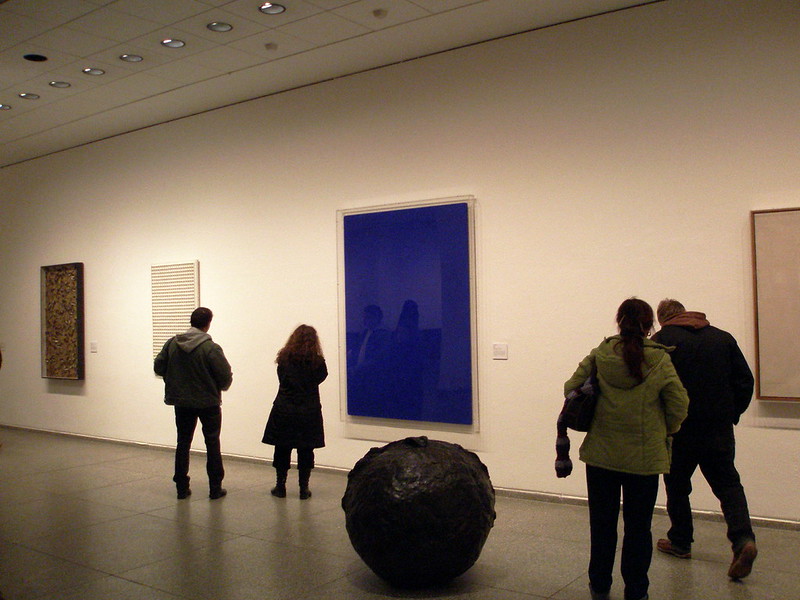
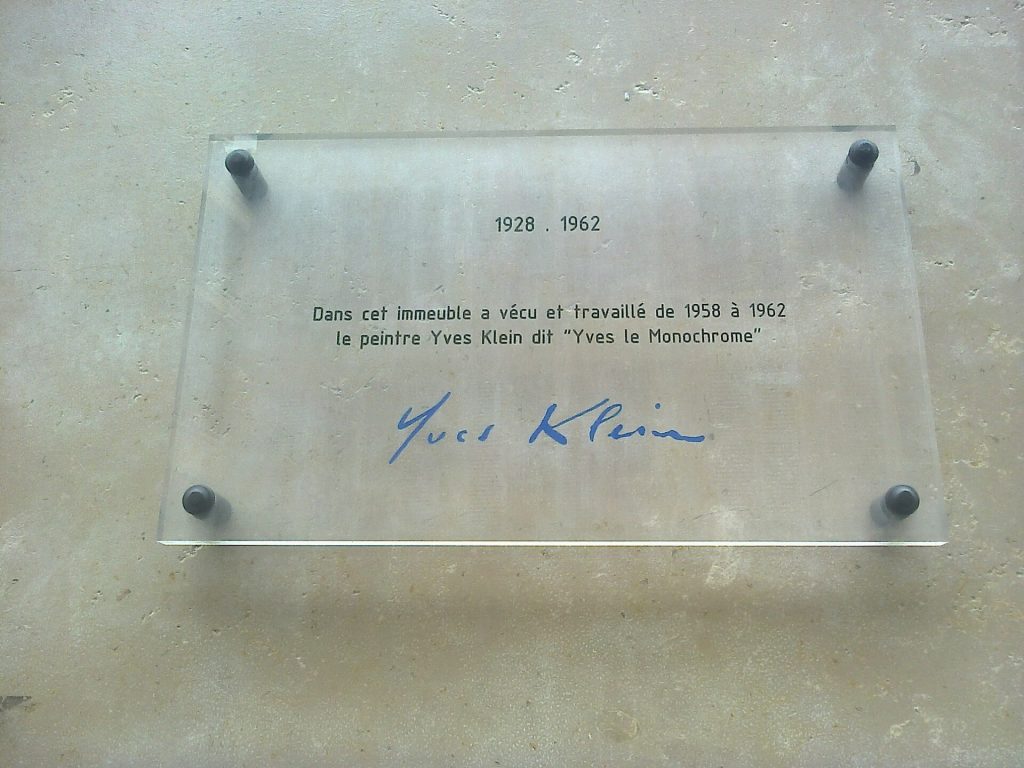
Yves Klein was born in Nice on 28 April 1928 into a family where painting was an everyday occurrence. His father, Fred Klein, worked in figurative art, while his mother, Marie Raymond, was part of the Parisian abstract art scene. The child grew up surrounded by these two artistic styles, free to embrace or reject them. At around the age of nineteen, on a beach in Nice, he supposedly ‘signed’ the sky with his gaze and declared it to be his first work. This gesture foreshadowed his entire artistic approach. During those same years, he discovered judo, a discipline that would take him to Japan in the early 1950s. There, he attained a fourth dan black belt and returned with a conception of emptiness and energy that would permeate his entire artistic exploration.

Blue: a medium in its own right

m-louis ; Wikimedia

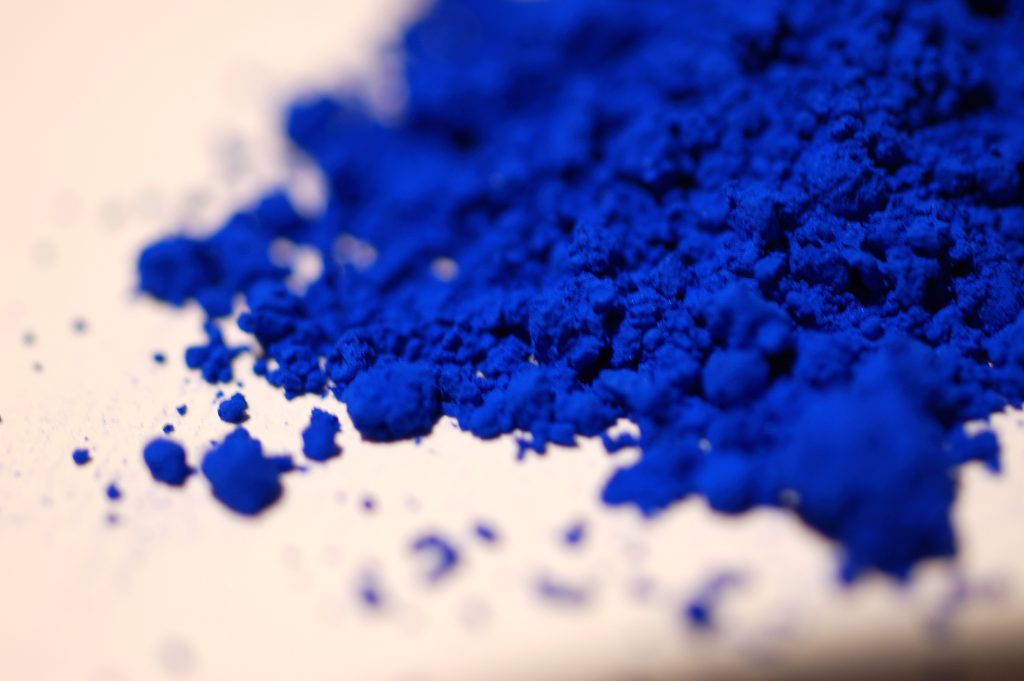
After settling in Paris in the mid-1950s, Klein sought a colour that was free from any representation and existed for its own sake. He found it in a deep, saturated ultramarine, which he developed in collaboration with a paint merchant using a binder that preserved the pigment’s intensity. This became International Klein Blue, trademarked in 1960. For Klein, this blue transcends dimensions; it opens out onto space, onto the sky, and onto infinity. His monochromes, first exhibited in Milan in 1957, eschew composition, drawing and anecdote. They offer the viewer a single surface to inhabit. This radical approach bewilders, captivates and causes scandal. It established Klein as one of the most daring artists of his time.

The Void, or the immaterial on display

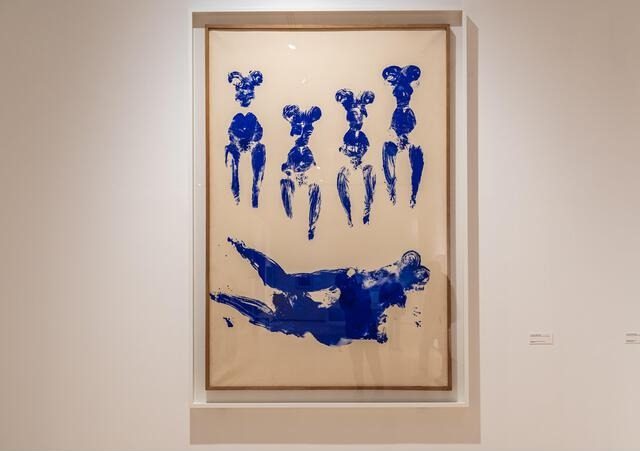
Œuvres de l’artiste Yves Klein (1928-1962) ‘IAnthropometrie sans titre, 1960’ en exposition au MUSÉE MART d’art moderne et contemporain de trente; Alamy

In 1958, at the Iris Clert Gallery, Klein took his ideas to the extreme. He cleared the entire space, repainted the walls white, and presented the bare venue to the public. The exhibition was called Le Vide. Thousands of visitors flocked to contemplate a room emptied of its paintings, where, according to the artist, a pictorial sensibility remained. A year earlier, he released a thousand and one blue balloons into the Parisian sky. Klein also conceived his ‘Zones of Immaterial Pictorial Sensibility’, which were sold in exchange for fine gold, some of which was returned to the River Seine in a ritual. Behind this provocation was a firm belief: a work of art can exist through presence alone, through the energy that flows.

The body as a paintbrush

Gaspare Di Caro ; Wikimedia

At the turn of the 1960s, Klein shifted the focus of painting towards the living.

 In his ‘Anthropometries’, models coated in blue imprint their bodies onto the canvas under the direction of the artist, who is dressed in ceremonial robes. Meanwhile, an orchestra plays his ‘Symphonie Monoton-Silence’. The painter keeps his distance from the surface; he orchestrates the gesture. Elsewhere, he attacks the canvas with a blowtorch and captures the trace of the fire in his ‘Peintures de feu’. Water, rain and wind become his collaborators in turn. Each series poses the same question: how can the immaterial be captured, and an elusive energy seized? Klein responds through ritual and spectacle, deliberately staging the creative process so that it is just as important as the finished work.

The leap, the legend, the disappearance

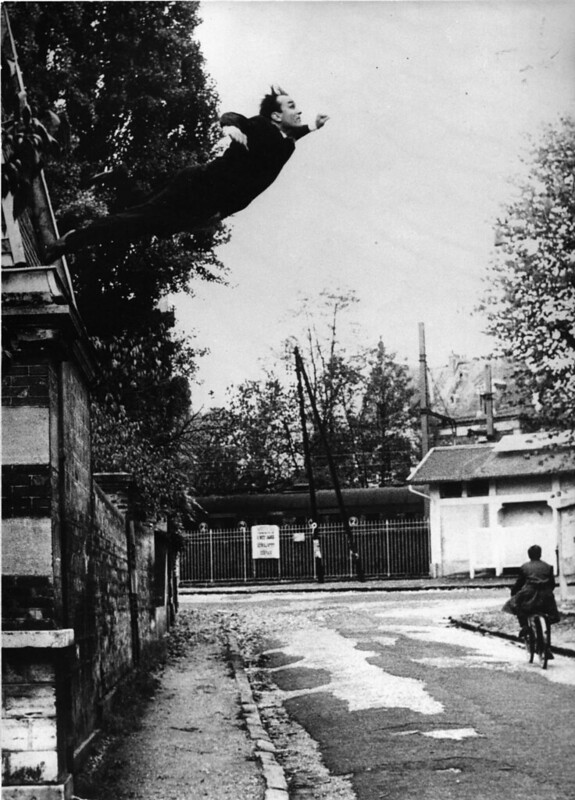
Le Saut / Leap into the Void ; Yves Klein (1960)

In October 1960, a photograph made its way around the world. It shows Klein leaping from a low wall with his arms outstretched over a deserted street. Le Saut dans le vide is a deliberate work of fiction, a montage that expresses his desire to conquer space and overcome gravity. That same year, he was one of the founders of the Nouveau Réalistes movement, brought together by the critic Pierre Restany. Everything happened very quickly. In 1961, his first retrospective was held in Germany, and he was welcomed to the United States at Leo Castelli’s gallery. On 6 June 1962, he died of a heart attack in Paris. He was thirty-four years old. In just seven years, he produced over a thousand works, leaving a legacy that continues to be revisited by contemporary art.

Not to be missed:

Continue exploring

Raymond Morel: design as the only signature
Sylvie Renoux, ceramic artist in Blois: creative freedom
Noah Walker: designing, building, and letting the site speak
Tomislav Topic: mastering the language of colour
Pierre Lilamand: a passion for fruit, a love of passing on the craft
BOON_EDITIONS: the art of creating tomorrow’s archetypes

Février, 2026

Édition 3 : Patrimoine et création

Créer avec l’existant, penser avec l’histoire

De l’architecture au design, cette édition explore comment lieux, savoir-faire et matières héritées deviennent terrains de création actuelle.

Janvier, 2026

Édition 2 : Quiet luxury

Le luxe se réinvente.

Finis les logos clignotants, place à une sobriété raffinée, à l’immersion personnelle, à l’excellence artisanale, à la durabilité sensible.

Décembre, 2025

Édition 1 : Le sens de la fête

Héritages, gestes contemporains et plaisirs essentiels

Parce que la fête n’est jamais qu’apparence : elle reflète notre manière d’habiter le monde, de transmettre, de fabriquer des souvenirs durables.

ÉDITION #3

Révéler la beauté

Upcycling et kintsugi transforment l’objet contemporain, faisant de la trace, de la réparation et de la matière un langage esthétique.

ÉDITION #3

Les nouveaux artisans du patrimoine

Artisans et designers donnent une seconde vie aux matériaux anciens, entre création contemporaine, patrimoine et réemploi.

ÉDITION #3

L'art à la rescousse des friches et lieux oubliés

Bunkers, wagons et kiosques renaissent grâce à la création, révélant comment l’art redonne sens aux lieux délaissés.

ÉDITION #2

Le murmure du beau

Un regard transversal sur le quiet luxury à travers des lieux, des objets et des figures qui expriment l’élégance.

ÉDITION #1

Lieux, maisons et matières en éclats

Une sélection de marques, architectures, objets et escapades qui donnent corps au sens de la fête.

ÉDITION #3

La création au secours des bâtiments promis à l’oubli

Usines et gares délaissées deviennent lieux culturels ouverts, où mémoire industrielle et usages contemporains redessinent la ville.

ÉDITION #3

Hôtel Normandy Le Chantier

L’audacieuse métamorphose d’un palace parisien

ÉDITION #3

Dans les coulisses du Centre d'Études Picasso à Paris

Au cœur du Marais, un lieu discret révèle comment archives, architecture et recherche font dialoguer l’œuvre de Picasso.

ÉDITION #2

Shopping iconique dans un décor Tudor

Une expérience shopping unique dans un magasin emblématique.

ÉDITION #2

Gastronomie et architecture

Voyage culinaire et architectural au cœur de la Seine

ÉDITION #2

L'art de l'hospitalité parisienne

Dans le 9e arrondissement, un établissement qui invite au quiet luxury

ÉDITION #1

Chante!

Chante! vient d’ouvrir ses portes. Une invitation à vibrer !

ÉDITION #3

La boîte aux lettres française devenue objet de design

Icône du paysage français, la boîte jaune change de statut et s’invite dans l’univers du design.

ÉDITION #3

Retour sur Maison&Objet 2026 : retour aux sources et à l’essentiel

L’édition 2026 affirme une vision où artisanat, design et mémoire façonnent l’habitat contemporain, international actuel.

ÉDITION #3

Art Deco: un mouvement centenaire, plus actuel que jamais

Cent ans après 1925, l’Art déco revient dans nos villes et intérieurs avec géométrie, audace, optimisme.

ÉDITION #3

Royal Limoges, deux siècles d’histoire au présent

Depuis plus de deux cents ans, Royal Limoges conjugue porcelaine, savoir-faire industriel et création contemporaine.

ÉDITION #3

Du terrain à la rue et au catwalk : les sneakers à travers les époques

Des terrains de sport aux podiums, la sneaker raconte un siècle de mutations culturelles, techniques et stylistiques.

ÉDITION #2

La formidable aventure du papier peint de luxe

Design, mode, artisanat : des créations où la forme et la matière se répondent avec justesse, loin de tout effet de mode.

ÉDITION #1

Icônes, détails, rituels

Décorations artisanales, calendriers ultra-luxe et pièces de collection pour s’enivrer de joie avant l’heure.

ÉDITION #3

Anton Laborde

Entre marqueterie monumentale et jungle symbolique, Anton Laborde transforme le bois en récit contemporain poétique engagé.

ÉDITION #3

Thierry Laudren

À Maison & Objet, Thierry Laudren présente des meubles sculptés où fonction, matière et lenteur façonnent une présence.

ÉDITION #3

Jean Nouvel

Jean Nouvel conçoit une architecture attentive aux contextes, où lumière, histoire et usages façonnent chaque projet.

ÉDITION #3

Sophie Morel

À Lyon, Sophie Morel rénove des lieux historiques en alliant respect du bâti et écriture contemporaine.

ÉDITION #3

Pascal Grasso

Au Centre d’Études Picasso, l’architecte compose une architecture où lumière, géométrie et héritage dialoguent avec précision.
ÉDITION #2

Alexandre Danan

Entretien avec le fondateur d’EDO (European Design Office)

ÉDITION #2

Aziz Temimi

Portrait d’un visionnaire qui transforme l’art de recevoir en expérience totale.
ÉDITION #1

Visages, gestes, inspirations

Personnalités, artisans et créateurs qui donnent à la fête sa profondeur humaine.

ÉDITION #3

Chemins de traverse : parenthèse d’exception en Bordelais

De Bordeaux au Bassin, art, vignobles et bien-être composent une échappée élégante au cœur de la Gironde.

ÉDITION #2

Voyage en Toscane

Vers une région de l’Italie habitée par le temps, où paysages, culture et usages s’accordent dans une continuité rare.

ÉDITION #1

Horizons, saisons, traditions

Destinations et rituels qui réinventent la fête, du soleil tropical aux marchés d’hiver.

Dates, adresses, invitations

Expositions, événements et repères culturels pour vivre pleinement la saison des fêtes.