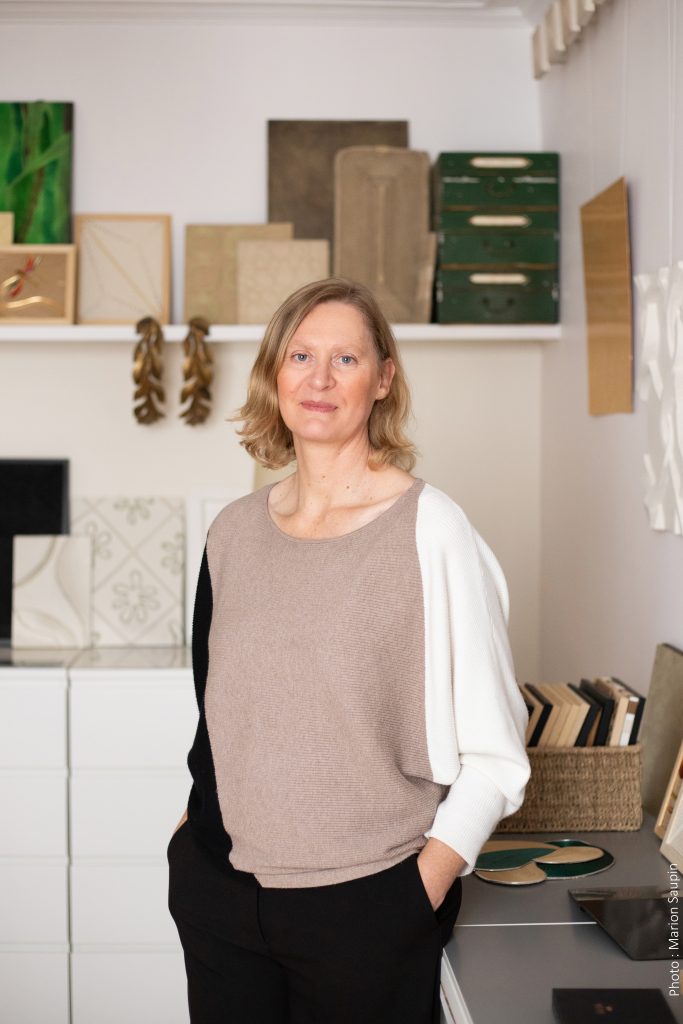
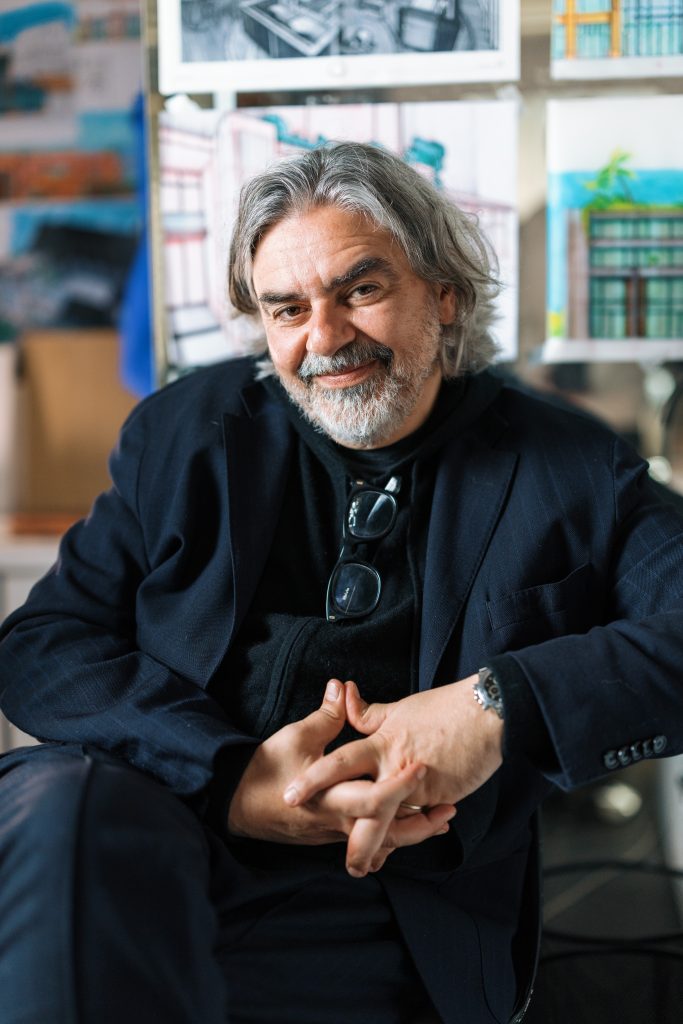
Isabelle de Lasteyrie has an excellent eye for materials, as well as a talent for fostering connections that is harder to define. Since 2006, through her agency, L’Agence d’Isabelle, she has supported workshops and creators in their dealings with architects, interior designers, and designers. Her role is to find the right material for the right project and the right person for the job. Sometimes, she even helps talented individuals to believe in themselves enough to take the plunge.
Today, her work spans several ventures, including her agency, the Artisans d’Excellence fair, which she co-founded with Miguel Duterrier, and Collection LISS, a new line of products created in collaboration with the arts and crafts sector. Three different paths, but a common thread: encounters, craftsmanship, and the belief that beautiful things take time.
Isabelle de Lasteyrie’s journey into the world of traditional crafts began almost by chance. After working in the pharmaceutical industry, Isabelle de Lasteyrie joined Lorca, a home furnishings fabric company, in 2000. There, she discovered a world that she would never leave: that of fabrics, design, specifications, and interior design. It was a small organisation, and she worked closely with the design team, managing the network of export agents. This close proximity to the designers immediately appealed to her.
She recalls a great colourist, who has since passed away, who dared to use very large-scale floral patterns. Working alongside him, she came to appreciate that freedom and ability to take risks. Then the company was bought out by a British group. Isabelle had to decide whether to move to London or find another solution. It was then that she discovered her future profession. There was a missing link between creation and specification.
The upholstery fabric market was already well-established. So were furniture and lighting, with their own sales networks. However, when it came to materials, nothing of the sort existed — there was a real gap to be filled. Many workshops know how to create and showcase their expertise and approach. But when it came to meeting a specifier or quoting a price, things got awkward. In 2006, Isabelle set up L’Agence to bridge the gap between workshops and potential clients.

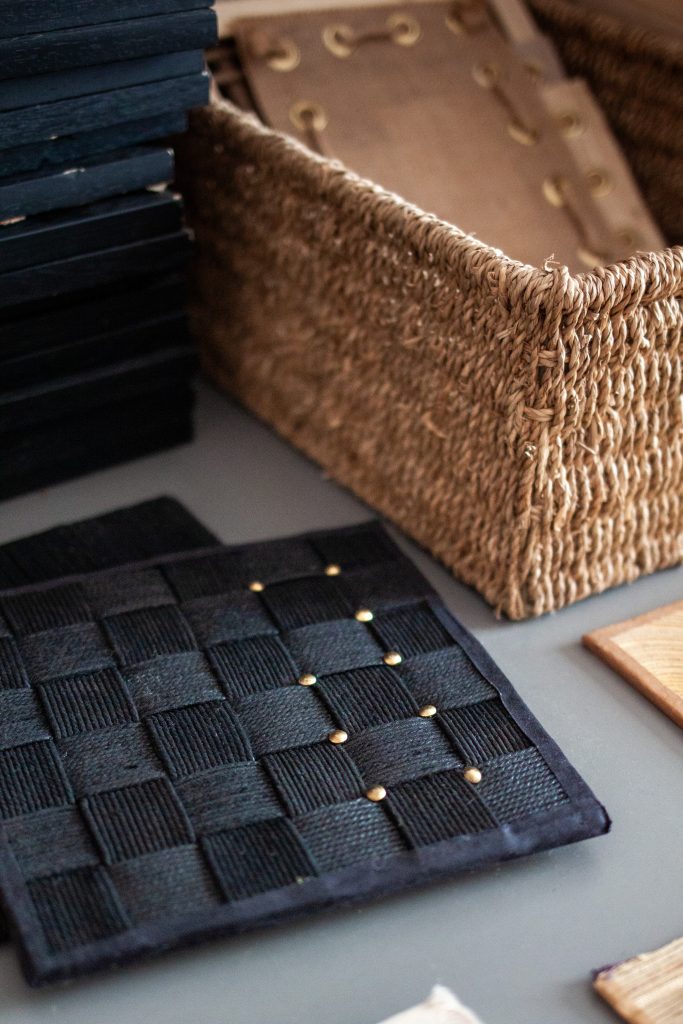
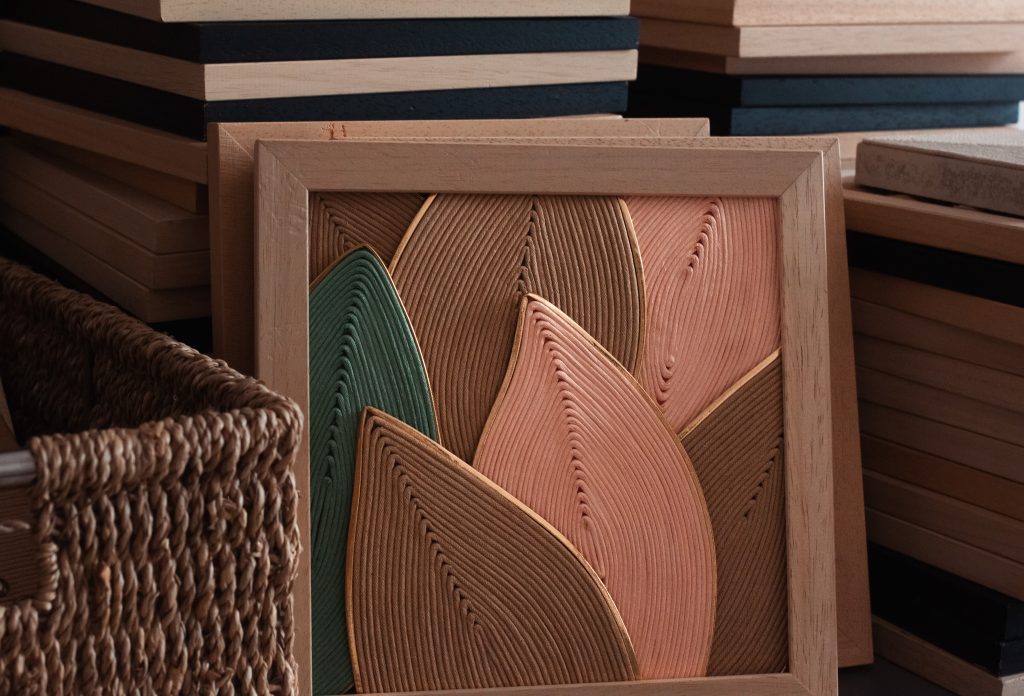
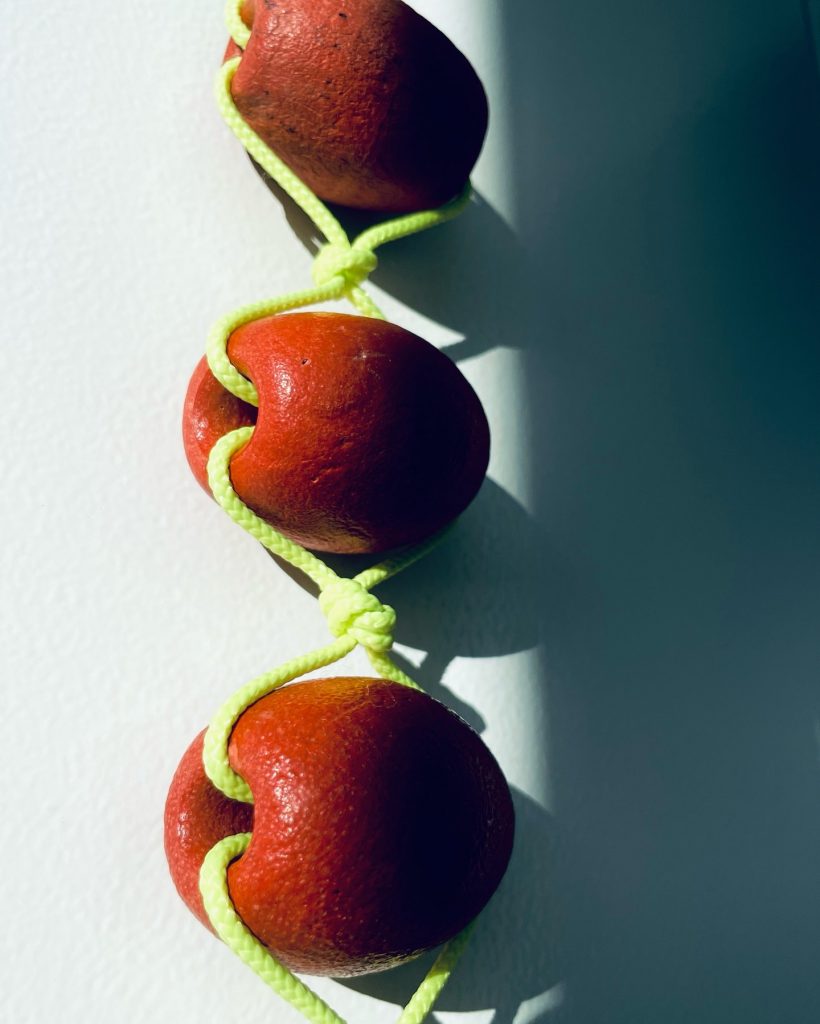
Tressage de corde; Véronique de Soultrait ; Alexia de Lasteyrie
What started as a simple intermediary role quickly evolved into a genuine partnership. Today, Isabelle works directly with a small number of carefully selected workshops. “I’m very honest and respectful of other people’s work,” she explains, prioritising the quality of her support over the quantity. This high standard speaks volumes about her approach to work. She admires the artisans not only for their talent, but also for what they pass on to her. “They have a sparkle in their eyes,” she says, referring to their humility, their intimate awareness of their limitations, and their occasional lack of self-confidence. This is where her role comes into its own. She helps arrange meetings, choose what to show architects and understand what might resonate with their sensibilities or those of their clients. She also supports them through the delicate process of valuing a creation. “It’s difficult to put a price on craftsmanship,” she explains. Isabelle does not see this as a weakness, however. On the contrary, she knows that these creators already possess something that cannot easily be learnt: a vision, a material, a story or a technique.
Her role is to help them connect with the right person.
The relationship works both ways. The workshops she supports enrich her. Through them, she discovers historical references, heritage, and techniques. “I’m constantly learning from them,” she says. She describes her relationship with the artisan as a partnership. Each person stays in their own role. Each person brings their own skills to the table. The respect is mutual.
Rope weaving; Véronique de Soultrait ; Alexia de Lasteyrie
Of all the stories that have shaped her journey, that of Véronique de Soultrait is particularly significant. Isabelle de Lasteyrie first came across her work in a press photograph measuring just a few centimetres. This single image was enough to spark her interest. She then met the designer in the gardens of the Palais-Royal, where Véronique showed her some tiny samples. Véronique de Soultrait barely dared to say that she thought they were beautiful. What followed was quite the opposite. Over the years, the designer has flourished, buoyed not only by her talent, but also by the trust that has developed between them. Ten years of work, dialogue, trust and mutual understanding. ‘We’ve supported each other,’ Isabelle sums up. This sentence could almost serve as a definition of her profession: Spotting talent. Giving it space. Finding the right connections. And sometimes being there long enough for trust to take root.
The agency’s desire to forge connections could not be contained within its own walls. The workshops that Isabelle supports regularly tell her of the same difficulty: knowing where to exhibit. Existing trade fairs do not always meet their expectations or reflect the way these artisans wish to showcase their work.
Isabelle and Miguel Duterrier, founder of Signatures Singulières, share this observation. They joined forces, consulted the workshops and set out to create something new. And so Artisans d’Excellence was born. The concept is simple: to bring together independent workshops, architects, designers, luxury brands, and professionals seeking materials and craftsmanship. Rather than merely displaying objects, the fair invites artisans to champion their work, talk about their journey, inspirations, and approach. It reveals what lies behind a material or a technique.
Around a hundred exhibitors come together in various formats, united by a common thread: materials, bespoke craftsmanship, and independent workshops. For Isabelle, this is essential. Because a creation is never just a sample. An architect might discover a material and immediately imagine how they could transform, repurpose or take it in a new direction. “It’s never the same thing twice,” she says. The fair thus becomes a meeting place for craftsmanship and projects yet to be conceived.
Isabelle de Lasteyrie
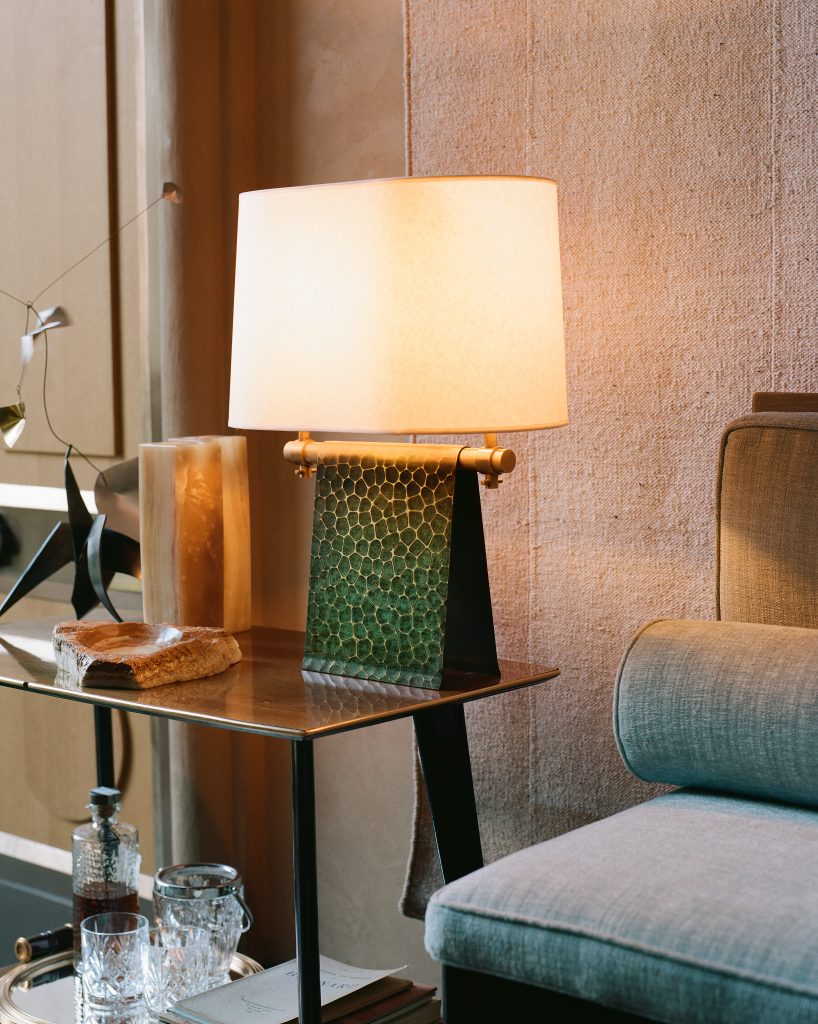
Recently, the story took a more personal turn. Isabelle had always wanted to design a lamp. However, it took her several attempts to find the right partner. She eventually met Studio Ombre, a duo she had known for a long time who provide artistic direction to workshops, among other things. She told them about her idea to create a lamp that would be a true ‘manifesto of craftsmanship’. The design features a small, jewellery-like base and a decorative surface on which the craftsman can truly express themselves.
The first piece in the LISS collection is called Sicco. Its shape evokes a folded sheet of paper held in place by the light. The base can be personalised, and the materials evolve in line with the proposals, discussions and ideas exchanged between Isabelle and the designers. The lamp was first unveiled at the inaugural Artisans d’Excellence fair. Since then, it has returned every year in a different version. This piece encapsulates Isabelle’s approach: an idea meets a network; one area of expertise meets another; proposals circulate; and the creation evolves.
Alexia de Lasteyrie
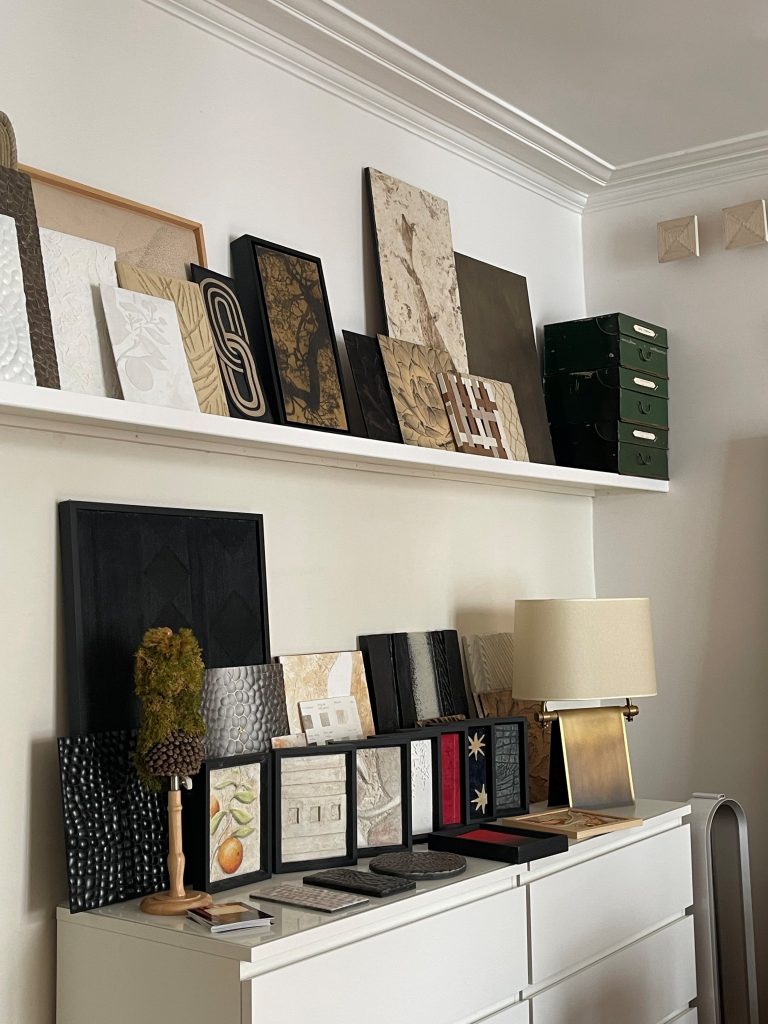
Isabelle de Lasteyrie now works from a small showroom in her Parisian home, where she regularly welcomes architects. It is a space dedicated to artists and craftspeople specialising in architecture, design, and interior decoration.
The venture is also expanding. She is opening a second showroom in the 7th arrondissement, which she will share with an interior designer. It is due to open by the end of the year. The two spaces have distinct identities, but complement one another, and both share a desire to exchange expertise. Her guiding principle is that we make better progress when we work together. She deeply believes in synergies and networks that complement one another. “We’re stronger together,” she says. This idea has run through her entire career, from her agency and the trade fair to the LISS collection and the way she chooses the people she works with. Her role is all about forging connections.
When speaking to young people who wish to pursue a career in arts and crafts, Isabelle makes a surprising suggestion: don’t abandon your general education too soon. Follow your artistic instincts, yes. But keep up with English, maths, management, sales and marketing – the skills that will enable you to run a business, deal with a bank and recruit staff later on. She mentions leading schools such as Boulle, Duperré, Penninghen and the Beaux-Arts, but above all she emphasises one concept: self-confidence. At sixteen or seventeen, she explains, it is difficult to envisage what you will become. Yet this gradual development matters. It can give a craftsperson more confidence when they have to defend their workshop and business later on. Therefore, her advice can be summed up in a few words: believe in yourself, dare to take the plunge, but do not neglect the things that surround the artistic process.
Her message to architects is different: be curious. They should take the time to discover new workshops, visit trade fairs, meet designers and view materials from a fresh perspective. Then know when to share this discovery with a client. After all, in her view, architects are among the primary ambassadors of craftsmanship to end clients. “Often, a material that captures your heart becomes the starting point for a mood – the one around which an entire project will be built.”
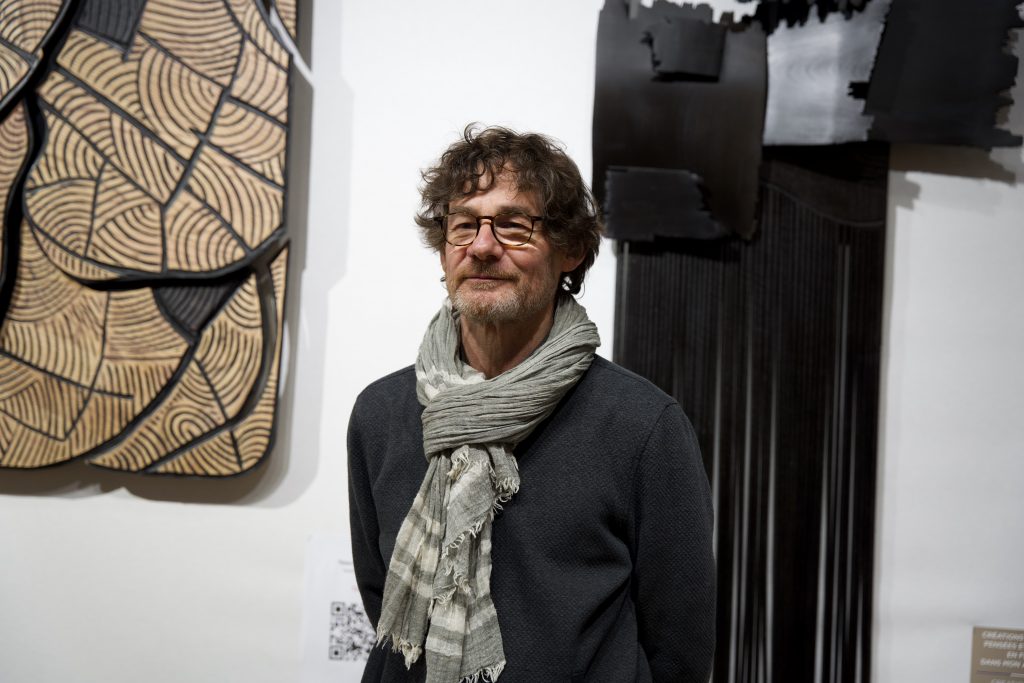
When asked what she would like people to remember about her journey, Isabelle doesn’t mention the firm, the trade fair or the lamp. Instead, she speaks of several lives and of patience. The showroom took two years to come to fruition. The lamp took several years and several attempts to find its form. “If you believe in it, it will come to fruition,” she says quite simply.
Sometimes, an object emerges. Sometimes an event.
Sometimes something less tangible emerges: an encounter, a relationship or an idea that has grown. Perhaps this is where the true common thread of her journey lies. Isabelle de Lasteyrie does not merely seek to showcase craftsmanship. She creates the conditions for it to connect with others. Behind this work of bringing people together, she places an essential value: the human element. For her, a creation made with heart and soul carries a visible presence and coherence. It cannot be reduced to a mere beautiful image or trend. In an age when images circulate rapidly and artificial intelligence is revolutionising the way we create, Isabelle believes this human dimension is irreplaceable.
Perhaps this is because that is what she has been doing from the beginning: putting the human element back into the relationship between a craftsman, their work and the person who will appreciate it.
Février, 2026
Créer avec l’existant, penser avec l’histoire
De l’architecture au design, cette édition explore comment lieux, savoir-faire et matières héritées deviennent terrains de création actuelle.
Janvier, 2026
Le luxe se réinvente.
Finis les logos clignotants, place à une sobriété raffinée, à l’immersion personnelle, à l’excellence artisanale, à la durabilité sensible.
Décembre, 2025
Héritages, gestes contemporains et plaisirs essentiels
Parce que la fête n’est jamais qu’apparence : elle reflète notre manière d’habiter le monde, de transmettre, de fabriquer des souvenirs durables.
ÉDITION #3
Upcycling et kintsugi transforment l’objet contemporain, faisant de la trace, de la réparation et de la matière un langage esthétique.
ÉDITION #3
Artisans et designers donnent une seconde vie aux matériaux anciens, entre création contemporaine, patrimoine et réemploi.
ÉDITION #3
Bunkers, wagons et kiosques renaissent grâce à la création, révélant comment l’art redonne sens aux lieux délaissés.
ÉDITION #2
Un regard transversal sur le quiet luxury à travers des lieux, des objets et des figures qui expriment l’élégance.
ÉDITION #1
Une sélection de marques, architectures, objets et escapades qui donnent corps au sens de la fête.
ÉDITION #3
Usines et gares délaissées deviennent lieux culturels ouverts, où mémoire industrielle et usages contemporains redessinent la ville.
ÉDITION #3
L’audacieuse métamorphose d’un palace parisien
ÉDITION #3
Au cœur du Marais, un lieu discret révèle comment archives, architecture et recherche font dialoguer l’œuvre de Picasso.
ÉDITION #2
Une expérience shopping unique dans un magasin emblématique.
ÉDITION #2
Voyage culinaire et architectural au cœur de la Seine
ÉDITION #2
Dans le 9e arrondissement, un établissement qui invite au quiet luxury
ÉDITION #1
Chante! vient d’ouvrir ses portes. Une invitation à vibrer !
ÉDITION #3
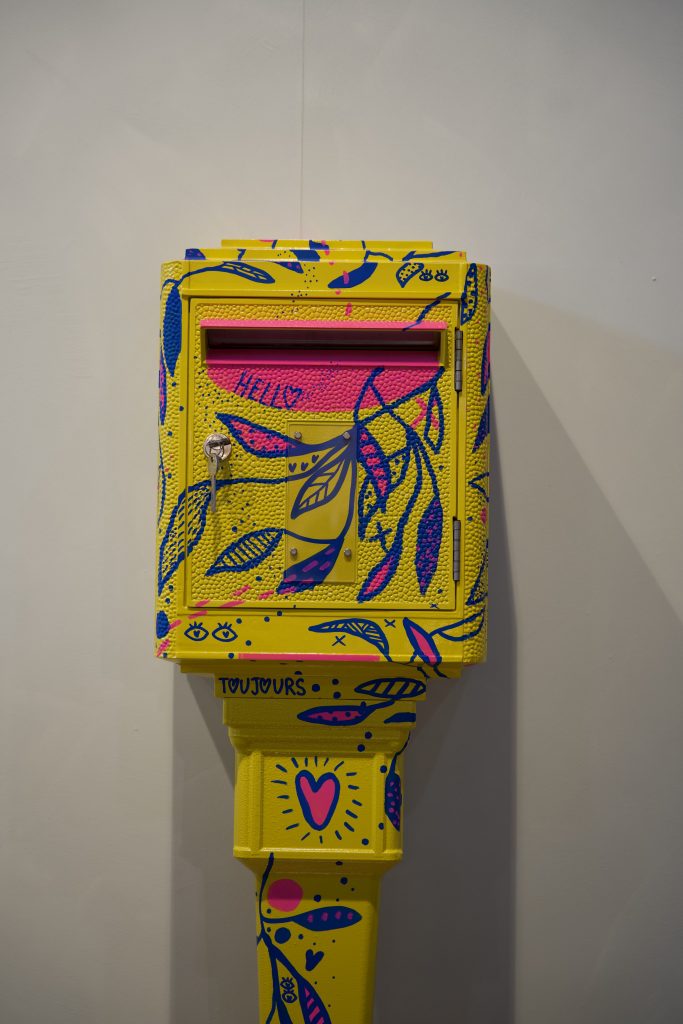
Icône du paysage français, la boîte jaune change de statut et s’invite dans l’univers du design.
ÉDITION #3
L’édition 2026 affirme une vision où artisanat, design et mémoire façonnent l’habitat contemporain, international actuel.
ÉDITION #3
Cent ans après 1925, l’Art déco revient dans nos villes et intérieurs avec géométrie, audace, optimisme.
ÉDITION #3
Depuis plus de deux cents ans, Royal Limoges conjugue porcelaine, savoir-faire industriel et création contemporaine.
ÉDITION #3
Des terrains de sport aux podiums, la sneaker raconte un siècle de mutations culturelles, techniques et stylistiques.
ÉDITION #2
Design, mode, artisanat : des créations où la forme et la matière se répondent avec justesse, loin de tout effet de mode.
ÉDITION #1
Décorations artisanales, calendriers ultra-luxe et pièces de collection pour s’enivrer de joie avant l’heure.
ÉDITION #3
Entre marqueterie monumentale et jungle symbolique, Anton Laborde transforme le bois en récit contemporain poétique engagé.
ÉDITION #3
À Maison & Objet, Thierry Laudren présente des meubles sculptés où fonction, matière et lenteur façonnent une présence.
ÉDITION #3
Jean Nouvel conçoit une architecture attentive aux contextes, où lumière, histoire et usages façonnent chaque projet.
ÉDITION #3
À Lyon, Sophie Morel rénove des lieux historiques en alliant respect du bâti et écriture contemporaine.
ÉDITION #3
Au Centre d’Études Picasso, l’architecte compose une architecture où lumière, géométrie et héritage dialoguent avec précision.
ÉDITION #2
Entretien avec le fondateur d’EDO (European Design Office)
ÉDITION #2
Portrait d’un visionnaire qui transforme l’art de recevoir en expérience totale.
ÉDITION #1
Personnalités, artisans et créateurs qui donnent à la fête sa profondeur humaine.
ÉDITION #3
De Bordeaux au Bassin, art, vignobles et bien-être composent une échappée élégante au cœur de la Gironde.
ÉDITION #2
Vers une région de l’Italie habitée par le temps, où paysages, culture et usages s’accordent dans une continuité rare.
ÉDITION #1
Destinations et rituels qui réinventent la fête, du soleil tropical aux marchés d’hiver.