Taxco, Mexico, 2006. In a narrow street in the ‘City of Silver’, a young French traveller opens the door to a workshop. Inside, she discovers a craftsman shaping metal by hand using techniques passed down through the ages. This scene lasted only a few moments, but it shaped what followed. She went on to attend the École Boulle, learn the art of engraving from Guillaume Estrade (a ‘Meilleur Ouvrier de France’), work in the haute joaillerie workshops and create cufflinks for the Place Vendôme. Finally, she opened her own workshop.
“I was struck by his movements and the simple beauty of his creations,” she says.
Taxco has been working with silver since colonial times. Its winding alleyways are lined with workshops where the metal is still shaped by hand. Chloé Hoquet wandered in out of curiosity and emerged with an unspoken certainty: the raw metal, the repeated gesture, the unadorned beauty.
The following year, a stay in Dakar deepened her understanding. A Tuareg community took her in for a few days and taught her to forge her first pieces of jewellery.
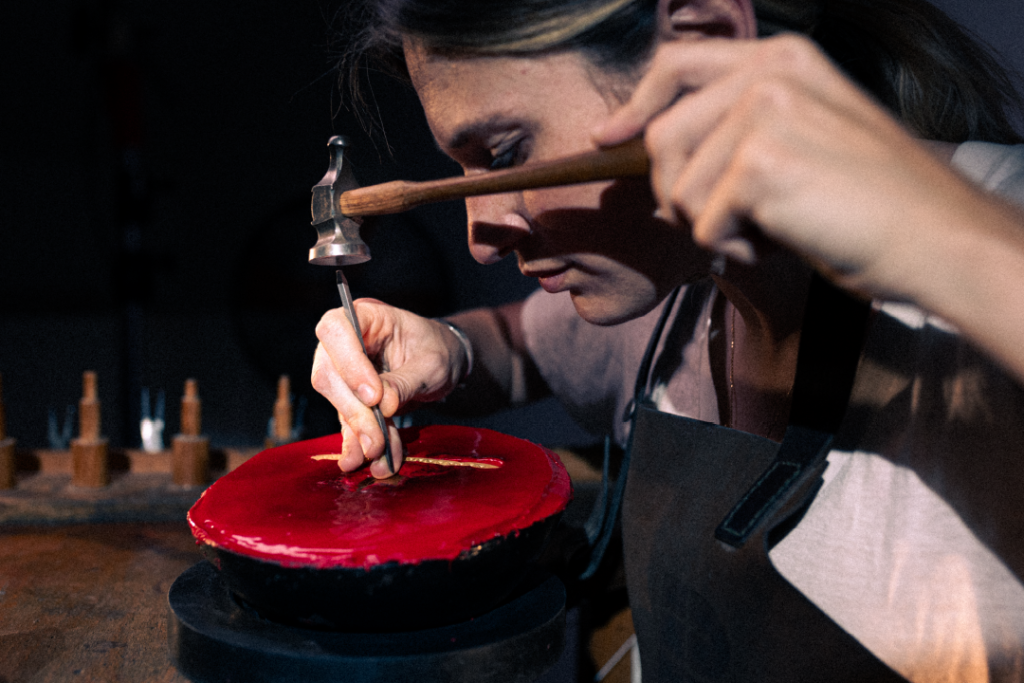
Back in France, she attended an open day at the École Boulle. She started out in metalwork, but quickly moved on to chiselling, a technique that sculpts the surface without removing any material. Just two trips were all it took to spark a vocation.
Chloé Hoquet
Three years in the workshop lie between answering a calling and achieving true craftsmanship. Chloé Hoquet spent this time working alongside Guillaume Estrade, a ‘Meilleur Ouvrier de France’ and chiselling tutor at the École Boulle. He taught her the rare techniques of this craft.
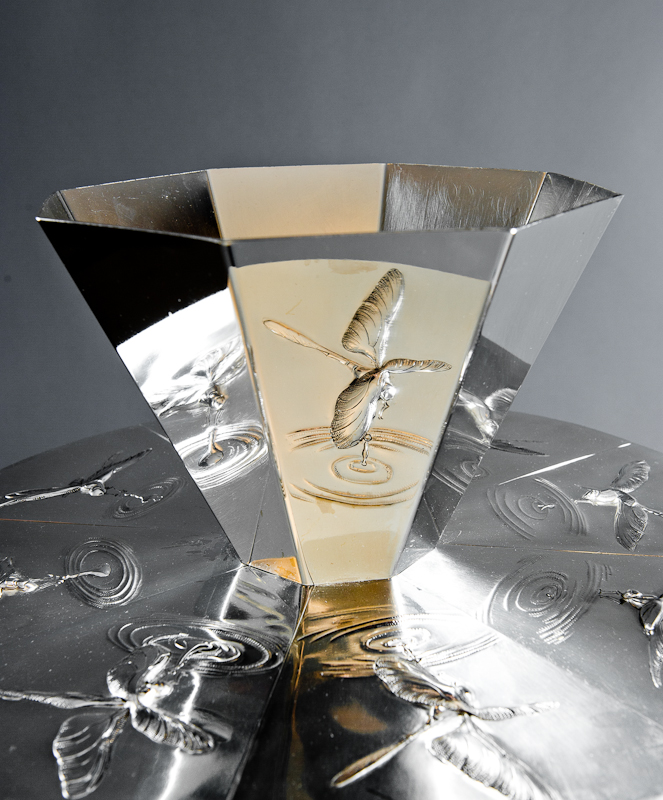
In 2012, she graduated with a diploma in arts and crafts, specialising in chiselling. Her final piece, entitled Icarus, was a kinetic champagne set inspired by Émile Reynaud’s praxinoscope. Its movement evokes the flight of a dragonfly.
This piece earned her two first prizes in the Île-de-France region, one awarded by the Rotary Club and the other by the INMA (now the Institut pour les Savoir-Faire Français). It was subsequently exhibited at the Carrousel du Louvre, the Musée des Arts et Métiers, the Parc Floral de Paris and even in Japan.
Chloé Hoquet
Her diploma opened another door: that of working with tiny pieces. Having trained in working with larger pieces, the engraver now wanted to learn how to work on a smaller scale. She moved to Montpellier to work for a master jeweller whose family had been in the trade for four generations. He taught her the basics of handmade jewellery.
Next came a Parisian high-end jewellery workshop. There, she worked on designs, chasing and production for leading brands, discovering their exacting standards of precision in the process.
In 2014, she set up her own business and undertook the shaping and repoussé work on motifs for exceptional cuffs, bracelets and earrings for Place Vendôme houses.
In 2017, she completed her training by obtaining a Master’s degree in Fine Arts from the University of Paris 1 Panthéon-Sorbonne, which broadened her perspective further.
In 2024, she set up her own workshop and gradually stopped working for others. Two years later, four of her pieces, brought together under the title Vestiges, were exhibited at the Petit Palais as part of The Art of Making.
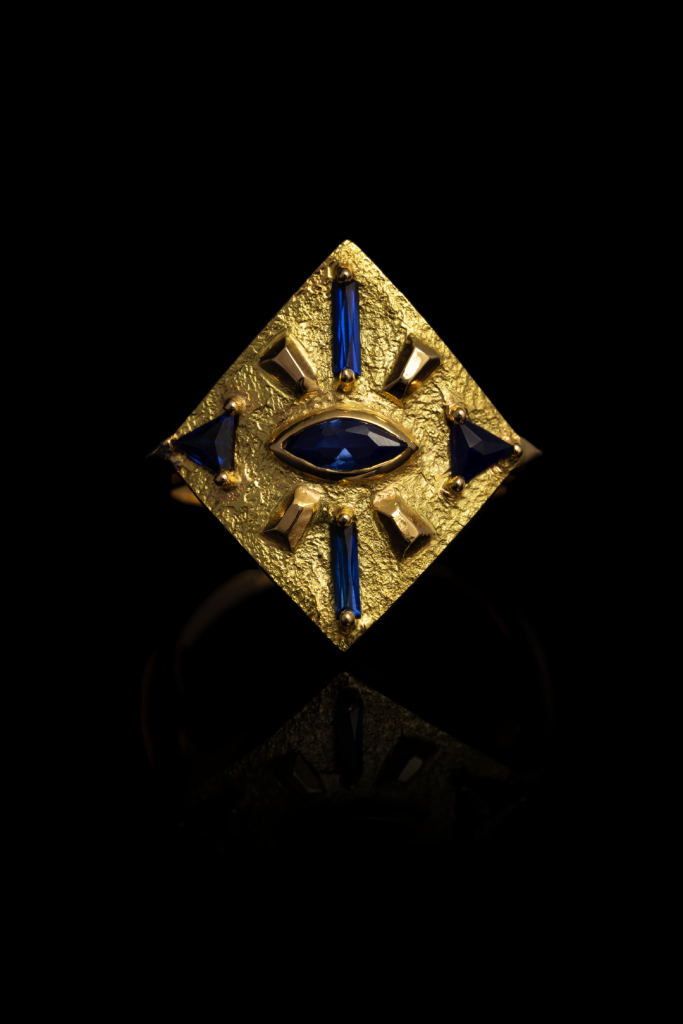
Rome Ring ; Chloé Hoquet
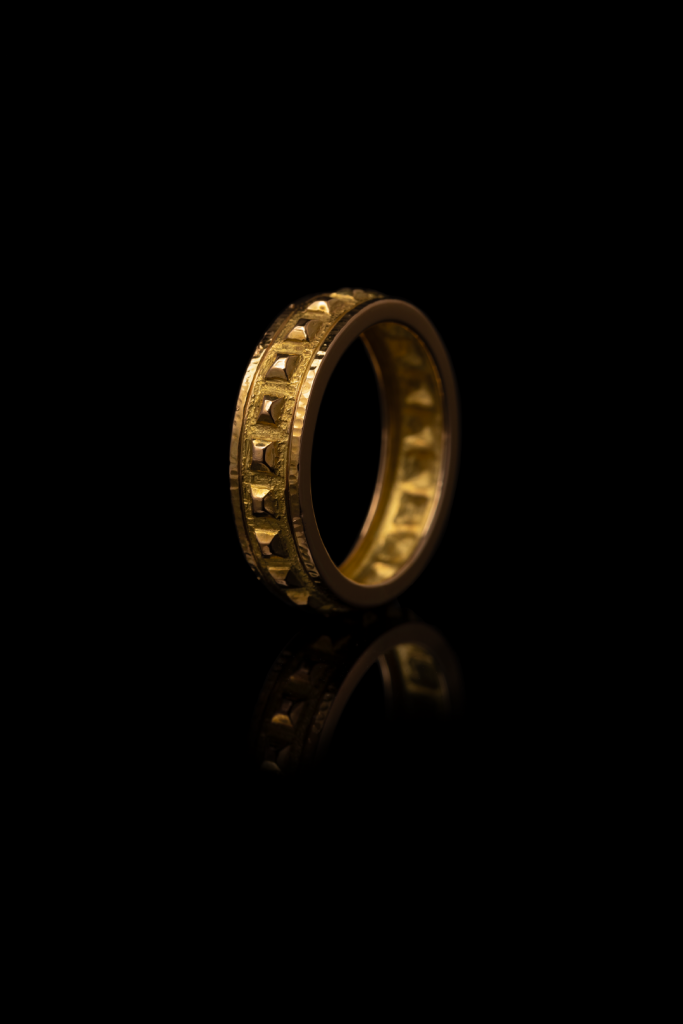
The first piece was created without any real plan. Chloé Hoquet began with a sheet of yellow gold, forged the necessary tools and carved twenty squares into the metal.
Using techniques such as tracé-mati and repoussé, she matted the tip of the chisel to shift the material rather than remove it. She then carved out the reliefs and organised the surfaces so that light would flow between the matt and polished areas.
The ring is called Rome. It is two millimetres wide and evokes ancient cities.
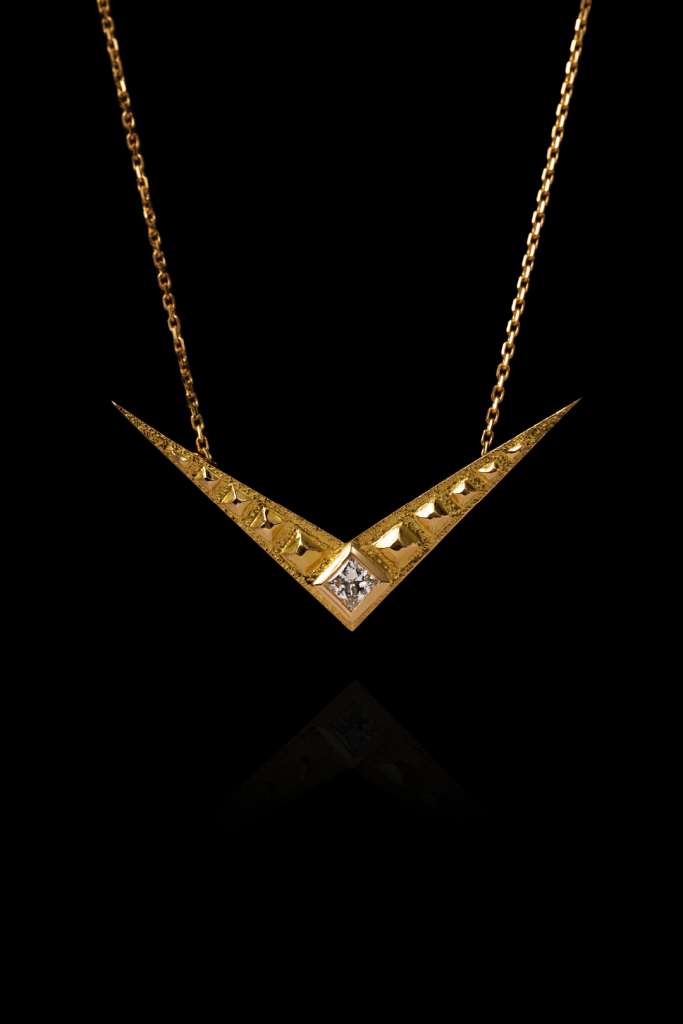
This piece gave rise to a design vocabulary that has since been adapted for rings, necklaces and pendants bearing the names Mycenae, Helios, Rhomboid and Artemis. The motifs have ancient origins. Civilisations such as the Maya, the Egyptians and the Minoans never crossed paths, yet each shaped squares, triangles, rhythms and patterns that echo one another.
“These forms speak to us without us knowing why; they touch something deep within,” says Christophe Hoquet, her partner and business associate.
Rhombe Ring ; Chloé Hoquet
The stones arrive afterwards, or sometimes beforehand. Two approaches coexist at the workbench.
The first starts with the motif. Once finalised, the gemstones to bring the design to life must be found, often in cuts that contemporary jewellery has abandoned in favour of round and oval shapes. Right-angled triangles, which are distinct from trillions with their softened corners, are hard to come by, especially when they need to be found in several varieties of gemstone.
The second approach starts with the gemstone. Chloé Hoquet spots the gemstone that speaks to her at specialist markets, buys it, and then builds the composition around it.
The gold is recycled, 18-carat and usually yellow to echo the metals of antiquity. While the environmental argument is important, it is not the primary consideration; the value of gold has long made remelting a natural choice. Indeed, the metal sometimes comes from the wearer themselves — an inherited piece of jewellery whose remelting extends its history into a new form.
Chloé Hoquet
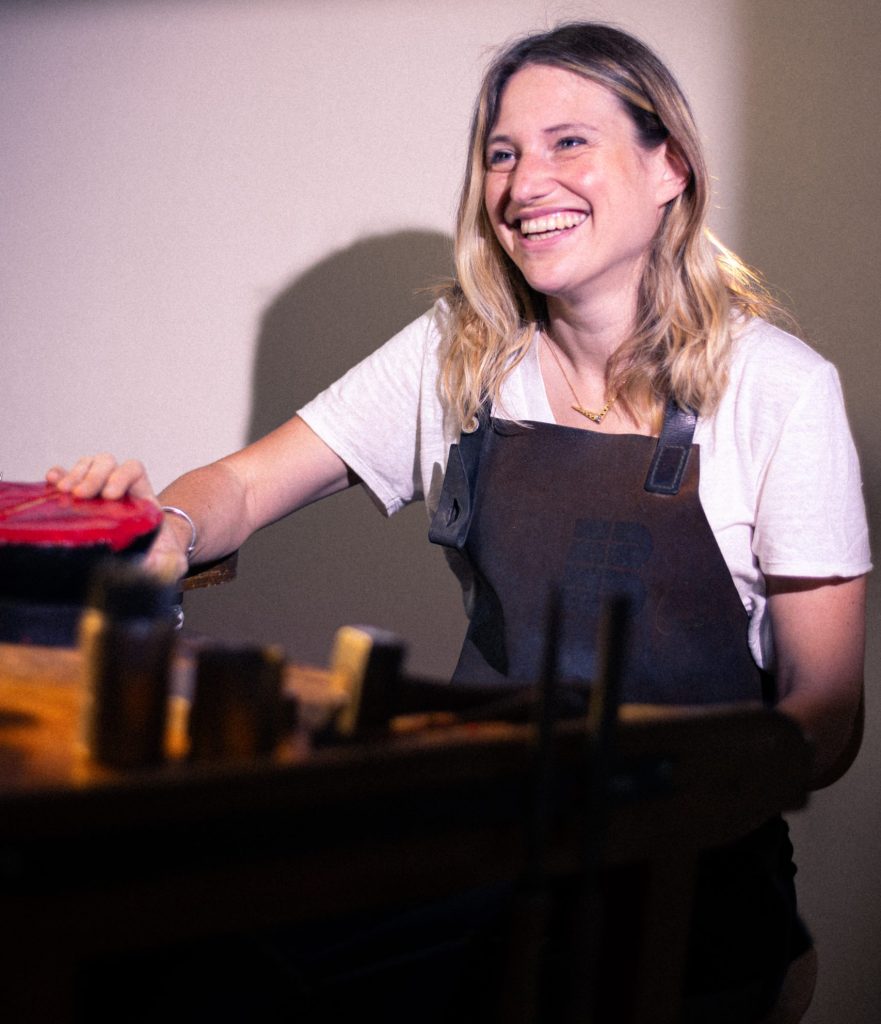
Chloé’s workshop occupies a room measuring fifteen square metres, lit by a rectangular glass roof. Two oak workbenches stand side by side: one for engraving and the other for jewellery making. There is also a side table and vice made from the same wood.
The rolling mill is used to draw out gold wires and sheets. Light floods the room all day long, gradually giving way to a play of light and shadow as evening falls.
The music never stops here, favouring trip-hop – a genre born in Bristol at the turn of the 1990s – as well as classical music and compositions blending orchestral and electronic elements.
Drawing fills the remaining hours, particularly nude drawings, providing a silent outlet free from commission. Gemmology courses are also on the programme to further deepen her knowledge of gemstones.
Sophia signet ring ; Chloé Hoquet
Such work now makes up the bulk of her business. A man she met at a trade fair wants a signet ring. The appointment takes place a month later at his home and consists of a warm, friendly conversation in an intimate setting.
The aim is to mark a transition — the passage into adulthood — and to find a form in the metal that expresses it.
Another client treats herself to a ring for her thirtieth birthday, capturing the ‘before’ and ‘after’ in gold and gemstones. The jewellery keeps its secret. Those who see it cannot guess its meaning; only those who wear it know.
Family heirlooms often feature in these stories. For example, an Art Deco engagement ring that has been deemed old-fashioned may be remelted and its stone reset, giving the piece a new lease of life and ensuring that the legacy continues.
Projects can sometimes be summed up in just a few words, such as a large-scale centrepiece that will take nearly a year to complete or an off-site exhibition in a gallery or selected hotels.
“People open up to her, and she draws from their stories what will become the raw material,” says Christophe Carvalho-Hoquet.
The rest can be summed up in one sentence: ‘Chloé is a person, not a brand.’

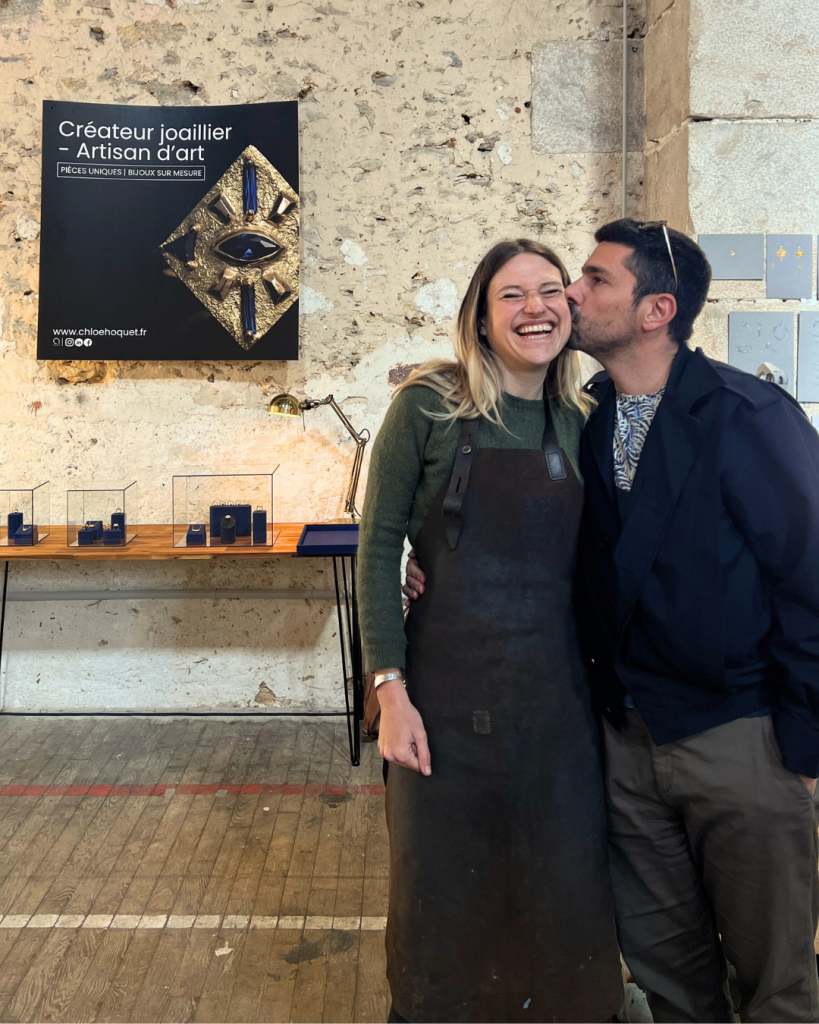
Chloé and Christophe Hoquet
Février, 2026
Créer avec l’existant, penser avec l’histoire
De l’architecture au design, cette édition explore comment lieux, savoir-faire et matières héritées deviennent terrains de création actuelle.
Janvier, 2026
Le luxe se réinvente.
Finis les logos clignotants, place à une sobriété raffinée, à l’immersion personnelle, à l’excellence artisanale, à la durabilité sensible.
Décembre, 2025
Héritages, gestes contemporains et plaisirs essentiels
Parce que la fête n’est jamais qu’apparence : elle reflète notre manière d’habiter le monde, de transmettre, de fabriquer des souvenirs durables.
ÉDITION #3
Upcycling et kintsugi transforment l’objet contemporain, faisant de la trace, de la réparation et de la matière un langage esthétique.
ÉDITION #3
Artisans et designers donnent une seconde vie aux matériaux anciens, entre création contemporaine, patrimoine et réemploi.
ÉDITION #3
Bunkers, wagons et kiosques renaissent grâce à la création, révélant comment l’art redonne sens aux lieux délaissés.
ÉDITION #2
Un regard transversal sur le quiet luxury à travers des lieux, des objets et des figures qui expriment l’élégance.
ÉDITION #1
Une sélection de marques, architectures, objets et escapades qui donnent corps au sens de la fête.
ÉDITION #3
Usines et gares délaissées deviennent lieux culturels ouverts, où mémoire industrielle et usages contemporains redessinent la ville.
ÉDITION #3
L’audacieuse métamorphose d’un palace parisien
ÉDITION #3
Au cœur du Marais, un lieu discret révèle comment archives, architecture et recherche font dialoguer l’œuvre de Picasso.
ÉDITION #2
Une expérience shopping unique dans un magasin emblématique.
ÉDITION #2
Voyage culinaire et architectural au cœur de la Seine
ÉDITION #2
Dans le 9e arrondissement, un établissement qui invite au quiet luxury
ÉDITION #1
Chante! vient d’ouvrir ses portes. Une invitation à vibrer !
ÉDITION #3
Icône du paysage français, la boîte jaune change de statut et s’invite dans l’univers du design.
ÉDITION #3
L’édition 2026 affirme une vision où artisanat, design et mémoire façonnent l’habitat contemporain, international actuel.
ÉDITION #3
Cent ans après 1925, l’Art déco revient dans nos villes et intérieurs avec géométrie, audace, optimisme.
ÉDITION #3
Depuis plus de deux cents ans, Royal Limoges conjugue porcelaine, savoir-faire industriel et création contemporaine.
ÉDITION #3
Des terrains de sport aux podiums, la sneaker raconte un siècle de mutations culturelles, techniques et stylistiques.
ÉDITION #2
Design, mode, artisanat : des créations où la forme et la matière se répondent avec justesse, loin de tout effet de mode.
ÉDITION #1
Décorations artisanales, calendriers ultra-luxe et pièces de collection pour s’enivrer de joie avant l’heure.
ÉDITION #3
Entre marqueterie monumentale et jungle symbolique, Anton Laborde transforme le bois en récit contemporain poétique engagé.
ÉDITION #3
À Maison & Objet, Thierry Laudren présente des meubles sculptés où fonction, matière et lenteur façonnent une présence.
ÉDITION #3
Jean Nouvel conçoit une architecture attentive aux contextes, où lumière, histoire et usages façonnent chaque projet.
ÉDITION #3
À Lyon, Sophie Morel rénove des lieux historiques en alliant respect du bâti et écriture contemporaine.
ÉDITION #3
Au Centre d’Études Picasso, l’architecte compose une architecture où lumière, géométrie et héritage dialoguent avec précision.
ÉDITION #2
Entretien avec le fondateur d’EDO (European Design Office)
ÉDITION #2
Portrait d’un visionnaire qui transforme l’art de recevoir en expérience totale.
ÉDITION #1
Personnalités, artisans et créateurs qui donnent à la fête sa profondeur humaine.
ÉDITION #3
De Bordeaux au Bassin, art, vignobles et bien-être composent une échappée élégante au cœur de la Gironde.
ÉDITION #2
Vers une région de l’Italie habitée par le temps, où paysages, culture et usages s’accordent dans une continuité rare.
ÉDITION #1
Destinations et rituels qui réinventent la fête, du soleil tropical aux marchés d’hiver.