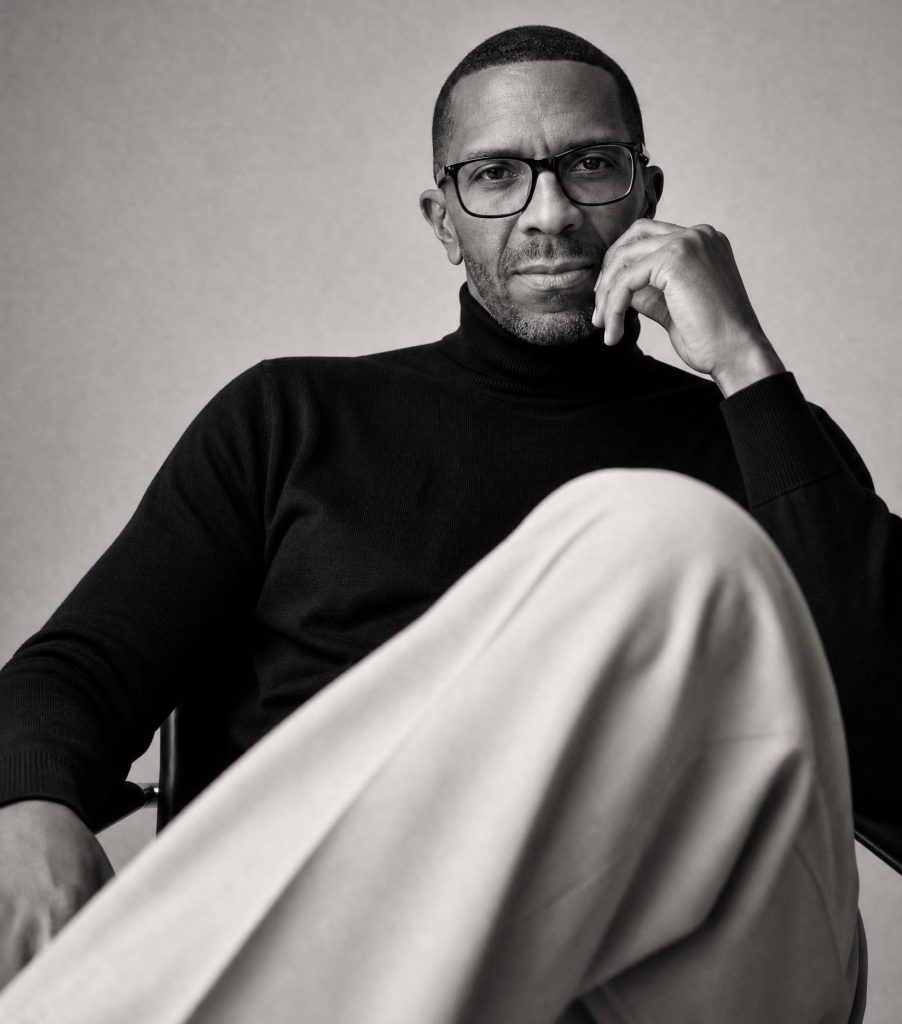
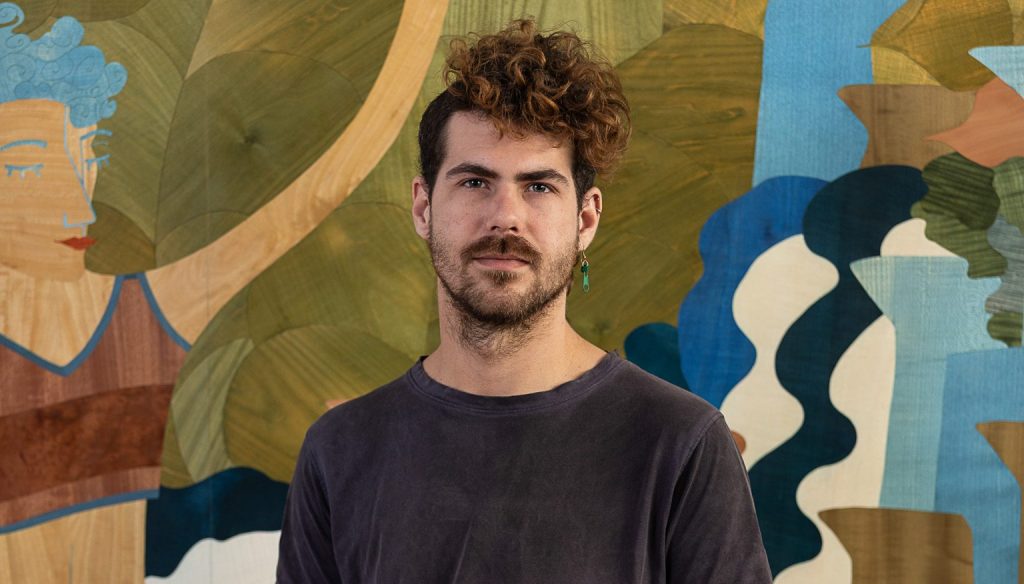
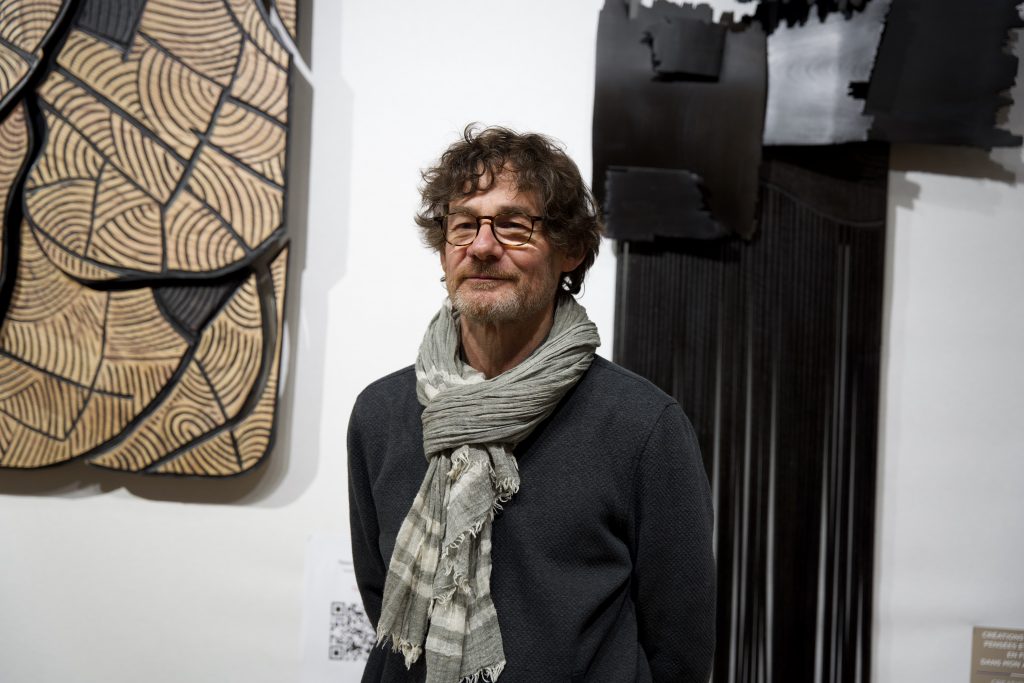
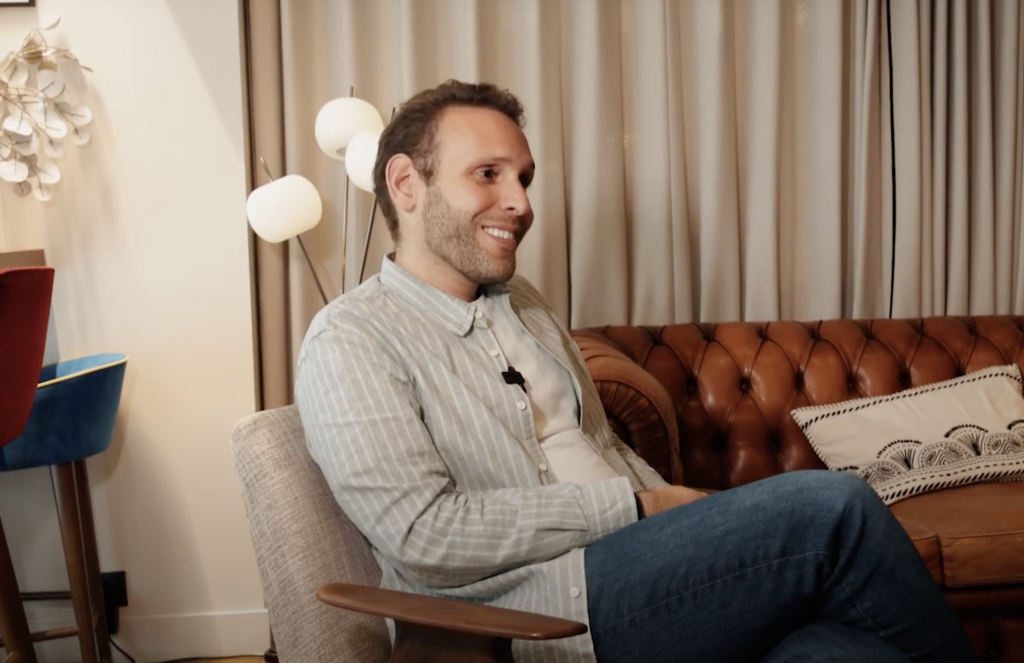
Hailing from Pointe-Noire in Guadeloupe, a region with a long history of woodworking, Charlie Mamie went on to study at the École Boulle and the ENSAD, where he developed his unique approach to working with wood. Having trained as a cabinetmaker and furniture designer, he founded and ran the Answerdesign studio for sixteen years. He creates unique pieces where marquetry meets sculpture, with every piece of furniture telling a story. Teaching artistic cabinetmaking has also placed the passing on of craftsmanship at the heart of his career. “I have never wanted to separate technique from storytelling.”
Charlie Mamie ; Answerdesign
Charlie Mamie was born in Basse-Terre, Guadeloupe. His relationship with wood began at a very early age in Pointe-Noire, in the family workshop, where he watched his father and grandfather transform the material. It was from this visual apprenticeship that his vocation was born. He obtained a CAP in joinery and interior fitting, followed by a BEP in wood and associated materials, and then a vocational baccalaureate in cabinetmaking. Next came the entrance exams for the École Boulle in Paris and the École nationale supérieure des Arts décoratifs (ENSAD) in the furniture design department, which he passed with flying colours. Two institutions, two cultures. At the École Boulle, he learnt about techniques and materials, and at the ENSAD he learnt to design objects and spaces. This progression shaped his entire career, from wood shavings to concept, without ever severing the connection between hand and idea.
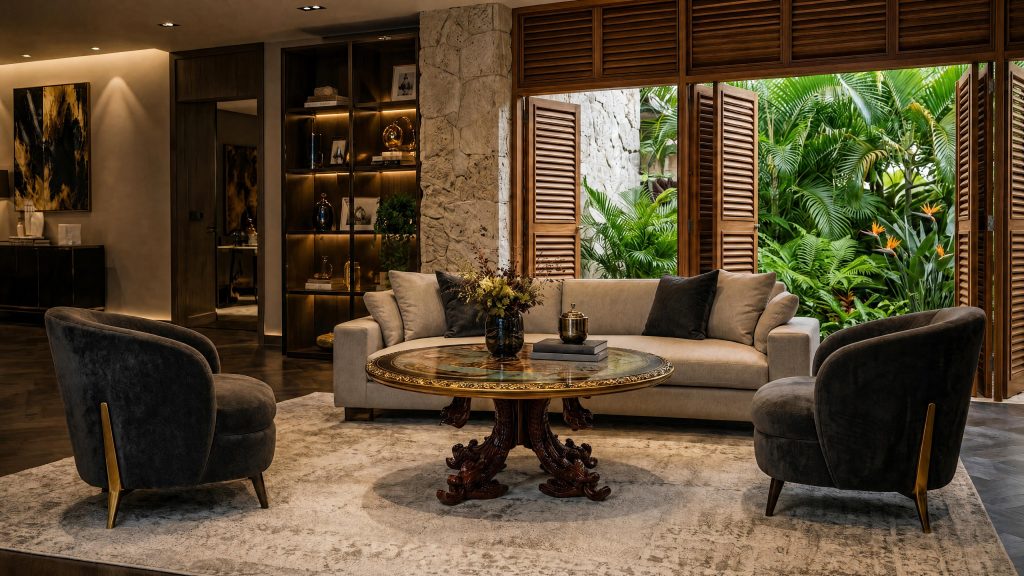
His first commission came after his time at the École Boulle: a marquetry table for the Guadeloupe region. He named it ‘Karukera’, after the name that the Amerindians gave to Guadeloupe: ‘the island of beautiful waters’. This unique piece evokes the island’s maritime history and openness to the world. Several craft skills come together in this piece: furniture design, decorative marquetry, and carving the base. For Charlie Mamie, this table encapsulates his approach of starting with material and traditional crafts before moving towards design and overall conception. “The craft,” he says, “must be mastered perfectly and serve a purpose, an identity, a function.” The Karukera table is now part of the Guadeloupe Region’s collection. Along with Ondine, it remains one of the pieces closest to his heart.
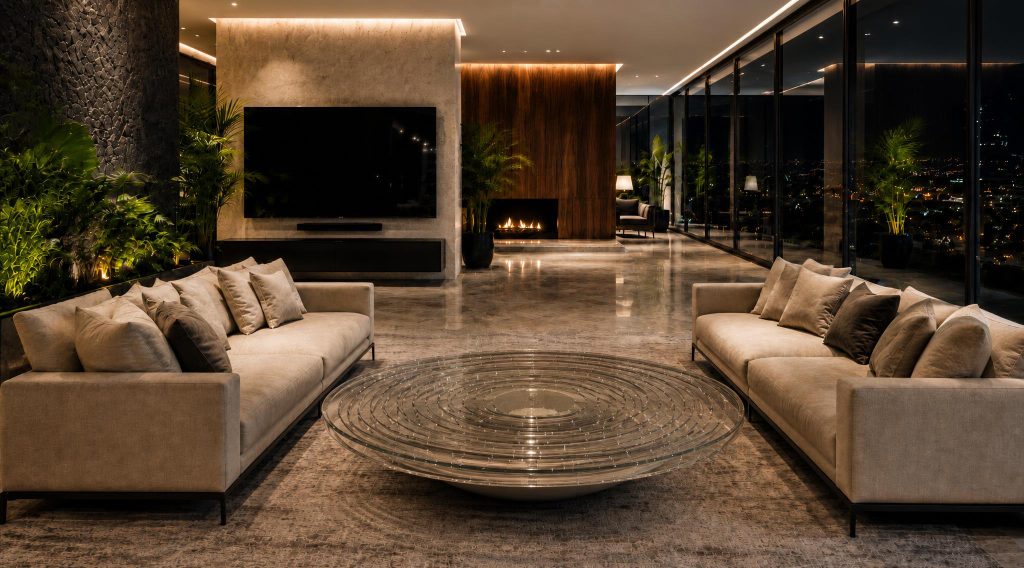
Charlie Mamie designed Ondine at ENSAD. It was a graduation project based on a single image: a drop of water. He drew on its undulations to design a double-layered tabletop. The first flat surface holds the tableware and envelops a fully undulating slab whose central dip — the fall of the drop — meets the base. For his final presentation, he created a 3D animation in 3DS Max which traces the project’s genesis from the drop of water to the table set within an interior. The jury praised both the object itself and the narrative surrounding it. Subsequently, the piece paved the way for private commissions, through which he was able to refine his design and process.
Ondine – Table basse ; Charlie Mamie – Answerdesign
For Charlie Mamie, a piece of furniture starts with a conversation. Before considering the object itself, he seeks to understand the origins of the request: where the piece will be placed, how it will be used, the client’s tastes, and their family environment. Materials and aesthetics come later. To make an idea tangible, he draws. First comes a freehand sketch, drawn in a minute or two while the client speaks, without interrupting the flow of the conversation. This is followed by 3D visuals. For those who find it difficult to visualise things based on words alone, the line and the image help them to do so. This method, learnt in part at ENSAD, puts dialogue at the heart of the project. It also explains Charlie Mamie’s loyalty to the sketch: it is warmer than a computer-generated image and bears the designer’s personal touch.
Charlie Mamie ; Answerdesign
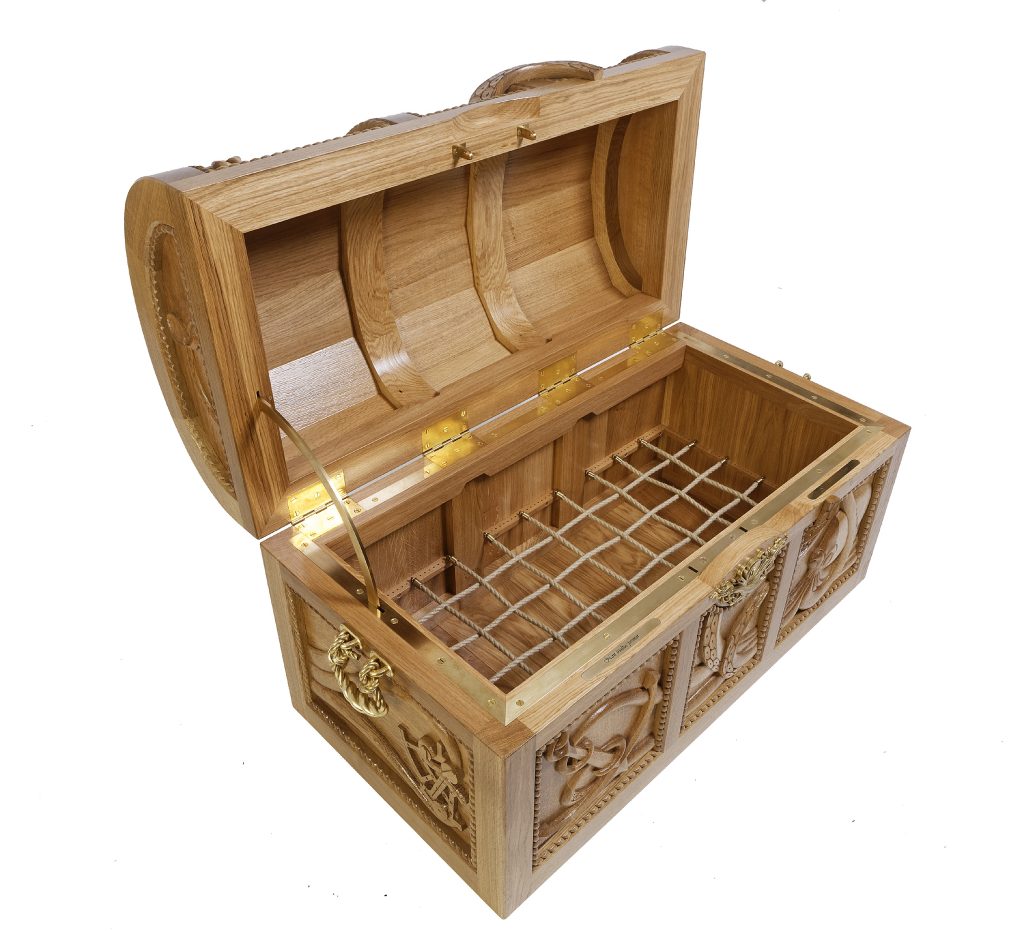
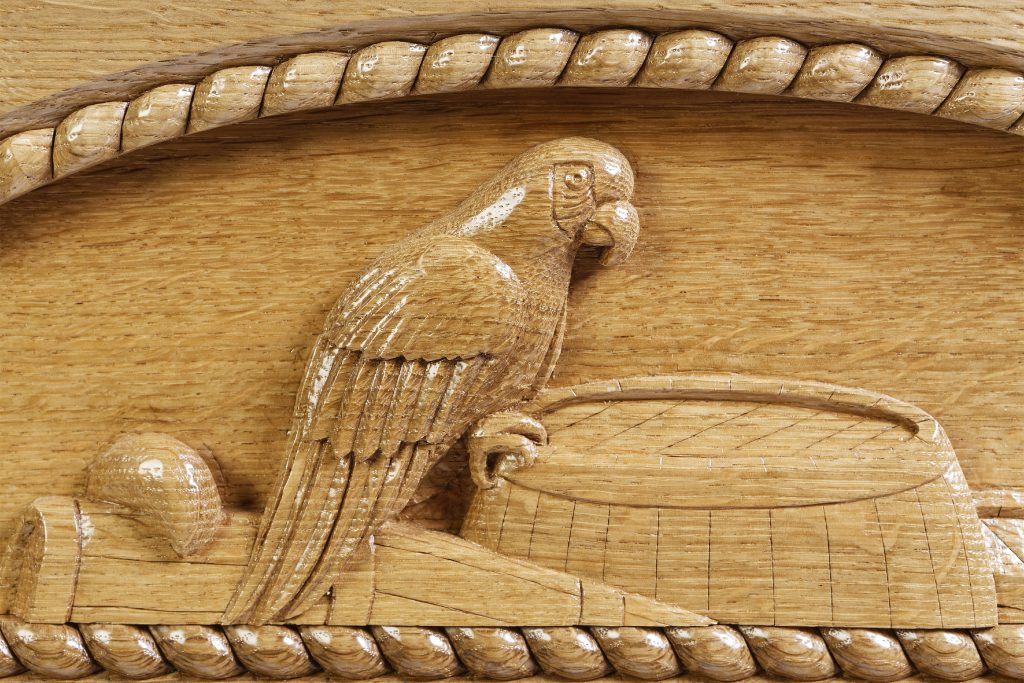
Cabinets finished in veneer, shagreen or leather, console tables, spirits cabinets, seating and bedroom furniture. Charlie Mamie’s design vocabulary remains wide-ranging. One piece epitomises his penchant for storytelling: a solid oak spirits cabinet, entirely hand-carved and commissioned by a Geneva-based client who dreamt of a pirate’s chest. The handles are reminiscent of rope, and the fittings were made to measure. The piece shifts the focus from storage to display. This project establishes a dialogue between sculpture, cabinetmaking, and metalwork, all the while maintaining the unity of the whole. For each of his projects, Charlie Mamie draws on a network of craftspeople specialising in everything from surface finishing to chiselling. A common thread runs through his pieces: a sensitivity to specific materials, such as solid or veneered ebony and shagreen, and a desire for his furniture to tell a story.
Charlie Mamie ; Answerdesign
Passing on his knowledge is central to Charlie Mamie’s profession. He has taught artistic cabinetmaking at the Lycée de Prony in Asnières-sur-Seine, working with students on CAP and Brevet des Métiers d’Art courses, as well as with adults on training programmes. He believes that these trades cannot be learnt entirely from books. Skill is acquired through hands-on experience and contact with those who have already mastered the craft. The school hosted the latest Île-de-France regional selections for WorldSkills, helping to prepare the raw materials and sitting on the judging panel. Regarding artificial intelligence, he takes a nuanced stance: it is a design tool that should be adopted with discernment, while never forgetting that the material and the craft remain paramount. His students came from a variety of backgrounds, from Peru to Afghanistan, and they enriched the workshop with their different approaches to working with wood.
Charlie Mamie’s career defies easy categorisation. He founded and ran a business for sixteen years, held operational management roles in several organisations and worked as a general contractor, always within the fields of cabinet making and interior design. Answerdesign, founded in 2006, employed up to sixteen people – including architects, interior designers, designers, and cabinetmakers – across Paris and Brie-Comte-Robert. Today, he wishes to utilise his dual background in craftsmanship and operational management in order to tackle new challenges within companies, agencies, or workshops specialising in high-end furniture and craftsmanship. He is guided by one idea: to envision artistic crafts that are demanding, desirable and inclusive. “Preserving craftsmanship,” he says, “does not mean freezing it in time, but giving it the means to endure and appeal to younger generations, ensuring its viability.” Above all, he wants to inspire a passion for the arts and crafts and encourage others to follow in his footsteps.

Février, 2026
Créer avec l’existant, penser avec l’histoire
De l’architecture au design, cette édition explore comment lieux, savoir-faire et matières héritées deviennent terrains de création actuelle.
Janvier, 2026
Le luxe se réinvente.
Finis les logos clignotants, place à une sobriété raffinée, à l’immersion personnelle, à l’excellence artisanale, à la durabilité sensible.
Décembre, 2025
Héritages, gestes contemporains et plaisirs essentiels
Parce que la fête n’est jamais qu’apparence : elle reflète notre manière d’habiter le monde, de transmettre, de fabriquer des souvenirs durables.
ÉDITION #3
Upcycling et kintsugi transforment l’objet contemporain, faisant de la trace, de la réparation et de la matière un langage esthétique.
ÉDITION #3
Artisans et designers donnent une seconde vie aux matériaux anciens, entre création contemporaine, patrimoine et réemploi.
ÉDITION #3
Bunkers, wagons et kiosques renaissent grâce à la création, révélant comment l’art redonne sens aux lieux délaissés.
ÉDITION #2
Un regard transversal sur le quiet luxury à travers des lieux, des objets et des figures qui expriment l’élégance.
ÉDITION #1
Une sélection de marques, architectures, objets et escapades qui donnent corps au sens de la fête.
ÉDITION #3
Usines et gares délaissées deviennent lieux culturels ouverts, où mémoire industrielle et usages contemporains redessinent la ville.
ÉDITION #3
L’audacieuse métamorphose d’un palace parisien
ÉDITION #3
Au cœur du Marais, un lieu discret révèle comment archives, architecture et recherche font dialoguer l’œuvre de Picasso.
ÉDITION #2
Une expérience shopping unique dans un magasin emblématique.
ÉDITION #2
Voyage culinaire et architectural au cœur de la Seine
ÉDITION #2
Dans le 9e arrondissement, un établissement qui invite au quiet luxury
ÉDITION #1
Chante! vient d’ouvrir ses portes. Une invitation à vibrer !
ÉDITION #3
Icône du paysage français, la boîte jaune change de statut et s’invite dans l’univers du design.
ÉDITION #3
L’édition 2026 affirme une vision où artisanat, design et mémoire façonnent l’habitat contemporain, international actuel.
ÉDITION #3
Cent ans après 1925, l’Art déco revient dans nos villes et intérieurs avec géométrie, audace, optimisme.
ÉDITION #3
Depuis plus de deux cents ans, Royal Limoges conjugue porcelaine, savoir-faire industriel et création contemporaine.
ÉDITION #3
Des terrains de sport aux podiums, la sneaker raconte un siècle de mutations culturelles, techniques et stylistiques.
ÉDITION #2
Design, mode, artisanat : des créations où la forme et la matière se répondent avec justesse, loin de tout effet de mode.
ÉDITION #1
Décorations artisanales, calendriers ultra-luxe et pièces de collection pour s’enivrer de joie avant l’heure.
ÉDITION #3
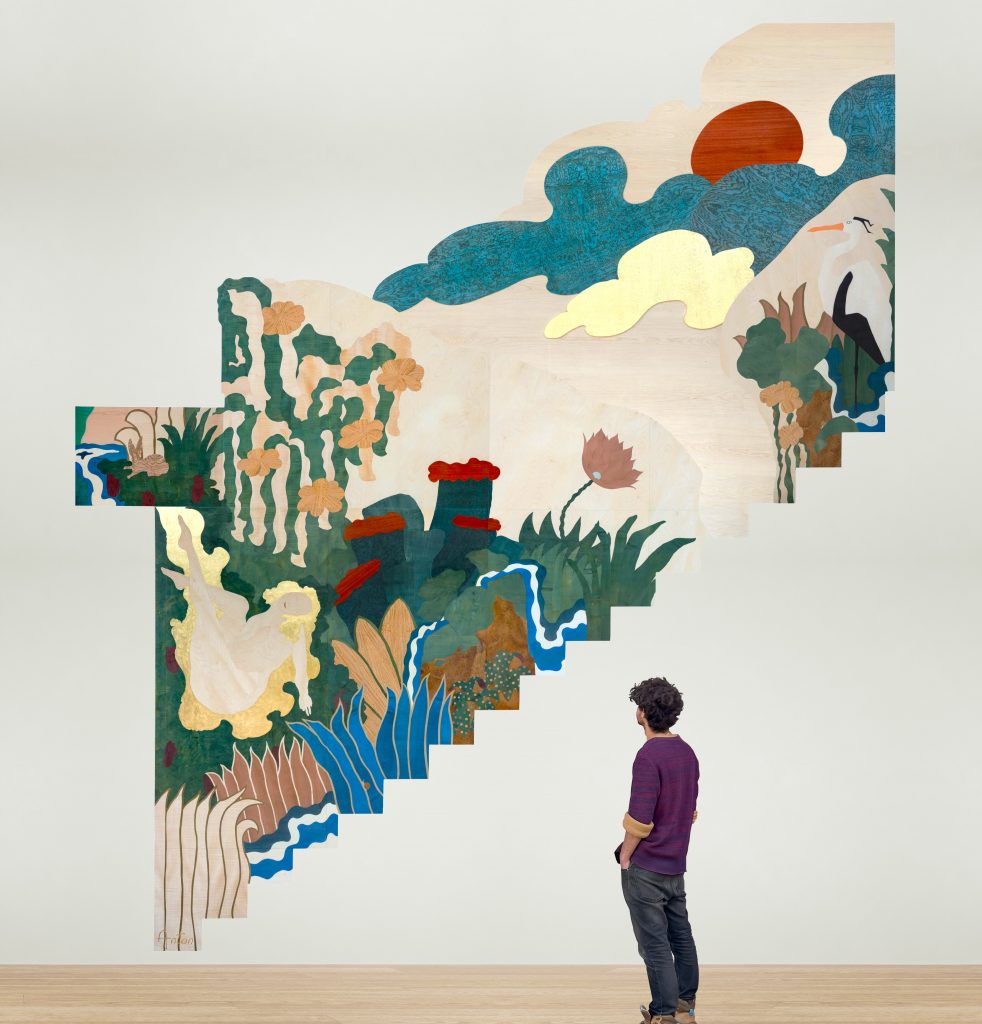
Entre marqueterie monumentale et jungle symbolique, Anton Laborde transforme le bois en récit contemporain poétique engagé.
ÉDITION #3
À Maison & Objet, Thierry Laudren présente des meubles sculptés où fonction, matière et lenteur façonnent une présence.
ÉDITION #3
Jean Nouvel conçoit une architecture attentive aux contextes, où lumière, histoire et usages façonnent chaque projet.
ÉDITION #3
À Lyon, Sophie Morel rénove des lieux historiques en alliant respect du bâti et écriture contemporaine.
ÉDITION #3
Au Centre d’Études Picasso, l’architecte compose une architecture où lumière, géométrie et héritage dialoguent avec précision.
ÉDITION #2
Entretien avec le fondateur d’EDO (European Design Office)
ÉDITION #2
Portrait d’un visionnaire qui transforme l’art de recevoir en expérience totale.
ÉDITION #1
Personnalités, artisans et créateurs qui donnent à la fête sa profondeur humaine.
ÉDITION #3
De Bordeaux au Bassin, art, vignobles et bien-être composent une échappée élégante au cœur de la Gironde.
ÉDITION #2
Vers une région de l’Italie habitée par le temps, où paysages, culture et usages s’accordent dans une continuité rare.
ÉDITION #1
Destinations et rituels qui réinventent la fête, du soleil tropical aux marchés d’hiver.