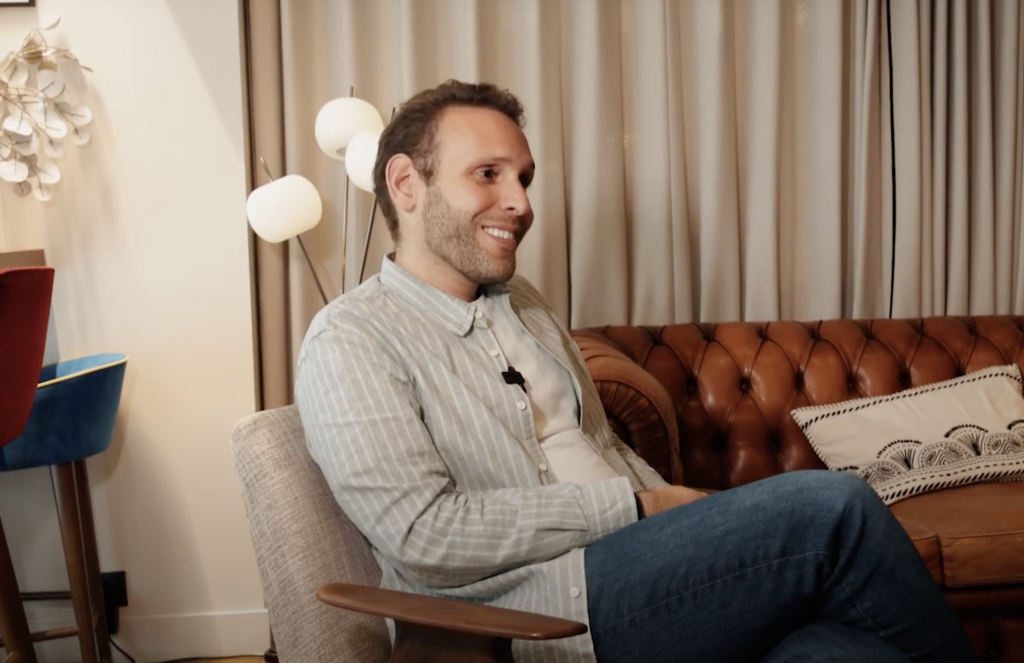
Hidden away at 10 Rue de Bruxelles, just a stone’s throw from the Moulin Rouge, two red lanterns discreetly mark the entrance to a five-star hotel that feels more like a cabinet of curiosities than a lavish palace. Maison Souquet occupies the site of a former brothel that opened in 1905. With twenty rooms and suites, three lounges and a secret spa beneath a starry vaulted ceiling, every corner tells a story of the Belle Époque. Yoni Aïdan, co-founder of the Maisons Particulières Collection, welcomed us into this enchanting setting and recounted the origins of this meticulously designed establishment.
Maison Souquet
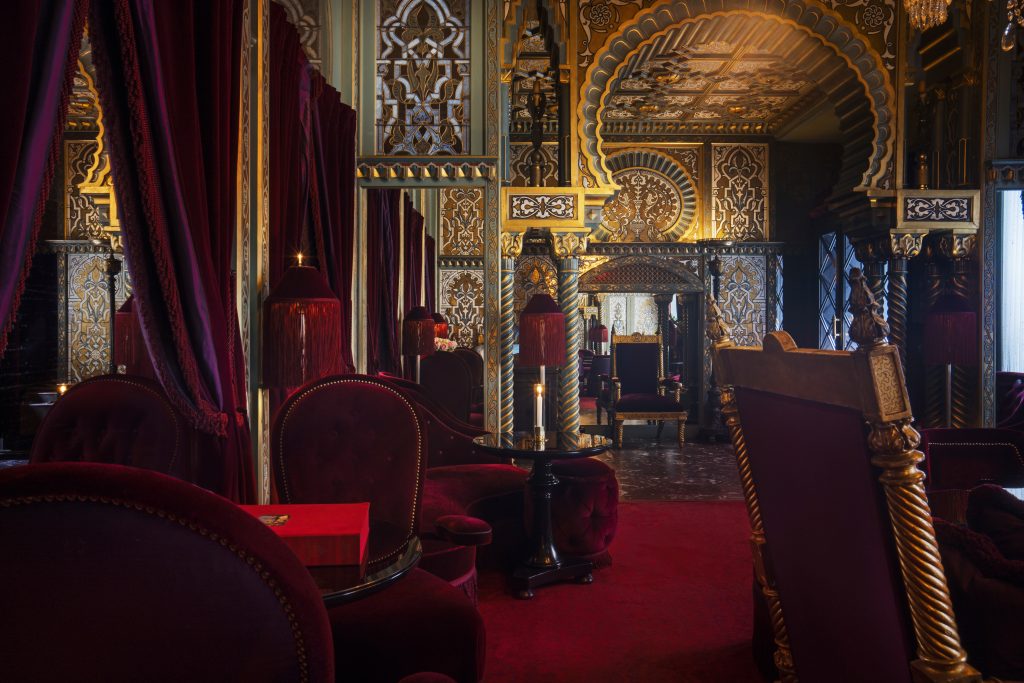
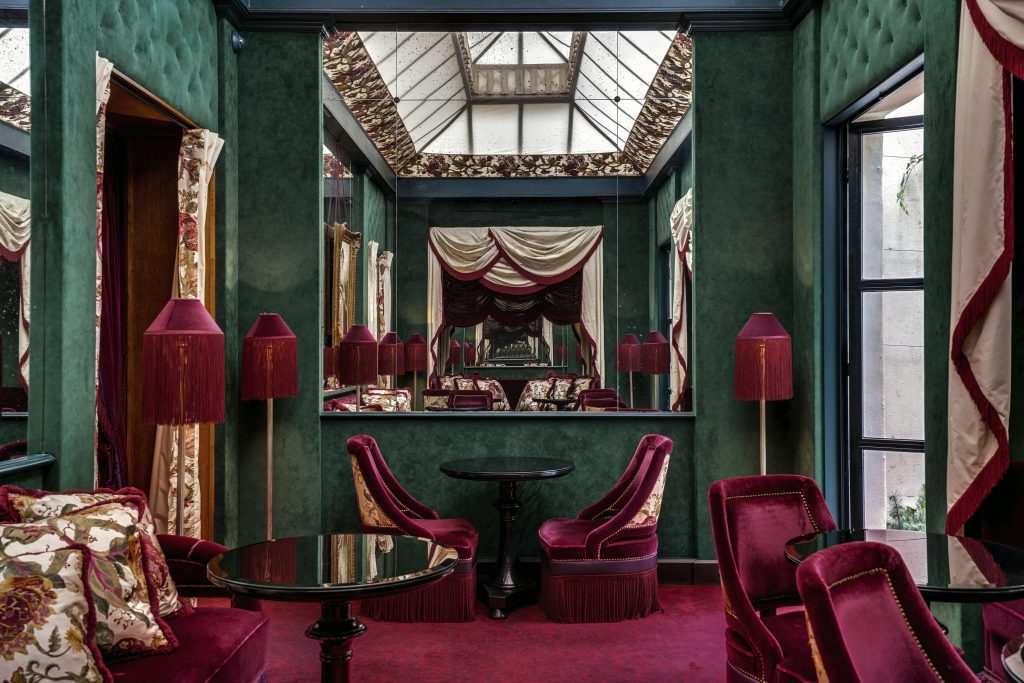
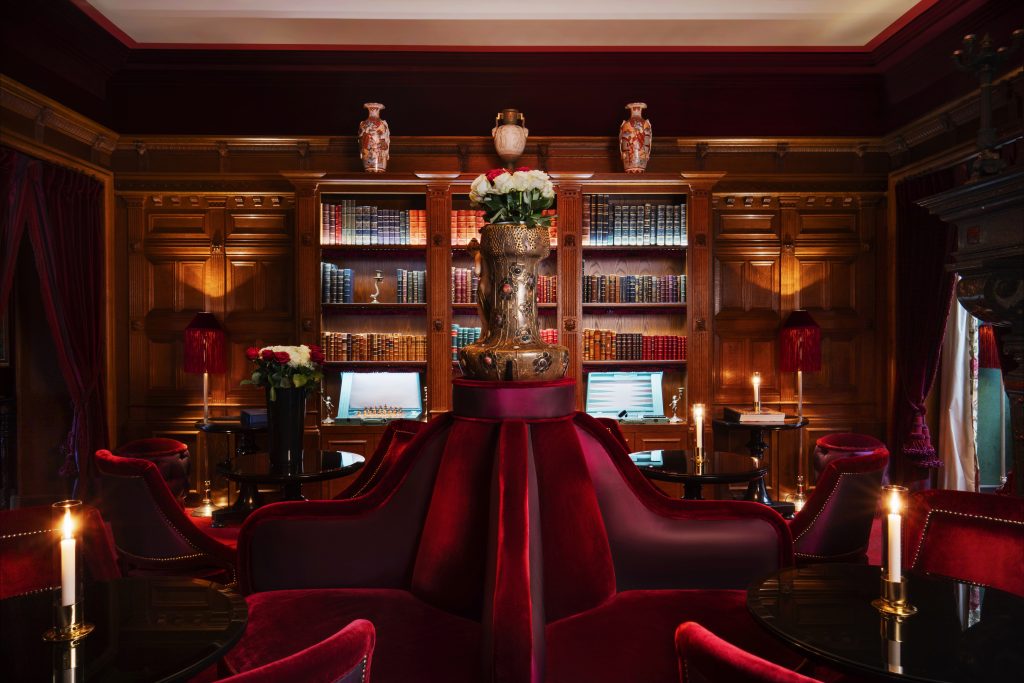
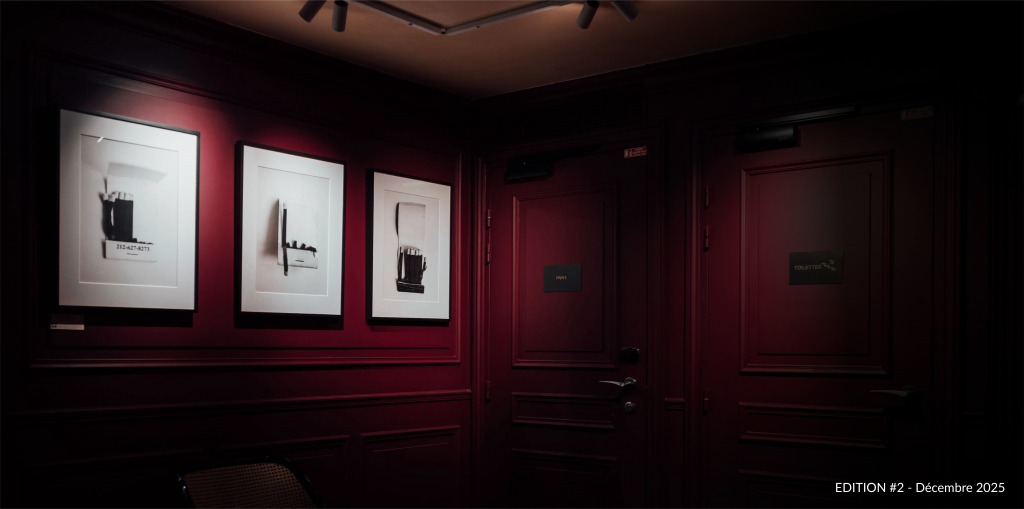
Maison Souquet could simply have evoked the Belle Époque with elegance. However, whilst delving into the archives, Yoni Aïdan and his partner Sylviane Sanz discovered that the building had actually housed a brothel. It opened at the foot of the Butte in 1905 and closed as early as 1907. No photographs from that period have survived. Rather than making things up, the two founders immersed themselves in the plans and architectural codes of such establishments, meticulously documented by historians. “There is an authentic story to tell,” says Yoni Aïdan. ‘The fact that we have drawn on something real adds to the soul of the establishment.’ It is against this backdrop that the three salons have been recreated in keeping with the era’s customs: a men-only club, a reception salon where courtesans received their admirers and a smoking room for a final cigar before dawn.
Maison Souquet
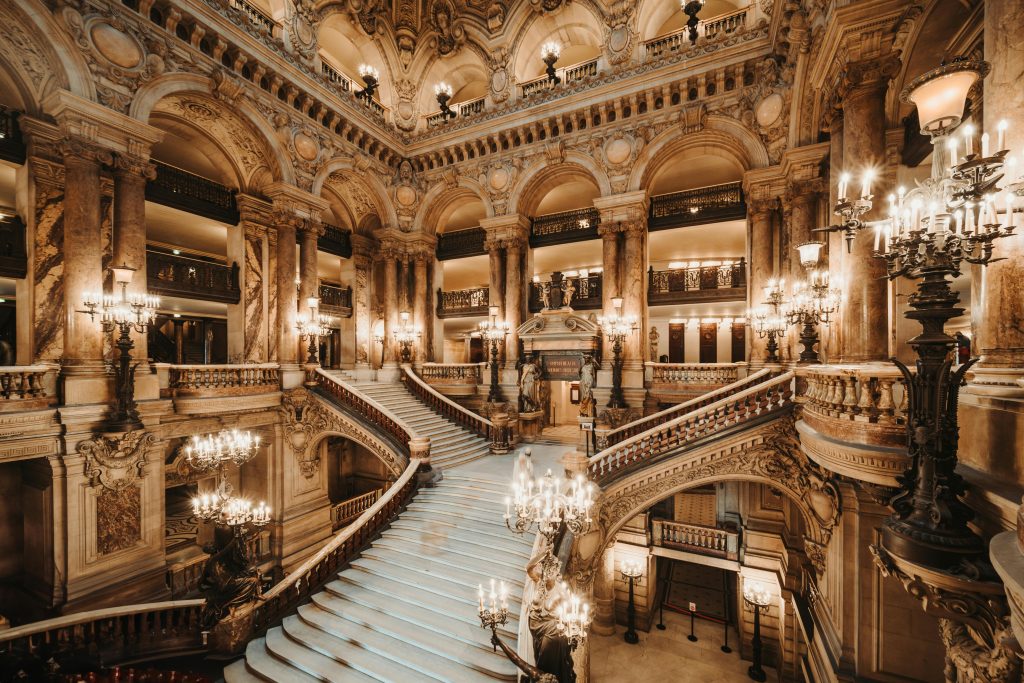
From the moment they enter the first salon, visitors realise that nothing here has been improvised. The carved wood panelling, Cordoba leather and Moorish-style ‘Thousand and One Nights’ enamels were completed in 1895 for a Belgian aristocrat in his Brussels mansion. The city was preparing to exercise its right of pre-emption on the entire collection. However, the founders acquired it just in time, and a team of master carpenters spent six months in the workshop adapting each panel to the dimensions of the Parisian house. The monumental fireplace in the bar and the bronze-framed stained-glass doors connecting the two salons come from the same collection. These doors are one of the project’s most remarkable details. To bring these treasures together, the founders enlisted the help of Laurence Esnol, an art advisor whose expertise and network enabled them to source the décor for the ‘Thousand and One Nights’ lounge, as well as the paintings, sculptures, and many other curios that now adorn the house. Some pieces found their place through a kind of poetic inevitability. Yoni Aïdan points to the chandelier hanging above the rotunda: ‘Its twelve elegant figures were purchased because they made sense in a former house of pleasure.’ And in the wood panelling, eighty-two hand-carved heads of men can be seen. Today, for eternity, these men watch over them.”

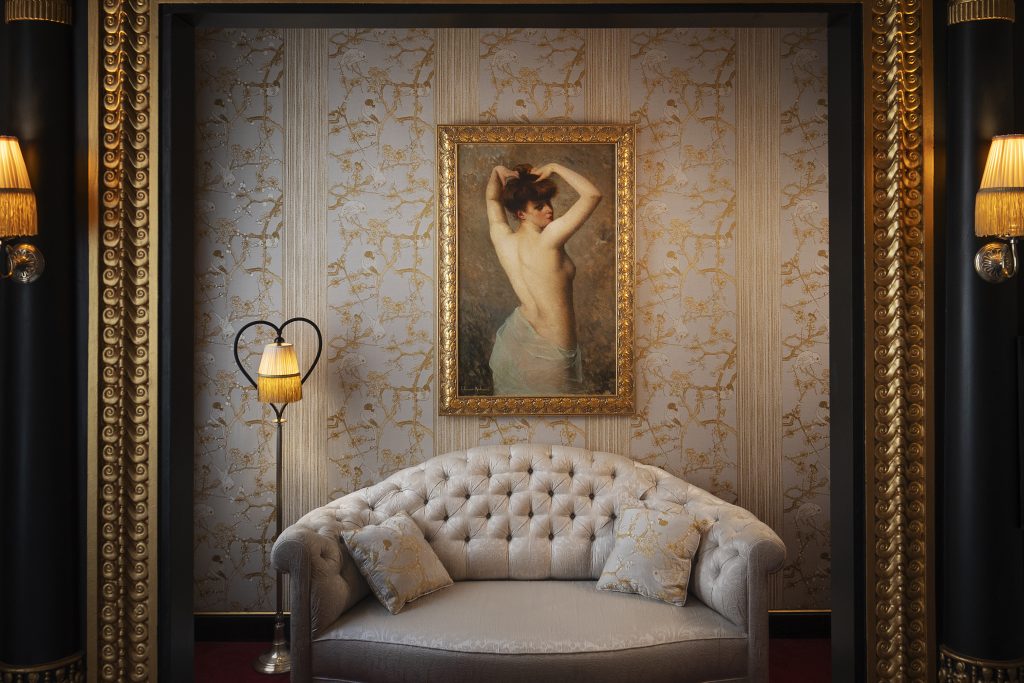
Jacques Garcia has furnished Louis XIV’s private apartments at Versailles and curated the 18^(th)-century furniture galleries at the Louvre. However, when it came to Maison Souquet, his first project with the founders, the interior designer threw himself into the work with a particular intensity. “Jacques Garcia was there every week. We spent hours upon hours together, selecting fabrics room by room and approving every piece. His involvement, his eye for detail and his expertise made all the difference.” He designed each headboard to be a different shape and upholstered them in different fabrics. He also conceived the bespoke furniture and created the heart-shaped lamps, each with a base that varies from room to room. Even the air conditioning remote control is concealed by an embossed leather cover. This meticulous attention to detail is a tribute to the founder’s craftsmen: the joiners at the Sema workshop, the upholsterers at the Atelier des Carmes, the gilders and the metalworkers at Rémy Garnier. ‘This kind of project can only exist thanks to extraordinary craftsmanship.’
Maison Souquet
Each room is named after a figure from the Belle Époque: La Belle Otero, La Païva, Liane de Pougy, Cléo de Mérode and Carmen. Each has its own unique atmosphere. From Empire style to Japonism and from Napoleon III to Art Deco, two thousand metres of fabric and one hundred and twenty different types of cloth adorn these settings. Rita’s room envelops guests in a weave of thousands of peacock feathers. Rose’s room, the smallest, evokes the ‘beautifully bizarre’ that Baudelaire wrote about; it is also the founder’s favourite. “You really feel as though you’re in a jewellery box,” he remarks. The Belle Otero suite features a portrait by Giovanni Costa, which was acquired at auction in the United States two and a half years after the hotel’s opening. The room was waiting for the right painting, and it took that level of patience to track it down.
Maison Souquet
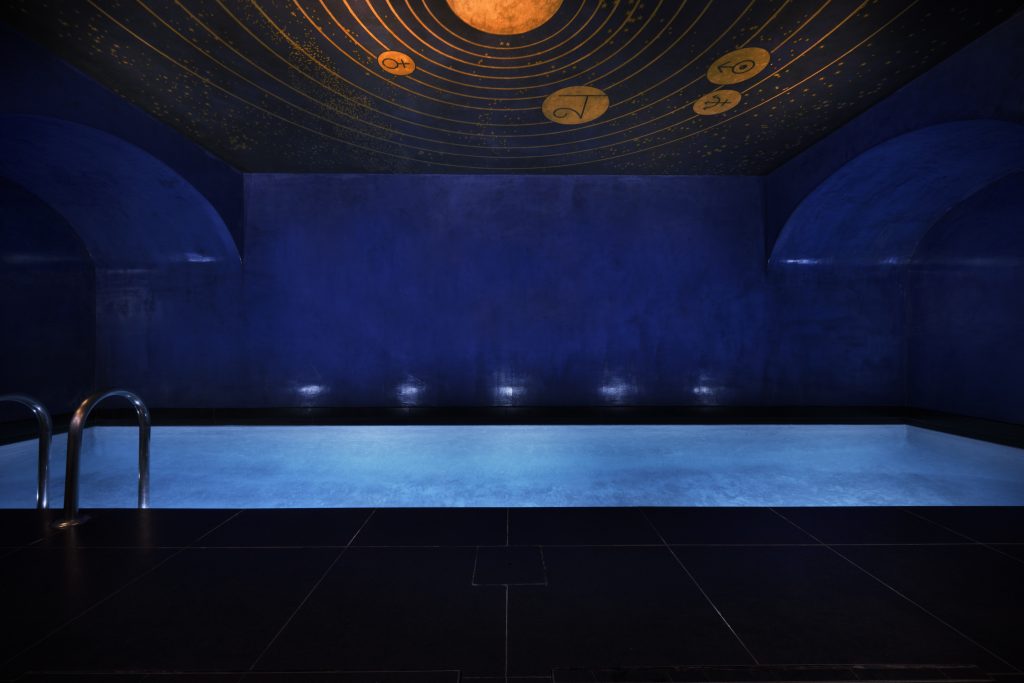
Hidden away in the basement, behind a door that only residents can open, the ‘Salon d’Eau’ at the Maison Souquet is probably its best-kept secret. Jacques Garcia has painted a celestial vault with gold leaf, featuring shining stars against a cobalt-blue sky. Above this is a ten-metre swimming pool that leads into a hammam and a treatment room. Each guest is allocated a private one-hour slot. A guest relations representative collects guests from their room while they are dressed in a bathrobe and slippers, and accompanies them to this space which has been prepared exclusively for them. “This level of attention can truly only be offered to every guest in a very intimate establishment,” emphasises Yoni Aïdan. “Maison Souquet’s private mansion format, with just twenty rooms and suites, allows us to maintain this intimate and deeply personalised relationship with each guest.” This absolute privacy, in a setting of almost unreal beauty, transforms the stay into an enchanted interlude.
WeAreKollectors Magazine
Maison Souquet opened in March 2015. Eleven years on, Yoni Aïdan continues to hunt for treasures, driven by a passion he inherited from his father, who was a collector and gallery owner. The week before our visit, he had acquired the complete works of Shakespeare, translated by François-Victor Hugo, in an 1880 edition at auction. “The Maison Souquet library consists exclusively of editions published before 1905, so as to offer our guests the experience of a library as it might have appeared on the day the Maison was inaugurated by Madame Souquet.” A month earlier, a second painting by Émile Baes had joined the collection, still with no specific destination in mind. ‘We often buy pieces without knowing where they will go. They always find their place.’ Around him, some twenty members of staff share the same passion and commitment to ensuring that every guest’s stay is an unforgettable experience. ‘After eleven years, what makes me most proud is having a team that takes such pleasure in making others happy.’
Février, 2026
Créer avec l’existant, penser avec l’histoire
De l’architecture au design, cette édition explore comment lieux, savoir-faire et matières héritées deviennent terrains de création actuelle.
Janvier, 2026
Le luxe se réinvente.
Finis les logos clignotants, place à une sobriété raffinée, à l’immersion personnelle, à l’excellence artisanale, à la durabilité sensible.
Décembre, 2025
Héritages, gestes contemporains et plaisirs essentiels
Parce que la fête n’est jamais qu’apparence : elle reflète notre manière d’habiter le monde, de transmettre, de fabriquer des souvenirs durables.
ÉDITION #3
Upcycling et kintsugi transforment l’objet contemporain, faisant de la trace, de la réparation et de la matière un langage esthétique.
ÉDITION #3
Artisans et designers donnent une seconde vie aux matériaux anciens, entre création contemporaine, patrimoine et réemploi.
ÉDITION #3
Bunkers, wagons et kiosques renaissent grâce à la création, révélant comment l’art redonne sens aux lieux délaissés.
ÉDITION #2
Un regard transversal sur le quiet luxury à travers des lieux, des objets et des figures qui expriment l’élégance.
ÉDITION #1
Une sélection de marques, architectures, objets et escapades qui donnent corps au sens de la fête.
ÉDITION #3
Usines et gares délaissées deviennent lieux culturels ouverts, où mémoire industrielle et usages contemporains redessinent la ville.
ÉDITION #3
L’audacieuse métamorphose d’un palace parisien
ÉDITION #3
Au cœur du Marais, un lieu discret révèle comment archives, architecture et recherche font dialoguer l’œuvre de Picasso.
ÉDITION #2
Une expérience shopping unique dans un magasin emblématique.
ÉDITION #2
Voyage culinaire et architectural au cœur de la Seine
ÉDITION #2
Dans le 9e arrondissement, un établissement qui invite au quiet luxury
ÉDITION #1
Chante! vient d’ouvrir ses portes. Une invitation à vibrer !
ÉDITION #3
Icône du paysage français, la boîte jaune change de statut et s’invite dans l’univers du design.
ÉDITION #3
L’édition 2026 affirme une vision où artisanat, design et mémoire façonnent l’habitat contemporain, international actuel.
ÉDITION #3
Cent ans après 1925, l’Art déco revient dans nos villes et intérieurs avec géométrie, audace, optimisme.
ÉDITION #3
Depuis plus de deux cents ans, Royal Limoges conjugue porcelaine, savoir-faire industriel et création contemporaine.
ÉDITION #3
Des terrains de sport aux podiums, la sneaker raconte un siècle de mutations culturelles, techniques et stylistiques.
ÉDITION #2
Design, mode, artisanat : des créations où la forme et la matière se répondent avec justesse, loin de tout effet de mode.
ÉDITION #1
Décorations artisanales, calendriers ultra-luxe et pièces de collection pour s’enivrer de joie avant l’heure.
ÉDITION #3
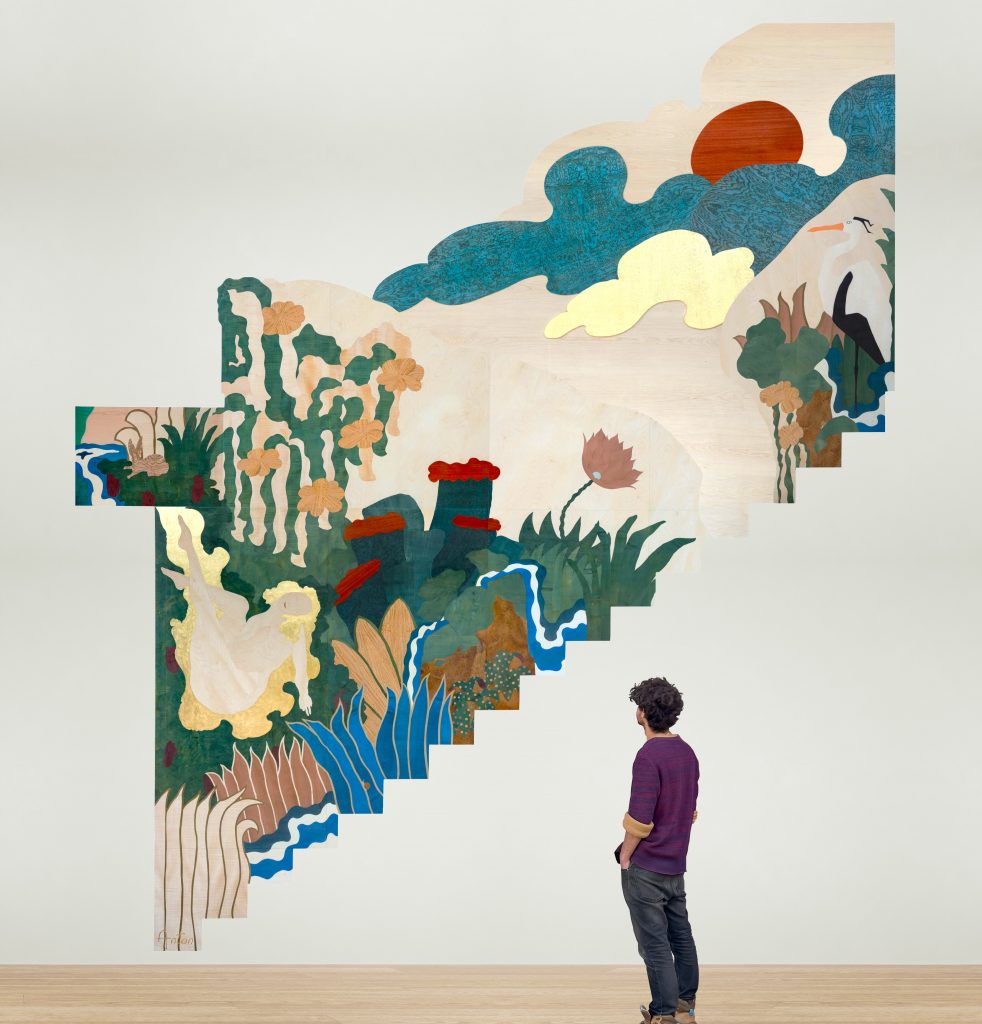
Entre marqueterie monumentale et jungle symbolique, Anton Laborde transforme le bois en récit contemporain poétique engagé.
ÉDITION #3
À Maison & Objet, Thierry Laudren présente des meubles sculptés où fonction, matière et lenteur façonnent une présence.
ÉDITION #3
Jean Nouvel conçoit une architecture attentive aux contextes, où lumière, histoire et usages façonnent chaque projet.
ÉDITION #3
À Lyon, Sophie Morel rénove des lieux historiques en alliant respect du bâti et écriture contemporaine.
ÉDITION #3
Au Centre d’Études Picasso, l’architecte compose une architecture où lumière, géométrie et héritage dialoguent avec précision.
ÉDITION #2
Entretien avec le fondateur d’EDO (European Design Office)
ÉDITION #2
Portrait d’un visionnaire qui transforme l’art de recevoir en expérience totale.
ÉDITION #1
Personnalités, artisans et créateurs qui donnent à la fête sa profondeur humaine.
ÉDITION #3
De Bordeaux au Bassin, art, vignobles et bien-être composent une échappée élégante au cœur de la Gironde.
ÉDITION #2
Vers une région de l’Italie habitée par le temps, où paysages, culture et usages s’accordent dans une continuité rare.
ÉDITION #1
Destinations et rituels qui réinventent la fête, du soleil tropical aux marchés d’hiver.