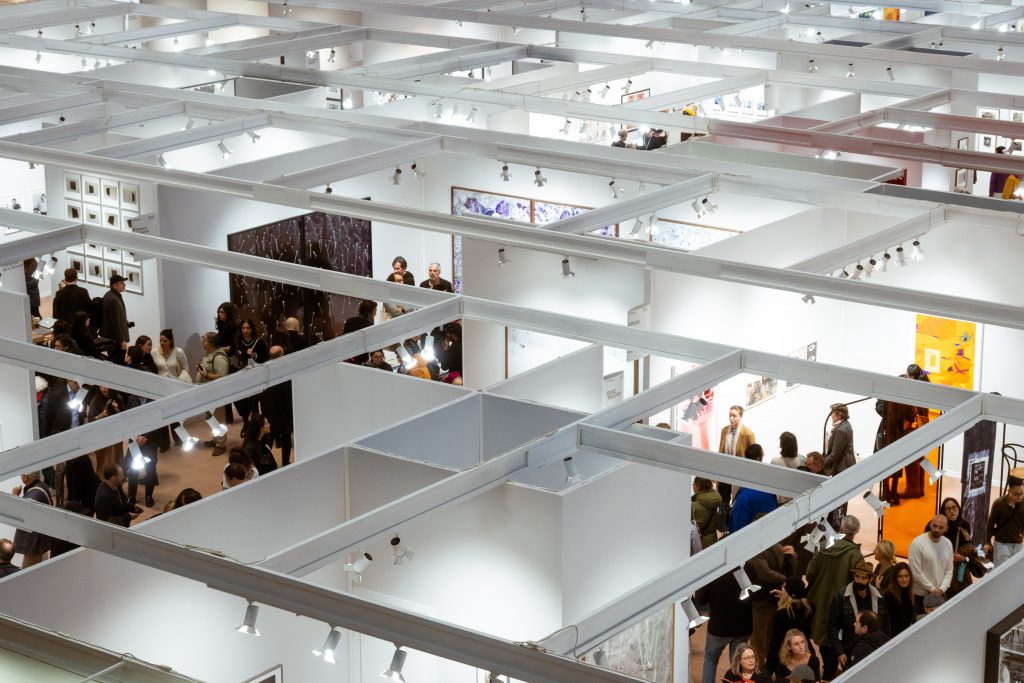
For centuries, the scene remained unchanged: A quiet room, an auctioneer calling the shots and hands raised in silence. Auctions were a kind of ritual: you had to be in the right city at the right time to stand a chance of winning the sought-after item. Sotheby’s, founded in London in 1744, and Christie’s, established in 1766, operated this exclusive model for a long time. But everything has changed in just a few years.
The auction market is currently undergoing a profound transformation, with accelerated digitalisation, democratised access, and technological innovations reshaping a world that was once reserved for a select few.
Pexels
The turning point came in 2020. Forced by the pandemic, the major auction houses improvised and did far more than simply adapt. Sotheby’s introduced multi-camera live auctions, broadcast in high definition across three continents with virtually zero latency. Since then, over thirty million people have watched these sessions from their living rooms. The auction room has become a television studio and every sale a global spectacle.
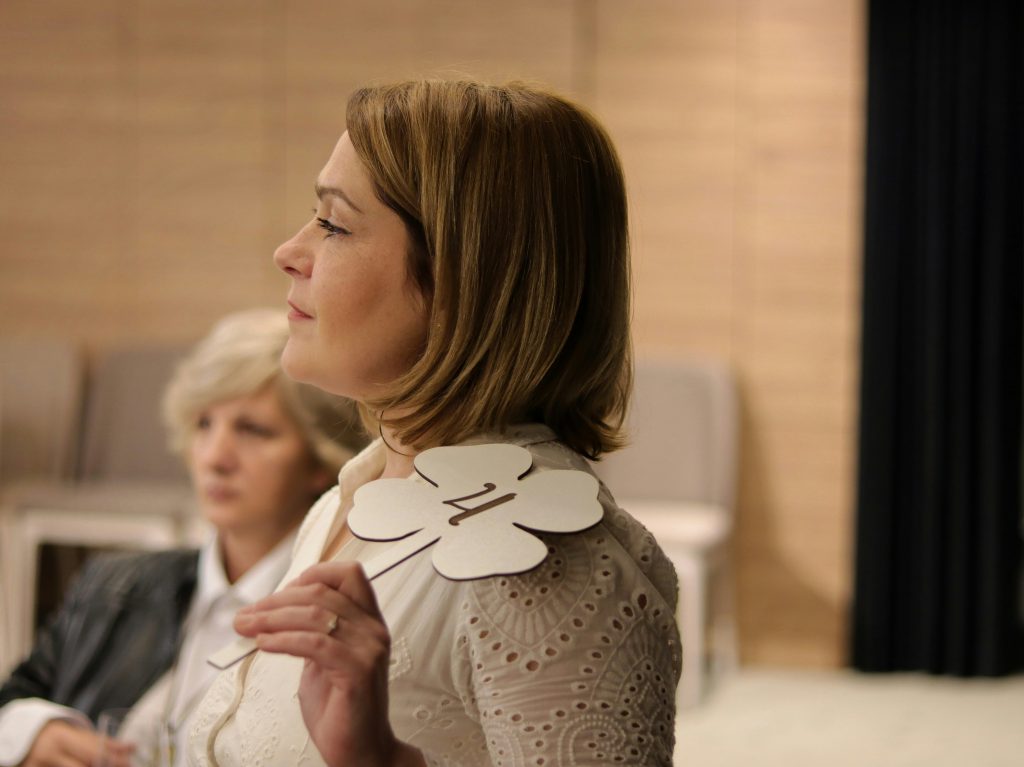
Today, bidders can participate in a variety of ways that would have been unthinkable fifteen years ago. They can raise their paddle in person, bid by telephone with an auction house representative, place proxy bids or log on to follow the sale online in real time and outbid others with a single click. At Sotheby’s, the system automatically extends the closing time of a lot by two minutes if a bid is placed in the final minute, a mechanism that maintains suspense and ensures fairness.
In France, aggregator platforms have accelerated this expansion. Interenchères, Drouot Digital and Agorastore enable people in Strasbourg or Biarritz to participate in sales held in Paris, Bordeaux or Lyon. This trend is confirmed by the global market, with around seventy-five per cent of bids now being placed via a smartphone or tablet. Auctions have moved beyond the gilded salons and into the pockets of millions of buyers.
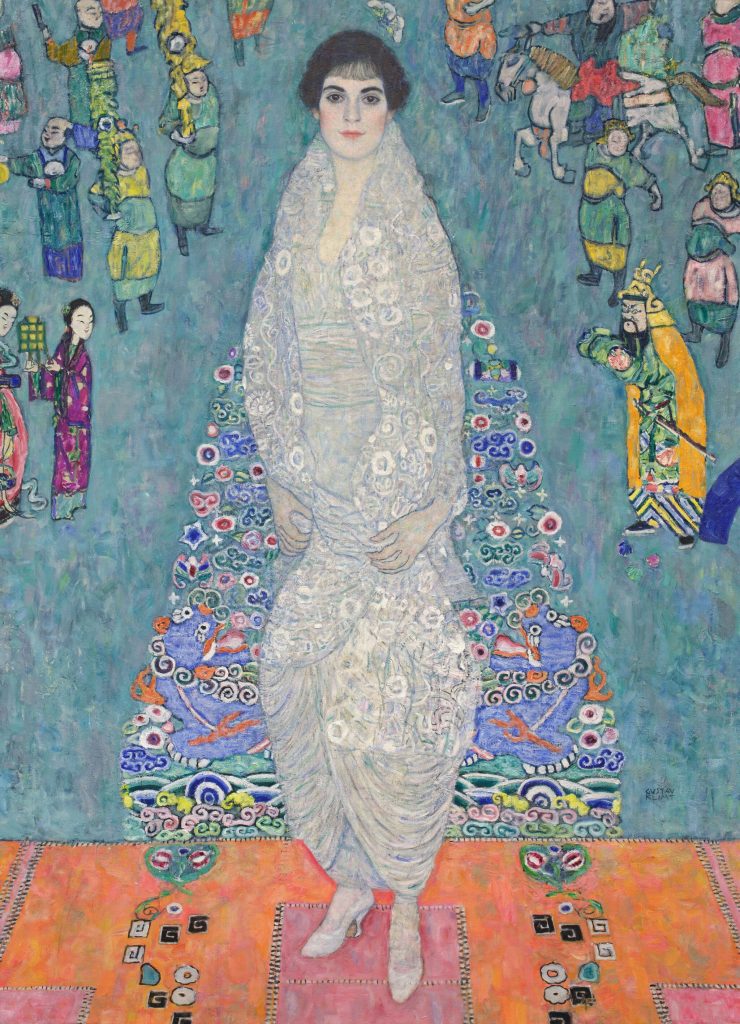
Gustav Klimt Bildnis der Elisabeth Lederer; Wikimedia
Far from lowering the standard of the high-end market, this expansion has actually raised it. The November 2025 season in New York totalled $2.2 billion, with the kind of brilliance that only auctions can produce.
The most spectacular of these was Gustav Klimt’s Portrait of Elisabeth Lederer, from the Leonard A. Lauder collection, which sold at Sotheby’s for $236.6 million after twenty minutes of intense bidding. This price makes it the second most expensive lot ever sold at auction. In the same week, Van Gogh’s Piles of Parisian Novels found a buyer for $62.7 million and Frida Kahlo’s El Sueño (La Cama) soared to $54.7 million. This propelled the Mexican artist to become the highest-valued woman in the history of public auctions. At Christie’s, the Fabergé Winter Egg fetched £22.9 million — a record price for the silversmith.
The same was true in Paris, where auctions were in full swing. In April 2026, Monet’s Vétheuil, Morning View sparked ten minutes of fierce bidding at Sotheby’s before selling for €10.2 million — a record for the artist in France.
During the same week, Christie’s and Sotheby’s combined to raise €182 million, 30 per cent more than in the same period in 2024.
Private sales are gaining momentum. At Christie’s, for example, this segment grew from 800 million dollars in 2019 to 1.5 billion in 2025.
The market is also thriving behind the scenes.

Unsplash
Beyond the digital realm, auctions are venturing into uncharted technological territory. A defining moment came in March 2021 when Christie’s sold Beeple’s ‘The First 5000 Days’ for almost seventy million dollars — the first NFT to be sold by a major auction house. The buyer, Vignesh Sundaresan, paid in cryptocurrency, and the transfer of ownership was recorded on the Ethereum blockchain.
Since then, Sotheby’s has auctioned tokenised Warhols, while Phillips has offered the first multi-generational NFT capable of automatically creating new works. Although the hype surrounding NFTs has died down somewhat, blockchain technology remains very much present in terms of traceability, provenance, and transaction transparency.
Meanwhile, artificial intelligence is making progress in a more low-key but equally decisive arena. Auction houses are using it to refine estimates, personalise recommendations sent to collectors, and detect forgeries. Some platforms use augmented reality to allow potential buyers to visualise a sculpture or painting in their home before placing a bid.
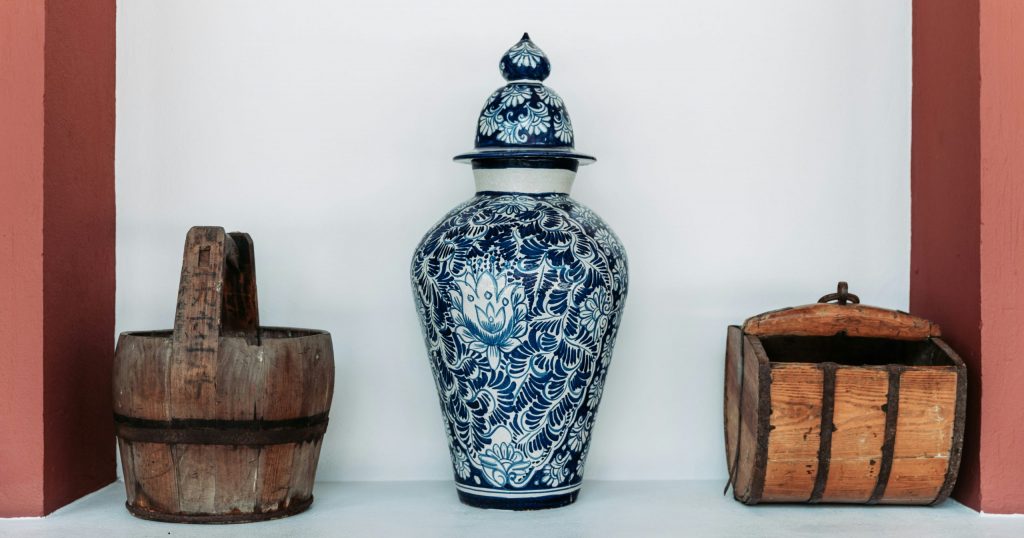
The luxury sector is reaping the full benefits of this trend. Sales of handbags, watches and jewellery have surged by twenty-two per cent at Sotheby’s and seventeen per cent at Christie’s since 2025. The auction market extends far beyond painting to encompass everything that attracts collectors.
Unsplash
Auctions still have the power to create suspense, emotion and surprise. The thrill of the hammer falling and an object changing hands remains the same as it was two centuries ago. The scale has changed, however: the circle of connoisseurs has expanded to a global community, and digital tools have erased geographical boundaries without eliminating the human dimension of face-to-face interaction.
In a world focused on sustainability, auctions also offer hope for the future by giving exceptional objects a second life, passing them from collection to collection and perpetuating an appreciation of beauty across generations. The hammer may have changed shape, but it continues to fall.
Février, 2026
Créer avec l’existant, penser avec l’histoire
De l’architecture au design, cette édition explore comment lieux, savoir-faire et matières héritées deviennent terrains de création actuelle.
Janvier, 2026
Le luxe se réinvente.
Finis les logos clignotants, place à une sobriété raffinée, à l’immersion personnelle, à l’excellence artisanale, à la durabilité sensible.
Décembre, 2025
Héritages, gestes contemporains et plaisirs essentiels
Parce que la fête n’est jamais qu’apparence : elle reflète notre manière d’habiter le monde, de transmettre, de fabriquer des souvenirs durables.
ÉDITION #3
Upcycling et kintsugi transforment l’objet contemporain, faisant de la trace, de la réparation et de la matière un langage esthétique.
ÉDITION #3
Artisans et designers donnent une seconde vie aux matériaux anciens, entre création contemporaine, patrimoine et réemploi.
ÉDITION #3
Bunkers, wagons et kiosques renaissent grâce à la création, révélant comment l’art redonne sens aux lieux délaissés.
ÉDITION #2
Un regard transversal sur le quiet luxury à travers des lieux, des objets et des figures qui expriment l’élégance.
ÉDITION #1
Une sélection de marques, architectures, objets et escapades qui donnent corps au sens de la fête.
ÉDITION #3
Usines et gares délaissées deviennent lieux culturels ouverts, où mémoire industrielle et usages contemporains redessinent la ville.
ÉDITION #3
L’audacieuse métamorphose d’un palace parisien
ÉDITION #3
Au cœur du Marais, un lieu discret révèle comment archives, architecture et recherche font dialoguer l’œuvre de Picasso.
ÉDITION #2
Une expérience shopping unique dans un magasin emblématique.
ÉDITION #2
Voyage culinaire et architectural au cœur de la Seine
ÉDITION #2
Dans le 9e arrondissement, un établissement qui invite au quiet luxury
ÉDITION #1
Chante! vient d’ouvrir ses portes. Une invitation à vibrer !
ÉDITION #3
Icône du paysage français, la boîte jaune change de statut et s’invite dans l’univers du design.
ÉDITION #3
L’édition 2026 affirme une vision où artisanat, design et mémoire façonnent l’habitat contemporain, international actuel.
ÉDITION #3
Cent ans après 1925, l’Art déco revient dans nos villes et intérieurs avec géométrie, audace, optimisme.
ÉDITION #3
Depuis plus de deux cents ans, Royal Limoges conjugue porcelaine, savoir-faire industriel et création contemporaine.
ÉDITION #3
Des terrains de sport aux podiums, la sneaker raconte un siècle de mutations culturelles, techniques et stylistiques.
ÉDITION #2
Design, mode, artisanat : des créations où la forme et la matière se répondent avec justesse, loin de tout effet de mode.
ÉDITION #1
Décorations artisanales, calendriers ultra-luxe et pièces de collection pour s’enivrer de joie avant l’heure.
ÉDITION #3
Entre marqueterie monumentale et jungle symbolique, Anton Laborde transforme le bois en récit contemporain poétique engagé.
ÉDITION #3
À Maison & Objet, Thierry Laudren présente des meubles sculptés où fonction, matière et lenteur façonnent une présence.
ÉDITION #3
Jean Nouvel conçoit une architecture attentive aux contextes, où lumière, histoire et usages façonnent chaque projet.
ÉDITION #3
À Lyon, Sophie Morel rénove des lieux historiques en alliant respect du bâti et écriture contemporaine.
ÉDITION #3
Au Centre d’Études Picasso, l’architecte compose une architecture où lumière, géométrie et héritage dialoguent avec précision.
ÉDITION #2
Entretien avec le fondateur d’EDO (European Design Office)
ÉDITION #2
Portrait d’un visionnaire qui transforme l’art de recevoir en expérience totale.
ÉDITION #1
Personnalités, artisans et créateurs qui donnent à la fête sa profondeur humaine.
ÉDITION #3
De Bordeaux au Bassin, art, vignobles et bien-être composent une échappée élégante au cœur de la Gironde.
ÉDITION #2
Vers une région de l’Italie habitée par le temps, où paysages, culture et usages s’accordent dans une continuité rare.
ÉDITION #1
Destinations et rituels qui réinventent la fête, du soleil tropical aux marchés d’hiver.