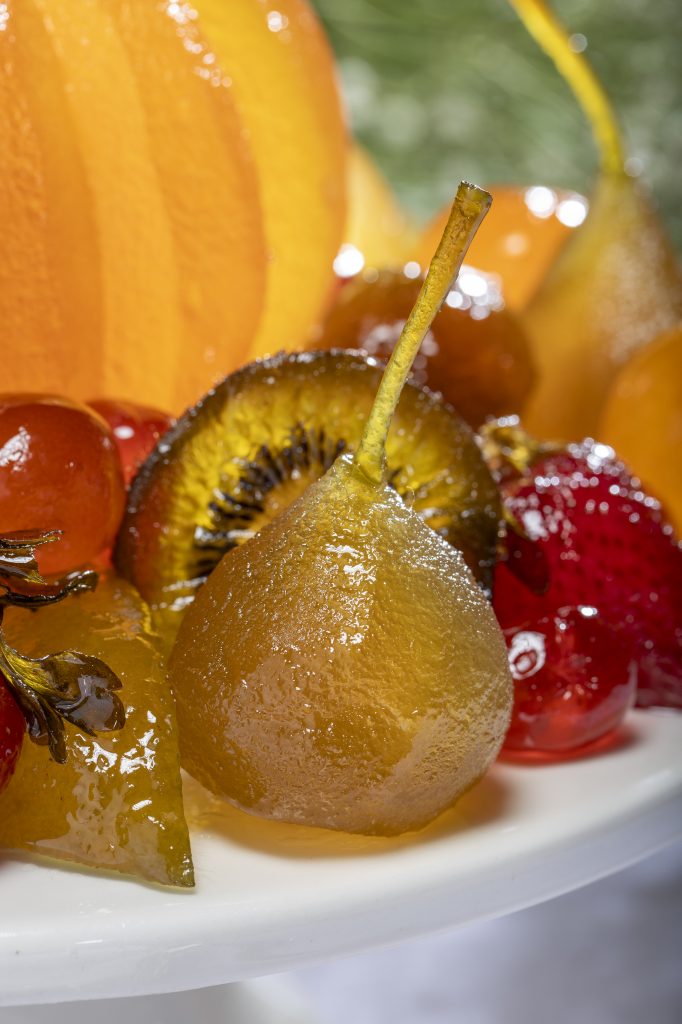
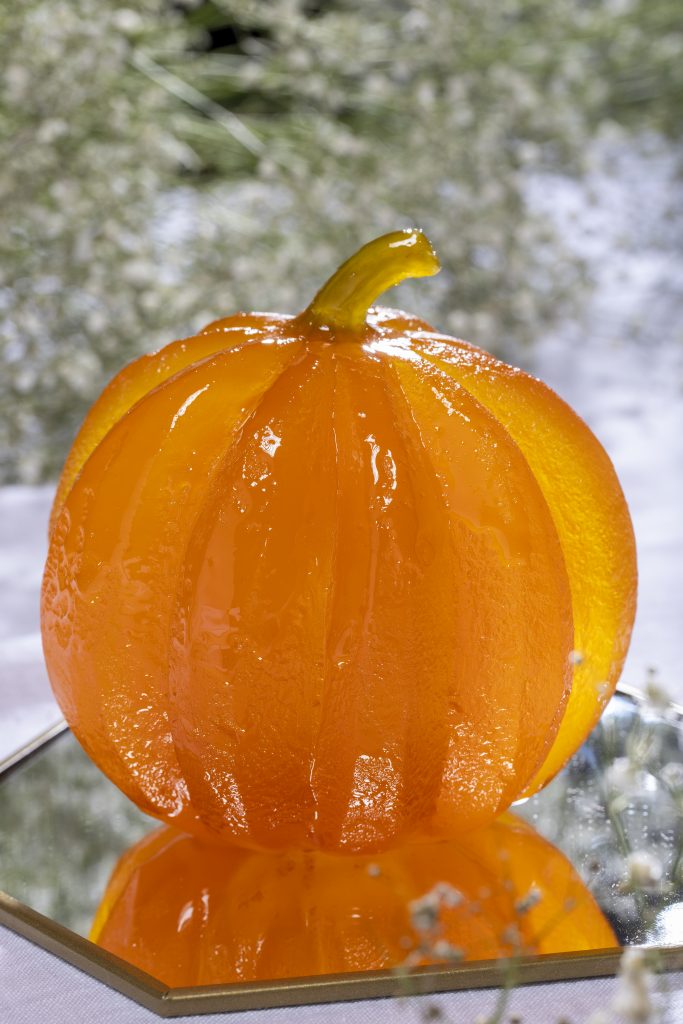
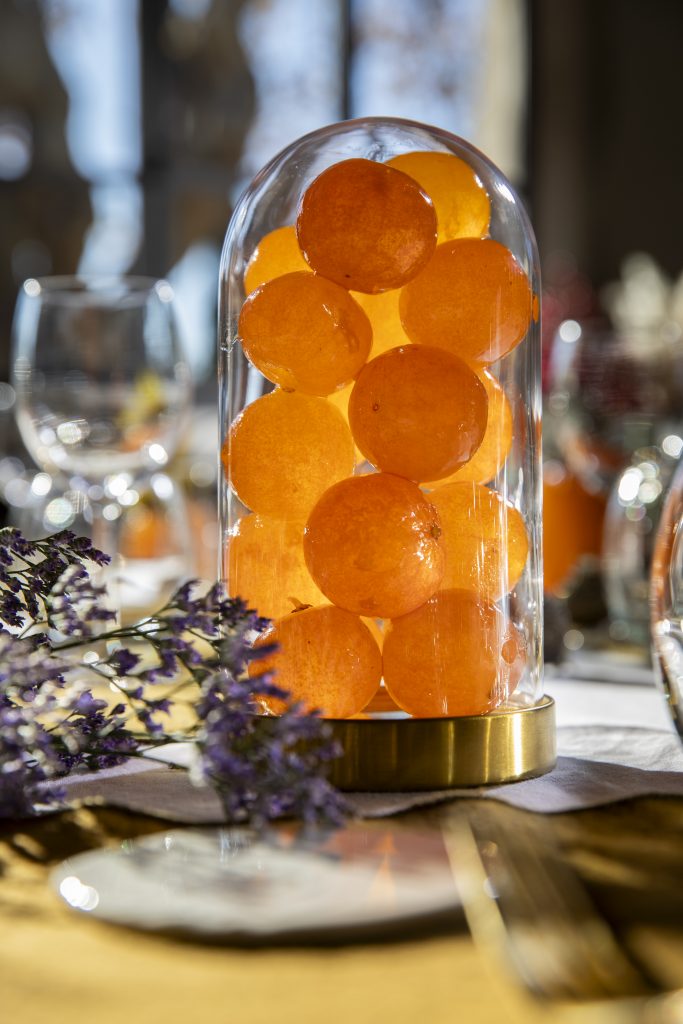
Since 1866, Confiserie Lilamand in Saint-Rémy-de-Provence has been transforming fruit into translucent gems. Pierre Lilamand, the fifth generation in a line of confectioners, took over a dormant business at the age of twenty-five and turned it into one of France’s leading names in candied fruit and artisanal calissons. An almond grower and champion of heritage varieties, he is also the proud recipient of the Entreprise du Patrimoine Vivant label. He is a true embodiment of a craft where patience is not just a virtue, but a hallmark. This is the story of a man who has made time his ally.
Lilamand Confiseur
The story begins in 1866 when Marius Lilamand, a pastry chef and confectioner, opened his workshop in the heart of Saint-Rémy-de-Provence. In 1903, his son Justin bought a former tannery covering 2,000 square metres on the outskirts of the village and transformed it into a confectionery workshop. He devoted himself exclusively to candied fruit made from the harvests of the surrounding orchards.
Then came Georges, followed by Robert, the third and fourth generations, who continued the tradition with the utmost discretion, producing solely for professionals with no logo, shop or name. The children grew up amidst cauldrons and sweet scents. The passing on of the craft began there, unnoticed.
Pierre Lilamand
Pierre Lilamand was twenty-five when he returned to Saint-Rémy in 1996 after spending two years backpacking. Prior to this, he had worked for two years in the family business. He had a realisation along the way: ‘There’s a gem here that needs developing.’ At the time, the confectionery factory had not changed since the turn of the century. It had terracotta floor tiles, weathered walls and intact production equipment, as well as unrivalled product quality — but it lacked a brand identity and retail outlets.
Pierre restored the buildings without altering the recipe. Within three years, he had given the business a name and a logo, breathing new life into it. Buoyed by the success of several trade fairs, he opened the first shop within the factory itself in 2000. Lilamand Confiseur now caters directly to food lovers whilst continuing to supply chefs and pâtissiers.
Lilamand Confiseur
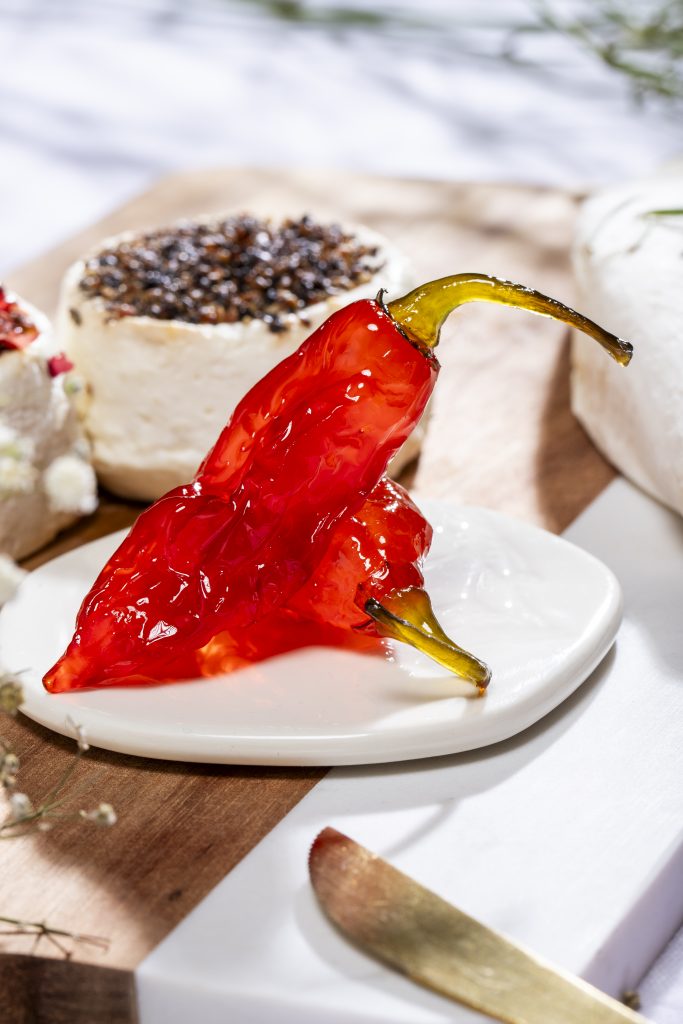
The principle is an ancient one. It was Nostradamus, a Saint-Rémy native, who recorded the definitive recipe for candied fruit in the 16^(th) century: preserving with sugar. At Lilamand, the process remains the same. The fruit is peeled by hand (ten minutes per melon, down to the millimetre), blanched, softened in water, and then immersed in a clear syrup. Over three to four weeks, successive cookings in copper cauldrons allow the fruit’s water to evaporate slowly whilst the syrup penetrates right to the heart of the flesh.
The confectioner tastes, adjusts and observes. Each piece of fruit has its own pace, depending on its variety and ripeness. Nothing is mechanised; it is all a matter of precision and intuition. This skill, this method of peeling and monitoring the cooking process, is as much a part of Lilamand’s identity as a signature. The result is translucent, melt-in-the-mouth fruit that retains its shine and original flavour.

Lilamand Confiseur
The cornerstone of the recipe is sourcing: good quality, good variety and good ripeness. Pierre Lilamand goes to great lengths to find fruit that is ideal for candying, such as pink apricots from Provence, Claude Blanchet pears known as ‘Saint-Jean’, and Ancien Cantaloup melons, also from Provence. These heirloom varieties are rarely grown anymore and he buys them directly from producers at harvest time.
An unexpected phenomenon has occurred: farmers who still own orchards of these varieties have started growing them again, safe in the knowledge that Lilamand will buy them. Thus, the confectionery has helped to revive sectors that were threatened with extinction. In 2010, Pierre was awarded the Order of Agricultural Merit in recognition of this conservation work, carried out in collaboration with the Provençal farming community.
Lilamand Confiseur
In 2008, the Aix-based company decided to stop making its own candied fruit for its calissons. Like others, it was forced to source industrial products, resulting in a loss of quality. Pierre saw this as an opportunity. He purchased traditional equipment, including a granite roller mill to crush almonds and candied melons together, and started producing calissons in 2009.
The traditional recipe uses 50% fresh almonds and 50% home-candied melon and oranges, bound together by a confectionery syrup. There is no unnecessary sugar or bitter almonds, as found in most calissons produced by manufacturers who attempt to flavour their products, which have effectively become almond pastes. The result is a very fruity calisson where the flavour of the almonds comes through first, followed by the subtle aromas of candied melon. It was an instant success. In 2013, when the workshop had become too small, Pierre built a 1,300-square-metre factory dedicated to calisson production on a 7,200-square-metre site in Saint-Rémy-de-Provence.
Pierre Lilamand was faced with the difficulty of sourcing sufficient quantities of Provençal almonds. He took a radical decision. In 2015, he ordered 2,150 Lauranne almond trees and planted them across nine contiguous hectares facing the Alpilles in Maillane — the birthplace of Frédéric Mistral — two kilometres from the calisson factory in November 2016. Everything is right on the doorstep!
The first harvest took place in August 2020. By 2024, the orchard was producing 35 tonnes of shelled almonds. Pierre has set up a shelling facility and prunes the trees himself, giving him complete control from orchard to calisson. He admits that driving a tractor at five kilometres per hour forces him to slow down and take in his surroundings. He is discovering another trade here, but one that still involves taking the long view so that things are done properly.
Lilamand Confiseur
Pierre Lilamand is now in his fifties. His wife Sophie oversees the team and is involved in every decision. Together, they run a business with around twenty employees: eight at the candied fruit factory, six in the calisson workshop and the rest split between the shops in Saint-Rémy-de-Provence and L’Isle-sur-la-Sorgue and the offices.
Their children, Lola and Romain, are both at business school. Pierre encourages them to follow their own path, free from any pressure. He himself hadn’t necessarily planned to take over the business. Whether the sixth generation will write the next chapter remains to be seen.
Lilamand Confiseur
Having been awarded the ‘Entreprise du Patrimoine Vivant’ label and honoured with the title of ‘Maître Artisan’, Confiserie Lilamand is looking to the future while maintaining the same high standards. A major project is in the pipeline. Pierre won’t reveal any more details. What we do know is that his latest ambition is to showcase this wonderful craft in an attractive setting where people can see the products being made and experience the ongoing story.
“I took on a sleeping beauty and turned it into what I wanted,” he sums up. At Lilamand, luxury isn’t something you simply declare. It is cultivated slowly and patiently, generation after generation.
Février, 2026
Créer avec l’existant, penser avec l’histoire
De l’architecture au design, cette édition explore comment lieux, savoir-faire et matières héritées deviennent terrains de création actuelle.
Janvier, 2026
Le luxe se réinvente.
Finis les logos clignotants, place à une sobriété raffinée, à l’immersion personnelle, à l’excellence artisanale, à la durabilité sensible.
Décembre, 2025
Héritages, gestes contemporains et plaisirs essentiels
Parce que la fête n’est jamais qu’apparence : elle reflète notre manière d’habiter le monde, de transmettre, de fabriquer des souvenirs durables.
ÉDITION #3
Upcycling et kintsugi transforment l’objet contemporain, faisant de la trace, de la réparation et de la matière un langage esthétique.
ÉDITION #3
Artisans et designers donnent une seconde vie aux matériaux anciens, entre création contemporaine, patrimoine et réemploi.
ÉDITION #3
Bunkers, wagons et kiosques renaissent grâce à la création, révélant comment l’art redonne sens aux lieux délaissés.
ÉDITION #2
Un regard transversal sur le quiet luxury à travers des lieux, des objets et des figures qui expriment l’élégance.
ÉDITION #1
Une sélection de marques, architectures, objets et escapades qui donnent corps au sens de la fête.
ÉDITION #3
Usines et gares délaissées deviennent lieux culturels ouverts, où mémoire industrielle et usages contemporains redessinent la ville.
ÉDITION #3
L’audacieuse métamorphose d’un palace parisien
ÉDITION #3
Au cœur du Marais, un lieu discret révèle comment archives, architecture et recherche font dialoguer l’œuvre de Picasso.
ÉDITION #2
Une expérience shopping unique dans un magasin emblématique.
ÉDITION #2
Voyage culinaire et architectural au cœur de la Seine
ÉDITION #2
Dans le 9e arrondissement, un établissement qui invite au quiet luxury
ÉDITION #1
Chante! vient d’ouvrir ses portes. Une invitation à vibrer !
ÉDITION #3
Icône du paysage français, la boîte jaune change de statut et s’invite dans l’univers du design.
ÉDITION #3
L’édition 2026 affirme une vision où artisanat, design et mémoire façonnent l’habitat contemporain, international actuel.
ÉDITION #3
Cent ans après 1925, l’Art déco revient dans nos villes et intérieurs avec géométrie, audace, optimisme.
ÉDITION #3
Depuis plus de deux cents ans, Royal Limoges conjugue porcelaine, savoir-faire industriel et création contemporaine.
ÉDITION #3
Des terrains de sport aux podiums, la sneaker raconte un siècle de mutations culturelles, techniques et stylistiques.
ÉDITION #2
Design, mode, artisanat : des créations où la forme et la matière se répondent avec justesse, loin de tout effet de mode.
ÉDITION #1
Décorations artisanales, calendriers ultra-luxe et pièces de collection pour s’enivrer de joie avant l’heure.
ÉDITION #3
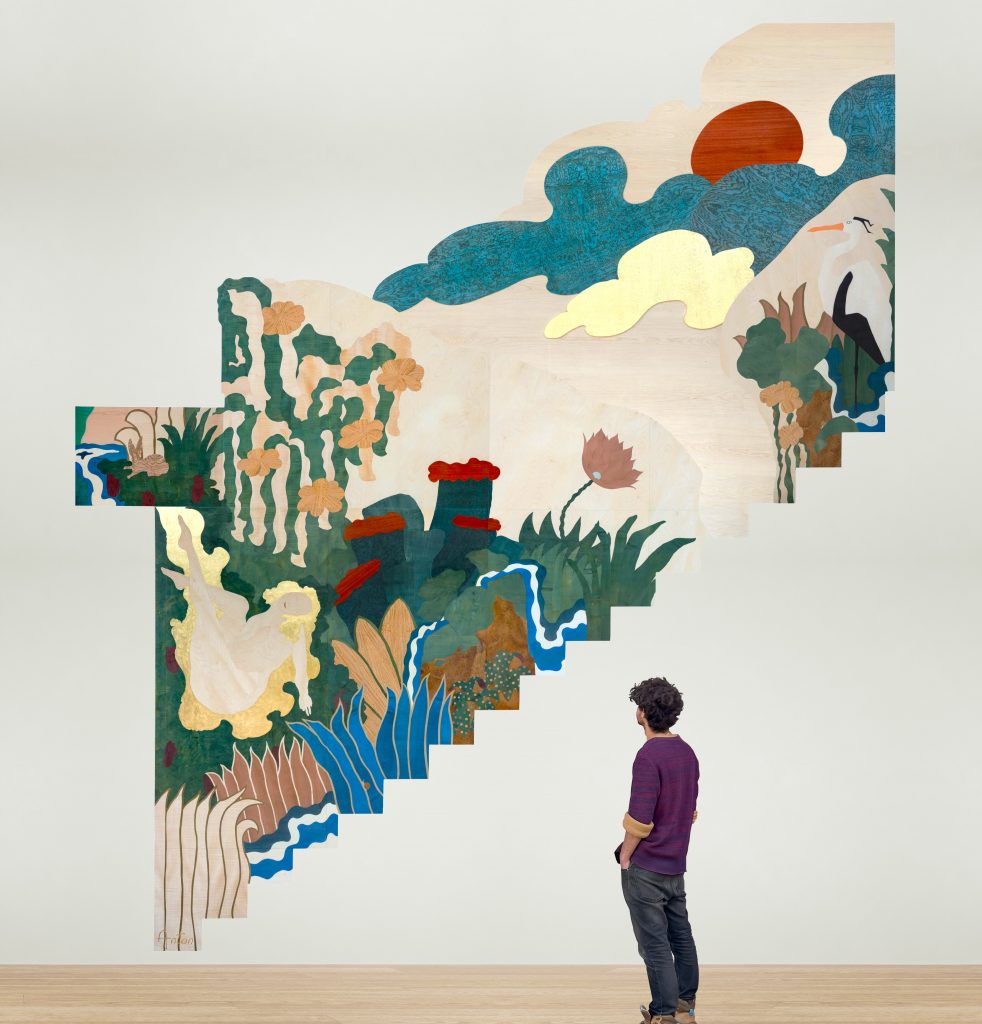
Entre marqueterie monumentale et jungle symbolique, Anton Laborde transforme le bois en récit contemporain poétique engagé.
ÉDITION #3
À Maison & Objet, Thierry Laudren présente des meubles sculptés où fonction, matière et lenteur façonnent une présence.
ÉDITION #3
Jean Nouvel conçoit une architecture attentive aux contextes, où lumière, histoire et usages façonnent chaque projet.
ÉDITION #3
À Lyon, Sophie Morel rénove des lieux historiques en alliant respect du bâti et écriture contemporaine.
ÉDITION #3
Au Centre d’Études Picasso, l’architecte compose une architecture où lumière, géométrie et héritage dialoguent avec précision.
ÉDITION #2
Entretien avec le fondateur d’EDO (European Design Office)
ÉDITION #2
Portrait d’un visionnaire qui transforme l’art de recevoir en expérience totale.
ÉDITION #1
Personnalités, artisans et créateurs qui donnent à la fête sa profondeur humaine.
ÉDITION #3
De Bordeaux au Bassin, art, vignobles et bien-être composent une échappée élégante au cœur de la Gironde.
ÉDITION #2
Vers une région de l’Italie habitée par le temps, où paysages, culture et usages s’accordent dans une continuité rare.
ÉDITION #1
Destinations et rituels qui réinventent la fête, du soleil tropical aux marchés d’hiver.