In the heart of Mali, the world’s largest mud-brick structure survives thanks to an age-old tradition carried out every year by a guild of hereditary masons. The Barey-Ton masters carry on an unparalleled craft: building and rebuilding with mud, straw and shea butter. However, due to climate change, insecurity and modern materials, this expertise, which is listed as endangered world heritage, could die out with the current generation.
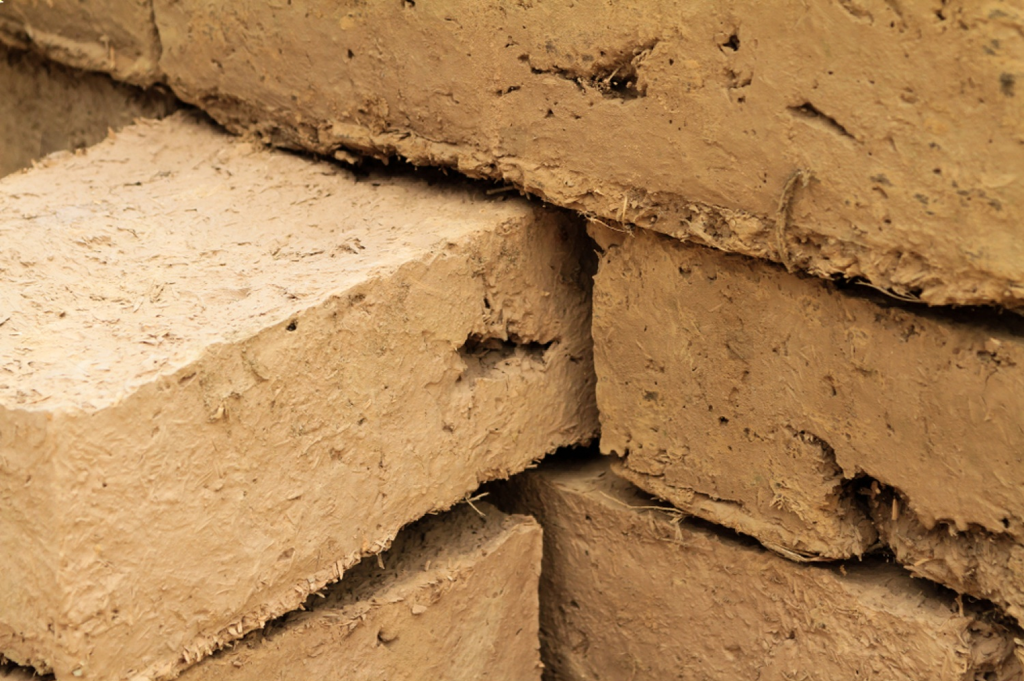
Traditional adobe bricks; Shutterstock
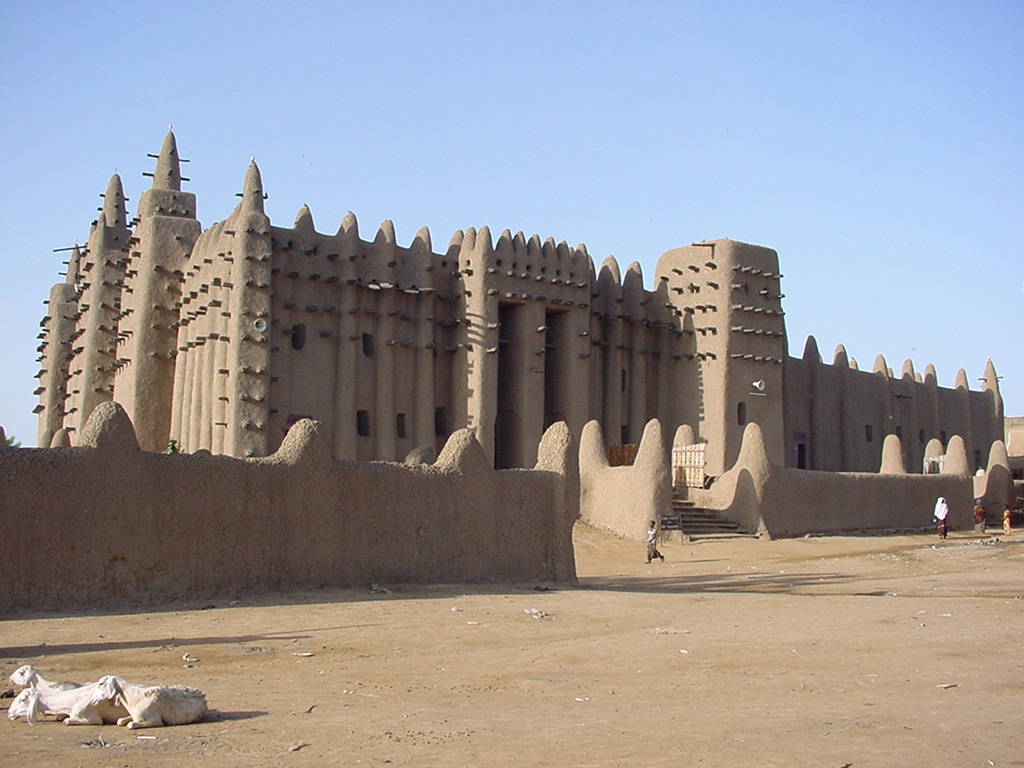
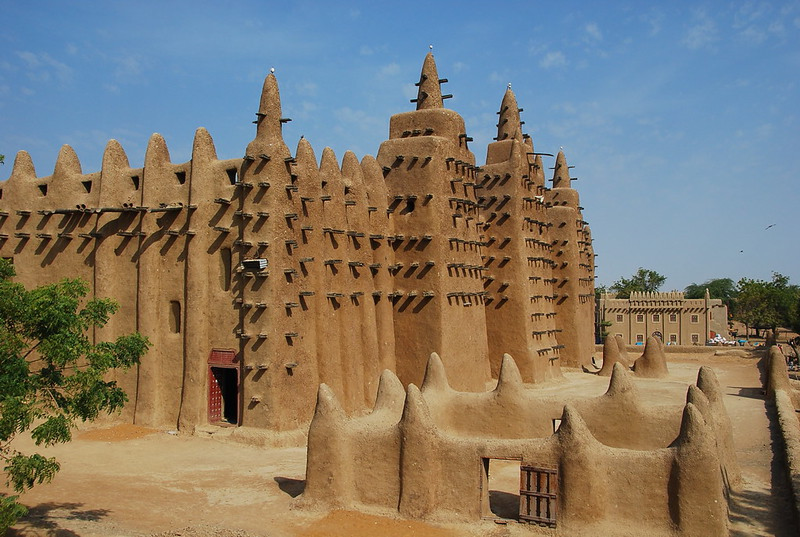
Towering over the city like a living sculpture, it is both massive and fragile. Located in the Inner Niger Delta, the Great Mosque of Djenné is the largest adobe building ever constructed. Its three minarets rise to a height of twenty metres, its walls enclose a space capable of holding a thousand worshippers, and its silhouette, bristling with protruding wooden beams known as torons, has become one of the most recognisable symbols of sub-Saharan Africa. First built in the 13th century by King Koy Komboro after he converted to Islam, the current mosque dates from 1907. Its reconstruction was overseen by Ismaïla Traoré, head of the Djenné masons’ guild. Together with the town and its archaeological sites, the mosque has been listed as a UNESCO World Heritage Site since 1988.
The Great Mosque of Djenné ; Jean-Louis Potier ; Flickr
Becoming a mason in Djenné is not something that happens overnight. This skill is passed down through the generations within the Barey-Ton, the guild of traditional builders. They are the masters of the proportions of the banco, a protective coating whose recipe is far from simple: the clay is taken from the Bani, a tributary of the Niger, and then mixed with water and natural additives such as rice bran, shea butter, and baobab powder. The bricks themselves, known as djenné-férey, are made from raw earth bound with bourgou grass and millet straw. This mixture is designed to withstand temperature fluctuations between day and night, thereby limiting the cracks caused by the sun. This is not merely a construction technique; it is an empirical science, refined over centuries, that only Barey-Ton members know how to implement fully.

Djenné ; Devriese ; Wikimedia
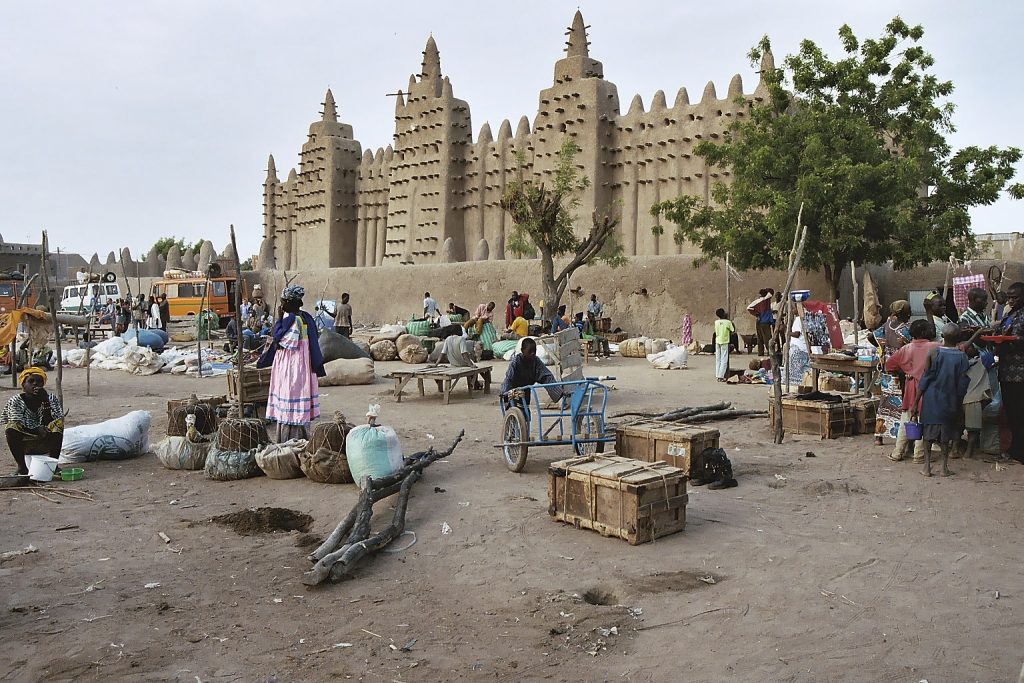
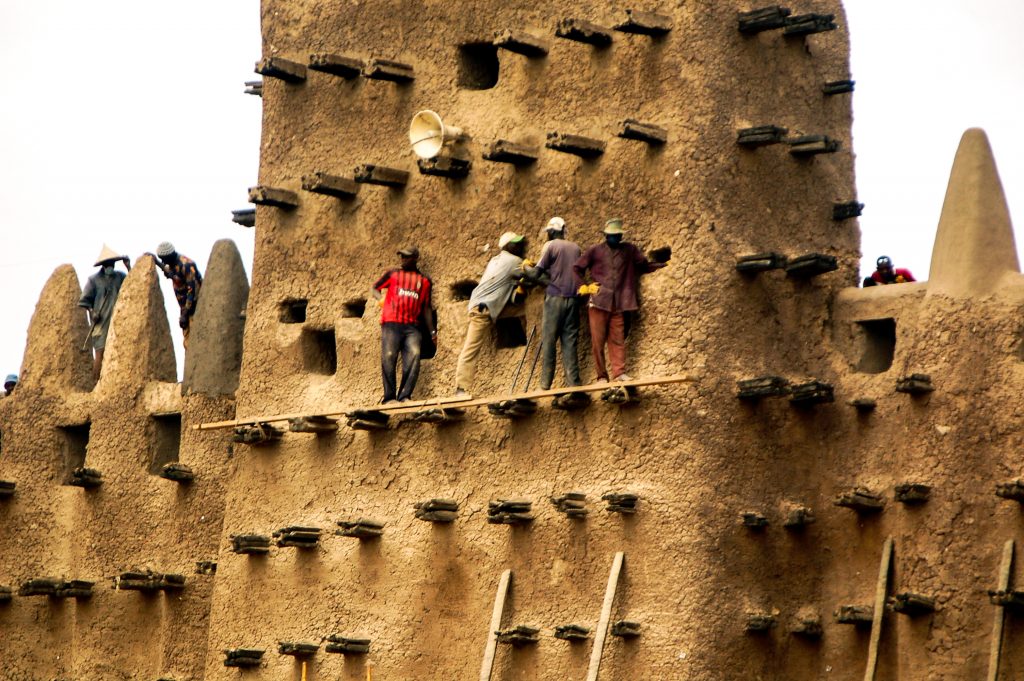
Every year, at the end of the dry season and before the rains arrive, Djenné is transformed into a vast open-air building site. The whole town comes together for the annual whitewashing of the mosque: the men climb the façades using torons, the projecting beams that serve as both decoration and permanent scaffolding; the women collect water; and the young people prepare the mortar. The master masons of Barey-Ton oversee the entire process, directing the work and adjusting the mortar mixtures. The day is accompanied by music and shared meals. This is much more than a technical maintenance task; it is an act of transmission. The youngest people learn the trade through practical experience, and the community reaffirms its connection to a heritage that it collectively upholds. In 2025, despite the challenging security situation, the plastering once again brought the community together just before the June rains.
Ralf Steinberger ; Wikimedia
Since 2016, the ancient city of Djenné has been included on the List of World Heritage in Danger. The threats are numerous and interrelated. Climate change is reducing the availability of the high-quality clay required for banco construction, prompting some residents to switch to cement and fired bricks. The introduction of these modern materials, such as metal doors and standardised windows, is gradually altering the appearance and structural integrity of the town’s approximately two thousand traditional houses. Insecurity linked to conflicts in central Mali complicates access to the site and hinders conservation efforts. Then there is a quieter threat: if younger generations turn away from the traditional masonry trade due to insufficient economic opportunities, Barey-Ton’s heritage could be lost within a generation.
14-03-14-UNESCO in Timbuktu 15 ; Flickr
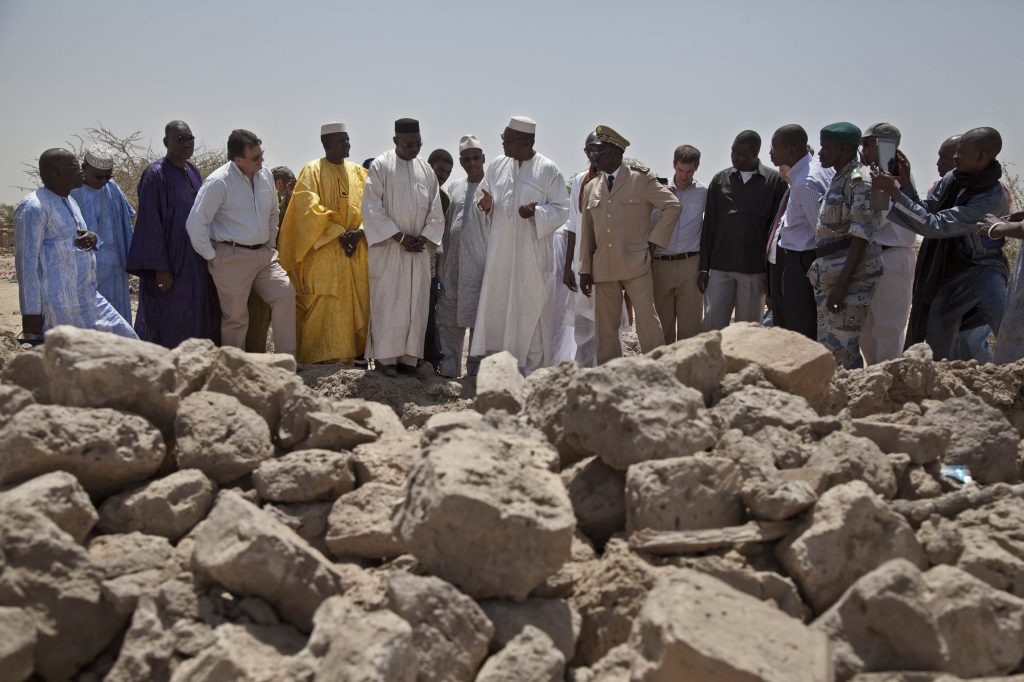
For several years, UNESCO and its partners, including the Aga Khan Trust for Culture, have supported conservation efforts. Since 2009, structural consolidation work has been carried out, bringing together international experts and masons from Barey-Ton in an approach that transforms the site into an ongoing training facility. The challenge extends beyond merely preserving a monument; it is about maintaining a living ecosystem of skills. In Djenné, the building and the builder are inseparable. The mosque is not a static object that can be restored once and for all — it is a form of architecture that requires constant renewal by those who understand its intricacies. Protecting Djenné means protecting a craft. And to protect this craft is to embrace the notion that certain forms of knowledge survive only through practice.
Février, 2026
Créer avec l’existant, penser avec l’histoire
De l’architecture au design, cette édition explore comment lieux, savoir-faire et matières héritées deviennent terrains de création actuelle.
Janvier, 2026
Le luxe se réinvente.
Finis les logos clignotants, place à une sobriété raffinée, à l’immersion personnelle, à l’excellence artisanale, à la durabilité sensible.
Décembre, 2025
Héritages, gestes contemporains et plaisirs essentiels
Parce que la fête n’est jamais qu’apparence : elle reflète notre manière d’habiter le monde, de transmettre, de fabriquer des souvenirs durables.
ÉDITION #3
Upcycling et kintsugi transforment l’objet contemporain, faisant de la trace, de la réparation et de la matière un langage esthétique.
ÉDITION #3
Artisans et designers donnent une seconde vie aux matériaux anciens, entre création contemporaine, patrimoine et réemploi.
ÉDITION #3
Bunkers, wagons et kiosques renaissent grâce à la création, révélant comment l’art redonne sens aux lieux délaissés.
ÉDITION #2
Un regard transversal sur le quiet luxury à travers des lieux, des objets et des figures qui expriment l’élégance.
ÉDITION #1
Une sélection de marques, architectures, objets et escapades qui donnent corps au sens de la fête.
ÉDITION #3
Usines et gares délaissées deviennent lieux culturels ouverts, où mémoire industrielle et usages contemporains redessinent la ville.
ÉDITION #3
L’audacieuse métamorphose d’un palace parisien
ÉDITION #3
Au cœur du Marais, un lieu discret révèle comment archives, architecture et recherche font dialoguer l’œuvre de Picasso.
ÉDITION #2
Une expérience shopping unique dans un magasin emblématique.
ÉDITION #2
Voyage culinaire et architectural au cœur de la Seine
ÉDITION #2
Dans le 9e arrondissement, un établissement qui invite au quiet luxury
ÉDITION #1
Chante! vient d’ouvrir ses portes. Une invitation à vibrer !
ÉDITION #3
Icône du paysage français, la boîte jaune change de statut et s’invite dans l’univers du design.
ÉDITION #3
L’édition 2026 affirme une vision où artisanat, design et mémoire façonnent l’habitat contemporain, international actuel.
ÉDITION #3
Cent ans après 1925, l’Art déco revient dans nos villes et intérieurs avec géométrie, audace, optimisme.
ÉDITION #3
Depuis plus de deux cents ans, Royal Limoges conjugue porcelaine, savoir-faire industriel et création contemporaine.
ÉDITION #3
Des terrains de sport aux podiums, la sneaker raconte un siècle de mutations culturelles, techniques et stylistiques.
ÉDITION #2
Design, mode, artisanat : des créations où la forme et la matière se répondent avec justesse, loin de tout effet de mode.
ÉDITION #1
Décorations artisanales, calendriers ultra-luxe et pièces de collection pour s’enivrer de joie avant l’heure.
ÉDITION #3
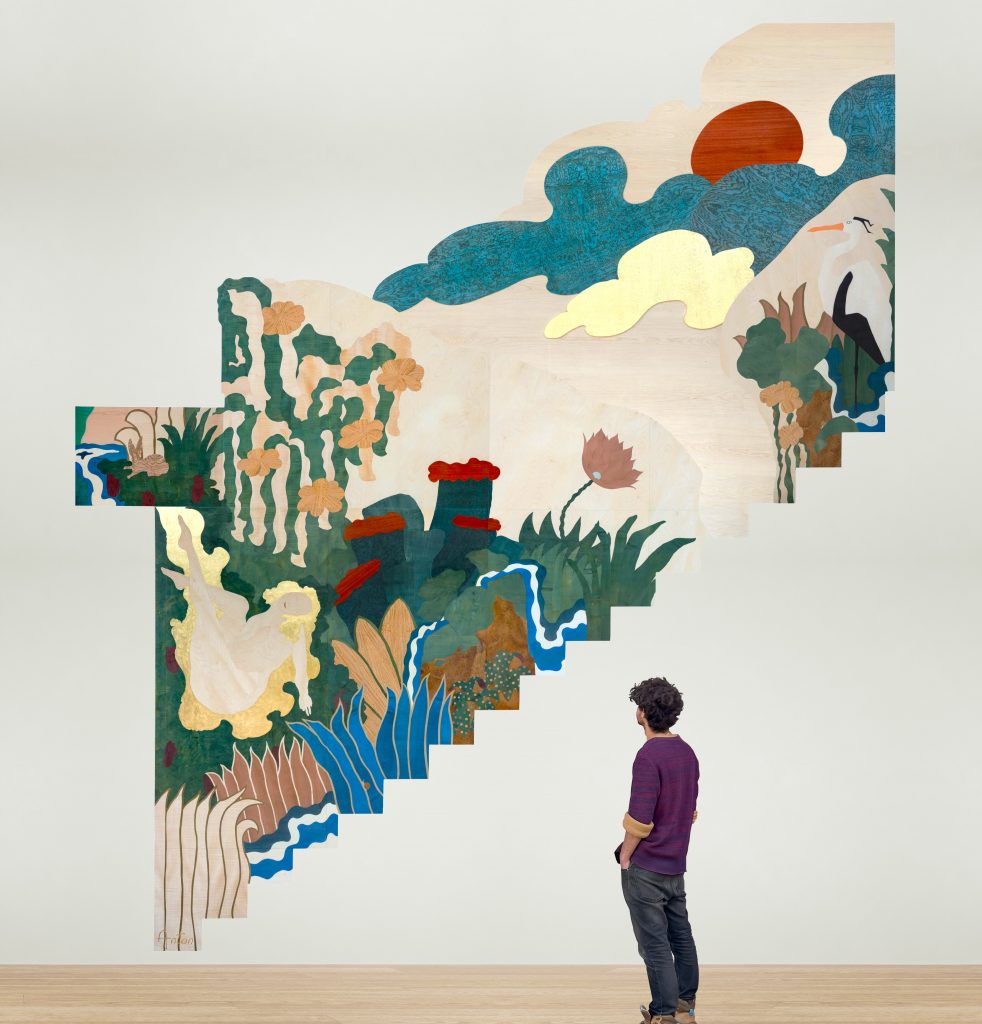
Entre marqueterie monumentale et jungle symbolique, Anton Laborde transforme le bois en récit contemporain poétique engagé.
ÉDITION #3
À Maison & Objet, Thierry Laudren présente des meubles sculptés où fonction, matière et lenteur façonnent une présence.
ÉDITION #3
Jean Nouvel conçoit une architecture attentive aux contextes, où lumière, histoire et usages façonnent chaque projet.
ÉDITION #3
À Lyon, Sophie Morel rénove des lieux historiques en alliant respect du bâti et écriture contemporaine.
ÉDITION #3
Au Centre d’Études Picasso, l’architecte compose une architecture où lumière, géométrie et héritage dialoguent avec précision.
ÉDITION #2
Entretien avec le fondateur d’EDO (European Design Office)
ÉDITION #2
Portrait d’un visionnaire qui transforme l’art de recevoir en expérience totale.
ÉDITION #1
Personnalités, artisans et créateurs qui donnent à la fête sa profondeur humaine.
ÉDITION #3
De Bordeaux au Bassin, art, vignobles et bien-être composent une échappée élégante au cœur de la Gironde.
ÉDITION #2
Vers une région de l’Italie habitée par le temps, où paysages, culture et usages s’accordent dans une continuité rare.
ÉDITION #1
Destinations et rituels qui réinventent la fête, du soleil tropical aux marchés d’hiver.