Liberty London:
Iconic shopping in a Tudor setting

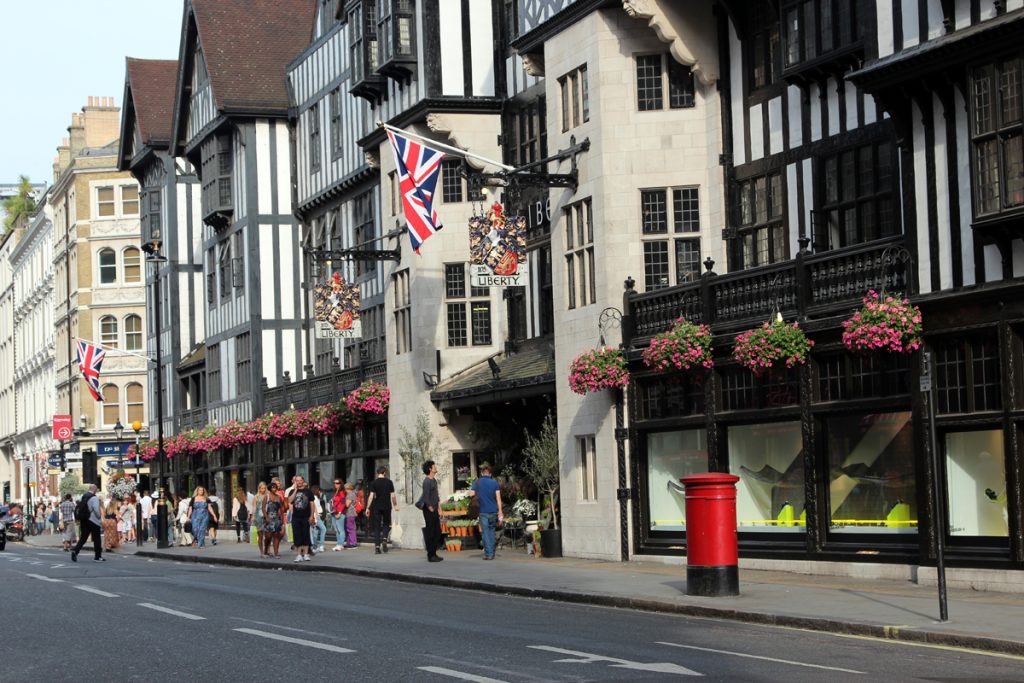
Liberty London first reveals itself through its striking Tudor façade on Great Marlborough Street, inaugurated in 1924. Designed by Edwin T. Hall and his son, the building was constructed using timber reclaimed from two former warships, HMS Impregnable and HMS Hindustan. Arthur Lasenby Liberty envisioned the building as a ship permanently moored in the city.

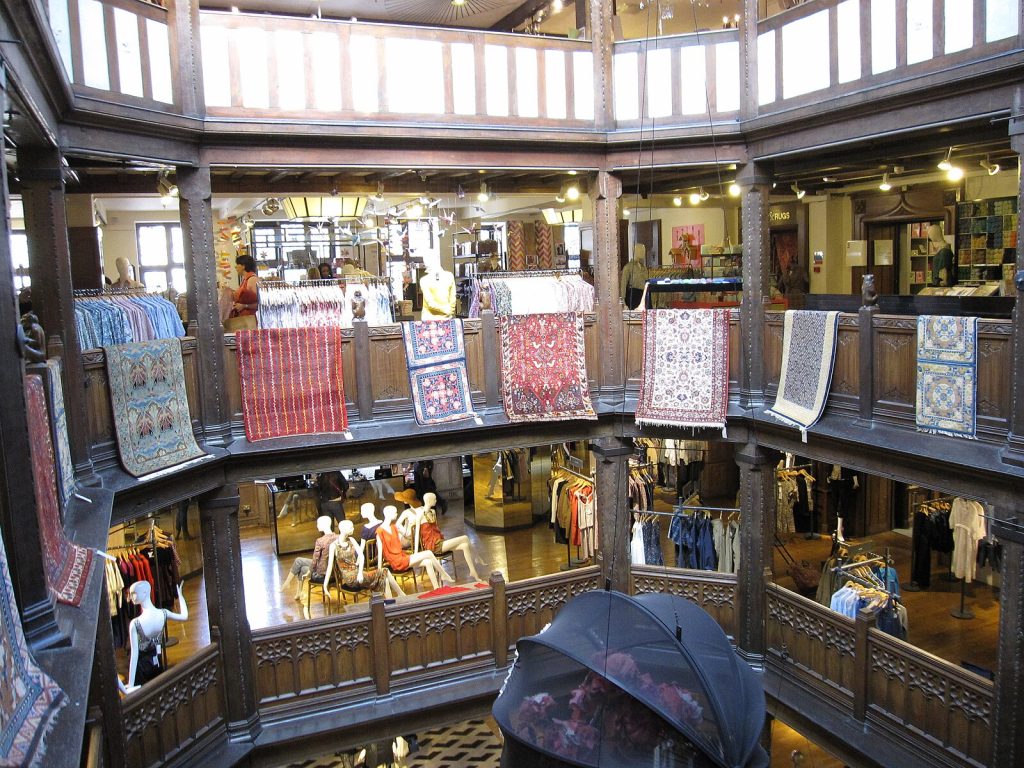
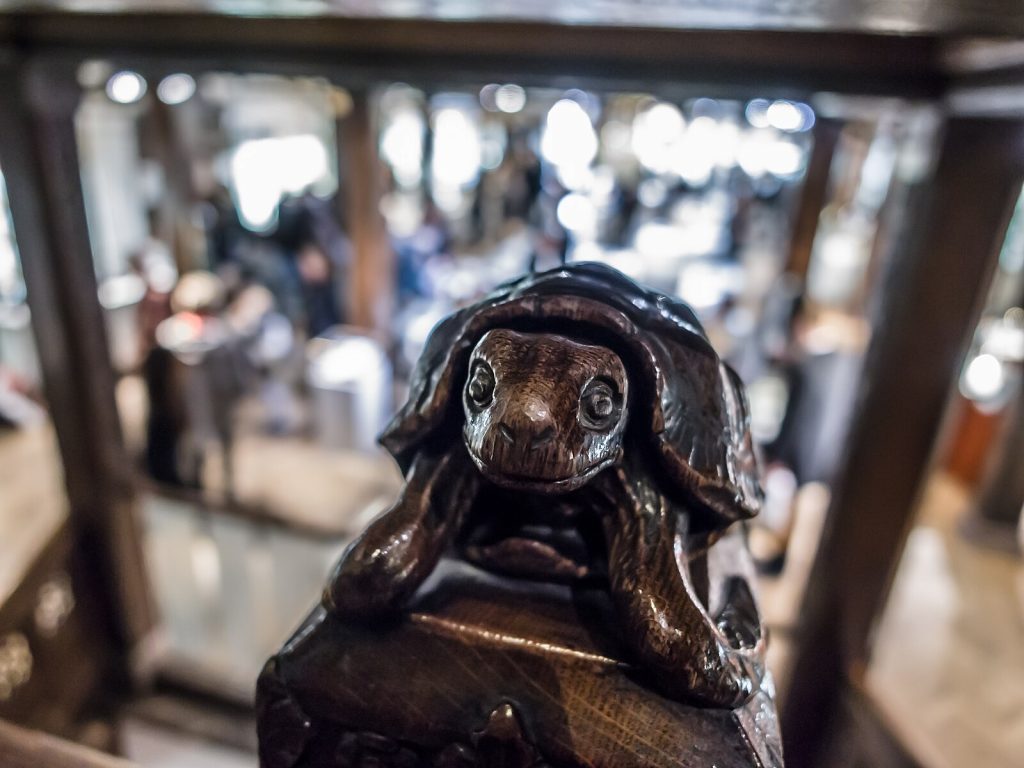
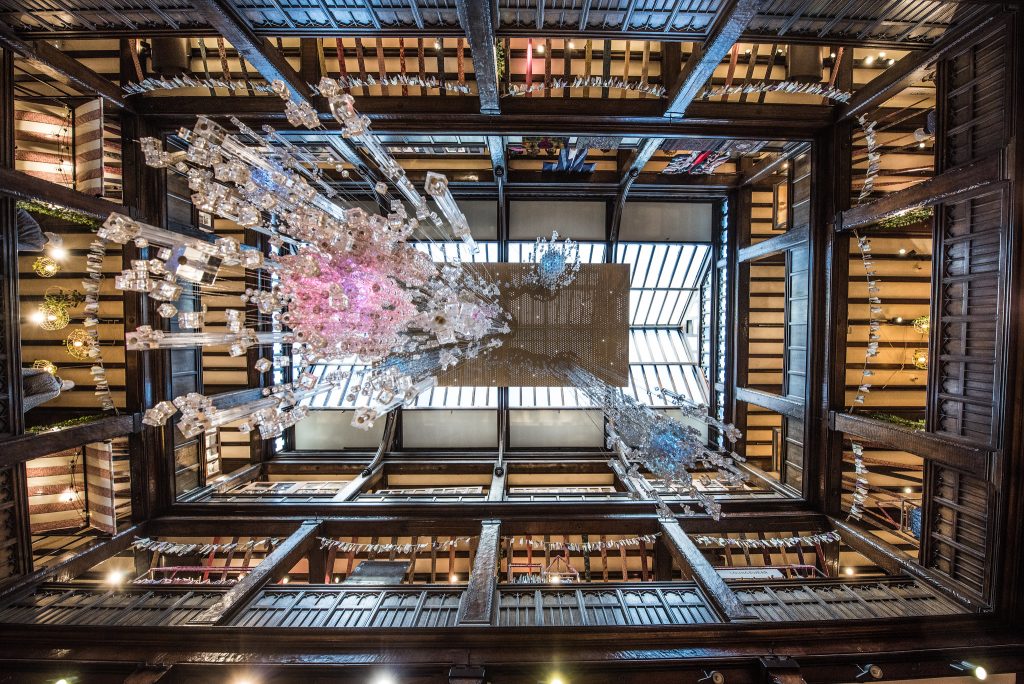
Inside, the atmosphere recalls that of an English townhouse. Atriums, monumental fireplaces, carved wood panelling and parquet floors create a domestic, almost intimate setting. Light filters down through a central glass roof, beneath which hangs one of the longest chandeliers in Europe. Staircases creak softly, galleries unfold one after another, sculpted animals emerge discreetly from corners, and portraits of Henry VIII’s wives punctuate the journey. Every detail contributes to a warm, welcoming environment, designed to slow the pace and encourage unhurried exploration.

Six floors of shopping and exclusive collections

jethrohealy, Flickr

Liberty London is organised across six interconnected levels, linked by staircases and internal walkways. The architecture favours human-scale proportions, alternating between generous rooms and more intimate galleries. Visitors move effortlessly between women’s, men’s and children’s fashion, accessories, jewellery, home décor, tableware and seasonal collections.

The selection blends international fashion houses — including Gucci, Prada and Chloé — with Liberty’s own creations. The store’s iconic floral prints appear on scarves, garments, decorative objects and fabrics sold by the metre. Each floor has its own atmosphere, enhanced by wood, carpets and carefully calibrated lighting. The layout encourages wandering rather than efficiency, inviting visitors to observe textures, materials and objects chosen for their craftsmanship and aesthetic value.

Beauty hall, Liberty fabrics and vintage finds

Gryffindor ; Wikimedia

The beauty hall draws visitors with its finely curated selection of fragrances, skincare and cosmetics. Established brands sit alongside niche perfumers, with counters dedicated to personalised services, notably those by make-up artist Lisa Eldridge.

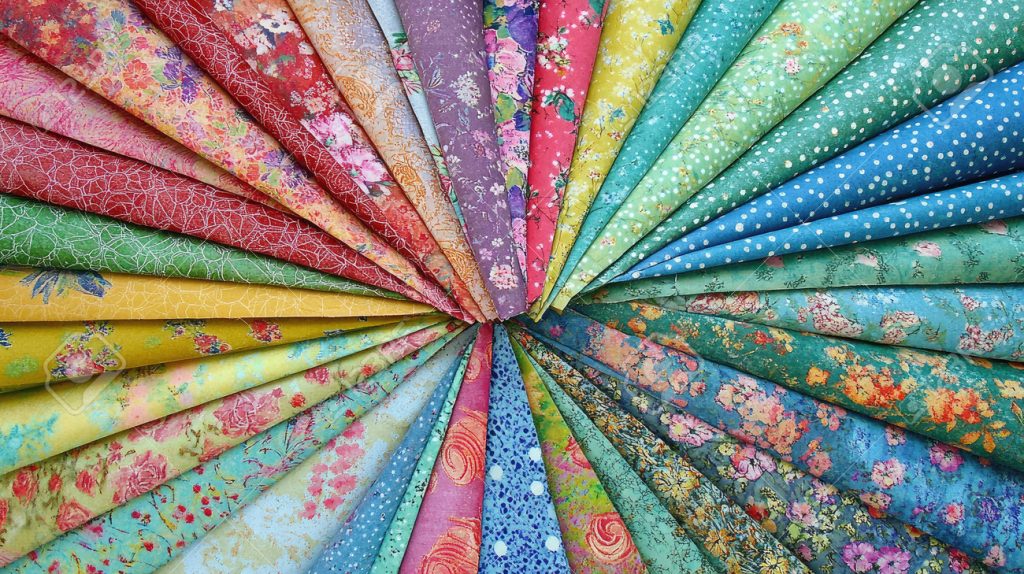
Further up, the haberdashery and fabric department remains one of Liberty’s most iconic spaces. Here, the famous Liberty prints — descendants of the hand-printed Mysore silks of the 1880s — are displayed in full richness. These fabrics, now signature pieces, attract designers, decorators and enthusiasts of bespoke projects alike.

The Vintage Designer section completes the offering, presenting carefully restored pieces: Chanel bags, wedding dresses and rare garments sought after by collectors. Each department tells a chapter of Liberty’s story, from its Arts & Crafts roots and Eastern influences to contemporary design.

Liberty London since 1875: a living history

Alena Kravchenko ; iStockPhoto

Liberty London continues a story that began in 1875. Arthur Lasenby Liberty, initially an apprentice draper and later manager of an oriental department on Regent Street, opened his own shop with a family loan of two thousand pounds. His intuition focused on objects from Japan, China, India and Persia, at a time shaped by Japonism, the Aesthetic Movement and Arts & Crafts.

Oscar Wilde once described Liberty as a refuge for artistic shoppers. That founding ambition remains intact today. Each floor reflects a careful balance between heritage, creativity and discovery. Liberty London is both a place of passage and a destination for collectors, where shopping becomes a cultural stroll through the heart of the city.

East India House: the origins of a visionary concept

Helloiamtugce ; Pexels

The Liberty experience began with the opening of East India House on Regent Street in 1875. With just three employees and a modest loan, Arthur Liberty created a space dedicated to Asian objects: silks, shawls, ornaments and decorative pieces imported from Japan, India, China and Persia.

The shop quickly attracted visitors intrigued by unfamiliar forms, materials and aesthetics. Liberty also staged ambitious displays, including an Indian craftsmen’s village presented in 1885, transforming the store into a site of cultural encounter. Commerce here was never purely transactional. Arthur Liberty sought to invent new forms rather than replicate existing ones, shaping an experience based on surprise, exploration and dialogue between cultures.

Liberty prints: a timeless textile signature

123rf.com

Liberty fabrics occupy a central place in the store’s identity. From the 1880s onward, the house developed its own patterns, originally hand-printed on Mysore silk. Floral and graphic, these designs quickly became recognisable and have endured across generations.

Today, they appear throughout the store — on fabrics sold by the metre, fashion accessories, clothing, decorative items and select collectibles. This recurring presence creates visual continuity across spaces. Seasonal variations, designer collaborations and diverse applications renew the tradition. For many visitors, choosing a Liberty fabric is a way of taking home a tangible fragment of the store’s graphic heritage, rooted in the Aesthetic Movement and Art Nouveau.

Architectural details and narrative staging

James Petts ; Wikimedia

Liberty London’s experience is also built on attention to architectural storytelling. Carved woodwork, monumental fireplaces, parquet floors and domestic-scale galleries shape a distinctive atmosphere. Along the way, visitors discover wooden animals hidden in stairwells, commemorative plaques recalling the Second World War, and portraits of Henry VIII’s wives.

At the top of the building, a gilded copper weather vane depicts the Mayflower, a reminder of the maritime symbolism so dear to Arthur Liberty. The narrative is discreet, woven into the architecture itself. Liberty is designed to be read as much as visited, with each floor offering a new interpretation of this layered staging — reinforcing the feeling of exploring a historic house rather than a conventional department store.

Liberty London: a cultural destination as much as a shop

James Petts ; Wikimedia

Today, Liberty London remains a place to visit, revisit and linger. Many guests come simply to wander through the floors, browse the collections and absorb the atmosphere, with or without a specific purchase in mind.

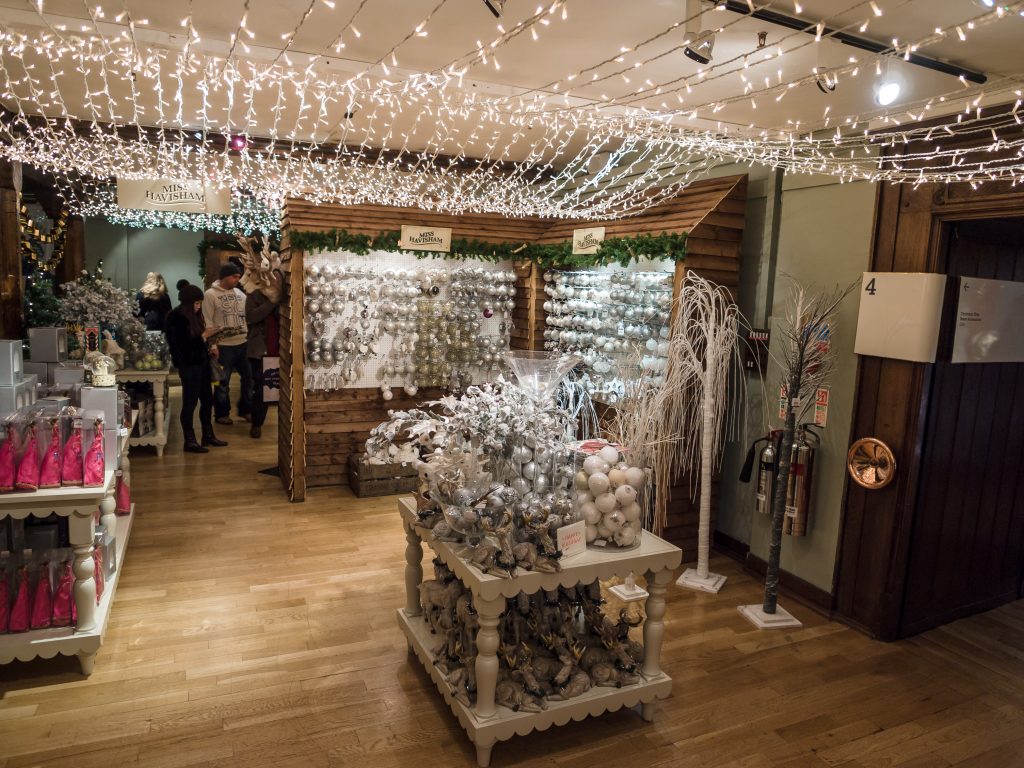
Seasonal spaces, such as the celebrated Christmas shop on the fourth floor, contribute to an annual ritual, with decorations, ornaments and traditional objects. The slow rhythm encouraged by staircases and successive galleries fosters careful observation and appreciation. Fashion, beauty, decoration, textiles and collectibles coexist in a coherent whole.

This approach remains faithful to Arthur Liberty’s original vision, in which commerce was understood as a form of artistic expression. Liberty London endures as a place where shopping becomes a cultural walk — embedded in London’s urban fabric and in the memory of those who pass through it.

Continue exploring

La Mamounia : a brief history of a grand palace
Behind the scenes at our favourite places, with Where is Brian, interior design agency based in Nantes
Cordon Bleu, Hôtel de la Marine: culinary excellence open to the public
Hotel Normandy Le Chantier, the daring transformation of a Parisian palace
Creativity breathing new lifeinto buildings destined for oblivion
Behind the scenes at the Centre d’Études Picasso in Paris

Février, 2026

Édition 3 : Patrimoine et création

Créer avec l’existant, penser avec l’histoire

De l’architecture au design, cette édition explore comment lieux, savoir-faire et matières héritées deviennent terrains de création actuelle.

Janvier, 2026

Édition 2 : Quiet luxury

Le luxe se réinvente.

Finis les logos clignotants, place à une sobriété raffinée, à l’immersion personnelle, à l’excellence artisanale, à la durabilité sensible.

Décembre, 2025

Édition 1 : Le sens de la fête

Héritages, gestes contemporains et plaisirs essentiels

Parce que la fête n’est jamais qu’apparence : elle reflète notre manière d’habiter le monde, de transmettre, de fabriquer des souvenirs durables.

ÉDITION #3

Révéler la beauté

Upcycling et kintsugi transforment l’objet contemporain, faisant de la trace, de la réparation et de la matière un langage esthétique.

ÉDITION #3

Les nouveaux artisans du patrimoine

Artisans et designers donnent une seconde vie aux matériaux anciens, entre création contemporaine, patrimoine et réemploi.

ÉDITION #3

L'art à la rescousse des friches et lieux oubliés

Bunkers, wagons et kiosques renaissent grâce à la création, révélant comment l’art redonne sens aux lieux délaissés.

ÉDITION #2

Le murmure du beau

Un regard transversal sur le quiet luxury à travers des lieux, des objets et des figures qui expriment l’élégance.

ÉDITION #1

Lieux, maisons et matières en éclats

Une sélection de marques, architectures, objets et escapades qui donnent corps au sens de la fête.

ÉDITION #3

La création au secours des bâtiments promis à l’oubli

Usines et gares délaissées deviennent lieux culturels ouverts, où mémoire industrielle et usages contemporains redessinent la ville.

ÉDITION #3

Hôtel Normandy Le Chantier

L’audacieuse métamorphose d’un palace parisien

ÉDITION #3

Dans les coulisses du Centre d'Études Picasso à Paris

Au cœur du Marais, un lieu discret révèle comment archives, architecture et recherche font dialoguer l’œuvre de Picasso.

ÉDITION #2

Shopping iconique dans un décor Tudor

Une expérience shopping unique dans un magasin emblématique.

ÉDITION #2

Gastronomie et architecture

Voyage culinaire et architectural au cœur de la Seine

ÉDITION #2

L'art de l'hospitalité parisienne

Dans le 9e arrondissement, un établissement qui invite au quiet luxury

ÉDITION #1

Chante!

Chante! vient d’ouvrir ses portes. Une invitation à vibrer !

ÉDITION #3

La boîte aux lettres française devenue objet de design

Icône du paysage français, la boîte jaune change de statut et s’invite dans l’univers du design.

ÉDITION #3

Retour sur Maison&Objet 2026 : retour aux sources et à l’essentiel

L’édition 2026 affirme une vision où artisanat, design et mémoire façonnent l’habitat contemporain, international actuel.

ÉDITION #3

Art Deco: un mouvement centenaire, plus actuel que jamais

Cent ans après 1925, l’Art déco revient dans nos villes et intérieurs avec géométrie, audace, optimisme.

ÉDITION #3

Royal Limoges, deux siècles d’histoire au présent

Depuis plus de deux cents ans, Royal Limoges conjugue porcelaine, savoir-faire industriel et création contemporaine.

ÉDITION #3

Du terrain à la rue et au catwalk : les sneakers à travers les époques

Des terrains de sport aux podiums, la sneaker raconte un siècle de mutations culturelles, techniques et stylistiques.

ÉDITION #2

La formidable aventure du papier peint de luxe

Design, mode, artisanat : des créations où la forme et la matière se répondent avec justesse, loin de tout effet de mode.

ÉDITION #1

Icônes, détails, rituels

Décorations artisanales, calendriers ultra-luxe et pièces de collection pour s’enivrer de joie avant l’heure.

ÉDITION #3

Anton Laborde

Entre marqueterie monumentale et jungle symbolique, Anton Laborde transforme le bois en récit contemporain poétique engagé.

ÉDITION #3

Thierry Laudren

À Maison & Objet, Thierry Laudren présente des meubles sculptés où fonction, matière et lenteur façonnent une présence.

ÉDITION #3

Jean Nouvel

Jean Nouvel conçoit une architecture attentive aux contextes, où lumière, histoire et usages façonnent chaque projet.
ÉDITION #3

Sophie Morel

À Lyon, Sophie Morel rénove des lieux historiques en alliant respect du bâti et écriture contemporaine.
ÉDITION #3

Pascal Grasso

Au Centre d’Études Picasso, l’architecte compose une architecture où lumière, géométrie et héritage dialoguent avec précision.

ÉDITION #2

Alexandre Danan

Entretien avec le fondateur d’EDO (European Design Office)

ÉDITION #2

Aziz Temimi

Portrait d’un visionnaire qui transforme l’art de recevoir en expérience totale.

ÉDITION #1

Visages, gestes, inspirations

Personnalités, artisans et créateurs qui donnent à la fête sa profondeur humaine.

ÉDITION #3

Chemins de traverse : parenthèse d’exception en Bordelais

De Bordeaux au Bassin, art, vignobles et bien-être composent une échappée élégante au cœur de la Gironde.

ÉDITION #2

Voyage en Toscane

Vers une région de l’Italie habitée par le temps, où paysages, culture et usages s’accordent dans une continuité rare.

ÉDITION #1

Horizons, saisons, traditions

Destinations et rituels qui réinventent la fête, du soleil tropical aux marchés d’hiver.

Dates, adresses, invitations

Expositions, événements et repères culturels pour vivre pleinement la saison des fêtes.