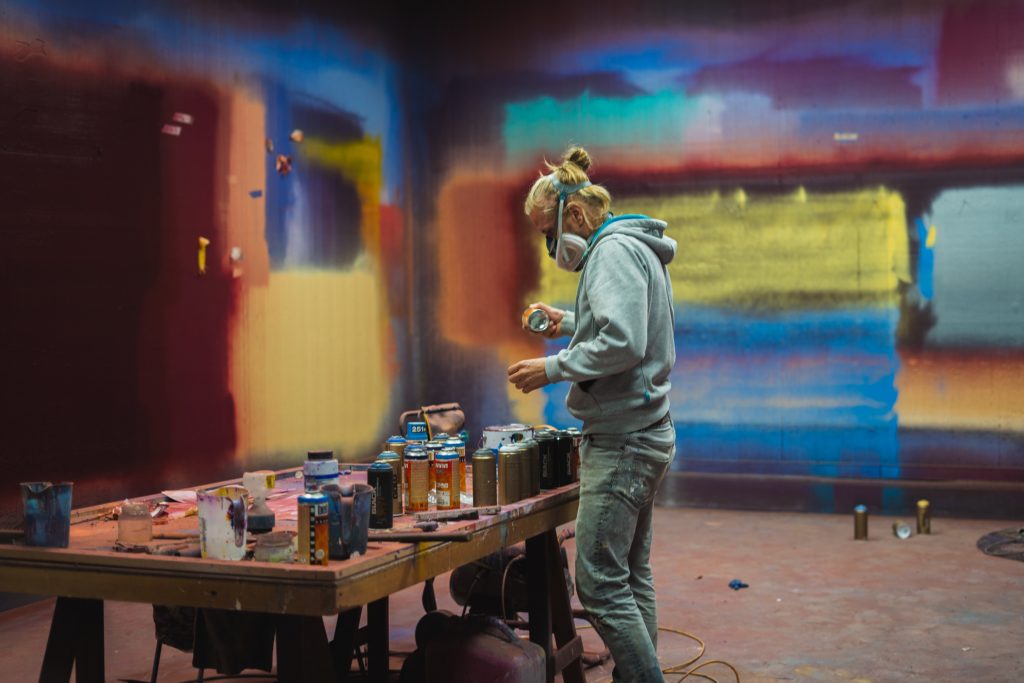
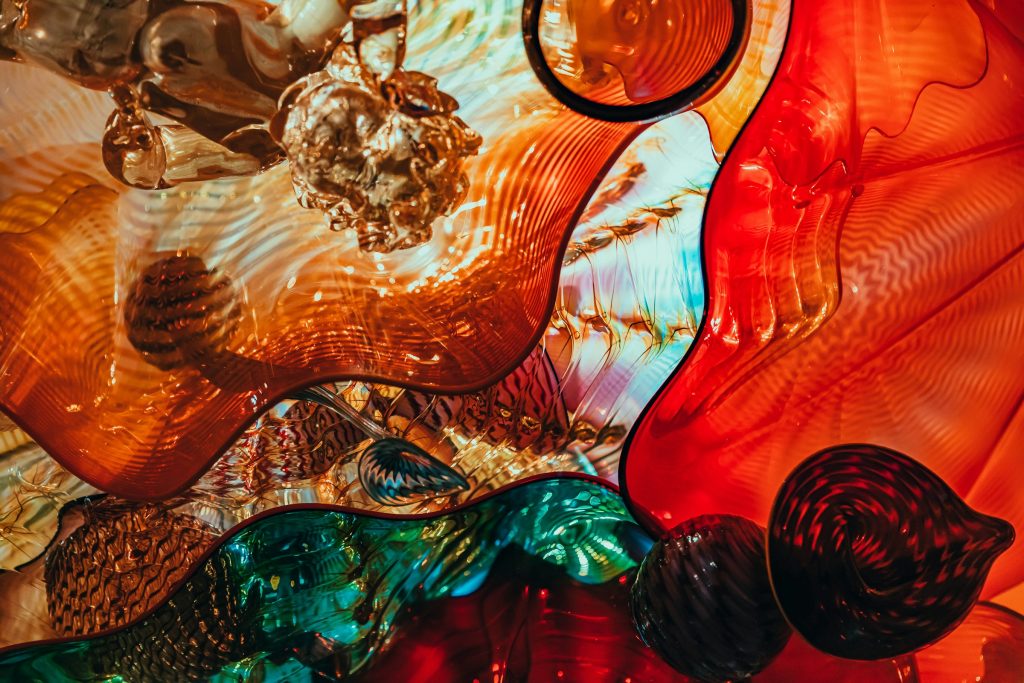
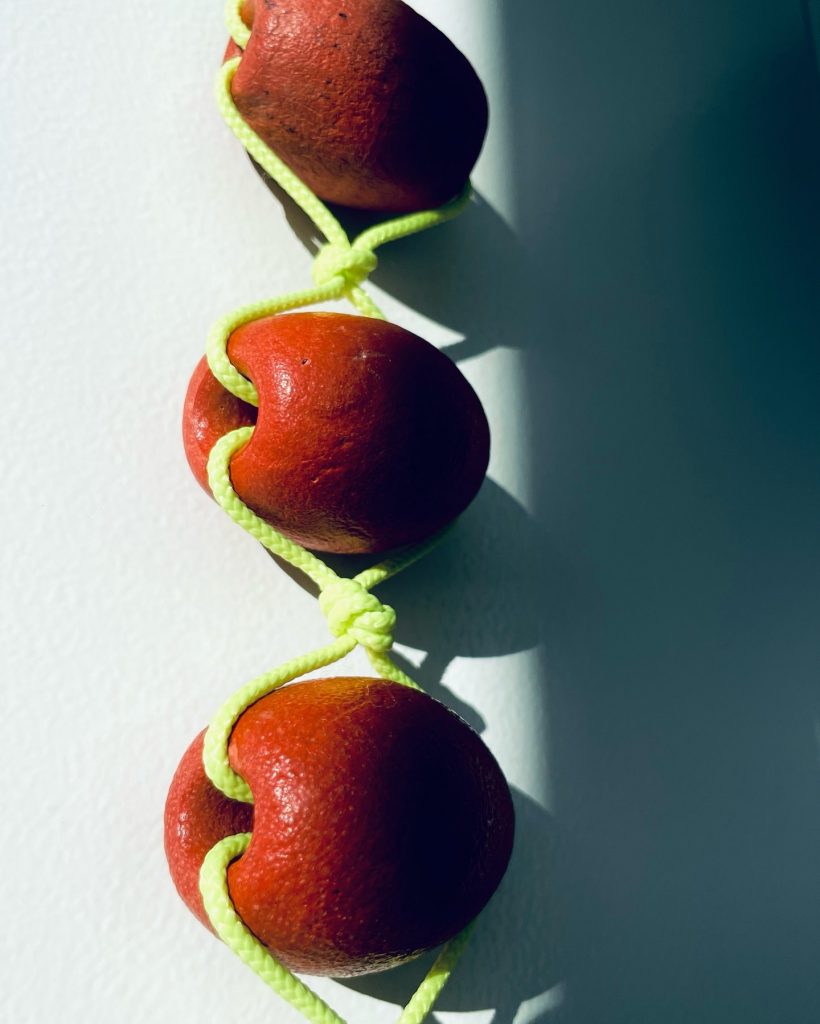
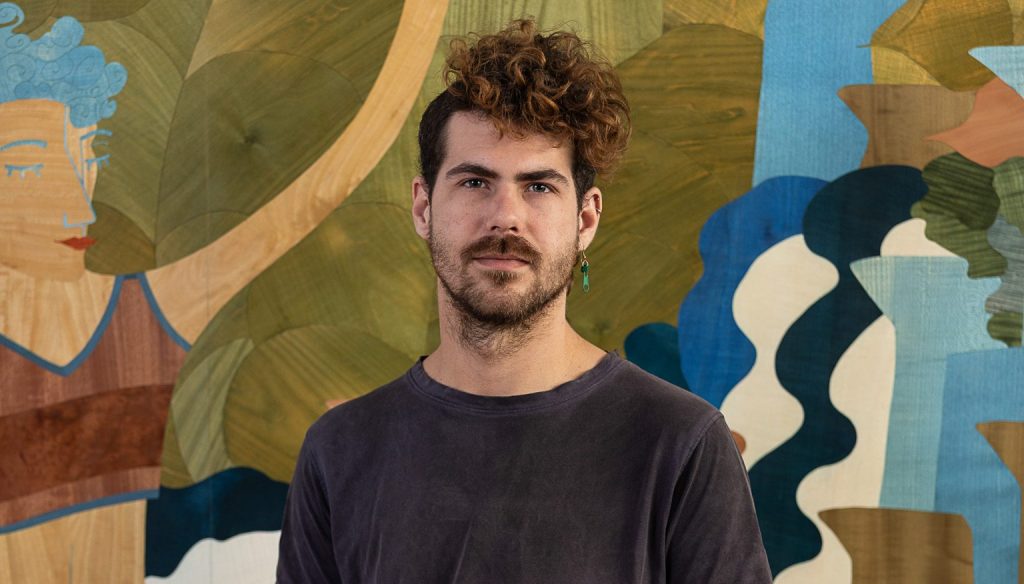
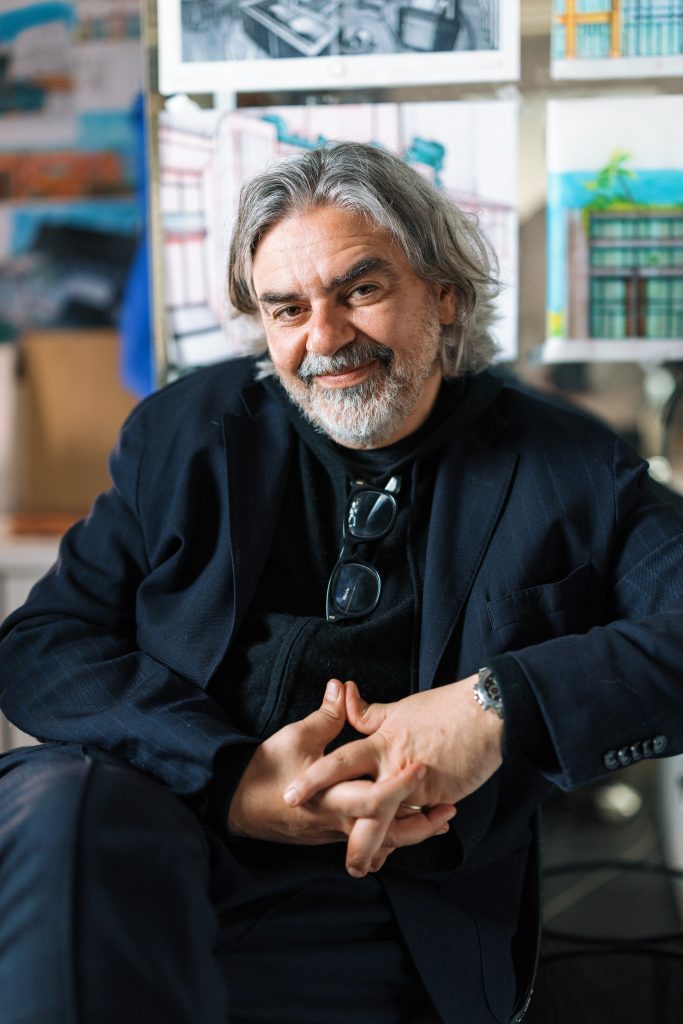
Born in Hannover in 1985, Tomislav Topić is a visual artist based near Berlin whose entire body of work revolves around a single obsession: colour. Starting out as a graffiti artist, he went on to become a qualified colourist and the founder of the Quintessenz collective. He has been creating monumental installations in painted fibreglass, murals and conceptual works all over the world for almost two decades. From China to Provence and from Georgia to the United States, his site-specific creations transform public spaces into immediate sensory experiences. A portrait of a man for whom colour is not just an attribute, but a language.
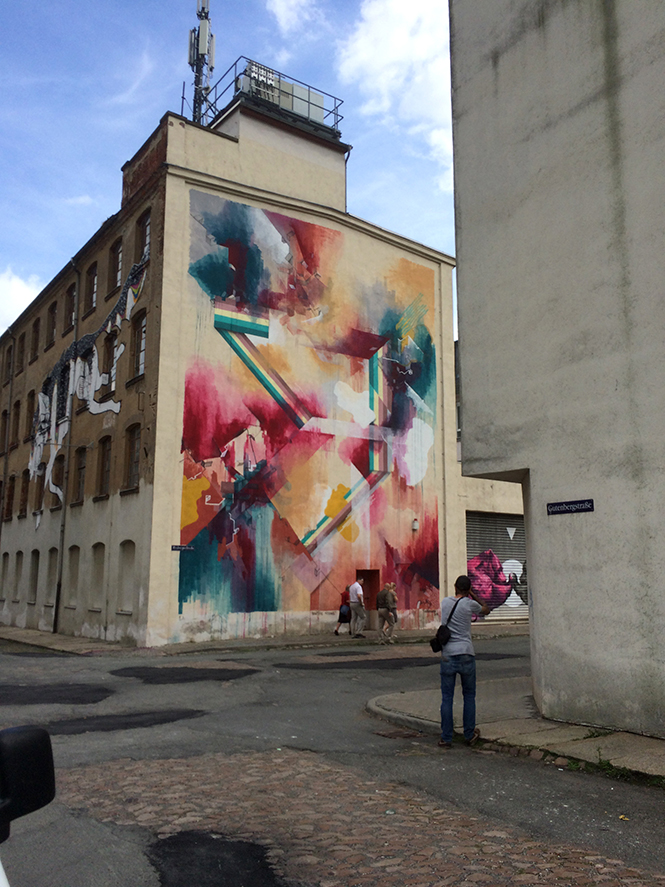
Beautiful Mistake; Crimmitschau; Allemagne – Tomislav Topic
It all began with a train journey. The young Tomislav, a keen skater, took the train every morning from his small town to Hildesheim, near Hannover. The graffiti on the carriages and along the tracks captivated him. First he copied the logos of his favourite skate brands, then he drew his own letters and later characters. Spotting a budding talent, his parents enrol him with an art teacher. From the age of twelve, he learnt every technique: pencil, watercolour, oil paint and engraving. At night, he and his friends painted walls an trains in secret. By day, he honed his mastery of line and colour. This dual apprenticeship — on the streets and in the studio — laid the foundations for everything that followed.
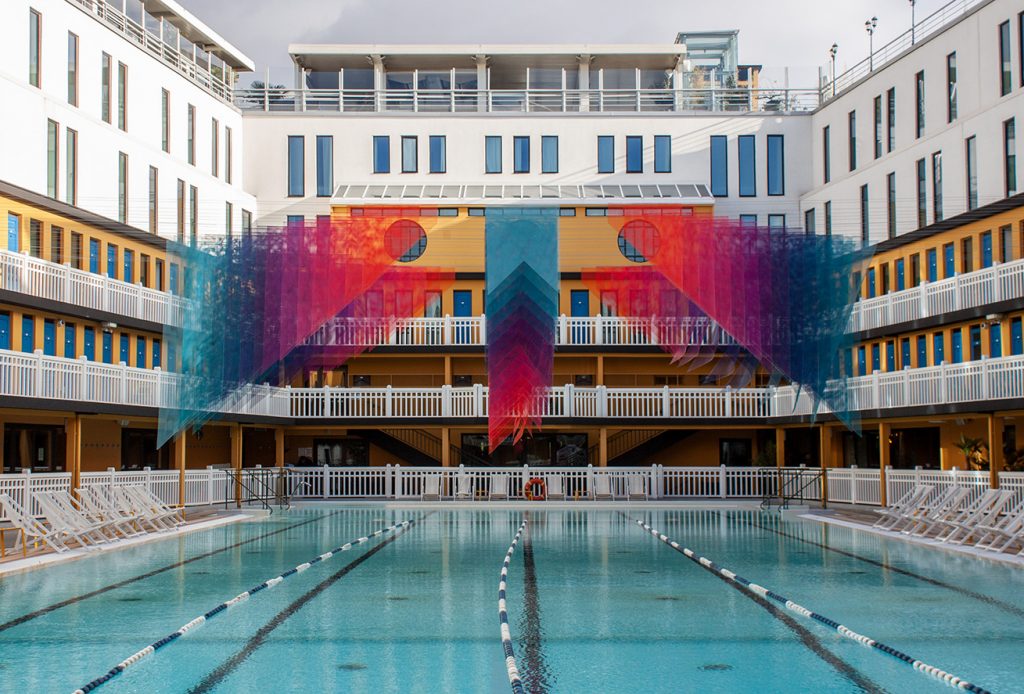
Nenuphar de Molitor; Paris – Tomislav Topic
In 2005, Tomislav surprised those around him by enrolling on a colour design major at the University of Hildesheim. He devoted five years to studying colour theory and practise. “People often asked me what you could possibly do with a degree in colour design,” he recalls. His answer could be summed up in one sweeping glance: the car you drive, the toothbrush you hold, the sofa you sit on — everything has been conceived in colour, and this concept influences our decisions far more than we realise. His professor quickly realised that this student would never be a traditional designer. He entrusted him with side projects, which offered greater freedom. A year-long stay in the United States in 2007 introduced Tomislav to animation and stop motion — two tools that would soon change the course of his career.
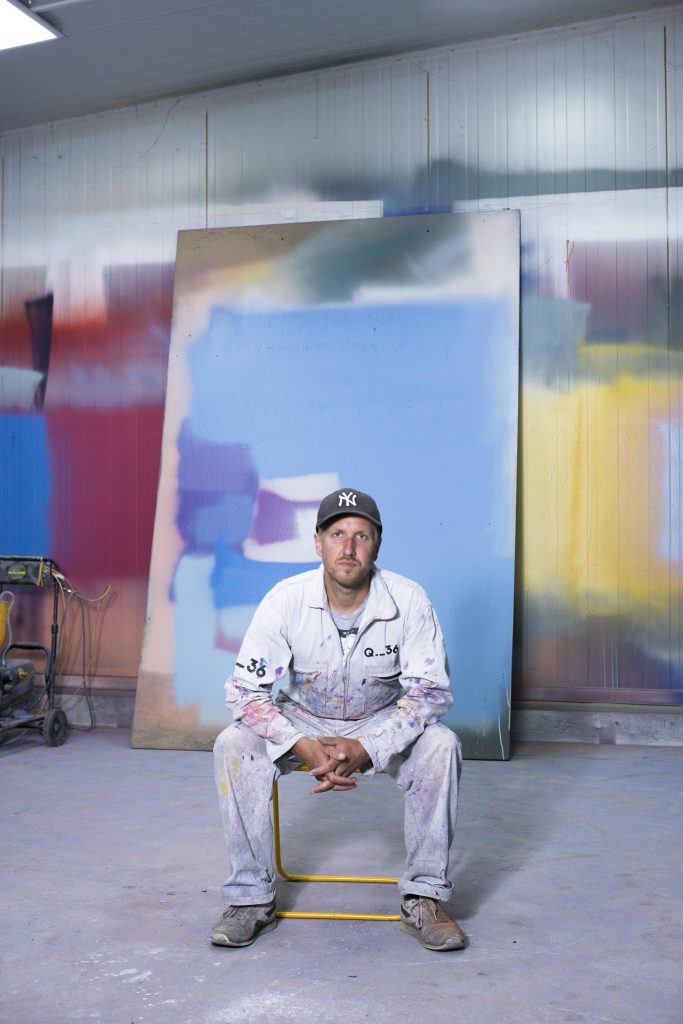
Tomislav Topic
After returning from the US in 2008, Tomislav reunited with his old graffiti friends at the same university. He suggested that they film a colourful intervention in an abandoned space, taking two thousand photos to show a wall transforming from grey to colour as if by magic. His professor screened the video at a lecture. The room went wild. The Quintessenz collective was born out of this momentum, starting with ten members, then six, then three. Together, they created stop-motion films for brands such as Converse, Bosch, Red Bull and Vitra… Their attention grew, and they were invited to more and more festivals. However, the group’s energy began to wane as they turned professional. In 2020, Tomislav made a decision: he would continue alone, staying true to his beliefs.
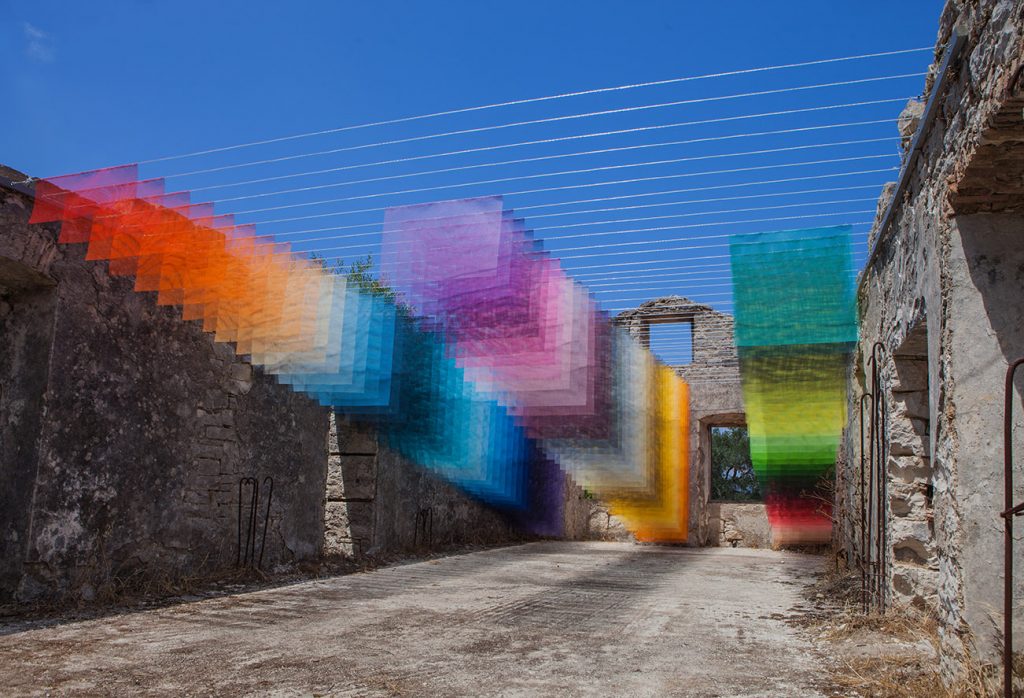
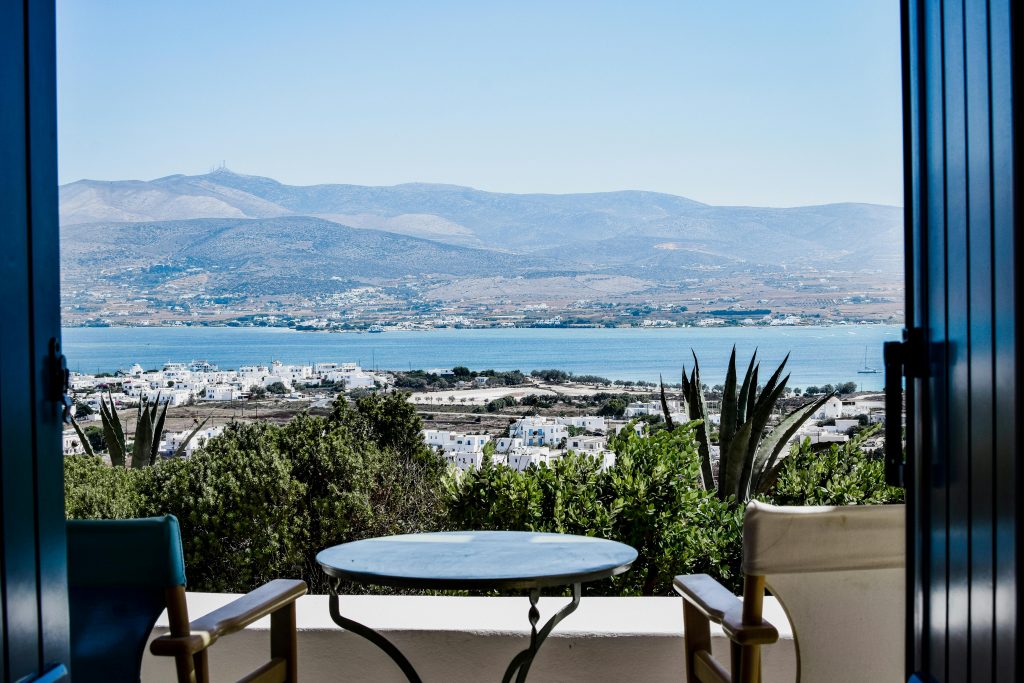
Kagkatikas Secret; Paxos; Grèce- Tomislav Topic
The year 2018 marked a turning point. He was invited to Paxos, a small Greek island, for a contemporary art festival. There was no budget, and his bank account was hardly any fuller. After some hesitation, he decided to fly, ordered mesh and about 120 shades of spray paint — two cans per colour — without knowing where or how he would use them. Once there, he discovered an abandoned ruin and realised that he would have to use all his colours to fill the space. The result resembled a rainbow, which had not been totally in his intention. He returned to Germany feeling somewhat unconvinced. However, the installation was photographed and published on an influential art blog and went viral. By 2019, he was no longer unpacking his suitcase, completing thirteen installations in a single year, from China to the United States.
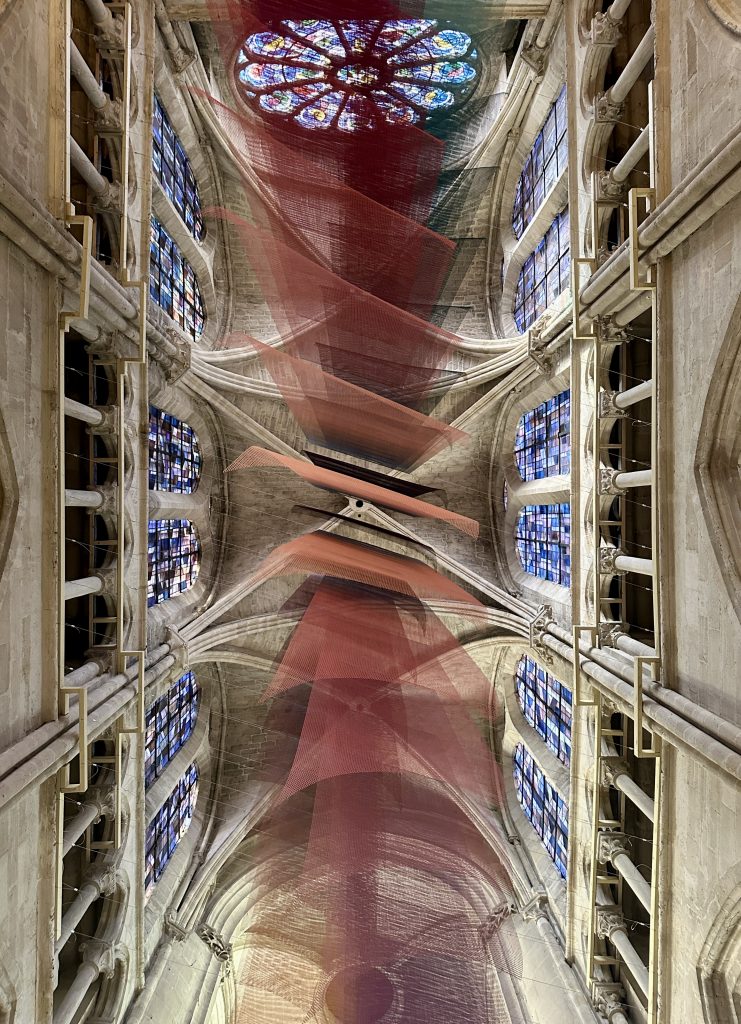
Nexus Lucis; Gisors; France – Tomislav Topic
After being forced out of his Berlin studios three times due to gentrification, Tomislav eventually left the city. In 2021, he bought an old apple farm an hour’s drive from Berlin. The 250-square-metre cold store became his production studio and an adjoining garage was converted into a workshop. Here, nature is not merely a backdrop. The artist has planted over a hundred trees, bushes, wildflowers and vegetable. He started to collect natural pigments and resumes his work with paper soaked in pigmented water, creating pieces where the colour rises by capillary action and separates into unpredictable gradients. In his greenhouses, he experiments with solar bleaching, creating pieces that are at the mercy of the summer heat. “It’s a diary of the summer,” he says. ‘You can read the temperature in the streaks.’
Installations, murals, paintings, water-soaked paper, spray-painted metal plates and conceptual works. Tomislav Topic has produced about fifteen different bodies of work over the years. All of them share a single theme: colour as the main subject, rather than an ornamental element. “I want to create works that give colour centre stage and show its effect and importance,” he explains. He is most moved by those moments when a visitor discovers a work series they have never seen before yet recognises his signature in it. ‘That’s the greatest compliment. Even if the pieces are radically different, people perceive a common spirit.” Represented by several galleries, he exhibits and sells his work worldwide without ever becoming fixed to a single format.
Aged forty, Tomislav Topic still dreams of a remote Pacific island where he could install a piece of work in complete freedom… a project he would finance, design and realise alone, as a return to his roots.

Février, 2026
Créer avec l’existant, penser avec l’histoire
De l’architecture au design, cette édition explore comment lieux, savoir-faire et matières héritées deviennent terrains de création actuelle.
Janvier, 2026
Le luxe se réinvente.
Finis les logos clignotants, place à une sobriété raffinée, à l’immersion personnelle, à l’excellence artisanale, à la durabilité sensible.
Décembre, 2025
Héritages, gestes contemporains et plaisirs essentiels
Parce que la fête n’est jamais qu’apparence : elle reflète notre manière d’habiter le monde, de transmettre, de fabriquer des souvenirs durables.
ÉDITION #3
Upcycling et kintsugi transforment l’objet contemporain, faisant de la trace, de la réparation et de la matière un langage esthétique.
ÉDITION #3
Artisans et designers donnent une seconde vie aux matériaux anciens, entre création contemporaine, patrimoine et réemploi.
ÉDITION #3
Bunkers, wagons et kiosques renaissent grâce à la création, révélant comment l’art redonne sens aux lieux délaissés.
ÉDITION #2
Un regard transversal sur le quiet luxury à travers des lieux, des objets et des figures qui expriment l’élégance.
ÉDITION #1
Une sélection de marques, architectures, objets et escapades qui donnent corps au sens de la fête.
ÉDITION #3
Usines et gares délaissées deviennent lieux culturels ouverts, où mémoire industrielle et usages contemporains redessinent la ville.
ÉDITION #3
L’audacieuse métamorphose d’un palace parisien
ÉDITION #3
Au cœur du Marais, un lieu discret révèle comment archives, architecture et recherche font dialoguer l’œuvre de Picasso.
ÉDITION #2
Une expérience shopping unique dans un magasin emblématique.
ÉDITION #2
Voyage culinaire et architectural au cœur de la Seine
ÉDITION #2
Dans le 9e arrondissement, un établissement qui invite au quiet luxury
ÉDITION #1
Chante! vient d’ouvrir ses portes. Une invitation à vibrer !
ÉDITION #3
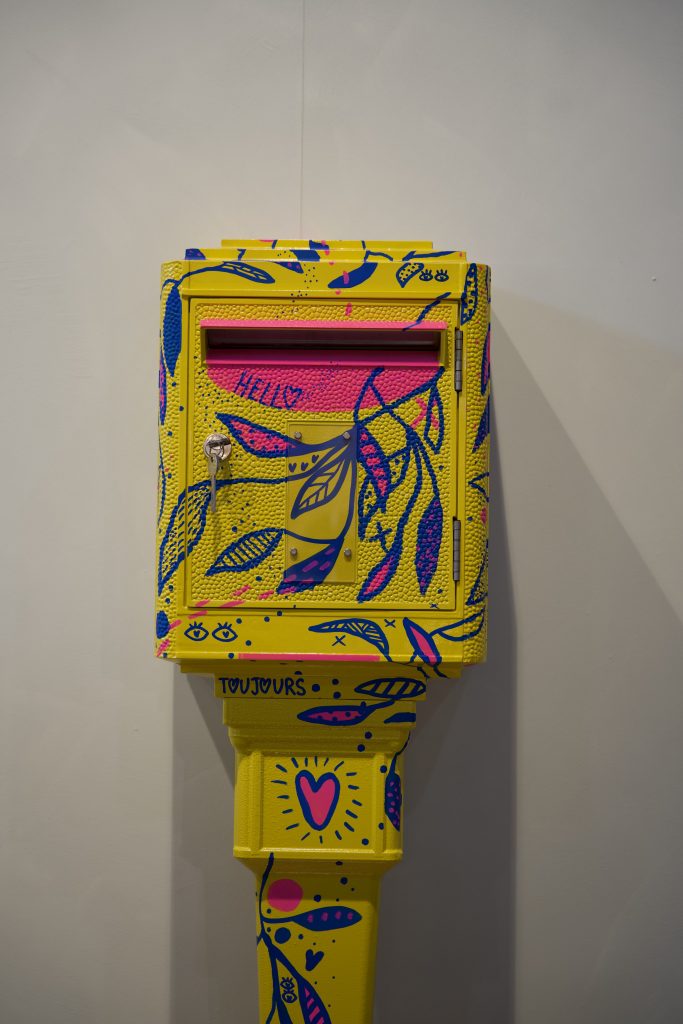
Icône du paysage français, la boîte jaune change de statut et s’invite dans l’univers du design.
ÉDITION #3
L’édition 2026 affirme une vision où artisanat, design et mémoire façonnent l’habitat contemporain, international actuel.
ÉDITION #3
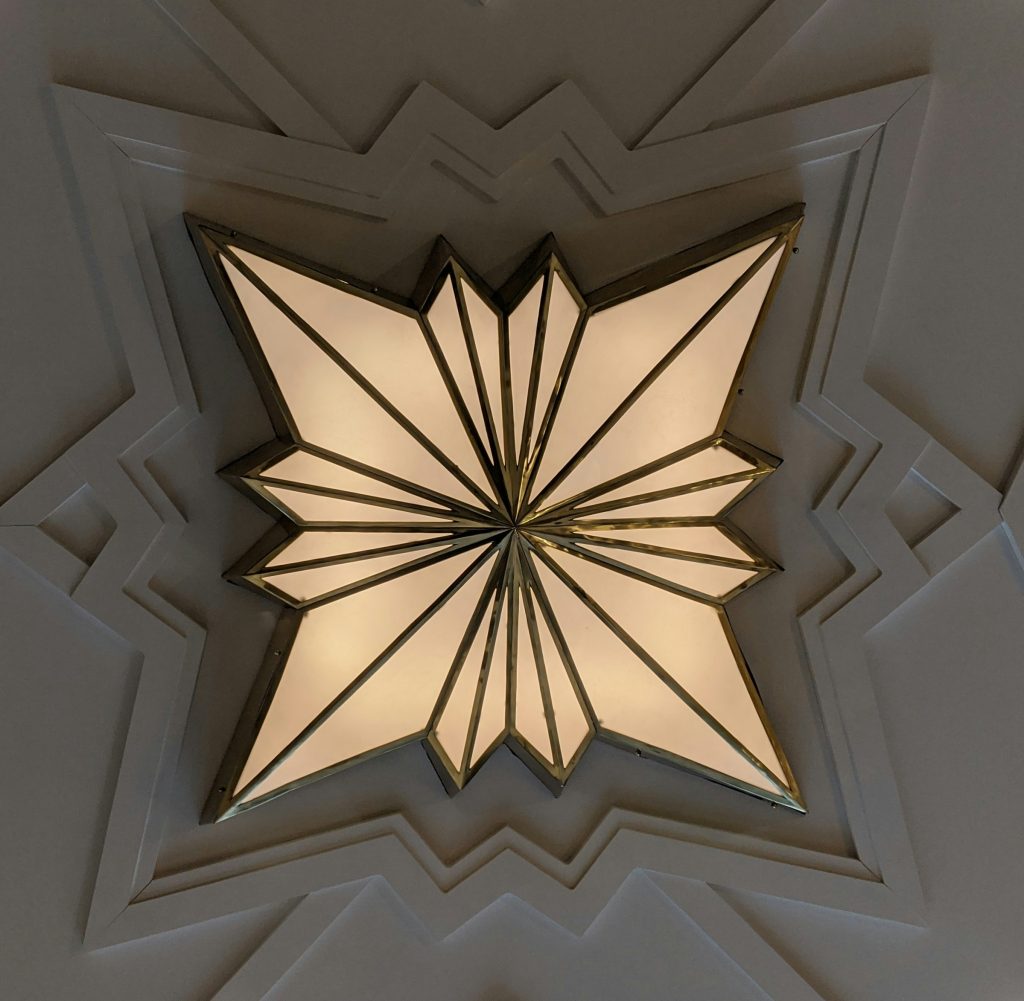
Cent ans après 1925, l’Art déco revient dans nos villes et intérieurs avec géométrie, audace, optimisme.
ÉDITION #3
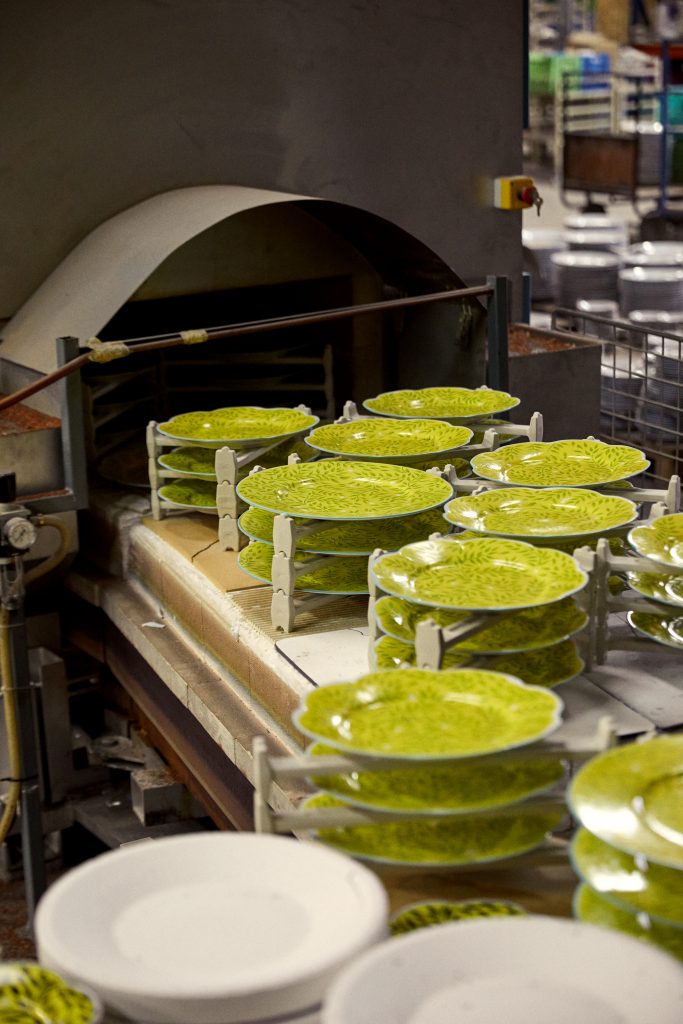
Depuis plus de deux cents ans, Royal Limoges conjugue porcelaine, savoir-faire industriel et création contemporaine.
ÉDITION #3
Des terrains de sport aux podiums, la sneaker raconte un siècle de mutations culturelles, techniques et stylistiques.
ÉDITION #2
Design, mode, artisanat : des créations où la forme et la matière se répondent avec justesse, loin de tout effet de mode.
ÉDITION #1
Décorations artisanales, calendriers ultra-luxe et pièces de collection pour s’enivrer de joie avant l’heure.
ÉDITION #3
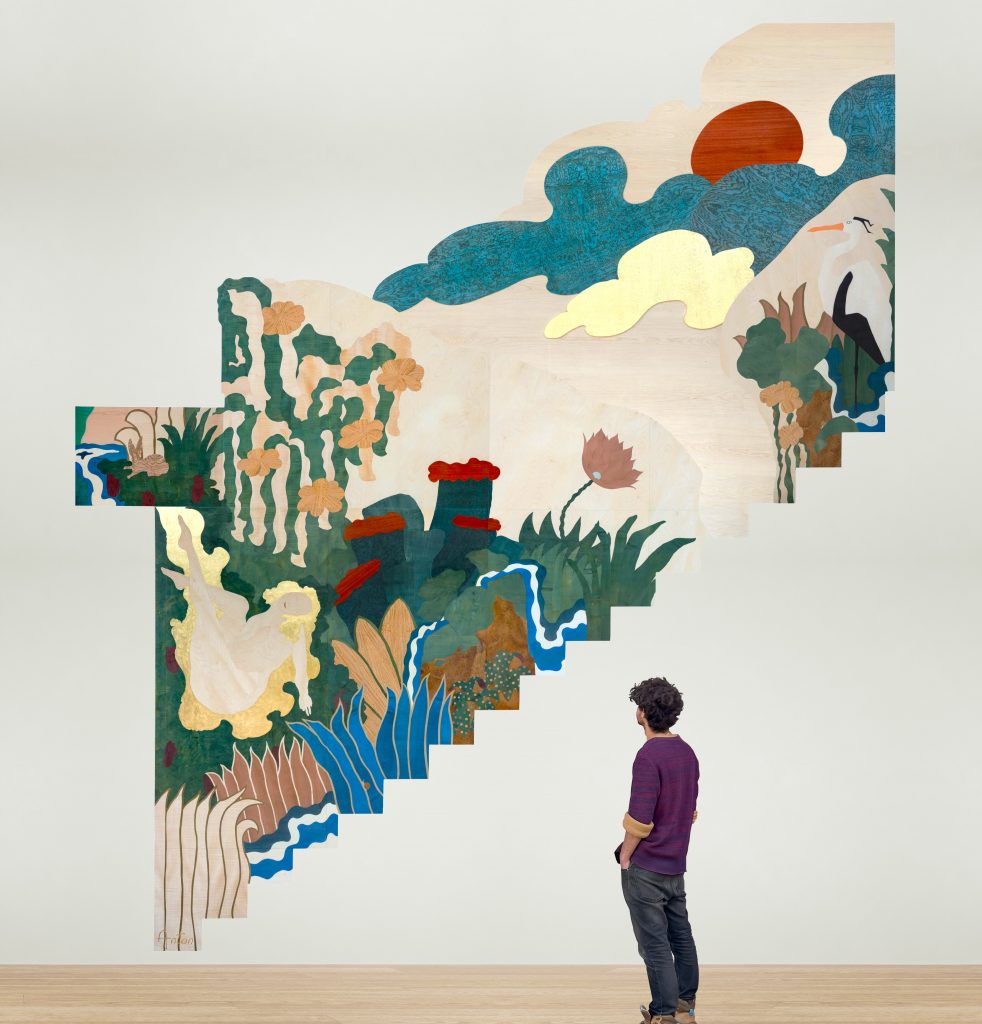
Entre marqueterie monumentale et jungle symbolique, Anton Laborde transforme le bois en récit contemporain poétique engagé.
ÉDITION #3
À Maison & Objet, Thierry Laudren présente des meubles sculptés où fonction, matière et lenteur façonnent une présence.
ÉDITION #3
Jean Nouvel conçoit une architecture attentive aux contextes, où lumière, histoire et usages façonnent chaque projet.
ÉDITION #3
À Lyon, Sophie Morel rénove des lieux historiques en alliant respect du bâti et écriture contemporaine.
ÉDITION #3
Au Centre d’Études Picasso, l’architecte compose une architecture où lumière, géométrie et héritage dialoguent avec précision.
ÉDITION #2
Entretien avec le fondateur d’EDO (European Design Office)
ÉDITION #2
Portrait d’un visionnaire qui transforme l’art de recevoir en expérience totale.
ÉDITION #1
Personnalités, artisans et créateurs qui donnent à la fête sa profondeur humaine.
ÉDITION #3
De Bordeaux au Bassin, art, vignobles et bien-être composent une échappée élégante au cœur de la Gironde.
ÉDITION #2
Vers une région de l’Italie habitée par le temps, où paysages, culture et usages s’accordent dans une continuité rare.
ÉDITION #1
Destinations et rituels qui réinventent la fête, du soleil tropical aux marchés d’hiver.