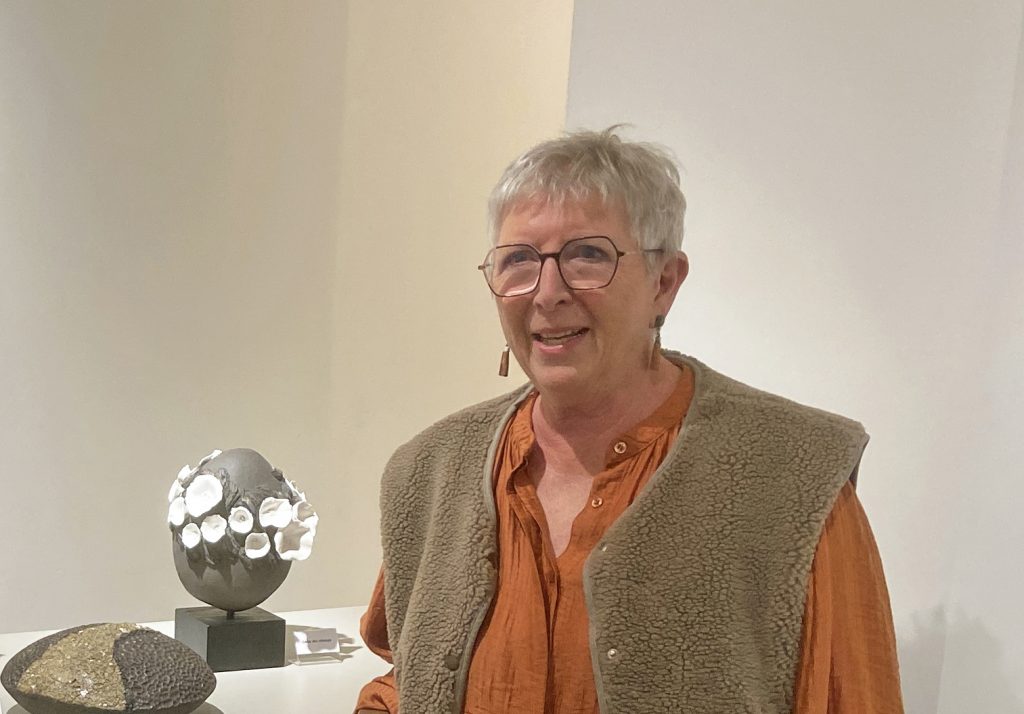
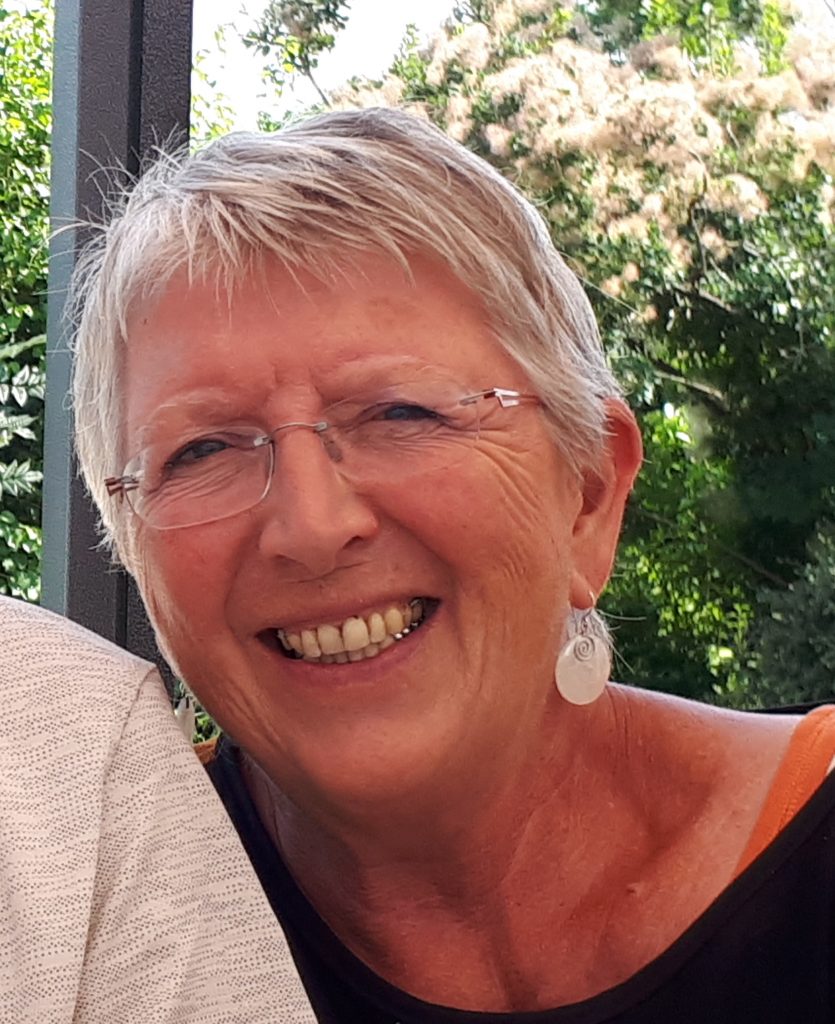
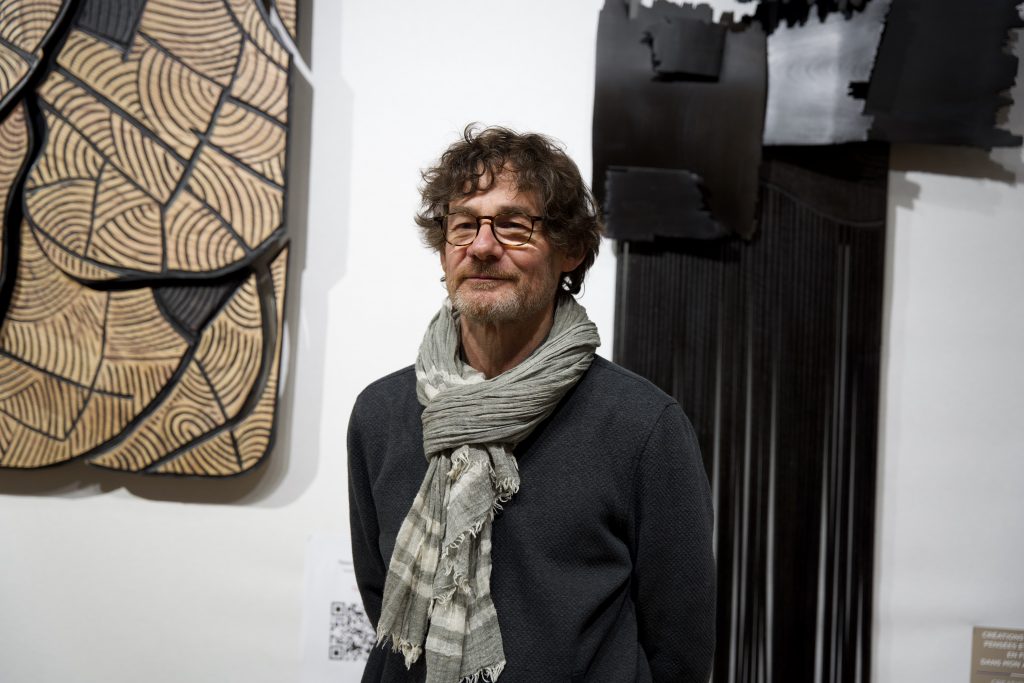
On the edge of a national forest in Blois, Sylvie Renoux has been shaping clay for nearly twenty years. Stoneware, porcelain, raku: under her fingers, the heavy, sticky material transforms into stone, a fossil, almost a breath. A former teacher turned artist, she works by instinct, guided by emotion and chance rather than the need to perform. We meet a creator who has made freedom her sole studio and clay her most beautiful refuge.
Sylvie Renoux
It all begins with the line. After training at the École des Beaux-Arts, Sylvie Renoux became a drawing and visual arts teacher, before branching out into applied arts. She designed signature pieces for the ‘Meilleurs Ouvriers de France’ pastry and cuisine competitions. She has practised ceramics ever since childhood. When a teaching position opened up at the Blois School of Art, she seized the opportunity, teaching herself the craft and learning from renowned 1980s ceramists such as Camille Virot. She says that drawing has ‘really helped her with everything’. It remains the foundation of her craft and the thing that led her to modelling. Even today, she continues to teach on a voluntary basis at an association in Blois. She is always learning, and this is how she moves forward.
Sylvie Renoux
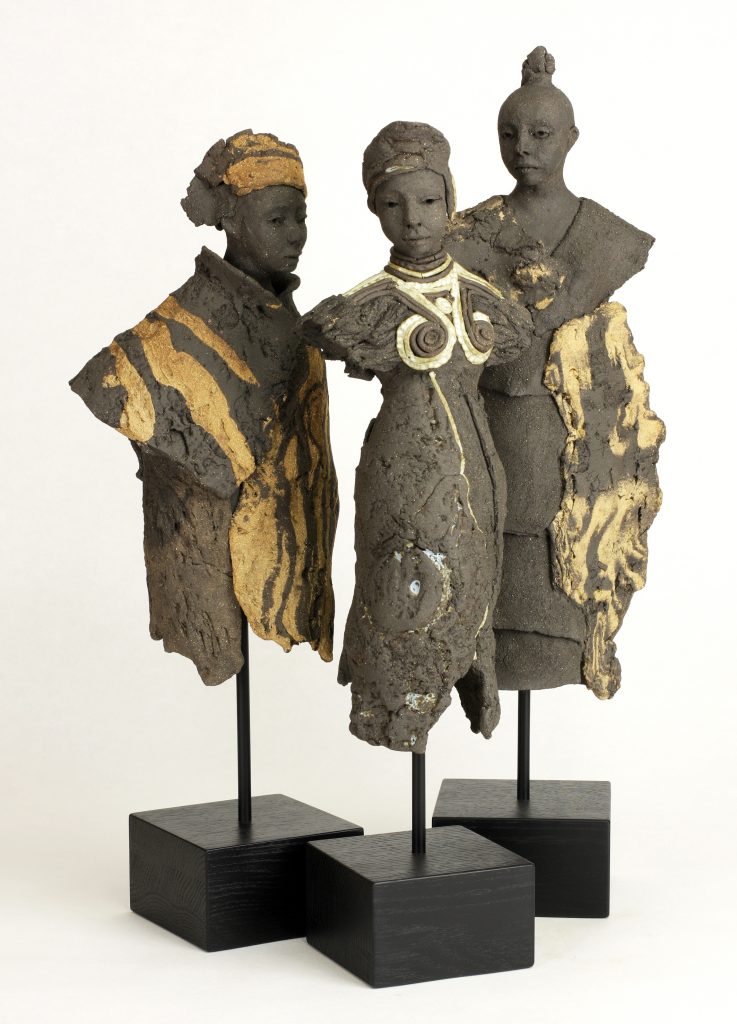
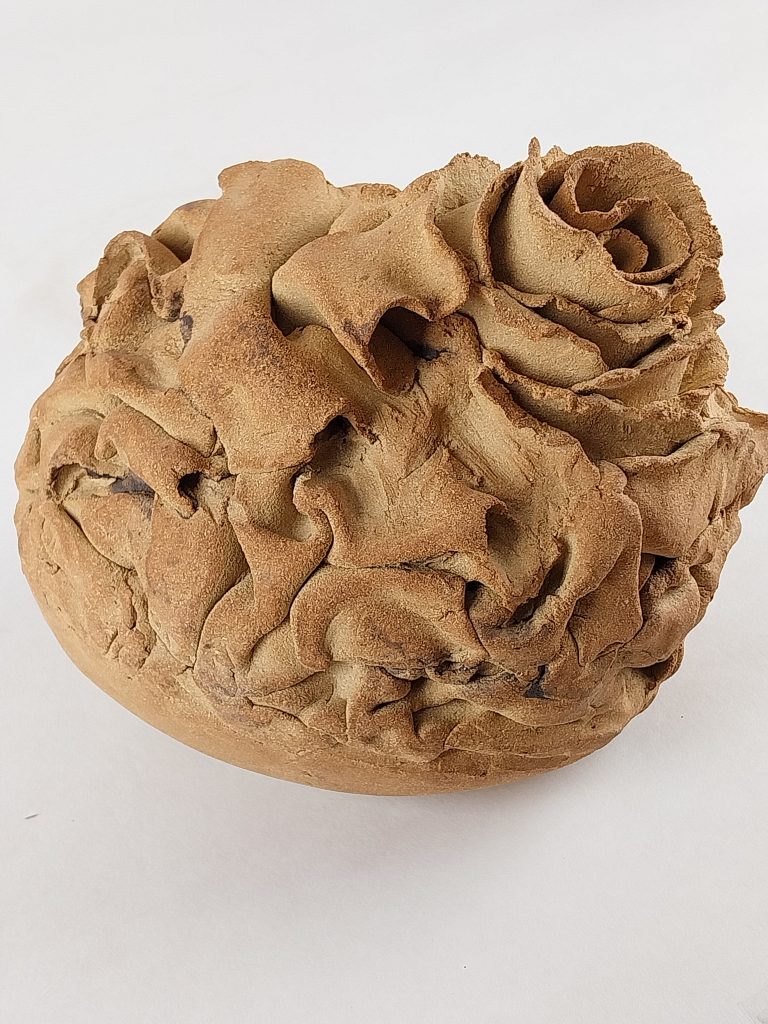
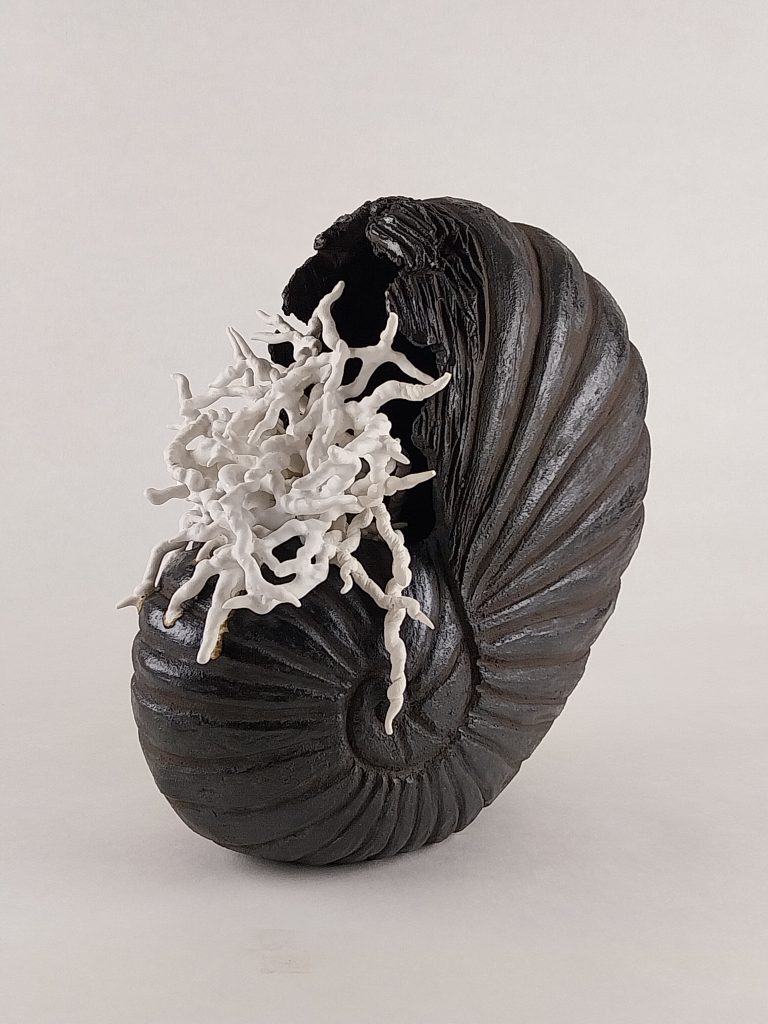
For Sylvie Renoux, sculpting isn’t a decision she makes. It imposes itself. “There has to be an event, something that leads me to it,” she reveals. The ‘Guetteurs’ series was born in this way, out of grief for her mother’s gradual decline due to Alzheimer’s disease, and her desire to capture the moments they shared. This journey first produced pebbles, then small garden Venuses, and finally the Rêves de Pierre (Stone Dreams), those mineral-like pieces recently exhibited. Renoux has always been fascinated by quarries, geological strata and the underwater world in which she grew up, and has always collected stones. Her latest works bear this dual heritage, both fossil and marine. Here, the earth becomes memory, an inner landscape and a silent way of expressing what words cannot articulate.

Sylvie Renoux
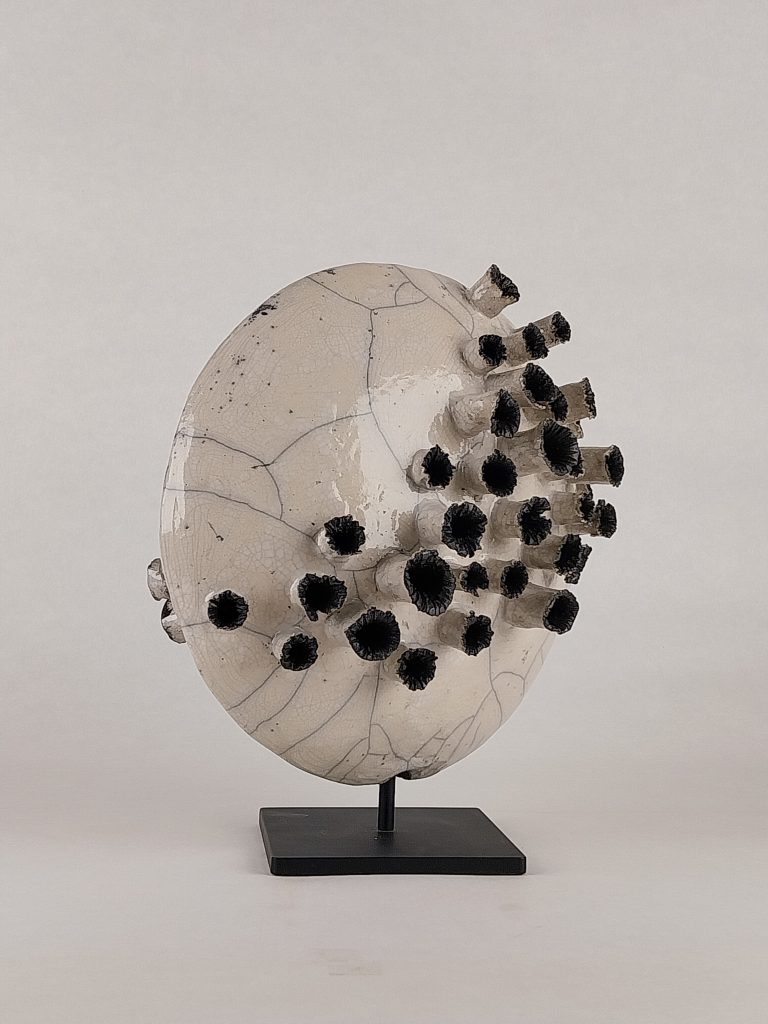
Raku, a firing technique that originated in Japan in the 16th century, has become her playground. The principle seems simple, but the execution is far more challenging. The pieces are fired once, glazed, and then fired again until the glaze melts at around 1,000 degrees. They are then removed from the kiln while still red-hot and placed in a container of wood shavings, herbs or paper, which is then smothered. This thermal shock causes the glaze to crack and the clay to blacken – the hallmark of Raku. ‘There’s a lot of chance involved,’ she admits, immediately qualifying this statement: ‘Chance doesn’t happen by chance.’ She isn’t interested in controlling everything. It is in the unexpected, in the surprise of opening the kiln, that emotion is born. Without this, nothing really holds together for Sylvie.
Sylvie Renoux
The studio is located in the basement of the house and was fitted out by her husband, Jean-Marie. It has been extended to include a summer kitchen. There are four kilns, two of which are in constant use – one electric and one gas-fired. However, it is the outdoors that nourish the indoors. Based on the outskirts of Blois and facing the national forest, Sylvie Renoux can watch roe deer and birds passing by from her workbench. The nearby River Loire gives her that sense of horizontality she loves so much. Nature literally enters her pieces in the form of imprints of pine, apple trees and bamboo, and moulds cast in pebbles. Some sculptures even contain clay from the garden – a beautiful red earth salvaged from a neighbouring building site. Thus, a little of this corner of the Sologne region on the Loire finds its way into every piece, like a trace of the place that gave it life.
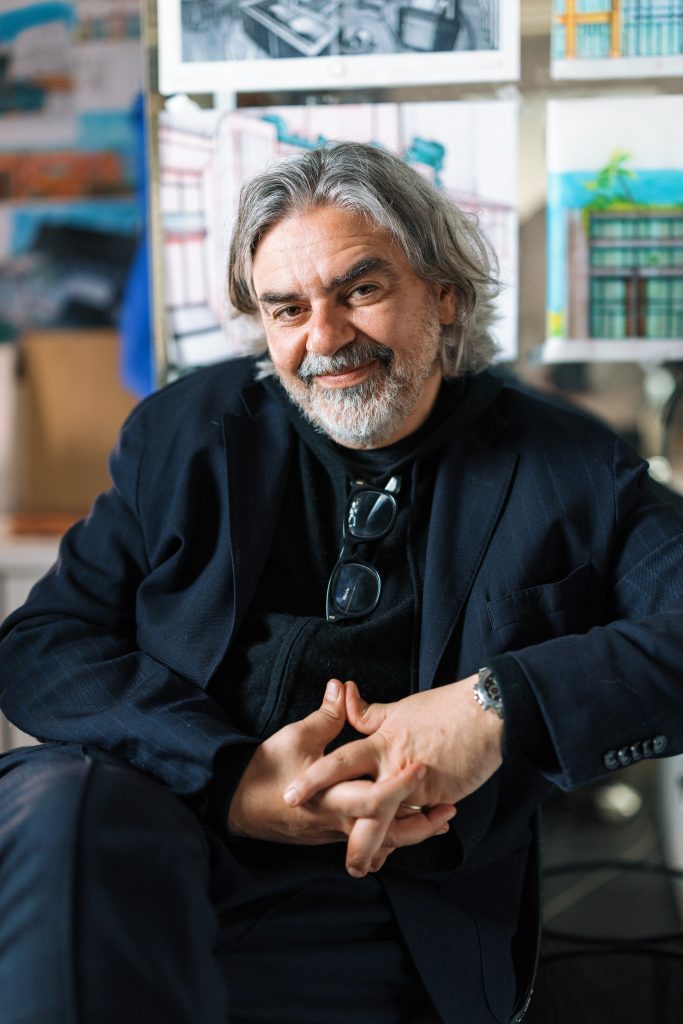
Sylvie Renoux
‘If you’re sure of yourself, there’s no point in trying at all! For Sylvie, doubt is not a weakness; it is the driving force. Having been brought up to ‘do things properly’, she now seeks to break free from that mindset in order to achieve the spontaneous gesture that eludes control. The Japanese and Korean ceramics she finds online inspire her quest for spontaneity, though she never copies them. She says that creation is “an incredible opportunity”, a refuge in times of joy as well as sorrow, much like music is for a musician. She is a multi-faceted artist who now dreams of collaborating with interior designers and seeing her pieces find a home in various spaces. But one thing sums up all her work and perhaps makes the most beautiful title: freedom in creation.
Février, 2026
Créer avec l’existant, penser avec l’histoire
De l’architecture au design, cette édition explore comment lieux, savoir-faire et matières héritées deviennent terrains de création actuelle.
Janvier, 2026
Le luxe se réinvente.
Finis les logos clignotants, place à une sobriété raffinée, à l’immersion personnelle, à l’excellence artisanale, à la durabilité sensible.
Décembre, 2025
Héritages, gestes contemporains et plaisirs essentiels
Parce que la fête n’est jamais qu’apparence : elle reflète notre manière d’habiter le monde, de transmettre, de fabriquer des souvenirs durables.
ÉDITION #3
Upcycling et kintsugi transforment l’objet contemporain, faisant de la trace, de la réparation et de la matière un langage esthétique.
ÉDITION #3
Artisans et designers donnent une seconde vie aux matériaux anciens, entre création contemporaine, patrimoine et réemploi.
ÉDITION #3
Bunkers, wagons et kiosques renaissent grâce à la création, révélant comment l’art redonne sens aux lieux délaissés.
ÉDITION #2
Un regard transversal sur le quiet luxury à travers des lieux, des objets et des figures qui expriment l’élégance.
ÉDITION #1
Une sélection de marques, architectures, objets et escapades qui donnent corps au sens de la fête.
ÉDITION #3
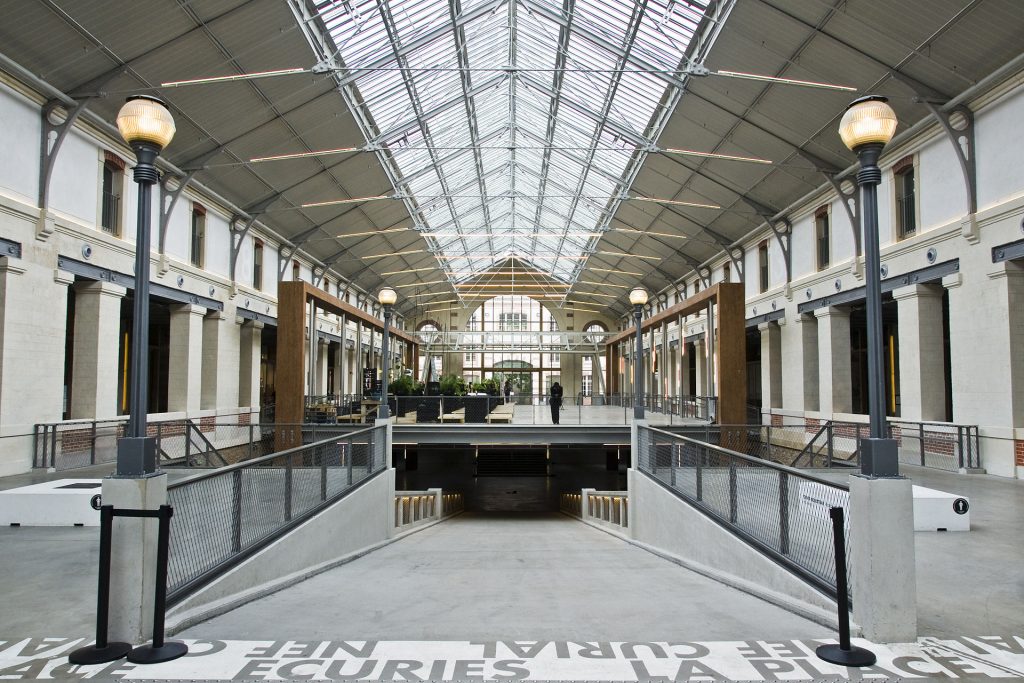
Usines et gares délaissées deviennent lieux culturels ouverts, où mémoire industrielle et usages contemporains redessinent la ville.
ÉDITION #3
L’audacieuse métamorphose d’un palace parisien
ÉDITION #3
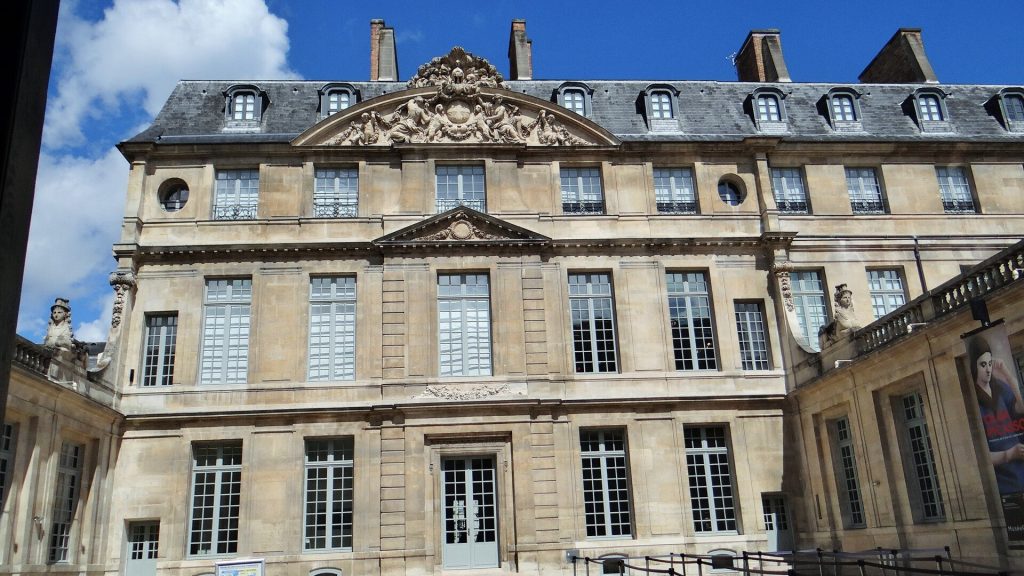
Au cœur du Marais, un lieu discret révèle comment archives, architecture et recherche font dialoguer l’œuvre de Picasso.
ÉDITION #2
Une expérience shopping unique dans un magasin emblématique.
ÉDITION #2
Voyage culinaire et architectural au cœur de la Seine
ÉDITION #2
Dans le 9e arrondissement, un établissement qui invite au quiet luxury
ÉDITION #1
Chante! vient d’ouvrir ses portes. Une invitation à vibrer !
ÉDITION #3
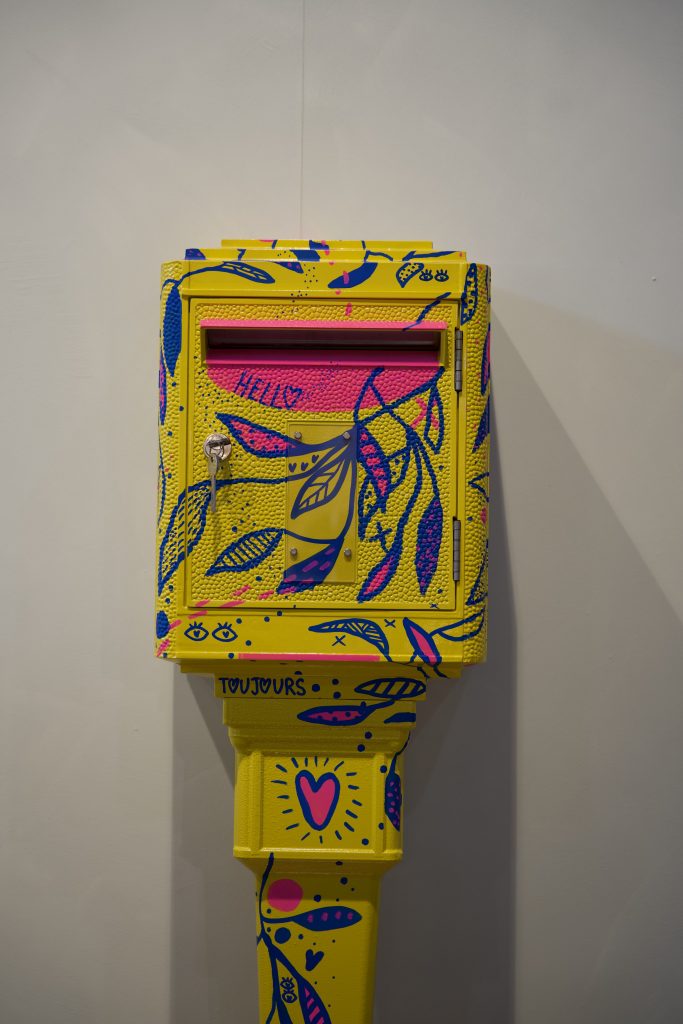
Icône du paysage français, la boîte jaune change de statut et s’invite dans l’univers du design.
ÉDITION #3
L’édition 2026 affirme une vision où artisanat, design et mémoire façonnent l’habitat contemporain, international actuel.
ÉDITION #3
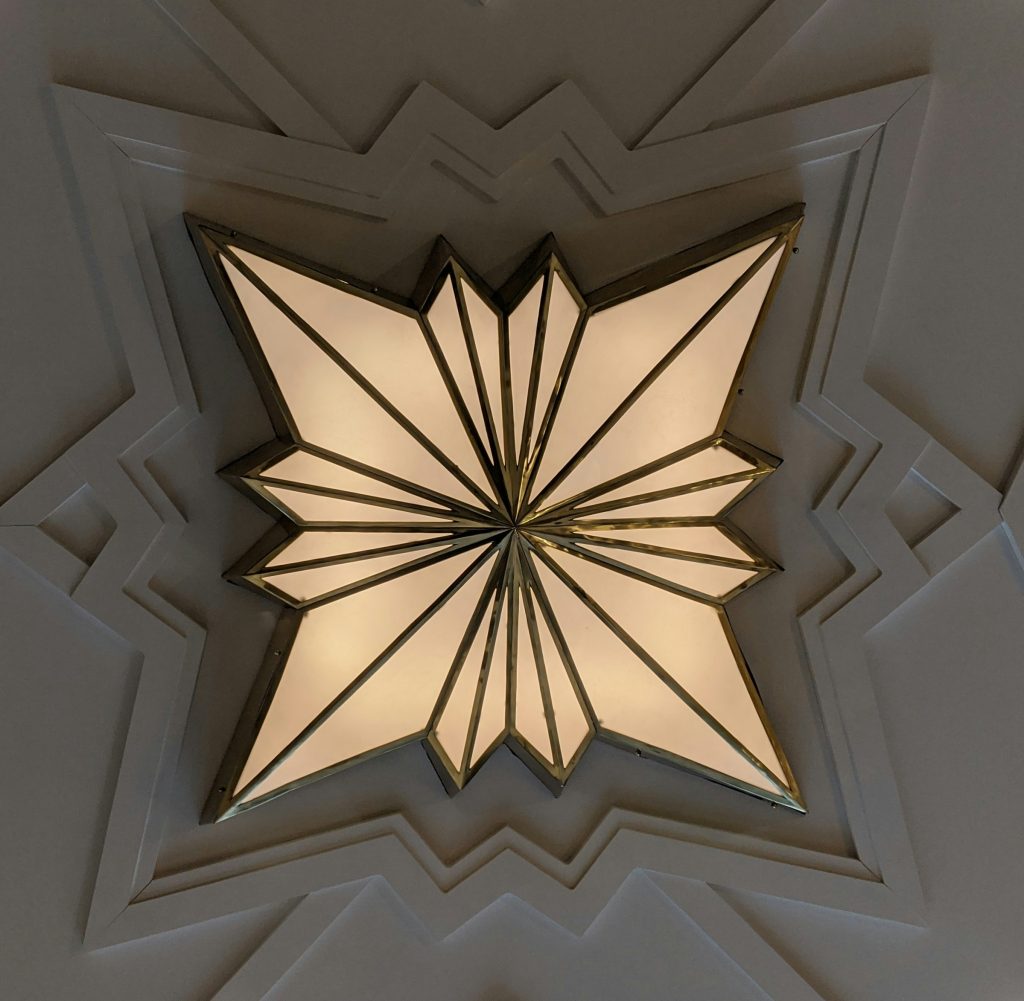
Cent ans après 1925, l’Art déco revient dans nos villes et intérieurs avec géométrie, audace, optimisme.
ÉDITION #3
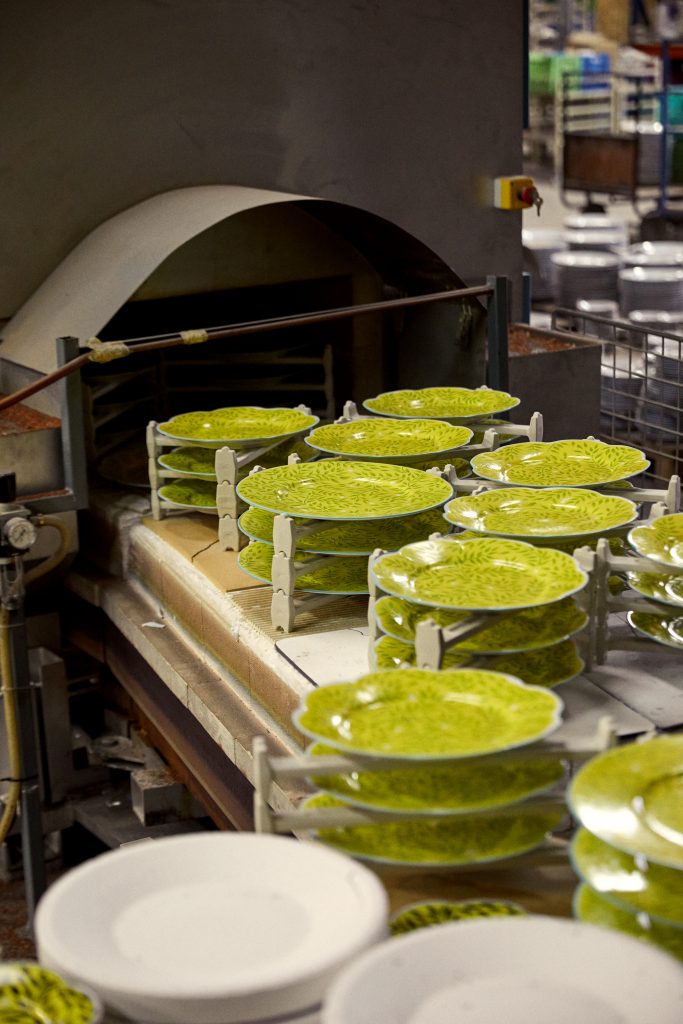
Depuis plus de deux cents ans, Royal Limoges conjugue porcelaine, savoir-faire industriel et création contemporaine.
ÉDITION #3
Des terrains de sport aux podiums, la sneaker raconte un siècle de mutations culturelles, techniques et stylistiques.
ÉDITION #2
Design, mode, artisanat : des créations où la forme et la matière se répondent avec justesse, loin de tout effet de mode.
ÉDITION #1
Décorations artisanales, calendriers ultra-luxe et pièces de collection pour s’enivrer de joie avant l’heure.
ÉDITION #3
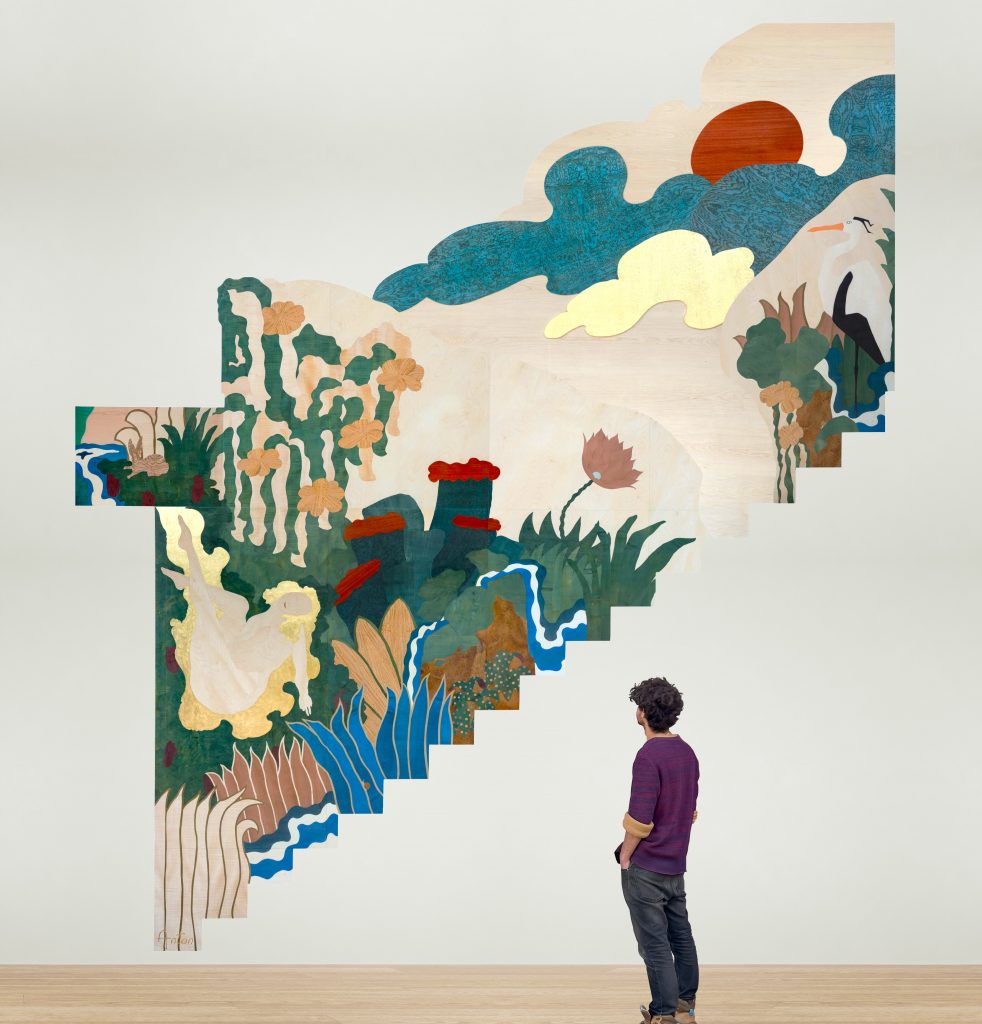
Entre marqueterie monumentale et jungle symbolique, Anton Laborde transforme le bois en récit contemporain poétique engagé.
ÉDITION #3
À Maison & Objet, Thierry Laudren présente des meubles sculptés où fonction, matière et lenteur façonnent une présence.
ÉDITION #3
Jean Nouvel conçoit une architecture attentive aux contextes, où lumière, histoire et usages façonnent chaque projet.
ÉDITION #3
À Lyon, Sophie Morel rénove des lieux historiques en alliant respect du bâti et écriture contemporaine.
ÉDITION #3
Au Centre d’Études Picasso, l’architecte compose une architecture où lumière, géométrie et héritage dialoguent avec précision.
ÉDITION #2
Entretien avec le fondateur d’EDO (European Design Office)
ÉDITION #2
Portrait d’un visionnaire qui transforme l’art de recevoir en expérience totale.
ÉDITION #1
Personnalités, artisans et créateurs qui donnent à la fête sa profondeur humaine.
ÉDITION #3
De Bordeaux au Bassin, art, vignobles et bien-être composent une échappée élégante au cœur de la Gironde.
ÉDITION #2
Vers une région de l’Italie habitée par le temps, où paysages, culture et usages s’accordent dans une continuité rare.
ÉDITION #1
Destinations et rituels qui réinventent la fête, du soleil tropical aux marchés d’hiver.