Treasures from vintage flea markets around the world

From a forgotten Art Deco chair to a weathered travel trunk and a rare vinyl record tucked away at the back of a box, the flea market remains the last bastion of serendipity. From Paris to Bangkok, these open-air bazaars bring together bargain hunters, antique dealers, and collectors, all united by a shared passion for objects with a history of their own. Join us on a world tour of the finest vintage markets, where you can discover hidden treasures around every corner.

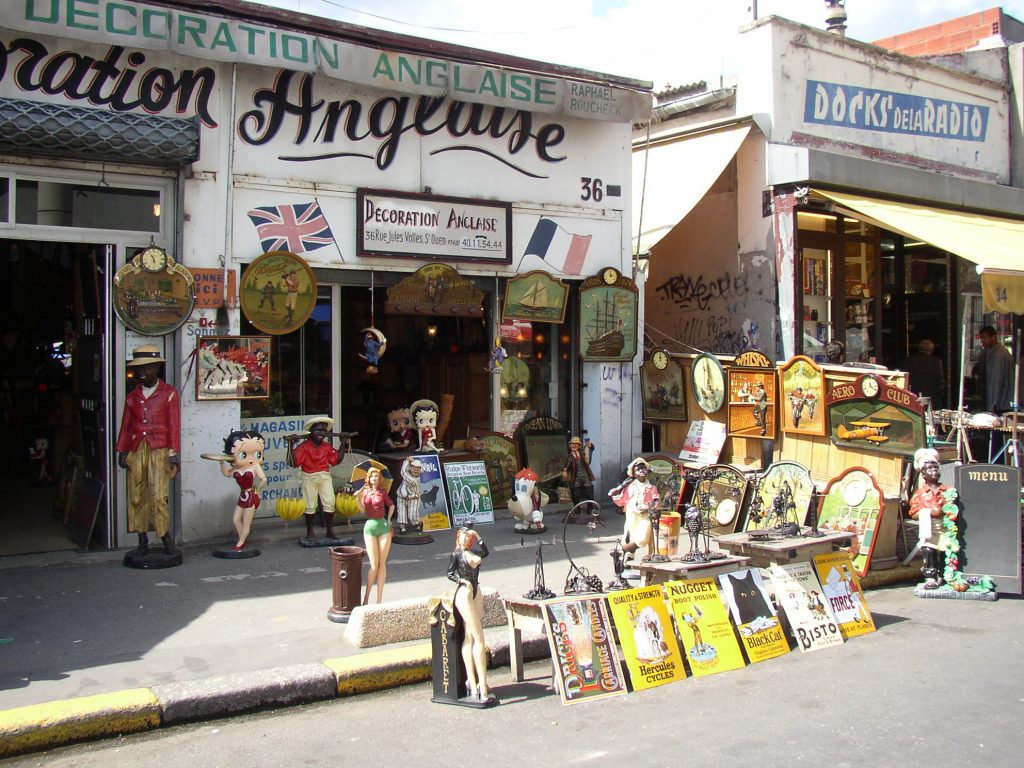
Saint-Ouen, the world’s largest concentration of antique dealers

Giuseppe Gurrieri; Unsplash

Spanning seven hectares of treasures and hosting nearly two thousand traders spread across some fifteen markets, the Saint-Ouen Flea Market is located on the outskirts of Paris. It originated in the 1870s, when rag-and-bone men set up shop beyond the city walls. It was officially recognised in 1885 and now attracts five million visitors every year. Visitors can stroll along Rue Paul Bert and Rue des Rosiers, where 18^(th)-century furniture is displayed alongside 1950s designs and industrial lighting. Open from Saturday to Monday (with Friday reserved for trade visitors), the market remains the global benchmark for antiques and second-hand goods. To walk away with that coveted item, it’s best to set aside the whole day and bring an address book, as well as a keen sense of haggling.

Vanves and Aligre: Paris for Sunday strollers

 Claude Truong-Ngoc; Wikimedia

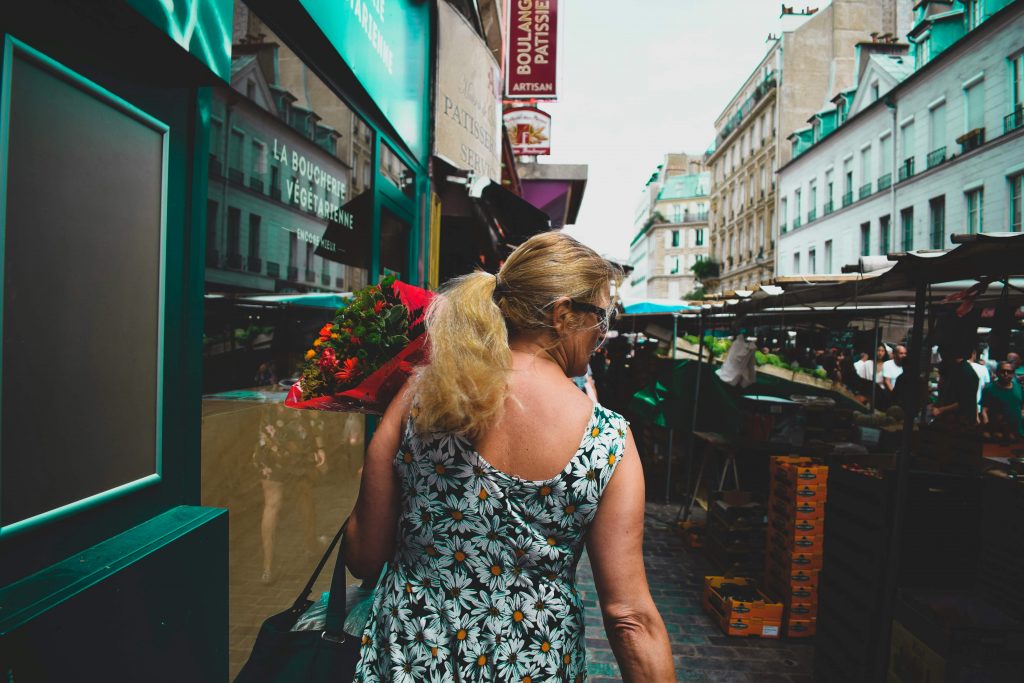
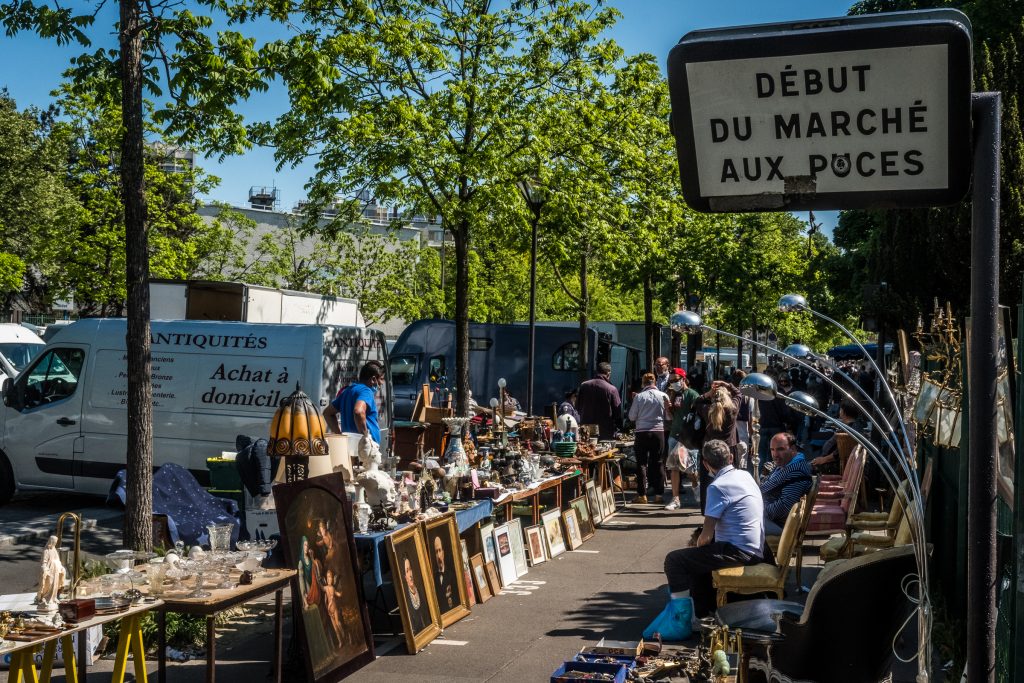
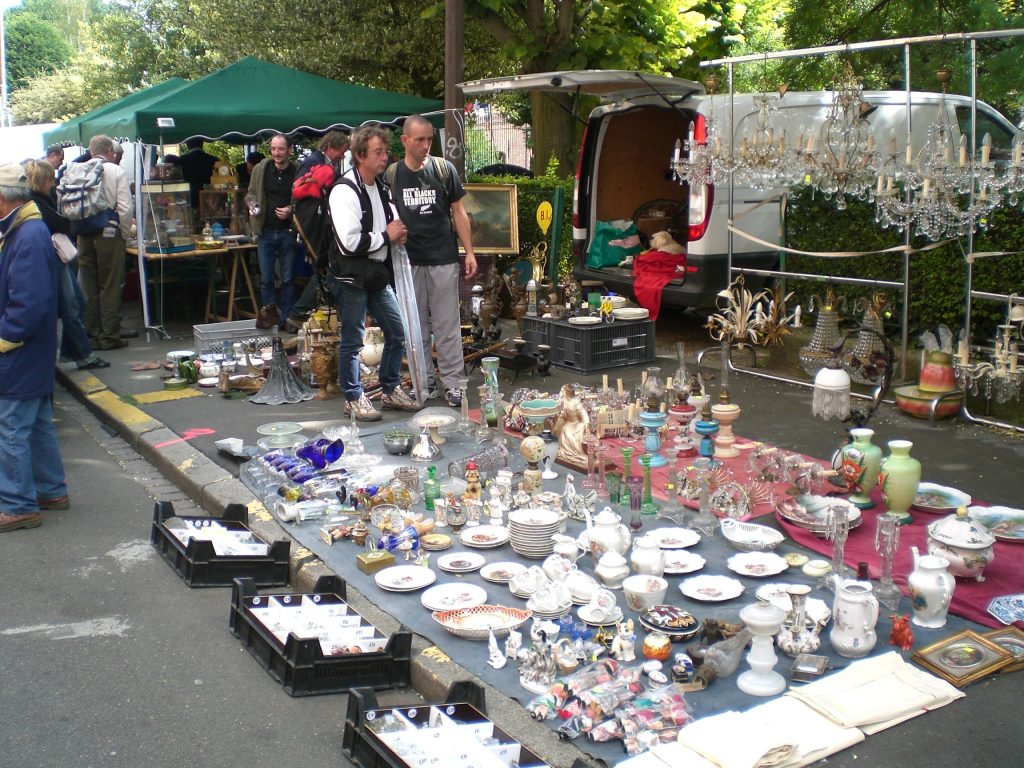
At the other end of the capital, the Vanves Flea Market has a more intimate atmosphere. Nearly four hundred stallholders set up their wares on the pavements along the southern ring road every Saturday and Sunday morning, from dawn onwards. With small pieces of furniture, silverware, engravings and vintage jewellery on offer, this second-hand and antiques market appeals to busy collectors just as much as it does to curious Sunday visitors. Closer to the city centre, at Place d’Aligre in the 12th arrondissement, is one of Paris’s most popular markets. From Tuesday to Sunday, food stalls and second-hand goods mingle here in a suburban atmosphere, where old books, vinyl records, and vintage linens are traded at reasonable prices. These are two must-visit Parisian spots for those who prefer authentic bargain hunting to polished shop windows.

Lyon, France’s vintage capital

Aleksandar Spasojevic; Pexels

Twice a year, La Sucrière plays host to the Marché de la Mode Vintage, an event that has become a firm favourite among aficionados of high-end vintage fashion. In March 2026, the event will celebrate its thirtieth anniversary, with 180 stallholders offering clothing, accessories, homeware, and collectables. Just a few minutes away, the Puces du Canal de Villeurbanne flea market opens its stalls on Thursdays, Saturdays and Sundays. Located in the Saint-Jean district for over thirty years, it has become France’s second-largest flea market, boasting hundreds of covered stalls and free entry. From antique furniture and vintage crockery to advertising posters and all kinds of curiosities, the Lyon metropolitan area offers bargain hunters a vast and challenging playground with a firmly established reputation amongst professionals.

Montsoreau, the flea market along the Loire

Philippe49730; Wikimedia

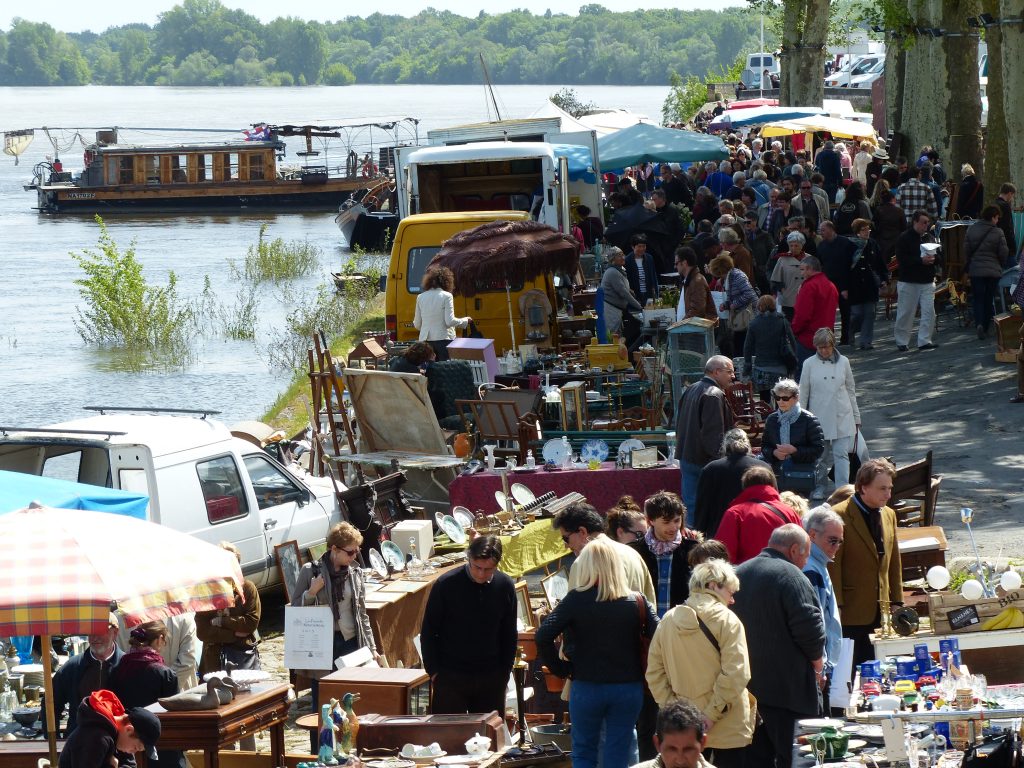
On the second Sunday of every month, the small village of Montsoreau, nestled at the foot of its Renaissance castle, comes alive as a meeting place for collectors of rare items. On the quays of the old harbour, on the banks of the Loire, around a hundred professional antique dealers display furniture, lace, old books, and large decorative items. Established by the local council in 1990, the event has, over the last three decades, become renowned as one of the finest flea markets in the Loire Valley. The market’s reputation is underpinned by one rule: no reproductions are allowed, only authentic pieces. The market now attracts over ten thousand visitors at each event, drawn by both the quality of the finds and the setting, nestled between the river and the golden-hued stones of the Loire Valley.

Nice, Marseille, Belfort: the South and East of France’s second-hand treasure hunts

Dalbera; Wikimedia

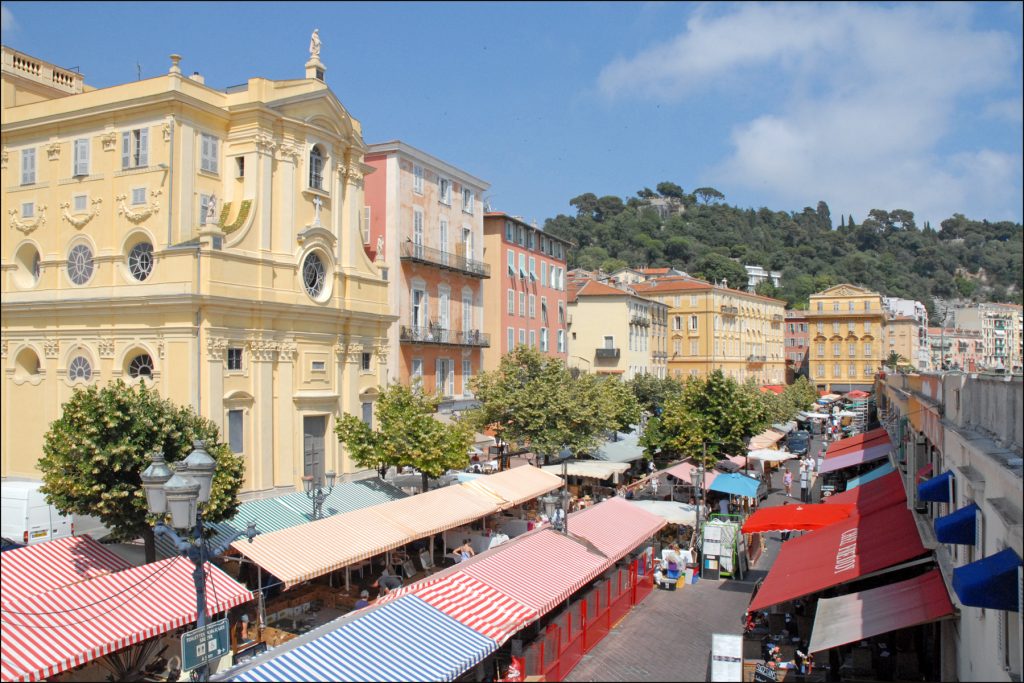
Every Monday, Nice’s Cours Saleya market on the Côte d’Azur swaps its flower stalls for nearly two hundred antique and second-hand dealers. This makes it the second-largest weekly market within city limits in France after Paris. In Marseille, the Cap Pinède flea market in the 15^(th) arrondissement is one of the largest open-air markets in the south of the country, while the Cours Julien is home to second-hand dealers and bookshops in a bohemian setting. Further east, up to 150 stallholders gather at the foot of the cathedral in Belfort’s Place d’Armes on the first Sunday of every month from March to December. This flea market attracts bargain hunters from across the Grand Est region, as well as from neighbouring Switzerland and Germany. They are drawn by the diversity of goods on offer, which changes with the seasons.

Lille, Europe’s largest braderie

Romainberth ; Wikimedia

Once a year, the capital of Flanders is transformed into a vast open-air market. On 5 and 6 September 2026, the Braderie de Lille will stretch for kilometres, with stalls open from Saturday morning until Sunday evening without interruption. The Braderie de Lille has its roots in the Middle Ages, when servants would sell their masters’ old clothes once a year and innkeepers would roast meat in the street to feed the crowds at the great fair. Nowadays, traders and private sellers mingle with hundreds of thousands of visitors amidst a cheerful jumble of furniture, crockery, and curiosities. Tradition dictates that everyone enjoys a plate of mussels and chips, with empty shells piling up outside restaurants over the course of the day.

London, from Portobello to Camden

J. Ligero Loarte, Wikimedia

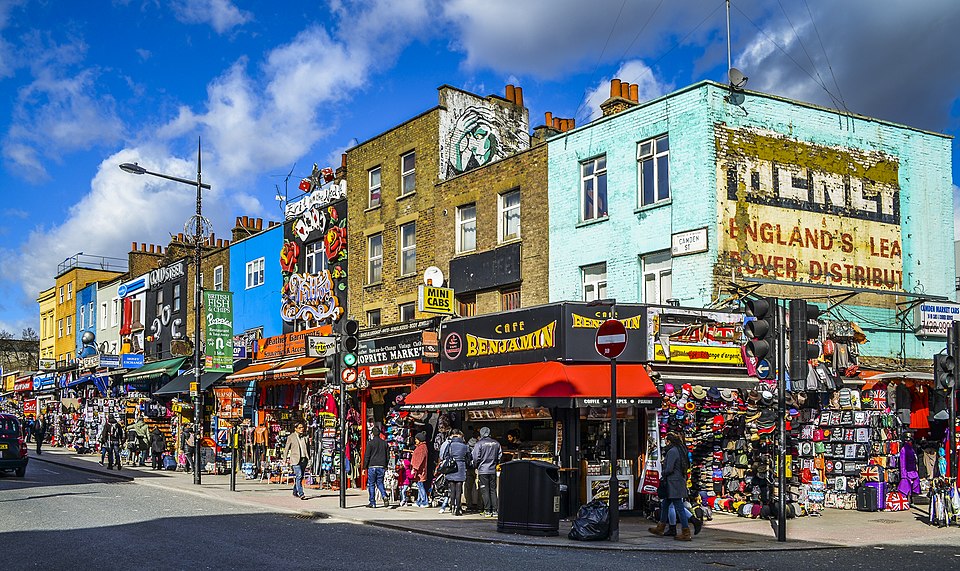
Portobello Road, made famous by the cinema, winds its way through Notting Hill, stretching for nearly a mile with stalls on both sides. On Saturdays, the market’s busiest day, a thousand traders lay out their antiques, vintage clothing, and other curiosities for over a hundred thousand visitors. The street originated in the nineteenth century as a country lane and specialised in antiques in the mid-twentieth century, before the 1960s fashion scene turned it into a cult destination. A few Underground stops away, Camden Market cultivates a younger, more alternative vibe. Founded in 1974 with just sixteen modest stalls near Camden Lock, it has grown to encompass six markets where second-hand clothes, vinyl records, crafts, and world cuisines come together. These two faces of London – one hushed and weathered, the other electric and colourful – are united by a shared passion for second-hand goods.

Amsterdam, from Waterlooplein to the IJ-Hallen

Txllxt TxllxT, Wikimedia

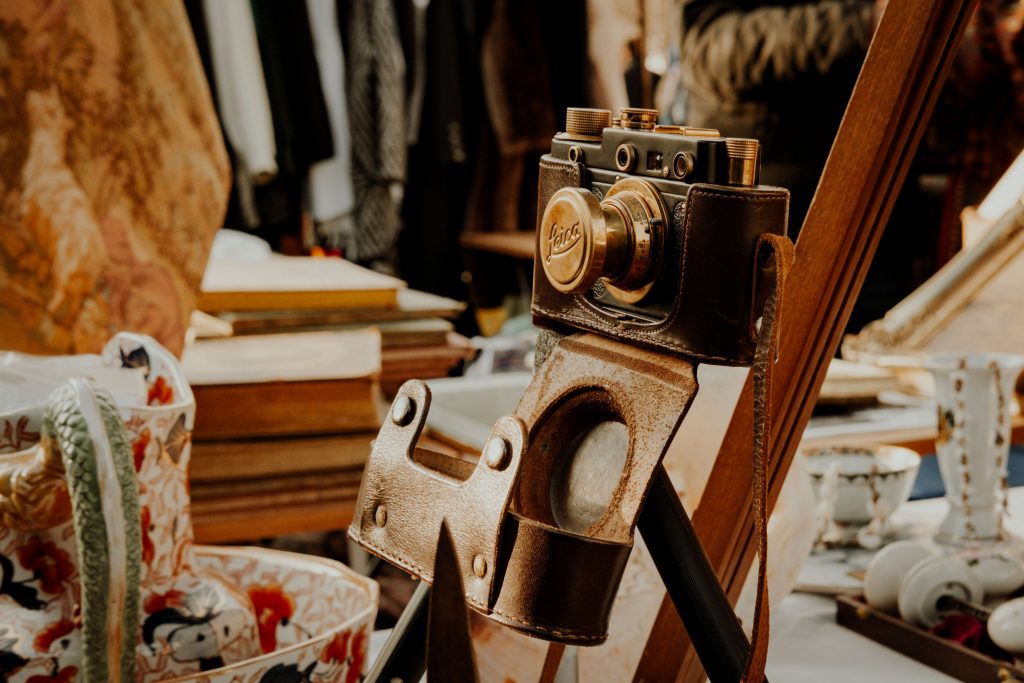
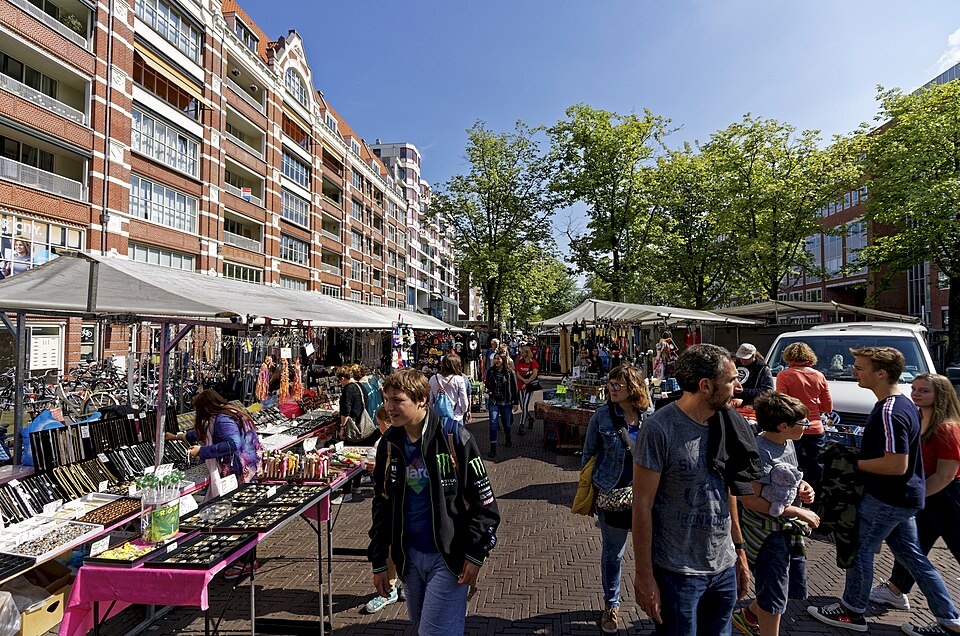
In the centre of Amsterdam, the Waterlooplein flea market is the oldest in the Netherlands. Open six days a week except Sundays since 1885, it features nearly three hundred stalls where you can find vintage cameras, second-hand books, records, and clothes. Each stall is unique, reflecting the market’s free-spirited and colourful atmosphere. On the other side of the IJ, in the city’s northern district, the IJ-Hallen flea market occupies huge hangars in a former shipyard. This market, reputed to be the largest in Europe, brings together 750 stalls spread over thousands of square metres once a month, with an entry fee of six euros. Bargain hunters from all over the world flock there on Saturdays and Sundays in search of a good deal, whether they’re looking for furniture, second-hand clothes, jewellery or vinyl records.

Berlin and Rome: the Sunday ritual

Every Sunday, Mauerpark in Berlin comes alive on the former dividing line between Prenzlauer Berg and Wedding. Up to 30,000 people flock to the stalls selling vinyl records, second-hand clothes, and vintage furniture. They then head to the famous Bearpit Karaoke, launched in 2009 by an Irish courier, which has since become a summer institution. Further south, Rome moves to the rhythm of Porta Portese. Every Sunday from 7 am, this market in the Trastevere neighbourhood unfolds two kilometres of stalls in the heart of the city. Established in the years following the Second World War, it offers a variety of goods, including vintage clothing, furniture, books and miscellaneous items, amidst a crowd of students, collectors, antique dealers and onlookers. Two European capitals, one Sunday gathering that has become a ritual.

Buenos Aires, San Telmo and the antique dealers’ tango

Liam Quinn; Wikimedia

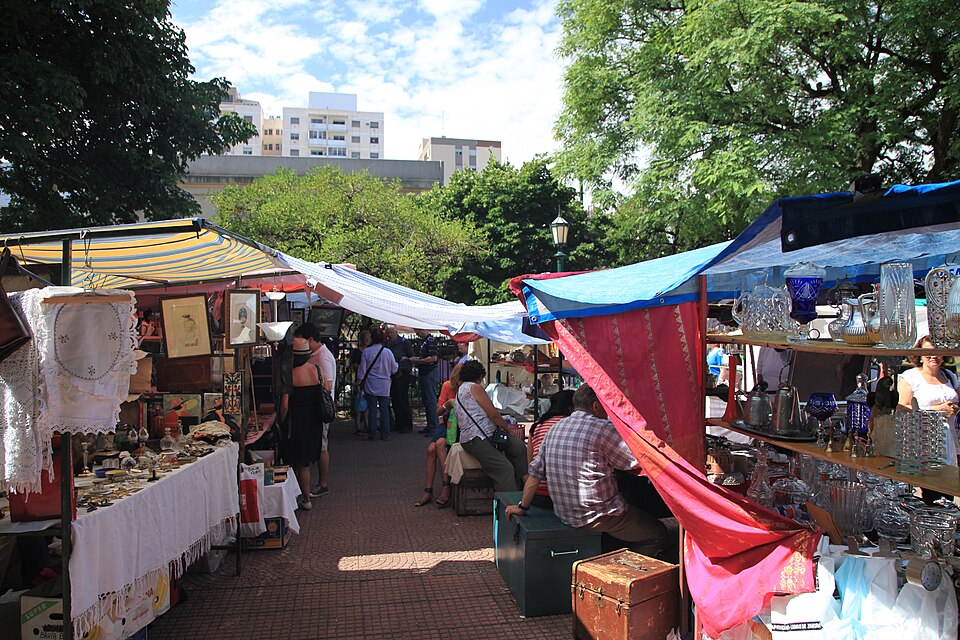
In Buenos Aires’ oldest neighbourhood, the Feria de San Telmo transforms Defensa Street every Sunday into a ten-block-long avenue of treasures. Created in 1970 by the architect José María Peña, it brings together nearly three hundred antique dealers around Plaza Dorrego, the market’s historic epicentre. Old advertising signs, soda fountains, vinyl records, clocks, musical instruments and silverware are traded amongst the stalls. The modestly sized square also hosts tango dancers, both professional and amateur, who make the cobblestones vibrate to the sound of the bandoneon. Just a stone’s throw away, the covered market, housed in an elegant iron structure dating from 1897, extends the stroll amongst food stalls and year-round antique dealers.

United States, from Brimfield to Brooklyn

Evanscott7; Wikimedia

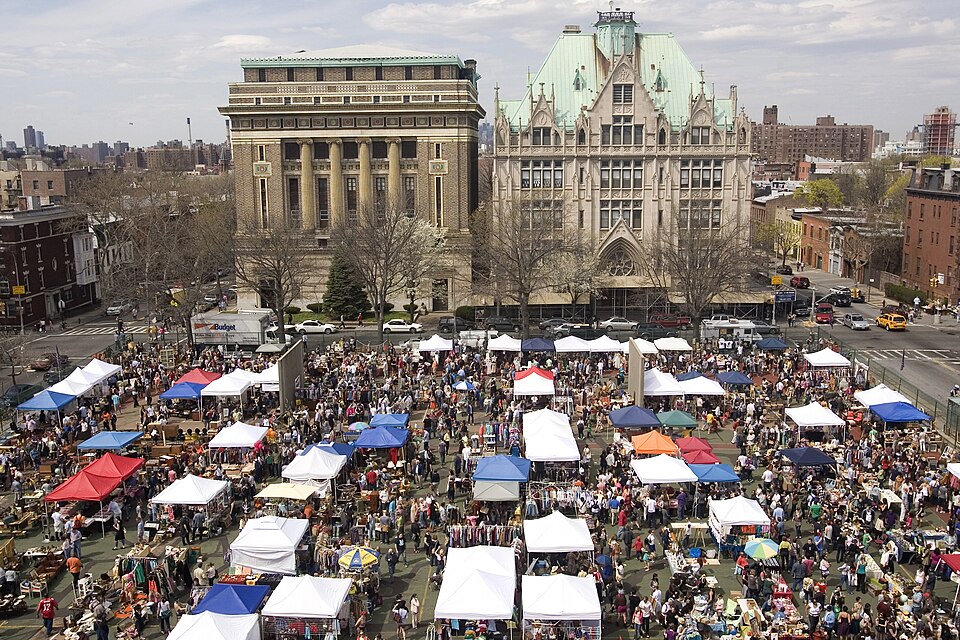
The small town of Brimfield, Massachusetts, hosts the largest open-air antiques market in the United States three times a year – in May, July and September 2026. Spanning nearly a mile of Route 20, the market attracts collectors, interior designers and bargain hunters from across the country, with six thousand traders setting up their stalls for six days. American furniture, enamelled signs, clothing and industrial curios are all traded there in the open air. In New York, the Brooklyn Flea is open from Saturday to Sunday from April to December, with furniture, second-hand clothes and art objects on display against a backdrop of skyscrapers. The market’s founders have also revived the Chelsea Flea in Manhattan, a hub for antiques enthusiasts since 1976, proving that bargain hunting is still very much alive in the American metropolis.

Bangkok: Chatuchak, the Asian giant

Christophe95; Wikimedia

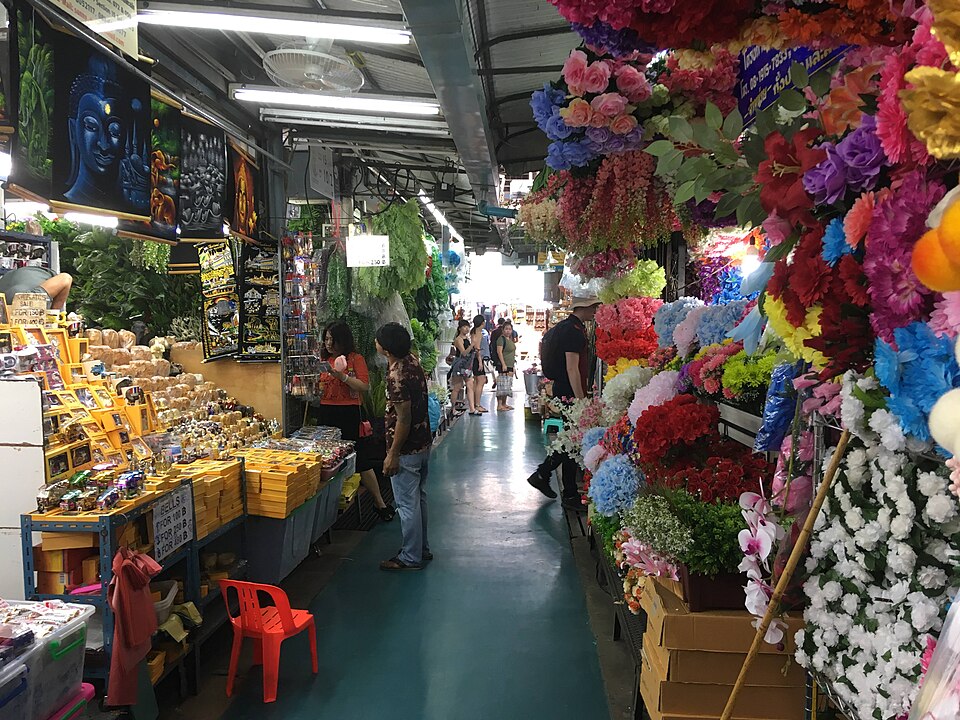
Chatuchak, located to the north of Bangkok, is widely regarded as the world’s largest weekend market. Spanning thirty-five acres, its fifteen thousand stalls are spread across twenty-six sections dedicated to fashion, cookware, crafts, and antiques. Vintage enthusiasts head to sections one, seven and twenty-six, where they can find antique items, second-hand furniture and collectables that cannot be found anywhere else. The market has been established at this site since 1982 and is crowned by its famous clock tower. It welcomes nearly 200,000 visitors every weekend. The heat, the crowds and the maze of aisles all form part of the experience, so it’s best to arrive early, pick up a map and let the flow of people carry you along until you find that one special item that makes the detour worthwhile.

Practical information

  • Saint-Ouen Flea Market (Paris): Saturday to Monday. Paris Saint-Ouen Flea Market: link
  • Vanves Flea Market (Paris): Saturday and Sunday mornings. Aligre Flea Market (Paris 12th arrondissement): Tuesday to Sunday. link
  • Vintage Fashion Market (Lyon): 7 and 8 March 2026, at La Sucrière. link
  • Canal Flea Market (Villeurbanne): Thursdays, Saturdays and Sundays, free entry. link
  • Montsoreau Flea Market: every second Sunday of the month. link
  • Cours Saleya Flea Market (Nice): every Monday. link
  • Marseille Flea Market (Cap Pinède): Friday to Sunday. link
  • Belfort Flea Market: first Sunday of the month, from March to December. link
  • Lille Braderie: 5 and 6 September 2026. link
  • Portobello Road and Camden Market (London): Saturdays. link
  • Waterlooplein (Amsterdam): Monday to Saturday. link
  • IJ-Hallen (Amsterdam): one weekend a month. link
  • Mauerpark (Berlin) link and Porta Portese (Rome): Sundays link
  • Feria de San Telmo (Buenos Aires): Sundays. link
  • Brimfield (Massachusetts): in May, July and September 2026. link
  • Brooklyn Flea (New York): Saturdays and Sundays, from April to December. link
  • Chatuchak (Bangkok): Saturdays and Sundays.link

Continue exploring

A grand tour of Swiss watchmaking expertise: the manufacturers and workshops
Endangered skills: a world tour of ten rare crafts worth preserving
Lasting forever: nine objects that have become legends
Ten hidden gems showcasing an intimate, artisanal and deeply elegant Scotland
Plant-based cuisine to awaken the senses: a host of chefs to follow
Temples of gastronomy where the senses are awakened!

Février, 2026

Édition 3 : Patrimoine et création

Créer avec l’existant, penser avec l’histoire

De l’architecture au design, cette édition explore comment lieux, savoir-faire et matières héritées deviennent terrains de création actuelle.

Janvier, 2026

Édition 2 : Quiet luxury

Le luxe se réinvente.

Finis les logos clignotants, place à une sobriété raffinée, à l’immersion personnelle, à l’excellence artisanale, à la durabilité sensible.

Décembre, 2025

Édition 1 : Le sens de la fête

Héritages, gestes contemporains et plaisirs essentiels

Parce que la fête n’est jamais qu’apparence : elle reflète notre manière d’habiter le monde, de transmettre, de fabriquer des souvenirs durables.

ÉDITION #3

Révéler la beauté

Upcycling et kintsugi transforment l’objet contemporain, faisant de la trace, de la réparation et de la matière un langage esthétique.

ÉDITION #3

Les nouveaux artisans du patrimoine

Artisans et designers donnent une seconde vie aux matériaux anciens, entre création contemporaine, patrimoine et réemploi.

ÉDITION #3

L'art à la rescousse des friches et lieux oubliés

Bunkers, wagons et kiosques renaissent grâce à la création, révélant comment l’art redonne sens aux lieux délaissés.

ÉDITION #2

Le murmure du beau

Un regard transversal sur le quiet luxury à travers des lieux, des objets et des figures qui expriment l’élégance.

ÉDITION #1

Lieux, maisons et matières en éclats

Une sélection de marques, architectures, objets et escapades qui donnent corps au sens de la fête.

ÉDITION #3

La création au secours des bâtiments promis à l’oubli

Usines et gares délaissées deviennent lieux culturels ouverts, où mémoire industrielle et usages contemporains redessinent la ville.

ÉDITION #3

Hôtel Normandy Le Chantier

L’audacieuse métamorphose d’un palace parisien

ÉDITION #3

Dans les coulisses du Centre d'Études Picasso à Paris

Au cœur du Marais, un lieu discret révèle comment archives, architecture et recherche font dialoguer l’œuvre de Picasso.

ÉDITION #2

Shopping iconique dans un décor Tudor

Une expérience shopping unique dans un magasin emblématique.

ÉDITION #2

Gastronomie et architecture

Voyage culinaire et architectural au cœur de la Seine

ÉDITION #2

L'art de l'hospitalité parisienne

Dans le 9e arrondissement, un établissement qui invite au quiet luxury

ÉDITION #1

Chante!

Chante! vient d’ouvrir ses portes. Une invitation à vibrer !

ÉDITION #3

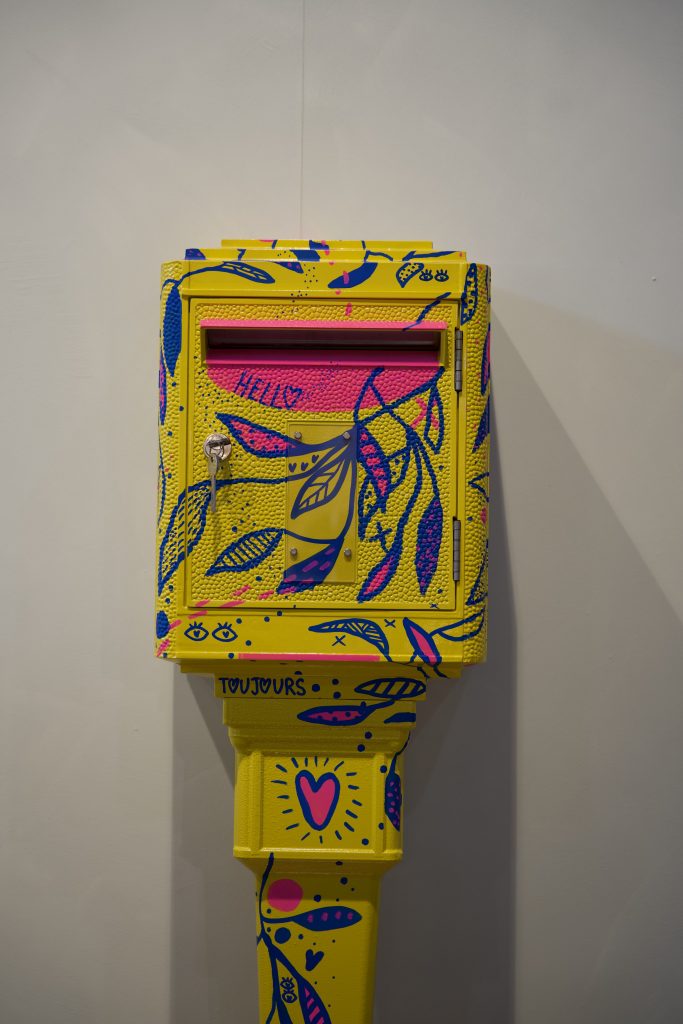
La boîte aux lettres française devenue objet de design

Icône du paysage français, la boîte jaune change de statut et s’invite dans l’univers du design.

ÉDITION #3

Retour sur Maison&Objet 2026 : retour aux sources et à l’essentiel

L’édition 2026 affirme une vision où artisanat, design et mémoire façonnent l’habitat contemporain, international actuel.
ÉDITION #3

Art Deco: un mouvement centenaire, plus actuel que jamais

Cent ans après 1925, l’Art déco revient dans nos villes et intérieurs avec géométrie, audace, optimisme.

ÉDITION #3

Royal Limoges, deux siècles d’histoire au présent

Depuis plus de deux cents ans, Royal Limoges conjugue porcelaine, savoir-faire industriel et création contemporaine.

ÉDITION #3

Du terrain à la rue et au catwalk : les sneakers à travers les époques

Des terrains de sport aux podiums, la sneaker raconte un siècle de mutations culturelles, techniques et stylistiques.

ÉDITION #2

La formidable aventure du papier peint de luxe

Design, mode, artisanat : des créations où la forme et la matière se répondent avec justesse, loin de tout effet de mode.

ÉDITION #1

Icônes, détails, rituels

Décorations artisanales, calendriers ultra-luxe et pièces de collection pour s’enivrer de joie avant l’heure.

ÉDITION #3

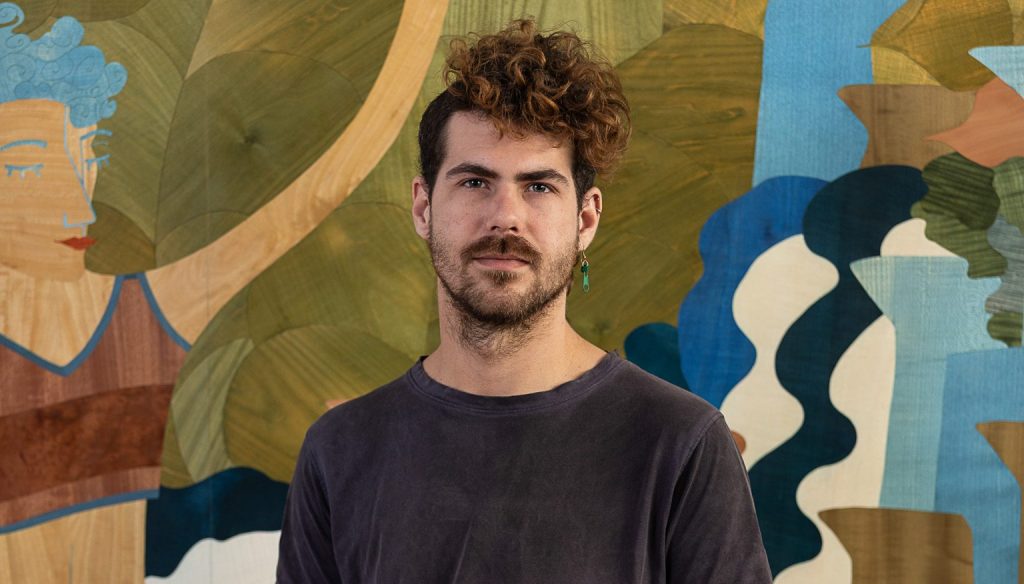
Anton Laborde

Entre marqueterie monumentale et jungle symbolique, Anton Laborde transforme le bois en récit contemporain poétique engagé.

ÉDITION #3

Thierry Laudren

À Maison & Objet, Thierry Laudren présente des meubles sculptés où fonction, matière et lenteur façonnent une présence.

ÉDITION #3

Jean Nouvel

Jean Nouvel conçoit une architecture attentive aux contextes, où lumière, histoire et usages façonnent chaque projet.

ÉDITION #3

Sophie Morel

À Lyon, Sophie Morel rénove des lieux historiques en alliant respect du bâti et écriture contemporaine.

ÉDITION #3

Pascal Grasso

Au Centre d’Études Picasso, l’architecte compose une architecture où lumière, géométrie et héritage dialoguent avec précision.

ÉDITION #2

Alexandre Danan

Entretien avec le fondateur d’EDO (European Design Office)

ÉDITION #2

Aziz Temimi

Portrait d’un visionnaire qui transforme l’art de recevoir en expérience totale.

ÉDITION #1

Visages, gestes, inspirations

Personnalités, artisans et créateurs qui donnent à la fête sa profondeur humaine.

ÉDITION #3

Chemins de traverse : parenthèse d’exception en Bordelais

De Bordeaux au Bassin, art, vignobles et bien-être composent une échappée élégante au cœur de la Gironde.

ÉDITION #2

Voyage en Toscane

Vers une région de l’Italie habitée par le temps, où paysages, culture et usages s’accordent dans une continuité rare.

ÉDITION #1

Horizons, saisons, traditions

Destinations et rituels qui réinventent la fête, du soleil tropical aux marchés d’hiver.

Dates, adresses, invitations

Expositions, événements et repères culturels pour vivre pleinement la saison des fêtes.