Between 1880 and 1914, France experienced a period of prosperity, technical optimism and creative effervescence which has come to be known as the Belle Époque. During this time, glassmakers from Nancy, Parisian jewellers and brilliant poster artists produced a profusion of desirable objects, which are now sought after by connoisseurs of fine materials. This exhibition provides an overview of the treasures left behind by this golden age for those who love to hunt for them, preserve them and pass them on.
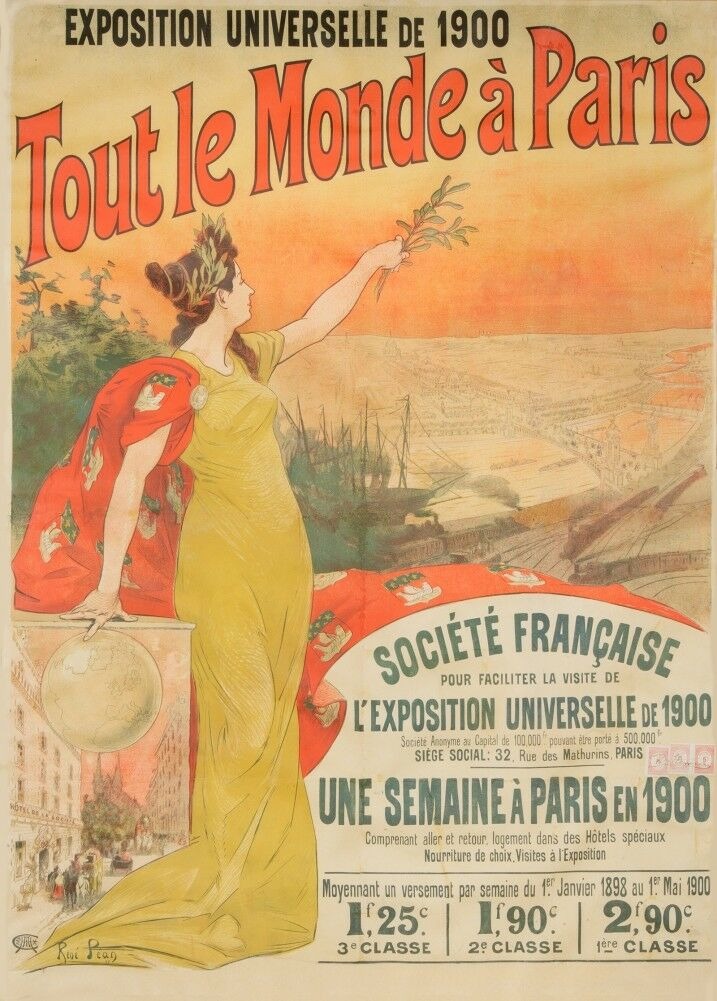
1900 World’s Fair; René Péan; Wikimedia
The Belle Époque refers to the decades of relative peace between the Franco-Prussian War and the First World War. Fostered by economic growth, the Second Industrial Revolution, electricity, the motor car and the nascent cinema, the period saw a pronounced taste for refinement in a climate of carefree optimism. Art Nouveau reigned supreme with its curved lines and floral motifs, and its ambition to create a ‘total art’ that permeated everyday objects. Two World’s Fairs, in 1889 and then in 1900, provided Paris with a global showcase and spread these creations far beyond its borders. For today’s collectors, this abundance opens up several areas: glass, jewellery, posters, and paper. Each tells the story of the same quest for beauty in modern life.
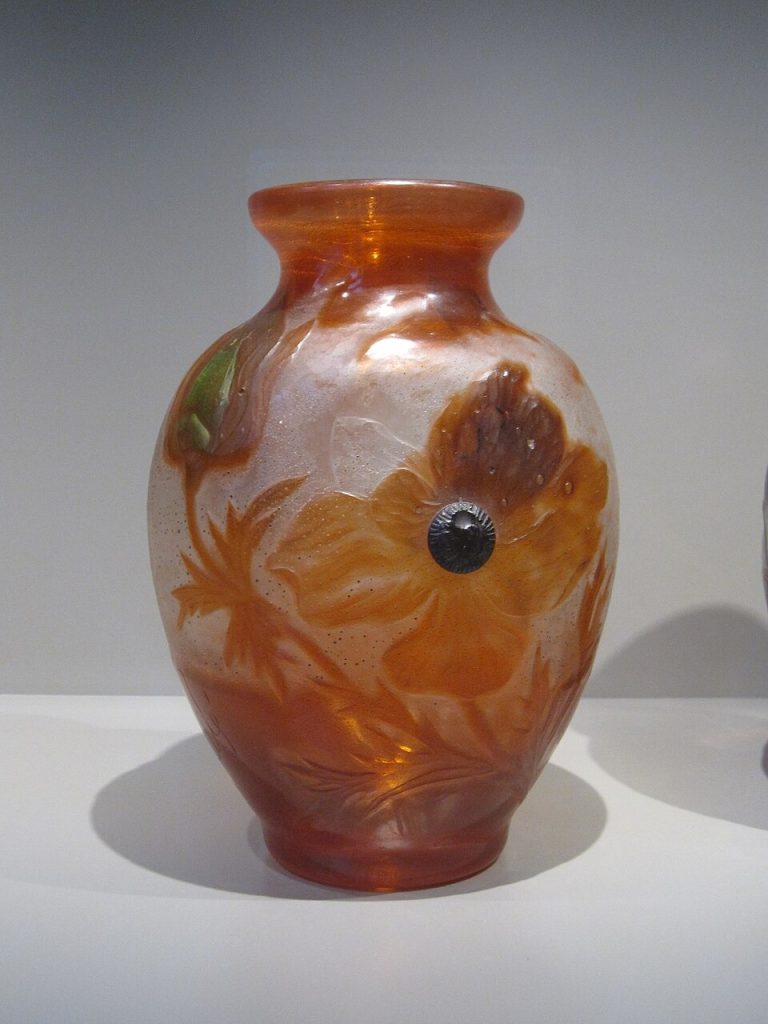
Vase with an anemone design, produced at the Émile Gallé crystal works in Nancy around 1897–1900 – Museum of Decorative Arts; Wikimedia
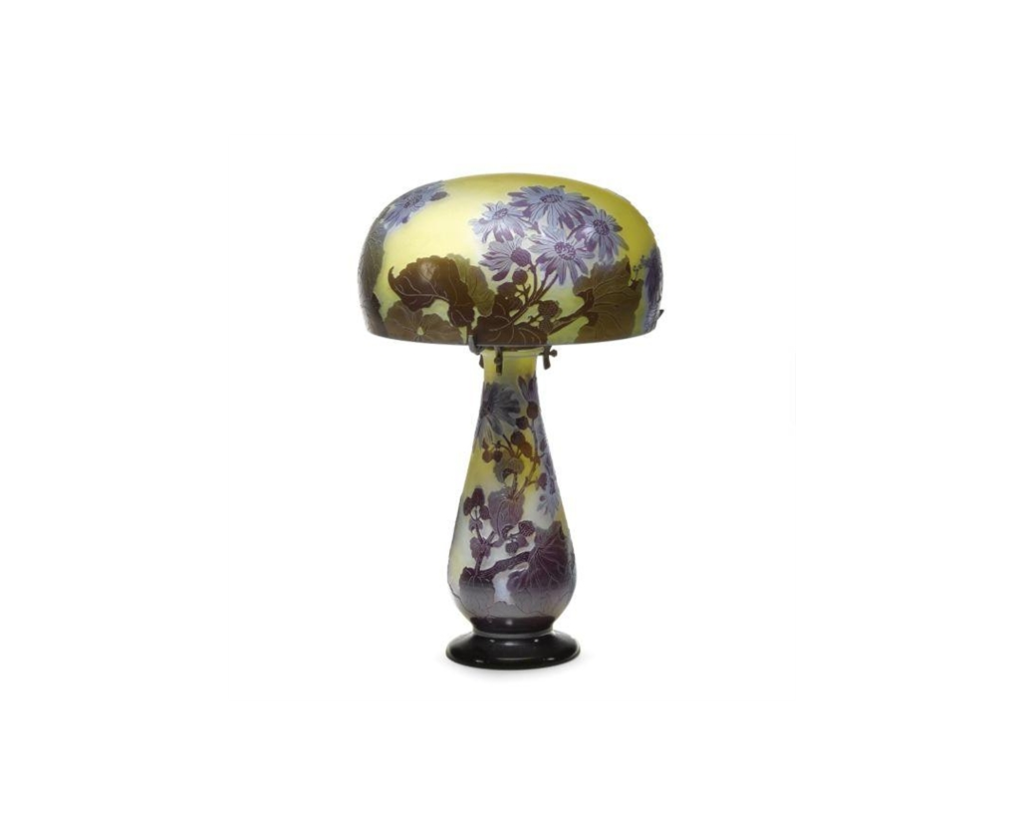
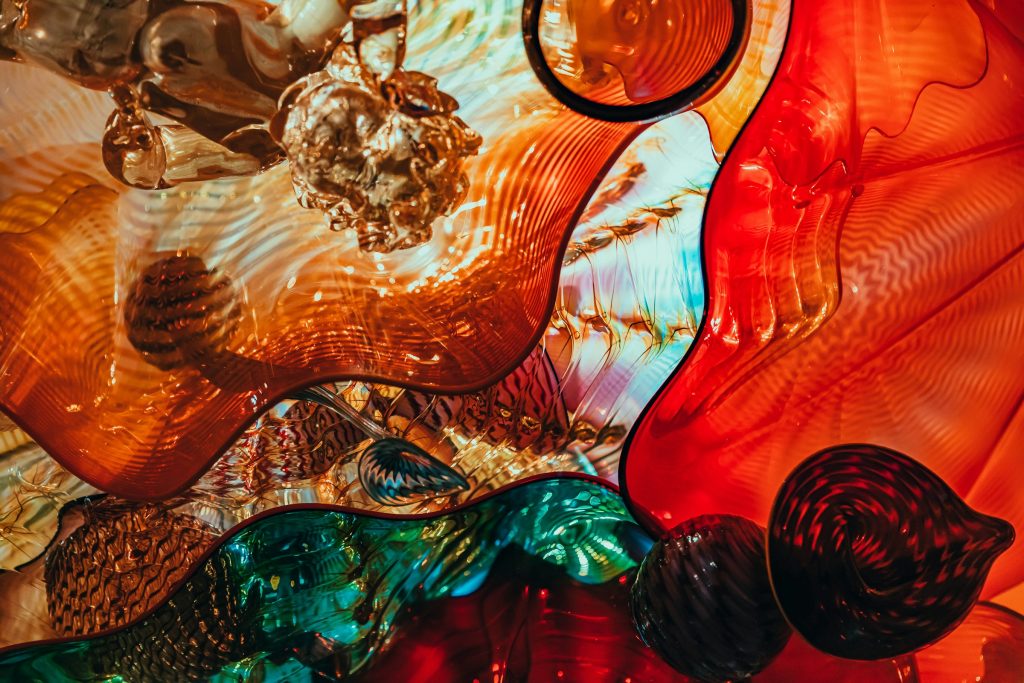
Glass dominated works of art during this period. In Nancy, Émile Gallé (1846–1904) elevated glassmaking to an art form, creating multi-layered crystal pieces with acid etchings and metal oxide inclusions featuring motifs inspired by botany and entomology. As founder of the École de Nancy in 1901, Gallé inspired the Daum brothers and cabinetmaker Louis Majorelle to follow in his footsteps. Their vases, lamps, and furniture are highly sought after by Art Nouveau enthusiasts. Alongside glass, this period produced ceramics with flamed glazes, Symbolist bronzes and clocks, as well as display pieces on which nature is depicted in the form of dragonflies, umbels and thistles. Mass-produced acid-etched pieces offer an accessible introduction to this world, before moving on to unique hand-blown pieces.
Ángel M. Felicísimo from Mérida, España ; Wikimedia
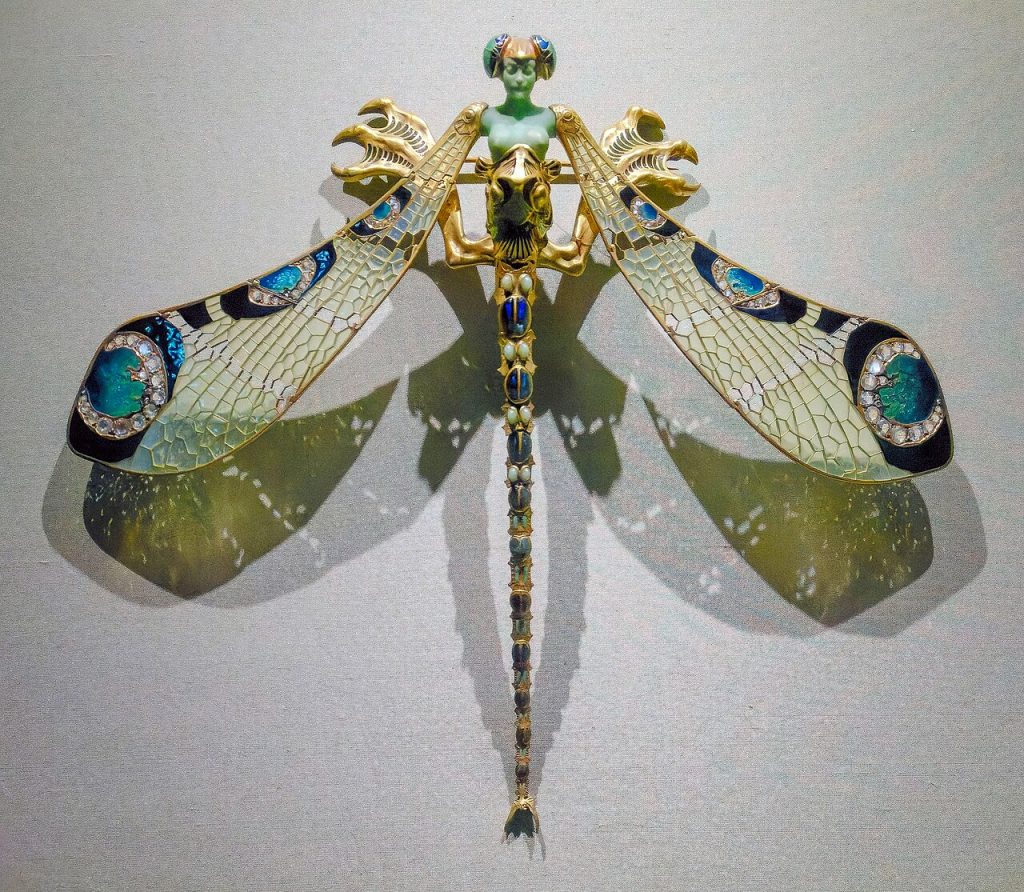
René Lalique (1860–1945) spearheaded an aesthetic revolution in jewellery. Having trained in Paris and London, he broke with tradition by celebrating materials and motifs such as horn, ivory, translucent enamel, opal and moulded glass, which he combined with gold to create dragonflies, flower-women and peacocks. Sarah Bernhardt was among his clients, which cemented his reputation as early as the 1890s. Around him, jewellery houses such as Vever, Fouquet and Boucheron also adopted the Art Nouveau style. Collectors can find brooches, pendants, combs and tiaras where the value lies as much in the design as in the gemstones. Signed and documented pieces are highly sought after at public auctions, while high-quality, more discreet, anonymous creations remain accessible to patient collectors who pay close attention to the condition of the enamel.
Wikimedia
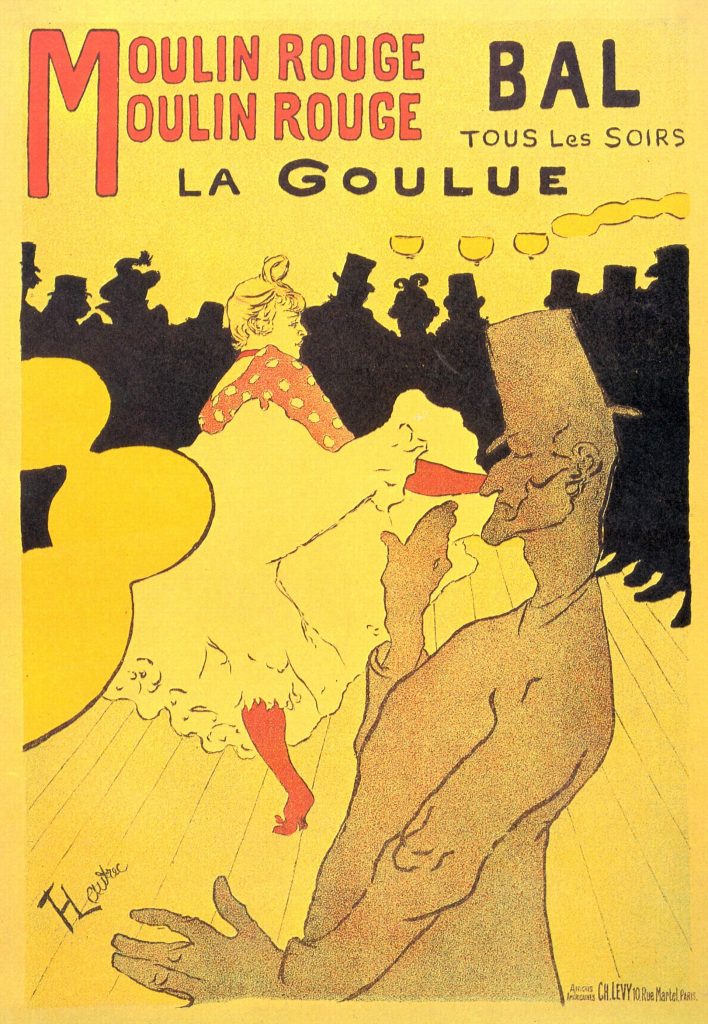
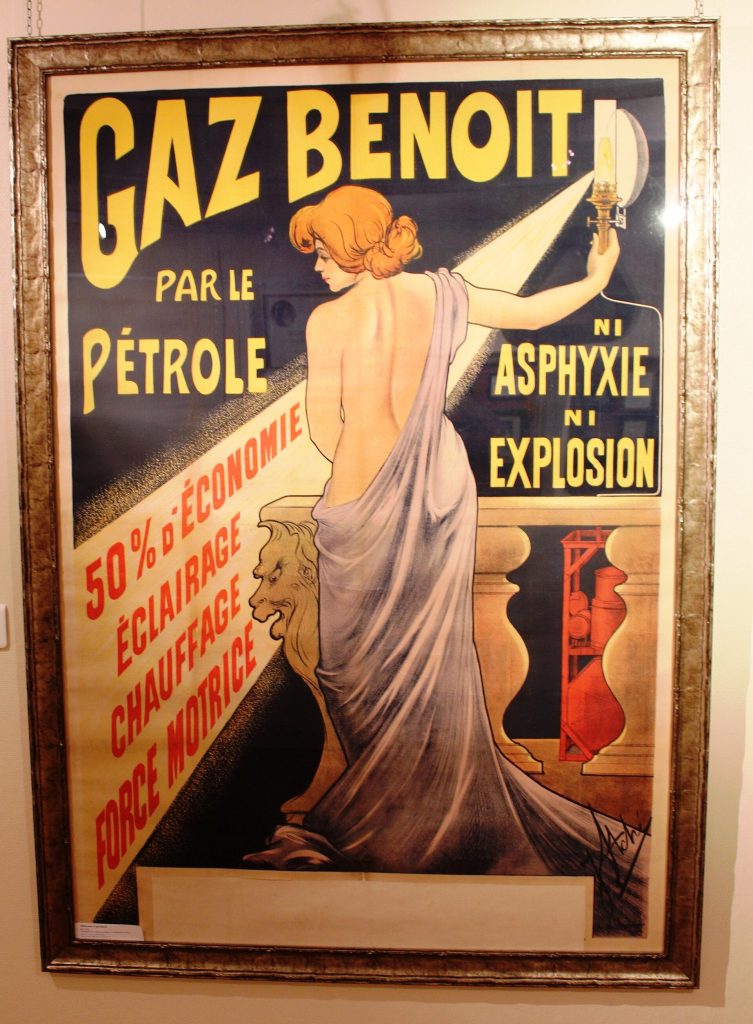
Advances in colour lithography transformed the streets into galleries. Jules Chéret, known as the father of the poster, covered Paris with his cheerful ‘Chérettes’; Henri de Toulouse-Lautrec designed ‘La Goulue’ for the Moulin Rouge as early as 1891, followed by ‘Aristide Bruant’ in 1893; and Alphonse Mucha made his mark with female figures surrounded by floral motifs. The 1881 law on freedom of display fuelled this profusion. Between 1895 and 1900, Chéret published ‘Les Maîtres de l’Affiche’, a series of 256 plates showcasing ninety-seven artists, now highly prized for their quality and affordability. Antique posters require careful scrutiny: formats, print runs, restorations, and mountings on canvas all affect their value. The loose plates from Les Maîtres represent a sensible first step towards acquiring original, large-format works.
wal_ 172619; Pexels
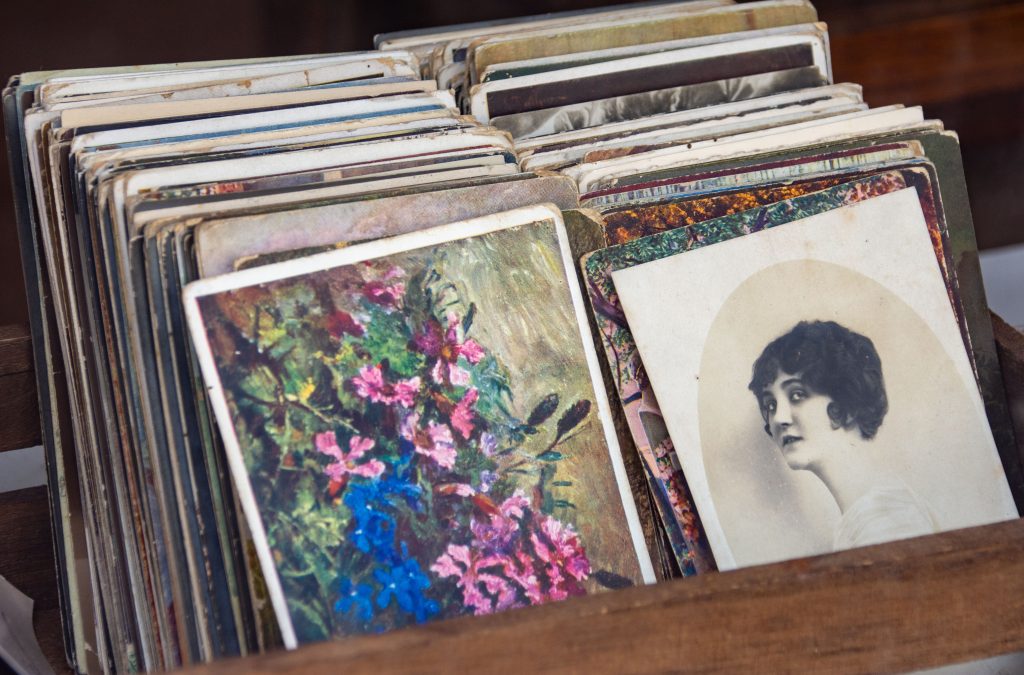
Paper is the most accessible area of collecting. The Belle Époque coincided with the golden age of the illustrated postcard, which circulated by the millions and depicted streets, monuments, cabarets, and exhibition pavilions. The two World’s Fairs left behind a wealth of memorabilia, including bronze plaques engraved by Louis Bottée, medals, certificates, official guides, tickets, and illustrated menus. This field is rounded off by menus from fine restaurants, theatre programmes, advertising chromolithographs and blotting papers, on which Art Nouveau motifs can even be found in the most humble printed matter. For collectors, the appeal lies in the subject matter and condition of an item, as well as the presence of period stamps or correspondence, which anchor the piece to a specific moment in time. A coherent collection centred on a place or event takes on a documentary value greater than the sum of its parts.

Franzrycou; Wikimedia
A fine Belle Époque collection is based on three key considerations. Firstly, provenance: signatures, workshop marks, invoices and sales catalogues reinforce attribution and provide reassurance when reselling. Secondly, consider the condition of the pieces. For glass, look out for chips and grinding marks. For jewellery, check the condition of the enamel and settings. For posters, check for creases, missing sections and restorations. Thirdly, coherence: a unifying theme (such as a glassmaker, poster artist, floral motif or event) gives the collection a narrative and depth that cannot be matched by scattered purchases. Public auctions, specialist fairs, galleries and flea markets offer complementary entry points, ranging from the most well-researched to the most adventurous. The online resources of major museums allow you to educate yourself before making a purchase by comparing authentic pieces with those currently on the market.
Février, 2026
Créer avec l’existant, penser avec l’histoire
De l’architecture au design, cette édition explore comment lieux, savoir-faire et matières héritées deviennent terrains de création actuelle.
Janvier, 2026
Le luxe se réinvente.
Finis les logos clignotants, place à une sobriété raffinée, à l’immersion personnelle, à l’excellence artisanale, à la durabilité sensible.
Décembre, 2025
Héritages, gestes contemporains et plaisirs essentiels
Parce que la fête n’est jamais qu’apparence : elle reflète notre manière d’habiter le monde, de transmettre, de fabriquer des souvenirs durables.
ÉDITION #3
Upcycling et kintsugi transforment l’objet contemporain, faisant de la trace, de la réparation et de la matière un langage esthétique.
ÉDITION #3
Artisans et designers donnent une seconde vie aux matériaux anciens, entre création contemporaine, patrimoine et réemploi.
ÉDITION #3
Bunkers, wagons et kiosques renaissent grâce à la création, révélant comment l’art redonne sens aux lieux délaissés.
ÉDITION #2
Un regard transversal sur le quiet luxury à travers des lieux, des objets et des figures qui expriment l’élégance.
ÉDITION #1
Une sélection de marques, architectures, objets et escapades qui donnent corps au sens de la fête.
ÉDITION #3
Usines et gares délaissées deviennent lieux culturels ouverts, où mémoire industrielle et usages contemporains redessinent la ville.
ÉDITION #3
L’audacieuse métamorphose d’un palace parisien
ÉDITION #3
Au cœur du Marais, un lieu discret révèle comment archives, architecture et recherche font dialoguer l’œuvre de Picasso.
ÉDITION #2
Une expérience shopping unique dans un magasin emblématique.
ÉDITION #2
Voyage culinaire et architectural au cœur de la Seine
ÉDITION #2
Dans le 9e arrondissement, un établissement qui invite au quiet luxury
ÉDITION #1
Chante! vient d’ouvrir ses portes. Une invitation à vibrer !
ÉDITION #3
Icône du paysage français, la boîte jaune change de statut et s’invite dans l’univers du design.
ÉDITION #3
L’édition 2026 affirme une vision où artisanat, design et mémoire façonnent l’habitat contemporain, international actuel.
ÉDITION #3
Cent ans après 1925, l’Art déco revient dans nos villes et intérieurs avec géométrie, audace, optimisme.
ÉDITION #3
Depuis plus de deux cents ans, Royal Limoges conjugue porcelaine, savoir-faire industriel et création contemporaine.
ÉDITION #3
Des terrains de sport aux podiums, la sneaker raconte un siècle de mutations culturelles, techniques et stylistiques.
ÉDITION #2
Design, mode, artisanat : des créations où la forme et la matière se répondent avec justesse, loin de tout effet de mode.
ÉDITION #1
Décorations artisanales, calendriers ultra-luxe et pièces de collection pour s’enivrer de joie avant l’heure.
ÉDITION #3
Entre marqueterie monumentale et jungle symbolique, Anton Laborde transforme le bois en récit contemporain poétique engagé.
ÉDITION #3
À Maison & Objet, Thierry Laudren présente des meubles sculptés où fonction, matière et lenteur façonnent une présence.
ÉDITION #3
Jean Nouvel conçoit une architecture attentive aux contextes, où lumière, histoire et usages façonnent chaque projet.
ÉDITION #3
À Lyon, Sophie Morel rénove des lieux historiques en alliant respect du bâti et écriture contemporaine.
ÉDITION #3
Au Centre d’Études Picasso, l’architecte compose une architecture où lumière, géométrie et héritage dialoguent avec précision.
ÉDITION #2
Entretien avec le fondateur d’EDO (European Design Office)
ÉDITION #2
Portrait d’un visionnaire qui transforme l’art de recevoir en expérience totale.
ÉDITION #1
Personnalités, artisans et créateurs qui donnent à la fête sa profondeur humaine.
ÉDITION #3
De Bordeaux au Bassin, art, vignobles et bien-être composent une échappée élégante au cœur de la Gironde.
ÉDITION #2
Vers une région de l’Italie habitée par le temps, où paysages, culture et usages s’accordent dans une continuité rare.
ÉDITION #1
Destinations et rituels qui réinventent la fête, du soleil tropical aux marchés d’hiver.