Helena Rubinstein, collectionneuse d’avant-garde

Helena Rubinstein, an avant-garde collector

Paris, Boulevard Raspail, circa 1930. In the drawing room, a Kota reliquary stand reflects the light off its brass plating on the mantelpiece. Surrounding it are masks from the Ivory Coast, paintings by Braque and Miró, opaline glassware, and modern sculptures, creating a setting without equal. The owner built a beauty empire. She also assembled one of the greatest collections of the century with rare audacity and scope. “That’s how you collect: by the lorryload.”

In the footsteps of ‘Madame’

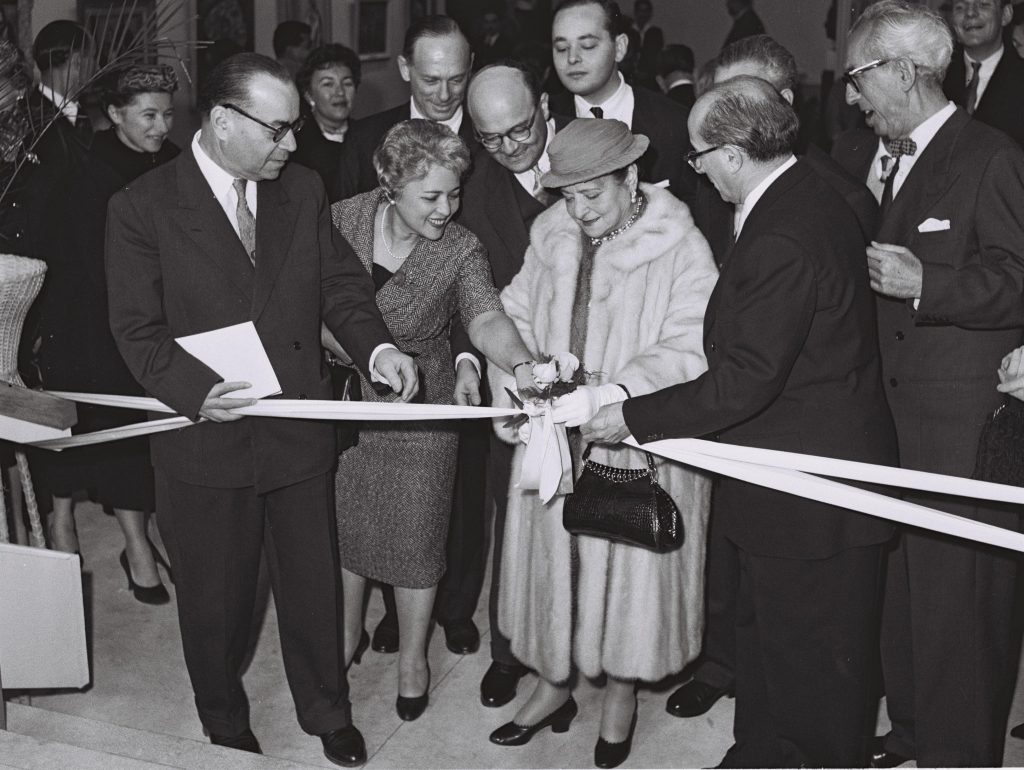
Helena Rubinstein au musée des beaux-arts de Tel Aviv en 1959 ; Fritz Cohn ; Wikimedia

Helena Rubinstein at the Tel Aviv Museum of Art in 1959, by Fritz Cohn, Wikimedia.

Born in the Kazimierz district of Kraków in 1872, Helena Rubinstein opened the first branch of her eponymous cosmetics empire in Melbourne. Her fortune fuelled a passion that stayed with her throughout her life. She collected mainly African and modern art, as well as jewellery, opaline glass, silverware, furniture, doll’s houses, and rare items. ‘Madame’, as she liked to be called, amassed, compared and displayed her treasures. Since then, the Jewish Museum in New York, the Museum of Jewish Art and History, and the Musée du Quai Branly in Paris have dedicated exhibitions to this highly unconventional perspective.

London: where her eye was trained

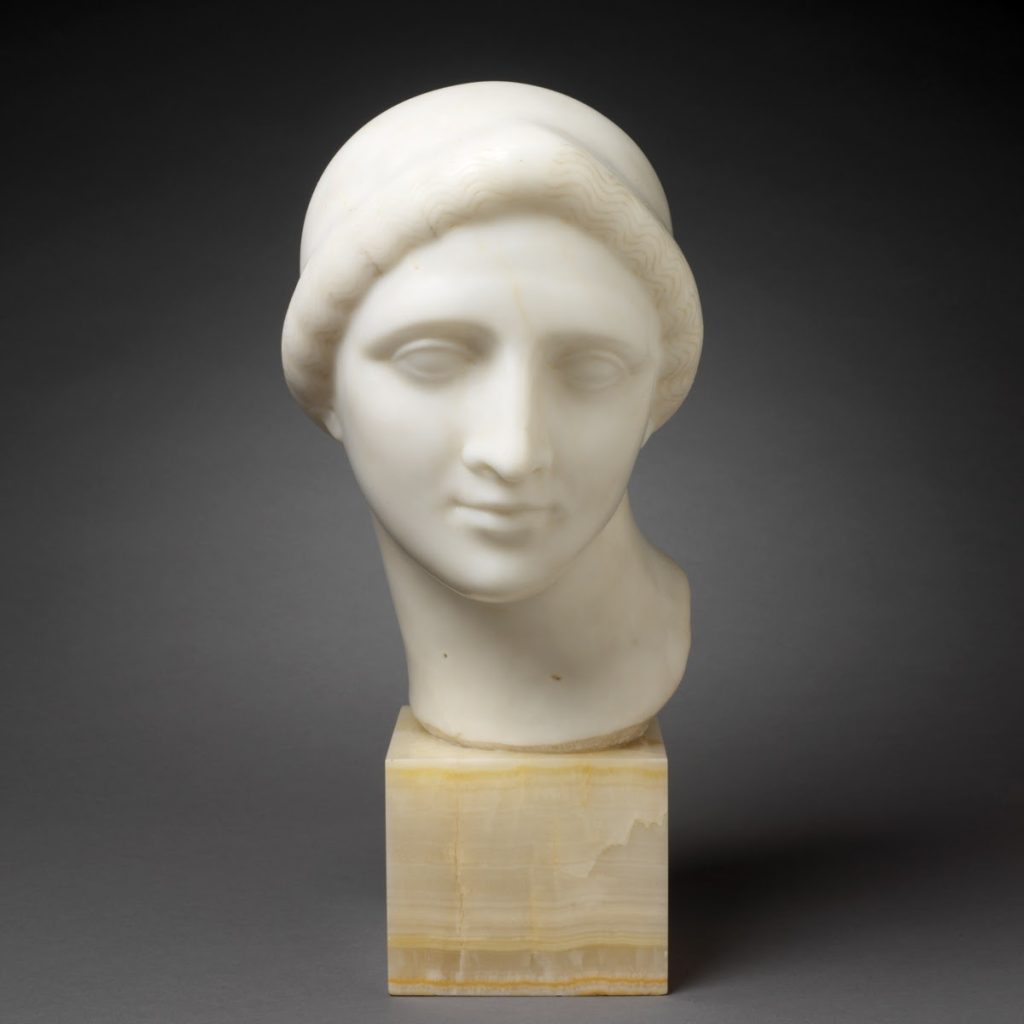
Elie Nadelman, Ideal Head, vers 1910-1911, marbre. Tête de la même période que la série acquise par Helena Rubinstein en 1911 (œuvre illustrative, non issue de sa collection). Crédit : RISD Museum, Providence, inv. 20.310, domaine public CC0.

Elie Nadelman, Ideal Head, c. 1910–1911, marble. This head is from the same period as the series acquired by Helena Rubinstein in 1911 (this is an illustrative work and is not from her collection). Credit: RISD Museum, Providence, inv. 20.310, public domain CC0.

It all began in London around 1908–1909. It was there that Helena Rubinstein opened her first European salon and married Edward William Titus, a well-read journalist who shaped her taste in art and literature. Their neighbour and friend, the sculptor Jacob Epstein — a great connoisseur of non-European art — introduced her to sculptures from Africa and Oceania. Initially, he entrusted her with making purchases at the Hôtel Drouot in Paris. Very soon, she began bidding on her own behalf. In 1911, at the Paterson Gallery in London, she discovered marble heads by Elie Nadelman, a young sculptor born in Warsaw. She bought the entire exhibition. The smooth faces of these sculptures, with their refined classicism, found their way into her salons and advertisements — the sculptor’s vision aligned perfectly with that of the brand. Nadelman became her protégé and she helped him move to New York at the start of the First World War. The collector had found her own approach: buying in one go and bringing the works to life in everyday life.

Arts from distant lands, in series

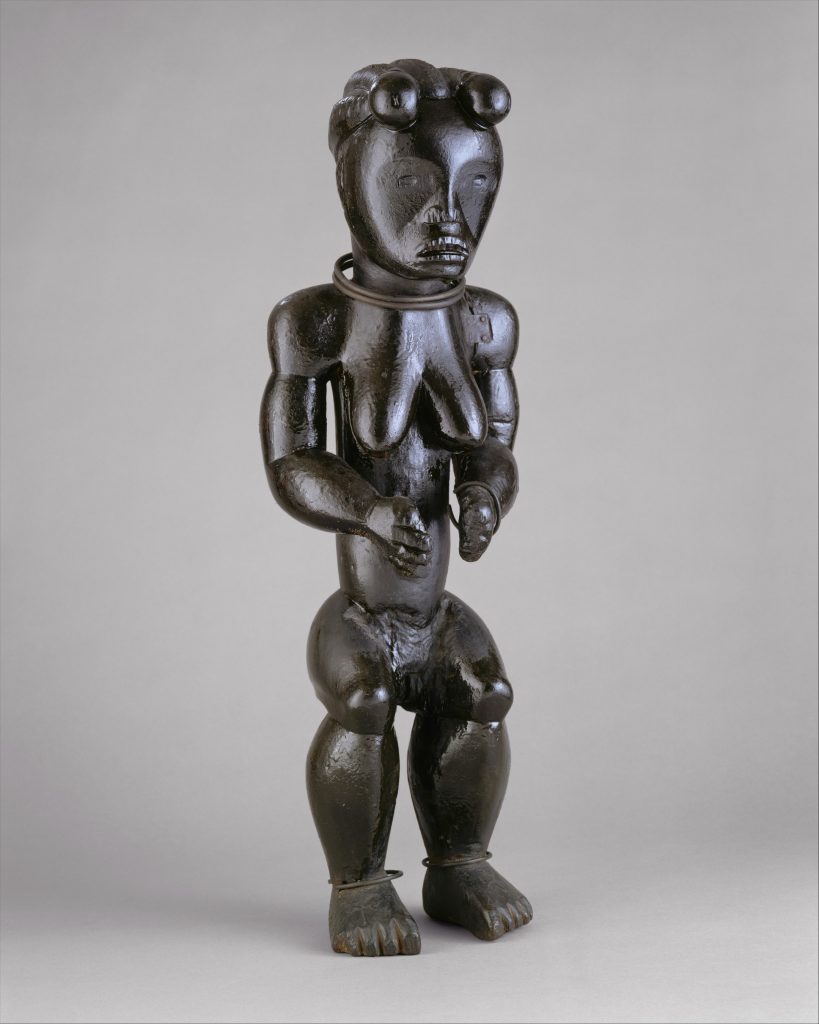
Figure de gardien de reliquaire eyema byeri, Fang, Gabon ou Guinée équatoriale, 19e siècle, ayant appartenu à Jacob Epstein, son initiateur. Crédit : The Metropolitan Museum of Art, New York, inv. 1978.412.441, domaine public (Open Access)

Eyema byeri reliquary guardian figure, Fang, Gabon or Equatorial Guinea, 19^(th) century, formerly owned by Jacob Epstein, who initiated the collection. Credit: The Metropolitan Museum of Art, New York, inv. 1978.412.441, public domain (Open Access).

After settling in Paris in 1912, Madame frequented the leading dealers in African and Oceanic art, such as Paul Guillaume, Charles Ratton and Pierre Loeb, and also hunted for bargains at the Clignancourt flea market. In 1931, she purchased pieces either directly or through an intermediary at the auctions of the André Breton–Paul Éluard and Georges de Miré collections at Drouot. She was keen to purchase items in sets. In 1937, she purchased part of the collection amassed by the collector F.-H. Lem, which contained many Bamana, Senoufo and Mossi pieces. In the 1950s, she bought fifty-six terracotta Agni funerary heads collected in Côte d’Ivoire by Dr Lheureux and displayed them in a large, four-tiered cabinet. She also assembled a collection of twenty-five Kota reliquary guardians, grouping them into ‘families’. She was also drawn to everyday objects, such as loom pulley brackets, doors, seats and musical instruments, for the beauty of the carved faces adorning them. Her collection of non-Western art eventually numbered nearly four hundred pieces.

The Bangwa queen and the masks

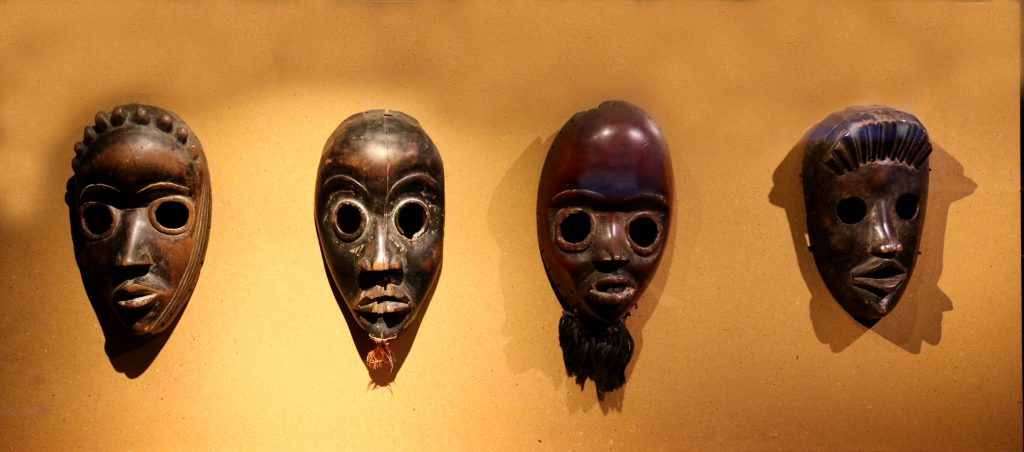
Musée des arts africains, océaniens et amérindiens à la Vieille Charité de Marseille : quatre masques en bois et fibres de la tribu Dan de Côte d'Ivoire. Wikimedia.

Museum of African, Oceanic and Native American Arts at the Vieille Charité in Marseille. Four masks made of wood and fibres from the Dan tribe of Côte d’Ivoire. (Wikimedia).

A few masterpieces cemented her legend. One such piece was the dancing statue known as the Bangwa ‘Queen’, which originated in Cameroon and was acquired from Charles Ratton in the 1930s. It was photographed by Man Ray before becoming an icon of modernism. She displayed it in her Parisian drawing room and library, moving it around as her travels and artistic installations dictated. In 1935, she loaned twenty works, including this queen, to the ‘African Negro Art’ exhibition at the Museum of Modern Art in New York. A Kota reliquary guardian, acquired in 1931 at the Georges de Miré sale, sits on the mantelpiece on Boulevard Raspail. Masks hold a special place. Dan, Baoulé and Gouro masks, with their polished faces and pure oval shapes, resonate with the quest that the founder of a beauty house had always pursued. The Musée du quai Branly interprets this as a ‘super-face’, a chosen portrait. Indeed, several photographs from the 1930s show her holding a mask at face level.

The painters of her time

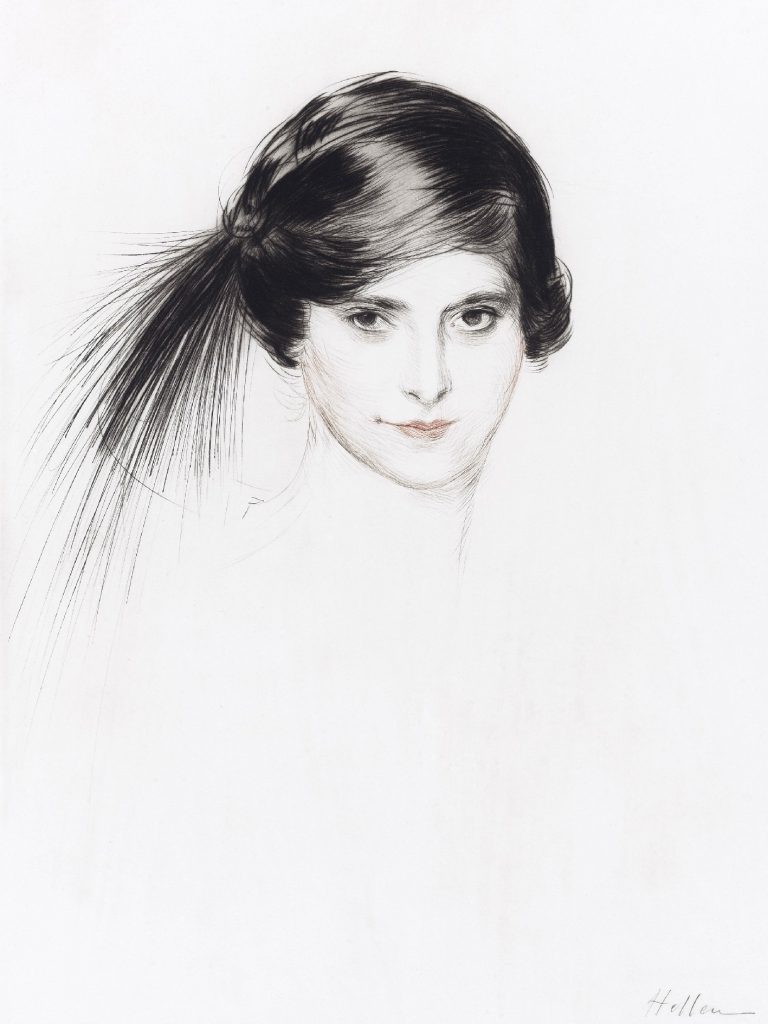
Tête d'Helena Rubinstein ornée de plumes d'aigrette *Gravure *70,8 x 53,6 cm *réalisée vers 1908 *signée en bas à droite : Helleu ; Wikimedia

Head of Helena Rubinstein adorned with egret feathers, engraving, 70.8 x 53.6 cm, created around 1908, signed lower right: Helleu, Wikimedia

Paris also opened its studios to her. Through her husband and the pianist Misia Sert, she met Juan Gris and Modigliani, and hosted artists at her table every week. Her modern art collection included works by Bonnard, Brancusi, Braque, Chagall, Léger, Miró, Picasso, Utrillo and Marcoussis. She was the first to display artworks in her beauty salons and collaborated with Miró, Marie Laurencin and Raoul Dufy on her advertising campaigns. Giorgio de Chirico designed the interior of her Fifth Avenue salon, which opened in 1937. In 1942, Salvador Dalí created three large murals for the dining room of her Park Avenue triplex. She also had more than thirty portraits made of herself by Paul César Helleu, Marie Laurencin, Christian Bérard, Pavel Tchelitchew, Salvador Dalí and Graham Sutherland. Sutherland’s 1956–1957 painting depicts her wearing a red brocade dress by Balenciaga. Initially taken aback by its severity, she eventually embraced it. Picasso, for his part, preferred to work in pencil, producing around forty sketches in the 1950s.

Pearls, gemstones and treasures

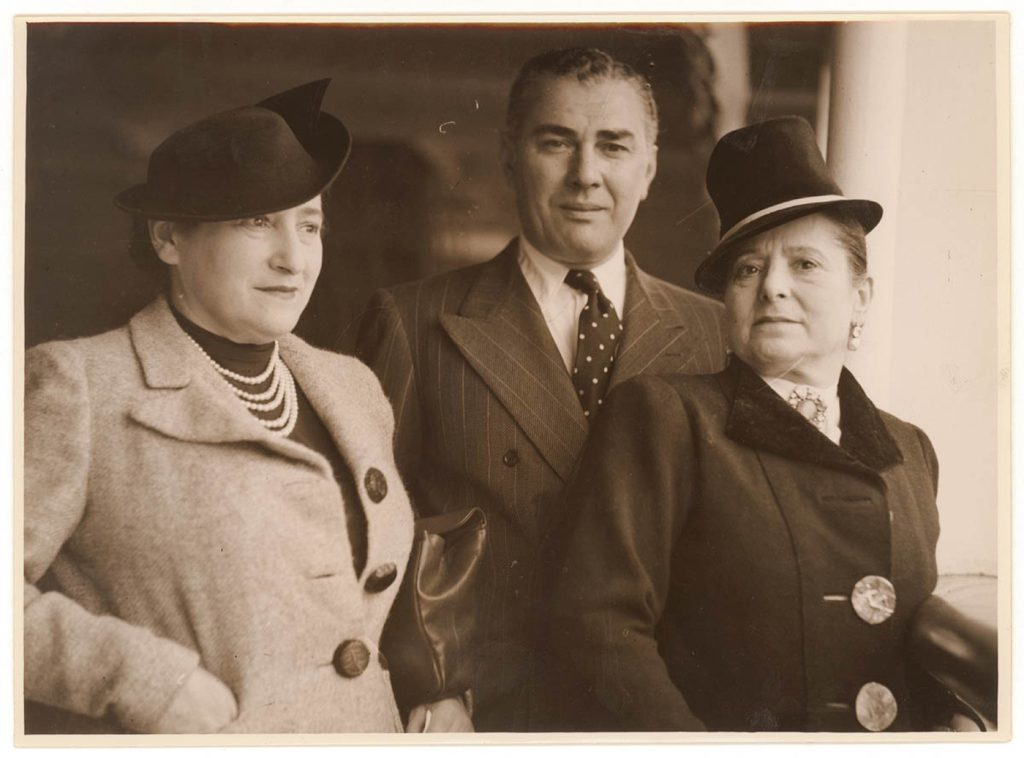
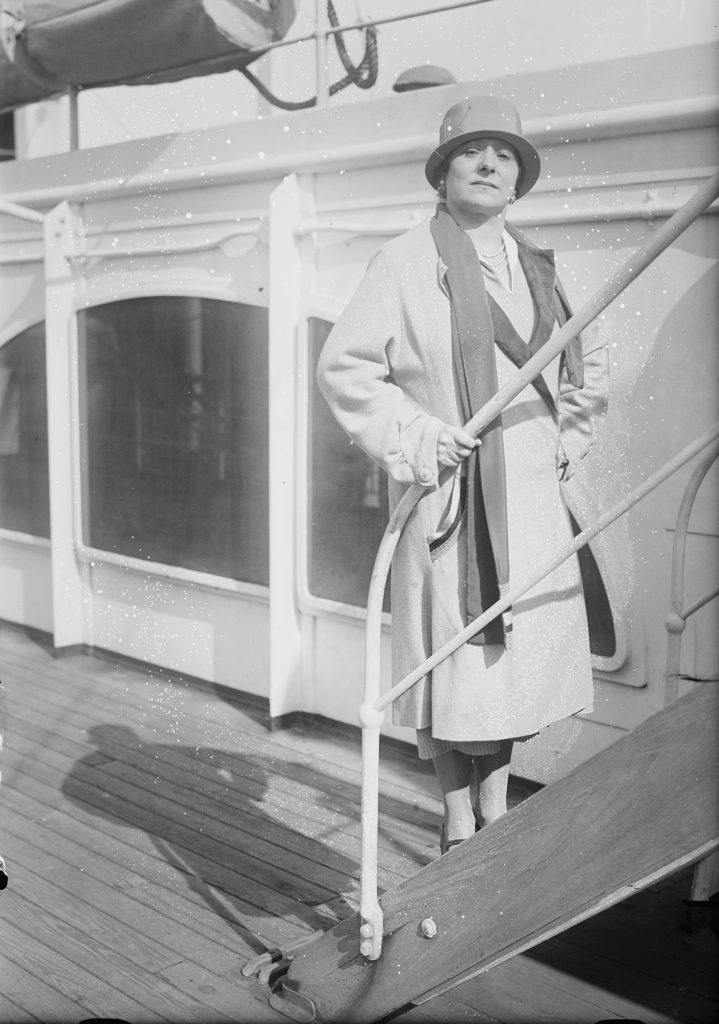
Helena Rubinstein et son époux le prince Gurielli-Tchkonia à Sydney ; 31 octobre 1938 – Sam Hood ; Picryl

Helena Rubinstein and her husband Prince Gurielli-Tchkonia in Sydney, 31 October 1938 – Sam Hood, Picryl.

Jewellery has been a part of her life since childhood. It was her grandmother who gave her a necklace of tiny, fine pearls, which sparked her passion, as recounted in her essay entitled Why I Love Jewels. In Melbourne, she collected pearls of every colour and shape, and in Ceylon she discovered gemstones. Her jewellery box contains diamonds, emeralds, sapphires, a star ruby ring, a peacock feather brooch and an Art Deco cuff, as well as exotic sets unearthed in unlikely shops. The Museum of Fine Arts in Boston showcases this blend of rare pieces from prestigious sources alongside flea market finds. For her, jewellery enhances beauty as much as make-up does. “Several strands of pearls brighten even the most sallow complexion,” she wrote. In 1938, Cecil Beaton photographed her adorned with strands of black and white pearls and a triple-strand necklace of antique jade. Following her death, her jewellery was sold at auction in New York by Parke-Bernet.

The home: a living collection

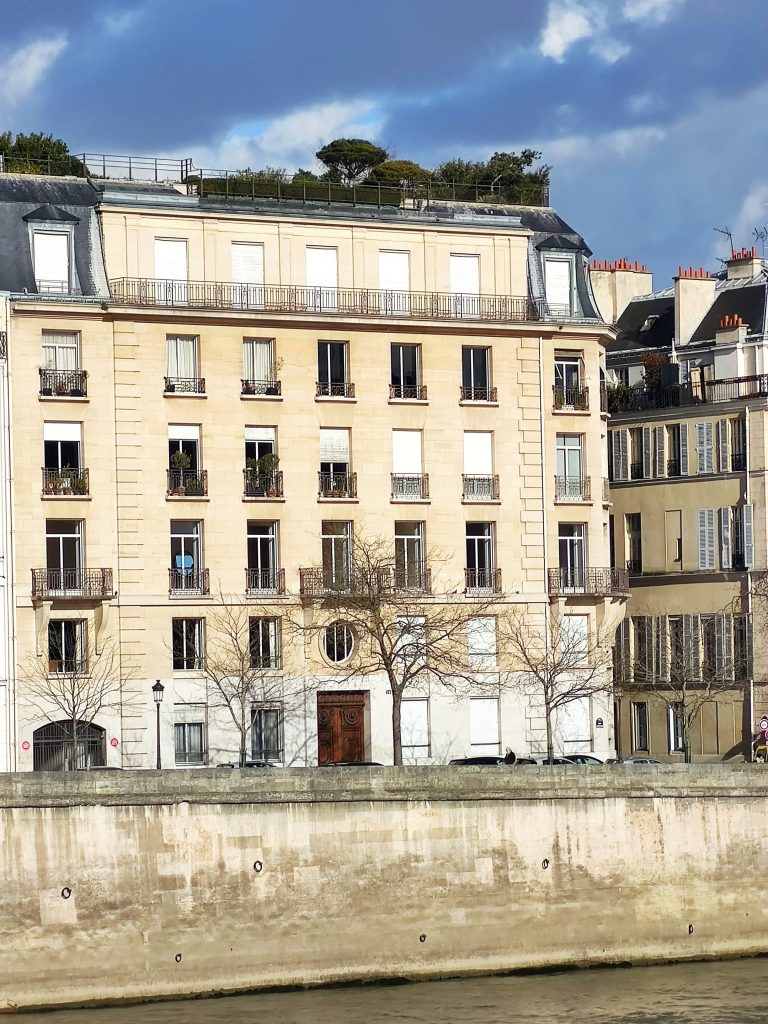
24, quai de Béthune, Paris 4e ; Philippe Cendron ; Wikimedia

24, quai de Béthune, Paris 4e ; Philippe Cendron ; Wikimedia

At Madame’s, the collections were an integral part of everyday life. In the early 1930s, the family moved to Boulevard Raspail, into a modern building renovated by Bruno Elkouken and decorated by Ernő Goldfinger. In 1932, they acquired the Hôtel Hesselin at 24 Quai de Béthune on Île Saint-Louis and commissioned Louis Süe to design a new apartment block. They moved into the top-floor, spacious flat with a terrace in 1937. Jean-Michel Frank and Louis Marcoussis designed the furnishings, which were combined with antique pieces, and the carpets from the Myrbor company were based on designs by Lurçat or Picasso. The African-themed drawing room was adjacent to a music room featuring opaline glassware, miniatures, and silverware, including a service commissioned from Josef Hoffmann as early as 1913. Dora Maar photographed the apartment. In 1941, she purchased the building at 625 Park Avenue in New York and reserved a penthouse triplex for herself, where her Lucite bed, illuminated from within and designed by Ladislas Medgyes, shone. The Metropolitan Museum notes that Madame organised her collections into themed rooms.

What the collection conveys

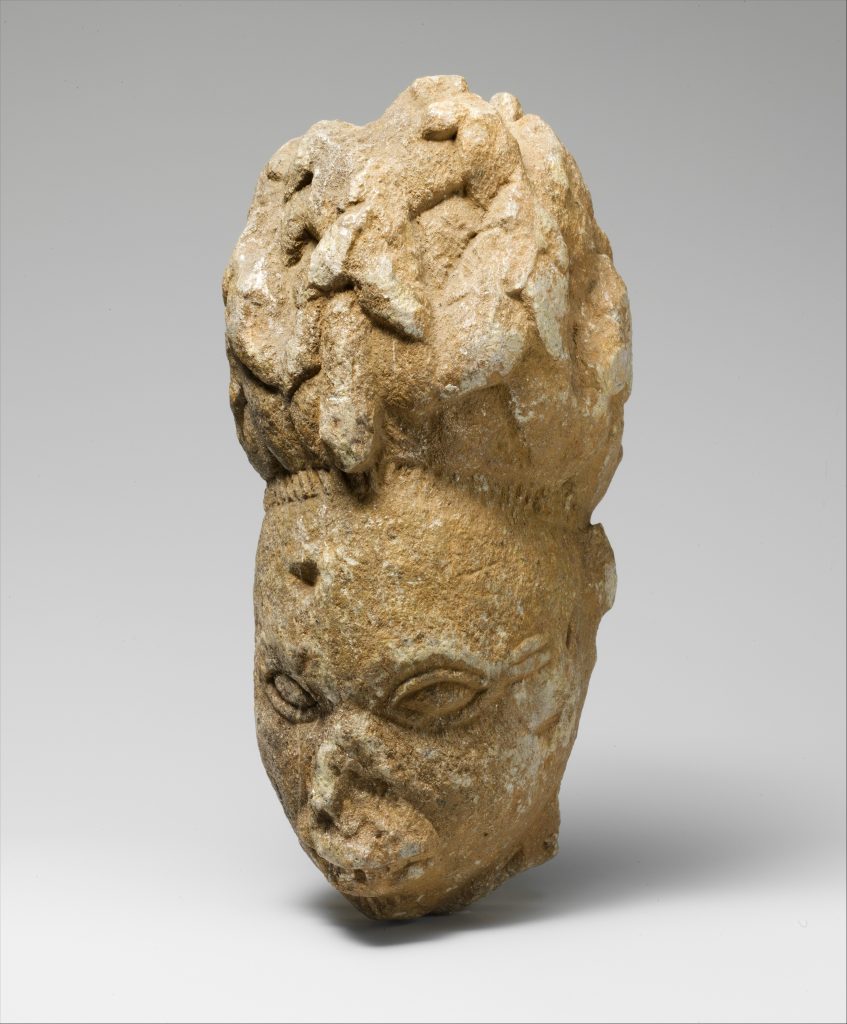
Tête Yoruba en stéatite ; XII – XVe siècle – The Michael C. Rockefeller Memorial Collection, Bequest of Nelson A. Rockefeller, 1979

Yoruba head in soapstone, 12th–15th century, from the Michael C. Rockefeller Memorial Collection, bequeathed by Nelson A. Rockefeller in 1979.

Helena Rubinstein passed away in New York on 1 April 1965. In accordance with her wishes, her collections were dispersed. The sales organised by Parke-Bernet in April and October 1966 marked a decisive milestone in the recognition of African art, and the ‘Helena Rubinstein collection’ designation remains highly sought after. Some pieces found their way into museums: the Bangwa queen is held by the Dapper Foundation in Paris, a Yoruba stone head from Esie is on display at the Metropolitan Museum, and the Musée du Quai Branly holds seven pieces, including a Nias island statue displayed at the Louvre’s Pavillon des Sessions. In January 1959, she inaugurated the pavilion bearing her name in Tel Aviv, which was funded by her foundation. She also donated a portrait of herself by Candido Portinari and two paintings by Utrillo to the museum. Her seventeen miniature rooms, first displayed in her home in 1935, were acquired by the Tel Aviv Museum in 1968. Now restored, they continue to enchant visitors. In My Life for Beauty, she confided: “Art connoisseurs and critics have come from many countries to see these miniature pieces, but I think it is to children that I most enjoy showing them.”

Sources :

Continue exploring

Régis Mathieu: a life in the glow of chandeliers
Georgine Glaenzer, fashion designer and feather artist
Atelier blam: collective intelligence and the genius of possibilities
A conversation with Sarah Poniatowski (Maison Sarah Lavoine)
Atelier Véronique de Soultrait: rope, from thread to marvels
Pascal Rieu, stained-glass artist and painter of light

Février, 2026

Édition 3 : Patrimoine et création

Créer avec l’existant, penser avec l’histoire

De l’architecture au design, cette édition explore comment lieux, savoir-faire et matières héritées deviennent terrains de création actuelle.

Janvier, 2026

Édition 2 : Quiet luxury

Le luxe se réinvente.

Finis les logos clignotants, place à une sobriété raffinée, à l’immersion personnelle, à l’excellence artisanale, à la durabilité sensible.

Décembre, 2025

Édition 1 : Le sens de la fête

Héritages, gestes contemporains et plaisirs essentiels

Parce que la fête n’est jamais qu’apparence : elle reflète notre manière d’habiter le monde, de transmettre, de fabriquer des souvenirs durables.

ÉDITION #3

Révéler la beauté
‎

Upcycling et kintsugi transforment l’objet contemporain, faisant de la trace, de la réparation et de la matière un langage esthétique.

ÉDITION #3

Les nouveaux artisans du patrimoine

Artisans et designers donnent une seconde vie aux matériaux anciens, entre création contemporaine, patrimoine et réemploi.

ÉDITION #3

L'art à la rescousse des friches et lieux oubliés

Bunkers, wagons et kiosques renaissent grâce à la création, révélant comment l’art redonne sens aux lieux délaissés.

ÉDITION #2

Le murmure du beau
‎

Un regard transversal sur le quiet luxury à travers des lieux, des objets et des figures qui expriment l’élégance.

ÉDITION #1

Lieux, maisons et matières en éclats

Une sélection de marques, architectures, objets et escapades qui donnent corps au sens de la fête.

ÉDITION #3

La création au secours des bâtiments promis à l’oubli

Usines et gares délaissées deviennent lieux culturels ouverts, où mémoire industrielle et usages contemporains redessinent la ville.

ÉDITION #3

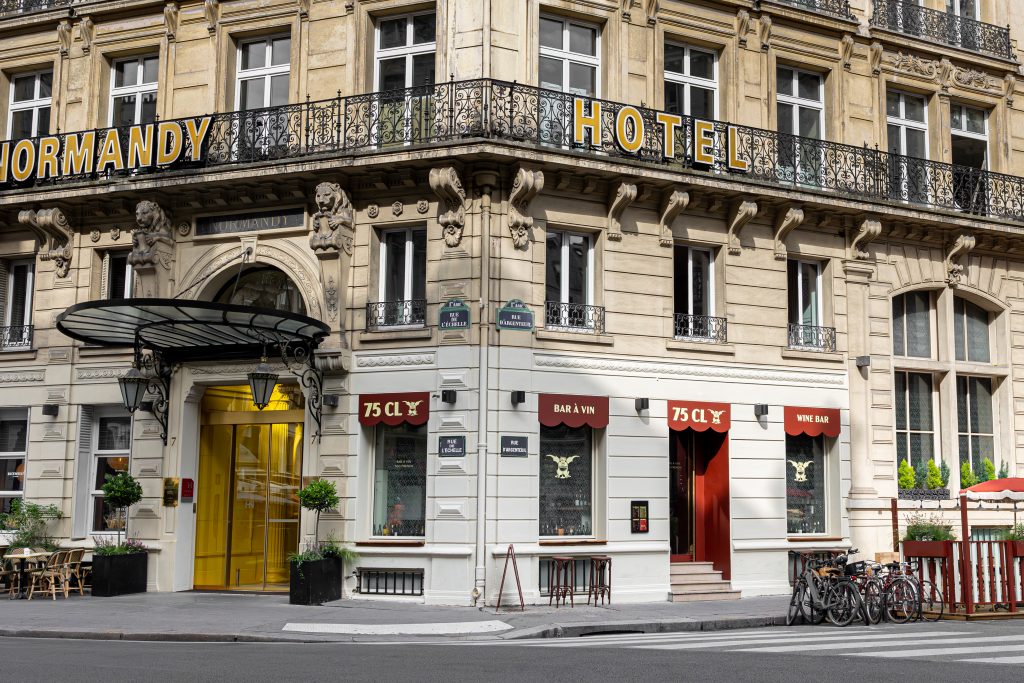
Normandy Hotel Paris Saint-Honoré

L’audacieuse métamorphose d’un palace parisien

ÉDITION #3

Dans les coulisses du Centre d'Études Picasso à Paris

Au cœur du Marais, un lieu discret révèle comment archives, architecture et recherche font dialoguer l’œuvre de Picasso.

ÉDITION #2

Shopping iconique dans un décor Tudor

Une expérience shopping unique dans un magasin emblématique.

ÉDITION #2

Gastronomie et architecture

Voyage culinaire et architectural au cœur de la Seine

ÉDITION #2

L'art de l'hospitalité parisienne

Dans le 9e arrondissement, un établissement qui invite au quiet luxury

ÉDITION #1

Chante!

Chante! vient d’ouvrir ses portes. Une invitation à vibrer !

ÉDITION #3

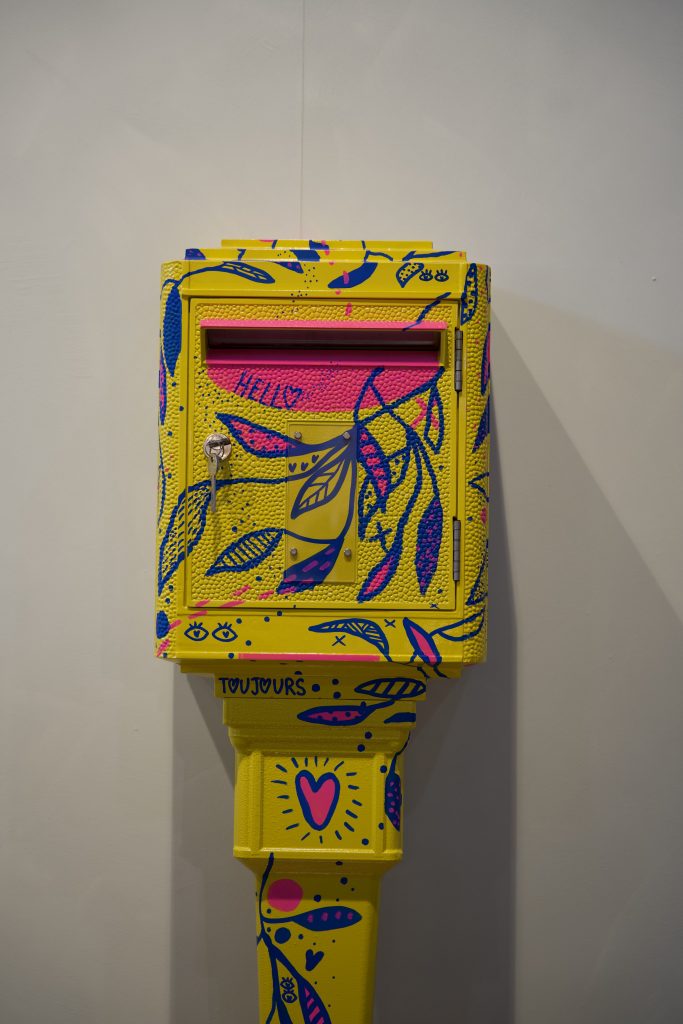
La boîte aux lettres française devenue objet de design

Icône du paysage français, la boîte jaune change de statut et s’invite dans l’univers du design.

ÉDITION #3

Retour sur Maison&Objet 2026 : retour aux sources et à l’essentiel

L’édition 2026 affirme une vision où artisanat, design et mémoire façonnent l’habitat contemporain, international actuel.

ÉDITION #3

Art Deco: un mouvement centenaire, plus actuel que jamais

Cent ans après 1925, l’Art déco revient dans nos villes et intérieurs avec géométrie, audace, optimisme.

ÉDITION #3

Royal Limoges, deux siècles d’histoire au présent

Depuis plus de deux cents ans, Royal Limoges conjugue porcelaine, savoir-faire industriel et création contemporaine.

ÉDITION #3

Du terrain à la rue et au catwalk : les sneakers à travers les époques

Des terrains de sport aux podiums, la sneaker raconte un siècle de mutations culturelles, techniques et stylistiques.

ÉDITION #2

La formidable aventure du papier peint de luxe

Design, mode, artisanat : des créations où la forme et la matière se répondent avec justesse, loin de tout effet de mode.

ÉDITION #1

Icônes, détails, rituels
‎

Décorations artisanales, calendriers ultra-luxe et pièces de collection pour s’enivrer de joie avant l’heure.

ÉDITION #3

Anton Laborde

Entre marqueterie monumentale et jungle symbolique, Anton Laborde transforme le bois en récit contemporain poétique engagé.

ÉDITION #3

Thierry Laudren

À Maison & Objet, Thierry Laudren présente des meubles sculptés où fonction, matière et lenteur façonnent une présence.

ÉDITION #3

Jean Nouvel

Jean Nouvel conçoit une architecture attentive aux contextes, où lumière, histoire et usages façonnent chaque projet.

ÉDITION #3

Sophie Morel

À Lyon, Sophie Morel rénove des lieux historiques en alliant respect du bâti et écriture contemporaine.

ÉDITION #3

Pascal Grasso

Au Centre d’Études Picasso, l’architecte compose une architecture où lumière, géométrie et héritage dialoguent avec précision.

ÉDITION #2

Alexandre Danan

Entretien avec le fondateur d’EDO (European Design Office)

ÉDITION #2

Aziz Temimi

Portrait d’un visionnaire qui transforme l’art de recevoir en expérience totale.

ÉDITION #1

Visages, gestes, inspirations

Personnalités, artisans et créateurs qui donnent à la fête sa profondeur humaine.

ÉDITION #3

Chemins de traverse : parenthèse d’exception en Bordelais

De Bordeaux au Bassin, art, vignobles et bien-être composent une échappée élégante au cœur de la Gironde.

ÉDITION #2

Voyage en Toscane
‎

Vers une région de l’Italie habitée par le temps, où paysages, culture et usages s’accordent dans une continuité rare.

ÉDITION #1

Horizons, saisons, traditions
‎

Destinations et rituels qui réinventent la fête, du soleil tropical aux marchés d’hiver.

Dates, adresses, invitations

Expositions, événements et repères culturels pour vivre pleinement la saison des fêtes.