De la 2CV à la Burton : le 2CV Méhari Club Cassis fait vivre la légende

From the 2CV to the Burton, the 2CV Méhari Club Cassis is keeping the legend alive!

In many garages, a 2CV lies dormant under a tarpaulin. It was part of family holidays, the first few kilometres after passing your driving test, and entire summers spent by the sea. In Cassis, the 2CV Méhari Club Cassis is working to get these cars back on the road. Since 1998, Citroën has provided the club with the original Méhari moulds, templates, and machinery, followed by those for the 2CV. Bertrand Bruna, head of marketing and sales, understands the emotional connection people have with these cars. “Our customers always have a story to tell about their 2CV.”

From the Citroën dealership to the original tools

2CV Méhari Club Cassis

2CV Méhari Club Cassis

It all began at the Citroën dealership in Cassis, which was run by the Marquès family — Georges, Philippe and Gilles’ father. The first two were mechanics, while the third was a bodywork specialist and painter. All three had a soft spot for the Méhari — that open-top car designed by Roland de la Poype with an ABS plastic body built on the 2CV chassis. The brothers restored vintage Méharis, organised rallies with local clubs, and published their own spare parts catalogue.

In 1998, Citroën entrusted them with the original Méhari tooling, including bodywork moulds, upholstery templates, and machinery for manufacturing mechanical parts. The 2CV tooling followed in the early 2000s. Bertrand Bruna recounts an anecdote passed down within the company: while on holiday in the region, executives from the car manufacturer are said to have met the three brothers and expressed a wish for this heritage to remain in France.

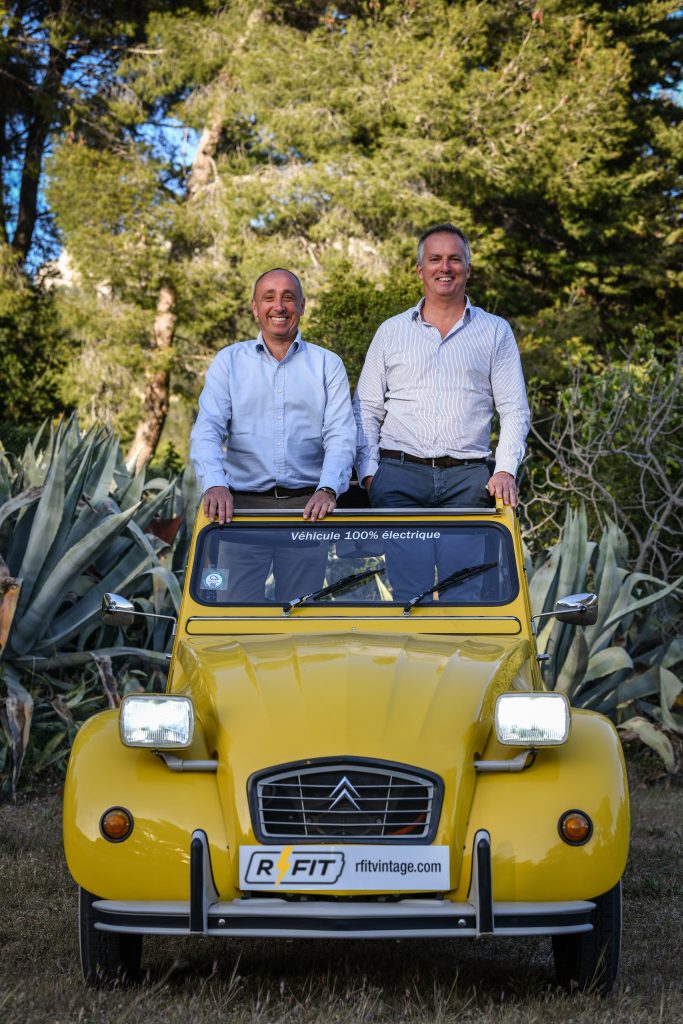
Bruna himself joined the company somewhat by chance in 2018, after completing his studies in Marseille. His father used to drive a 2CV, so he was already familiar with the brand. Meanwhile, in 2013, childhood friends Stéphane Wimez and Julien Wagner took over the company. The word ‘club’ remained in its name as a reminder of its early years.

Sixty-year-old Citroën moulds

2CV Méhari Club Cassis

A Citroën partner for over three decades, the 2CV Méhari Club Cassis is the only organisation authorised to affix the brand’s chevrons to its vehicles, according to its marketing manager. This responsibility requires adherence to the original designs and manufacturing processes.

The Méhari’s body is moulded from solution-dyed ABS plastic. Its ribbed panels are characteristic of the model, and the moulds used to manufacture them date back to when the car was first produced. Some were lost in a fire, so one or two had to be remade. Reconstructing tooling that is nearly sixty years old without altering the shape of the parts requires meticulous work — almost the work of an archivist.

As for the chassis, the tooling that was once used at the Citroën factory in Vigo, Spain is still used to assemble 2CV platforms. In the metalwork workshop, another machine seems to have weathered the decades without ageing at all. Or almost. It still works, but if it breaks down, only one man knows how to repair it. His father held the same position before him.

However, not everything is stuck in the past. The company has acquired a laser cutter and a press brake. Some parts are available in two versions: one that is faithful to the original specifications and one that is improved for greater strength, notably through the use of new materials (e.g. silicone seals). Therefore, preserving the designs of yesteryear does not preclude improving what can be improved.

Upholstery: made to measure and by hand

2CV Méhari Club Cassis

Although the tools in the upholstery workshop are old, nothing is done by itself. The 2CV’s seats rest on a tubular frame with rubber springs. The upholstery is cut to size using Citroën-provided templates, then assembled by hand.

“Our teams are very hands-on,” explains Bertrand Bruna. “In upholstery, everything is cut to size by hand using templates. It’s the human touch that makes the piece.” New upholsterers often come from other areas of the trade. However, vintage car upholstery has its own established practices, constraints, and specific techniques. Department heads therefore work directly with new upholsterers in the workshop until they can work independently. Here, expertise isn’t just passed on through technical manuals; it’s learnt by working alongside experienced practitioners.

In October 2019, the company was awarded the ‘Entreprise du Patrimoine Vivant’ label by the French government in recognition of its excellence in artisanal and industrial craftsmanship. Certain parts manufactured in the upholstery and bodywork workshops also bear the ‘Origine France Garantie’ label. But internally, there is another phrase that is often used: ‘Made in Cassis’. The town and the company have become inseparable in the region.

Rebuilding to exact specifications

This commitment extends to every part of the car. The project may start with little more than a wreck and its registration document — a precious artefact, given that original Méharis are becoming increasingly rare.

The mechanics strip the car down and carefully sort through what can be salvaged. The gearbox, twin-cylinder engine casings, and front and rear axles are among the most challenging components to reproduce. These components are cleaned, sandblasted and restored before being refitted. The rest of the car can be replaced with new parts produced using the moulds and templates preserved in Cassis.

Customers are generally very familiar with these models. Often aged over fifty, they have been driving their 2CVs or Méharis for years. Some even know more than the mechanics about how their car behaves. Almost all of them have a story to tell. In particular, there are those who sold their 2CV for a few thousand francs and still regret it.

Bertrand Bruna also considers those who did not grow up driving these cars. A grandchild might discover an old 2CV that has been forgotten for years in a family barn. The smell of petrol and the gear lever and controls from a bygone era will be unfamiliar to them. In order to spark the curiosity of this new generation, the 2CV Méhari Club Cassis is organising an increasing number of gatherings. Young people are turning up in ever-greater numbers.

The 2CV in a different guise

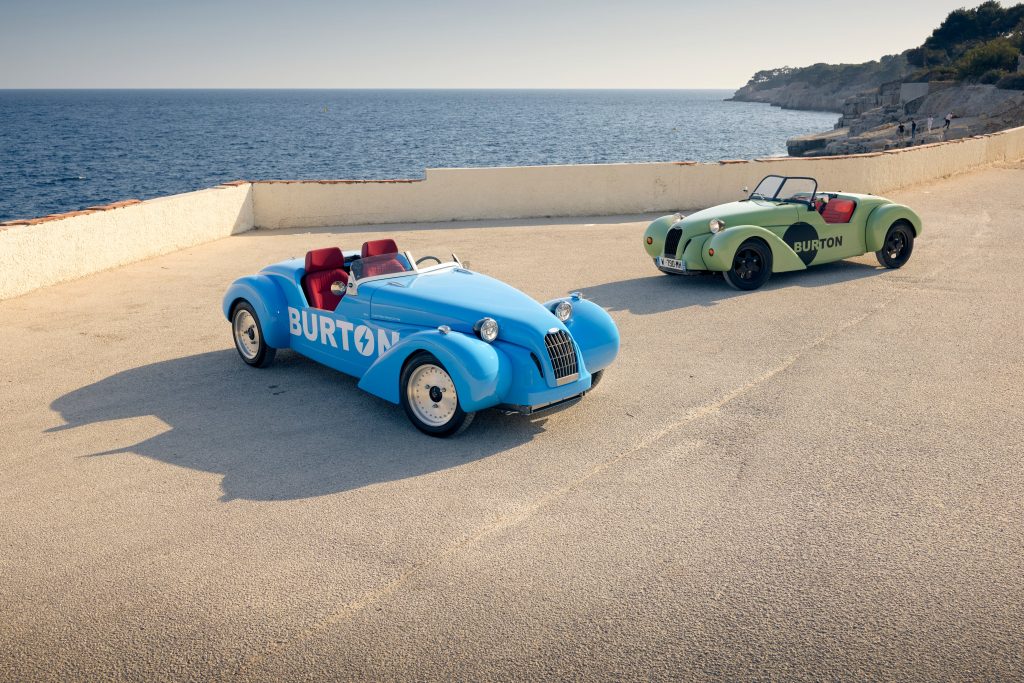
The 2CV’s mechanics also lend themselves to other interpretations. In 2022, the 2CV Méhari Club Cassis acquired Burton Car Company, a firm founded by brothers Dimitri and Iwan Göbel in the Netherlands in 1993.

The concept is simple: the 2CV’s chassis, engine, gearbox and braking system are retained, but the bodywork is replaced with a fibreglass kit inspired by 1950s and 1960s sports cars. The result is a low-slung roadster in which the driver sits close to the ground. At 90 km/h, the sensation of speed is already very apparent.

This two-seater without doors, into which you step over the bodywork to get in, was type-approved in France in 2025 and is aimed in particular at a younger clientele. It is ideal for weekend trips, such as along the coast. The company is also seeking to win over car rental firms in the region.

In Cassis, the Eden, an electric Méhari assembled locally, has also found its place in the electrification trend. In 2023, interior designer Tristan Auer and his studio created a collection called ‘Sorbet’ for the Hôtel Martinez in Cannes. This series features a white body and hand-woven cane seats. This is another way of bringing this familiar silhouette into a more contemporary world.

Cars for taking your time

2CV Méhari Club Cassis

2CV Méhari Club Cassis

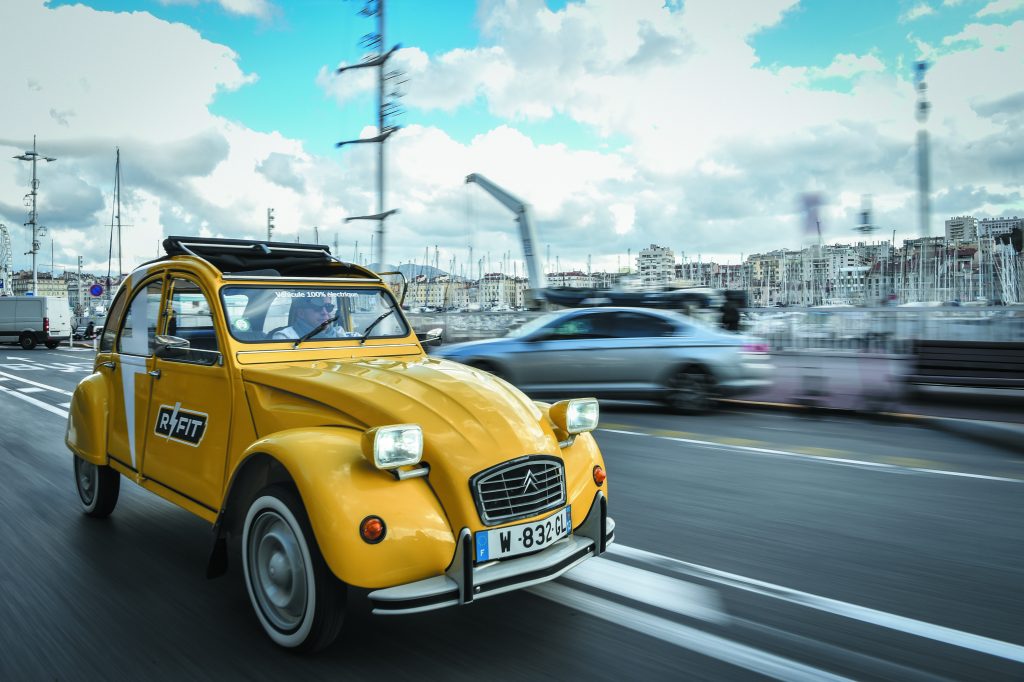
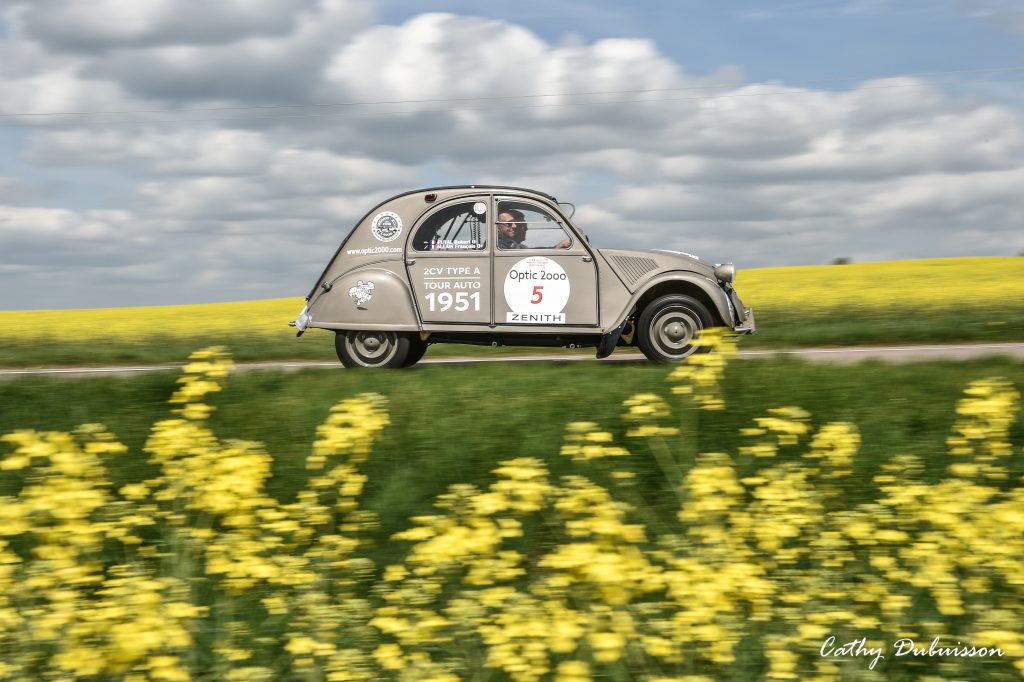
Travelling in a 2CV is a completely different experience to travelling in a modern car. The radio is a real luxury, the heating is modest and the low cruising speed means you can really take in the scenery. What were once seen as limitations are now part of its charm.
This art of taking one’s time now attracts drivers who never experienced the 2CV’s heyday. The 2CV Méhari Club Cassis aims to nurture this interest, considering extending its expertise in upholstery and metalwork to other iconic models from the 1990s and 2000s – the cars that defined a generation.

The challenge lies in continuing to produce parts, devise new models and develop the business without losing what sets the company apart. For Bertrand Bruna, this is essential for keeping a passion alive. 2CV owners often sum it up more simply: “The 2CV is all about taking your time.”

Continue exploring

Schiaparelli at the V&A in London: the dress as art
Retro and vintage items: a major comeback for pieces that appeal to the nostalgic
Venus Williams: tennis comes home
LP Design : a cactus called ‘Mirage’
LOVE by Sami Savatli: collectable design meets sculpture
Legendary bottles: the vessels that have shaped the history of perfume  

Février, 2026

Édition 3 : Patrimoine et création

Créer avec l’existant, penser avec l’histoire

De l’architecture au design, cette édition explore comment lieux, savoir-faire et matières héritées deviennent terrains de création actuelle.

Janvier, 2026

Édition 2 : Quiet luxury

Le luxe se réinvente.

Finis les logos clignotants, place à une sobriété raffinée, à l’immersion personnelle, à l’excellence artisanale, à la durabilité sensible.

Décembre, 2025

Édition 1 : Le sens de la fête

Héritages, gestes contemporains et plaisirs essentiels

Parce que la fête n’est jamais qu’apparence : elle reflète notre manière d’habiter le monde, de transmettre, de fabriquer des souvenirs durables.

ÉDITION #3

Révéler la beauté
‎

Upcycling et kintsugi transforment l’objet contemporain, faisant de la trace, de la réparation et de la matière un langage esthétique.

ÉDITION #3

Les nouveaux artisans du patrimoine

Artisans et designers donnent une seconde vie aux matériaux anciens, entre création contemporaine, patrimoine et réemploi.

ÉDITION #3

L'art à la rescousse des friches et lieux oubliés

Bunkers, wagons et kiosques renaissent grâce à la création, révélant comment l’art redonne sens aux lieux délaissés.

ÉDITION #2

Le murmure du beau
‎

Un regard transversal sur le quiet luxury à travers des lieux, des objets et des figures qui expriment l’élégance.

ÉDITION #1

Lieux, maisons et matières en éclats

Une sélection de marques, architectures, objets et escapades qui donnent corps au sens de la fête.

ÉDITION #3

La création au secours des bâtiments promis à l’oubli

Usines et gares délaissées deviennent lieux culturels ouverts, où mémoire industrielle et usages contemporains redessinent la ville.

ÉDITION #3

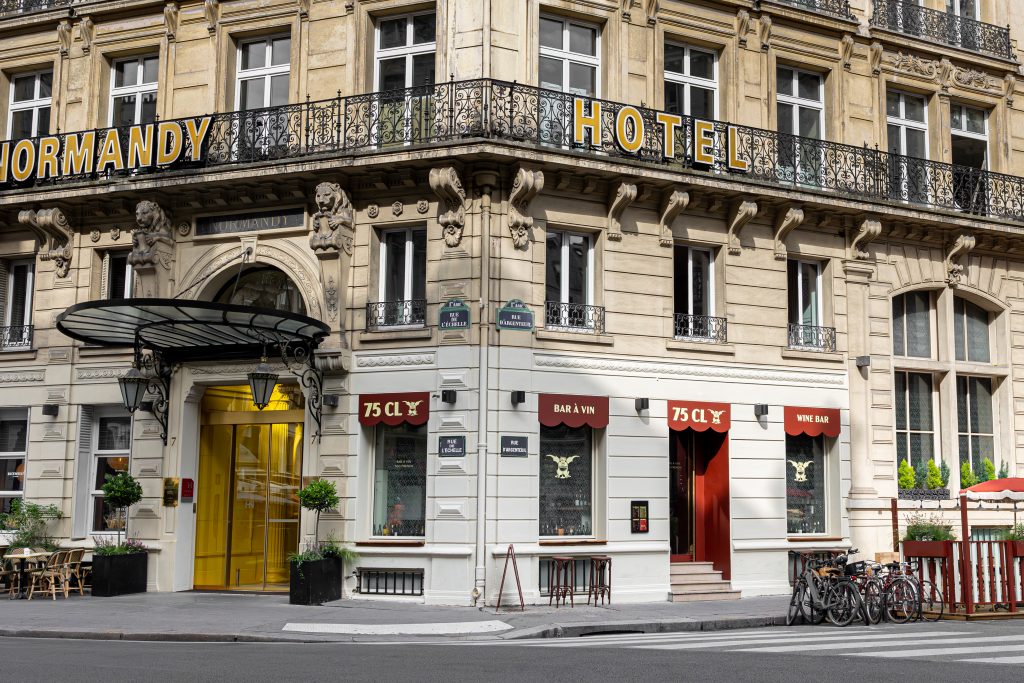
Normandy Hotel Paris Saint-Honoré

L’audacieuse métamorphose d’un palace parisien

ÉDITION #3

Dans les coulisses du Centre d'Études Picasso à Paris

Au cœur du Marais, un lieu discret révèle comment archives, architecture et recherche font dialoguer l’œuvre de Picasso.

ÉDITION #2

Shopping iconique dans un décor Tudor

Une expérience shopping unique dans un magasin emblématique.

ÉDITION #2

Gastronomie et architecture

Voyage culinaire et architectural au cœur de la Seine

ÉDITION #2

L'art de l'hospitalité parisienne

Dans le 9e arrondissement, un établissement qui invite au quiet luxury

ÉDITION #1

Chante!

Chante! vient d’ouvrir ses portes. Une invitation à vibrer !

ÉDITION #3

La boîte aux lettres française devenue objet de design

Icône du paysage français, la boîte jaune change de statut et s’invite dans l’univers du design.

ÉDITION #3

Retour sur Maison&Objet 2026 : retour aux sources et à l’essentiel

L’édition 2026 affirme une vision où artisanat, design et mémoire façonnent l’habitat contemporain, international actuel.

ÉDITION #3

Art Deco: un mouvement centenaire, plus actuel que jamais

Cent ans après 1925, l’Art déco revient dans nos villes et intérieurs avec géométrie, audace, optimisme.

ÉDITION #3

Royal Limoges, deux siècles d’histoire au présent

Depuis plus de deux cents ans, Royal Limoges conjugue porcelaine, savoir-faire industriel et création contemporaine.

ÉDITION #3

Du terrain à la rue et au catwalk : les sneakers à travers les époques

Des terrains de sport aux podiums, la sneaker raconte un siècle de mutations culturelles, techniques et stylistiques.

ÉDITION #2

La formidable aventure du papier peint de luxe

Design, mode, artisanat : des créations où la forme et la matière se répondent avec justesse, loin de tout effet de mode.

ÉDITION #1

Icônes, détails, rituels
‎

Décorations artisanales, calendriers ultra-luxe et pièces de collection pour s’enivrer de joie avant l’heure.

ÉDITION #3

Anton Laborde

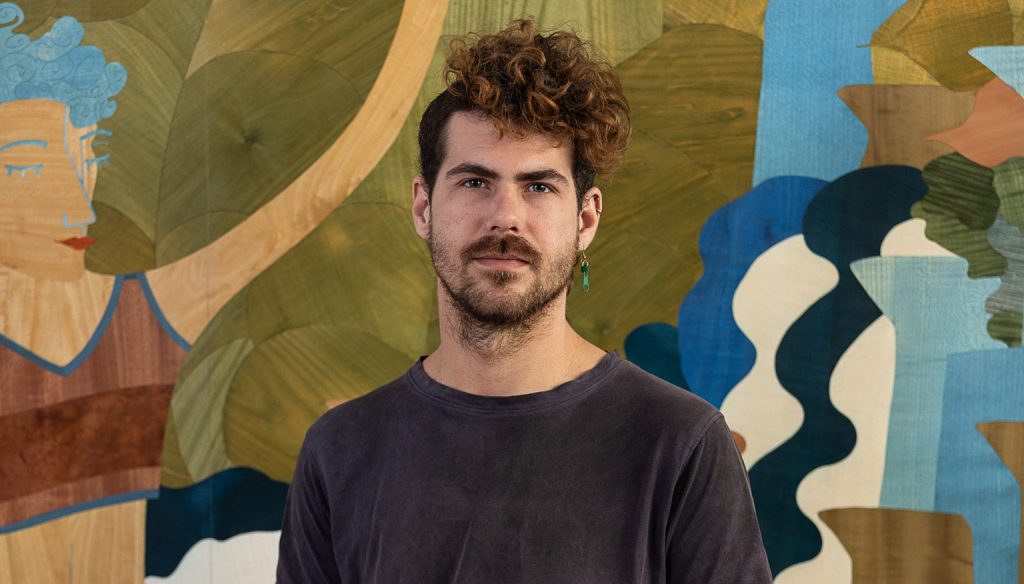
Entre marqueterie monumentale et jungle symbolique, Anton Laborde transforme le bois en récit contemporain poétique engagé.

ÉDITION #3

Thierry Laudren

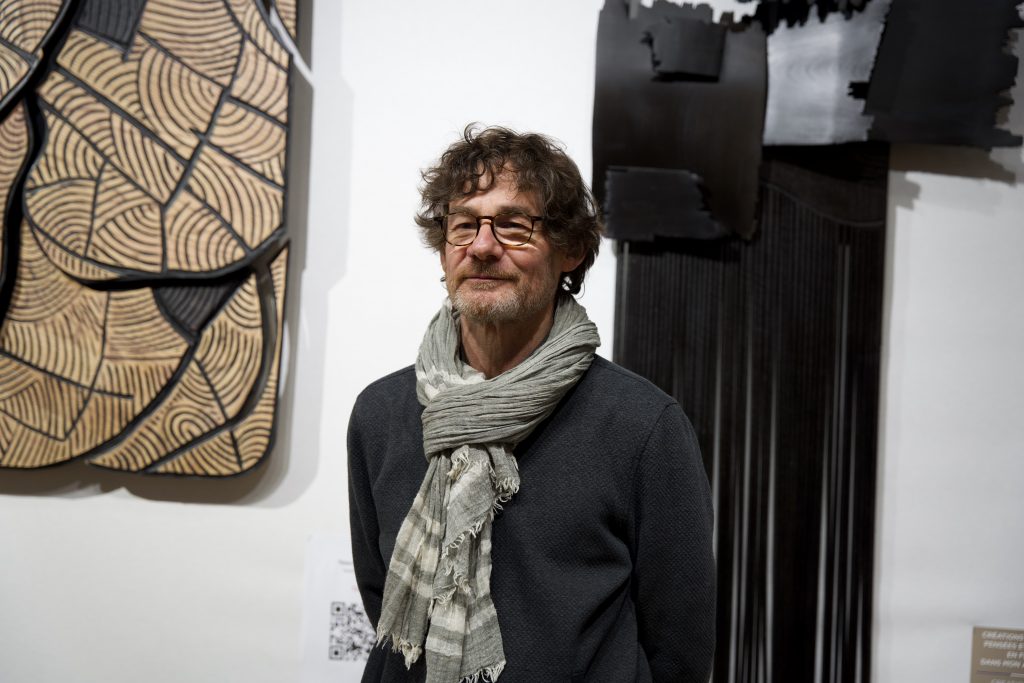
À Maison & Objet, Thierry Laudren présente des meubles sculptés où fonction, matière et lenteur façonnent une présence.

ÉDITION #3

Jean Nouvel

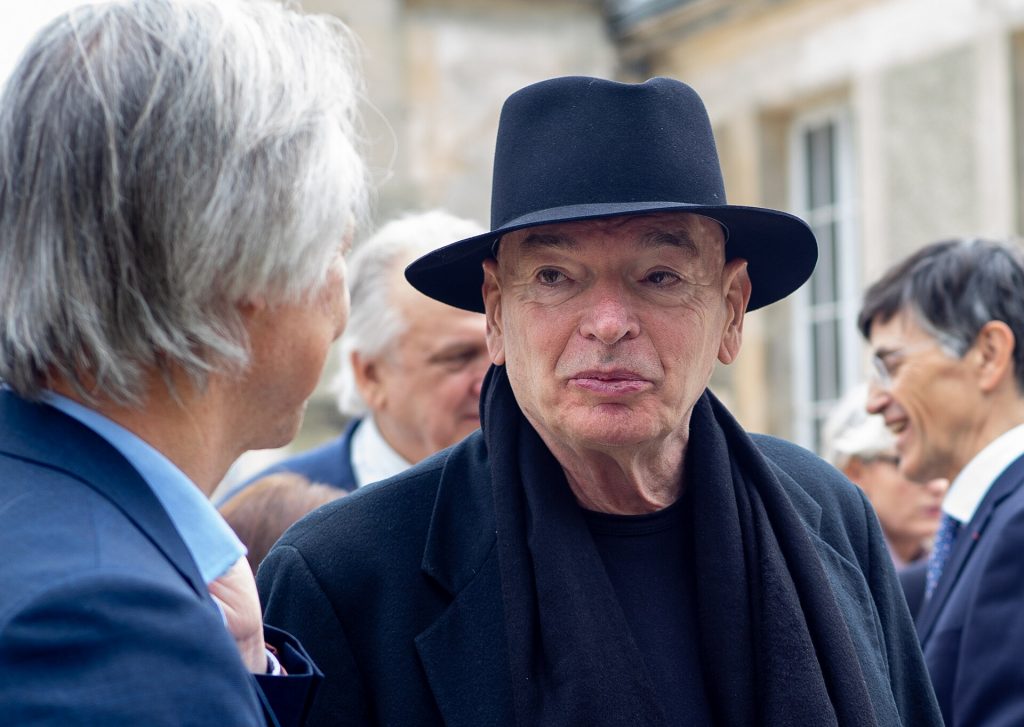
Jean Nouvel conçoit une architecture attentive aux contextes, où lumière, histoire et usages façonnent chaque projet.

ÉDITION #3

Sophie Morel

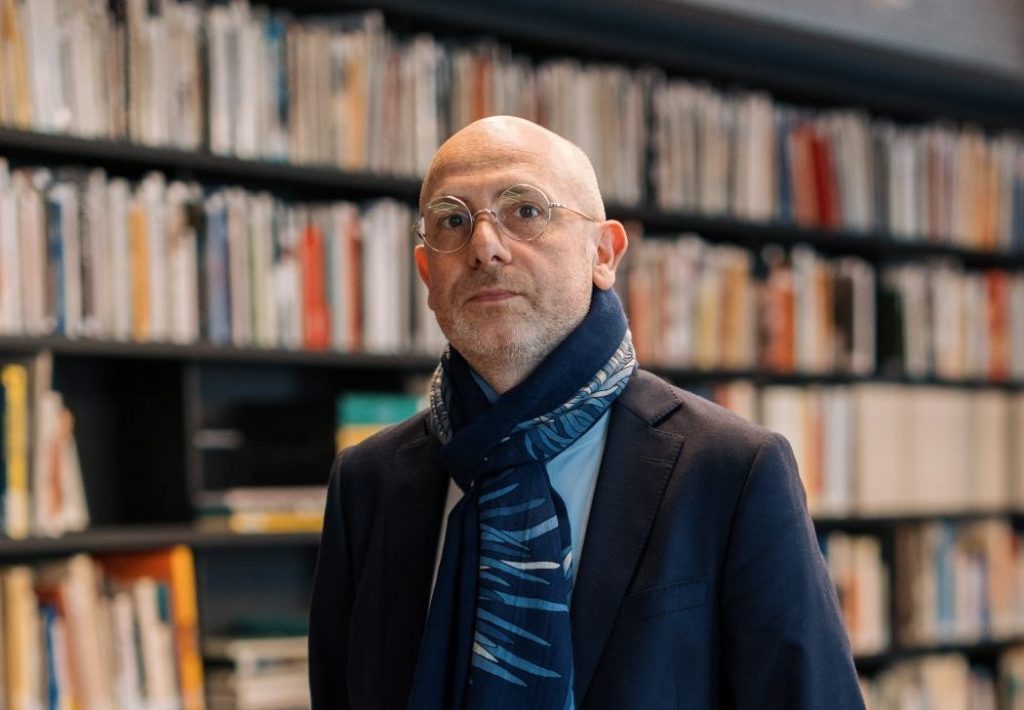
À Lyon, Sophie Morel rénove des lieux historiques en alliant respect du bâti et écriture contemporaine.

ÉDITION #3

Pascal Grasso

Au Centre d’Études Picasso, l’architecte compose une architecture où lumière, géométrie et héritage dialoguent avec précision.

ÉDITION #2

Alexandre Danan

Entretien avec le fondateur d’EDO (European Design Office)

ÉDITION #2

Aziz Temimi

Portrait d’un visionnaire qui transforme l’art de recevoir en expérience totale.

ÉDITION #1

Visages, gestes, inspirations

Personnalités, artisans et créateurs qui donnent à la fête sa profondeur humaine.

ÉDITION #3

Chemins de traverse : parenthèse d’exception en Bordelais

De Bordeaux au Bassin, art, vignobles et bien-être composent une échappée élégante au cœur de la Gironde.

ÉDITION #2

Voyage en Toscane
‎

Vers une région de l’Italie habitée par le temps, où paysages, culture et usages s’accordent dans une continuité rare.

ÉDITION #1

Horizons, saisons, traditions
‎

Destinations et rituels qui réinventent la fête, du soleil tropical aux marchés d’hiver.

Dates, adresses, invitations

Expositions, événements et repères culturels pour vivre pleinement la saison des fêtes.