A great perfume is often recognised by its silhouette before its scent is even released. The bottle encapsulates an emotion in glass and endures through changing fashions, long after the fragrance has evaporated. Behind these vessels are jewellers, master glassmakers, fashion designers and sculptors who have turned perfume into a collector’s item. From the Imperial Bee to contemporary crystal, here are the legendary bottles. What do they really have in common?
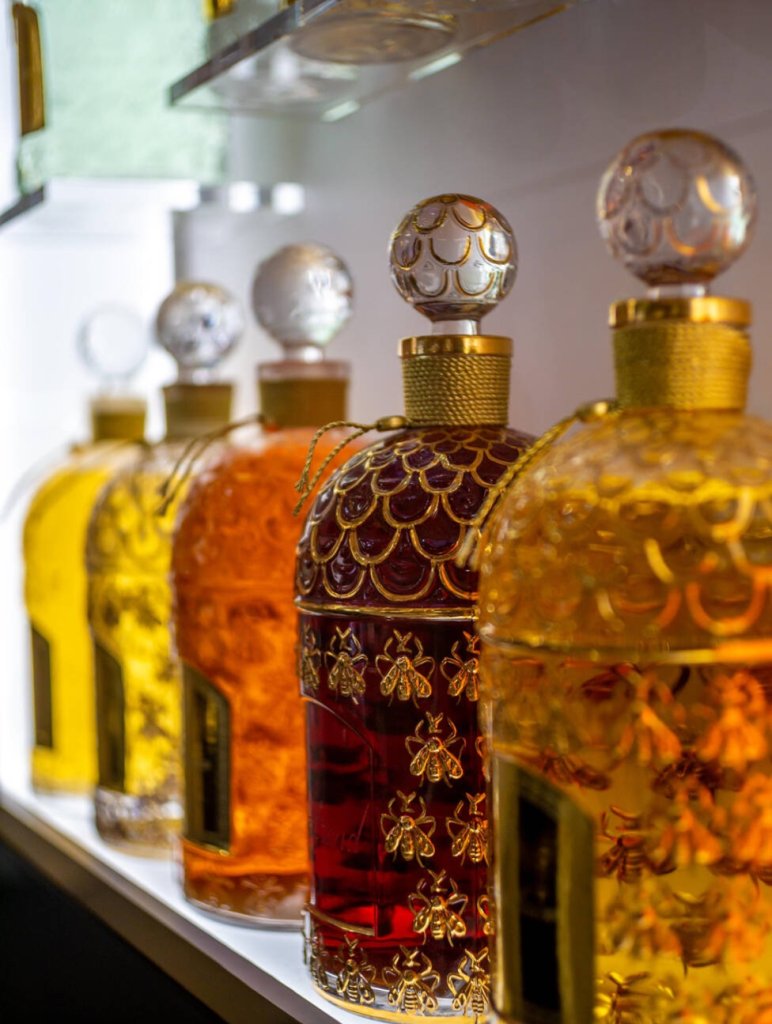
Paris, France, August 18,2018: Guerlain perfumes on display in Galeries Lafayette ; Snehal Pailkar
It all began in 1853, the year that Napoleon III married Eugénie de Montijo. Pierre-François-Pascal Guerlain created an ‘Eau de Cologne Impériale’ for the Empress and designed a bespoke bottle for her. The bottle’s design was inspired by the Vendôme Column, with festoons reminiscent of the crinolines of the Second Empire. Sixty-nine gilded bees, the emblem of the Empire, were depicted in relief across its body. The glassmaker Pochet du Courval rose to the challenge of semi-batch production, which was rare at the time. Impressed, the Empress appointed Guerlain as Her Majesty’s certified perfumer. The ‘Flacon aux Abeilles’ (Bottle of Bees) has remained with the house ever since. Even today, it is used to hold cologne and is personalised and embellished by hand. This bottle was born from a royal commission and has become the oldest emblem of a French perfume house.
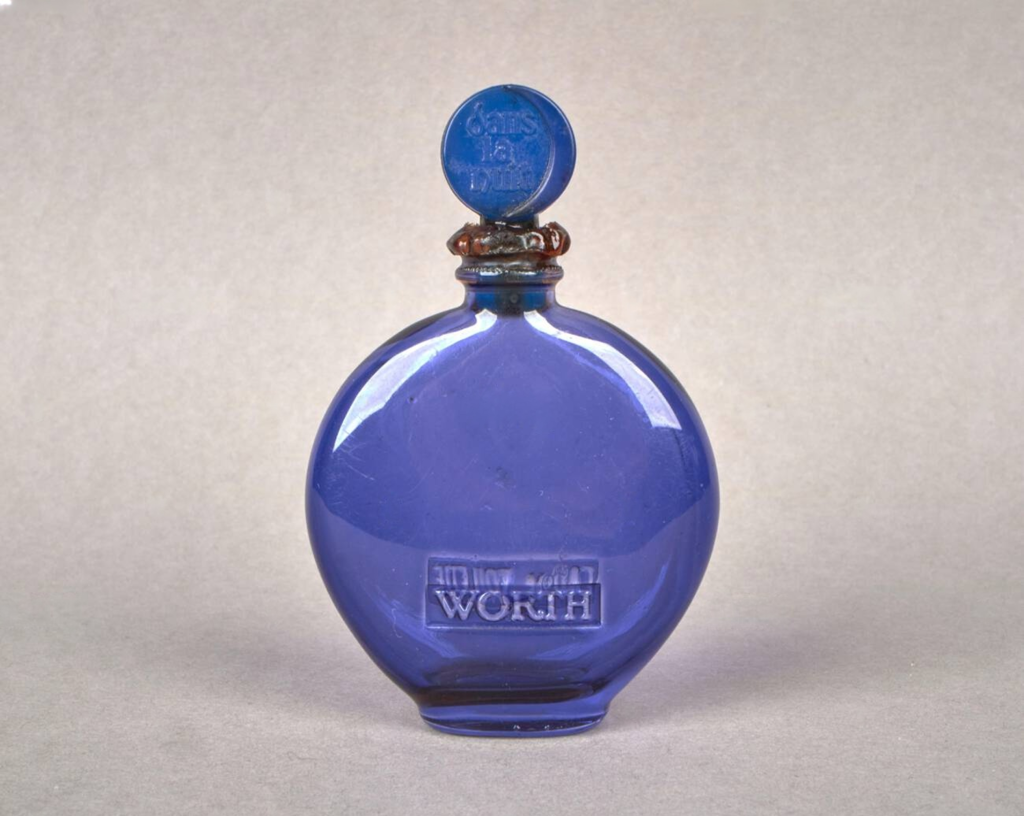
Vintage Worth Dans La Nuit glass perfume bottle, designed by Rene Lalique ; Simon Curtis
At the turn of the century, François Coty felt that the bottles available at the time lacked character. He crossed Place Vendôme and entrusted their design to his neighbour, the jeweller René Lalique, who had long been fascinated by glass. The result of this collaboration was the Ambre Antique bottle, which was created in 1910. It is a moulded and blown glass bottle with a patina, featuring four female figures draped in the classical style circling the body and crowned by a pistil-shaped stopper. This collaboration transformed the jeweller’s career and ushered the perfume industry into a new era — that of the mass-produced bottle as a work of art.
Fourteen years later, Les Parfums Worth commissioned Lalique to create a bottle for Dans la Nuit. This was a midnight-blue, patinated glass sphere studded with relief stars and topped with a crescent-moon stopper. However, the design was short-lived, as it was deemed too similar to the Ivory soap logo and disappeared in the mid-1930s. The bottle itself remains a masterpiece of Art Deco and is highly sought after by collectors.
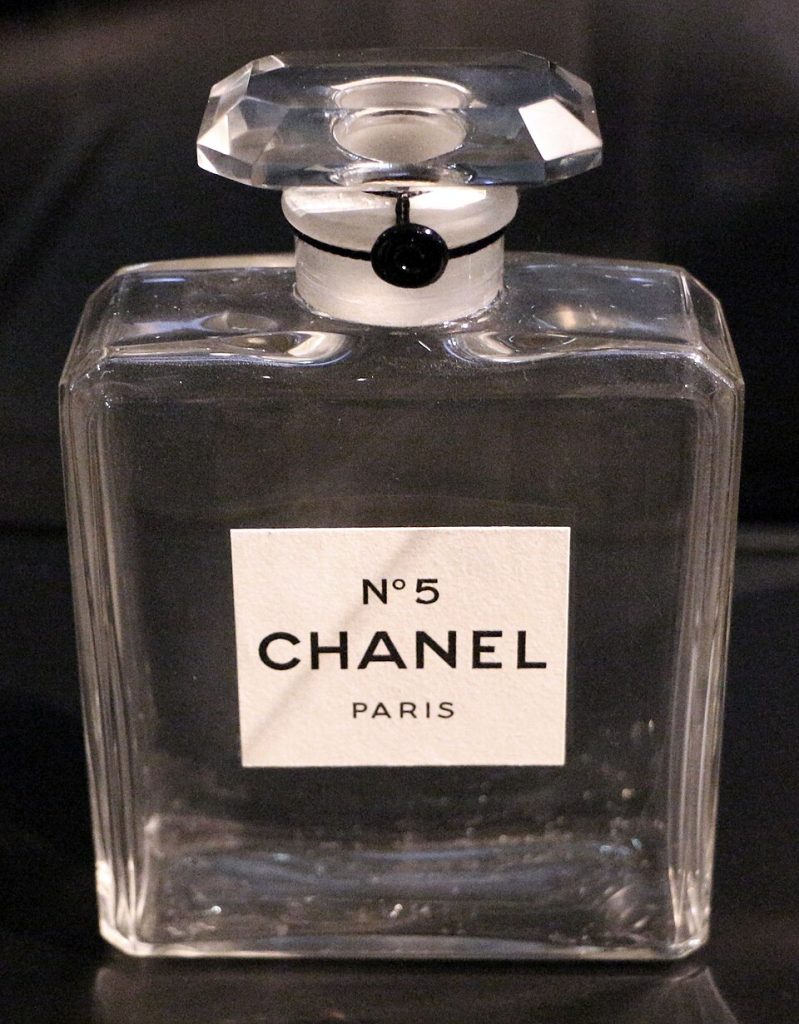
Chanel N°5 ; Neo Preistoria exhibition (Milan 2016) ; Sailko
During the Roaring Twenties, two contrasting visions of the perfume bottle emerged. In 1921, Gabrielle Chanel launched her first perfume, created by perfumer Ernest Beaux, taking a stand against the prevailing conventions of decorum. Her N°5 was housed in a clean, almost bare rectangle, designed so that only the fragrance itself would catch the eye.
The exact origin of the design remains a carefully guarded mystery, with theories ranging from a men’s toiletries case to Boy Capel’s hip flask and the hand of a Russian grand duke. Five successive designs followed, never straying from this founding simplicity.
Four years later, Guerlain presented Shalimar at the International Exhibition of Decorative Arts, where it won an award. Designed by Raymond Guerlain and crafted by Baccarat, its stemmed bottle broke new ground with a sapphire-blue crystal fan crowning the vial and echoing the water jets of Mughal gardens. It was one of the first perfumes to feature a coloured stopper. Two contrasting approaches, two legends of French perfumery.
Musée international de la Parfumerie, Grasse ; Xavier de Jauréguiberry
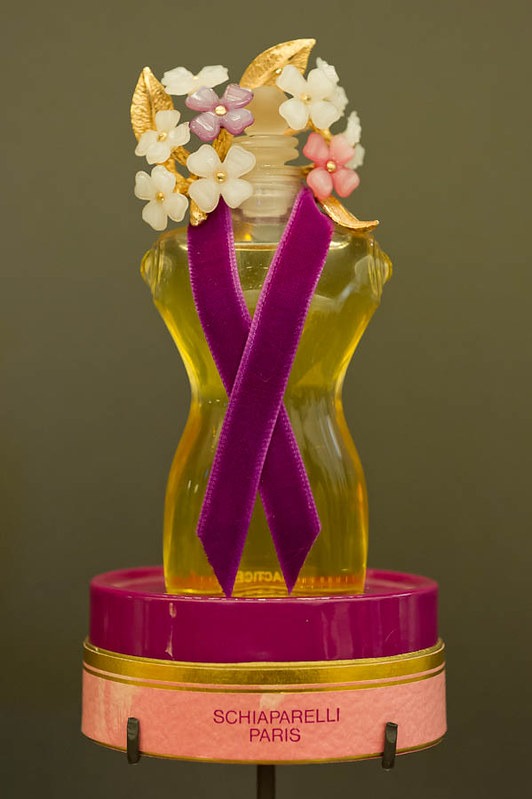
Chanel’s rival Elsa Schiaparelli frequented the Surrealists and brought the absurd into haute couture. In 1937, she launched her perfume ‘Shocking’ in an unusual bottle: a dressmaker’s bust modelled on the silhouette of actress Mae West, who had her own mannequin in the house’s workshops. The surrealist painter Leonor Fini designed the bottle. A measuring tape encircles the neck, while a bouquet of flowers and a small ‘S’ adorn the bottle. The whole bottle is bathed in a bright pink shade that the designer herself dubbed ‘shocking’, and which she made into a fashion statement. The fragrance was created by perfumer Jean Carles. This glass vessel set a precedent, and half a century later the corseted bust reappeared on the catwalks of another couturier. The bottle became a sculpture, and the sculpture became a signature.
NINA RICCI – “L’Air du Temps” – (1948) – rouillac
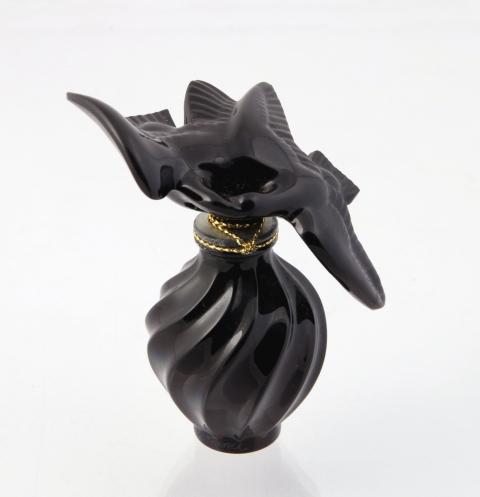
Following the war, Robert Ricci established a perfume division within his mother’s fashion label, Nina Ricci. L’Air du Temps was launched in 1948 in a sun-inspired bottle designed by the sculptor Joan Rebull. The stopper was engraved with a single dove – a symbol of freedom regained. Three years later, Marc Lalique revisited the design, giving it its definitive form: two intertwining crystal doves perched above a swirl, symbolising love and peace. The bottle requires fifteen stages of hand finishing due to the challenge posed by its shape to the crystal. Robert Ricci was particularly fond of this white bird, especially after the dark years. While the fragrance has changed over the decades, the two doves continue to watch over it. Few bottles have conveyed such a clear message.
Pxhere
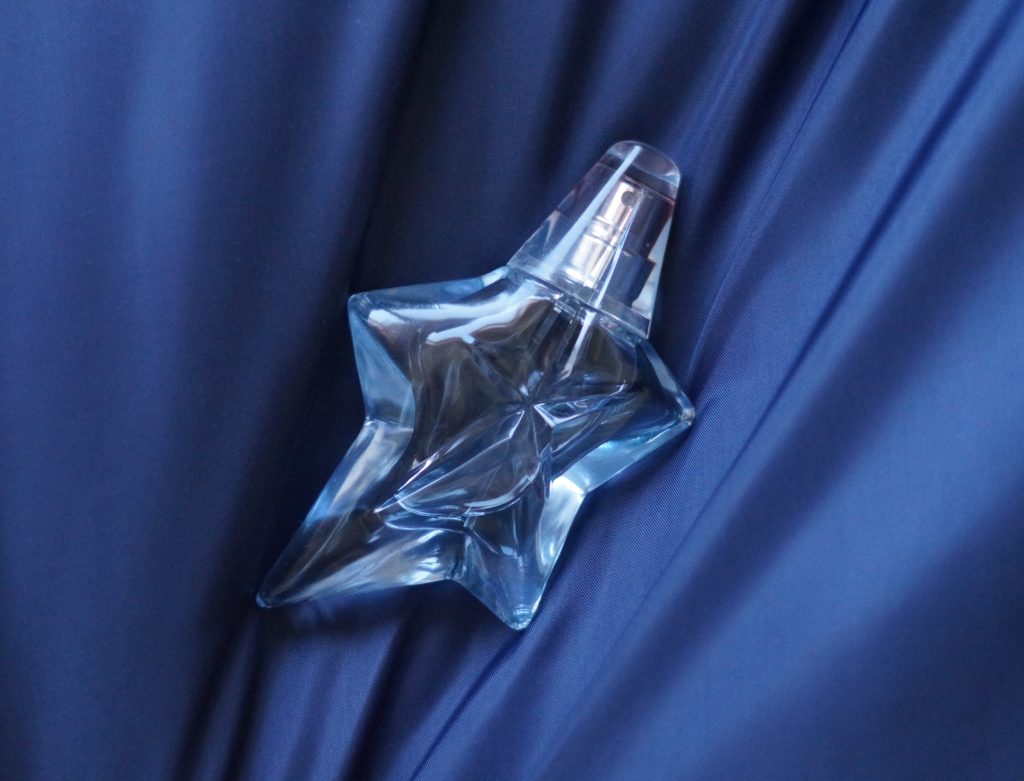
It was back in Paris in the early 1990s that Thierry Mugler, the prince of the catwalks, was one of the few designers without a perfume licence. Thierry Mugler, the prince of the catwalks, was one of the few designers without a perfume licence. After more than six hundred attempts, he created Angel, the first major ‘gourmand’ fragrance in history, where patchouli blends with praline, caramel and vanilla, working with Vera Strubi and perfumer Olivier Cresp. The bottle, a flat five-pointed star designed by Jean-Jacques Urcun, initially put off all the glassmakers.
After two years of research, however, the Brosse glassworks devised an exclusive process to cut this blue crystal comet. Several retailers refused to stock the fragrance, deeming it too daring, but its success proved them wrong. Most notably, Angel was the world’s first refillable fragrance, thanks to the ‘Source’ refill station installed in perfumeries. It is a jewel-like bottle designed to last and demonstrates an eco-conscious vision far ahead of its time.

A century after Coty, the House of Lalique continues the founding tradition. In 2025, its Lalique Art collection unveils La Valse Hésitation, a crystal bottle that reimagines the world of René Magritte. Each piece is numbered and comes with a refill of perfume extract to be poured into the crystal bottle using a special funnel. This collaboration brings the story full circle, as the glassmaker who first brought prestige to the perfume bottle is once again working with a surrealist painter, half a century after the House of Schiaparelli’s bold innovations. The perfume bottle has always been a domain for artists. From the Imperial Bee of 1853 to Magritte’s reverie, one conviction has spanned the decades: perfume deserves a vessel worthy of its mystery. It remains to be seen which bottle will go down in legend tomorrow.
Février, 2026
Créer avec l’existant, penser avec l’histoire
De l’architecture au design, cette édition explore comment lieux, savoir-faire et matières héritées deviennent terrains de création actuelle.
Janvier, 2026
Le luxe se réinvente.
Finis les logos clignotants, place à une sobriété raffinée, à l’immersion personnelle, à l’excellence artisanale, à la durabilité sensible.
Décembre, 2025
Héritages, gestes contemporains et plaisirs essentiels
Parce que la fête n’est jamais qu’apparence : elle reflète notre manière d’habiter le monde, de transmettre, de fabriquer des souvenirs durables.
ÉDITION #3
Upcycling et kintsugi transforment l’objet contemporain, faisant de la trace, de la réparation et de la matière un langage esthétique.
ÉDITION #3
Artisans et designers donnent une seconde vie aux matériaux anciens, entre création contemporaine, patrimoine et réemploi.
ÉDITION #3
Bunkers, wagons et kiosques renaissent grâce à la création, révélant comment l’art redonne sens aux lieux délaissés.
ÉDITION #2
Un regard transversal sur le quiet luxury à travers des lieux, des objets et des figures qui expriment l’élégance.
ÉDITION #1
Une sélection de marques, architectures, objets et escapades qui donnent corps au sens de la fête.
ÉDITION #3
Usines et gares délaissées deviennent lieux culturels ouverts, où mémoire industrielle et usages contemporains redessinent la ville.
ÉDITION #3
L’audacieuse métamorphose d’un palace parisien
ÉDITION #3
Au cœur du Marais, un lieu discret révèle comment archives, architecture et recherche font dialoguer l’œuvre de Picasso.
ÉDITION #2
Une expérience shopping unique dans un magasin emblématique.
ÉDITION #2
Voyage culinaire et architectural au cœur de la Seine
ÉDITION #2
Dans le 9e arrondissement, un établissement qui invite au quiet luxury
ÉDITION #1
Chante! vient d’ouvrir ses portes. Une invitation à vibrer !
ÉDITION #3
Icône du paysage français, la boîte jaune change de statut et s’invite dans l’univers du design.
ÉDITION #3
L’édition 2026 affirme une vision où artisanat, design et mémoire façonnent l’habitat contemporain, international actuel.
ÉDITION #3
Cent ans après 1925, l’Art déco revient dans nos villes et intérieurs avec géométrie, audace, optimisme.
ÉDITION #3
Depuis plus de deux cents ans, Royal Limoges conjugue porcelaine, savoir-faire industriel et création contemporaine.
ÉDITION #3
Des terrains de sport aux podiums, la sneaker raconte un siècle de mutations culturelles, techniques et stylistiques.
ÉDITION #2
Design, mode, artisanat : des créations où la forme et la matière se répondent avec justesse, loin de tout effet de mode.
ÉDITION #1
Décorations artisanales, calendriers ultra-luxe et pièces de collection pour s’enivrer de joie avant l’heure.
ÉDITION #3
Entre marqueterie monumentale et jungle symbolique, Anton Laborde transforme le bois en récit contemporain poétique engagé.
ÉDITION #3
À Maison & Objet, Thierry Laudren présente des meubles sculptés où fonction, matière et lenteur façonnent une présence.
ÉDITION #3
Jean Nouvel conçoit une architecture attentive aux contextes, où lumière, histoire et usages façonnent chaque projet.
ÉDITION #3
À Lyon, Sophie Morel rénove des lieux historiques en alliant respect du bâti et écriture contemporaine.
ÉDITION #3
Au Centre d’Études Picasso, l’architecte compose une architecture où lumière, géométrie et héritage dialoguent avec précision.
ÉDITION #2
Entretien avec le fondateur d’EDO (European Design Office)
ÉDITION #2
Portrait d’un visionnaire qui transforme l’art de recevoir en expérience totale.
ÉDITION #1
Personnalités, artisans et créateurs qui donnent à la fête sa profondeur humaine.
ÉDITION #3
De Bordeaux au Bassin, art, vignobles et bien-être composent une échappée élégante au cœur de la Gironde.
ÉDITION #2
Vers une région de l’Italie habitée par le temps, où paysages, culture et usages s’accordent dans une continuité rare.
ÉDITION #1
Destinations et rituels qui réinventent la fête, du soleil tropical aux marchés d’hiver.