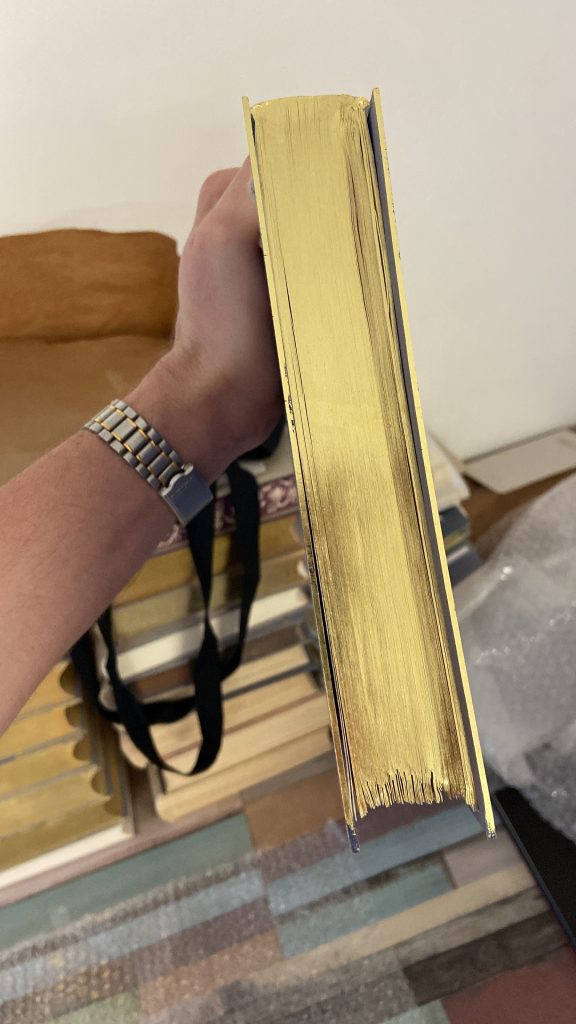
With a sheet of gold and a breath, the edge of a book comes to life. Guillaume practises edge gilding, a rare craft that adorns bound pages with a lustre destined to last for centuries. Having trained at the École Estienne and later under Jean-Luc Bongrain, one of the last edge-gilders in France, he was awarded the inaugural ‘Bourse des Métiers Orphelins’ grant by The Craft Project in 2021. It is a craft rooted in the passage of time, in patience, and in the silence of the workshop. ‘I will not consider my life complete until this craft can continue without me.’
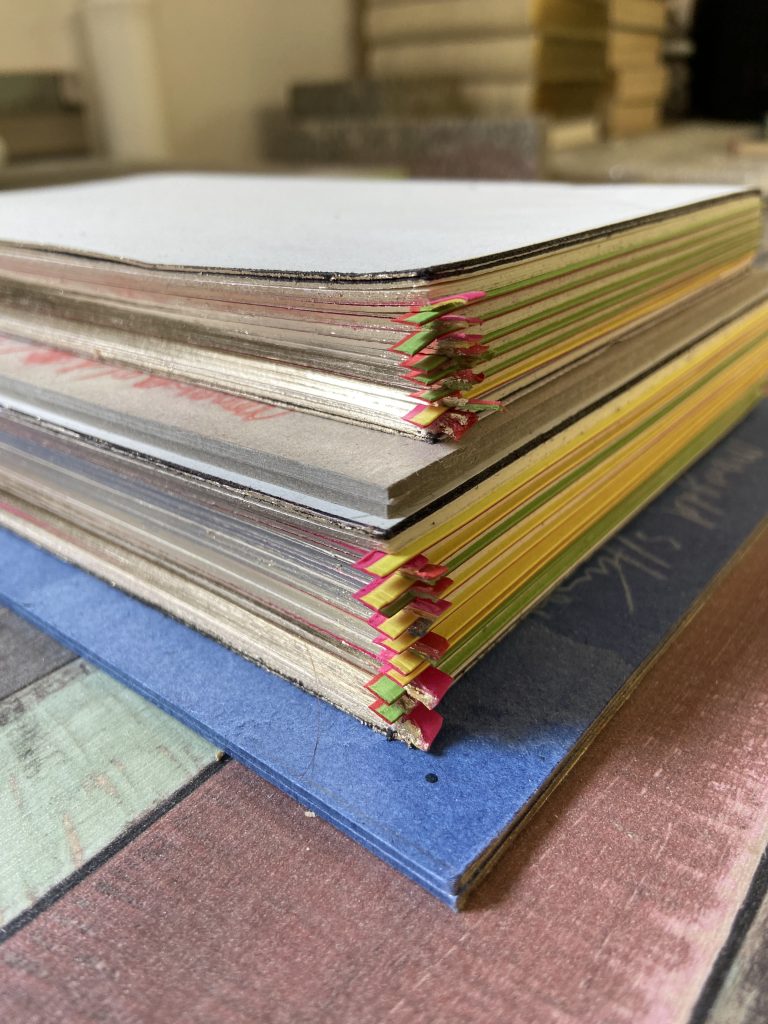
Tranches témoins encartées; Guillaume Catay
It all began in a house where books were everywhere, from well-thumbed novels to comic books. As a child, Guillaume Catay would linger over a few old, weathered volumes. His curiosity got the better of him: he opened the books, took them apart, and tried to understand how bookbinding worked. He repaired one book, then two, and sewed his first notebooks from blank sheets of paper. One day, he walked into Maurice Baux’s bookshop on Place Nationale in Montauban and showed the bookseller his attempts. The bookseller referred him to Philippe Grimont, an antique book restorer who happened to be visiting the shop. This encounter proved to be a turning point in his life. Holiday after holiday, the teenager returned to the master’s workbench as an amateur and learnt the trade in the oldest way possible: by watching him work.
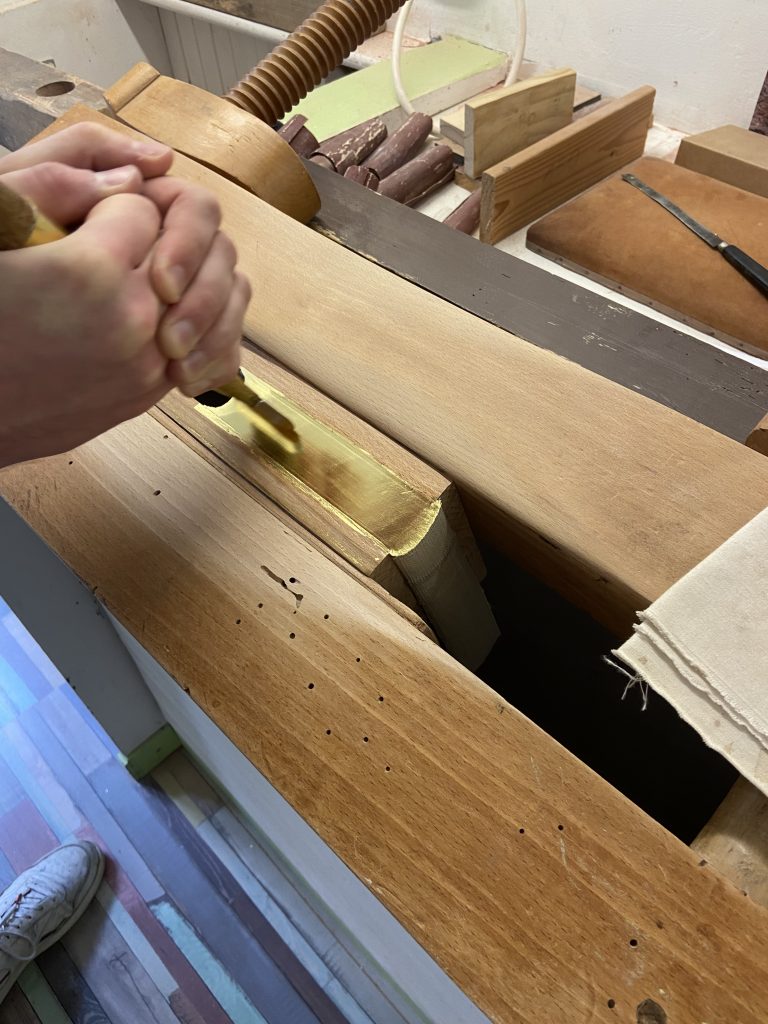
Tâte d’or dans la presse; Guillaume Catay
His passion for books never left him. After completing his A-levels, he spent a year studying for a Bachelor’s degree in Art History and Archaeology, while also preparing independently for a CAP in bookbinding and gilding. He was then admitted to the École Estienne in Paris, a temple of the book arts, on the strength of his application. Two years of study for the Diplôme des Métiers d’Art (now known as the Diplôme National des Métiers d’Art et du Design) trained him in decoration and design. The school opened doors for him. However, the real apprenticeship took place afterwards in workshops, with a year of internships in Paris, including at the Atelier Quartier Livre in the 14^(th) arrondissement, where he remains a regular. The right technique is passed on from workbench to workbench through contact with people who have practised it all their lives.
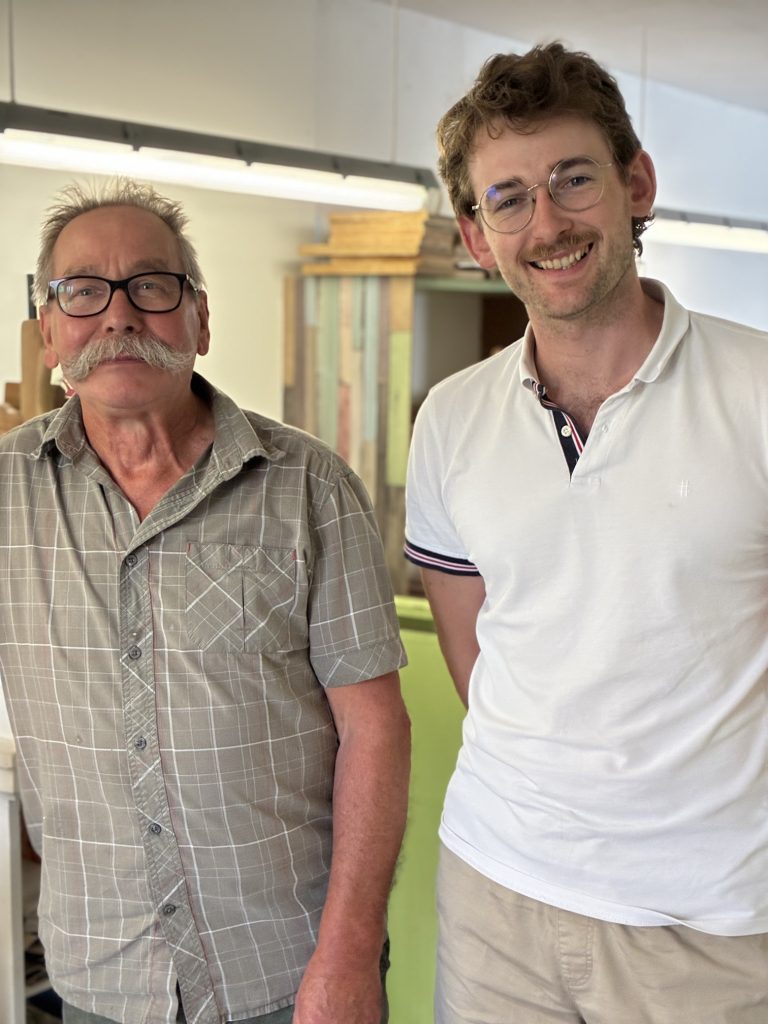
Guillaume Catay et Jean-Luc Bongrain
Then one name changed his outlook: Jean-Luc Bongrain, one of the last edge-gilders in France, who had just retired from working at the bench. The two men hit it off immediately. The master agreed to pass on his skills. For nearly two years, they met once a week to work on the same book edge and sheet of gold leaf. In 2021, the association The Craft Project established the Bourse des Métiers Orphelins to preserve these skills, which are no longer taught in any school, despite there being a market for them. The art bookbinder Louise Bescond identified edge gilding as a priority, and the Rémy Cointreau Foundation became a patron, funding the first recipient, Guillaume Catay.
What the master passes on to him goes beyond mere technique. “With a master, you learn above all a way of seeing. The day you see the material through his eyes, you finally understand things,’ he says.

Guillaume Catay;
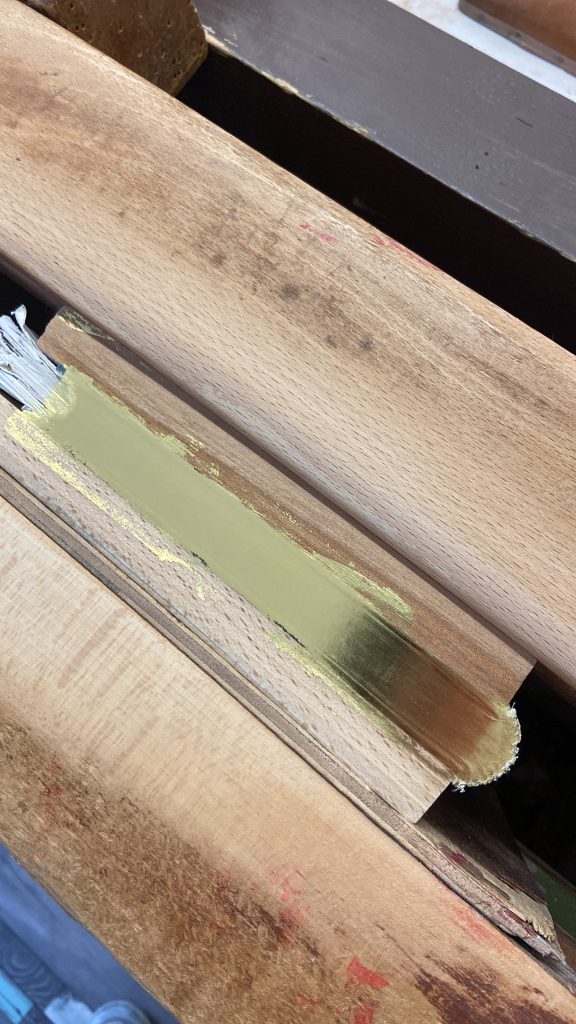
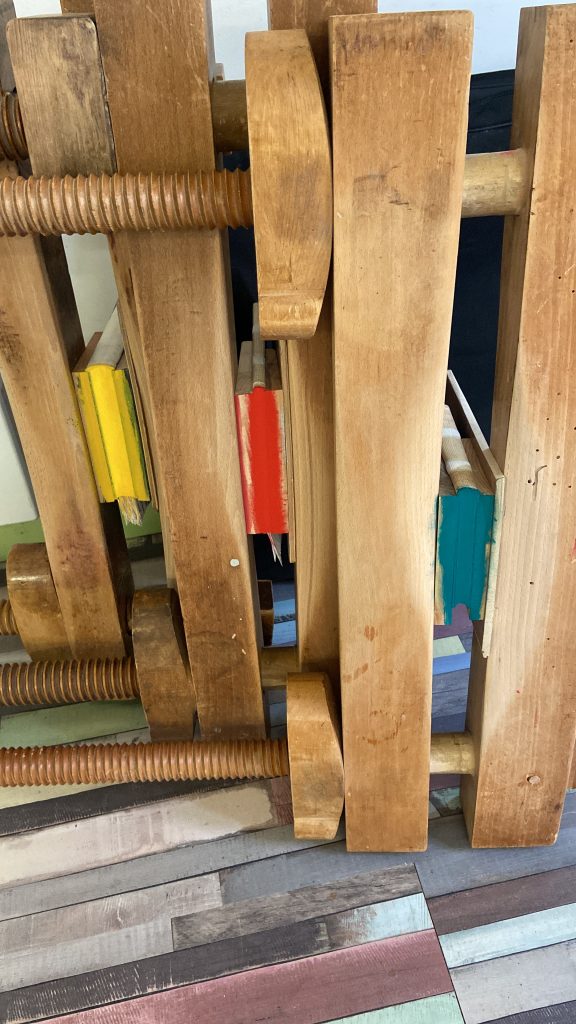
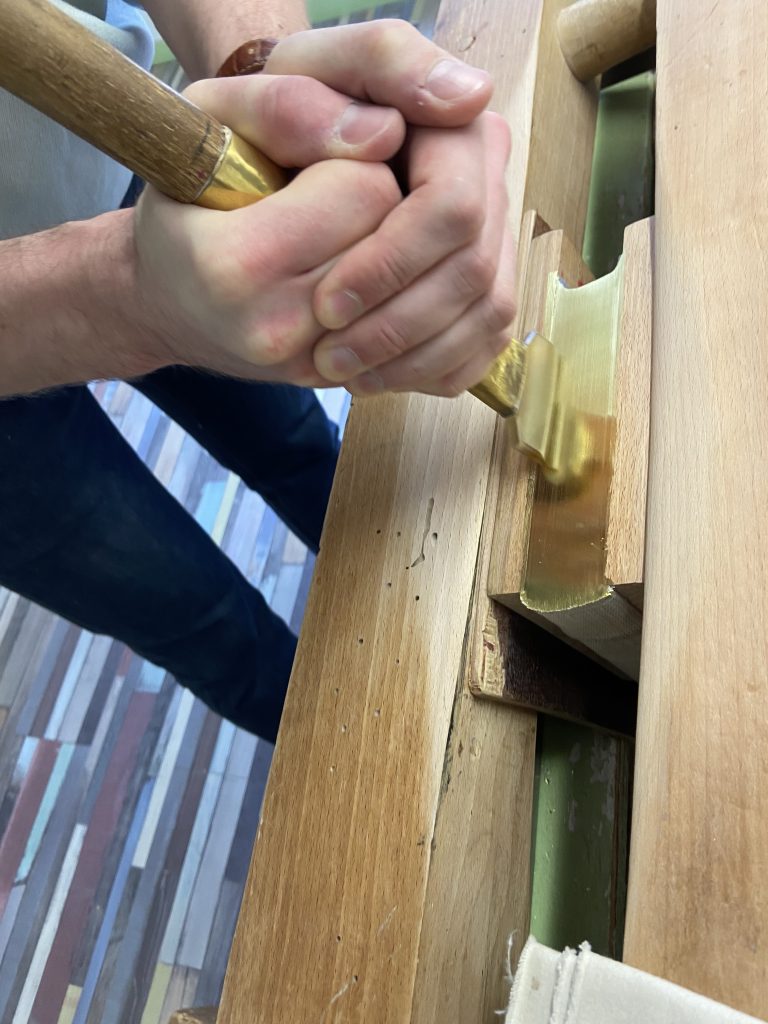
The workshop has its rituals. Once sewn and end-banded, the book is placed in a German wooden press and clamped between its staves. The edge is sanded until it is velvety smooth, coated with starch paste and polished for the first time so that the paper begins to reflect light. Then comes the gold: a sheet of extreme fineness is laid over a veil of egg white, fixed in place, and burnished until it shines. The gilder works with a living material. The paper, the humidity in the air and the season all come into play. On a stormy afternoon, the gold refuses to cooperate, and one must wait until the following day. No two pieces are alike. The gold comes in matt or glossy shades, sometimes blending with the colour, and the final decision rests with the bookbinder. This patient dialogue results in an object that is made to last far beyond the life of the person who crafted it.
Tête d’or; Guillaume Catay
Behind the technique lies an element of emotion that cannot be measured. Guillaume Catay recalls a father who entrusted him with a few pages written for his three children – memories of life jotted down on paper – to be bound into three copies. The object is designed to be passed on and is more precious than anything it contains. This emotional weight permeates every commission and his relationship with books. A bibliophile, he collects bound volumes and those that he will bind with his own hands. On Saturdays, he can still be found poring over his own books at his workbench, keeping an eye out for library sales. He sometimes rescues small nineteenth-century editions from oblivion, crafted with a care that is no longer demanded, for the sheer pleasure of creating beautiful bindings and honing his gilding skills.
Guillaume Catay
Guillaume Catay works in a printing works where he carries out book finishing. He is devoted to gilt edging and practises it once a month with his master at a slower pace. Passing on his craft remains his ultimate goal. He is organising the notes he took during his training with a view to writing a treatise that will set out the technique in such a way that any amateur can try it and succeed. This work progresses in small, patient and meticulous steps. He also dreams of reopening a workshop and making a living from his dual crafts of bookbinding and edge gilding. What matters to him goes far beyond what one might imagine. “A beautiful object is time, and someone behind it who has gone to great lengths. You’ll forget the price within six months. The book, however, will always be there.’
Février, 2026
Créer avec l’existant, penser avec l’histoire
De l’architecture au design, cette édition explore comment lieux, savoir-faire et matières héritées deviennent terrains de création actuelle.
Janvier, 2026
Le luxe se réinvente.
Finis les logos clignotants, place à une sobriété raffinée, à l’immersion personnelle, à l’excellence artisanale, à la durabilité sensible.
Décembre, 2025
Héritages, gestes contemporains et plaisirs essentiels
Parce que la fête n’est jamais qu’apparence : elle reflète notre manière d’habiter le monde, de transmettre, de fabriquer des souvenirs durables.
ÉDITION #3
Upcycling et kintsugi transforment l’objet contemporain, faisant de la trace, de la réparation et de la matière un langage esthétique.
ÉDITION #3
Artisans et designers donnent une seconde vie aux matériaux anciens, entre création contemporaine, patrimoine et réemploi.
ÉDITION #3
Bunkers, wagons et kiosques renaissent grâce à la création, révélant comment l’art redonne sens aux lieux délaissés.
ÉDITION #2
Un regard transversal sur le quiet luxury à travers des lieux, des objets et des figures qui expriment l’élégance.
ÉDITION #1
Une sélection de marques, architectures, objets et escapades qui donnent corps au sens de la fête.
ÉDITION #3
Usines et gares délaissées deviennent lieux culturels ouverts, où mémoire industrielle et usages contemporains redessinent la ville.
ÉDITION #3
L’audacieuse métamorphose d’un palace parisien
ÉDITION #3
Au cœur du Marais, un lieu discret révèle comment archives, architecture et recherche font dialoguer l’œuvre de Picasso.
ÉDITION #2
Une expérience shopping unique dans un magasin emblématique.
ÉDITION #2
Voyage culinaire et architectural au cœur de la Seine
ÉDITION #2
Dans le 9e arrondissement, un établissement qui invite au quiet luxury
ÉDITION #1
Chante! vient d’ouvrir ses portes. Une invitation à vibrer !
ÉDITION #3
Icône du paysage français, la boîte jaune change de statut et s’invite dans l’univers du design.
ÉDITION #3
L’édition 2026 affirme une vision où artisanat, design et mémoire façonnent l’habitat contemporain, international actuel.
ÉDITION #3
Cent ans après 1925, l’Art déco revient dans nos villes et intérieurs avec géométrie, audace, optimisme.
ÉDITION #3
Depuis plus de deux cents ans, Royal Limoges conjugue porcelaine, savoir-faire industriel et création contemporaine.
ÉDITION #3
Des terrains de sport aux podiums, la sneaker raconte un siècle de mutations culturelles, techniques et stylistiques.
ÉDITION #2
Design, mode, artisanat : des créations où la forme et la matière se répondent avec justesse, loin de tout effet de mode.
ÉDITION #1
Décorations artisanales, calendriers ultra-luxe et pièces de collection pour s’enivrer de joie avant l’heure.
ÉDITION #3
Entre marqueterie monumentale et jungle symbolique, Anton Laborde transforme le bois en récit contemporain poétique engagé.
ÉDITION #3
À Maison & Objet, Thierry Laudren présente des meubles sculptés où fonction, matière et lenteur façonnent une présence.
ÉDITION #3
Jean Nouvel conçoit une architecture attentive aux contextes, où lumière, histoire et usages façonnent chaque projet.
ÉDITION #3
À Lyon, Sophie Morel rénove des lieux historiques en alliant respect du bâti et écriture contemporaine.
ÉDITION #3
Au Centre d’Études Picasso, l’architecte compose une architecture où lumière, géométrie et héritage dialoguent avec précision.
ÉDITION #2
Entretien avec le fondateur d’EDO (European Design Office)
ÉDITION #2
Portrait d’un visionnaire qui transforme l’art de recevoir en expérience totale.
ÉDITION #1
Personnalités, artisans et créateurs qui donnent à la fête sa profondeur humaine.
ÉDITION #3
De Bordeaux au Bassin, art, vignobles et bien-être composent une échappée élégante au cœur de la Gironde.
ÉDITION #2
Vers une région de l’Italie habitée par le temps, où paysages, culture et usages s’accordent dans une continuité rare.
ÉDITION #1
Destinations et rituels qui réinventent la fête, du soleil tropical aux marchés d’hiver.