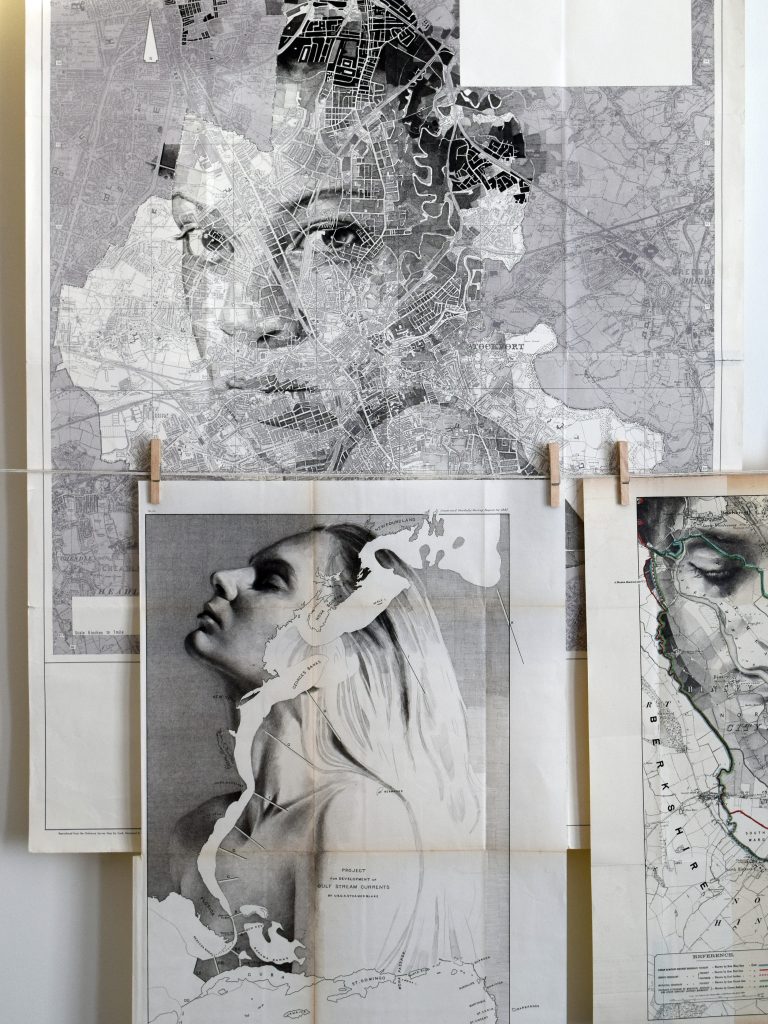
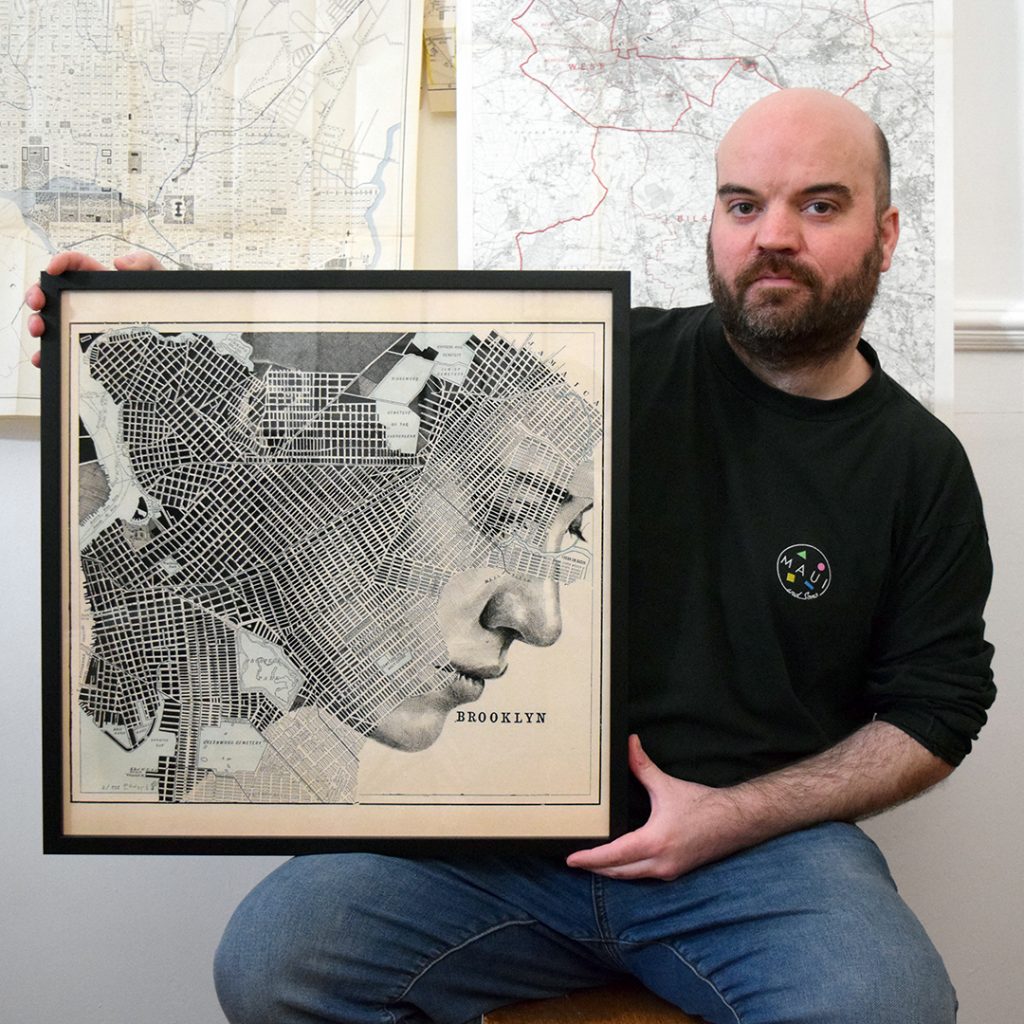
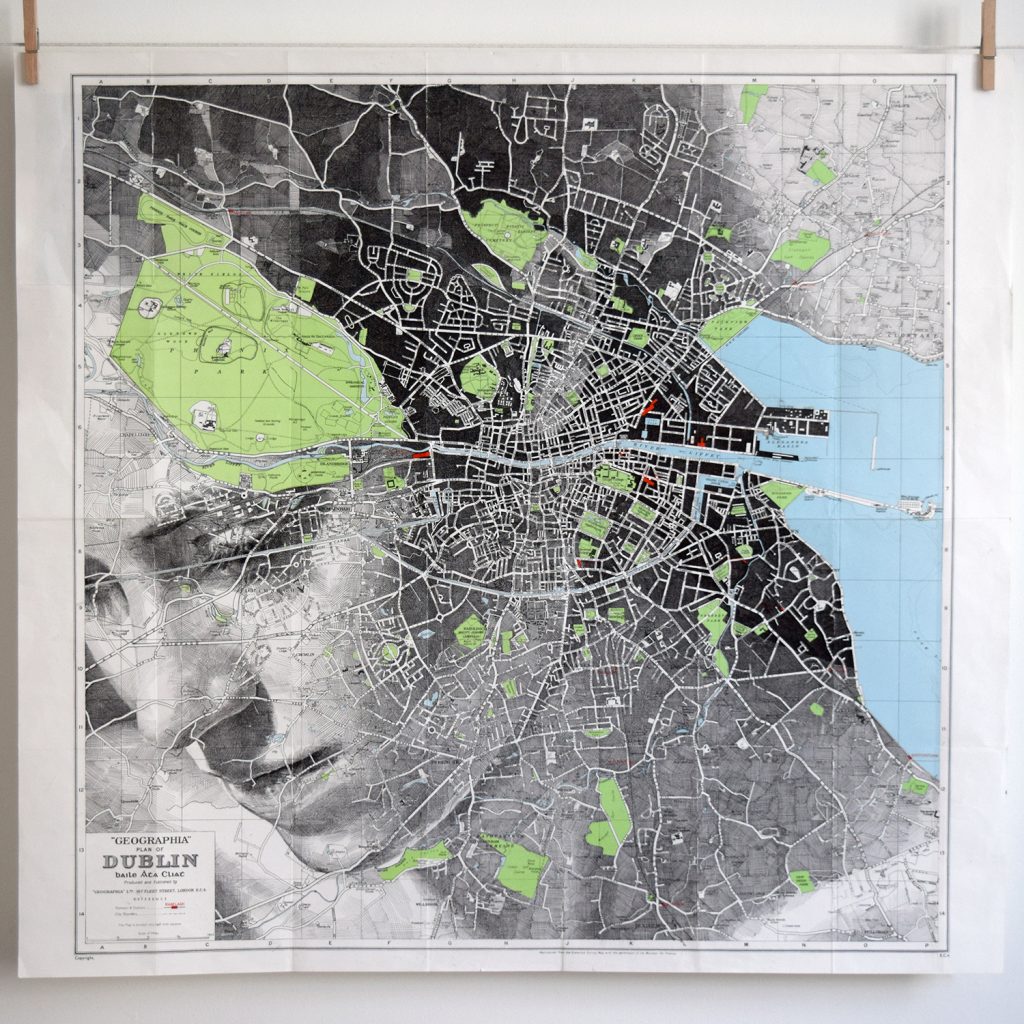
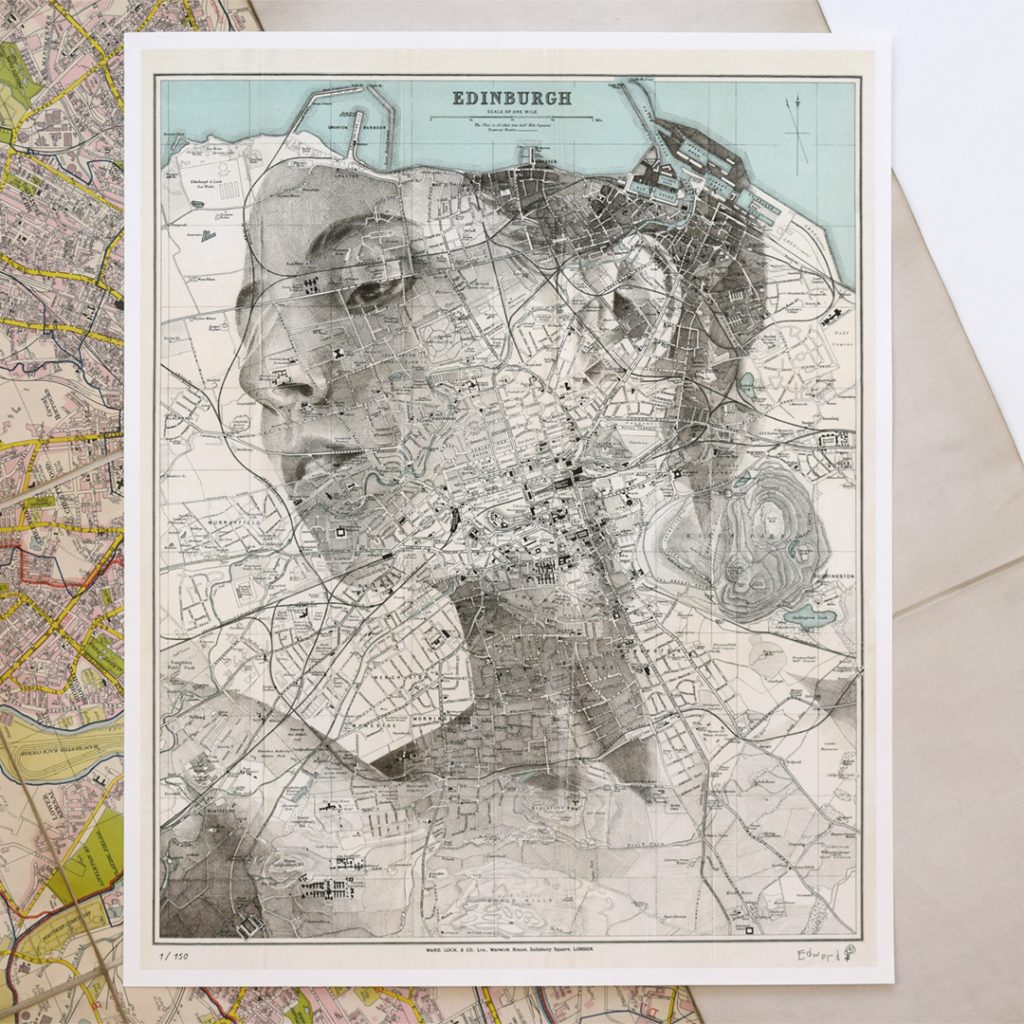
From his small Southampton studio, British artist Ed Fairburn draws portraits directly onto old road maps. Gradually, the streets, contour lines and terrain come together under his pen to form an eye, a mouth or a cheek. It’s as if people and the land had always belonged together.
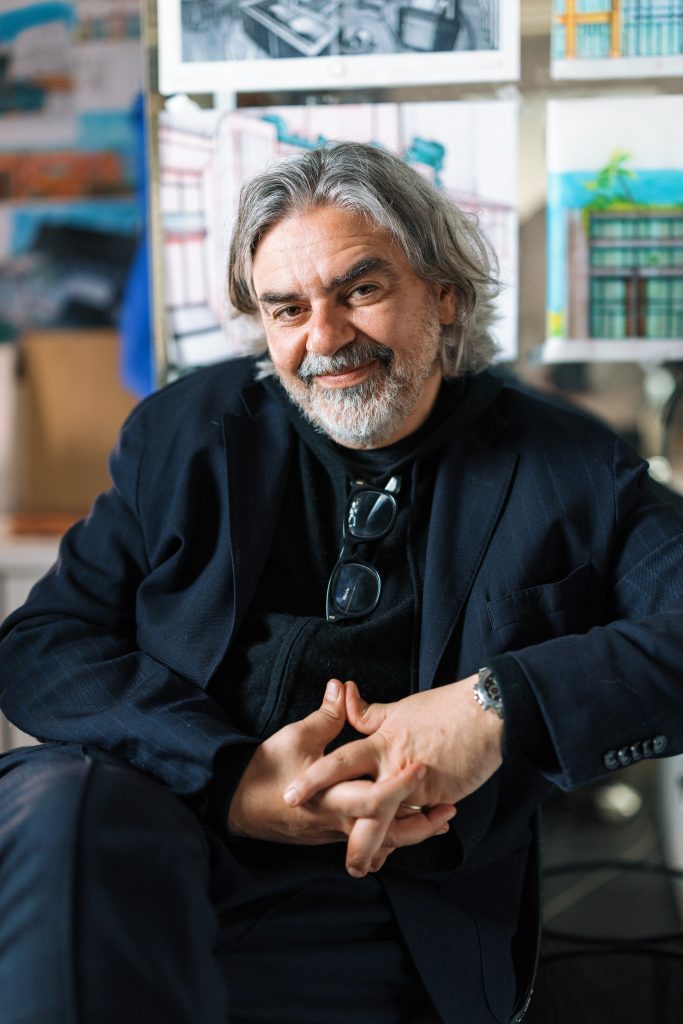
Ed Fairburn with Brooklyn II ; Ed Fairburn
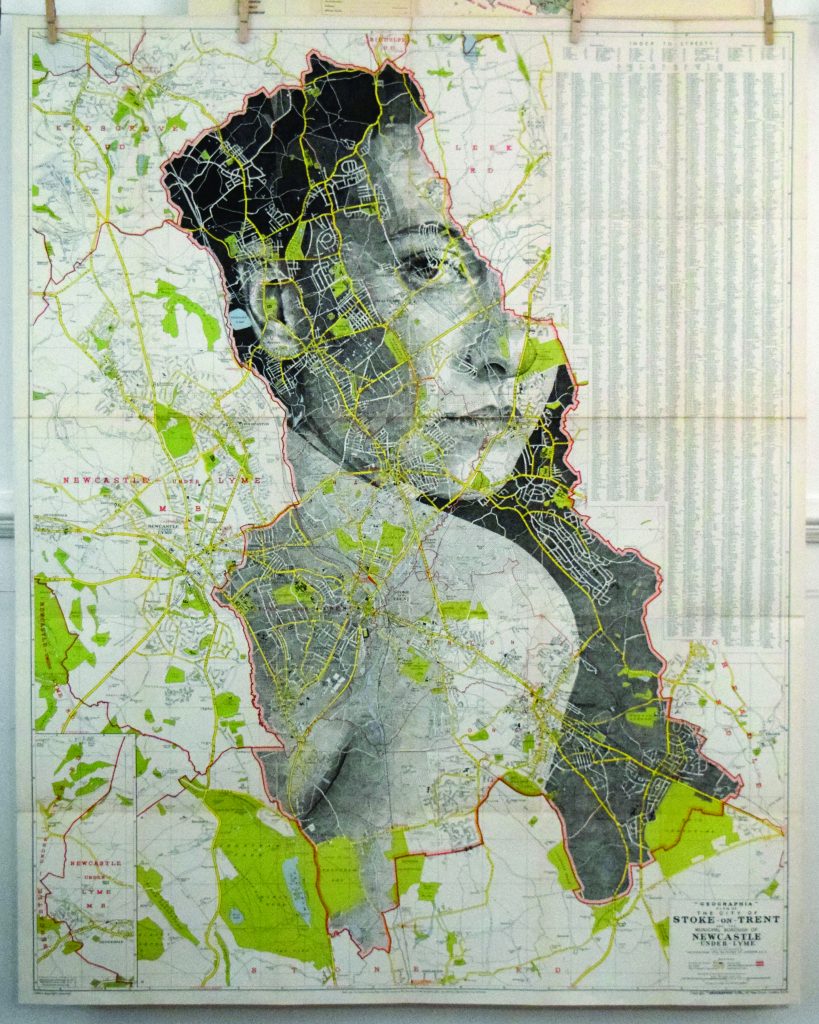
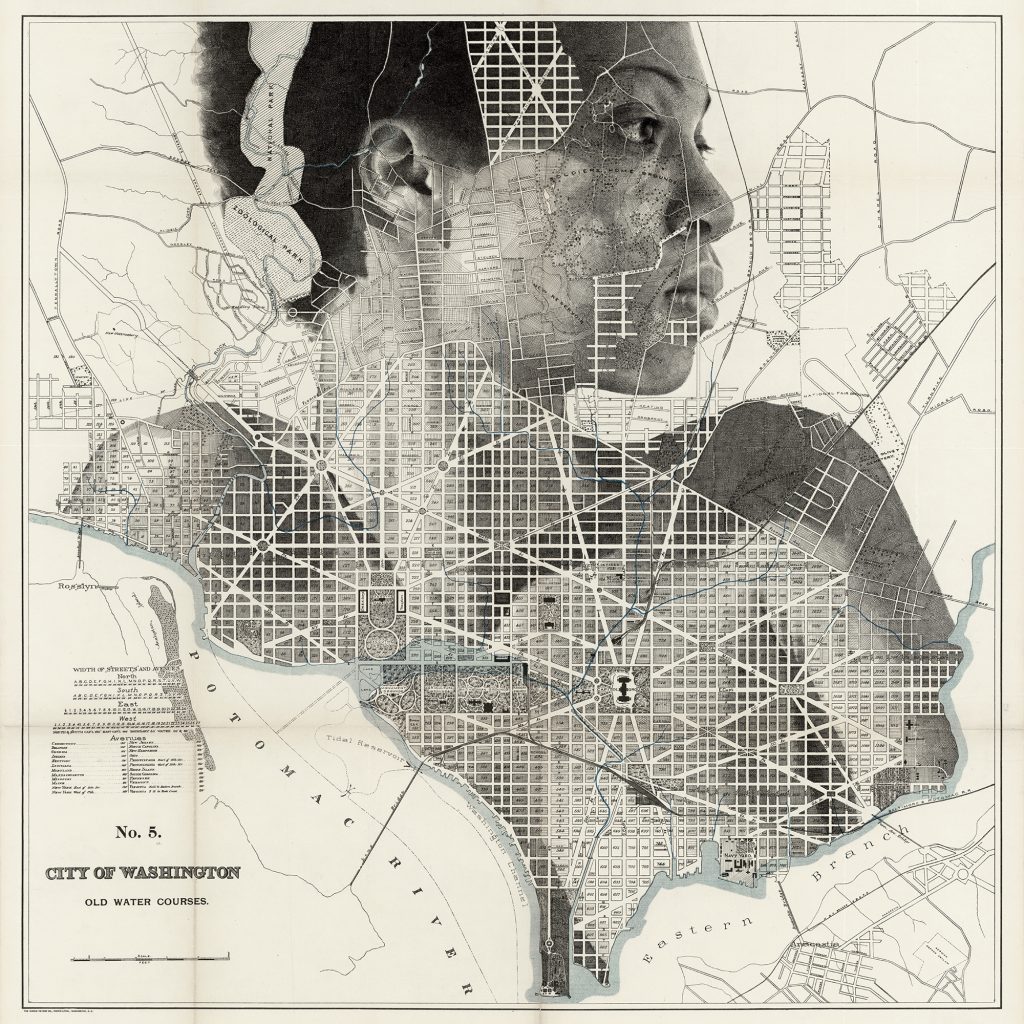
First, there is the map. An old, unfolded map with criss-crossing roads, shading to indicate elevation and colours faded by time. Then, as you step back, a face rises to the surface. A forehead traced by contour lines, a cheekbone emerging from a crossroads and a gaze woven between two neighbourhoods. In Ed Fairburn’s work, the portrait does not sit on top of the geography; it emerges from it. “It’s as if the two have always belonged to one another,” wrote American broadcaster PBS about his work. This is exactly right: the coexistence is so natural that it is impossible to tell whether it is the landscape that shapes the man or the man who reveals the landscape.
Ed Fairburn
This British artist, born in 1989, coined the term ‘topopointillism’ to describe his work. It is a portmanteau of ‘topography’ and ‘pointillism’. The definition is crystal clear, but it conceals hours of work requiring rare patience. “My work stems from my two greatest passions,’ he says. ‘Collecting old paper maps and drawing portraits.” Using ink, a little paint and a pencil, he gently alters the contours, roads and patterns already present on the map until a human figure emerges. “These changes allow me to bring out the human form and achieve a peaceful coexistence between the figure and the landscape.”
‘Stoke on Trent’; Ed Fairburn
It all began at the end of 2012. Having graduated a few months earlier from the Cardiff School of Art, where he had studied illustration, the young Ed Fairburn was already interested in unlikely surfaces. He calls it his ‘off-road drawing’: drawing on anything but white paper. Wood and its grain, old envelopes and objects marked by time. For one of his final projects as a student, he painted on envelopes, which he then posted. This transformed the postal system into an impromptu gallery, all under the watchful eyes of the postmen.
One day in October, he walked into a charity shop — a regular occurrence for him as he loves rummaging through jumble sales filled with objects that have already led a life of their own. He came out with a road map of Munich. Price: twenty pence. “I remember the price,” he says. “It was nothing special. I liked the colours and patterns.” The map lay in a corner of the studio for a while, like so many other things. Then he started to see it differently. What if the human anatomy could be woven into this network of roads, which was already codified, hierarchised and coloured? He sketched. He realised straight away that he was onto something.
“Those twenty pence were the best investment of my life,” he says, smiling. Ed describes himself as a believer in chaos theory — it’s the small decisions that lead to major turning points. “If I hadn’t bought that map, I’m not sure I’d have the career I have.”
What followed came down to another small gesture. He scanned his first piece poorly and sent it to a design blog he followed on Tumblr ‘just to see’. The next day, he woke up to find that it had been shared thousands of times, and he had received lots of messages and requests to buy it. Back then, going viral wasn’t yet the norm. Fairburn, for his part, had just landed a job as a barista in a café. He stayed there for two weeks, then resigned to seize his chance. In the months that followed, with the help of his ex-partner, who had business acumen that he hadn’t learnt at art school, he set up his business. He positioned himself somewhere between art and illustration, selling limited-edition prints and originals. He’s never looked back.

Washington D.C; Ed Fairburn
The most surprising thing about his approach is that he refuses to dominate the landscape. ‘One thing I don’t do,’ he says, ‘is see faces in the landscape. That’s not it.’ Instead, he looks for correspondences and echoes, and for lines that might accommodate a stroke without clashing with them. ‘Sometimes, the landscape makes a statement or asks a question. My job is to respond to it.’ The artist does not impose himself; he listens, and then adds something that can stand alongside the landscape without taking over. “It’s like having a conversation.” He also says that he wants to preserve the function of each map, “to nurture the composition rather than fight it”. Even before he draws a single line, he spends hours studying the terrain.
The process is therefore slow and almost tactile. Using ink and a pen, he hatches line by line, with his index finger resting close to the area he is working on to prevent the old paper from springing up like a trampoline. For no old paper is perfectly flat — this is both a joy and a constraint. A small piece takes him a few days, while a large one can take years, worked on intermittently. In the studio behind him, maps hang from washing lines, waiting to be used one day. His collection has grown to staggering proportions, comprising atlases, cardboard sheets and entire cabinets full of plan chests – “far more than I could ever use in a lifetime”. When asked where he finds his maps, he says the question is misguided; what matters is not where, but how — a passion for which there are no shortcuts.
Dublin ; Ed Fairburn
His Southampton studio resembles less a painter’s lair than a meticulously organised office, centred around a large workbench. A friend once remarked on “the blend of old and new” evident there. His partner sums him up as “an old gentleman in a young man’s body”. Ed Fairburn does not deny this. He loves old books and films, listens to jazz while drawing, is wary of technology and has a soft spot for snooker. He doesn’t play because he’s too short, but he loves the sound of it: the clatter of the balls and the hushed commentary that soothes him.
Yet from this unassuming world have emerged major commissions, including covers for Penguin, posters for the John Wick franchise and several Clio Awards. However, he sees the pinnacle elsewhere. For the reissue of John Lennon’s album Mind Games, he created a portrait of the musician on a map of Liverpool after visiting the city in person. His two maps of John and Yoko are included in the box set, which won a Grammy Award for Best Special Edition Packaging. On the evening of the ceremony, he heard his name announced on stage by John Lennon’s son and the box set’s producer, Simon Hilton.
‘A surreal moment,’ he confides. He sent the video to his mother. She was in tears.
Edinburgh; Ed Fairburn
Sometimes, people suggest in the comments under one of his posts that artificial intelligence could do the same thing in a matter of seconds. Ed Fairburn doesn’t take offence: ‘These people are completely missing the point. AI doesn’t collect old maps, and it doesn’t work with authentic paper that’s decades old.” When you buy one of his works, you acquire more than just an image: you acquire the hand, the material, the time, and the meticulous, handcrafted nature of a unique object. “People are free to take shortcuts. But they’re missing the point.”
When asked about the future, he replies without hesitation that he’ll be doing this for the rest of his life and that the prospect makes him happy. “I always feel as though I’m turning a corner, doing things a little differently, trying to surpass myself”. He dreams of other places – Europe and Tokyo, which people often ask him about – of holding a solo exhibition one day and of bringing long-tucked-away projects to life. In the meantime, he carries on, line by line, breathing new life into the faces on the maps. As if they’d always been there.”
Février, 2026
Créer avec l’existant, penser avec l’histoire
De l’architecture au design, cette édition explore comment lieux, savoir-faire et matières héritées deviennent terrains de création actuelle.
Janvier, 2026
Le luxe se réinvente.
Finis les logos clignotants, place à une sobriété raffinée, à l’immersion personnelle, à l’excellence artisanale, à la durabilité sensible.
Décembre, 2025
Héritages, gestes contemporains et plaisirs essentiels
Parce que la fête n’est jamais qu’apparence : elle reflète notre manière d’habiter le monde, de transmettre, de fabriquer des souvenirs durables.
ÉDITION #3
Upcycling et kintsugi transforment l’objet contemporain, faisant de la trace, de la réparation et de la matière un langage esthétique.
ÉDITION #3
Artisans et designers donnent une seconde vie aux matériaux anciens, entre création contemporaine, patrimoine et réemploi.
ÉDITION #3
Bunkers, wagons et kiosques renaissent grâce à la création, révélant comment l’art redonne sens aux lieux délaissés.
ÉDITION #2
Un regard transversal sur le quiet luxury à travers des lieux, des objets et des figures qui expriment l’élégance.
ÉDITION #1
Une sélection de marques, architectures, objets et escapades qui donnent corps au sens de la fête.
ÉDITION #3
Usines et gares délaissées deviennent lieux culturels ouverts, où mémoire industrielle et usages contemporains redessinent la ville.
ÉDITION #3
L’audacieuse métamorphose d’un palace parisien
ÉDITION #3
Au cœur du Marais, un lieu discret révèle comment archives, architecture et recherche font dialoguer l’œuvre de Picasso.
ÉDITION #2
Une expérience shopping unique dans un magasin emblématique.
ÉDITION #2
Voyage culinaire et architectural au cœur de la Seine
ÉDITION #2
Dans le 9e arrondissement, un établissement qui invite au quiet luxury
ÉDITION #1
Chante! vient d’ouvrir ses portes. Une invitation à vibrer !
ÉDITION #3
Icône du paysage français, la boîte jaune change de statut et s’invite dans l’univers du design.
ÉDITION #3
L’édition 2026 affirme une vision où artisanat, design et mémoire façonnent l’habitat contemporain, international actuel.
ÉDITION #3
Cent ans après 1925, l’Art déco revient dans nos villes et intérieurs avec géométrie, audace, optimisme.
ÉDITION #3
Depuis plus de deux cents ans, Royal Limoges conjugue porcelaine, savoir-faire industriel et création contemporaine.
ÉDITION #3
Des terrains de sport aux podiums, la sneaker raconte un siècle de mutations culturelles, techniques et stylistiques.
ÉDITION #2
Design, mode, artisanat : des créations où la forme et la matière se répondent avec justesse, loin de tout effet de mode.
ÉDITION #1
Décorations artisanales, calendriers ultra-luxe et pièces de collection pour s’enivrer de joie avant l’heure.
ÉDITION #3
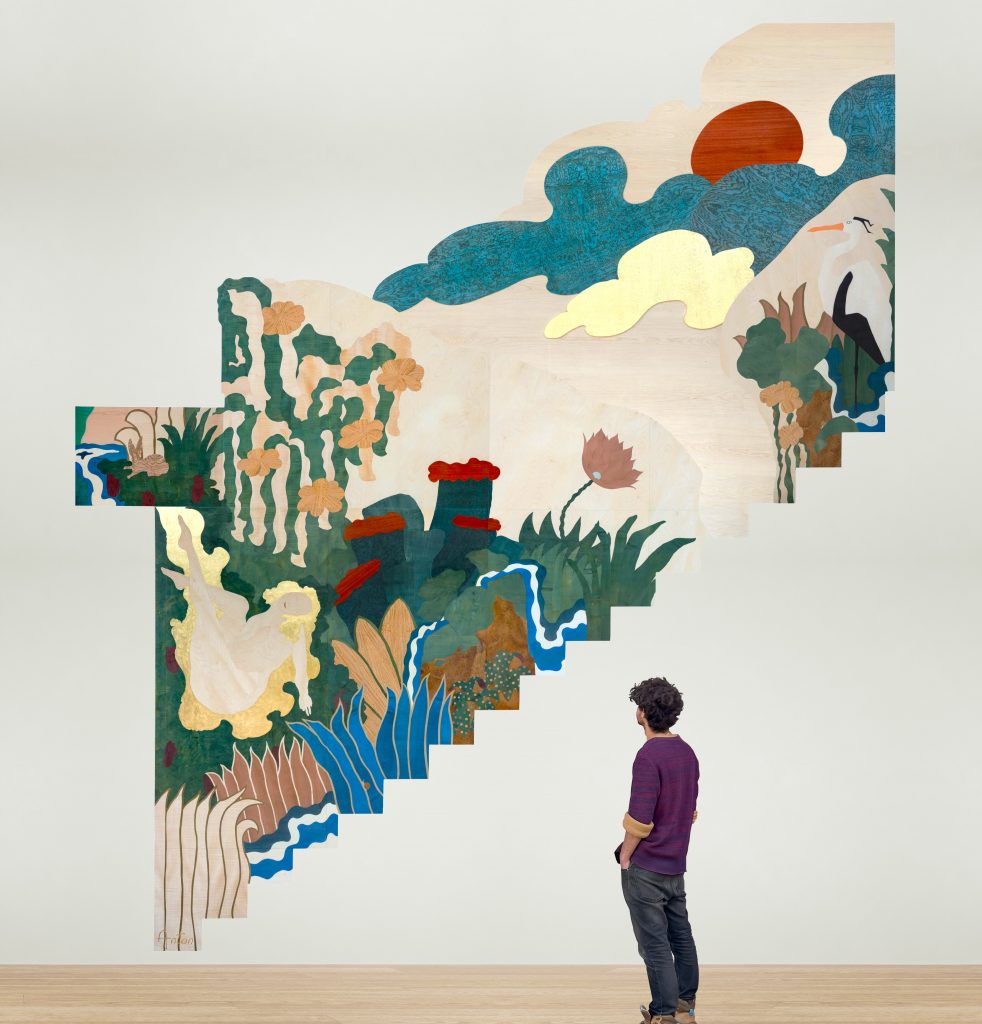
Entre marqueterie monumentale et jungle symbolique, Anton Laborde transforme le bois en récit contemporain poétique engagé.
ÉDITION #3
À Maison & Objet, Thierry Laudren présente des meubles sculptés où fonction, matière et lenteur façonnent une présence.
ÉDITION #3
Jean Nouvel conçoit une architecture attentive aux contextes, où lumière, histoire et usages façonnent chaque projet.
ÉDITION #3
À Lyon, Sophie Morel rénove des lieux historiques en alliant respect du bâti et écriture contemporaine.
ÉDITION #3
Au Centre d’Études Picasso, l’architecte compose une architecture où lumière, géométrie et héritage dialoguent avec précision.
ÉDITION #2
Entretien avec le fondateur d’EDO (European Design Office)
ÉDITION #2
Portrait d’un visionnaire qui transforme l’art de recevoir en expérience totale.
ÉDITION #1
Personnalités, artisans et créateurs qui donnent à la fête sa profondeur humaine.
ÉDITION #3
De Bordeaux au Bassin, art, vignobles et bien-être composent une échappée élégante au cœur de la Gironde.
ÉDITION #2
Vers une région de l’Italie habitée par le temps, où paysages, culture et usages s’accordent dans une continuité rare.
ÉDITION #1
Destinations et rituels qui réinventent la fête, du soleil tropical aux marchés d’hiver.