A gift can sometimes become as much a part of the home as it is of the person who receives it. This is the thinking behind the Fendi Casa collection curated by Maison Territo in Montreal: embroidered cushions, throws, lacquered trays, woven rope baskets and leather magazine racks, all bearing the distinctive hallmarks of the Roman fashion house founded in 1925. For the founders of Maison Territo, true luxury lies in ‘giving something that will be treasured for a lifetime’.
Photo: Maison Territo
Some things remain in a home for a lifetime. A tray holds the keys each evening, decade after decade; a throw moves from one sofa to another with every house move; a cushion gradually takes on the shape of a familiar backrest. Their value lies in the years of use, the patina they develop and the memories attached to the day they were given. Choosing such a piece is, in a sense, a bet on longevity: on the quality of its materials, the skill of its craftsmanship and the enduring appeal of a symbol that becomes all the more familiar with time.
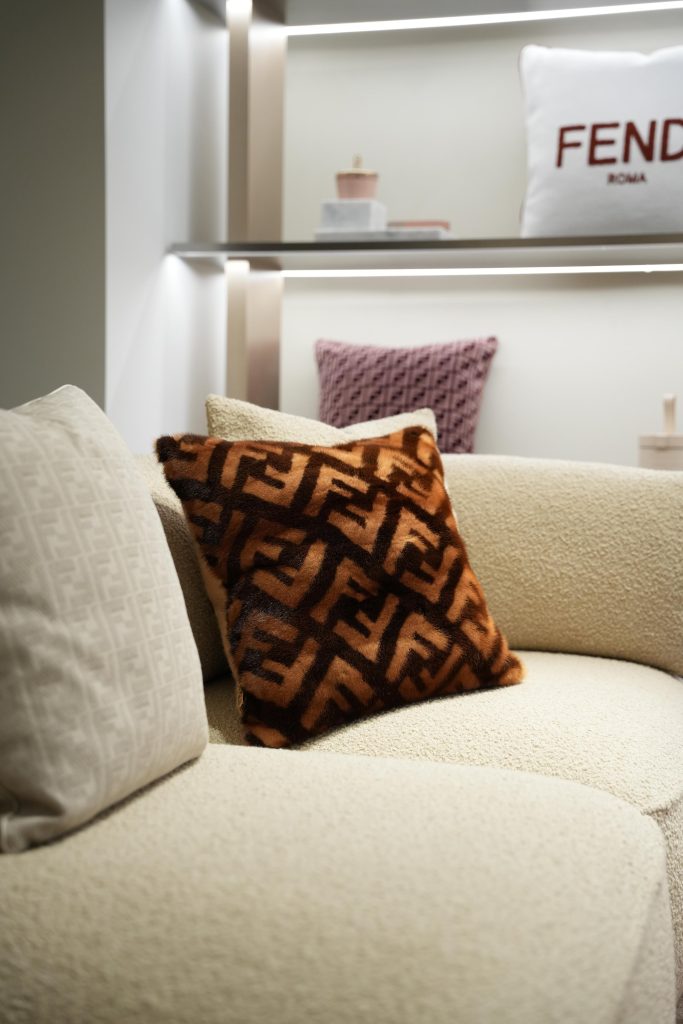
Cushions featuring the FF monogram and a cushion embroidered with ‘FENDI Roma’, Fendi Casa; Sinclair Territo
At Fendi, that symbol takes the form of two letters. The house was founded in Rome in 1925 by Edoardo Fendi and Adele Casagrande, initially specialising in fur and leather goods. In 1965, the five Fendi sisters approached a young German designer, Karl Lagerfeld, and commissioned him to create a collection of contemporary furs. He wanted the designs to have a playful edge, too, and came up with a monogram: the double F, standing for ‘Fun Fur’. Lagerfeld later claimed that he had sketched it in less than five seconds.
Originally conceived as a lining for fur coats, the motif gradually found its way onto clothing, luggage and handbags, eventually becoming one of the house’s most recognisable signatures. Its appeal lies in its graphic simplicity: distinctive enough to stand alone, yet simple enough to be repeated across an entire surface, whether embroidered, printed or engraved. Today, the same two letters feature on Fendi Casa furniture and home accessories.
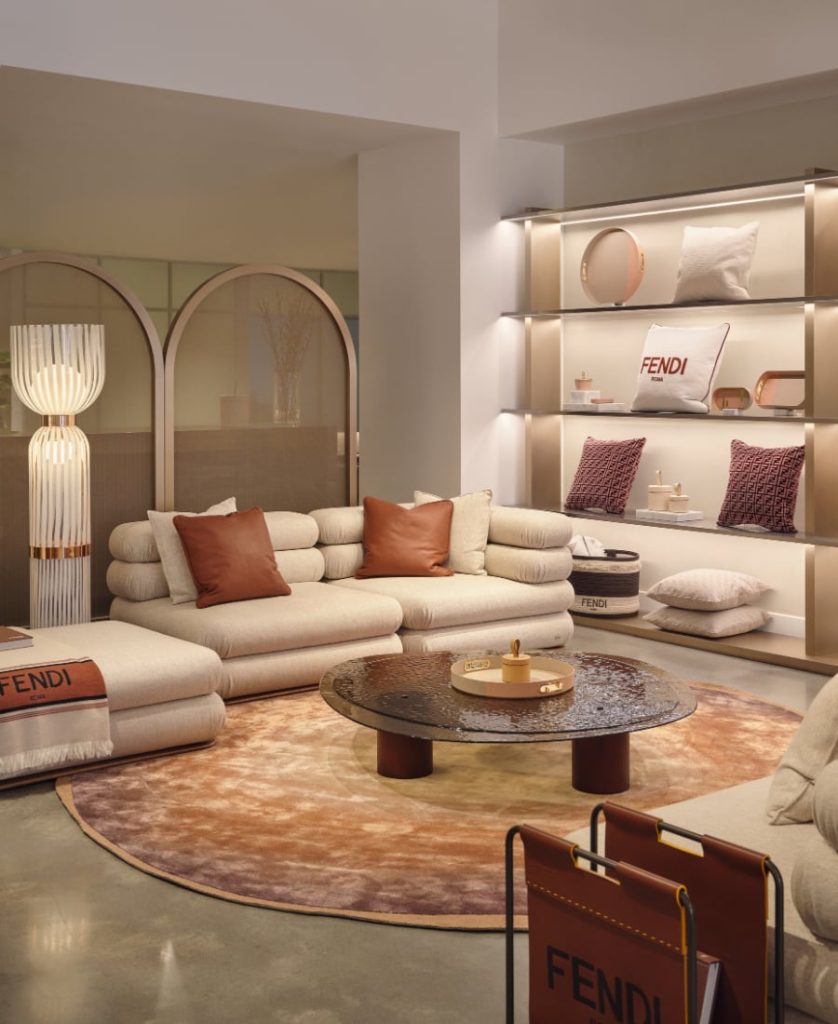
Credit: Sandia modular sofa and FF monogram cushions, Fendi Casa; Sinclair Territo
Fendi’s handbags have helped make this visual language familiar well beyond the world of fashion. In 1997, Silvia Venturini Fendi, granddaughter of the founders, designed the Baguette: a slim handbag intended to be carried under the arm, like its namesake French loaf. Its appearance in the television series Sex and the City, on the arm of Carrie Bradshaw, propelled it into popular culture, and it is widely regarded as the first ‘it bag’.
Twelve years later, the same designer introduced the Peekaboo, a bag whose construction offers a glimpse of its interior. Since 1989, Fendi Casa has been translating the house’s distinctive design codes into furniture. Drawing inspiration from the Peekaboo, the Controvento studio created the Peekasit seating collection, unveiled at Salone del Mobile in Milan in 2023. The Peekasleep bed and Peekachill armchair followed.
With the F-Affair, presented in 2024, the same studio took the monogram in a new direction, incorporating it into a modular sofa whose individual sections can be separated and rearranged to suit the space.

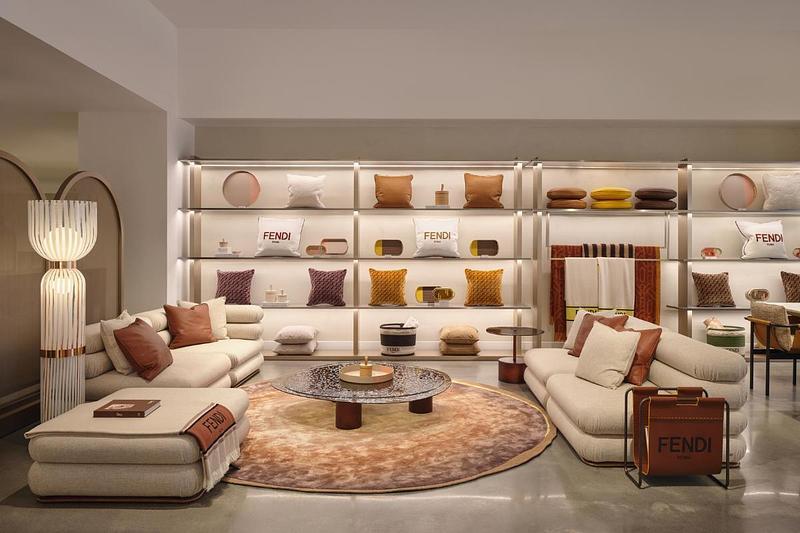
‘FENDI Roma’ embroidered cushion displayed on illuminated shelves, Fendi-branded throw and leather magazine rack in the Fendi Casa area of the Maison Territo showroom at Royalmount; Phil Bernard
The selection curated by Maison Territo brings these design signatures into the realm of everyday objects. The cushions feature the embroidered inscription ‘FENDI Roma’, a reminder of the city where the story began. The throws showcase the house’s signature patterns, whether draped over a sofa arm or laid across the foot of a bed.
The lacquered trays provide an elegant resting place for the things we move around throughout the day: a selection of tableware, a few books or a bouquet of flowers. Woven rope baskets introduce texture through their supple, knotted construction, making them ideal for storing a throw or a collection of magazines. Finally, the leather magazine rack pays tribute to the house’s heritage in leatherworking, a craft that has been central to Fendi since its beginnings in 1925.
Each piece, on a more intimate scale, reflects the same design language found in the furniture: the ability to give a space an instantly recognisable identity through a pattern, a material or a distinctive inscription.
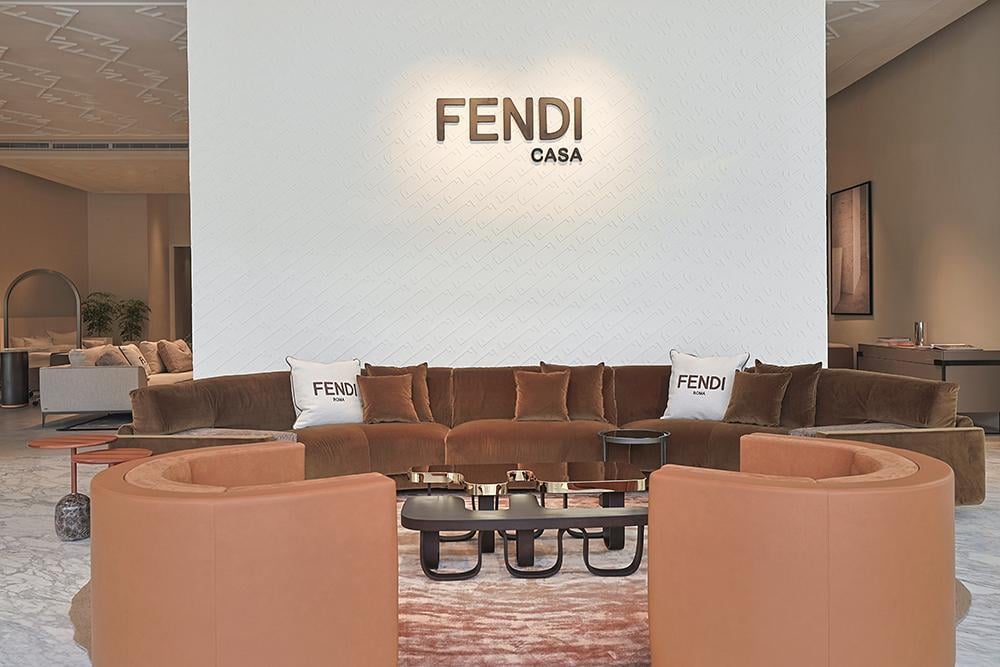
In the Fendi Casa section of the Montreal showroom, the pieces are displayed on illuminated shelves beneath a wall entirely engraved with the double F. The setting tells its own story of heritage: a motif originally conceived for the lining of a fur coat now covers an entire wall, while its visual language is carried through into the furnishings and accessories displayed below.
Giving one of these pieces is a way of bringing a fragment of a story that began in Rome in 1925 into someone’s home. With time, the leather of the magazine rack will acquire the marks of everyday use, the throw will grow softer and the tray will find its permanent place on the coffee table. Gradually, the gift will become part of its surroundings, until it is woven into the very fabric of the home’s memories.
Février, 2026
Créer avec l’existant, penser avec l’histoire
De l’architecture au design, cette édition explore comment lieux, savoir-faire et matières héritées deviennent terrains de création actuelle.
Janvier, 2026
Le luxe se réinvente.
Finis les logos clignotants, place à une sobriété raffinée, à l’immersion personnelle, à l’excellence artisanale, à la durabilité sensible.
Décembre, 2025
Héritages, gestes contemporains et plaisirs essentiels
Parce que la fête n’est jamais qu’apparence : elle reflète notre manière d’habiter le monde, de transmettre, de fabriquer des souvenirs durables.
ÉDITION #3
Upcycling et kintsugi transforment l’objet contemporain, faisant de la trace, de la réparation et de la matière un langage esthétique.
ÉDITION #3
Artisans et designers donnent une seconde vie aux matériaux anciens, entre création contemporaine, patrimoine et réemploi.
ÉDITION #3
Bunkers, wagons et kiosques renaissent grâce à la création, révélant comment l’art redonne sens aux lieux délaissés.
ÉDITION #2
Un regard transversal sur le quiet luxury à travers des lieux, des objets et des figures qui expriment l’élégance.
ÉDITION #1
Une sélection de marques, architectures, objets et escapades qui donnent corps au sens de la fête.

ÉDITION #3
Usines et gares délaissées deviennent lieux culturels ouverts, où mémoire industrielle et usages contemporains redessinent la ville.

ÉDITION #3
L’audacieuse métamorphose d’un palace parisien
ÉDITION #3
Au cœur du Marais, un lieu discret révèle comment archives, architecture et recherche font dialoguer l’œuvre de Picasso.
ÉDITION #2
Une expérience shopping unique dans un magasin emblématique.
ÉDITION #2
Voyage culinaire et architectural au cœur de la Seine
ÉDITION #2
Dans le 9e arrondissement, un établissement qui invite au quiet luxury
ÉDITION #1
Chante! vient d’ouvrir ses portes. Une invitation à vibrer !
ÉDITION #3
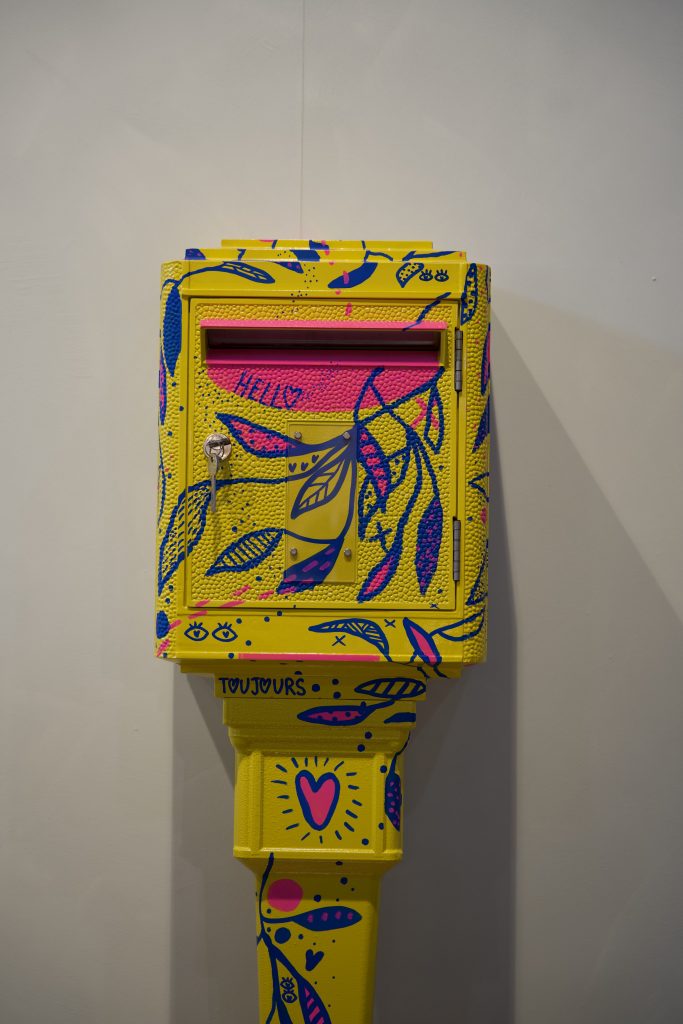
Icône du paysage français, la boîte jaune change de statut et s’invite dans l’univers du design.
ÉDITION #3
L’édition 2026 affirme une vision où artisanat, design et mémoire façonnent l’habitat contemporain, international actuel.
ÉDITION #3
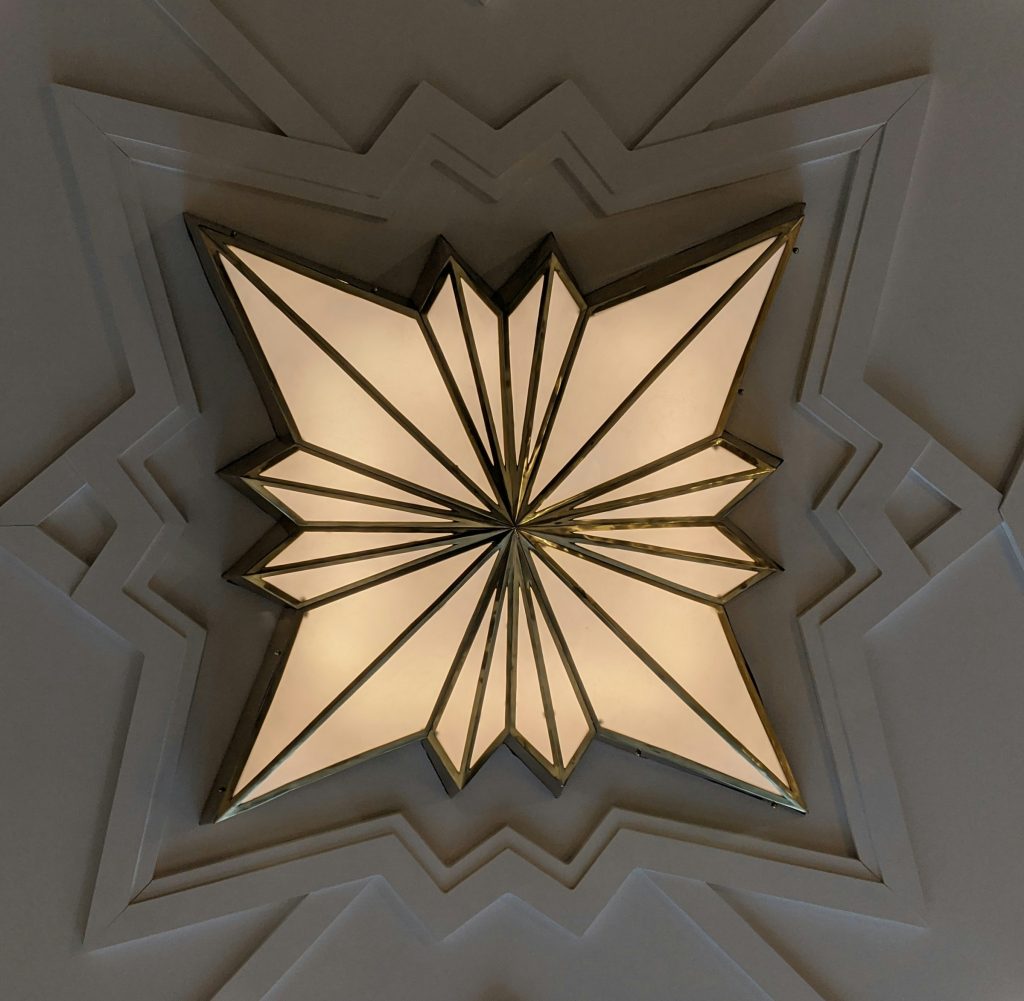
Cent ans après 1925, l’Art déco revient dans nos villes et intérieurs avec géométrie, audace, optimisme.
ÉDITION #3
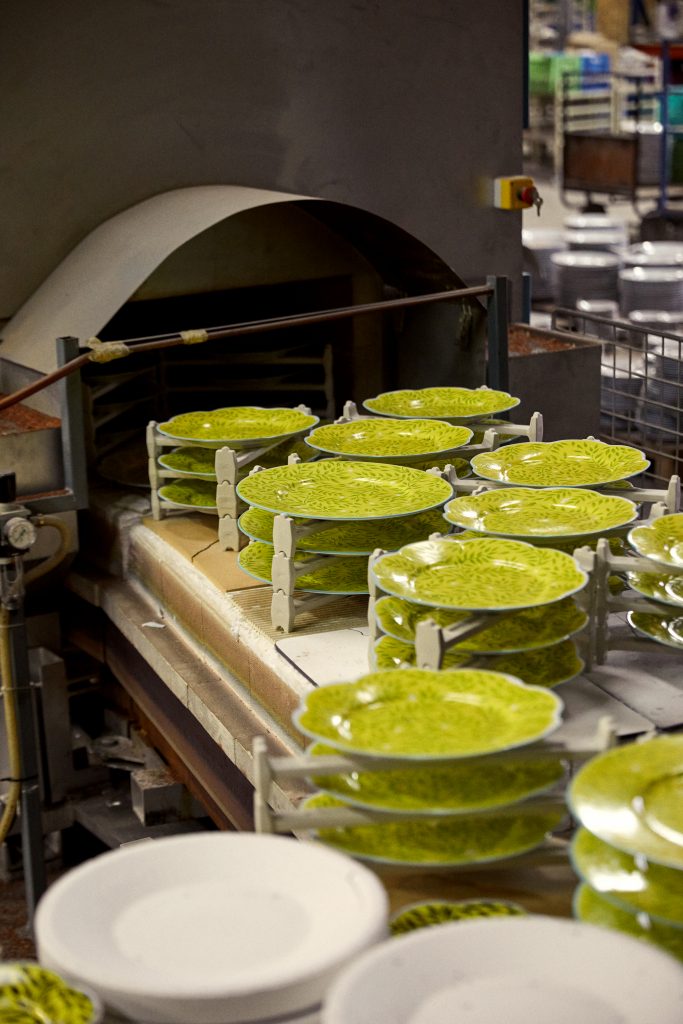
Depuis plus de deux cents ans, Royal Limoges conjugue porcelaine, savoir-faire industriel et création contemporaine.
ÉDITION #3
Des terrains de sport aux podiums, la sneaker raconte un siècle de mutations culturelles, techniques et stylistiques.
ÉDITION #2
Design, mode, artisanat : des créations où la forme et la matière se répondent avec justesse, loin de tout effet de mode.
ÉDITION #1
Décorations artisanales, calendriers ultra-luxe et pièces de collection pour s’enivrer de joie avant l’heure.
ÉDITION #3
Entre marqueterie monumentale et jungle symbolique, Anton Laborde transforme le bois en récit contemporain poétique engagé.
ÉDITION #3
À Maison & Objet, Thierry Laudren présente des meubles sculptés où fonction, matière et lenteur façonnent une présence.
ÉDITION #3
Jean Nouvel conçoit une architecture attentive aux contextes, où lumière, histoire et usages façonnent chaque projet.
ÉDITION #3
À Lyon, Sophie Morel rénove des lieux historiques en alliant respect du bâti et écriture contemporaine.
ÉDITION #3
Au Centre d’Études Picasso, l’architecte compose une architecture où lumière, géométrie et héritage dialoguent avec précision.
ÉDITION #2
Entretien avec le fondateur d’EDO (European Design Office)
ÉDITION #2
Portrait d’un visionnaire qui transforme l’art de recevoir en expérience totale.
ÉDITION #1
Personnalités, artisans et créateurs qui donnent à la fête sa profondeur humaine.
ÉDITION #3
De Bordeaux au Bassin, art, vignobles et bien-être composent une échappée élégante au cœur de la Gironde.
ÉDITION #2
Vers une région de l’Italie habitée par le temps, où paysages, culture et usages s’accordent dans une continuité rare.
ÉDITION #1
Destinations et rituels qui réinventent la fête, du soleil tropical aux marchés d’hiver.