Sept scènes du XXe siècle dans des hôtels de légende

Seven scenes from the 20th century in legendary hotels

From his balcony, which extends more than three and a half metres out from the building, Winston Churchill paints the orange trees, the ramparts of Marrakesh, and the snow-capped peaks of the Atlas Mountains. It is 30 December 1935 at La Mamounia. During the interwar period, seven luxury hotels served as salons, studios and refuges for writers, celebrities and statesmen. On that day, Churchill wrote to his wife, ‘It is a marvellous place, and this is one of the best hotels I have ever stayed in.’

At that time, travel was the preserve of a select clientele who crossed Europe by sleeper train and the oceans by ocean liner before meeting up with their social circle in the lobby of a grand hotel. Each of the seven venues featured here captures a different facet of the interwar period: Parisian elegance, London nights, Berlin’s modernity, the terminus of the Orient Express, a literary stopover in Singapore, the Moroccan winter, and Caribbean glamour. All of these venues have also left a legacy in interior design thanks to the work of architects, interior designers and craftsmen whose names have gone down in history.

The Ritz Paris, Mademoiselle’s favourite

Suite Coco Chanel au Ritz, Paris ; Purcell Team ; Alamy

Coco Chanel Suite at the Ritz, Paris; Purcell Team; Alamy

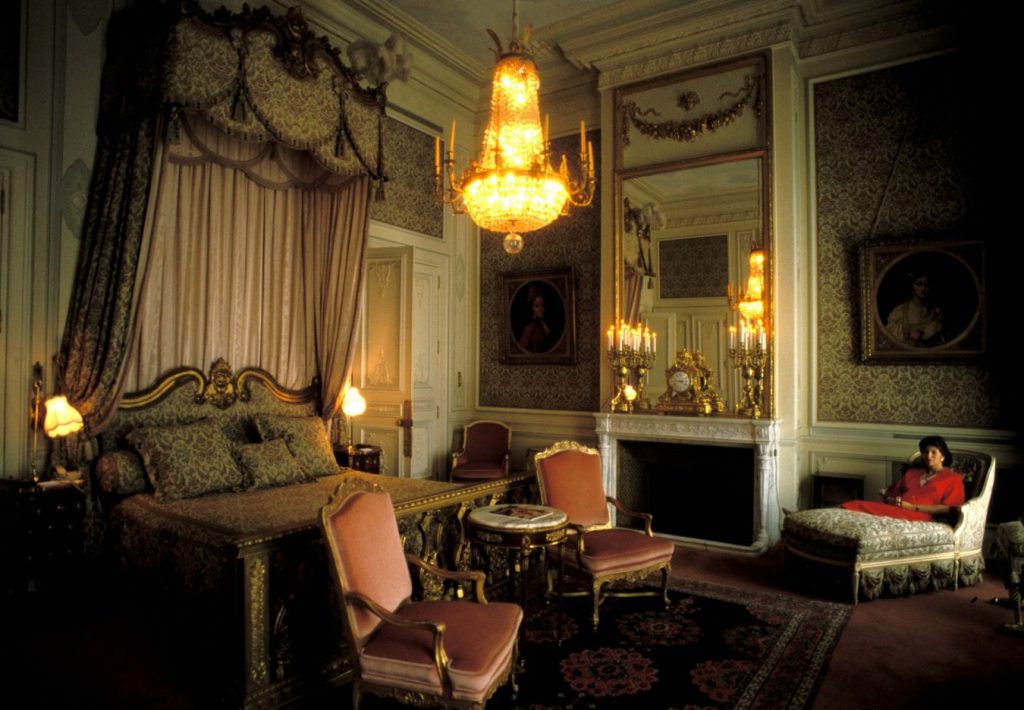
At 15 Place Vendôme, César Ritz combined the former residence of the Dukes of Lauzun and Gramont, on the side facing the square, with a building opening onto Rue Cambon. The architect Charles Mewès transformed it into a luxury hotel, which opened on 1 June 1898, where every room featured electricity, a telephone and a bath. Auguste Escoffier was in charge of the kitchens. Marcel Proust attended the opening, then returned later for dinner, served by the maître d’hôtel Olivier Dabescat, who brought him news from around the world. From 1921 to 1947, the Austrian Frank Meier ran the bar; Ernest Hemingway discovered it in the late 1920s with Francis Scott Fitzgerald. Gabrielle Chanel, whose fashion house was located at 31 Rue Cambon, was a regular at the hotel from that decade onwards; she spent more and more time there from 1935, before taking up permanent residence there in 1954. She furnished her suite herself. The suite that now bears her name captures its spirit: Coromandel screens from her collection, Chinese lacquer panels engraved with landscapes, a Goossens table adorned with an ear of wheat, in black, ivory and white.

The Savoy, the Strand in the Art Deco era

Salle de bal "Lancaster", hôtel Savoy, Londres ; CVB ; Wikimedia

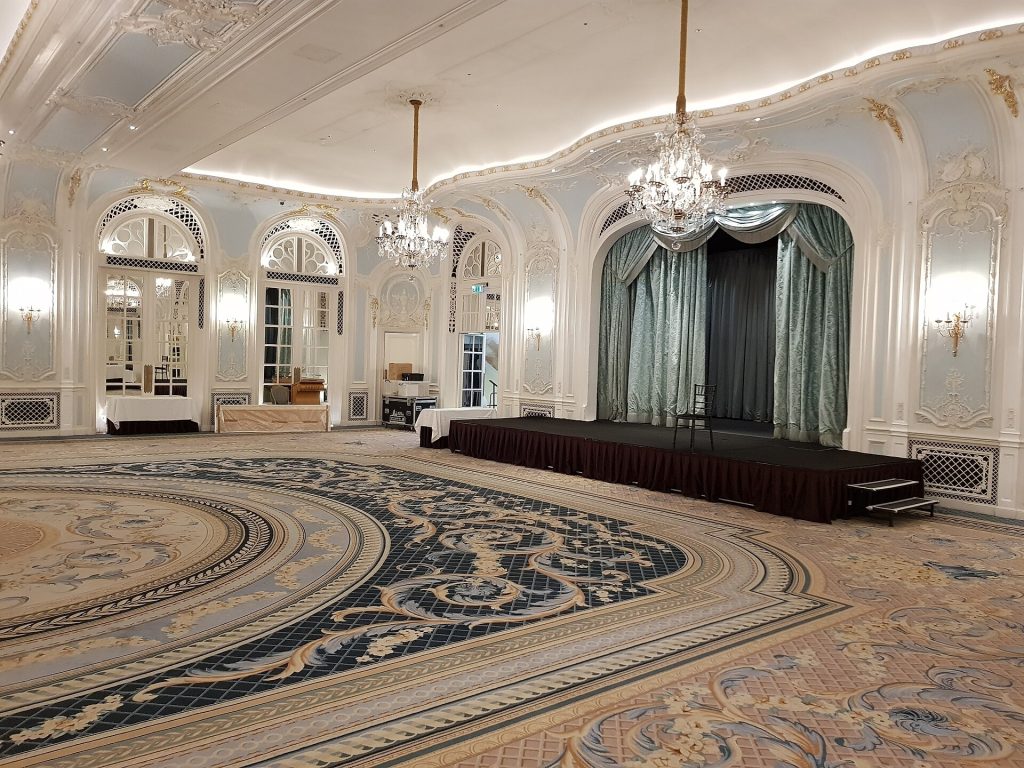
Salle de bal “Lancaster”, hôtel Savoy, Londres ; CVB ; Wikimedia

Richard D’Oyly Carte financed the construction of the hotel with the proceeds from the performances of Gilbert and Sullivan operas at the neighbouring Savoy Theatre. Designed by Thomas Edward Collcutt, the hotel opened in 1889. It was lit by electricity and had electric lifts, known as ‘ascending rooms’.

In the 1920s, the hotel embraced the Art Deco style. Sir Howard Robertson designed the stainless-steel sign that still hangs above the Savoy Court. In 1927, interior designer Basil Ionides created Kaspar: a cat sculpted from a single block of London plane wood, lacquered black and now seated as the fourteenth guest at any table of thirteen in the Pinafore Lounge. Beneath the glass roof of the Thames Foyer was a dance floor where the house bands performed, and a hydraulic platform rose to form a cabaret stage. Fred and Adele Astaire danced there. At the American Bar, Ada Coleman — head barmaid from 1903 onwards — served Charlie Chaplin and Marlene Dietrich. The actress’s guest record, on display at the hotel’s museum, specified twelve pink roses in her room.

The Adlon, Berlin beneath Einstein’s windows

Hotel Adlon Kempinski à Berlin : Rolf Heinrich, Köln ; Wikimedia

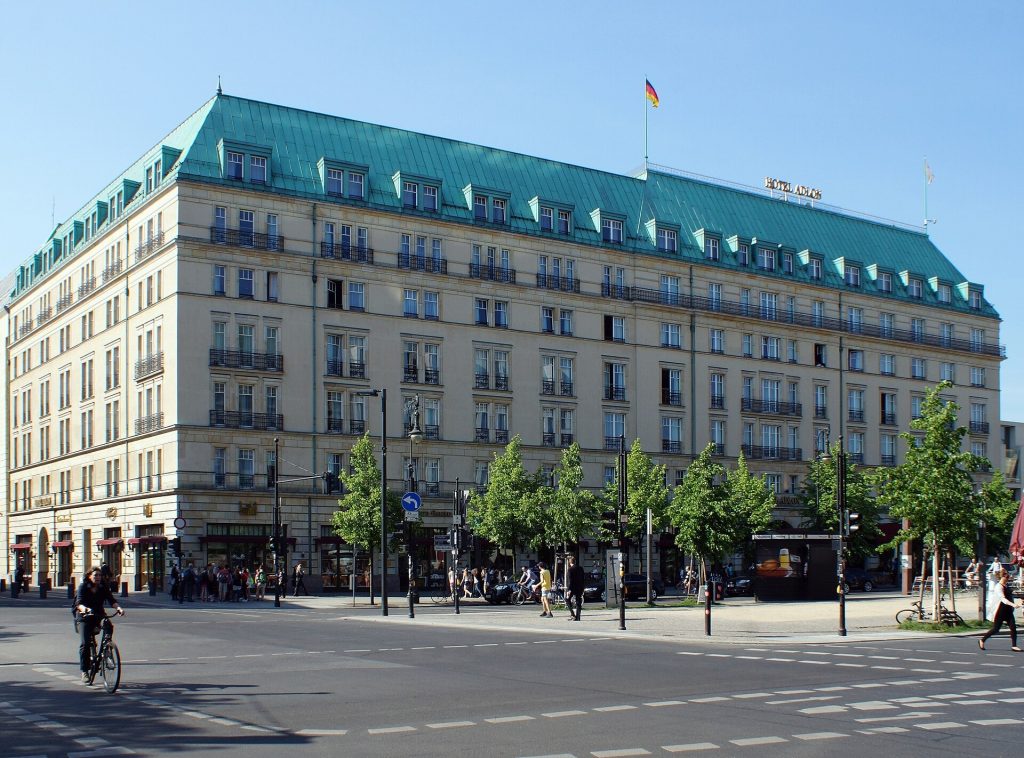
Hotel Adlon Kempinski in Berlin: Rolf Heinrich, Cologne; Wikimedia

Lorenz Adlon opened his hotel opposite the Brandenburg Gate on 23 October 1907, following two years of construction work led by the architects Carl Gause and Robert Leibnitz. Hidden behind the Neo-Baroque and Louis XVI décor was state-of-the-art technology, including hot and cold running water, a power station and 110-volt light bulbs manufactured specifically for the hotel. Wilhelm II was keen to be the hotel’s first guest. Embassies soon set up offices on the upper floors and the Kaisersaal (Emperors’ Hall) hosted official receptions. During the Weimar Republic, the Adlon was one of Berlin’s leading diplomatic and social hotspots. Albert Einstein would wave to passers-by on Pariser Platz from his corner suite. Mary Pickford and Josephine Baker stayed there. Following the Berlin premiere of City Lights in 1931, Charlie Chaplin was greeted by a crowd that tore the buttons off his jacket and braces; he made his way to the lift with his hands in his pockets to hold up his trousers. Devastated by a fire in 1945, the hotel was rebuilt on the same site in 1997.

The Pera Palace, terminus of the Orient Express

Porte de l’ascenseur du Pera Palace Hotel ; Francesco Brocchi ; Wikimedia

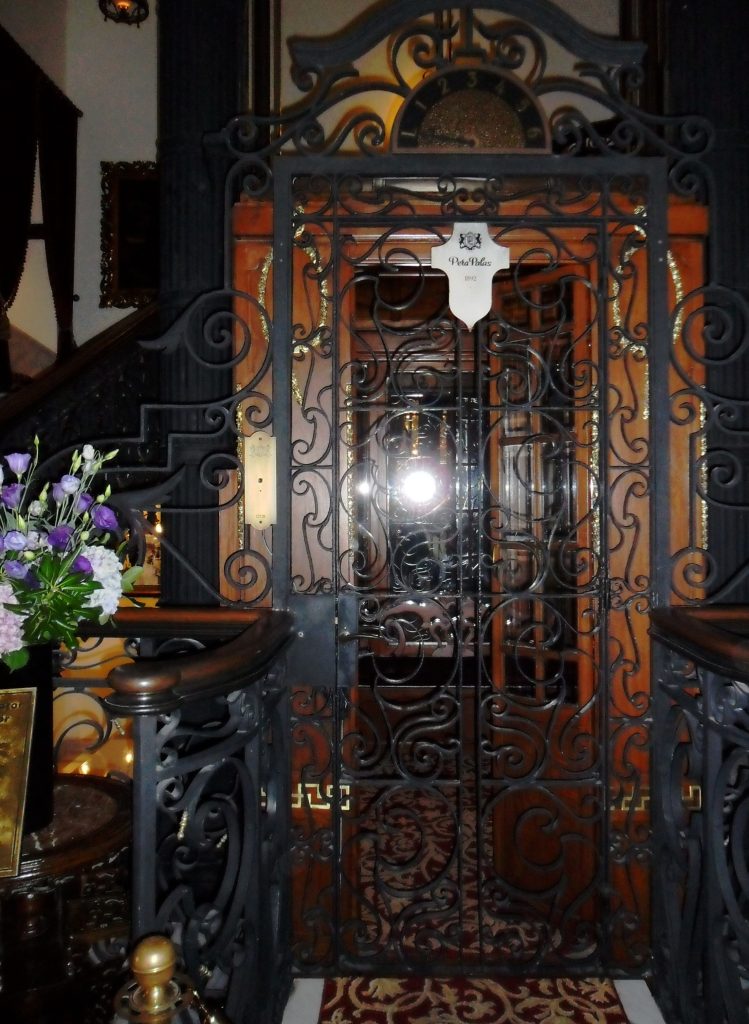
Lift door at the Pera Palace Hotel; Francesco Brocchi; Wikimedia

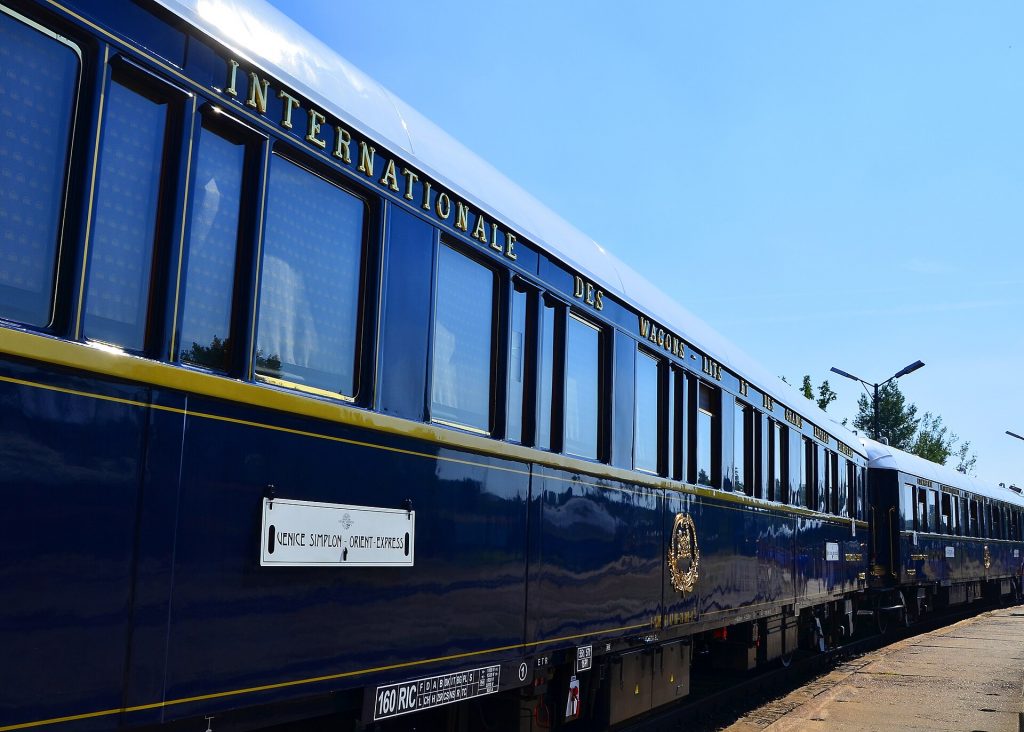
Launched in 1883, the Orient Express travelled from Paris to Constantinople in around eighty hours. In 1892, to accommodate its passengers, the Compagnie Internationale des Wagons-Lits commissioned the construction of a hotel, entrusting the project to Alexandre Vallaury, an architect born in Istanbul and trained in Paris. Boasting a neoclassical façade, Art Nouveau features and oriental décor, the Pera Palace opened its doors to guests at a gala in 1895. The first building in the Ottoman Empire outside the imperial palaces to be supplied with electricity, it offered running hot water and the city’s first electric lift – a cage-style cabin with counterweights sliding within two decorative cast-iron columns, still in use today. In 1926, its ballrooms hosted Istanbul’s first fashion show. Hemingway stayed there in 1922 while working as a correspondent for the Toronto Star Weekly. Room 411 is named after Agatha Christie, who, according to tradition, wrote Murder on the Orient Express there. However, hotel historian Andreas Augustin points out the lack of any written evidence and notes that, in the novel, Hercule Poirot books his room at the Tokatlian.

Raffles Singapore, a writers’ haven

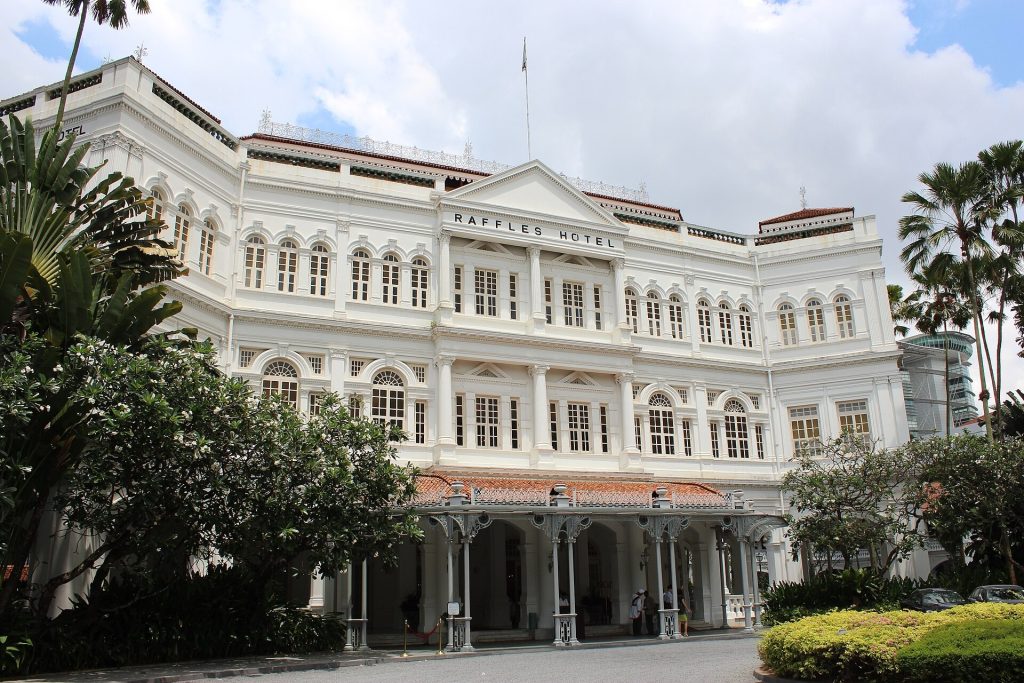
Raffles Hotel, Singapour ; Grayswoodsurrey ; Wikimedia

Raffles Hotel, Singapore; Grayswoodsurrey ; Wikimedia

La Mamounia, Churchill’s winters

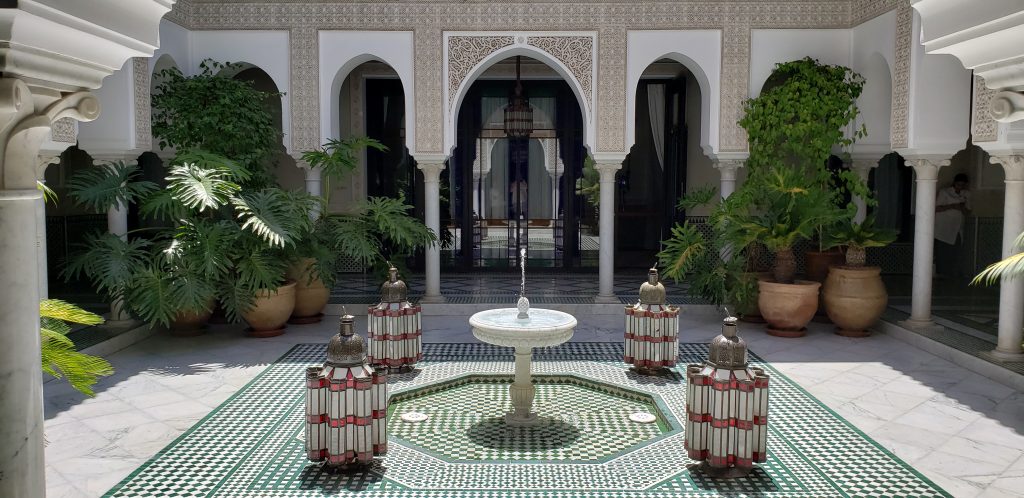
La Mamounia, Marrakech

La Mamounia, Marrakech

In the 18th century, Sultan Sidi Mohammed Ben Abdallah gave his son, Prince Moulay Mamoun, a 13-hectare orchard as a wedding gift. In 1923, the Moroccan Railway Company built a hotel there. Architects Henri Prost and Antoine Marchisio blended Moroccan and Art Deco styles: zellige tiles and Berber tapestries sit alongside Art Deco furniture. Before the war, European and American guests would bring their own furniture for long stays. Churchill discovered the hotel in late 1935 and made it his winter residence. He would move from balcony to balcony to follow the sun’s path and capture its exact colour. Following the Casablanca Conference in 1943, he persuaded Franklin D. Roosevelt to watch the sunset over the Atlas Mountains with him. He then painted the Koutoubia Minaret, his only painting from the war, and presented it to the president. In 1946, the painter Jacques Majorelle took part in the renovation work carried out as part of the hotel’s expansion, which, at that time, comprised around a hundred rooms.

The Hotel Nacional de Cuba, the coral-stone hotel facing the sea

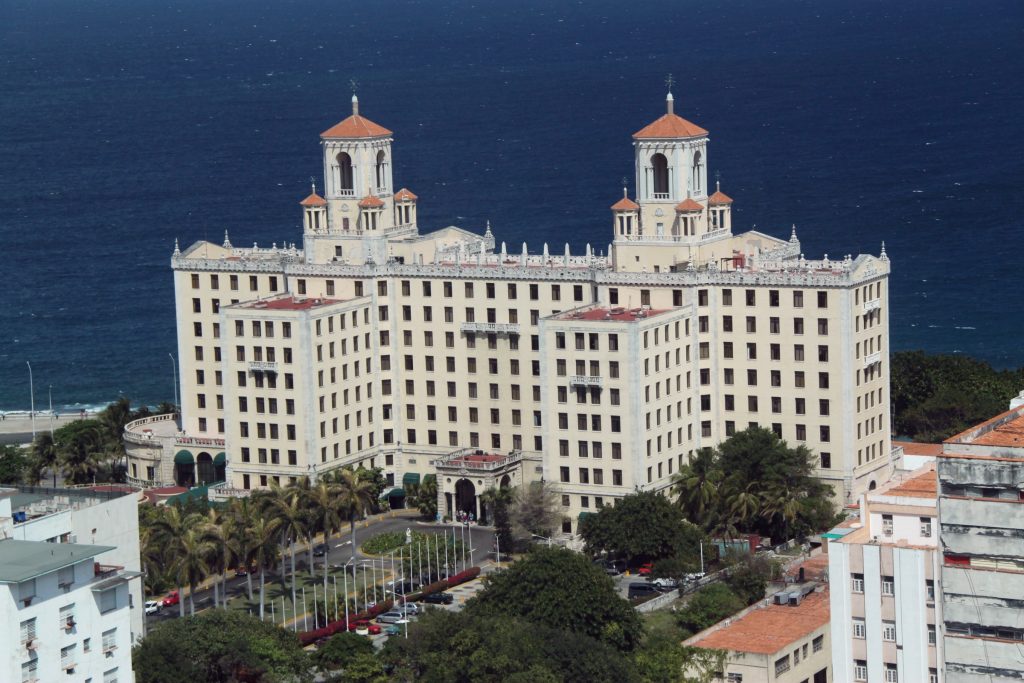
Hotel Nacional de Cuba ; nurzumspass ; Wikimedia

Hotel Nacional de Cuba ; nurzumspass ; Wikimedia

Located on Taganana Hill on the Vedado seafront, the hotel opened on 30 December 1930. The New York firm McKim, Mead & White designed it, and Purdy & Henderson constructed the building in just fourteen months. Its distinctive layout in the form of two Greek crosses ensures that most of the rooms overlook the sea. The columns, cladding, floors and ground-floor details are set within a steel framework and carved from the same coral stone used for the Palladian entrance portico’s corner piers. The décor draws inspiration from Seville, Rome, Moorish architecture and Art Deco. In the garden, cannons from the former Santa Clara battery serve as a reminder of the site’s military past. Guests at the hotel included Buster Keaton, Johnny Weissmuller, Errol Flynn, Gary Cooper, Marlene Dietrich and Ernest Hemingway, as well as Winston Churchill.

From the Place Vendôme to the Vedado, these luxury hotels have served as salons, studios and residences for over a century. Gabrielle Chanel summed up this connection in a single word when speaking of the Ritz: ‘My home’.
Continue exploring

Loto du patrimoine 2026: a hundred endangered sites are given a new lease of life
Reaching new heights and returning transformed in the Indian Himalayas
The Masons of Djenné: a thousand-year-old craft that keeps a monument standing by hand.
Europe by the water: in praise of a deliberate slowness
A getaway to the Japan of silence
World cuisine: a dish is worth a thousand stories

Février, 2026

Édition 3 : Patrimoine et création

Créer avec l’existant, penser avec l’histoire

De l’architecture au design, cette édition explore comment lieux, savoir-faire et matières héritées deviennent terrains de création actuelle.

Janvier, 2026

Édition 2 : Quiet luxury

Le luxe se réinvente.

Finis les logos clignotants, place à une sobriété raffinée, à l’immersion personnelle, à l’excellence artisanale, à la durabilité sensible.

Décembre, 2025

Édition 1 : Le sens de la fête

Héritages, gestes contemporains et plaisirs essentiels

Parce que la fête n’est jamais qu’apparence : elle reflète notre manière d’habiter le monde, de transmettre, de fabriquer des souvenirs durables.

ÉDITION #3

Révéler la beauté
‎

Upcycling et kintsugi transforment l’objet contemporain, faisant de la trace, de la réparation et de la matière un langage esthétique.

ÉDITION #3

Les nouveaux artisans du patrimoine

Artisans et designers donnent une seconde vie aux matériaux anciens, entre création contemporaine, patrimoine et réemploi.

ÉDITION #3

L'art à la rescousse des friches et lieux oubliés

Bunkers, wagons et kiosques renaissent grâce à la création, révélant comment l’art redonne sens aux lieux délaissés.

ÉDITION #2

Le murmure du beau
‎

Un regard transversal sur le quiet luxury à travers des lieux, des objets et des figures qui expriment l’élégance.

ÉDITION #1

Lieux, maisons et matières en éclats

Une sélection de marques, architectures, objets et escapades qui donnent corps au sens de la fête.

ÉDITION #3

La création au secours des bâtiments promis à l’oubli

Usines et gares délaissées deviennent lieux culturels ouverts, où mémoire industrielle et usages contemporains redessinent la ville.

ÉDITION #3

Normandy Hotel Paris Saint-Honoré

L’audacieuse métamorphose d’un palace parisien

ÉDITION #3

Dans les coulisses du Centre d'Études Picasso à Paris

Au cœur du Marais, un lieu discret révèle comment archives, architecture et recherche font dialoguer l’œuvre de Picasso.

ÉDITION #2

Shopping iconique dans un décor Tudor

Une expérience shopping unique dans un magasin emblématique.

ÉDITION #2

Gastronomie et architecture

Voyage culinaire et architectural au cœur de la Seine

ÉDITION #2

L'art de l'hospitalité parisienne

Dans le 9e arrondissement, un établissement qui invite au quiet luxury

ÉDITION #1

Chante!

Chante! vient d’ouvrir ses portes. Une invitation à vibrer !

ÉDITION #3

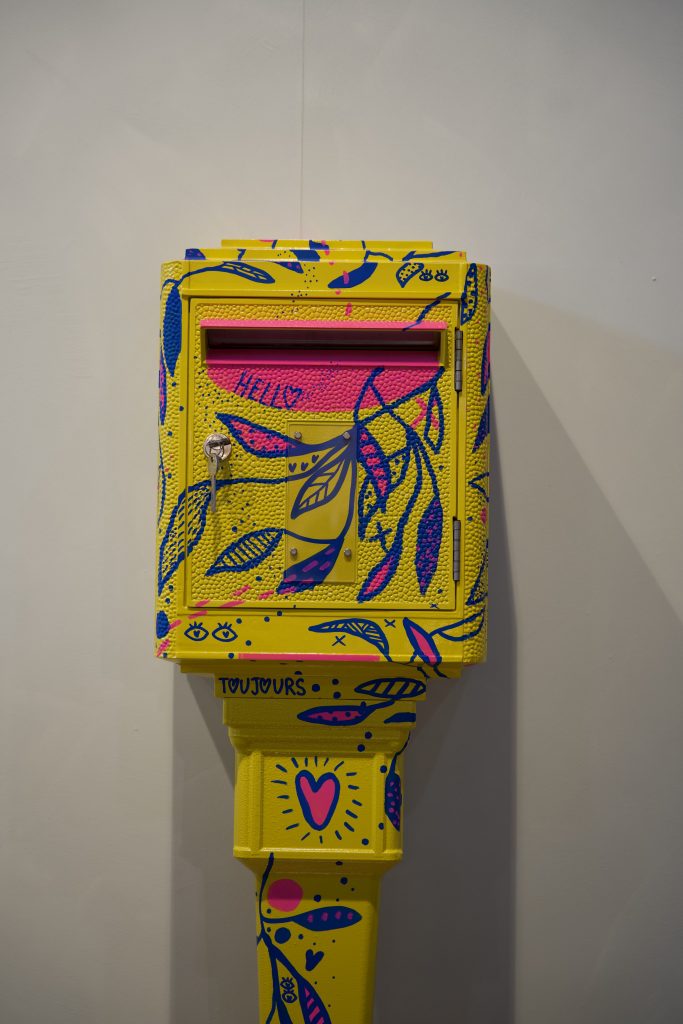
La boîte aux lettres française devenue objet de design

Icône du paysage français, la boîte jaune change de statut et s’invite dans l’univers du design.

ÉDITION #3

Retour sur Maison&Objet 2026 : retour aux sources et à l’essentiel

L’édition 2026 affirme une vision où artisanat, design et mémoire façonnent l’habitat contemporain, international actuel.

ÉDITION #3

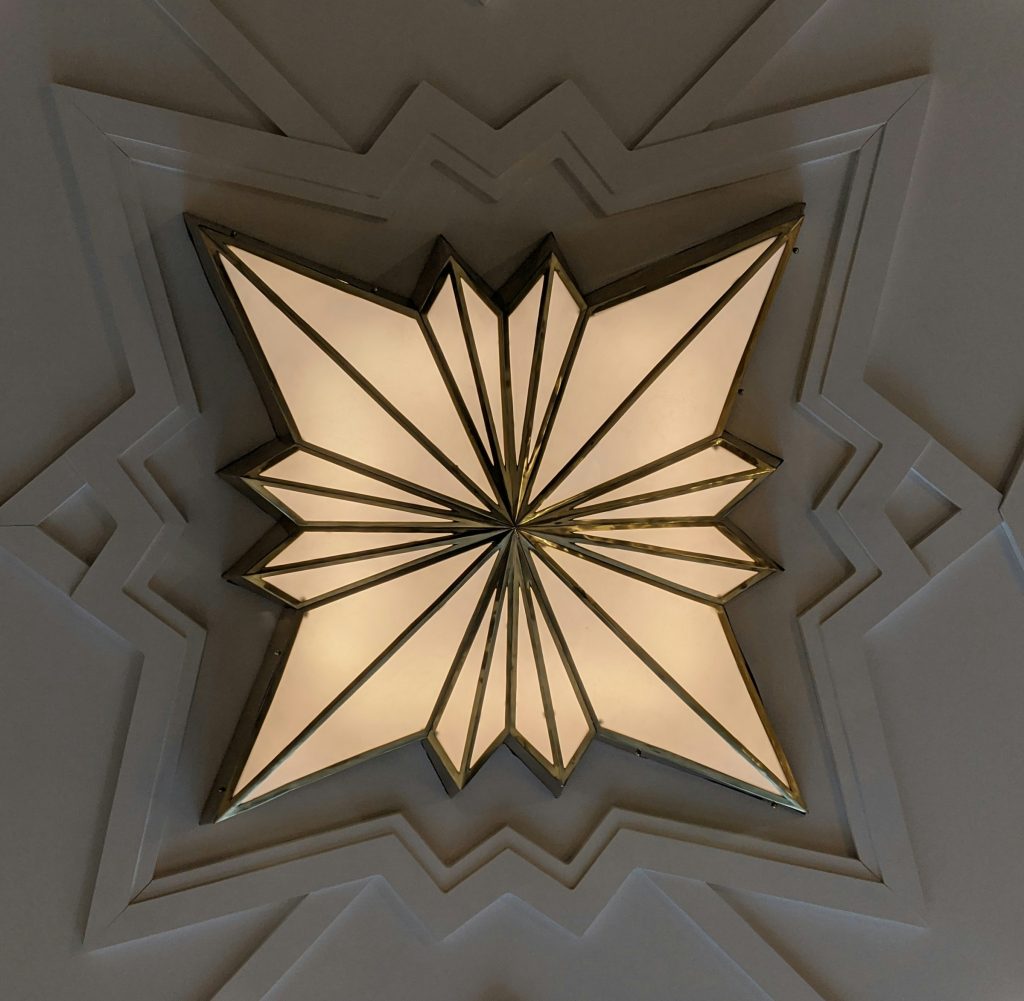
Art Deco: un mouvement centenaire, plus actuel que jamais

Cent ans après 1925, l’Art déco revient dans nos villes et intérieurs avec géométrie, audace, optimisme.

ÉDITION #3

Royal Limoges, deux siècles d’histoire au présent

Depuis plus de deux cents ans, Royal Limoges conjugue porcelaine, savoir-faire industriel et création contemporaine.

ÉDITION #3

Du terrain à la rue et au catwalk : les sneakers à travers les époques

Des terrains de sport aux podiums, la sneaker raconte un siècle de mutations culturelles, techniques et stylistiques.

ÉDITION #2

La formidable aventure du papier peint de luxe

Design, mode, artisanat : des créations où la forme et la matière se répondent avec justesse, loin de tout effet de mode.

ÉDITION #1

Icônes, détails, rituels
‎

Décorations artisanales, calendriers ultra-luxe et pièces de collection pour s’enivrer de joie avant l’heure.

ÉDITION #3

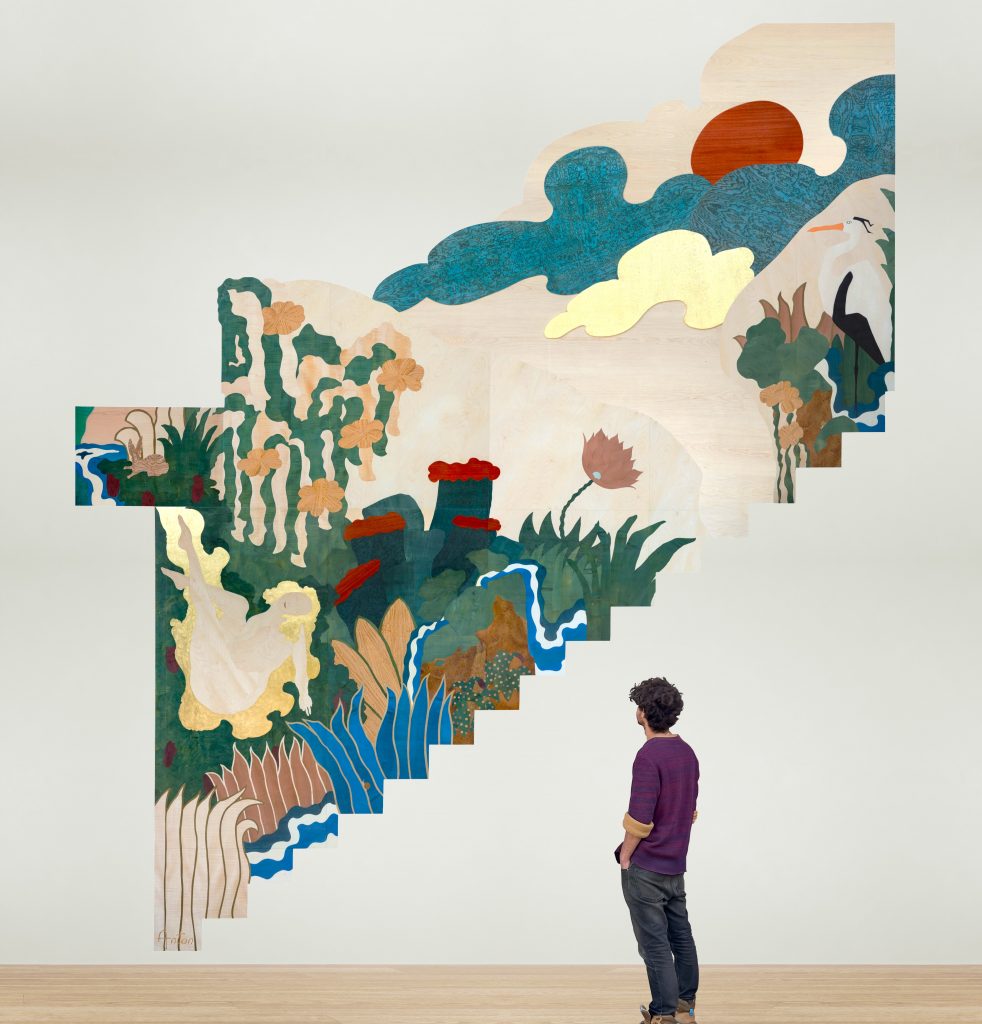
Anton Laborde

Entre marqueterie monumentale et jungle symbolique, Anton Laborde transforme le bois en récit contemporain poétique engagé.

ÉDITION #3

Thierry Laudren

À Maison & Objet, Thierry Laudren présente des meubles sculptés où fonction, matière et lenteur façonnent une présence.

ÉDITION #3

Jean Nouvel

Jean Nouvel conçoit une architecture attentive aux contextes, où lumière, histoire et usages façonnent chaque projet.

ÉDITION #3

Sophie Morel

À Lyon, Sophie Morel rénove des lieux historiques en alliant respect du bâti et écriture contemporaine.

ÉDITION #3

Pascal Grasso

Au Centre d’Études Picasso, l’architecte compose une architecture où lumière, géométrie et héritage dialoguent avec précision.

ÉDITION #2

Alexandre Danan

Entretien avec le fondateur d’EDO (European Design Office)

ÉDITION #2

Aziz Temimi

Portrait d’un visionnaire qui transforme l’art de recevoir en expérience totale.

ÉDITION #1

Visages, gestes, inspirations

Personnalités, artisans et créateurs qui donnent à la fête sa profondeur humaine.

ÉDITION #3

Chemins de traverse : parenthèse d’exception en Bordelais

De Bordeaux au Bassin, art, vignobles et bien-être composent une échappée élégante au cœur de la Gironde.

ÉDITION #2

Voyage en Toscane
‎

Vers une région de l’Italie habitée par le temps, où paysages, culture et usages s’accordent dans une continuité rare.

ÉDITION #1

Horizons, saisons, traditions
‎

Destinations et rituels qui réinventent la fête, du soleil tropical aux marchés d’hiver.

Dates, adresses, invitations

Expositions, événements et repères culturels pour vivre pleinement la saison des fêtes.