Raphaël Barrois : façonner la lumière dans le verre

Raphaël Barrois: shaping light in glass

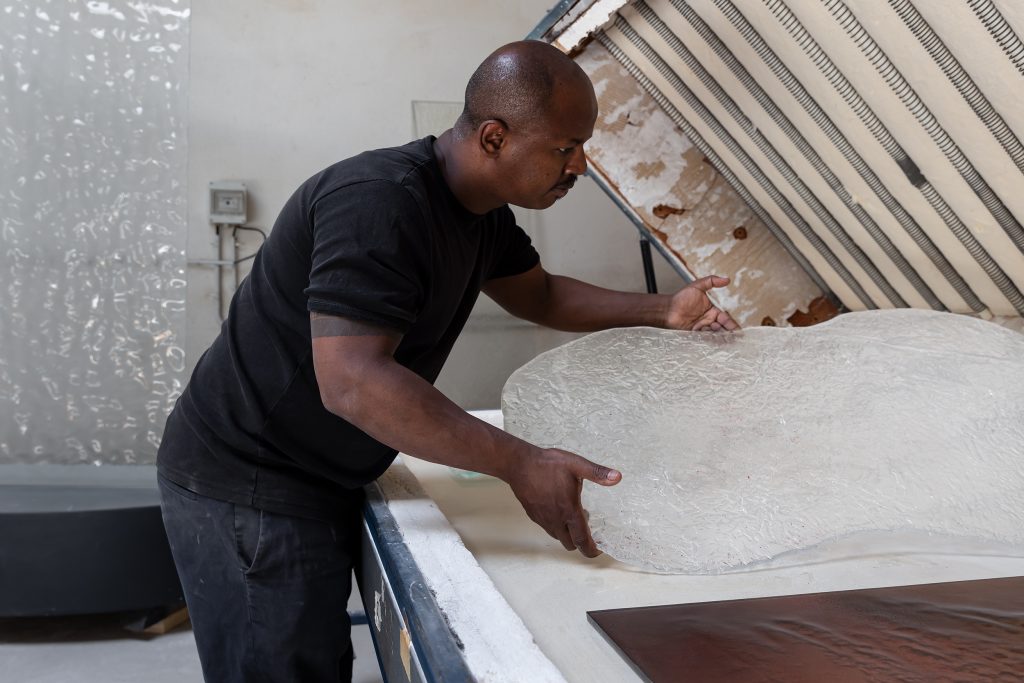
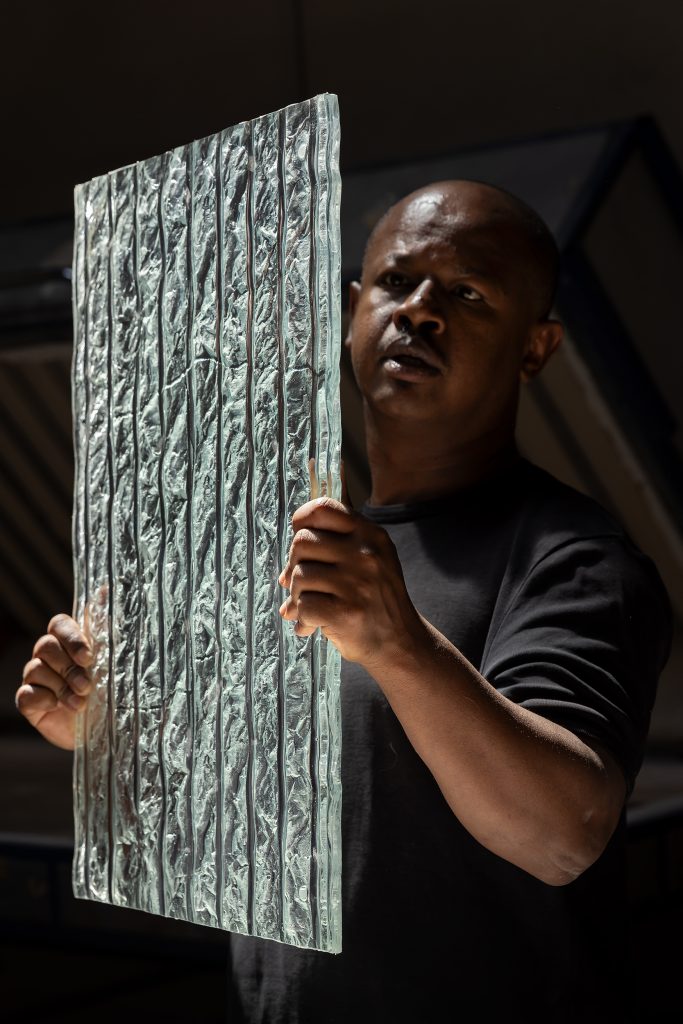
Wearing gloves and standing near the kiln, Raphaël Barrois oversees the transformation of the glass. Having trained in glassmaking techniques at CERFAV and then at EESAB in Rennes and Villa Arson, this glass artist has developed a practice at the intersection of interior design, furniture, and fine art. He designs bespoke panels, doors, and other pieces for interior design projects while also developing his own collection of furniture and standalone artworks. Featured in Révélations at the Grand Palais in 2025, his work is driven by a single quest. “I work with the material, but ultimately, I work with light. Glass is the only material that allows me to touch it. ”

Learning the craft

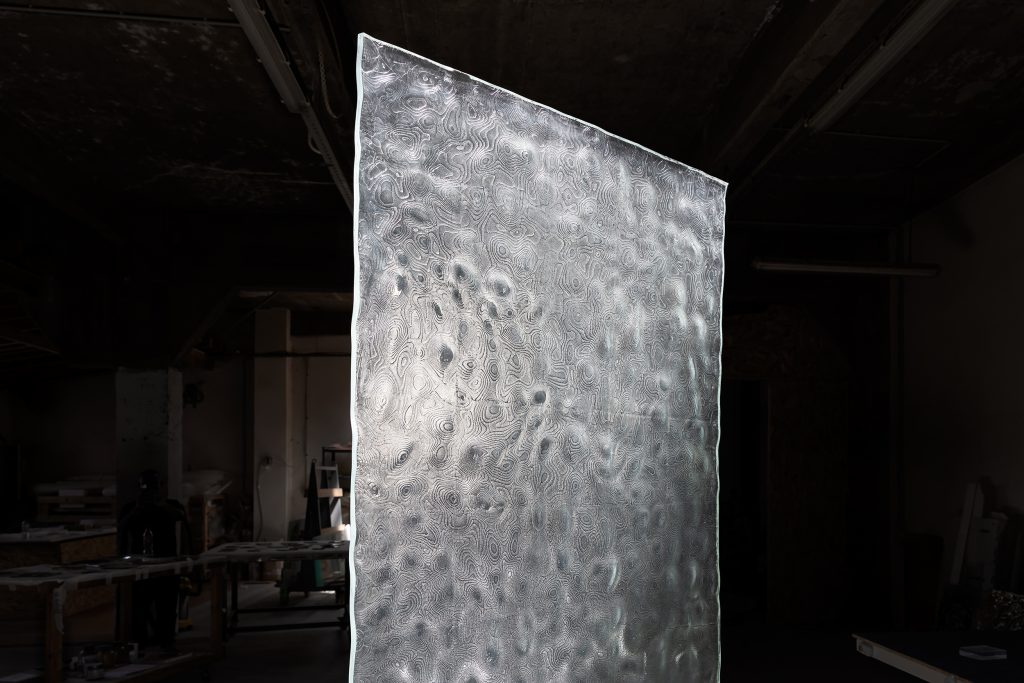
Raphaël Barrois - Panneau de verre; Matthieu Barani

Raphaël Barrois – Panneau de verre; Matthieu Barani

Born in 1988 in Asmara, Eritrea, Raphaël grew up in Auvergne, immersed in the family workshop. It was there that he cut his teeth. Working with glass instilled discipline in him from a very early age, teaching him the importance of method, patience, and precision of movement. Glass became a familiar material to him very early on, and he gradually discovered its limitations and possibilities. This demanding training would later become a breeding ground for invention. Having learnt the rules of the material, he gradually came to understand just how far he could push them.

Stepping away to return stronger

Unité, Raphael Barrois

Unité, Raphael Barrois

He continued his technical training at CERFAV (the European Centre for Research and Training in Glass Arts) in Vannes-le-Châtel, where he obtained a CAP in glass decoration, followed by a Brevet des Métiers d’Art. Then came the need for a change of scenery. Having completed a course of study that he considered highly rational, Raphaël turned to art schools, first the EESAB in Rennes, where he earned his DNAP, and then the Villa Arson in Nice, from which he graduated with a DNSEP in 2018.

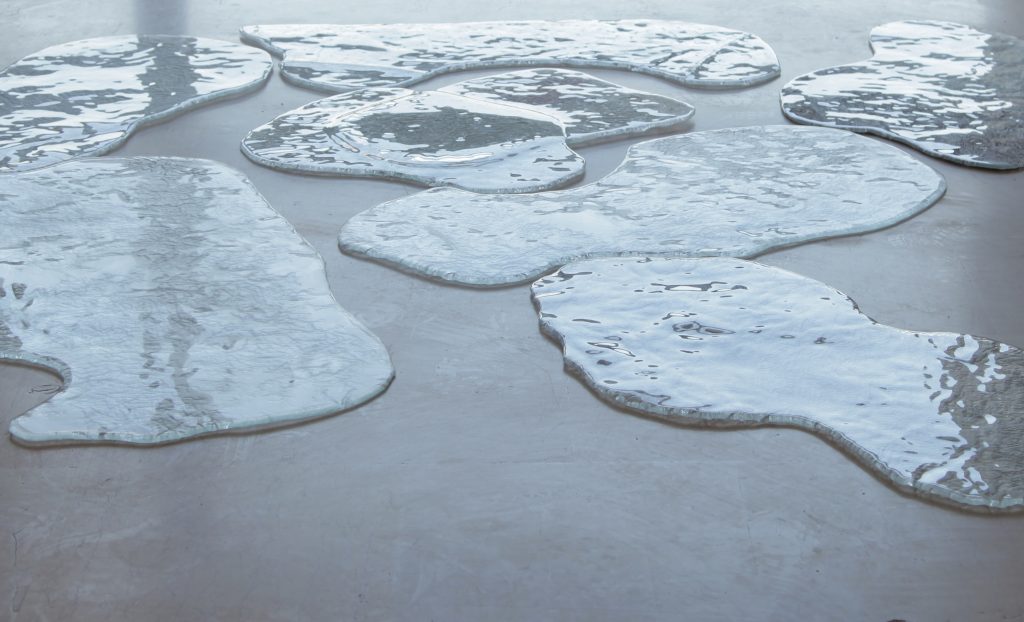
During those years, he made a point of keeping his distance from glass. He explored other avenues, such as painting, sculpture, video and repurposed objects, and cultivated what he calls ‘the intelligence of the hand’ – that union of gesture and thought. The return to glass came naturally. Among his final-year pieces was a puddle of water frozen in glass. The material of his childhood had once again become his medium, this time by choice.

Touching the light

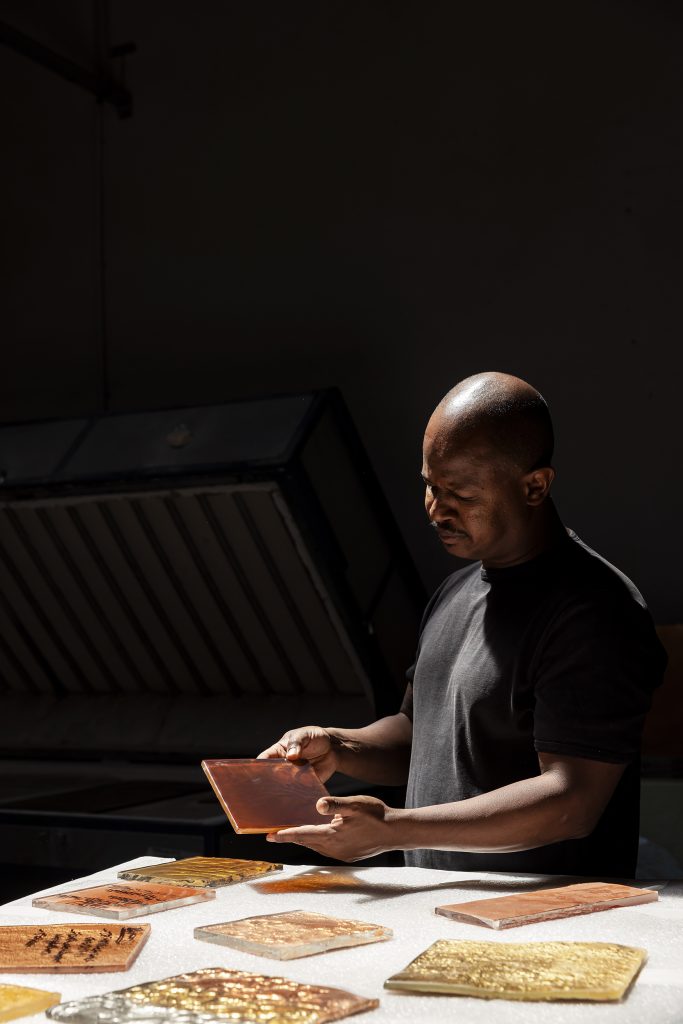
Raphaël Barrois; Recherche matière ; Matthieu Barani

Raphaël Barrois; Recherche matière ; Matthieu Barani

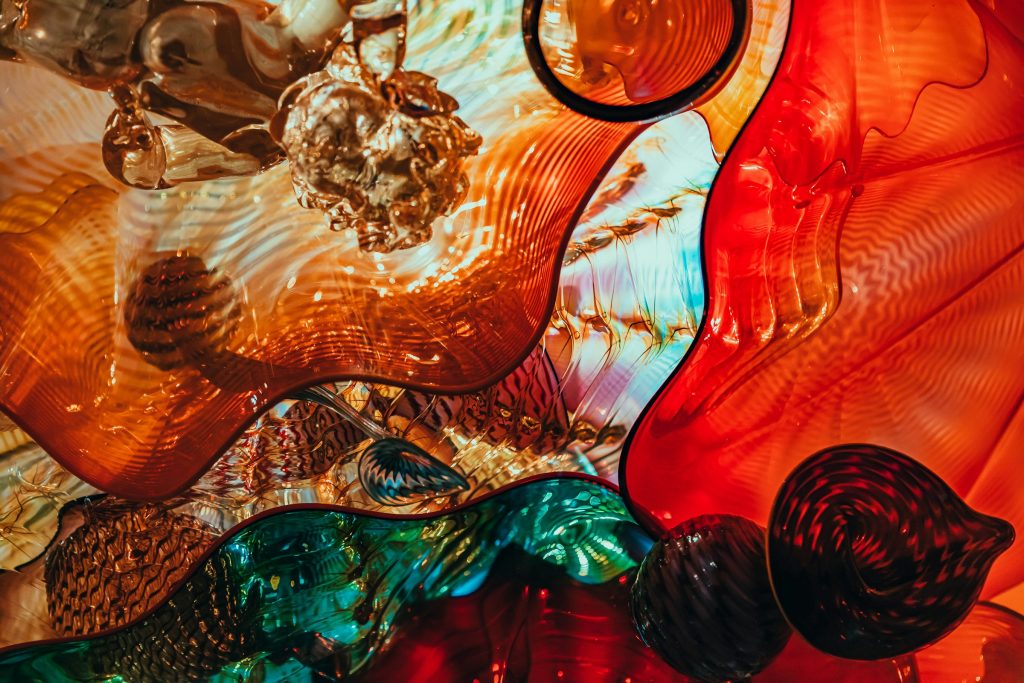
Everything stems from the material and leads back to light. Relief, thickness and colour all alter the way daylight passes through a sheet of glass. When placed in a space, the piece shimmers as the hours pass, changing with the seasons and capturing and reflecting light in different ways.

Raphaël speaks of a living material. When heated to certain temperatures, glass shifts, softens and becomes dense and malleable before solidifying whilst retaining the imprint of its transformation. This ability to receive and transform light lies at the heart of his work.

Taming the unpredictable

Sortie de four; Matthieu Barani

Out of the oven; Matthieu Barani

From his technical training, he has inherited a taste for constraints; today, he pushes these boundaries to explore the limits of the material. Experimentation sets the pace of his days. In the studio, he amasses a collection of samples — textures varying in temperature, thickness, and colour — which form the basis of every discussion with interior architects and decorators.

He accepts and is learning to manage the element of the unexpected: the more he experiments, the better he understands where chance might arise. A piece created several months apart may have a unique nuance. This variation is not sought for its own sake; it contributes to striking a balance between mastering the process and embracing the uniqueness of the material.

Innovation is part of the craft. New tools and processes, particularly digital ones, are gradually being integrated into traditional glassworking techniques whenever they help to expand the range of possible forms and materials.

Glass, the centrepiece

Interior architecture by Rudy Guénaire, glass panels by Raphaël Barrois, photography by Ludovic Balay

Interior architects and designers approach Raphaël after discovering his work, and the conversation centres on the space, the material and the light. Raphaël is also keen to understand how his pieces will be used day in, day out. He seeks the right balance between the project’s intention, the occupant’s use of the space and his own artistic exploration.

At Place du Panthéon in Paris, Rudy Guénaire made glass the central feature of an apartment overlooking the zinc rooftops. Upon entering, a vestibule made of crafted glass evokes rippling water, criss-crossed by bluish reflections that change as the day progresses. In the bedroom, large sliding doors showcase a mineral aesthetic, with handcrafted panels set within a stainless steel inlay designed by the architect. An architect fascinated by glass and clients familiar with the material: Raphaël finds great creative freedom here.

Révélations, a turning point

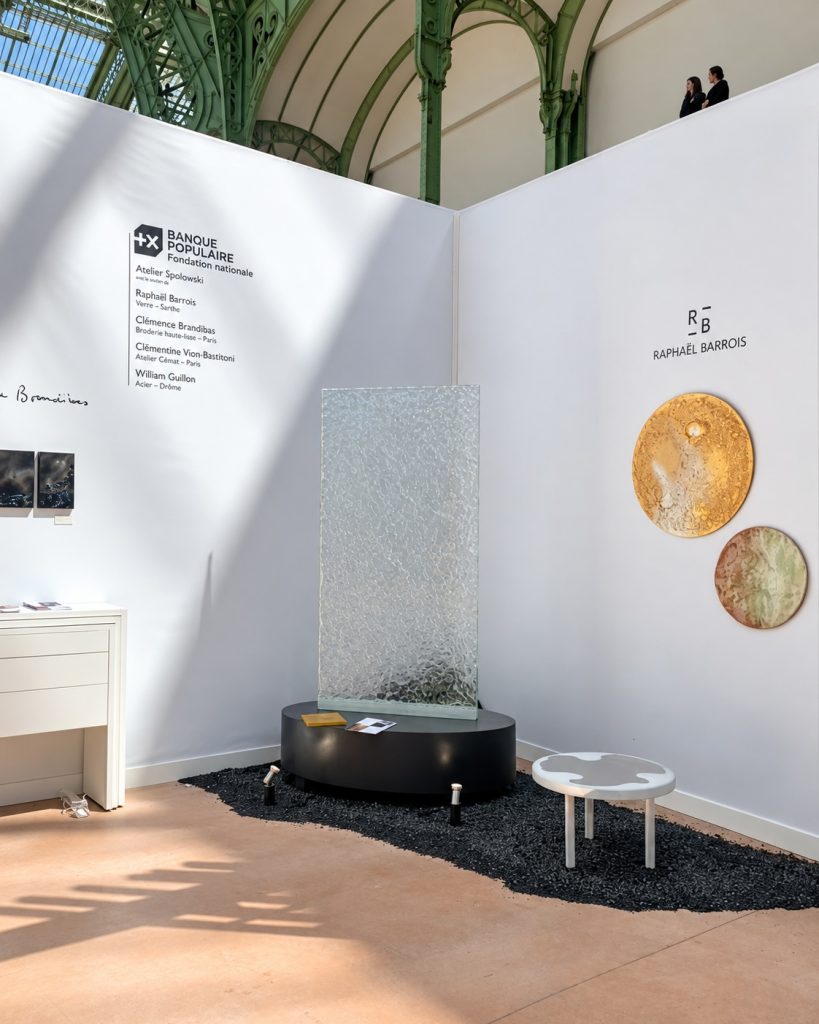
Stand *Révélations 2025* ; Raphaël Barrois

Révélations 2025 stand ; Raphaël Barrois

In 2025, Raphaël Barrois presented his work for the first time at Révélations, the international biennial of arts and crafts, beneath the glass roof of the Grand Palais. The experience proved invaluable. There, he met other glass artists, each with their own approach to the material, and came to appreciate the richness of these peer-to-peer exchanges. Meeting an audience from all over the world did the rest.

The biennial also opened up new projects abroad for him. It was there that he met the team of Luis Laplace, a Paris-based Argentine architect, with whom he subsequently developed a project involving bespoke glass panels. Other commissions followed in settings where discretion was part of the brief. In these settings, where each material complements the others, his contribution is valued, thanks to the trust of the interior architects.

Passing on knowledge and moving forward

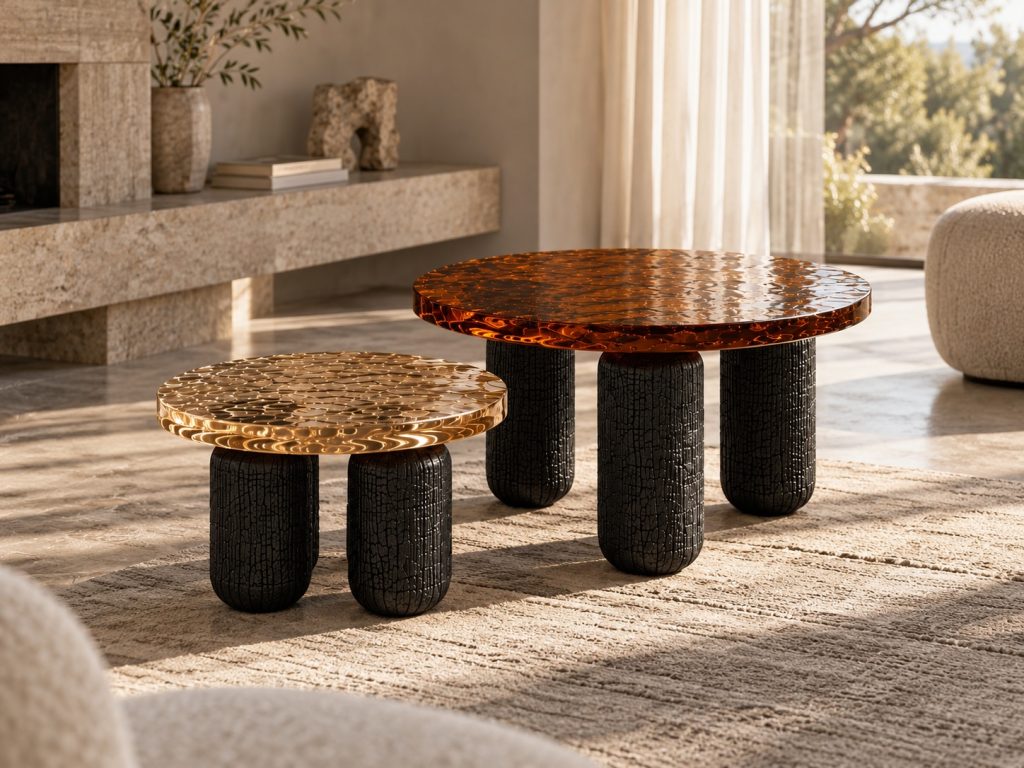
Nouvelle collection 3D; Raphaël Barrois

New 3D collection; Raphaël Barrois

Once a piece leaves the workshop, it no longer belongs to him. He scrutinises every facet of it while it takes shape in his hands. Once installed, it finds its permanent home. On site, his gaze remains that of a researcher: wherever the light falls, he is already considering how it could be improved.

Passing on knowledge is more important to him than his own career path. He takes on interns and responds to people on Instagram who wish to pursue careers in design and glasswork. He provides initial advice on schools and career paths, keen to dispel the clichéd image of the designer isolated in his studio.

A new chapter is now taking shape. Alongside interior design projects, Raphaël is working on his first furniture collection. Tables combine thick, textured, coloured glass tops with sculptural wooden legs, some of which feature surfaces treated using a Japanese charred wood technique.

In these pieces, the material is no longer merely a response to a specific space or commission; it is the starting point for the form itself. Interior architecture, furniture, and standalone pieces thus become different scales of the same creative exploration.

“I develop a language based on the material. It may take the form of an architectural element, a piece of furniture, or a standalone piece, but the exploration remains the same: understanding how glass transforms light.” ’

Continue exploring

Anne Paccard: the perfect harmony of song and bells
Mr Popart, the street artist with a quirky twist
Bagage Collection: vintage trunks that tell a story
Tom Waugh, stone sculptor, the long life of disposable things
Adeline Giffon, interior designer: volume, light and materials
Isabelle de Lasteyrie: from materials to connections

Février, 2026

Édition 3 : Patrimoine et création

Créer avec l’existant, penser avec l’histoire

De l’architecture au design, cette édition explore comment lieux, savoir-faire et matières héritées deviennent terrains de création actuelle.

Janvier, 2026

Édition 2 : Quiet luxury

Le luxe se réinvente.

Finis les logos clignotants, place à une sobriété raffinée, à l’immersion personnelle, à l’excellence artisanale, à la durabilité sensible.

Décembre, 2025

Édition 1 : Le sens de la fête

Héritages, gestes contemporains et plaisirs essentiels

Parce que la fête n’est jamais qu’apparence : elle reflète notre manière d’habiter le monde, de transmettre, de fabriquer des souvenirs durables.

ÉDITION #3

Révéler la beauté
‎

Upcycling et kintsugi transforment l’objet contemporain, faisant de la trace, de la réparation et de la matière un langage esthétique.

ÉDITION #3

Les nouveaux artisans du patrimoine

Artisans et designers donnent une seconde vie aux matériaux anciens, entre création contemporaine, patrimoine et réemploi.

ÉDITION #3

L'art à la rescousse des friches et lieux oubliés

Bunkers, wagons et kiosques renaissent grâce à la création, révélant comment l’art redonne sens aux lieux délaissés.

ÉDITION #2

Le murmure du beau
‎

Un regard transversal sur le quiet luxury à travers des lieux, des objets et des figures qui expriment l’élégance.

ÉDITION #1

Lieux, maisons et matières en éclats

Une sélection de marques, architectures, objets et escapades qui donnent corps au sens de la fête.

ÉDITION #3

La création au secours des bâtiments promis à l’oubli

Usines et gares délaissées deviennent lieux culturels ouverts, où mémoire industrielle et usages contemporains redessinent la ville.

ÉDITION #3

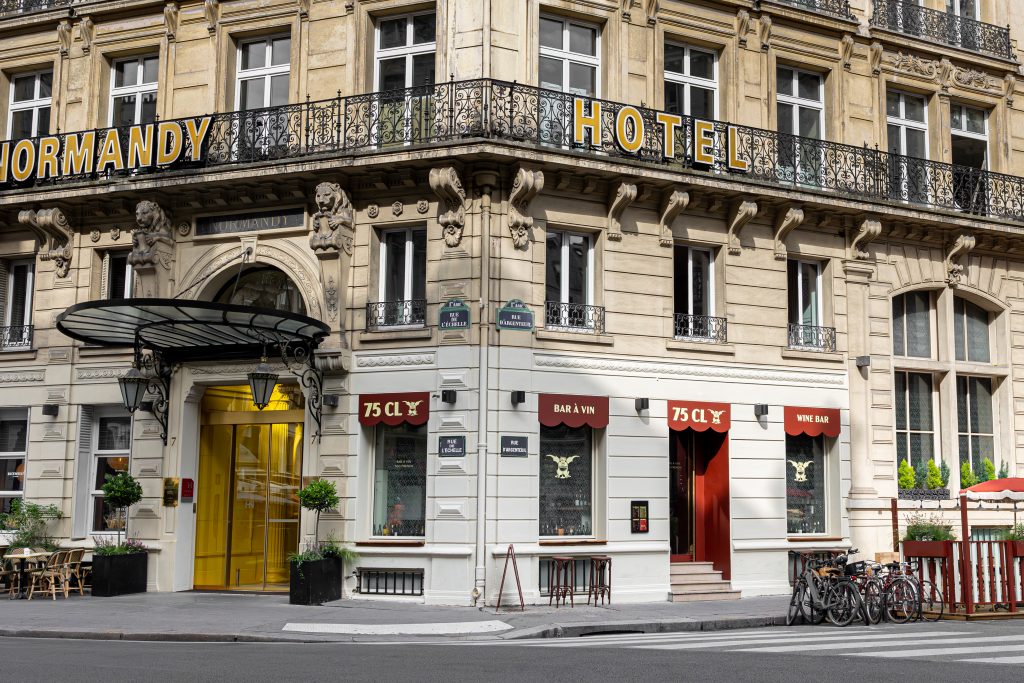
Normandy Hotel Paris Saint-Honoré

L’audacieuse métamorphose d’un palace parisien

ÉDITION #3

Dans les coulisses du Centre d'Études Picasso à Paris

Au cœur du Marais, un lieu discret révèle comment archives, architecture et recherche font dialoguer l’œuvre de Picasso.

ÉDITION #2

Shopping iconique dans un décor Tudor

Une expérience shopping unique dans un magasin emblématique.

ÉDITION #2

Gastronomie et architecture

Voyage culinaire et architectural au cœur de la Seine

ÉDITION #2

L'art de l'hospitalité parisienne

Dans le 9e arrondissement, un établissement qui invite au quiet luxury

ÉDITION #1

Chante!

Chante! vient d’ouvrir ses portes. Une invitation à vibrer !

ÉDITION #3

La boîte aux lettres française devenue objet de design

Icône du paysage français, la boîte jaune change de statut et s’invite dans l’univers du design.

ÉDITION #3

Retour sur Maison&Objet 2026 : retour aux sources et à l’essentiel

L’édition 2026 affirme une vision où artisanat, design et mémoire façonnent l’habitat contemporain, international actuel.

ÉDITION #3

Art Deco: un mouvement centenaire, plus actuel que jamais

Cent ans après 1925, l’Art déco revient dans nos villes et intérieurs avec géométrie, audace, optimisme.

ÉDITION #3

Royal Limoges, deux siècles d’histoire au présent

Depuis plus de deux cents ans, Royal Limoges conjugue porcelaine, savoir-faire industriel et création contemporaine.

ÉDITION #3

Du terrain à la rue et au catwalk : les sneakers à travers les époques

Des terrains de sport aux podiums, la sneaker raconte un siècle de mutations culturelles, techniques et stylistiques.

ÉDITION #2

La formidable aventure du papier peint de luxe

Design, mode, artisanat : des créations où la forme et la matière se répondent avec justesse, loin de tout effet de mode.

ÉDITION #1

Icônes, détails, rituels
‎

Décorations artisanales, calendriers ultra-luxe et pièces de collection pour s’enivrer de joie avant l’heure.

ÉDITION #3

Anton Laborde

Entre marqueterie monumentale et jungle symbolique, Anton Laborde transforme le bois en récit contemporain poétique engagé.

ÉDITION #3

Thierry Laudren

À Maison & Objet, Thierry Laudren présente des meubles sculptés où fonction, matière et lenteur façonnent une présence.

ÉDITION #3

Jean Nouvel

Jean Nouvel conçoit une architecture attentive aux contextes, où lumière, histoire et usages façonnent chaque projet.

ÉDITION #3

Sophie Morel

À Lyon, Sophie Morel rénove des lieux historiques en alliant respect du bâti et écriture contemporaine.

ÉDITION #3

Pascal Grasso

Au Centre d’Études Picasso, l’architecte compose une architecture où lumière, géométrie et héritage dialoguent avec précision.

ÉDITION #2

Alexandre Danan

Entretien avec le fondateur d’EDO (European Design Office)

ÉDITION #2

Aziz Temimi

Portrait d’un visionnaire qui transforme l’art de recevoir en expérience totale.

ÉDITION #1

Visages, gestes, inspirations

Personnalités, artisans et créateurs qui donnent à la fête sa profondeur humaine.

ÉDITION #3

Chemins de traverse : parenthèse d’exception en Bordelais

De Bordeaux au Bassin, art, vignobles et bien-être composent une échappée élégante au cœur de la Gironde.

ÉDITION #2

Voyage en Toscane
‎

Vers une région de l’Italie habitée par le temps, où paysages, culture et usages s’accordent dans une continuité rare.

ÉDITION #1

Horizons, saisons, traditions
‎

Destinations et rituels qui réinventent la fête, du soleil tropical aux marchés d’hiver.

Dates, adresses, invitations

Expositions, événements et repères culturels pour vivre pleinement la saison des fêtes.