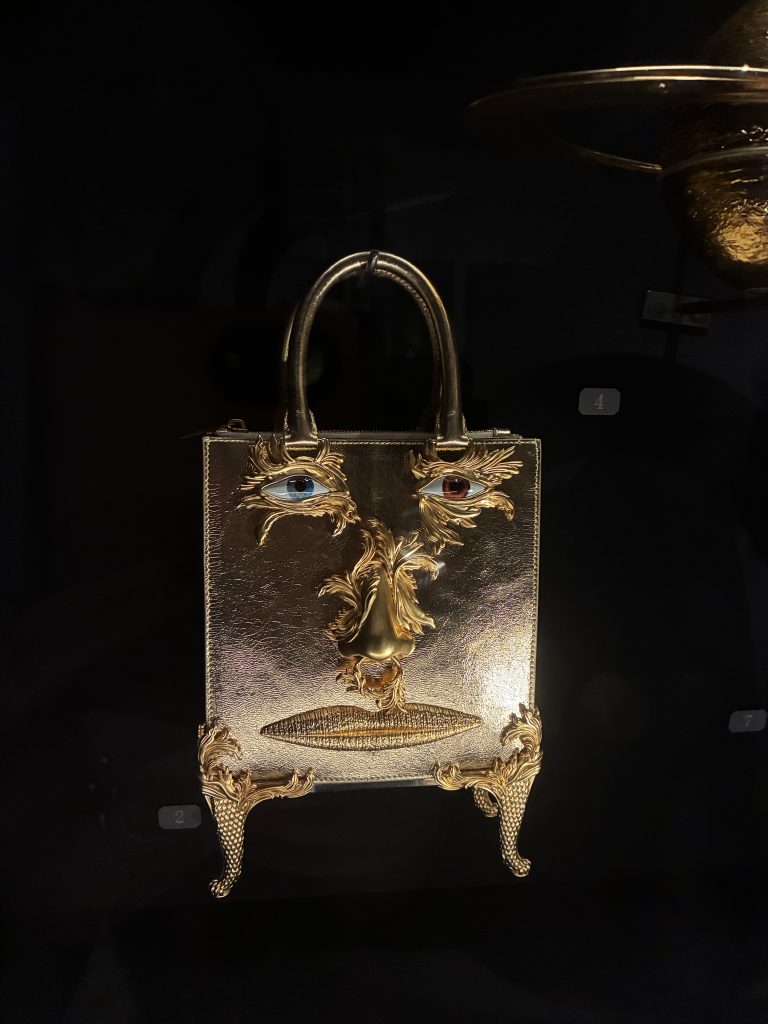
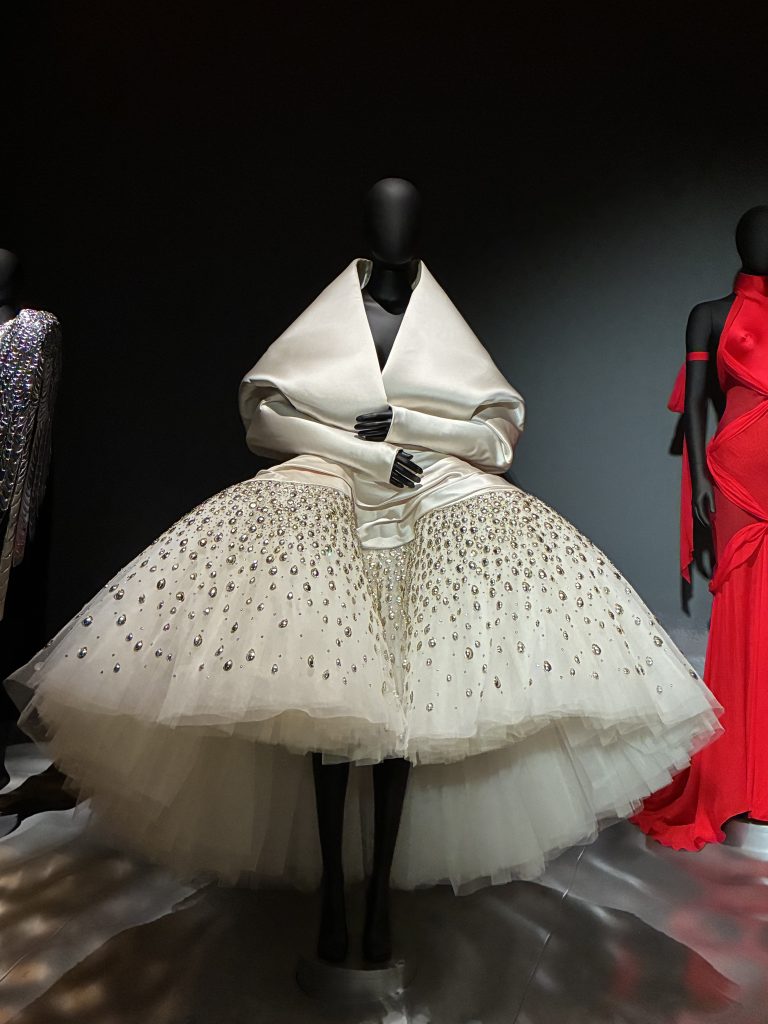
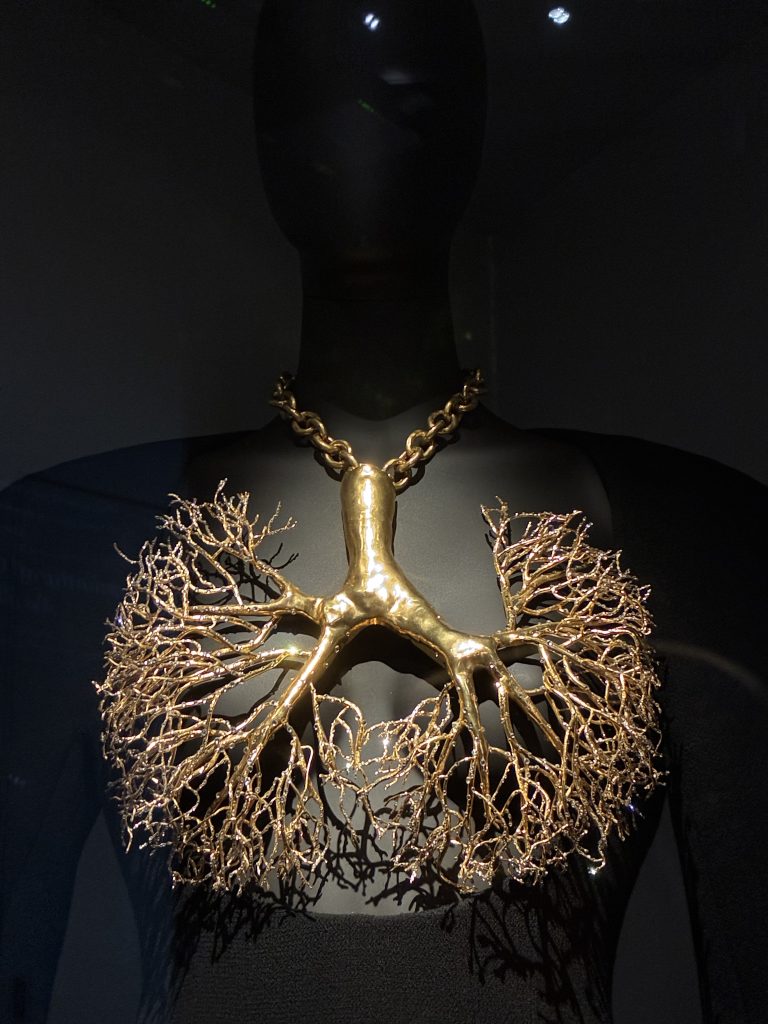
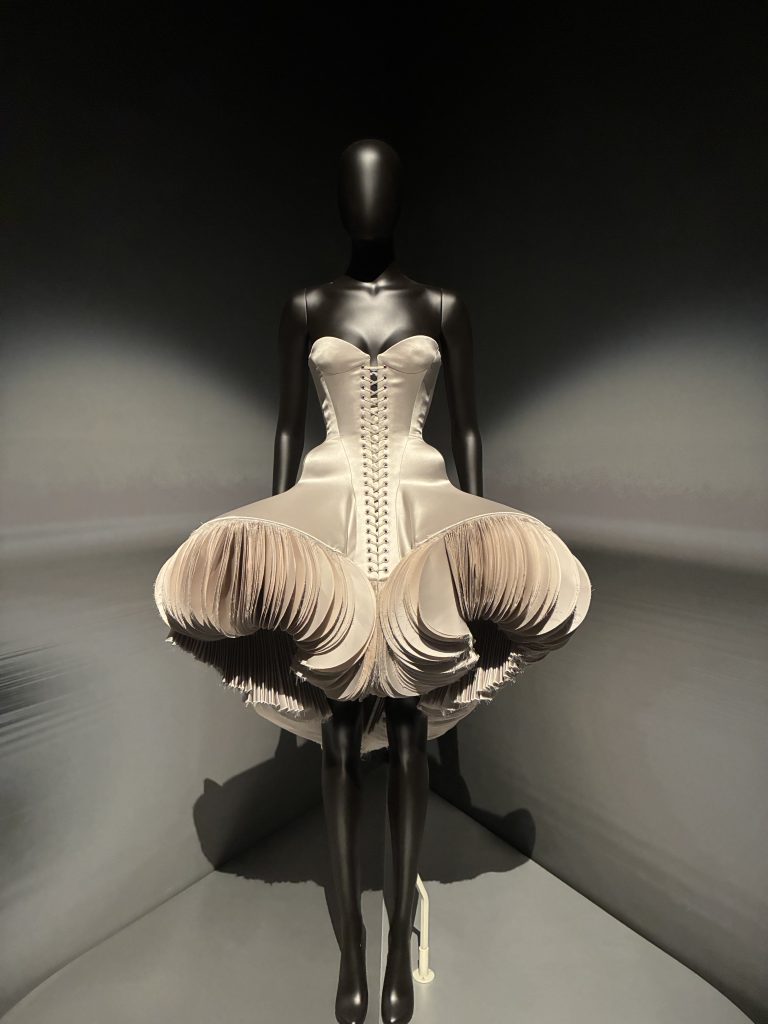
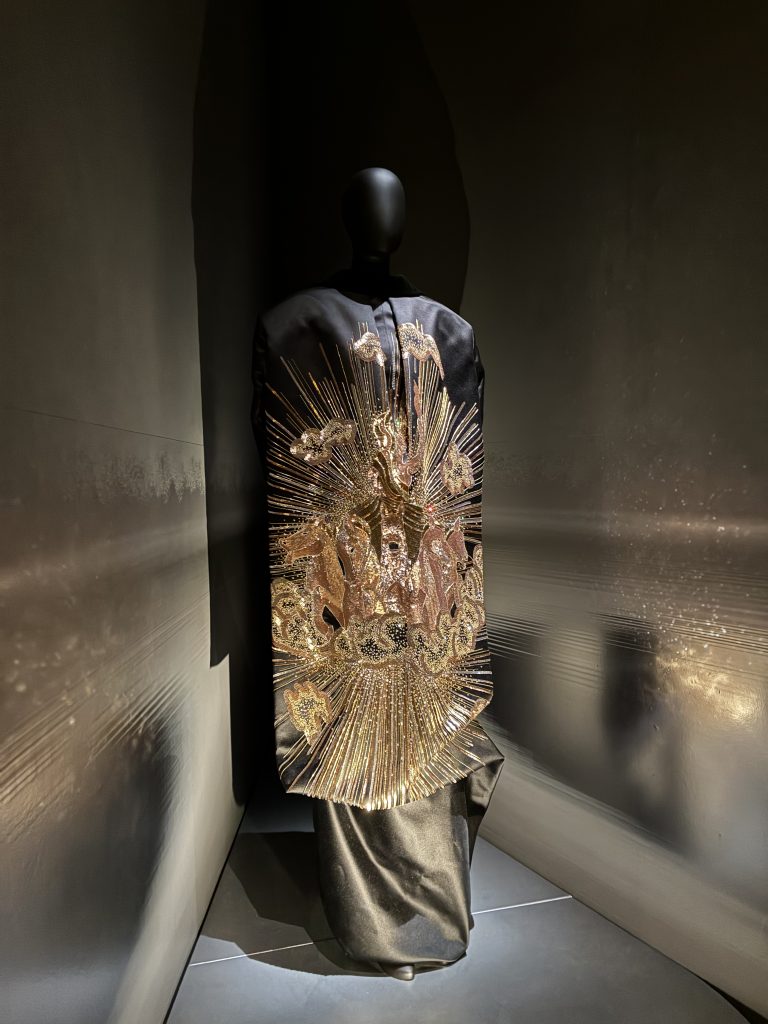
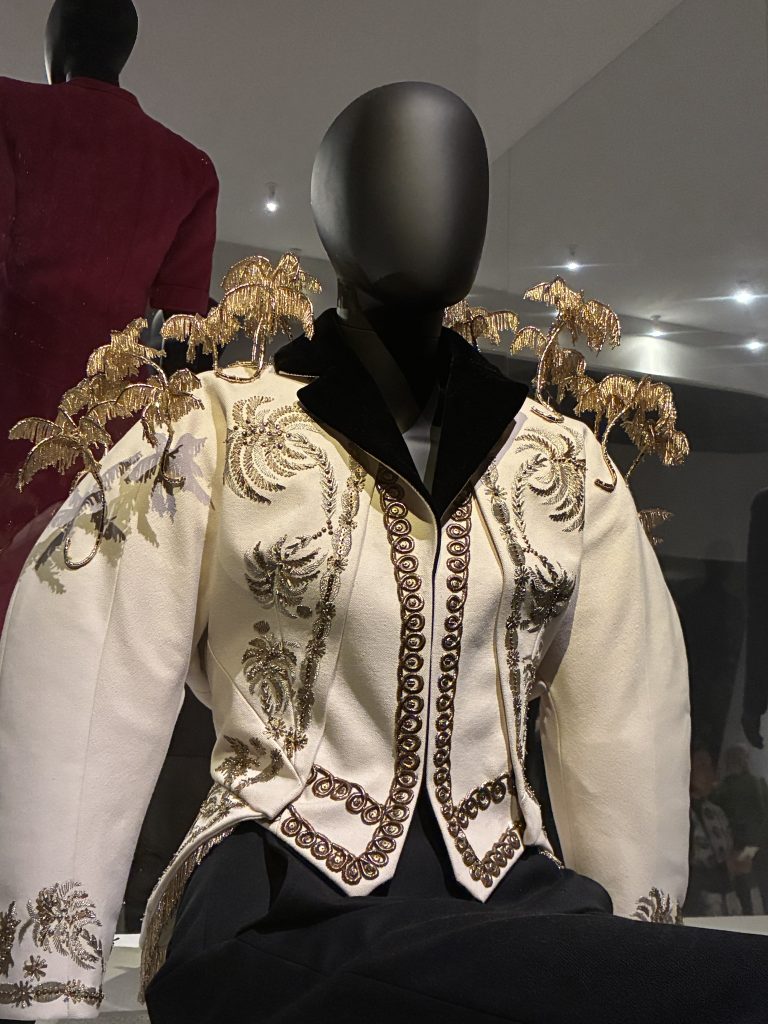
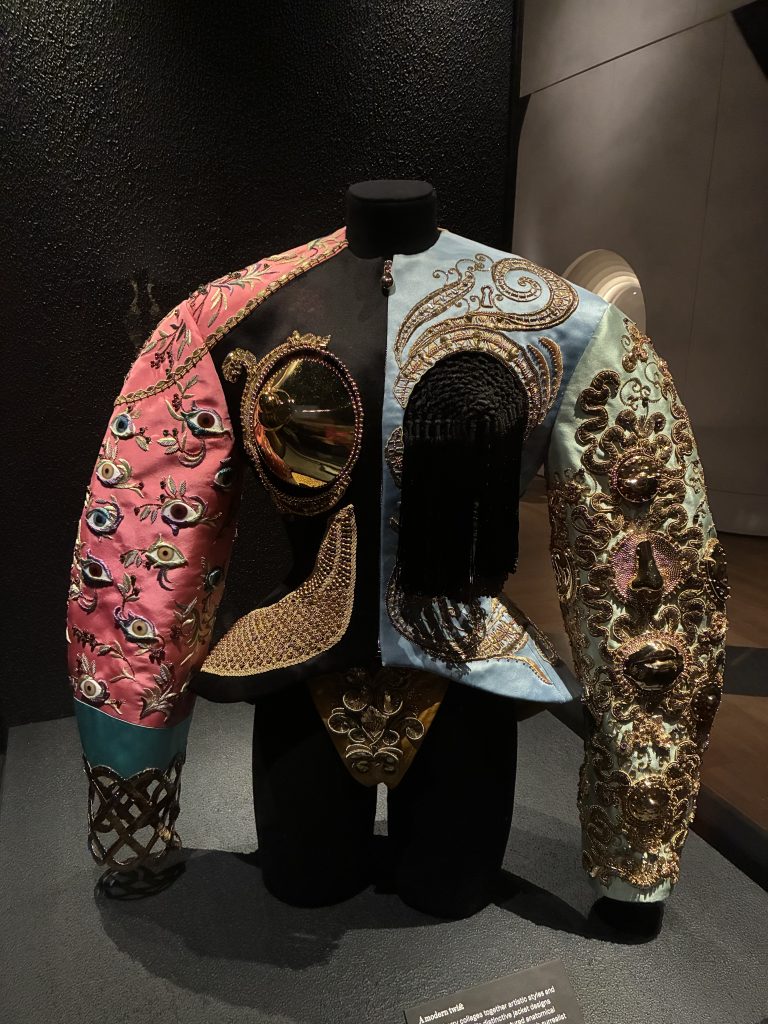
Examples include a ‘Skeleton’ dress, a hat shaped like an upturned shoe and an evening coat with two gold-embroidered profiles forming a vase of roses. Spanning from the 1920s to the present day, over four hundred objects make up the very first exhibition in the UK dedicated to the House of Schiaparelli at the Victoria and Albert Museum in London. Around a hundred outfits are displayed alongside some fifty works of art, in keeping with the founder’s conviction that ‘designing clothes is an art, not a profession’.
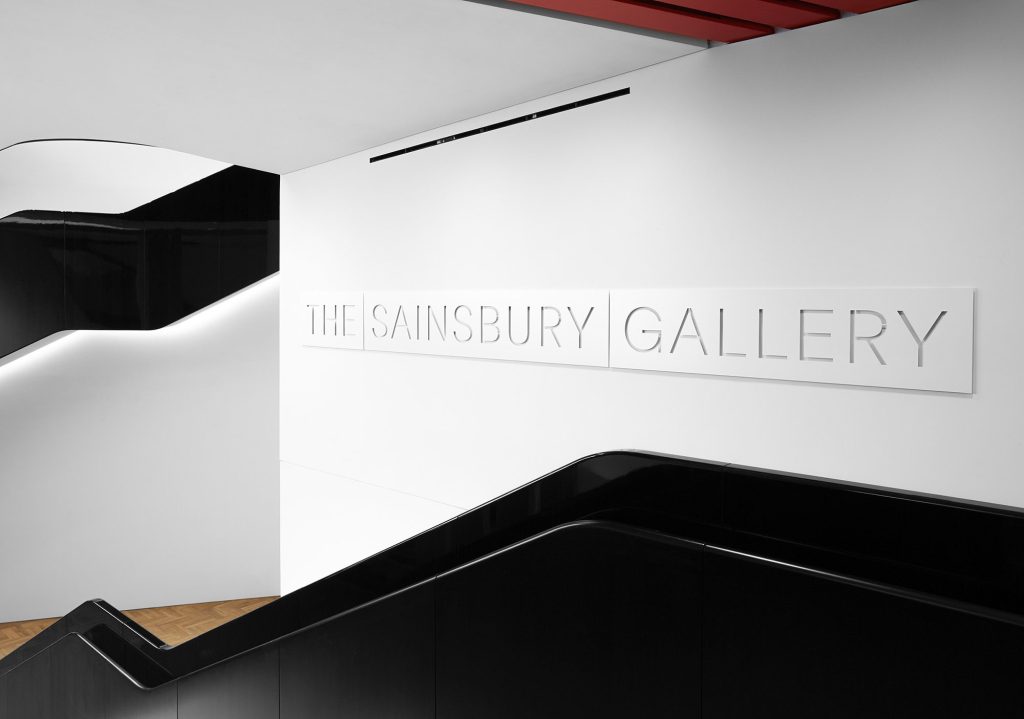
The fashion house could not have found a better setting. The V&A houses one of the world’s largest and most comprehensive fashion collections, designated as the UK’s national collection, as well as Britain’s largest collection of Schiaparelli garments. Conceived in close collaboration with the fashion house, the Schiaparelli: Fashion Becomes Art exhibition draws on new research conducted by art and fashion specialists. Curators Sonnet Stanfill, Lydia Caston and Rosalind McKever position Elsa Schiaparelli among the great innovators of the interwar period, spanning Paris, London and New York and situated at the intersection of fashion, art and the performing arts. In a display designed by Nebbia, the narrative traces the journey of a businesswoman across four chapters, taking us from the fashion house’s earliest garments to the creations of its creative director, Daniel Roseberry.

Bow-knot sweater designed by Elsa Schiaparelli (1927); Wikimedia
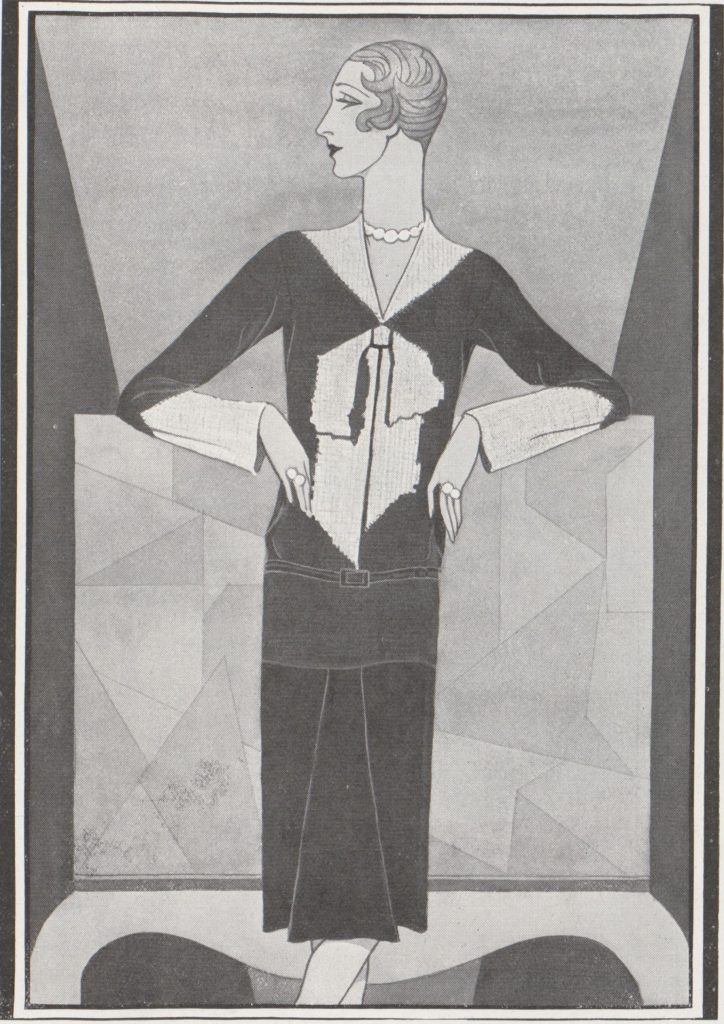
It all started with a knit. In January 1927, Elsa Schiaparelli presented her first personal collection, and a few months later she launched her famous trompe l’œil bow jumper. The following year, she opened her first Parisian store on Rue de la Paix under the name ‘Schiaparelli Pour le Sport’. One of her earliest designs, now held at the V&A and donated by the designer herself, sets the tone for the exhibition. Her sense of humour and love of illusion were already evident.
The designer then turned her attention to citywear. Her Pour la Ville line featured trouser suits, which were rare among women at the time, and sharply cut skirt suits, which were often embellished with unexpected buttons. By 1934, Schiaparelli was considered one of the leading names in haute couture for the modern city-dweller. With Pour le Soir, her whimsical side came to the fore, as seen in a gold lamé dress that caught the light and a dinner suit adorned with appliquéd circus horses. The accessories followed suit, ranging from hats shaped like braided hair to striped shoes and those trimmed with leopard fur.
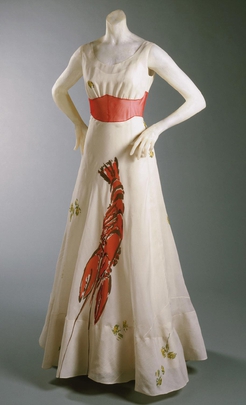
Lobster dress; Elsa Schiaparelli; Wikimedia
In 1920s and 1930s Paris, Elsa Schiaparelli socialised with Surrealist painters, sculptors and writers who shared her fondness for the bizarre and subversion. The second chapter, ‘Creative Constellations’, juxtaposes these friendships with the garments they inspired, establishing a direct dialogue between artworks and dresses.
Salvador Dalí is the central figure here. His famous Lobster Telephone is displayed alongside the 1937 Lobster Dress that was inspired by it. The exhibition also brings together several pieces designed in collaboration with Dalí, including the Skeleton Dress from 1938 — the only known surviving example, which is held in the museum’s permanent collection — and the Tears Dress from the same year. The silhouette becomes a canvas for the image and the fabric takes on the painter’s motif, with fashion meeting painting on its own terms.
Schiaparelli: Fashion Becomes Art ; WeAreKollectors Magazine
The dialogue extends far beyond Dalí. One of the most delicate examples of this is an evening coat designed with Jean Cocteau, which features two facing profiles embroidered in gold thread forming a vase filled with pink silk roses. The poet’s drawings for the fashion designer are also on display. The exhibition also features works by Pablo Picasso, Man Ray and Eileen Agar.

Schiaparelli also commissioned artists to create works for her advertisements and boutiques. Her friendships inspired numerous portraits, notably by Man Ray and Cecil Beaton, which reflect her eclectic taste. The exhibition also highlights her collaborations with Alberto Giacometti, Leonor Fini, Meret Oppenheim, Elsa Triolet and Jean Schlumberger, all of whom left a lasting mark on the house’s legacy. Sir Tristram Hunt, Director of the V&A, sums up this boldness: ‘This exhibition celebrates one of the most ingenious and daring designers in the history of fashion.’
Schiaparelli: Fashion Becomes Art ; WeAreKollectors Magazine
Elsa Schiaparelli knew how to put herself in the spotlight, too. She would appear at high-profile soirées dressed in her own creations, and her fame quickly spread beyond the world of Parisian haute couture. In 1933, the opening of her London salon in Mayfair cemented her international presence. The third chapter, ‘Beyond Paris’, is the first to shed light on this British branch and its clientele of dynamic, independent women.
It features rarely seen pieces bearing the Schiaparelli London label, including a sumptuous burgundy velvet suit embroidered with gold and a dress and coat worn at the coronation of King George VI in 1937. There is also a portrait by Gluck of Lady Mount Temple wearing one of the house’s designs. One piece catches the eye in particular: the only known wedding dress by Elsa Schiaparelli, made of crinkled oyster-coloured rayon embellished with metallic thread. Rosalinde Gilbert, an art collector and owner of a wholesale fashion business, wore it on her wedding day at Golders Green Synagogue.
From the 1930s to the 1950s, the couturier designed costumes for theatre and film productions in Britain, France, and the United States. The exhibition showcases several of these, including an outfit created for Mae West in Every Day’s a Holiday, released in 1937. The great actresses of the era also entrusted her with their personal wardrobes. Marlene Dietrich was particularly fond of her sharply cut trouser suits. The transition from haute couture to the stage came naturally, and this connection with the world of entertainment remains one of the house’s defining features.
The final chapter, ‘A Golden Thread’, traces this connection right up to the present day. Since 2019, Daniel Roseberry has led the house’s creative direction from its historic premises at 21 Place Vendôme. There, he uses Parisian haute couture techniques such as draping, embroidery and ornamentation to create sculptural silhouettes and pay homage to the American Western wardrobe. The house is thus once again becoming the wardrobe of performers, artists, and creators.
Among the pieces that bring the journey to a close are the white tank top and cargo trousers ensemble modelled by Maggie Maurer with a rhinestone-studded robot baby (Spring/Summer 2024 haute couture, look 6), Ariana Grande’s sparkling dress for her 2025 Oscars performance, and a contemporary black-and-gold version of the ‘Squelette’ dress designed for Dua Lipa at the 2024 Golden Globes. Delphine Bellini, Schiaparelli’s Managing Director, sees this as the continuation of a distinct vision: “Daniel Roseberry’s creations carry on Elsa Schiaparelli’s surrealist spirit, with bold, sculptural pieces that honour her vision and renew it for a new century.”
Slider :
Schiaparelli: Fashion Becomes Art ; WeAreKollectors Magazine
Février, 2026
Créer avec l’existant, penser avec l’histoire
De l’architecture au design, cette édition explore comment lieux, savoir-faire et matières héritées deviennent terrains de création actuelle.
Janvier, 2026
Le luxe se réinvente.
Finis les logos clignotants, place à une sobriété raffinée, à l’immersion personnelle, à l’excellence artisanale, à la durabilité sensible.
Décembre, 2025
Héritages, gestes contemporains et plaisirs essentiels
Parce que la fête n’est jamais qu’apparence : elle reflète notre manière d’habiter le monde, de transmettre, de fabriquer des souvenirs durables.
ÉDITION #3
Upcycling et kintsugi transforment l’objet contemporain, faisant de la trace, de la réparation et de la matière un langage esthétique.
ÉDITION #3
Artisans et designers donnent une seconde vie aux matériaux anciens, entre création contemporaine, patrimoine et réemploi.
ÉDITION #3
Bunkers, wagons et kiosques renaissent grâce à la création, révélant comment l’art redonne sens aux lieux délaissés.
ÉDITION #2
Un regard transversal sur le quiet luxury à travers des lieux, des objets et des figures qui expriment l’élégance.
ÉDITION #1
Une sélection de marques, architectures, objets et escapades qui donnent corps au sens de la fête.
ÉDITION #3
Usines et gares délaissées deviennent lieux culturels ouverts, où mémoire industrielle et usages contemporains redessinent la ville.
ÉDITION #3
L’audacieuse métamorphose d’un palace parisien
ÉDITION #3
Au cœur du Marais, un lieu discret révèle comment archives, architecture et recherche font dialoguer l’œuvre de Picasso.
ÉDITION #2
Une expérience shopping unique dans un magasin emblématique.
ÉDITION #2
Voyage culinaire et architectural au cœur de la Seine
ÉDITION #2
Dans le 9e arrondissement, un établissement qui invite au quiet luxury
ÉDITION #1
Chante! vient d’ouvrir ses portes. Une invitation à vibrer !
ÉDITION #3
Icône du paysage français, la boîte jaune change de statut et s’invite dans l’univers du design.
ÉDITION #3
L’édition 2026 affirme une vision où artisanat, design et mémoire façonnent l’habitat contemporain, international actuel.
ÉDITION #3
Cent ans après 1925, l’Art déco revient dans nos villes et intérieurs avec géométrie, audace, optimisme.
ÉDITION #3
Depuis plus de deux cents ans, Royal Limoges conjugue porcelaine, savoir-faire industriel et création contemporaine.
ÉDITION #3
Des terrains de sport aux podiums, la sneaker raconte un siècle de mutations culturelles, techniques et stylistiques.
ÉDITION #2
Design, mode, artisanat : des créations où la forme et la matière se répondent avec justesse, loin de tout effet de mode.
ÉDITION #1
Décorations artisanales, calendriers ultra-luxe et pièces de collection pour s’enivrer de joie avant l’heure.
ÉDITION #3
Entre marqueterie monumentale et jungle symbolique, Anton Laborde transforme le bois en récit contemporain poétique engagé.
ÉDITION #3
À Maison & Objet, Thierry Laudren présente des meubles sculptés où fonction, matière et lenteur façonnent une présence.
ÉDITION #3
Jean Nouvel conçoit une architecture attentive aux contextes, où lumière, histoire et usages façonnent chaque projet.
ÉDITION #3
À Lyon, Sophie Morel rénove des lieux historiques en alliant respect du bâti et écriture contemporaine.
ÉDITION #3
Au Centre d’Études Picasso, l’architecte compose une architecture où lumière, géométrie et héritage dialoguent avec précision.
ÉDITION #2
Entretien avec le fondateur d’EDO (European Design Office)
ÉDITION #2
Portrait d’un visionnaire qui transforme l’art de recevoir en expérience totale.
ÉDITION #1
Personnalités, artisans et créateurs qui donnent à la fête sa profondeur humaine.
ÉDITION #3
De Bordeaux au Bassin, art, vignobles et bien-être composent une échappée élégante au cœur de la Gironde.
ÉDITION #2
Vers une région de l’Italie habitée par le temps, où paysages, culture et usages s’accordent dans une continuité rare.
ÉDITION #1
Destinations et rituels qui réinventent la fête, du soleil tropical aux marchés d’hiver.