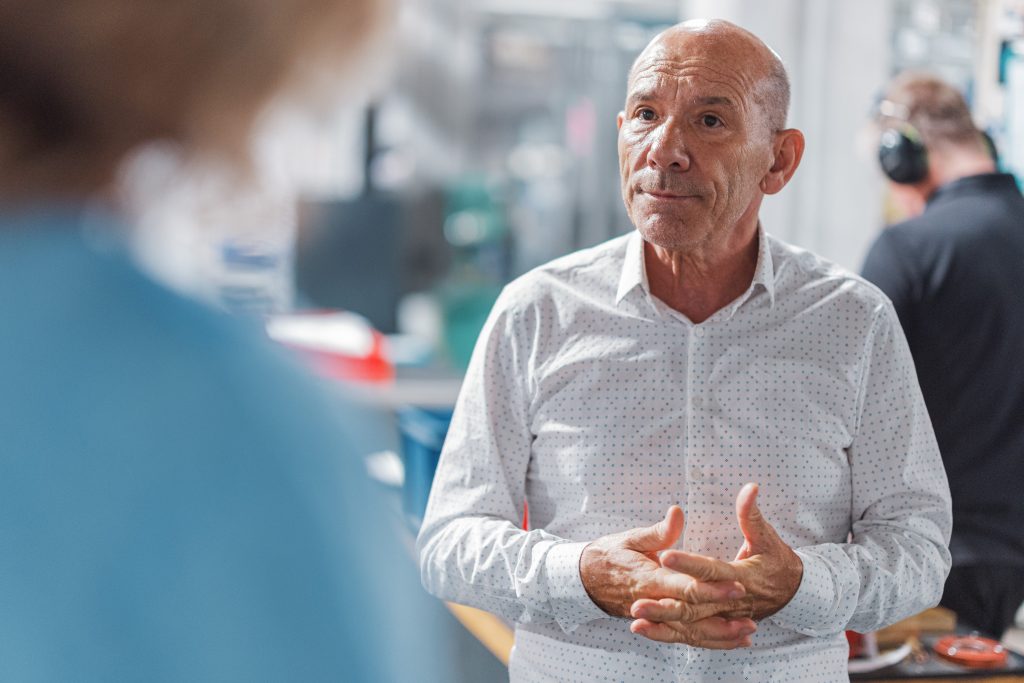
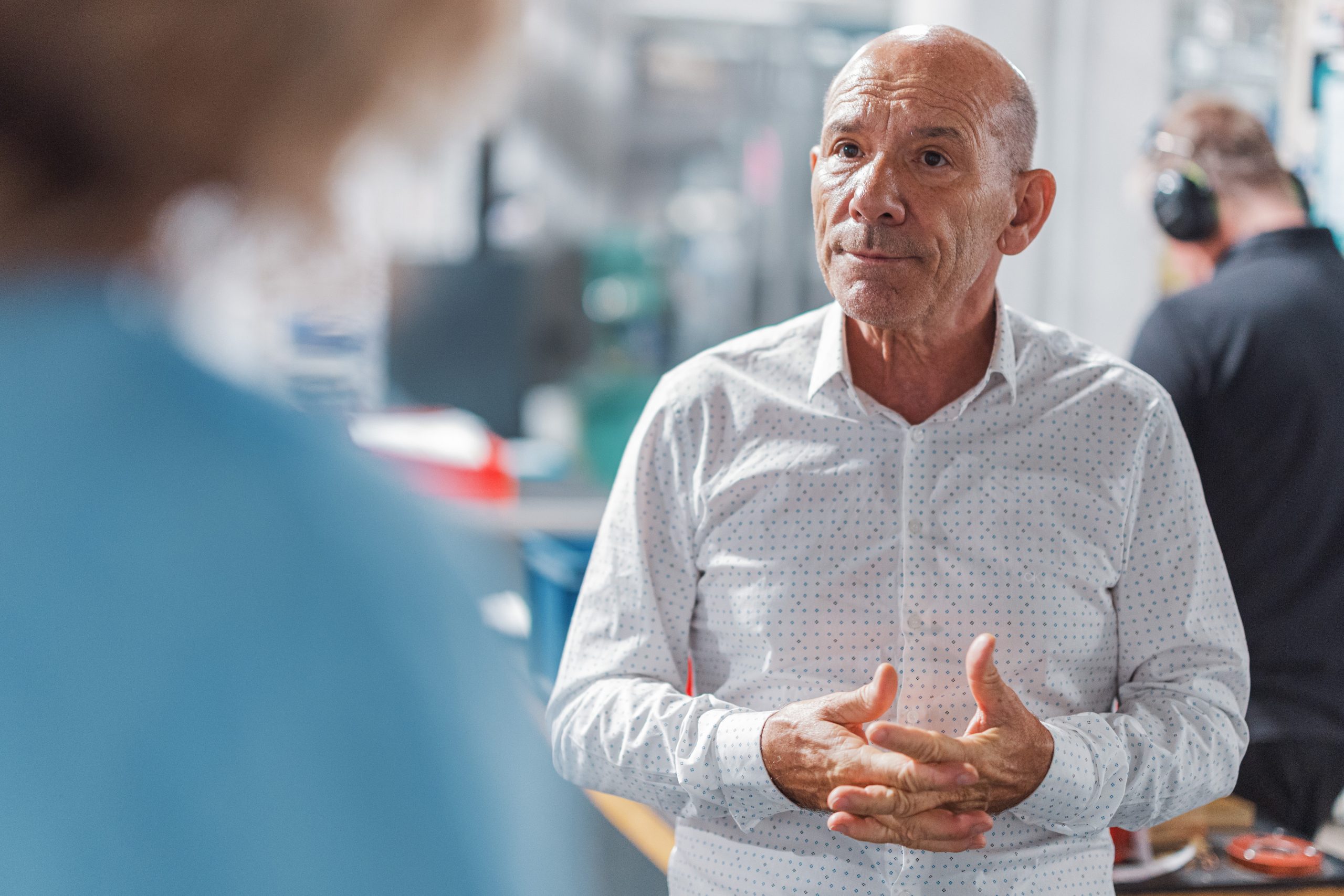
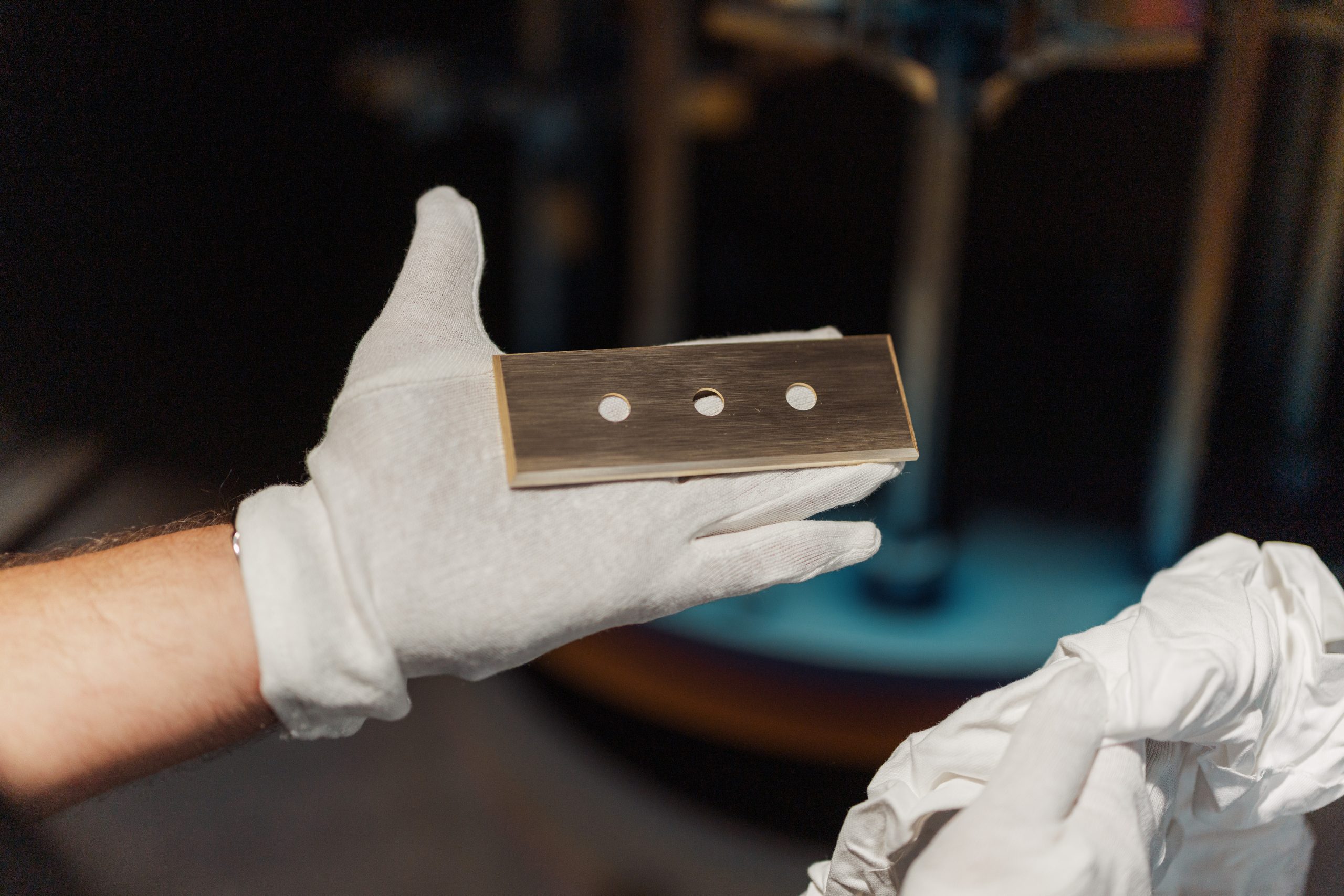
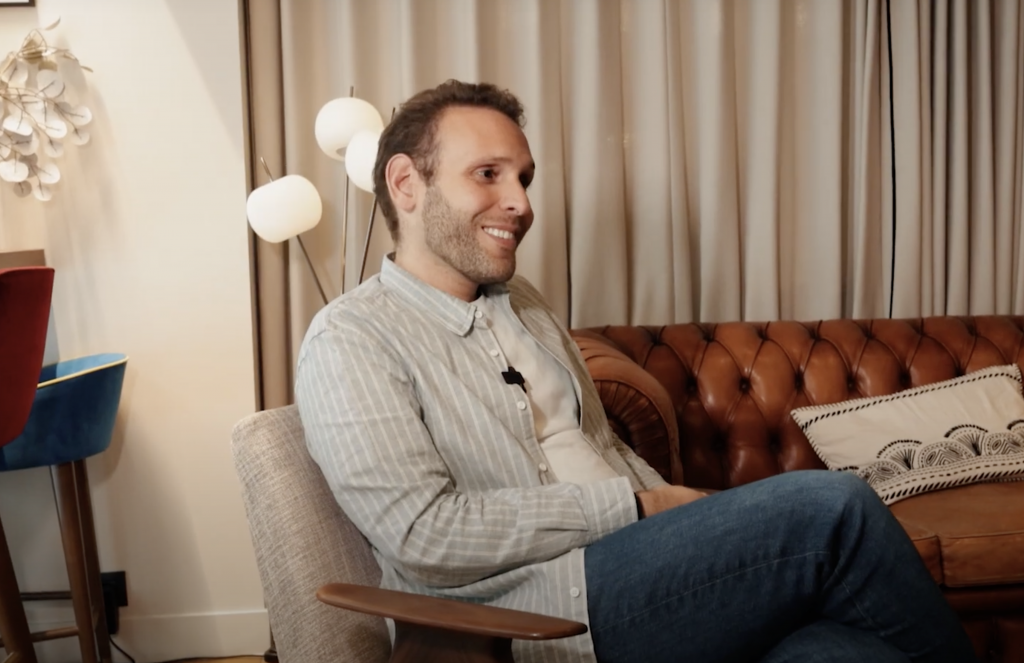
In L’Escarène, twenty minutes from Nice, a 2,500-square-metre workshop produces solid-brass switches, handles and light fittings for villas on the Côte d’Azur, in Monaco and as far afield as the Caribbean. Maison ORSTEEL is part of the SFECCI Group, a family-run business founded in 1975 as a precision engineering and bar-turning workshop. The group holds both the Entreprise du Patrimoine Vivant (Living Heritage Company) and Origine France Garantie (Guaranteed French Origin) certifications. Three generations have worked within the business. Daniel Sfecci, the founder’s son, eventually handed over the reins to his own two sons while continuing to work at the workshop. “We know where we come from and where we want to go, whilst remaining true to our heritage.”
Photo: WeAreKollectors Magazine
WeAreKollectors Magazine
The story began in 1975. That year, in the Alpes-Maritimes, Jean Sfecci founded a precision engineering and bar-turning workshop. His son Daniel took over after completing his military service and spending several years teaching. He subsequently introduced CNC machinery and computer technology, bringing about a major transformation. “He [my father] thought I was a social climber because I was using machines that were less ‘human’ than his,” Daniel Sfecci recalls.
The disagreements were sometimes heated, but the workshop went on to become one of the most successful in the region, with its workforce growing from a handful of employees to around forty. For thirty years, the company supplied metal components to manufacturers throughout the Alpes-Maritimes. Above all, it developed an expertise that would become its defining strength: precision machining of brass.
WeAreKollectors Magazine
The subprime mortgage crisis turned the market upside down. Clients began explaining that, from then on, they would have to source their supplies from outside France, where production costs were lower. “It was either that or go under,” Daniel Sfecci recalls.
The company responded by opening a production facility in Tunisia, managed by a trusted local colleague. Today, it employs more than thirty-five people. A few years later, the same clients returned, having realised that efficiency and shorter lead times mattered more than the difference in price.
The experience nevertheless left a lasting lesson: a business dependent on a particular volume of orders can lose them overnight.
Adrien and Arnaud, Daniel’s two sons, joined the company in 2016 with a clear ambition. A business that knows how to manufacture must also learn to design, develop its own solutions and put its name to its creations. It took five years to identify the right market niche.
The Grenelle Environment Round Table opened up new opportunities. New legislation called for more energy-efficient lighting and a reduced carbon footprint, just as LED technology was beginning to gain traction.
A corner of the workshop was set aside for experimentation, with a small testing facility installed. Initially, the LEDs would burn out every five minutes. But the team gradually mastered the technology, at a time when very few companies in France were offering LED product ranges.
ORSTEEL Light was established in 2008. Drawing on his original training and technical background, Daniel designed the first product ranges himself, before stepping back from his former hands-on role to focus on managing the business.
The company’s expertise was first recognised in underwater lighting, an especially demanding field in which even the slightest water ingress can render a product unusable. Waterproofing consequently became a top priority, prompting further investment. Among the new equipment was a digitally controlled casting machine capable of dispensing two-component resin, with its hardness calibrated to accommodate the expected expansion and its translucency adjusted to achieve the desired lighting effect beneath the water.
WeAreKollectors Magazine
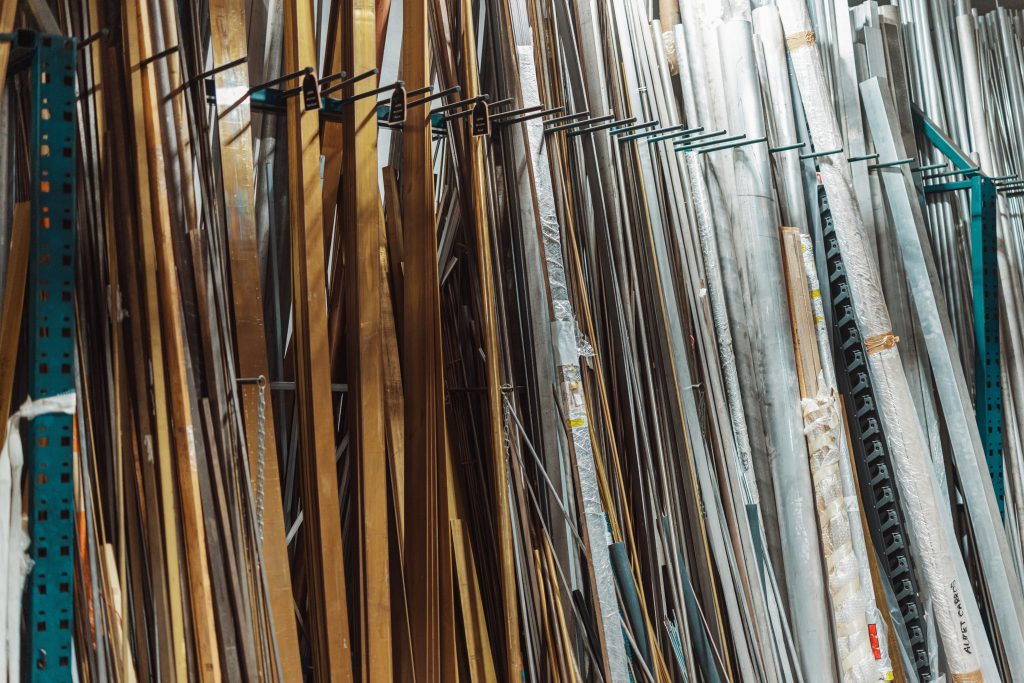
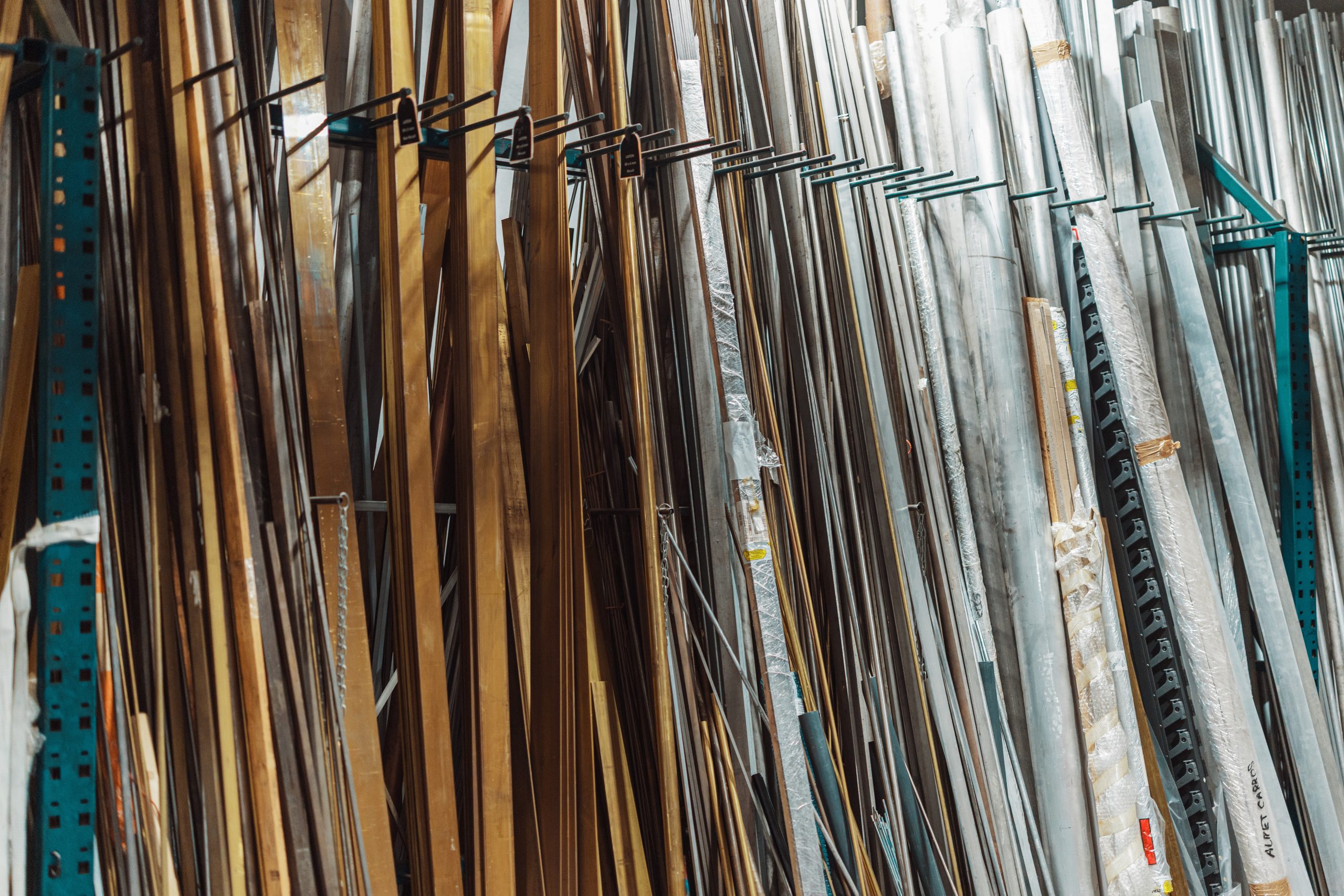
The brass comes from Italy. France has had virtually no domestic producers of the material for around forty years. Italy, by contrast, has a thriving brass industry, sustained in particular by its manufacturers of taps and fittings, whose products are made predominantly from the metal.
Around twenty tonnes of brass pass through the L’Escarène workshop every year, arriving in bars that are then cut and machined to size.
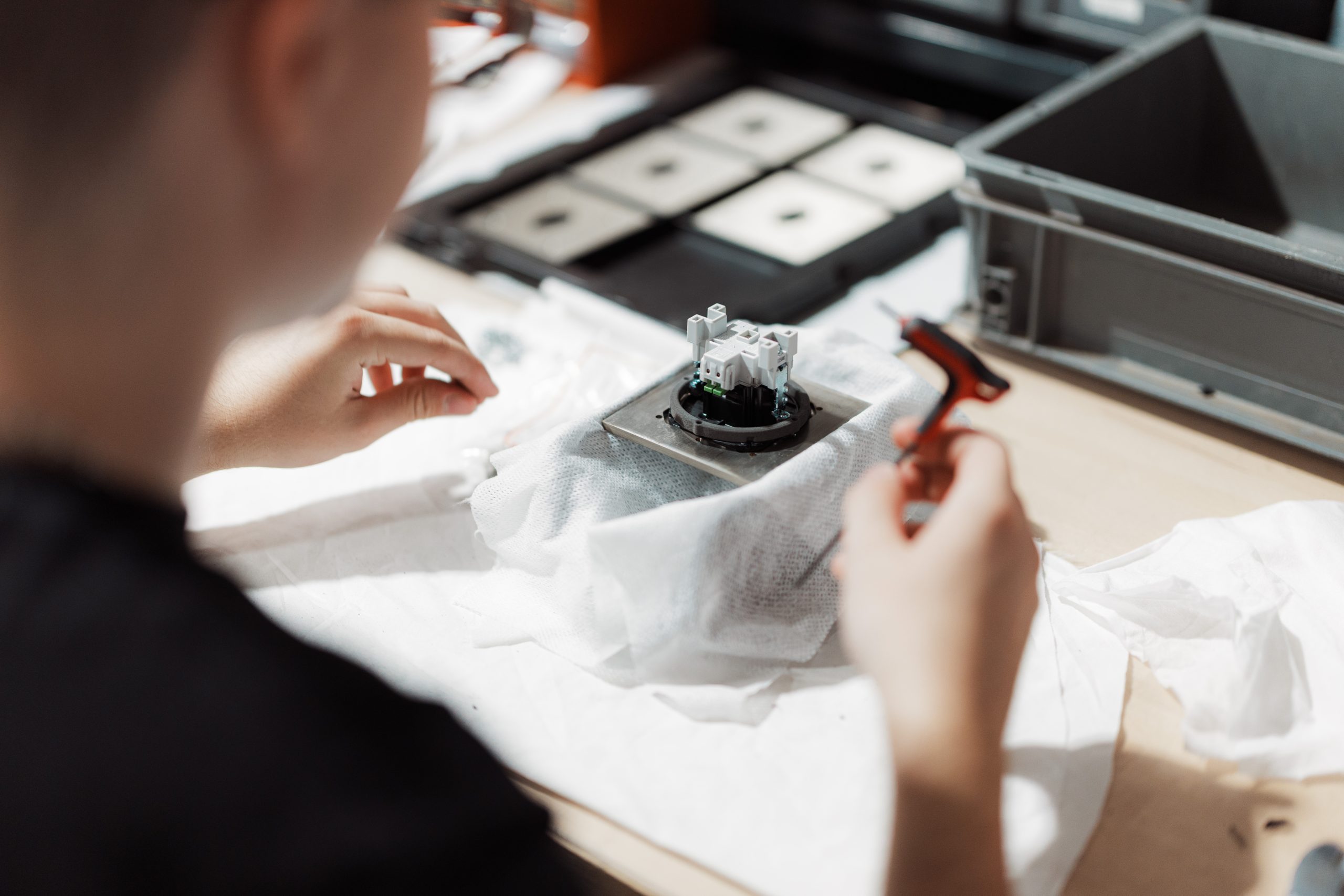
Two machines handle the entire production of the fittings. One is a robot acquired to meet the demanding deadlines of the Mareterra development in Monaco. It can run entirely unattended from Friday evening until Monday morning, producing the thousands of components required across ten construction sites. Once the parts are ready, they are sent for surface treatment.
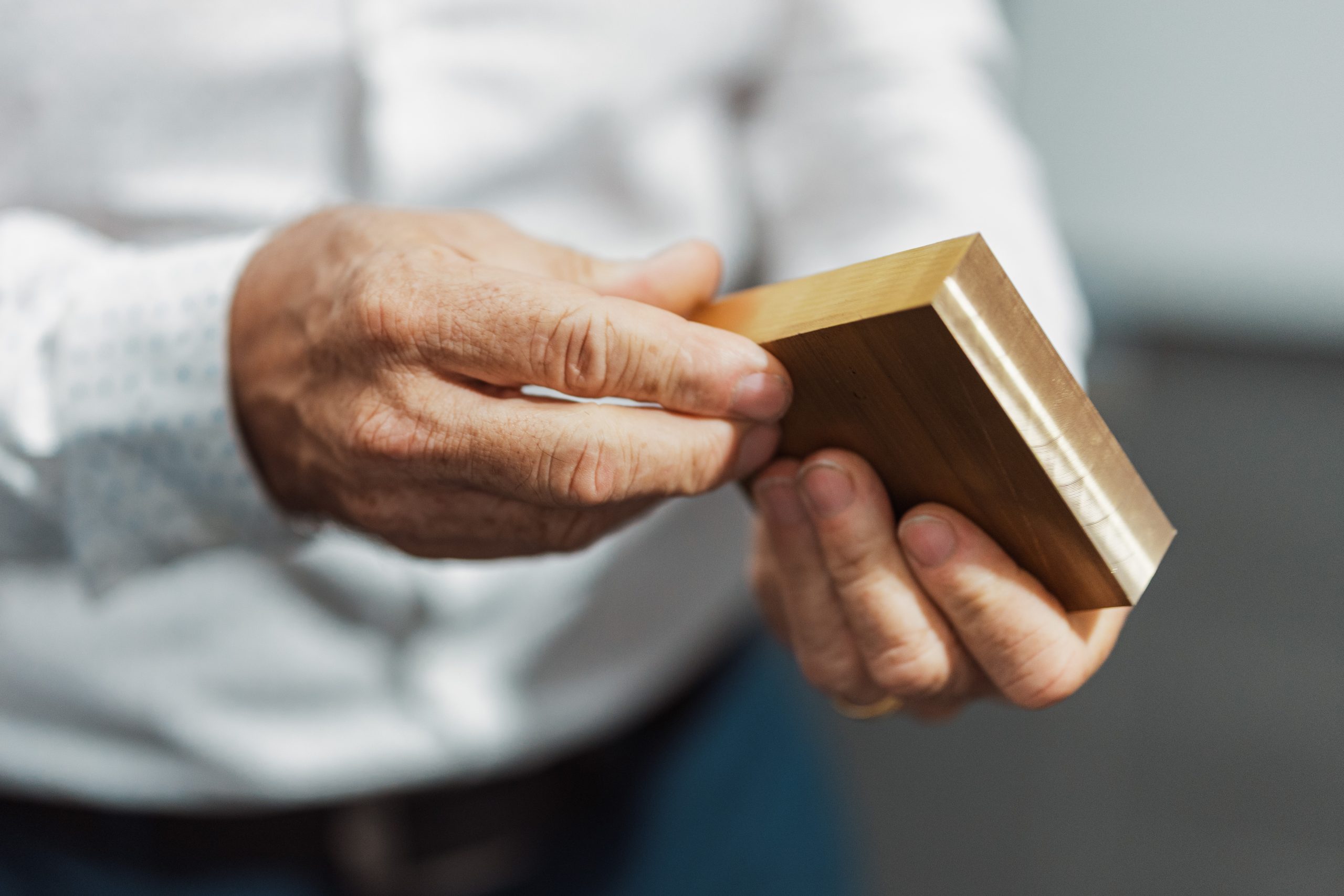
Much of the remaining work is bespoke. One Swiss client, for example, requires custom fixings and connection standards that cannot be used for other customers. Another commissioned a thermostat housing machined from a solid block of brass, designed to conceal the standard white plastic casing supplied by air-conditioning manufacturers, which would otherwise stand out in the middle of a room.
Brass is no arbitrary choice. It develops a beautiful patina over time, ages gracefully and, importantly, can be repaired.
At Maison ORSTEEL, bespoke projects begin in the design office, deliberately located alongside the production planning department. The arrangement allows designers and production teams to work closely together, resolving technical constraints before they become problems.
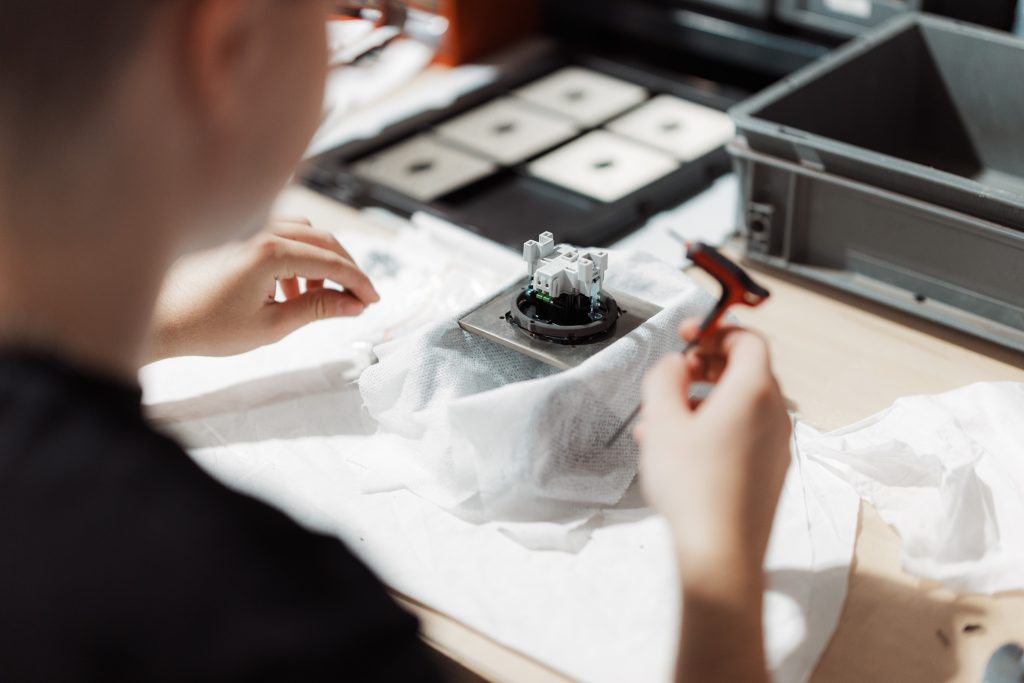
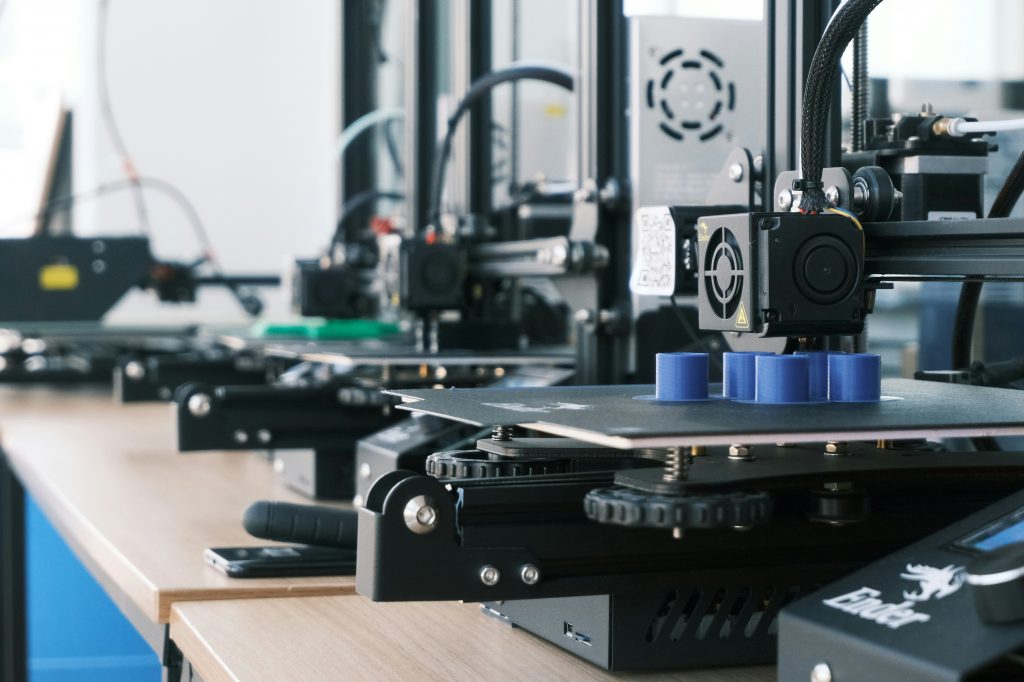
A fleet of 3D printers, using both powder-based and filament technologies, produces initial prototypes and small production runs. These include waterproof housings and technical components, manufactured in batches of twenty without the need for costly moulds.
But the printers also bring more decorative creations to life: a brass passion flower suspended from an almost invisible wire beneath a conservatory; an agapanthus with resin-printed flower stems; and a bird of paradise whose amber-coloured bloom envelops the light source.
“Take a terrace without plants, then add those same plants, and it is no longer the same terrace,” explains Sébastien Tuticci, an associate director of the group. He joined the company as an intern during his BTS technical studies and is now a shareholder.
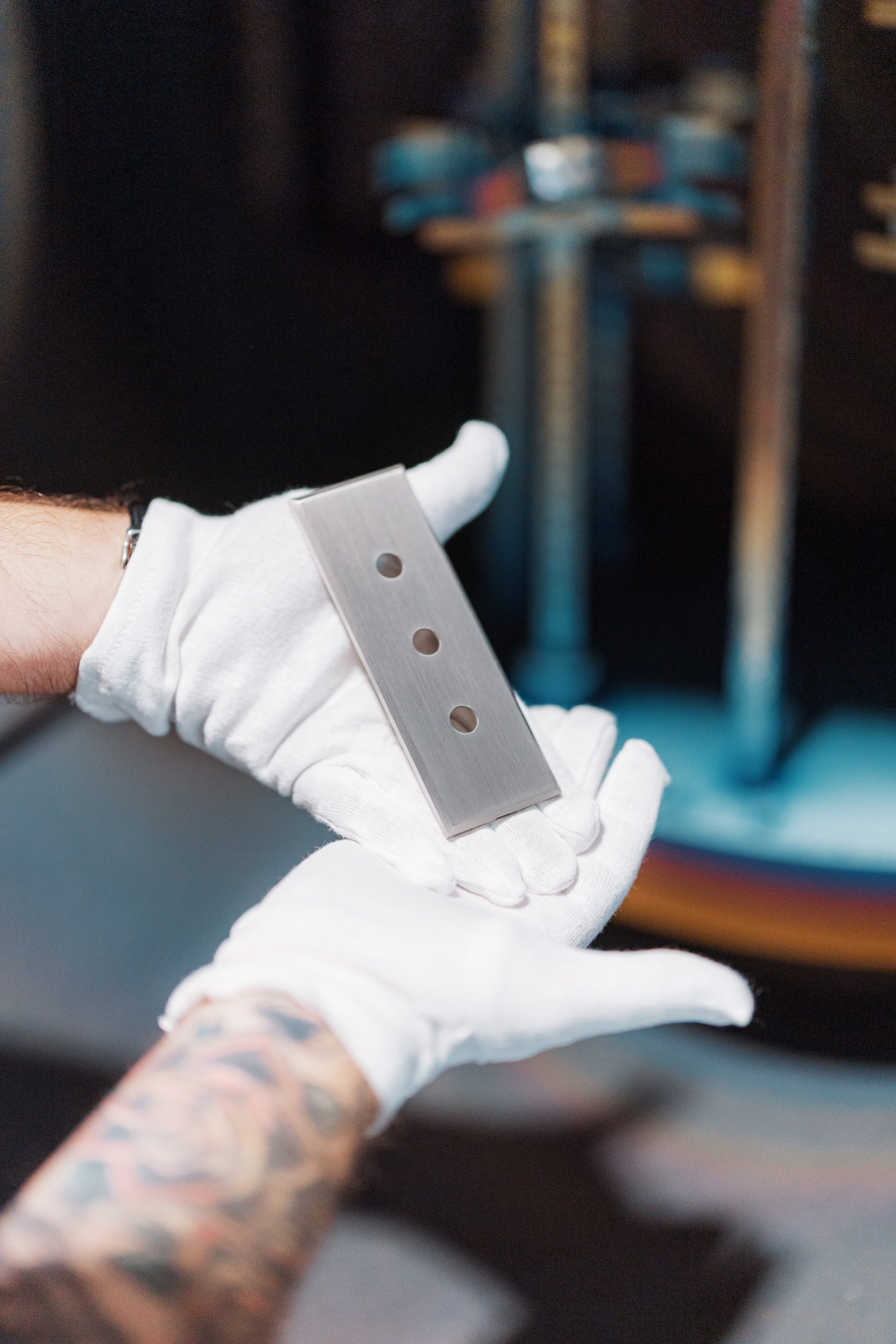
The guiding philosophy can be summed up in three everyday gestures: grasping a door handle, pressing a light switch and turning on a light fitting. In each case, the finish should be exactly the same.
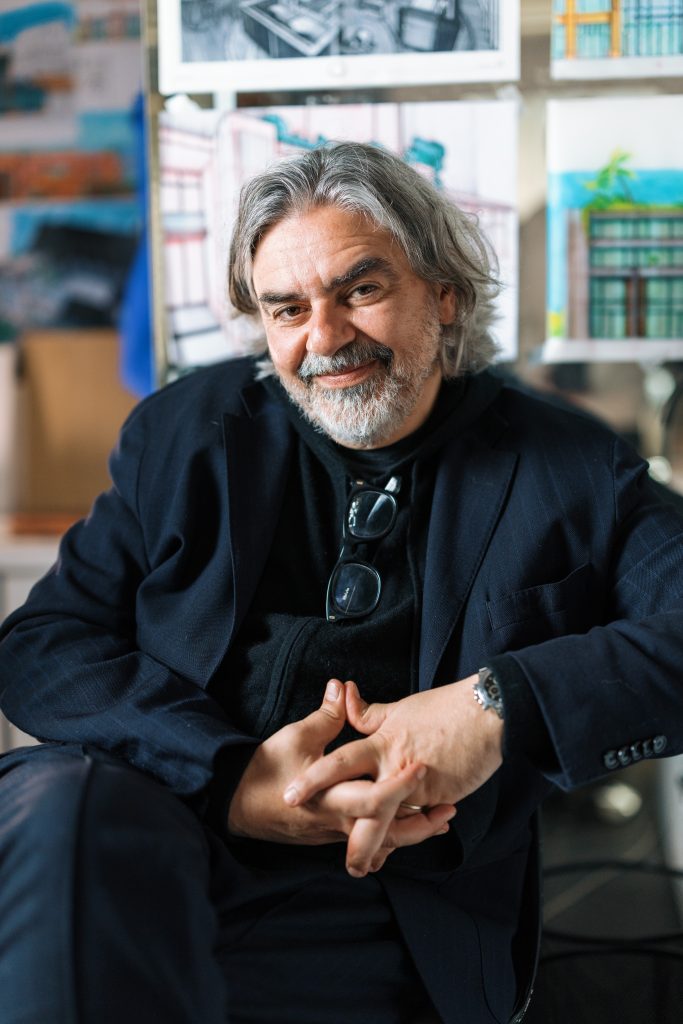
Joe Aoun, founder and chairman of JA Architecture, has been working with the company for several years, initially on lighting, then on electrical fittings, and more recently on door handles and bathroom accessories.
“They have managed to achieve consistent finishes across light fittings and switches, which is extremely important in our projects,” the architect explains.
His teams have become accustomed to bringing their most ambitious ideas to L’Escarène: unprecedented diameters, patterns that do not yet exist and finishes developed for a single project. “We push each other to go further.”

WeAreKollectors Magazine
There is not a single machine on the finishing floor. Instead, the work is carried out across three successive areas.
The first gives the metal its texture: brushed, satin or sandblasted, each finish is applied by hand.
The second involves ageing the brass in an oxidation bath. Just a few seconds can be enough to give a newly made piece the appearance of fifteen years of ageing. It is the craftsperson’s trained eye that determines precisely when to stop the process.
The building itself tells the story of this transformation. Perched on a hillside, far removed from the industrial estates where manufacturers typically set up shop, the factory is surrounded by solar panels which, according to the company, meet nearly 70 per cent of the site’s energy needs.
Yet Daniel Sfecci resisted the idea of building new premises for thirty years. When bankers advised him to invest in property as a way of securing his retirement, his response was that a building does not make a company more competitive. A new machine or a well-trained employee does. It was his sons who eventually persuaded him that the building could serve as a production facility. Since the company moved there in 2023, production times have been cut in half.
Adrien and Arnaud now run the SFECCI Group, which brings together Maison ORSTEEL, ECLAIX and Madame STEEL, and employs forty-five people. Their father, Daniel, now sixty-six, remains closely involved, offering his experience and support.
He could have sold the business, taken the money and walked away. But his involvement in professional organisations, including trade unions and chambers of commerce, has given him a different perspective. “When you sell a company, its intangible assets don’t appear on the balance sheet,” he explains. The expertise, the commitment of the teams and the technical solutions developed over the years are nowhere to be found in the accounts, yet they are precisely what keep a business alive.
Rather than talking about ‘reindustrialisation’, he prefers the term ‘sovereignty’: the ability to produce things that are important, necessary and beautiful. “We are a country that has created so many wonderful things. Why shouldn’t we carry on?”
From his father’s machining shop to precision turning, then a bet on LED lighting
Passing the baton to his sons, and building a new production facility to last
His advice to owners: prepare successors and value know-how, not just the balance sheet
ISO certification, mutual concession, and a new dialogue with architects and specifiers
A tourism-driven region where industry had to fight for its visibility
A dare taken up down to the last component, to prove what France can make
Février, 2026
Créer avec l’existant, penser avec l’histoire
De l’architecture au design, cette édition explore comment lieux, savoir-faire et matières héritées deviennent terrains de création actuelle.
Janvier, 2026
Le luxe se réinvente.
Finis les logos clignotants, place à une sobriété raffinée, à l’immersion personnelle, à l’excellence artisanale, à la durabilité sensible.
Décembre, 2025
Héritages, gestes contemporains et plaisirs essentiels
Parce que la fête n’est jamais qu’apparence : elle reflète notre manière d’habiter le monde, de transmettre, de fabriquer des souvenirs durables.
ÉDITION #3
Upcycling et kintsugi transforment l’objet contemporain, faisant de la trace, de la réparation et de la matière un langage esthétique.
ÉDITION #3
Artisans et designers donnent une seconde vie aux matériaux anciens, entre création contemporaine, patrimoine et réemploi.
ÉDITION #3
Bunkers, wagons et kiosques renaissent grâce à la création, révélant comment l’art redonne sens aux lieux délaissés.
ÉDITION #2
Un regard transversal sur le quiet luxury à travers des lieux, des objets et des figures qui expriment l’élégance.
ÉDITION #1
Une sélection de marques, architectures, objets et escapades qui donnent corps au sens de la fête.
ÉDITION #3
Usines et gares délaissées deviennent lieux culturels ouverts, où mémoire industrielle et usages contemporains redessinent la ville.
ÉDITION #3
L’audacieuse métamorphose d’un palace parisien
ÉDITION #3
Au cœur du Marais, un lieu discret révèle comment archives, architecture et recherche font dialoguer l’œuvre de Picasso.
ÉDITION #2
Une expérience shopping unique dans un magasin emblématique.
ÉDITION #2
Voyage culinaire et architectural au cœur de la Seine
ÉDITION #2
Dans le 9e arrondissement, un établissement qui invite au quiet luxury
ÉDITION #1
Chante! vient d’ouvrir ses portes. Une invitation à vibrer !
ÉDITION #3
Icône du paysage français, la boîte jaune change de statut et s’invite dans l’univers du design.
ÉDITION #3
L’édition 2026 affirme une vision où artisanat, design et mémoire façonnent l’habitat contemporain, international actuel.
ÉDITION #3
Cent ans après 1925, l’Art déco revient dans nos villes et intérieurs avec géométrie, audace, optimisme.
ÉDITION #3
Depuis plus de deux cents ans, Royal Limoges conjugue porcelaine, savoir-faire industriel et création contemporaine.
ÉDITION #3
Des terrains de sport aux podiums, la sneaker raconte un siècle de mutations culturelles, techniques et stylistiques.
ÉDITION #2
Design, mode, artisanat : des créations où la forme et la matière se répondent avec justesse, loin de tout effet de mode.
ÉDITION #1
Décorations artisanales, calendriers ultra-luxe et pièces de collection pour s’enivrer de joie avant l’heure.
ÉDITION #3
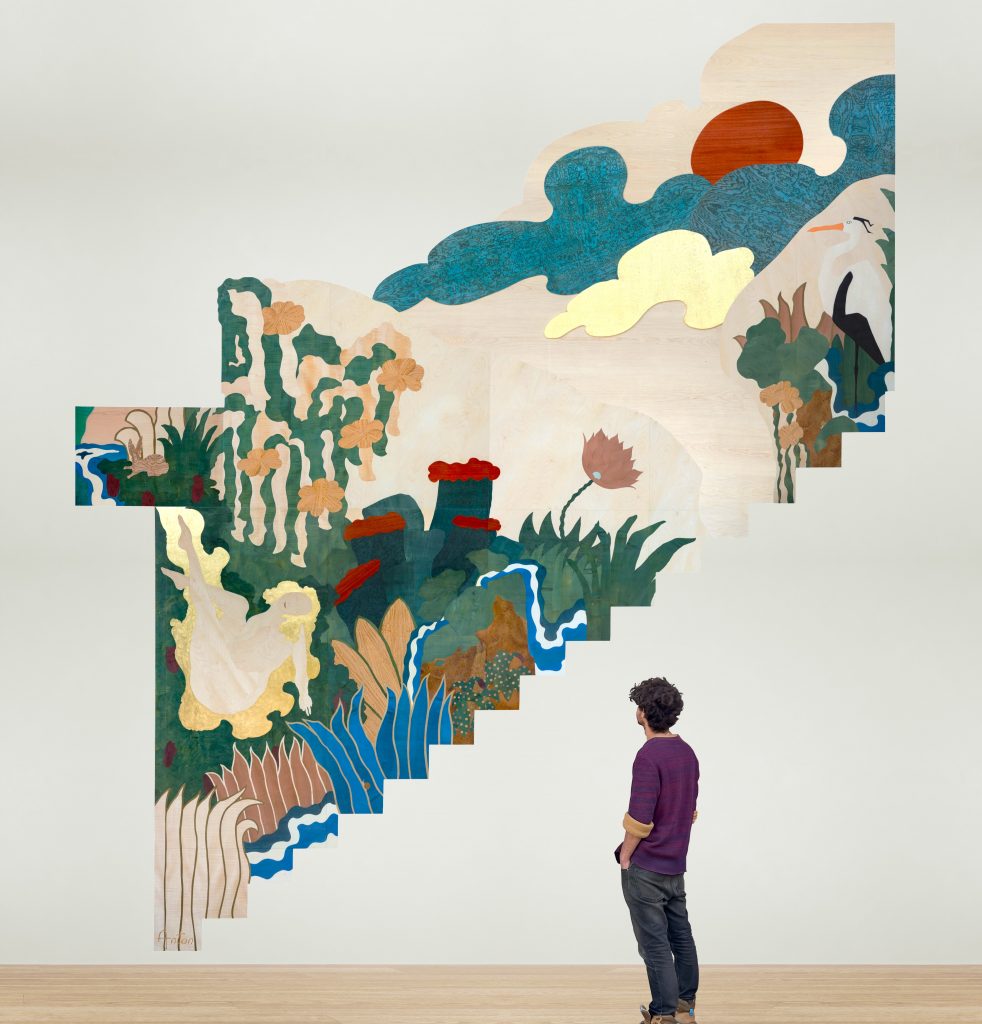
Entre marqueterie monumentale et jungle symbolique, Anton Laborde transforme le bois en récit contemporain poétique engagé.
ÉDITION #3
À Maison & Objet, Thierry Laudren présente des meubles sculptés où fonction, matière et lenteur façonnent une présence.
ÉDITION #3
Jean Nouvel conçoit une architecture attentive aux contextes, où lumière, histoire et usages façonnent chaque projet.
ÉDITION #3
À Lyon, Sophie Morel rénove des lieux historiques en alliant respect du bâti et écriture contemporaine.
ÉDITION #3
Au Centre d’Études Picasso, l’architecte compose une architecture où lumière, géométrie et héritage dialoguent avec précision.
ÉDITION #2
Entretien avec le fondateur d’EDO (European Design Office)
ÉDITION #2
Portrait d’un visionnaire qui transforme l’art de recevoir en expérience totale.
ÉDITION #1
Personnalités, artisans et créateurs qui donnent à la fête sa profondeur humaine.
ÉDITION #3
De Bordeaux au Bassin, art, vignobles et bien-être composent une échappée élégante au cœur de la Gironde.
ÉDITION #2
Vers une région de l’Italie habitée par le temps, où paysages, culture et usages s’accordent dans une continuité rare.
ÉDITION #1
Destinations et rituels qui réinventent la fête, du soleil tropical aux marchés d’hiver.