Noé Duchaufour-Lawrance, le design à l'échelle d'un territoire

Noé Duchaufour-Lawrance: design on a regional scale

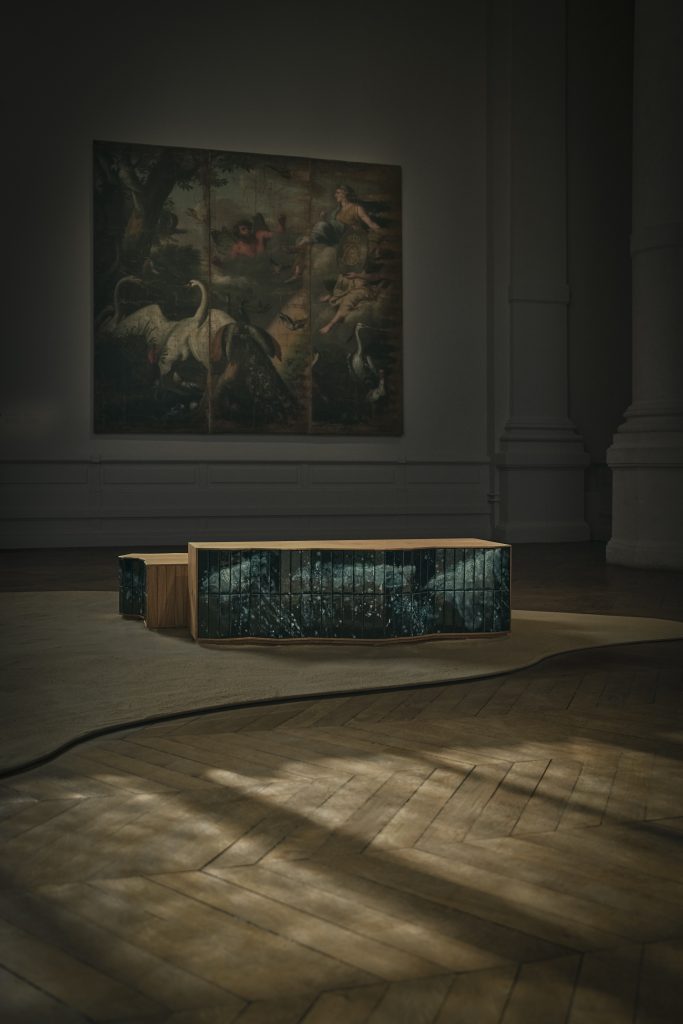
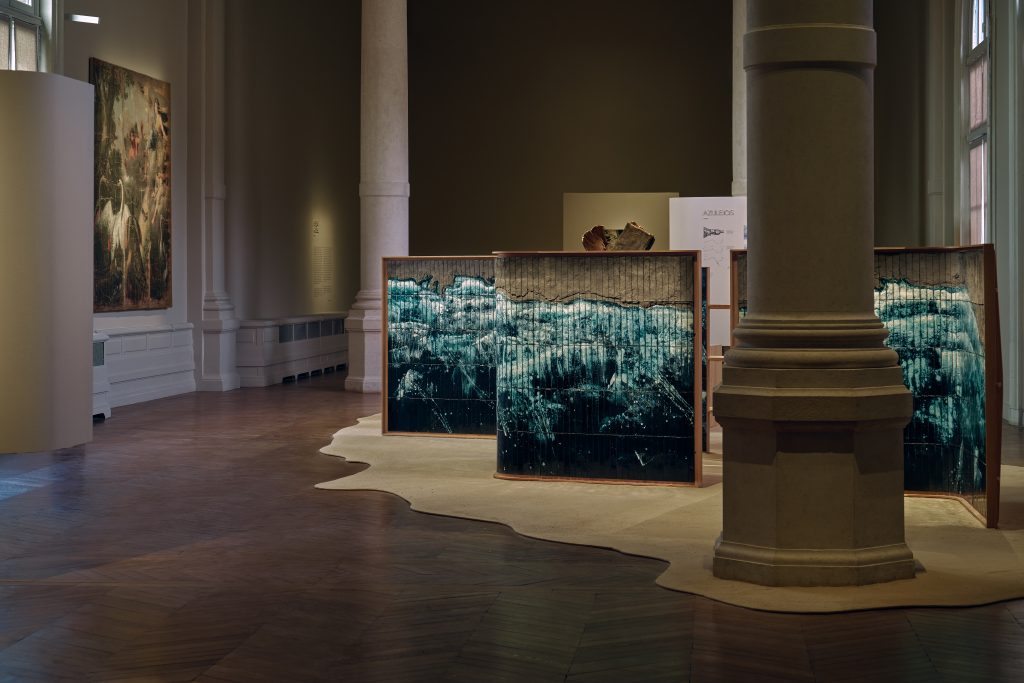
Across three panels of azulejos in deep blue-green hues, a line runs from north to south. It begins in Plougasnou, in Morlaix Bay, and ends in Lisbon. It traces the Atlantic coastline, but also a personal geography: that of Noé Duchaufour-Lawrance, from his childhood in Brittany to his life in Portugal, where he settled in 2017 and developed Made in Situ, a long-term design project inspired by the regions, materials and craftspeople that shape them. “If I had to choose one place to hold dear in my memory, it would be Brittany.”

Photo: Noé Duchaufour-Lawrance; Mobilier National – © Paul Louda

The design is rendered in enamel and fired at Viúva Lamego, a Lisbon-based factory founded in 1849. On these terracotta tiles, the colours only emerge during the second firing. The result does not always follow the original design: the material has a life of its own, and the designer must learn to work with the unexpected. Duchaufour-Lawrance embraces this element of letting go. Set a direction, then allow places, encounters and materials to change the course: this is an approach that now runs through his work.

In the same collection, the Memory Islands take the form of a series of small furniture pieces, each associated with a particular memory of the Atlantic. Stretching from Brittany to Lisbon, the line connects two home ports and two moments in a life. To understand the story it tells, we must travel up the coast.

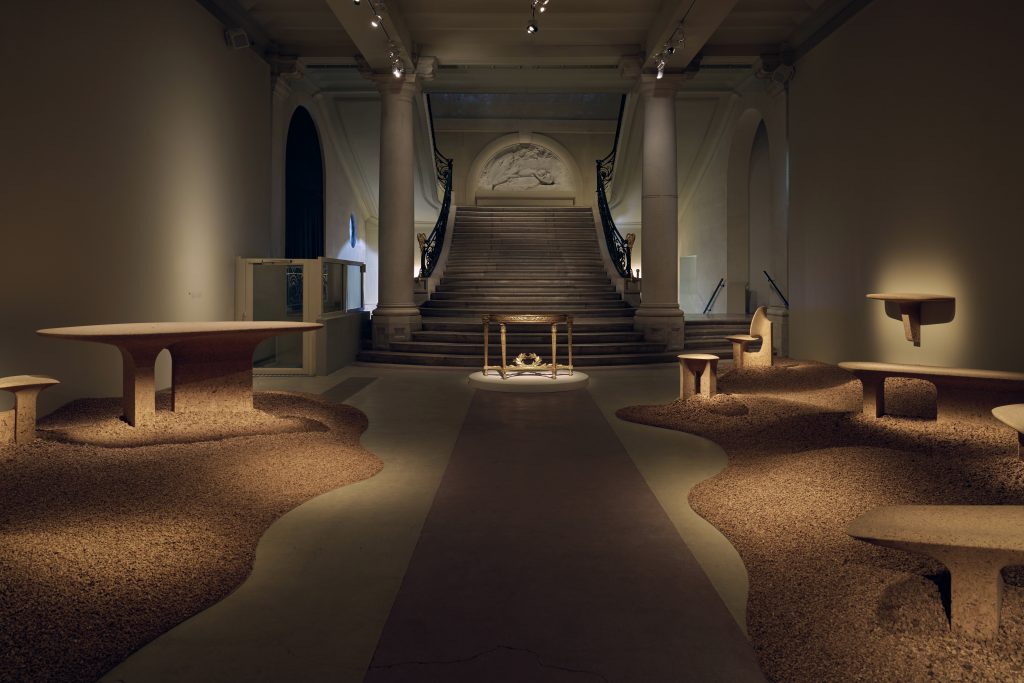
*Made in Situ*, Mobilier National - © Benjamin Colombel

Made in Situ, Mobilier National – © Benjamin Colombel

Growing up in Brittany

*Made in Situ*, Mobilier National - © Benjamin Colombel

Made in Situ, Mobilier National – © Benjamin Colombel

The northernmost point of this journey is a hamlet near Plougasnou, right by the water. Noé Duchaufour-Lawrance arrived there at the age of six, with his mother, a painter trained at the Beaux-Arts, and his English stepfather. He stayed until he was eighteen. “Here, the rain sometimes falls horizontally, but you have to go out anyway.” An only child, he spent his days cycling and playing with Lego. Time seemed to pass slowly. Looking back, he sees that boredom as formative: it forced him to invent stories and find his own ways of escaping.

Brittany is also about its people. He remembers reserved, understated characters, with a quietly mischievous streak, and families of sailors who travelled the world as explorers, driven by curiosity rather than any desire for conquest. Having arrived from Paris, he needed time to feel accepted. “Being Breton,” he says, in essence, “is something you have to earn.”

From his childhood and upbringing, the designer retains a strong sense of independence and a desire to forge his own path. Brittany remains one of the places that shaped him. Yet another, even older landscape also lives within him.

An upbringing shaped by art and sculpture

Caretos Stools ; © Matilde Travassos

Caretos Stools; © Matilde Travassos

Before Brittany came Lozère and Aveyron, and a house without running water or electricity where he spent his first year. His father, a sculptor, had decided to renovate it in the spirit of the post-1968 movement. He died when his son was just eighteen months old. A few of his works remained, which the young boy would gaze at intently. With no real memories of his father, he began to imagine and idealise him.

Working with his hands gradually became central to his life. His interest in design emerged more unexpectedly: first, around the age of thirteen, through a 3 Suisses catalogue featuring designs by Philippe Starck. Then came an article, brought home by his stepfather, about a designer who described himself as an artist and sculptor before calling himself a designer. The revelation was immediate: here was a profession that could encompass everything, from works of art to everyday objects. By the age of fourteen, he had made up his mind. He would first learn about materials by working with them, then move on to design.

He spent two years studying metal sculpture at the École Olivier de Serres. His priority was to understand the material through direct experience: to test its strength, discover what it could do and learn where its limits lay. He then moved on to the École des Arts Décoratifs, where he focused on furniture design.

This hands-on understanding of materials has remained central to his work ever since.

The thrill of grand interiors

Scenography - Coa-1; ©Nuno Sousa Dias

Scenography – Coa-1; © Nuno Sousa Dias

His career also began with an unexpected detour. While still a student, Noé Duchaufour-Lawrance spent a year in Morocco, living in a fisherman’s hut south of Rabat. A Parisian interior designer came across his drawings there and invited him to join a project in London: Sketch. When the architect and his client went their separate ways, the venue’s owner, Mourad Mazouz, entrusted the rest of the project to the young designer, who learned interior design on the job. The restaurant won awards in London in 2002 and 2003, putting his name on the map.

Other projects followed: Senderens in Paris, which helped establish his signature style; the Air France lounges; the La Transhumance chalet; the Montblanc boutiques; and collaborations with Ceccotti Collezioni, Bernhardt Design, Ligne Roset, Hermès and Saint-Louis. Projects came thick and fast, and commissions kept piling up. Success was undeniable, but so was a growing sense of vertigo.

Torn between two possible paths – developing his own practice as a designer or running an agency – Noé Duchaufour-Lawrance gradually began to feel out of step with his surroundings. He felt as though he were living in a bubble, increasingly disconnected from the tangible, everyday reality he associated with his childhood and his parents’ lives. Paris remains a city he loves, but he needed to take a step back and reconnect more directly with the world around him.

The idea of a design practice rooted in a particular region had been taking shape for some time. He thought of chefs who cook with ingredients grown locally: starting with what is available, understanding the resources at hand and working alongside those who know them best. The decision itself took just one day. Six months later, he left Paris for Portugal, ready to devote himself to furniture design.

The ocean played a part in his choice, as did kitesurfing, which offered him a welcome escape. He was also drawn by the diversity of Portugal’s landscapes and its traditional crafts, all within easy reach by road: stonework, textiles and basketry. Leaving Paris was, above all, a way of changing perspective and gaining some distance.

A country ravaged by fire

Burnt Cork, Made in Situ; © Nuno Sousa Dias

He arrived in the summer of 2017, during a period of devastating wildfires. Driving across the country, Noé Duchaufour-Lawrance passed through landscapes engulfed in flames, followed by vast stretches of scorched land. He remembers the experience as both painful and deeply striking, confronting him with a force that seemed beyond human control. He immediately sensed that this experience would one day find its way into his work.

Later, in a workshop producing cork blocks, he came across a pile of charred cork. This became the starting point for Burnt Cork: an exploration of burnt material, often discarded by the industry, and its potential for a new life. Each piece combines unburnt and charred particles, bringing together the memory of a wounded landscape and a fresh perspective on overlooked resources.

This connection between a material and the story behind it lies at the heart of Made in Situ. Conceived independently, without a commission or a predefined brief, the project takes shape through encounters, observation and time spent on the ground.

Listen first

*Made in Situ*; Noé Duchaufour-Lawrance - Mobilier National; ©Benjamin Colombel

Made in Situ; Noé Duchaufour-Lawrance – Mobilier National; © Benjamin Colombel

Made in Situ brings together a small team of designers, graphic designers and photographers. Its guiding principle is a demanding one: every piece must tell the story of a place, a craftsperson or a material. Beyond the beauty of a form or the interest of a particular technique, Noé Duchaufour-Lawrance is looking for the right balance between all three.

An early project, centred on a woven plant fibre, never progressed beyond the experimental stage. Unable to find a story that felt sufficiently authentic, the designer decided to abandon it. The decision reveals much about his approach: understanding the context always comes before designing the object.

The first successful project took shape around the fire in Molelos, a pottery village in the Tondela region. Local potters practise soenga, a communal firing process carried out in an open hearth. It gives the pottery its distinctive black colour and brings the village together. Convincing Xana Monteiro and Carlos Lima to organise a soenga for Made in Situ took time. The shared firing eventually gave rise to Barro Negro, a collection of twelve vases that can be arranged together, in a circle or in a line.

“The design comes later,” he explains. “First comes the encounter, listening, taking the time to understand how things work.” Each project develops in close collaboration with the craftspeople, drawing on their techniques and expertise. Every collection opens a new chapter, taking the team from one region to another and finding its own expression in its surroundings.

Beyond the object

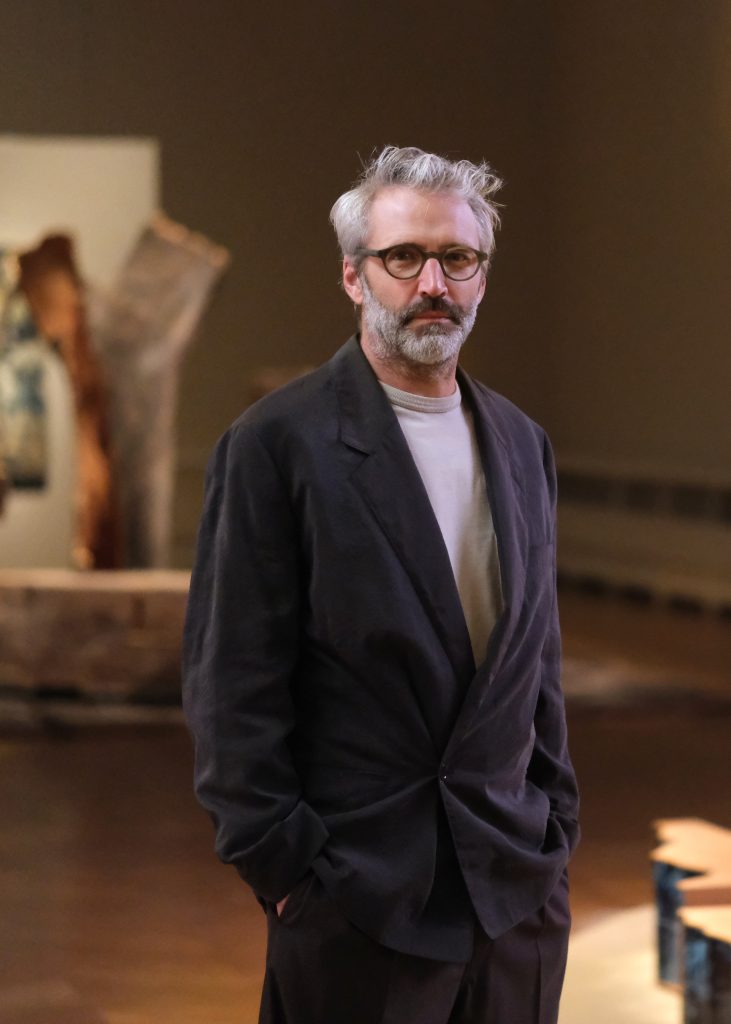
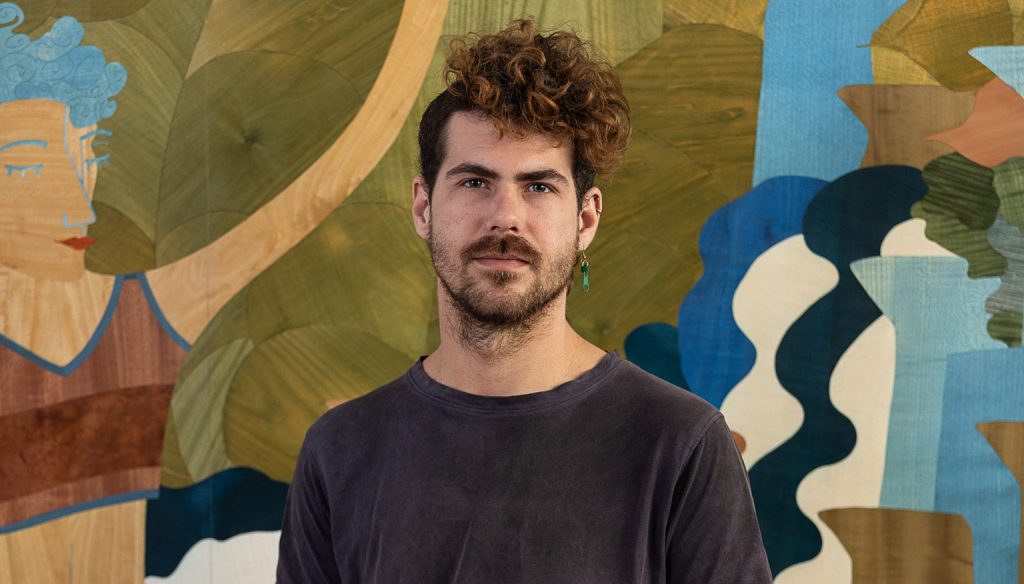
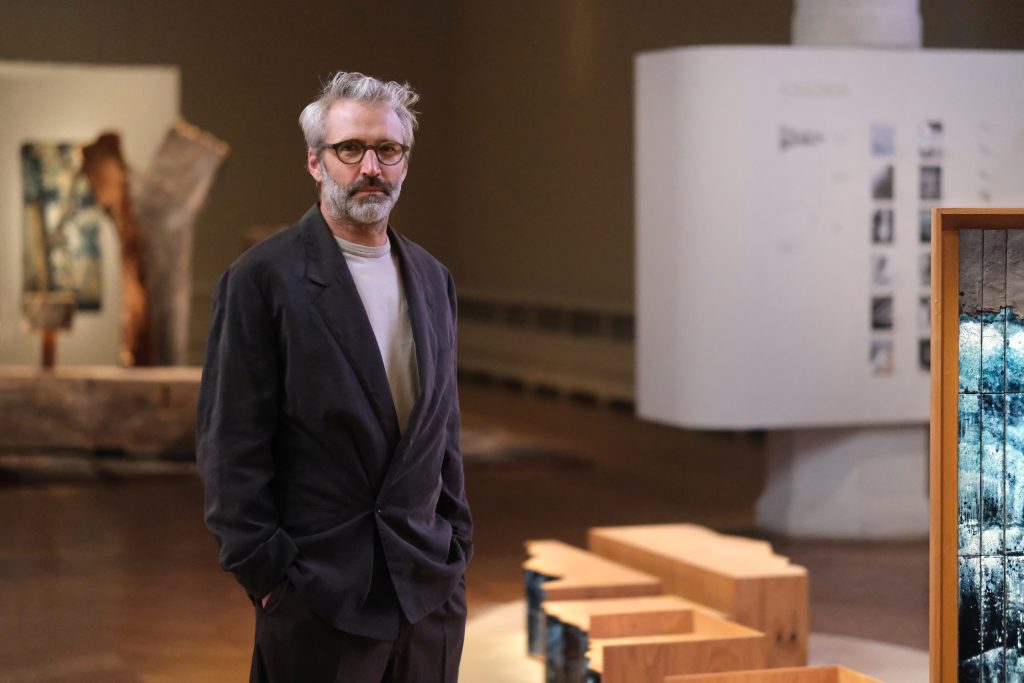
Noé Duchaufour-Lawrance; Mobilier National; ©Paul Louda

Noé Duchaufour-Lawrance; Mobilier National; © Paul Louda

A piece of furniture alone tells us little about the journey that brought it into being. To carry the story further, each collection is accompanied by a film, conceived as a kind of sensory documentary. Landscapes, gestures, faces and materials find another way of expressing themselves on screen.

Other disciplines also come into play. Perfumer Daphné Bugey has captured the scent of soenga, while Portuguese musician Luís Clara Gomes, known as Moullinex, has been involved in the project from the very beginning. Noé Duchaufour-Lawrance enjoys bringing different perspectives into the process, allowing design to share the spotlight with other creative disciplines. These collaborations reveal what the objects themselves cannot express: an atmosphere, a sensation, a memory.

In Lisbon, the Made in Situ gallery extends this approach. For him, it is first and foremost a place to present and experiment. The craftspeople involved in the projects can meet there, while dinners and other gatherings create opportunities to share the work in ways that go beyond furniture.

Here, design becomes, in his words, “a tool for building relationships as much as an exercise in creation”: a way to bring people together, tell the story of a region and share an experience.

The line remains open

Seven collections have now been created: six in Portugal and one in the Massif des Maures, centred on the cork oak. In 2026, the Made in Situ exhibition at the Galerie des Gobelins, part of the Mobilier National, brought the entire project together for the first time, including collections never previously shown in France. That same year, Noé Duchaufour-Lawrance was appointed a Knight of the Order of Arts and Letters.
The distinction came as a surprise. He was receiving this recognition in France after having chosen to leave the country and explore other territories. Above all, he sees it as an opportunity to preserve his freedom, continue working in his own way and have his work recognised.

His advice to young designers is to take risks, follow their deepest instincts and open doors, even those others insist are closed. He offers this advice with humility: his own journey has been guided by spontaneity and self-reflection. Over time, he has also learned to slow down and understand before acting.

The future of Made in Situ is still taking shape. He dreams of a place where territory, craftsmanship, materials, gastronomy and hospitality can come together – perhaps a space devoted to welcoming people. Portugal has become a country to which he feels deeply attached, while Brittany might one day become his home base again. For now, that question remains open.

On the Azulejos triptych, the line connects Plougasnou to Lisbon. It traces a provisional geography, open to new encounters, materials and landscapes. “I love the freedom that movement brings. Being somewhere, and knowing that one day I’ll be able to leave again.”

Continue exploring

Adrien Jaminet, maker of French-style trumpets
Helena Rubinstein, an avant-garde collector
Régis Mathieu: a life in the glow of chandeliers
Georgine Glaenzer, fashion designer and feather artist
Atelier blam: collective intelligence and the genius of possibilities
A conversation with Sarah Poniatowski (Maison Sarah Lavoine)

Février, 2026

Édition 3 : Patrimoine et création

Créer avec l’existant, penser avec l’histoire

De l’architecture au design, cette édition explore comment lieux, savoir-faire et matières héritées deviennent terrains de création actuelle.

Janvier, 2026

Édition 2 : Quiet luxury

Le luxe se réinvente.

Finis les logos clignotants, place à une sobriété raffinée, à l’immersion personnelle, à l’excellence artisanale, à la durabilité sensible.

Décembre, 2025

Édition 1 : Le sens de la fête

Héritages, gestes contemporains et plaisirs essentiels

Parce que la fête n’est jamais qu’apparence : elle reflète notre manière d’habiter le monde, de transmettre, de fabriquer des souvenirs durables.

ÉDITION #3

Révéler la beauté
‎

Upcycling et kintsugi transforment l’objet contemporain, faisant de la trace, de la réparation et de la matière un langage esthétique.

ÉDITION #3

Les nouveaux artisans du patrimoine

Artisans et designers donnent une seconde vie aux matériaux anciens, entre création contemporaine, patrimoine et réemploi.

ÉDITION #3

L'art à la rescousse des friches et lieux oubliés

Bunkers, wagons et kiosques renaissent grâce à la création, révélant comment l’art redonne sens aux lieux délaissés.

ÉDITION #2

Le murmure du beau
‎

Un regard transversal sur le quiet luxury à travers des lieux, des objets et des figures qui expriment l’élégance.
ÉDITION #1

Lieux, maisons et matières en éclats

Une sélection de marques, architectures, objets et escapades qui donnent corps au sens de la fête.

ÉDITION #3

La création au secours des bâtiments promis à l’oubli

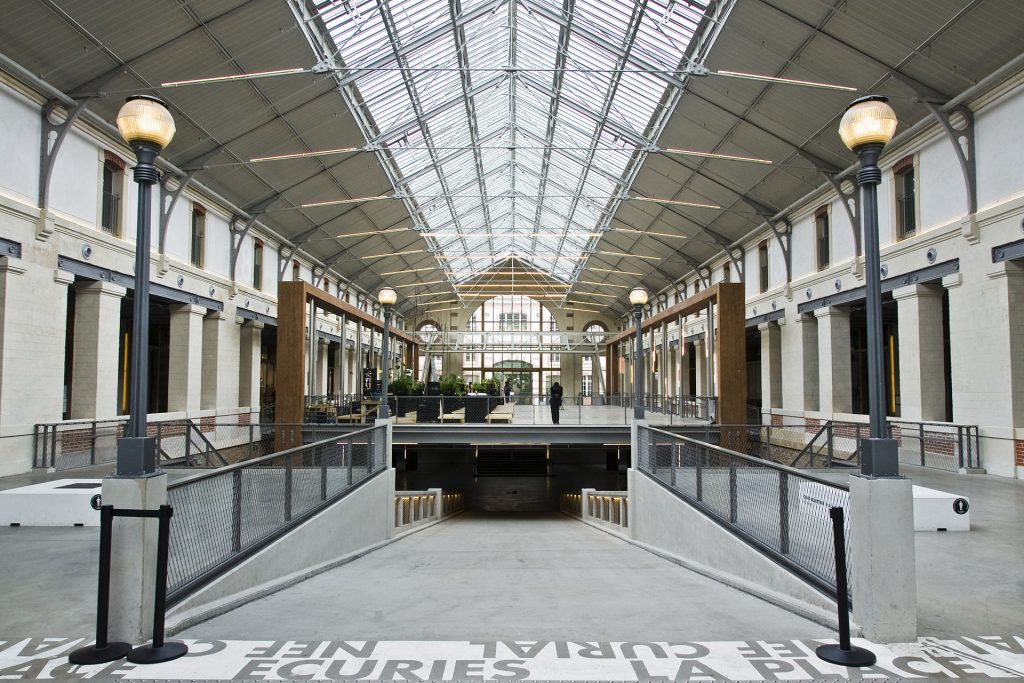
Usines et gares délaissées deviennent lieux culturels ouverts, où mémoire industrielle et usages contemporains redessinent la ville.

ÉDITION #3

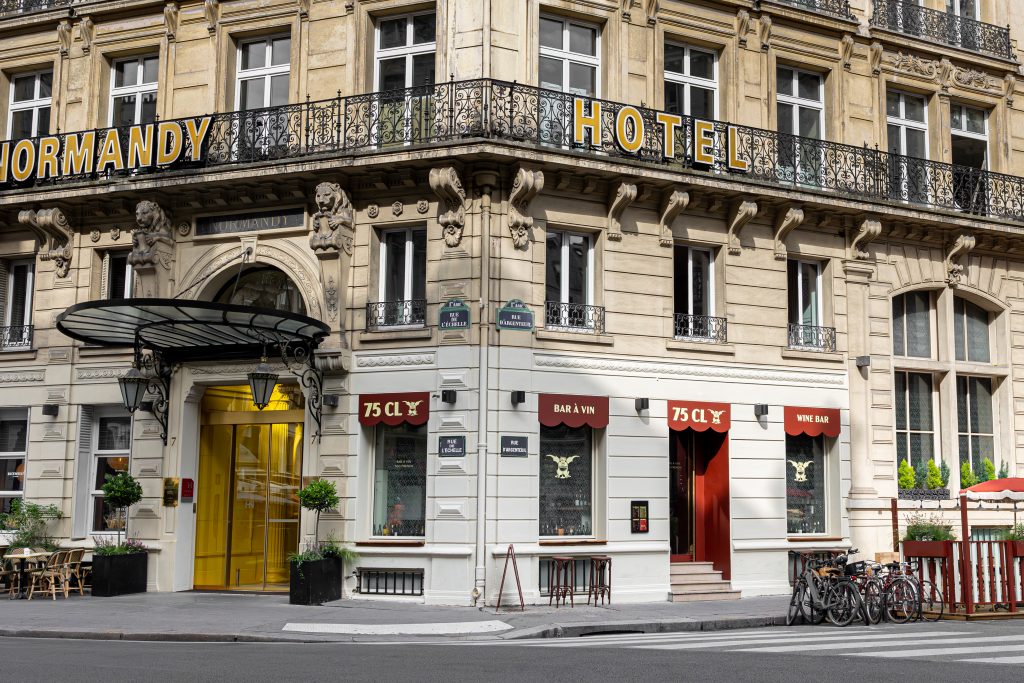
Normandy Hotel Paris Saint-Honoré

L’audacieuse métamorphose d’un palace parisien

ÉDITION #3

Dans les coulisses du Centre d'Études Picasso à Paris

Au cœur du Marais, un lieu discret révèle comment archives, architecture et recherche font dialoguer l’œuvre de Picasso.

ÉDITION #2

Shopping iconique dans un décor Tudor

Une expérience shopping unique dans un magasin emblématique.

ÉDITION #2

Gastronomie et architecture

Voyage culinaire et architectural au cœur de la Seine

ÉDITION #2

L'art de l'hospitalité parisienne

Dans le 9e arrondissement, un établissement qui invite au quiet luxury

ÉDITION #1

Chante!

Chante! vient d’ouvrir ses portes. Une invitation à vibrer !

ÉDITION #3

La boîte aux lettres française devenue objet de design

Icône du paysage français, la boîte jaune change de statut et s’invite dans l’univers du design.

ÉDITION #3

Retour sur Maison&Objet 2026 : retour aux sources et à l’essentiel

L’édition 2026 affirme une vision où artisanat, design et mémoire façonnent l’habitat contemporain, international actuel.

ÉDITION #3

Art Deco: un mouvement centenaire, plus actuel que jamais

Cent ans après 1925, l’Art déco revient dans nos villes et intérieurs avec géométrie, audace, optimisme.

ÉDITION #3

Royal Limoges, deux siècles d’histoire au présent

Depuis plus de deux cents ans, Royal Limoges conjugue porcelaine, savoir-faire industriel et création contemporaine.

ÉDITION #3

Du terrain à la rue et au catwalk : les sneakers à travers les époques

Des terrains de sport aux podiums, la sneaker raconte un siècle de mutations culturelles, techniques et stylistiques.

ÉDITION #2

La formidable aventure du papier peint de luxe

Design, mode, artisanat : des créations où la forme et la matière se répondent avec justesse, loin de tout effet de mode.

ÉDITION #1

Icônes, détails, rituels
‎

Décorations artisanales, calendriers ultra-luxe et pièces de collection pour s’enivrer de joie avant l’heure.

ÉDITION #3

Anton Laborde

Entre marqueterie monumentale et jungle symbolique, Anton Laborde transforme le bois en récit contemporain poétique engagé.

ÉDITION #3

Thierry Laudren

À Maison & Objet, Thierry Laudren présente des meubles sculptés où fonction, matière et lenteur façonnent une présence.
ÉDITION #3

Jean Nouvel

Jean Nouvel conçoit une architecture attentive aux contextes, où lumière, histoire et usages façonnent chaque projet.

ÉDITION #3

Sophie Morel

À Lyon, Sophie Morel rénove des lieux historiques en alliant respect du bâti et écriture contemporaine.
ÉDITION #3

Pascal Grasso

Au Centre d’Études Picasso, l’architecte compose une architecture où lumière, géométrie et héritage dialoguent avec précision.
ÉDITION #2

Alexandre Danan

Entretien avec le fondateur d’EDO (European Design Office)

ÉDITION #2

Aziz Temimi

Portrait d’un visionnaire qui transforme l’art de recevoir en expérience totale.

ÉDITION #1

Visages, gestes, inspirations

Personnalités, artisans et créateurs qui donnent à la fête sa profondeur humaine.

ÉDITION #3

Chemins de traverse : parenthèse d’exception en Bordelais

De Bordeaux au Bassin, art, vignobles et bien-être composent une échappée élégante au cœur de la Gironde.

ÉDITION #2

Voyage en Toscane
‎

Vers une région de l’Italie habitée par le temps, où paysages, culture et usages s’accordent dans une continuité rare.

ÉDITION #1

Horizons, saisons, traditions
‎

Destinations et rituels qui réinventent la fête, du soleil tropical aux marchés d’hiver.

Dates, adresses, invitations

Expositions, événements et repères culturels pour vivre pleinement la saison des fêtes.