The same shade can look very different depending on whether it’s used on a wall, on velvet, or on ceramics. Sarah Poniatowski has been exploring this contrast for twenty years. After studying psychology and theatre, she taught herself interior design and founded her studio in 2002, launching her collections ten years later. In this interview with WeAreKollectors Magazine, she discusses colour, choosing workshops, and creating pieces that stand the test of time. “An interior must remain pleasant on an ordinary Tuesday morning, not just look good in a photograph.”
WeAreKollectors Magazine: You taught yourself interior design despite having studied psychology and theatre, and despite your mother being an interior designer. What did this unconventional path give you that you wouldn’t have found at school?
Sarah Poniatowski: I’d be quite unable to say what I would have found at school. I’m sure I would have learnt a great deal there and perhaps saved some time. But my journey has taught me to seek things out, ask questions and recognise what I don’t know. It forces you to stay curious and to surround yourself with the right people.
I’m joking, because I was fortunate enough to sit on the Penninghen jury this year, chaired by Jean-Luc Colonna. I would have loved to attend that school.
Growing up with an interior designer for a mother, I was immersed in a world where attention was paid to spaces, objects and combinations. This perspective carries over into everyday life almost without you realising it. I then had to find my own way of expressing it.
I see a link between psychology, theatre and my profession: we’re interested in people, their emotions and how they express themselves. When you enter someone’s home, you’re entering their private space. It’s important to listen to what the person says, but you also need to understand what they’re hoping for, even if they can’t always express it. Designing a beautiful space isn’t enough; people need to be able to identify with it and live in it.
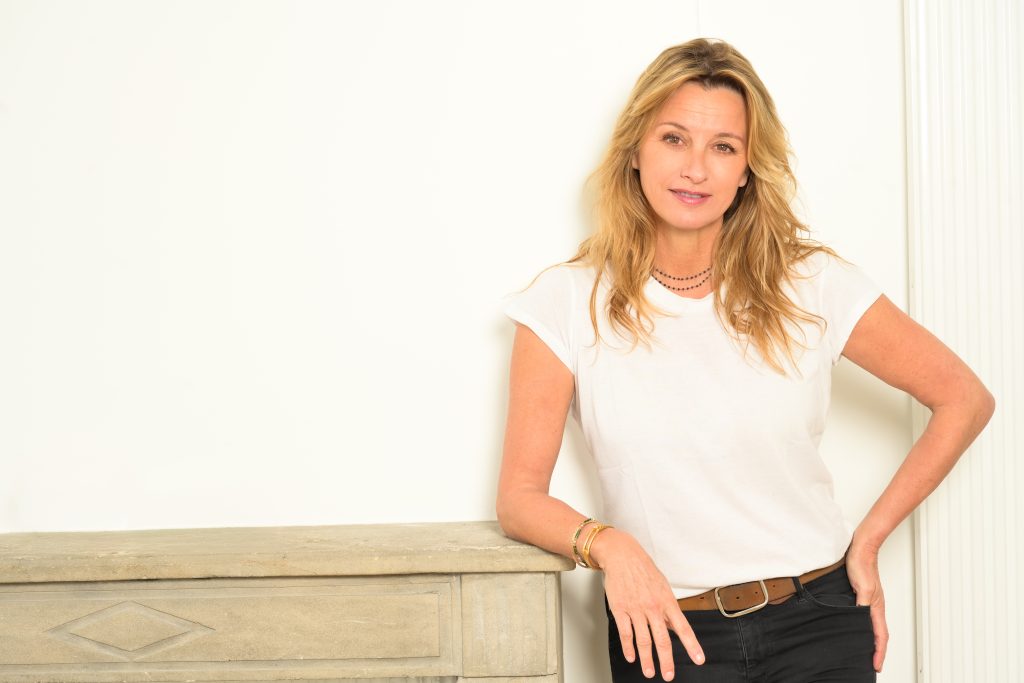
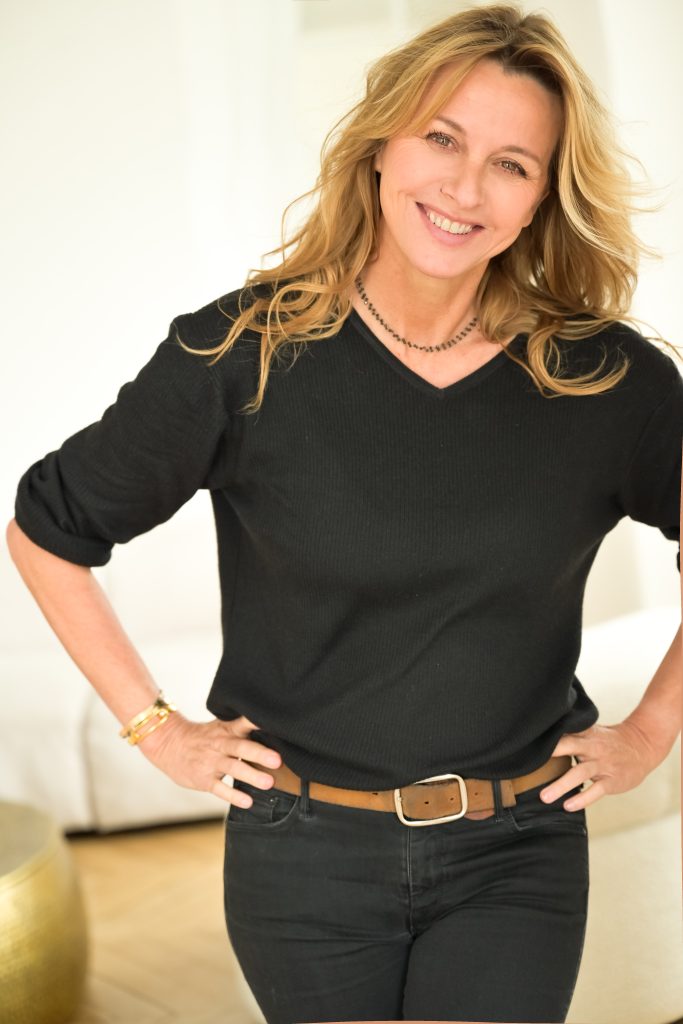
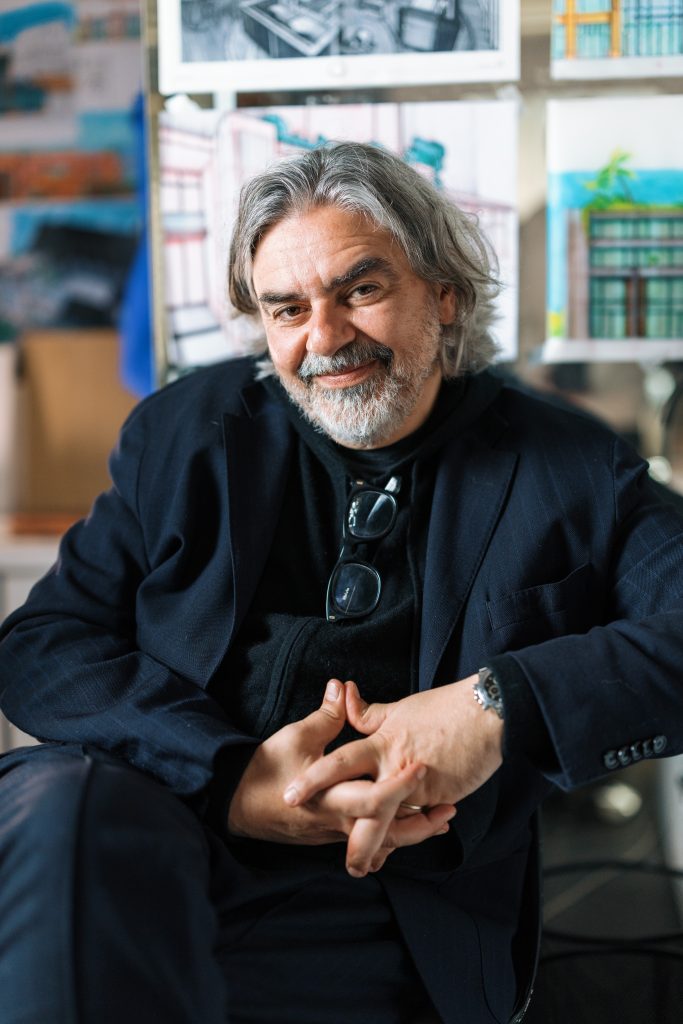
Sarah Poniatowski ; Sandrine Gomez
WAK: Colour is the first thing that makes a home recognisable. Where does a colour originate in your work, and how do you know it’s the right one?
S.P.: It often stems from something that catches my eye. It could be a painting, a landscape or the colour of one item of clothing next to another. I love these unexpected encounters. Some colour combinations energise you, whilst others have a calming effect. It’s that emotion that interests me.
However, there’s a whole process involved between choosing a colour you like and introducing it into a space. You have to consider the light, proportions, and materials. The appearance of a shade can change dramatically depending on whether it’s applied to a wall, velvet or ceramics. It also changes when paired with another colour. Even the slightest touch can be enough to bring a whole space to life.
I know a colour is right when you stop viewing it in isolation and start to sense what it brings to the room. I love colours with character, but above all, I want people to feel at ease with them. An interior should be pleasant on an ordinary Tuesday morning, not just look good in a photograph.
Maison Sarah Lavoine
WAK: How do you select a workshop, and are there any pieces whose final form is more influenced by the workshop’s constraints than your original intention?
S.P.: First and foremost, it’s all about the craftsmanship and the quality of the work. The way a material is treated, how a finish is applied, and how details are resolved all matter enormously. Then there’s the relationship. We explore ideas together, sometimes hesitating and sometimes going back to the drawing board. It’s important that we can speak frankly with one another.
I am also interested in a craftsman’s ability to help us discover possibilities we hadn’t imagined. They understand how the material reacts, its limitations and what it does and doesn’t allow. This knowledge can cause a piece to evolve in a very positive way.
We start with an intention, but we must accept that it will change when confronted with reality. A curve might need to be softened, a thickness adjusted or a joint redesigned. The real challenge lies in sensing what must absolutely be preserved and what can evolve. I love this aspect of dialogue: it gives objects a richness that simply cannot be achieved when working alone on an idea.
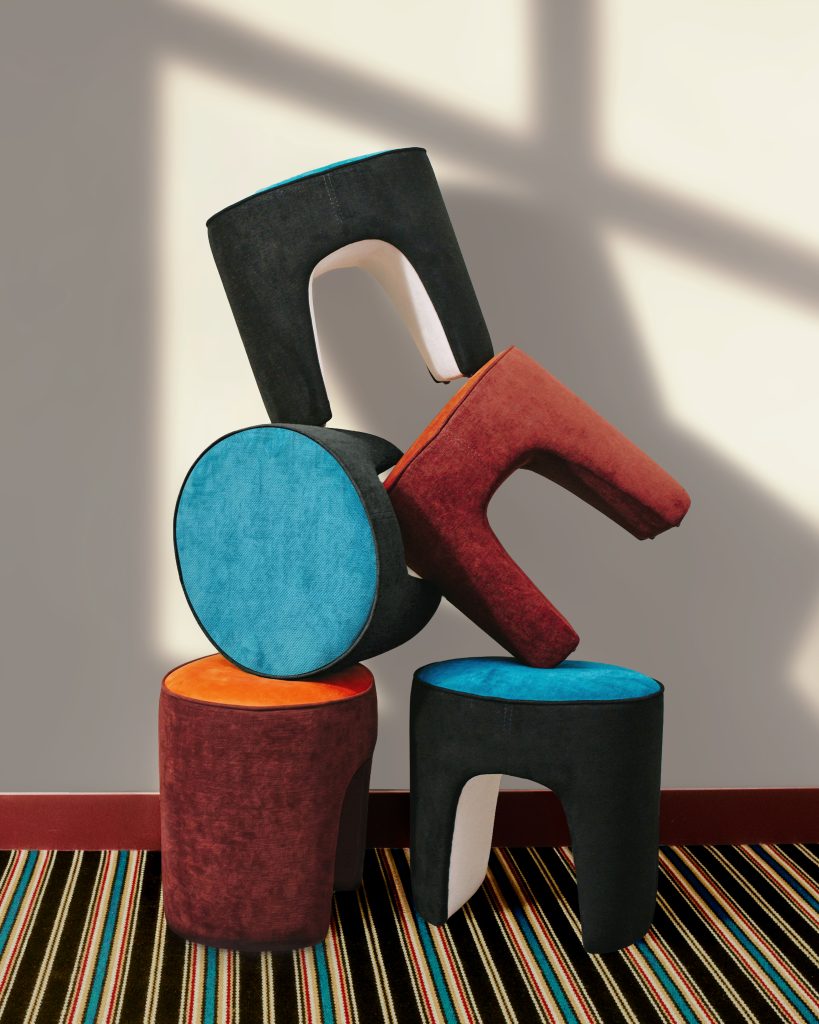
Léa footstool; Maison Sarah Lavoine
WAK: The Noto mirror and the Léo footstool have become iconic pieces. Can you tell whether a piece is destined to stand the test of time the moment you design it, or only years later?
S.P.: You can have a very strong sense that a piece is simply right. But you can’t decide what place it will occupy in people’s lives. Fortunately, because there’s still something that eludes us.
At the moment of creation, we seek a certain proportion and character, and a balance between form and function. Then, the piece begins a new life. It finds its way into interiors that we hadn’t envisaged, blending in with family heirlooms, works of art, and other pieces of furniture. It is then that we discover what it is capable of becoming.
For me, lasting means continuing to have a purpose once the initial excitement has worn off. It’s an object you keep because you enjoy living with it. I find that far more touching than its success at the time of launch. It eventually becomes part of a personal story.
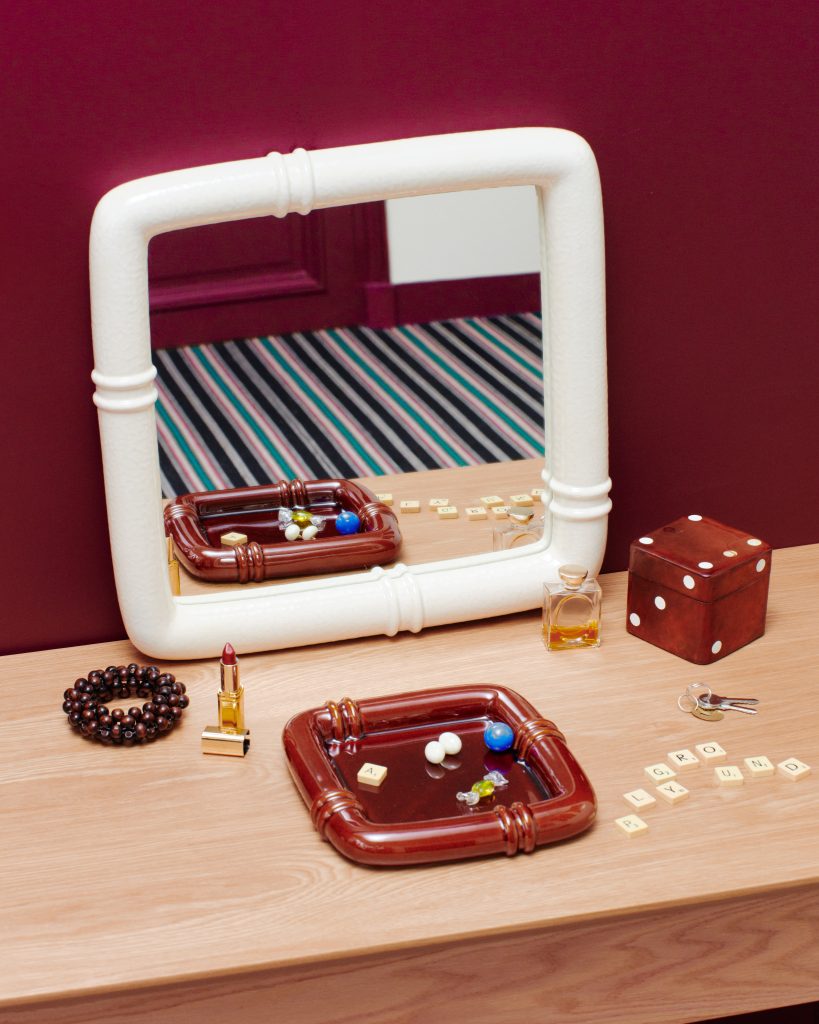
Coco mirror; Maison Sarah Lavoine
WAK: You mentioned that you don’t do the drawings yourself. How does an idea travel between you and your creative teams?
S.P.: I don’t start with a sketch, but I may have a very clear idea of what I’m looking for, such as a silhouette, a combination of materials or a certain presence in a room. The next step is to find the words and references to share that vision.
It’s a process of translation and exchange. The teams then give shape to the concept, contributing their own ideas and skills. From there, we can observe, discuss, and refine the design. Sometimes, a seemingly minuscule detail can completely alter the balance of an object. It is important to understand why something appeals to or bothers us, and then to bring it to life.
I want everyone to be able to contribute. While I am very committed to the direction I set, a suggestion that takes me a little further is invaluable. You can’t build a house like ours alone. There’s real satisfaction in seeing an idea grow stronger thanks to the input and work of others.
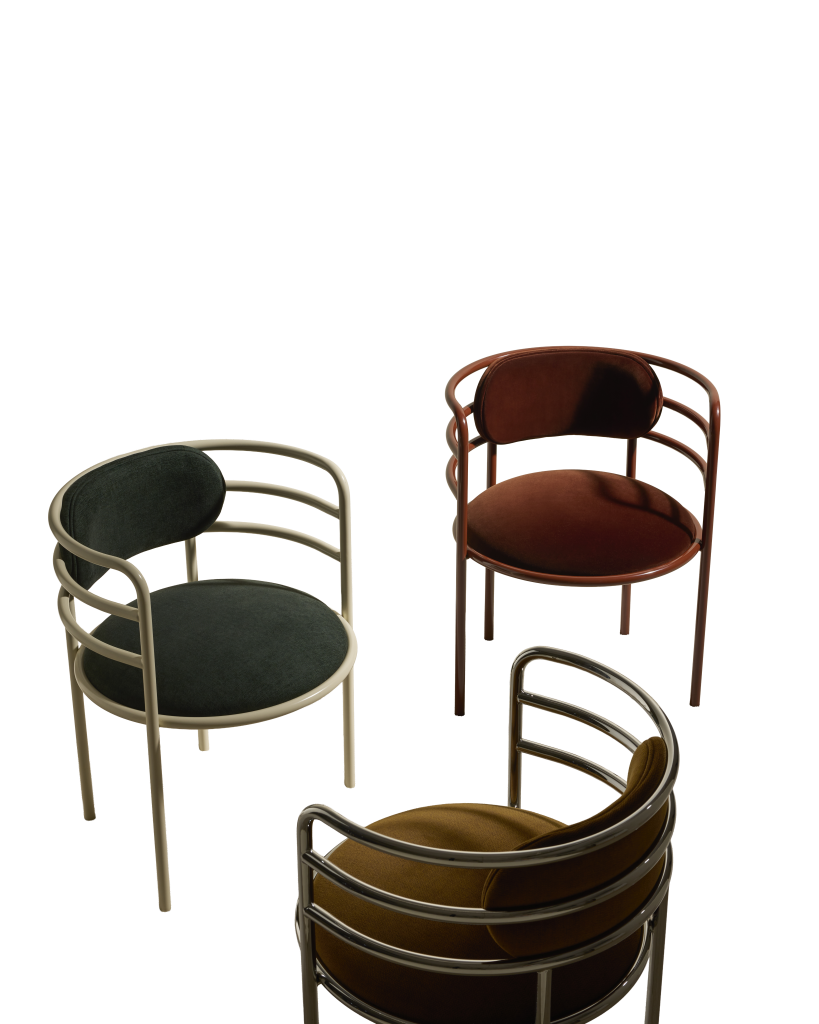
Moon chair; Maison Sarah Lavoine ;
WAK: What actually changes from one project to the next, given that your design philosophy must remain consistent throughout?
S.P.: The people, their habits, the light and the rhythm of the space change. These are considerable differences! When designing a home, it is important to understand how a family lives, how they spend time together and how each person maintains their privacy. In a restaurant, we also consider factors such as movement, noise, and the proximity between tables. In a hotel, guests must be able to find their way around and feel welcome very quickly.
The place itself provides a great deal of guidance. Life in Marrakech is different to life in Cap Ferret. The relationship with the outdoors, the heat, and materials is different. I like to let that influence my designs.
My design style is rooted in a particular sensibility involving colour, contrasts, simplicity of line and warmth. It must evolve with each project. I’d be disappointed if someone walked into a space and felt they had seen it somewhere before. I’d like people to recognise my vision, while also feeling that this place couldn’t quite be anywhere else.
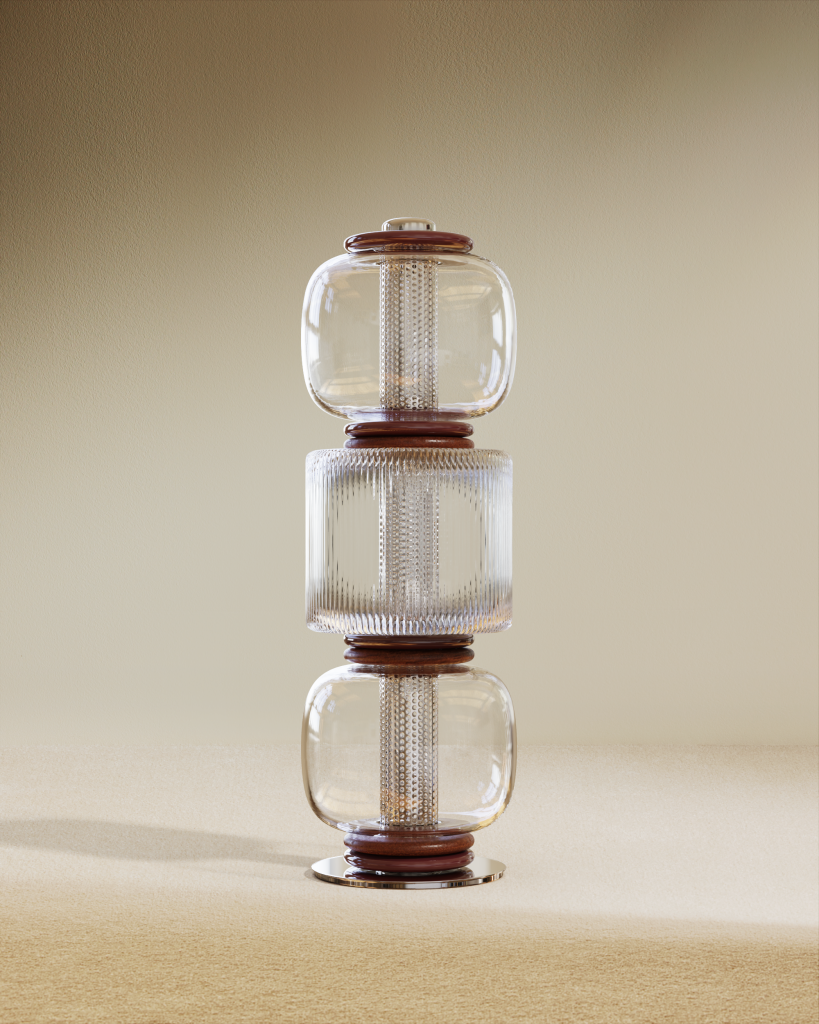
Loulou lamp; Maison Sarah Lavoine
WAK: You took part in Milan Design Week for the first time in April 2026. Which pieces did you choose to showcase, and what did you learn from the experience?
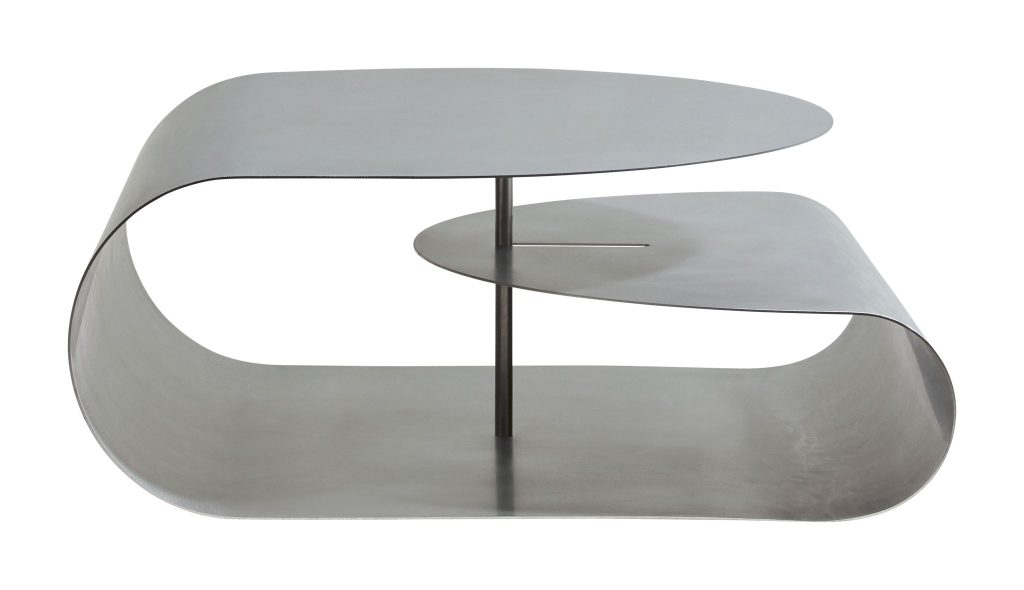
S.P.: We presented the Moon chair, the Gégé coffee table, and the Loulou floor lamp. Together, these three pieces represent different aspects of our work. The Moon chair combines chrome with velvet; the Gégé coffee table explores a more sculptural presence through steel; and the Loulou floor lamp brings together blown glass, carved wood, and polished stainless steel.
I find it interesting to showcase the brand through such a carefully curated selection. Each piece must express something whilst relating to the others. This approach also enables us to demonstrate our work with regard to volumes and materials, moving beyond the colour with which we are often associated.
Presenting objects outside their usual context raises a question that I find appealing: what do they convey to someone who isn’t familiar with our story? A piece must be able to evoke an emotion in its own right. It’s a stimulating challenge.
Gégé table in brushed stainless steel; Maison Sarah Lavoine
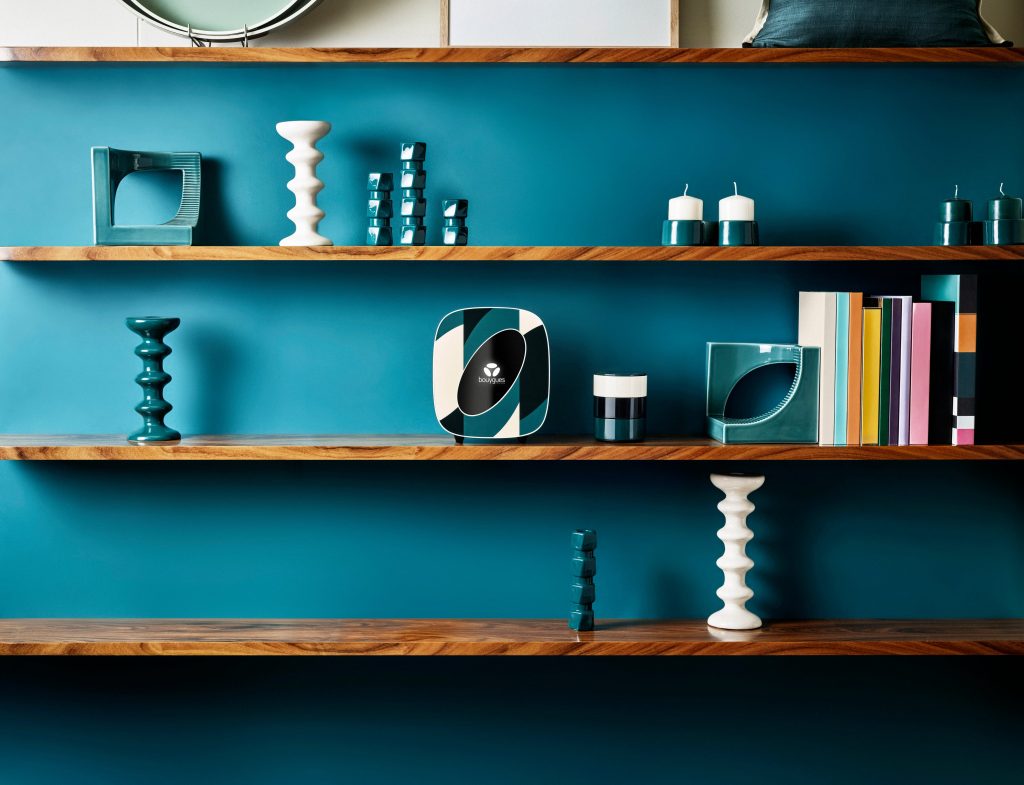
WAK: An internet router for Bouygues Telecom, a DS 3 for DS Automobiles. What interests you about industrial design, and where do you draw the line?
S.P.: These objects occupy a real place in our lives. We have routers in our homes every day, and we spend time in cars. I find it fascinating to be able to work with objects that we sometimes use without even looking at them, and to be able to work with this kind of proximity.
It also forces you to learn. The technical constraints, materials and manufacturing methods are different to those used for furniture. You have to step into the other person’s field, understand their requirements, and identify where your perspective can contribute.
With a box, you might consider its presence in a room or whether you would want to leave it on display. With a car, you consider the relationship between the exterior and interior, the harmonies and the comfort it provides. The limit is reached when the design intervention adds nothing to the object’s functionality or enjoyment, and becomes gratuitous. I need to understand why we do things. A signature implies a particular vision and a certain standard.
WAK: What would a hotel bearing your brand’s signature offer that the existing collections do not? How far along are you with this project?
S.P.: What appeals to me about this idea is the opportunity to welcome guests. It’s about creating a place where guests can arrive with their luggage, tiredness and expectations, and gradually start to feel at ease. Hotels touch on so many things: sleep, privacy, encounters and the pleasure of being somewhere else.
I’d like to think through these details with you. The light by the bed, the softness of a fabric, a table where you feel like lingering, and the option to either retreat or spend time with others. And, of course, the welcome is just as important as the décor. Even the most magnificent place loses much of its charm if you feel unwelcome immediately.
With our collections, we entrust objects to people so they can incorporate them into their own lives. A hotel would be a way of opening the door to our world for guests. I’d like it to have the personality and warmth of a home, with the special freedom that comes with holidays: the freedom to do nothing, to prove nothing, and simply to enjoy oneself.
WAK: After more than twenty years, what message would you like to pass on to designers just starting out, and how would you like the brand to be remembered in twenty years’ time?
S.P.: I’d tell them to take their curiosity seriously. They should look around them, step outside their own world and take an interest in things that don’t seem directly relevant to their work. One’s perspective is constantly evolving. You have to give it time to become personal.
I’d also tell them to dare to start without waiting to feel perfectly justified. Doubt is a constant companion on many journeys, but it mustn’t bring everything to a halt. On the other hand, you have to work hard, listen and be willing to start again. Surround yourself with the right people, too – the people you move forward with matter enormously, both personally and creatively.
In twenty years’ time, I’d like some of our pieces to still be in homes that will have changed and families that will have grown. I’d like them to have been kept out of affection. I’d also like the brand to have inspired people to embrace colour, trust their taste and feel more at home.
When I say ‘Beauty does you good’, this is what I mean: the tangible, everyday ways in which spaces and objects can enrich our lives.

Février, 2026
Créer avec l’existant, penser avec l’histoire
De l’architecture au design, cette édition explore comment lieux, savoir-faire et matières héritées deviennent terrains de création actuelle.
Janvier, 2026
Le luxe se réinvente.
Finis les logos clignotants, place à une sobriété raffinée, à l’immersion personnelle, à l’excellence artisanale, à la durabilité sensible.
Décembre, 2025
Héritages, gestes contemporains et plaisirs essentiels
Parce que la fête n’est jamais qu’apparence : elle reflète notre manière d’habiter le monde, de transmettre, de fabriquer des souvenirs durables.

ÉDITION #3
Upcycling et kintsugi transforment l’objet contemporain, faisant de la trace, de la réparation et de la matière un langage esthétique.
ÉDITION #3
Artisans et designers donnent une seconde vie aux matériaux anciens, entre création contemporaine, patrimoine et réemploi.
ÉDITION #3
Bunkers, wagons et kiosques renaissent grâce à la création, révélant comment l’art redonne sens aux lieux délaissés.
ÉDITION #2
Un regard transversal sur le quiet luxury à travers des lieux, des objets et des figures qui expriment l’élégance.
ÉDITION #1
Une sélection de marques, architectures, objets et escapades qui donnent corps au sens de la fête.
ÉDITION #3
Usines et gares délaissées deviennent lieux culturels ouverts, où mémoire industrielle et usages contemporains redessinent la ville.
ÉDITION #3
L’audacieuse métamorphose d’un palace parisien
ÉDITION #3
Au cœur du Marais, un lieu discret révèle comment archives, architecture et recherche font dialoguer l’œuvre de Picasso.
ÉDITION #2
Une expérience shopping unique dans un magasin emblématique.
ÉDITION #2
Voyage culinaire et architectural au cœur de la Seine
ÉDITION #2
Dans le 9e arrondissement, un établissement qui invite au quiet luxury
ÉDITION #1
Chante! vient d’ouvrir ses portes. Une invitation à vibrer !
ÉDITION #3
Icône du paysage français, la boîte jaune change de statut et s’invite dans l’univers du design.
ÉDITION #3
L’édition 2026 affirme une vision où artisanat, design et mémoire façonnent l’habitat contemporain, international actuel.
ÉDITION #3
Cent ans après 1925, l’Art déco revient dans nos villes et intérieurs avec géométrie, audace, optimisme.
ÉDITION #3
Depuis plus de deux cents ans, Royal Limoges conjugue porcelaine, savoir-faire industriel et création contemporaine.
ÉDITION #3
Des terrains de sport aux podiums, la sneaker raconte un siècle de mutations culturelles, techniques et stylistiques.
ÉDITION #2
Design, mode, artisanat : des créations où la forme et la matière se répondent avec justesse, loin de tout effet de mode.
ÉDITION #1
Décorations artisanales, calendriers ultra-luxe et pièces de collection pour s’enivrer de joie avant l’heure.
ÉDITION #3
Entre marqueterie monumentale et jungle symbolique, Anton Laborde transforme le bois en récit contemporain poétique engagé.
ÉDITION #3
À Maison & Objet, Thierry Laudren présente des meubles sculptés où fonction, matière et lenteur façonnent une présence.
ÉDITION #3
Jean Nouvel conçoit une architecture attentive aux contextes, où lumière, histoire et usages façonnent chaque projet.
ÉDITION #3
À Lyon, Sophie Morel rénove des lieux historiques en alliant respect du bâti et écriture contemporaine.
ÉDITION #3
Au Centre d’Études Picasso, l’architecte compose une architecture où lumière, géométrie et héritage dialoguent avec précision.
ÉDITION #2
Entretien avec le fondateur d’EDO (European Design Office)
ÉDITION #2
Portrait d’un visionnaire qui transforme l’art de recevoir en expérience totale.
ÉDITION #1
Personnalités, artisans et créateurs qui donnent à la fête sa profondeur humaine.
ÉDITION #3
De Bordeaux au Bassin, art, vignobles et bien-être composent une échappée élégante au cœur de la Gironde.
ÉDITION #2
Vers une région de l’Italie habitée par le temps, où paysages, culture et usages s’accordent dans une continuité rare.
ÉDITION #1
Destinations et rituels qui réinventent la fête, du soleil tropical aux marchés d’hiver.