Atelier Jean Perzel, un siècle de passion pour la lumière

Atelier Jean Perzel, a century of passion for light

Bronze and glass lighting that illuminates a room without straining the eye. Since 1923, the company has been designing and crafting lighting fixtures in Paris that are built to last. Three generations have succeeded one another at the helm of the company, which holds the ‘Entreprise du Patrimoine Vivant’ (Living Heritage Company) label, all the while staying true to the founder’s vision. Here, nothing is mass-produced. Olivier Raidt, Jean Perzel’s grand-nephew and director of the workshop, sums it up in a single sentence: ‘We think in terms of one-off pieces.’

More than a century after its foundation, the company still manufactures its light fittings on Rue de la Cité Universitaire, on the edge of Montsouris Park. Its archives contain over seven thousand drawings and its catalogue features several hundred handcrafted models. The designs have evolved over the generations. The original concept, however, has remained unchanged: light that reveals spaces, materials and faces whilst remaining in the background.

A glassmaker from Bavaria

Atelier Jean Perzel

Atelier Jean Perzel

Jean Perzel was born in Bruck, Bavaria, on 2 May 1892, and learnt glass painting at a very young age in Munich. At the age of 16, he was top of his class. He then set off on foot, travelling across Europe to Paris, where he arrived in 1910. The war brought this first Parisian chapter to an end when he enlisted in the Foreign Legion. Having become a naturalised French citizen, he was demobilised in 1919 and immediately returned to his craft, working as a stained-glass artist under the renowned glassmaker Jacques Gruber. At this stage, his craft involved working with light passing through glass. The remaining challenge was to bring that light into lived-in spaces.

Illuminating without dazzling

Atelier Jean Perzel

In 1923, aged 31, he founded his own company, Atelier Jean Perzel. He was wholly consumed by a single obsession: amplifying light without causing glare. He designed all of his creations himself, using glass and bronze, and relentlessly pursued the refinement of forms. His lighting is precisely controlled and often indirect. It reveals volumes, highlights materials, complements functions, and recedes behind the architecture it serves.

Four principles stem from this approach, which the firm still regards as its hallmark. Firstly, pure lines that are rigorous enough to allow the building itself to take centre stage. Secondly, indirect light that sculpts the space. Functionality, where use dictates form and every detail is the result of invisible engineering. Finally, there is a timeless quality that transcends passing fashions. The purity of the lines, the accuracy of the proportions, and the nobility of the materials speak for themselves.

From architects to the liner ‘Normandie’

Atelier Jean Perzel

Atelier Jean Perzel

Art Deco was at its height, and Jean Perzel soon became one of its leading figures. He participated in international exhibitions and competitions, winning numerous awards. The great architects and interior designers of the era, such as Le Corbusier, Mallet-Stevens, Ruhlmann and Leleu, called upon him to illuminate their projects. His light fittings found their way into the court of the King of the Belgians, the residences of the Rothschild family and Henry Ford, the Canadian embassy in The Hague and the cathedral in Luxembourg. He was even commissioned to design the lighting for the League of Nations in Geneva. His crowning achievement came in 1935 when his light fittings were installed on board the ocean liner Normandie, becoming a symbol of French elegance.

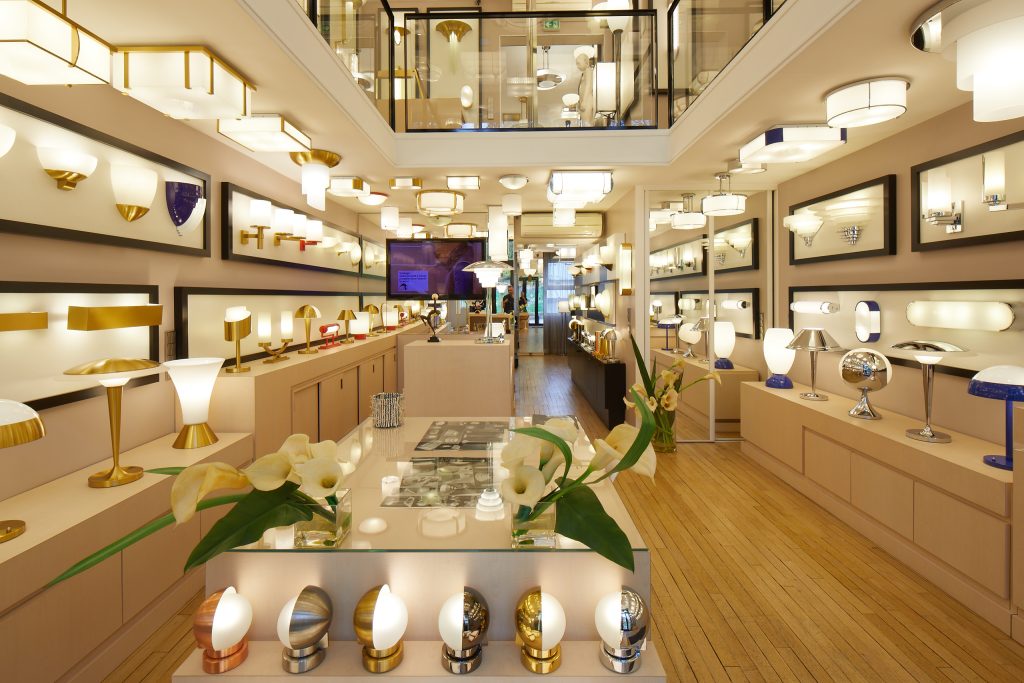
His collaboration with Michel Roux-Spitz was a two-way street. At Jean Perzel’s request, the architect designed the Art Deco building on Rue de la Cité Universitaire, to which the studio moved in 1931 and where it remains to this day, complete with showroom. In turn, Perzel designed the lighting for Roux-Spitz’s work desk. The Musée des Arts Décoratifs now houses Michel Roux-Spitz’s personal desk, exhibited at the 1930 Salon des Artistes Décorateurs, which features a lamp by Jean Perzel.

Five models, one design

Lampe n°162 (doré) – Atelier Jean Perzel

Lampe n°162 (doré) – Atelier Jean Perzel

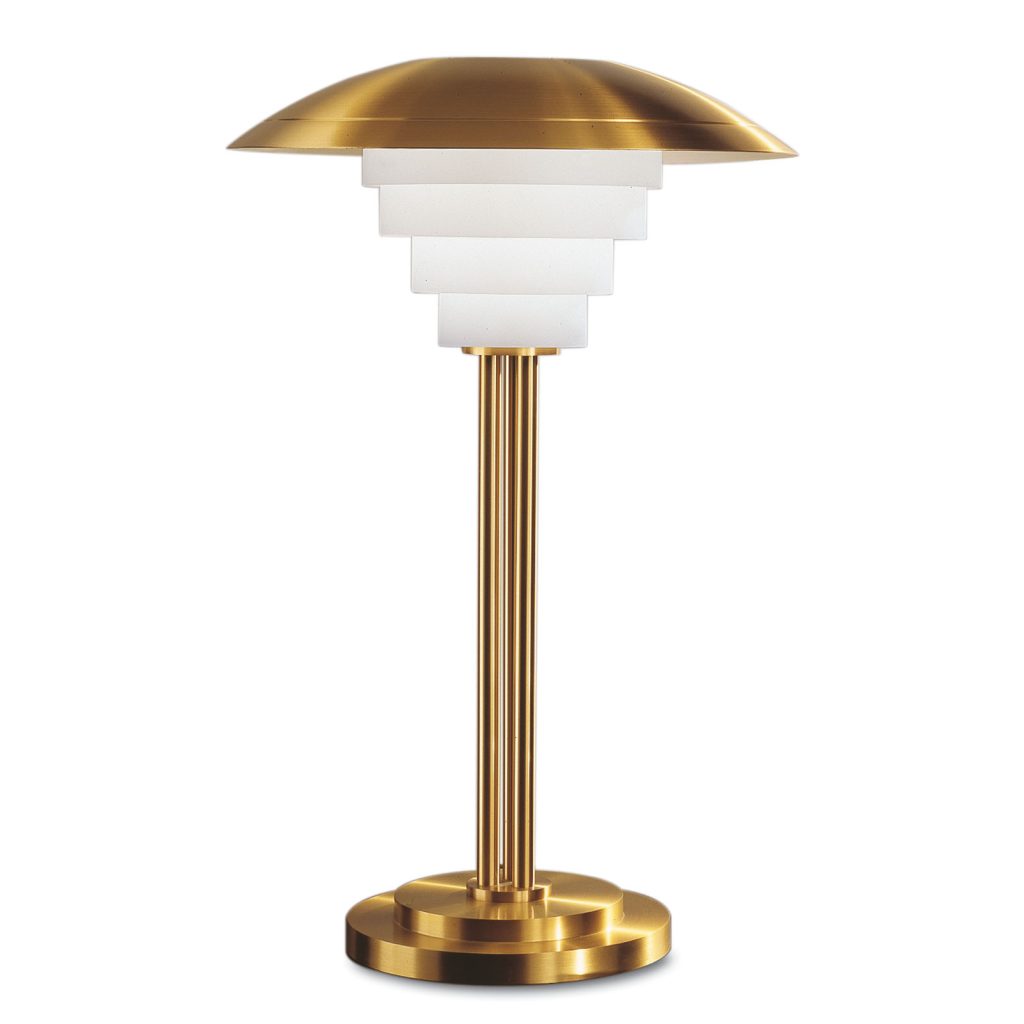
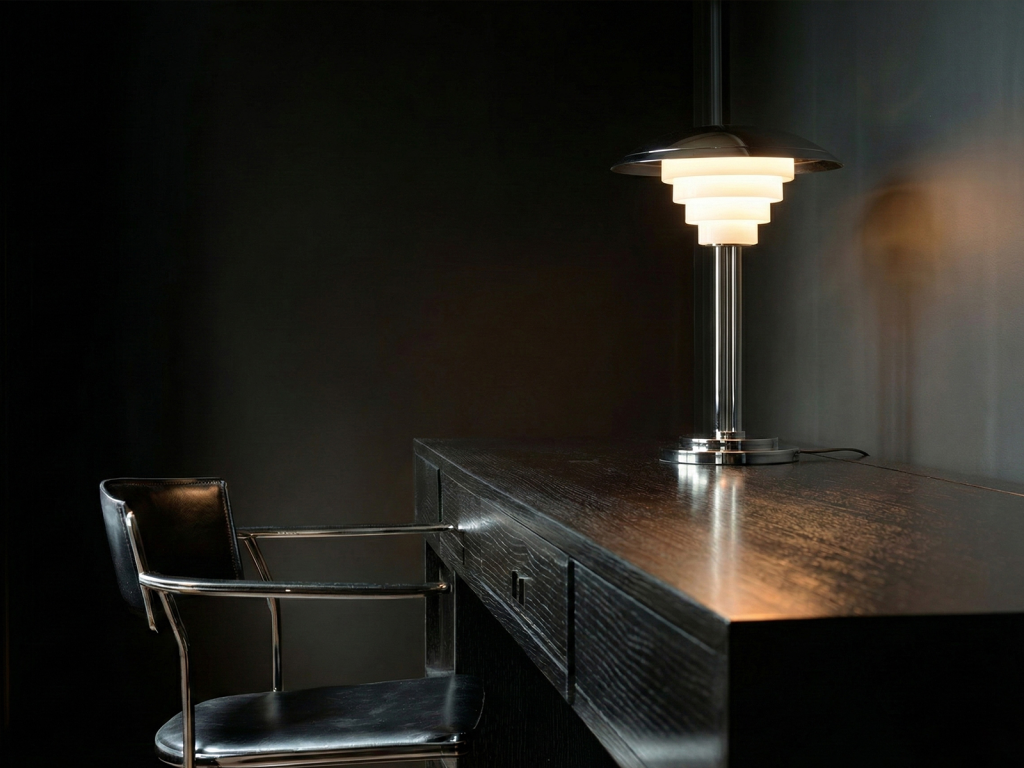
The catalogue preserves the memory of those years. Created in 1927, Lamp No. 162 emits such powerful light that it can illuminate a room on its own without causing glare. The firm considers it to be the most prestigious collector’s lamp from the 1930s. In the late 1920s, model No. 234 introduced a new concept in desk lighting with its directed light and frosted optical glass shade that could be adjusted and swivelled for precision and beauty.

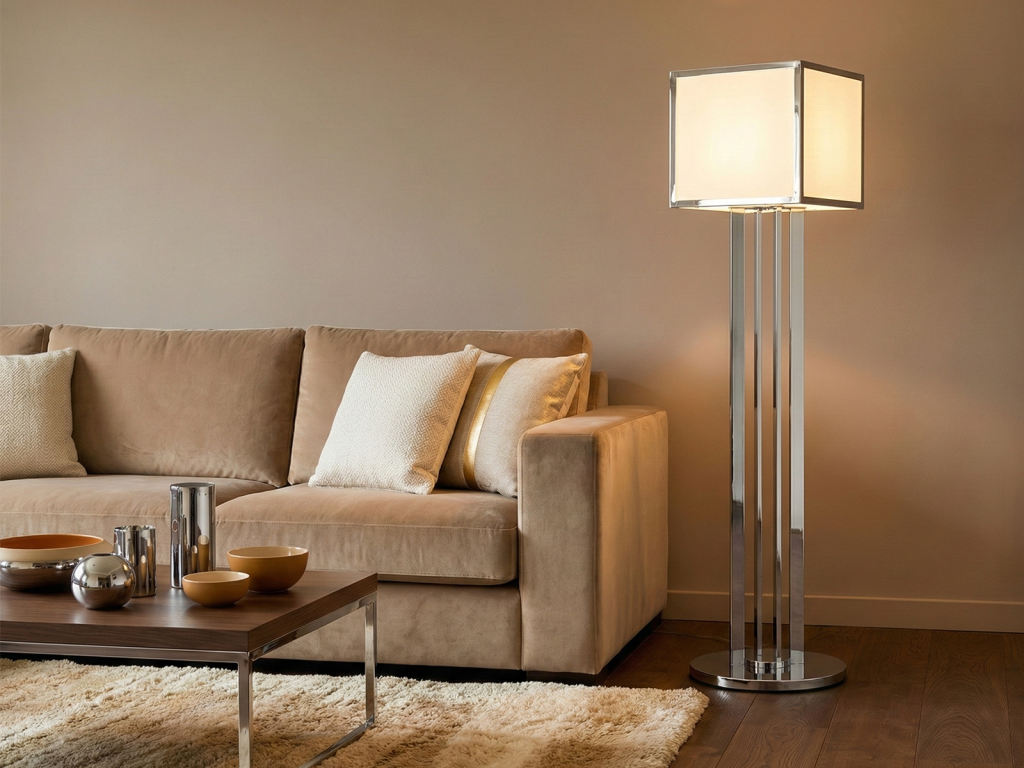
Two pieces have set sail. The Normandie’s interior designers have chosen lamp No. 514, with its slender lines and exquisite craftsmanship. The wall lamp No. 650 adorns a luxury suite on the liner and features two bowls stacked upon a column of diamond-cut glass slabs set in bronze. The more compact floor lamp No. 119 features an unusual height. Resting on an ethereal base of four bronze rods, its cube of light casts a soft, enveloping glow. Interior designers favour it for accentuating a corner of a living room or bedroom.

Invisible to the eye

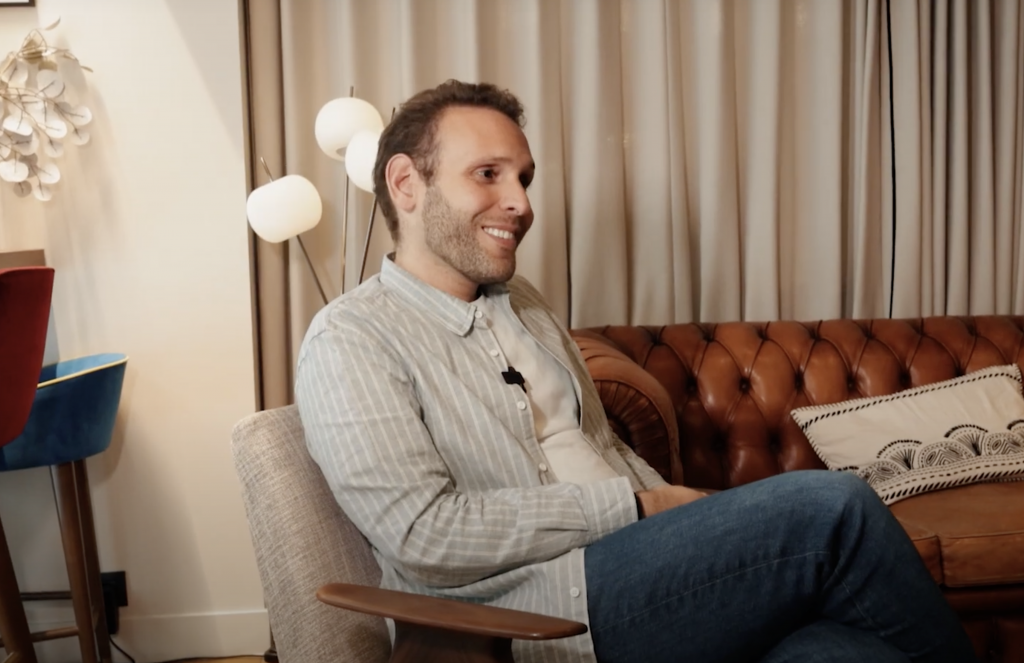
Olivier Raidt

Olivier Raidt

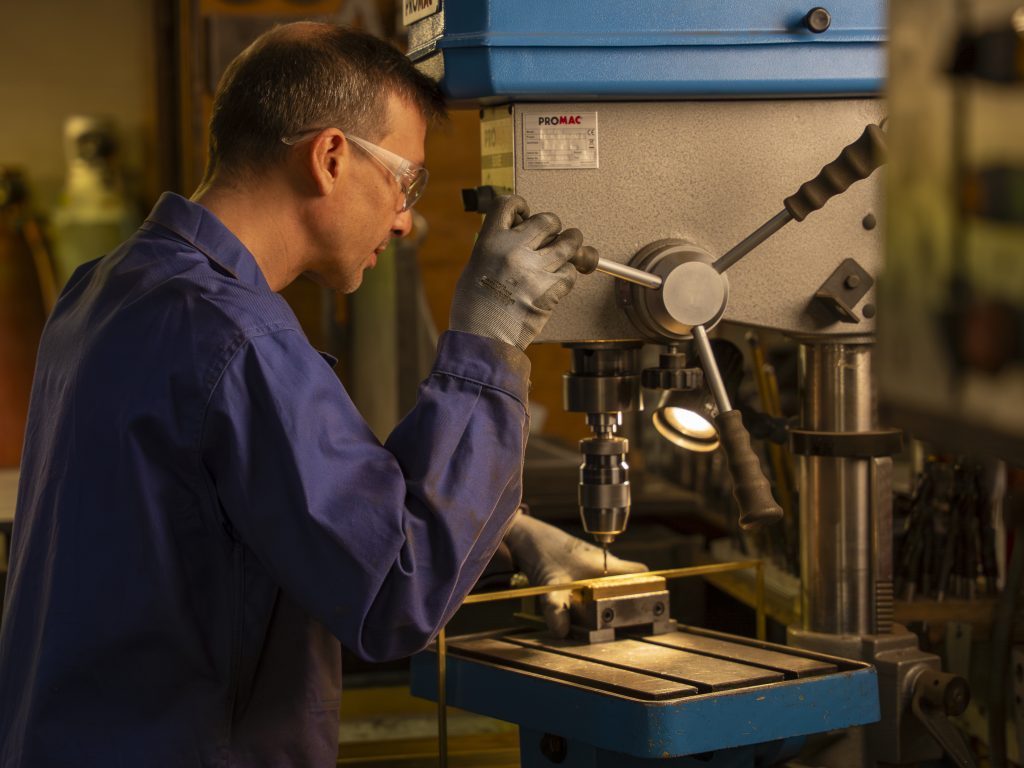
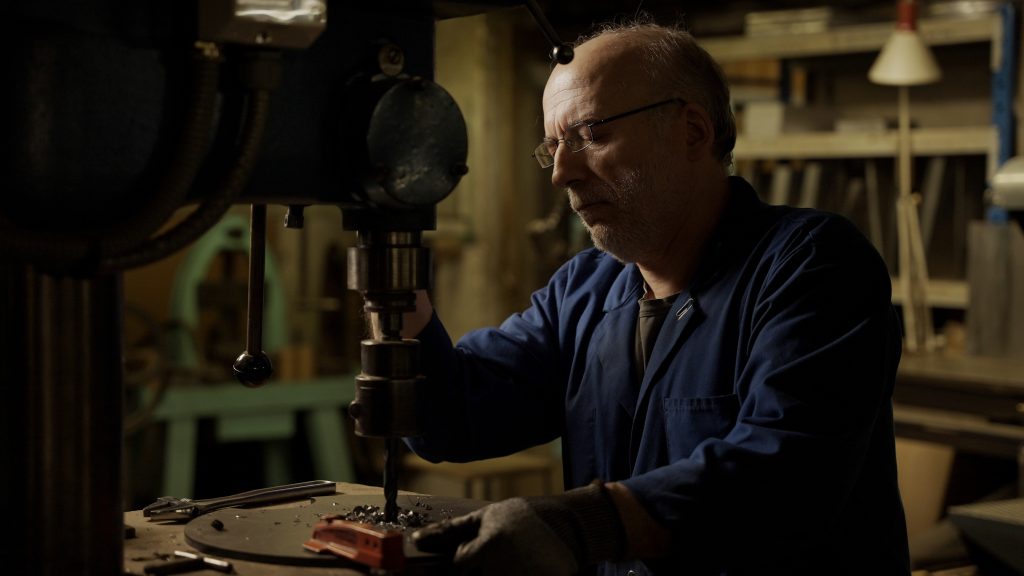
Nothing leaves the workshop without having been hand-finished. A close-knit team of craftsmen work the glass and metal there, each trained in a variety of techniques. Optical glass is cut by hand using a diamond tool, shaped in a 900-degree oven around a mould and frosted with sand. Metal is hammered into shape on a die, tapped, brazed, then sanded and polished. Everything is made on site, right down to the smallest screws, with the meticulousness of a watchmaker.

The role of glass polisher is the oldest in the company and has remained unchanged since the 1920s. The company has made it the very soul of its craft. Using a century-old machine, master glassmakers polish the rims of bowls with water and silica sand, removing every irregularity and adjusting the glass to the lamp’s dimensions with absolute precision.

This attention to detail extends even to the unseen, all in the service of light. “All non-visible parts are lacquered white to reflect light as effectively as possible,” explains Olivier Raidt. Once polished, each piece is numbered and bears the company’s signature.

Three generations, the same high standards

Atelier Jean Perzel

Atelier Jean Perzel

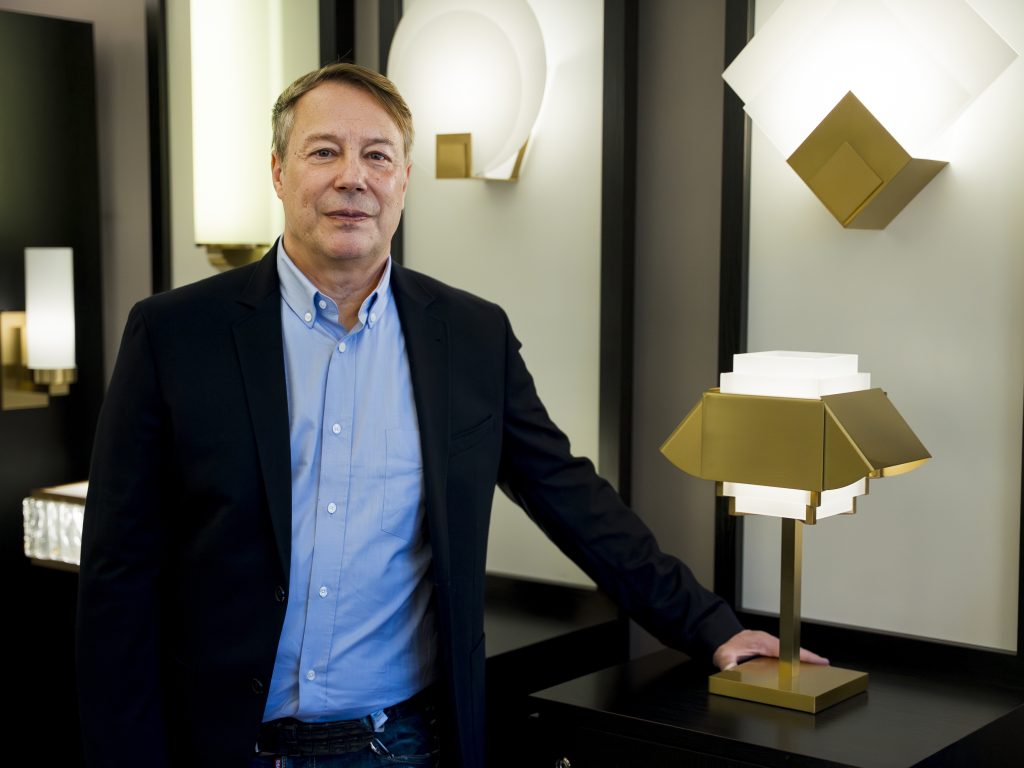
The tradition of passing on the craft begins early. In 1933, François Raidt, the founder’s nephew, joined the workshop. A perfectionist, he designed, refined and simplified the assemblies. In 1951, Jean Perzel entrusted him with managing the company, a role to which he would devote his entire life. In 1994, his son Olivier took over. Having trained in all technical roles and been familiar with the workshop since childhood, he expanded the company’s reach internationally while preserving its identity. A designer in his own right, Olivier works closely with the craftsmen, infusing the workshop with a contemporary spirit.

The same continuity applies to the craftsmanship. The most senior craftsmen train younger apprentices for several years, and most artisans spend their entire careers in the workshop. Meanwhile, the repertoire remains vibrant: the designs evolve while adhering to the original standards, and the firm produces a few bespoke pieces each year. Since 2008, the government’s ‘Entreprise du Patrimoine Vivant’ (Living Heritage Company) label has recognised this rare expertise and its transmission.

A century later

Showroom Jean Perzel

Showroom Jean Perzel

In 2023, the company celebrated its centenary. Jean-Jacques Wattel dedicated a reference work to the company, L’Efficacité de la Lumière (The Efficiency of Light), published by Éditions Louvre Victoire. This book traces the company’s history through its archives and craftsmanship. The light fittings continue to illuminate the spaces that have welcomed them. At the Maison de la Chimie in Paris, which opened in 1931, No. 341 V wall lights illuminate the stone columns in the grand hall, whilst No. 1137 wall lights provide subtle lighting for the reception room, and No. 650 wall lights cast their glow in another room. Some of the pieces are originals, while others have been restored to their rightful places during renovations.

From national museums to the most prestigious residences, Perzel lighting continues to make its mark. On Rue de la Cité Universitaire, the same techniques are employed, the same grinding wheel is used, and the value of a piece is determined by the time it takes to create it rather than its size. As Olivier Raidt puts it, ‘It is the complexity of the light fitting that does the work, not its size.’

Sources :

Continue exploring

Katrien Van Der Schueren and Art+Loom: the relief rug
From the 2CV to the Burton, the 2CV Méhari Club Cassis is keeping the legend alive!
Schiaparelli at the V&A in London: the dress as art
Retro and vintage items: a major comeback for pieces that appeal to the nostalgic
Venus Williams: tennis comes home
LP Design : a cactus called ‘Mirage’

Février, 2026

Édition 3 : Patrimoine et création

Créer avec l’existant, penser avec l’histoire

De l’architecture au design, cette édition explore comment lieux, savoir-faire et matières héritées deviennent terrains de création actuelle.

Janvier, 2026

Édition 2 : Quiet luxury

Le luxe se réinvente.

Finis les logos clignotants, place à une sobriété raffinée, à l’immersion personnelle, à l’excellence artisanale, à la durabilité sensible.

Décembre, 2025

Édition 1 : Le sens de la fête

Héritages, gestes contemporains et plaisirs essentiels

Parce que la fête n’est jamais qu’apparence : elle reflète notre manière d’habiter le monde, de transmettre, de fabriquer des souvenirs durables.

ÉDITION #3

Révéler la beauté
‎

Upcycling et kintsugi transforment l’objet contemporain, faisant de la trace, de la réparation et de la matière un langage esthétique.

ÉDITION #3

Les nouveaux artisans du patrimoine

Artisans et designers donnent une seconde vie aux matériaux anciens, entre création contemporaine, patrimoine et réemploi.

ÉDITION #3

L'art à la rescousse des friches et lieux oubliés

Bunkers, wagons et kiosques renaissent grâce à la création, révélant comment l’art redonne sens aux lieux délaissés.

ÉDITION #2

Le murmure du beau
‎

Un regard transversal sur le quiet luxury à travers des lieux, des objets et des figures qui expriment l’élégance.

ÉDITION #1

Lieux, maisons et matières en éclats

Une sélection de marques, architectures, objets et escapades qui donnent corps au sens de la fête.

ÉDITION #3

La création au secours des bâtiments promis à l’oubli

Usines et gares délaissées deviennent lieux culturels ouverts, où mémoire industrielle et usages contemporains redessinent la ville.

ÉDITION #3

Normandy Hotel Paris Saint-Honoré

L’audacieuse métamorphose d’un palace parisien

ÉDITION #3

Dans les coulisses du Centre d'Études Picasso à Paris

Au cœur du Marais, un lieu discret révèle comment archives, architecture et recherche font dialoguer l’œuvre de Picasso.

ÉDITION #2

Shopping iconique dans un décor Tudor

Une expérience shopping unique dans un magasin emblématique.

ÉDITION #2

Gastronomie et architecture

Voyage culinaire et architectural au cœur de la Seine

ÉDITION #2

L'art de l'hospitalité parisienne

Dans le 9e arrondissement, un établissement qui invite au quiet luxury

ÉDITION #1

Chante!

Chante! vient d’ouvrir ses portes. Une invitation à vibrer !

ÉDITION #3

La boîte aux lettres française devenue objet de design

Icône du paysage français, la boîte jaune change de statut et s’invite dans l’univers du design.

ÉDITION #3

Retour sur Maison&Objet 2026 : retour aux sources et à l’essentiel

L’édition 2026 affirme une vision où artisanat, design et mémoire façonnent l’habitat contemporain, international actuel.

ÉDITION #3

Art Deco: un mouvement centenaire, plus actuel que jamais

Cent ans après 1925, l’Art déco revient dans nos villes et intérieurs avec géométrie, audace, optimisme.

ÉDITION #3

Royal Limoges, deux siècles d’histoire au présent

Depuis plus de deux cents ans, Royal Limoges conjugue porcelaine, savoir-faire industriel et création contemporaine.

ÉDITION #3

Du terrain à la rue et au catwalk : les sneakers à travers les époques

Des terrains de sport aux podiums, la sneaker raconte un siècle de mutations culturelles, techniques et stylistiques.

ÉDITION #2

La formidable aventure du papier peint de luxe

Design, mode, artisanat : des créations où la forme et la matière se répondent avec justesse, loin de tout effet de mode.

ÉDITION #1

Icônes, détails, rituels
‎

Décorations artisanales, calendriers ultra-luxe et pièces de collection pour s’enivrer de joie avant l’heure.

ÉDITION #3

Anton Laborde

Entre marqueterie monumentale et jungle symbolique, Anton Laborde transforme le bois en récit contemporain poétique engagé.

ÉDITION #3

Thierry Laudren

À Maison & Objet, Thierry Laudren présente des meubles sculptés où fonction, matière et lenteur façonnent une présence.

ÉDITION #3

Jean Nouvel

Jean Nouvel conçoit une architecture attentive aux contextes, où lumière, histoire et usages façonnent chaque projet.

ÉDITION #3

Sophie Morel

À Lyon, Sophie Morel rénove des lieux historiques en alliant respect du bâti et écriture contemporaine.

ÉDITION #3

Pascal Grasso

Au Centre d’Études Picasso, l’architecte compose une architecture où lumière, géométrie et héritage dialoguent avec précision.

ÉDITION #2

Alexandre Danan

Entretien avec le fondateur d’EDO (European Design Office)

ÉDITION #2

Aziz Temimi

Portrait d’un visionnaire qui transforme l’art de recevoir en expérience totale.

ÉDITION #1

Visages, gestes, inspirations

Personnalités, artisans et créateurs qui donnent à la fête sa profondeur humaine.

ÉDITION #3

Chemins de traverse : parenthèse d’exception en Bordelais

De Bordeaux au Bassin, art, vignobles et bien-être composent une échappée élégante au cœur de la Gironde.

ÉDITION #2

Voyage en Toscane
‎

Vers une région de l’Italie habitée par le temps, où paysages, culture et usages s’accordent dans une continuité rare.
ÉDITION #1

Horizons, saisons, traditions
‎

Destinations et rituels qui réinventent la fête, du soleil tropical aux marchés d’hiver.
Dates, adresses, invitations

Expositions, événements et repères culturels pour vivre pleinement la saison des fêtes.