Atelier Véronique de Soultrait : la corde, de fil en merveilles

Atelier Véronique de Soultrait: rope, from thread to marvels

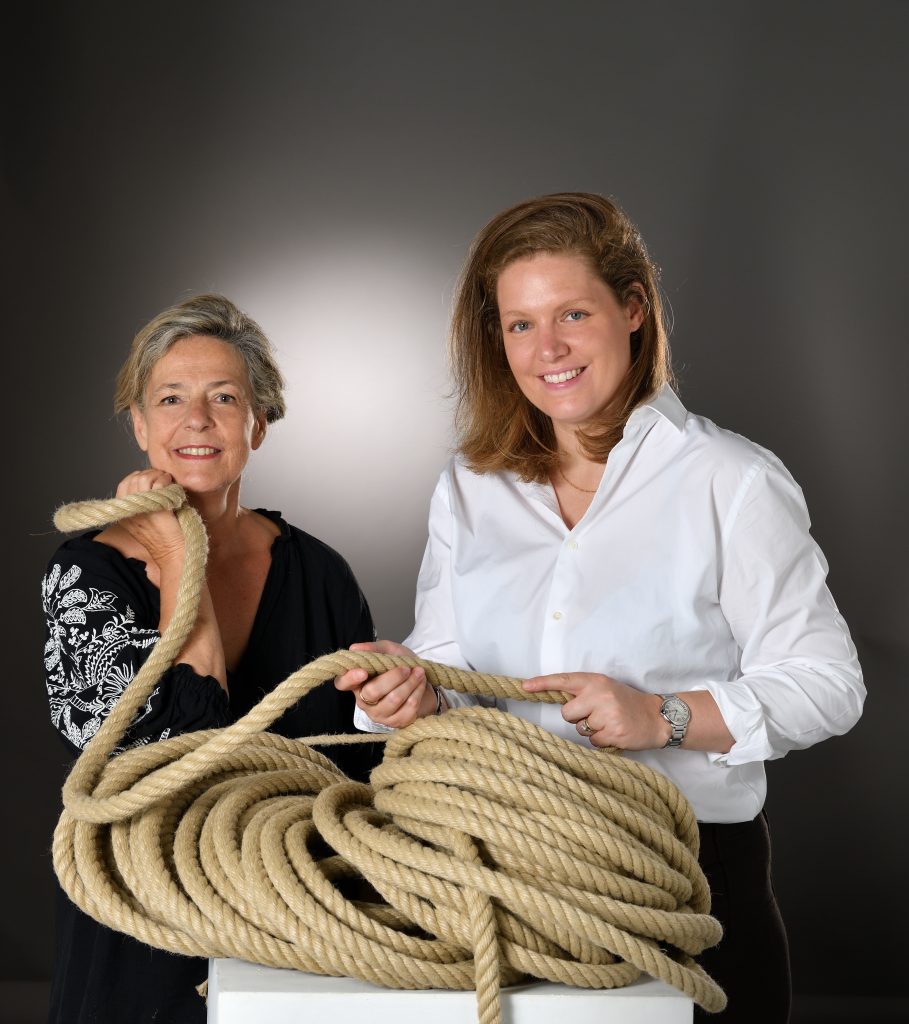
Based in Lyon, the atelier has transformed a basic material into the foundation for a distinctive craft: rope marquetry. Founded in 2013, the atelier continues its journey today under the leadership of Juliette Chazot, who took over management whilst preserving the creative vision of the founder. It is a passing of the torch where the craft remains whilst a new artistic style takes shape.

Extraordinary simplicity

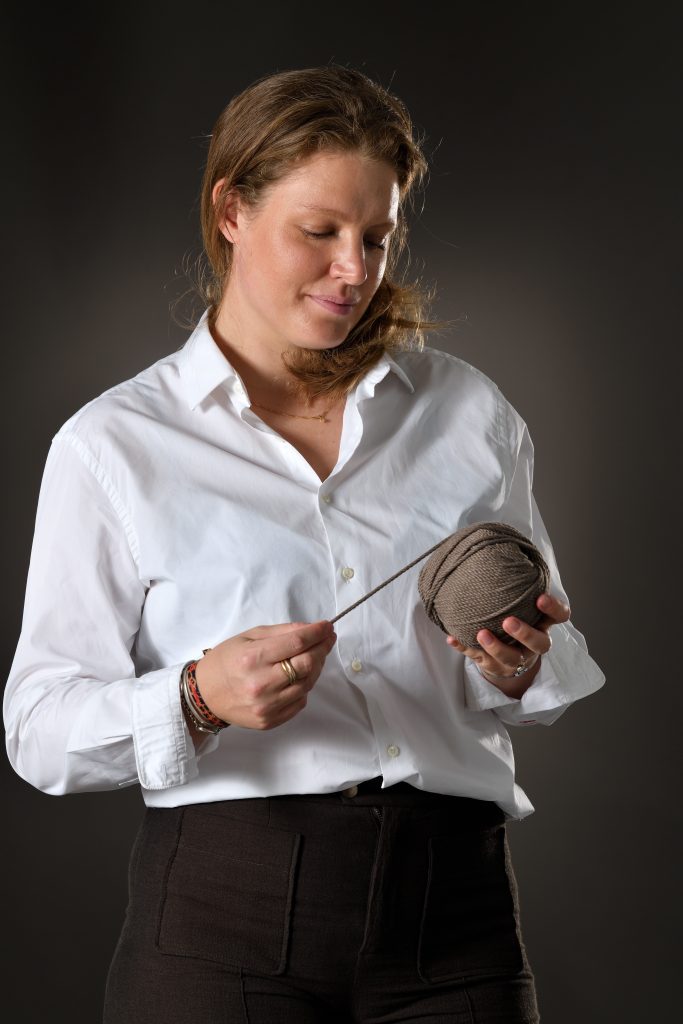
Juliette Chazot ; Studio Erick Saillet

Juliette Chazot ; Studio Erick Saillet

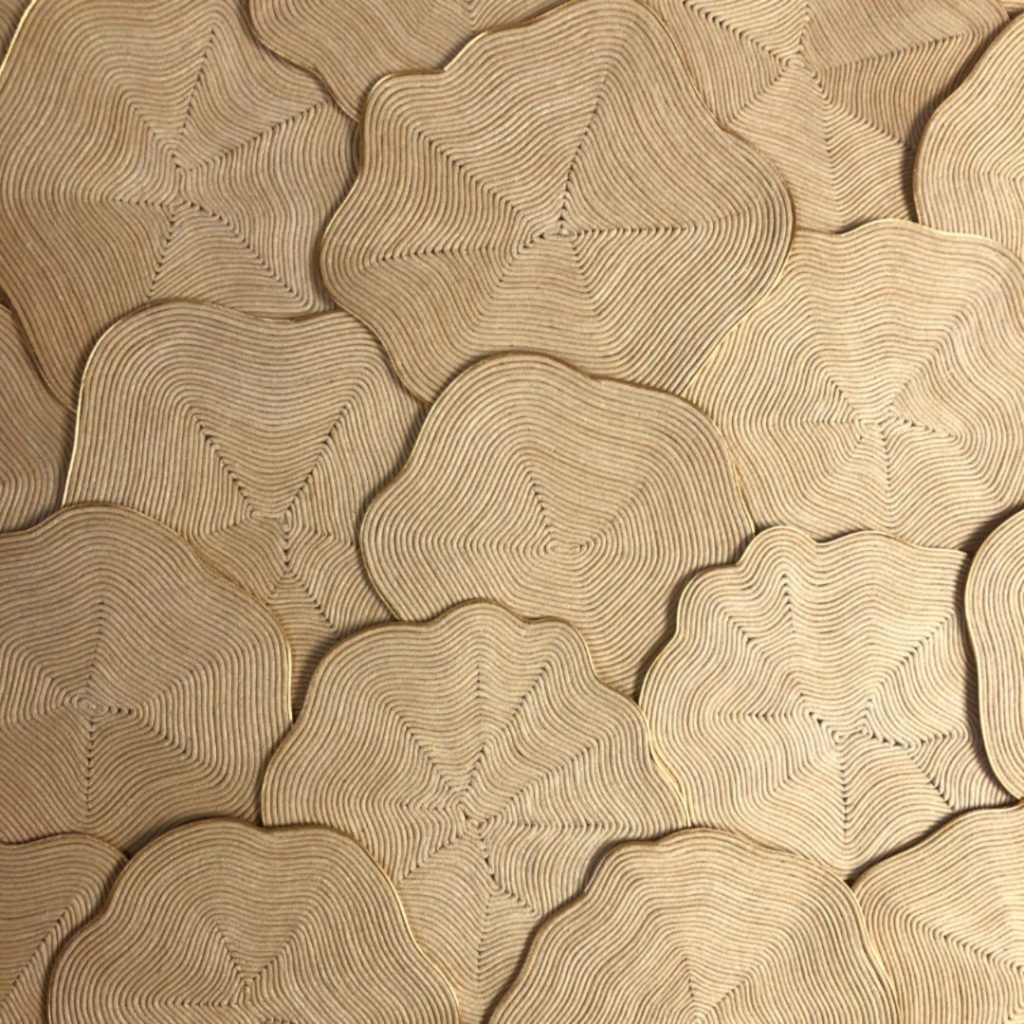
Waxed cotton, satin cord, jute and hemp. On a wooden panel, the cords align, coil and interplay to gradually reveal scales, scrolls, foliage and animal silhouettes with metallic sheens. Though the materials are familiar, they undergo a metamorphosis. They take on depth, catch the light, and form designs whose delicacy contrasts with the simplicity of the materials used.

This is the unique character of Atelier Véronique de Soultrait, based on Rue Vendôme in Lyon. Since its foundation in 2013, the studio has developed a distinct artisanal craft: rope marquetry. Juliette Chazot now leads the workshop, with Véronique de Soultrait still by her side to guide the creative process.

What drew Juliette here can be summed up in a few words: ‘The ability to create incredible things with just a piece of cord.’ There is something intangible in this act. “It’s almost magical to bring such enchanting designs and effects to life using such a simple material.”

A humble material, a unique craft

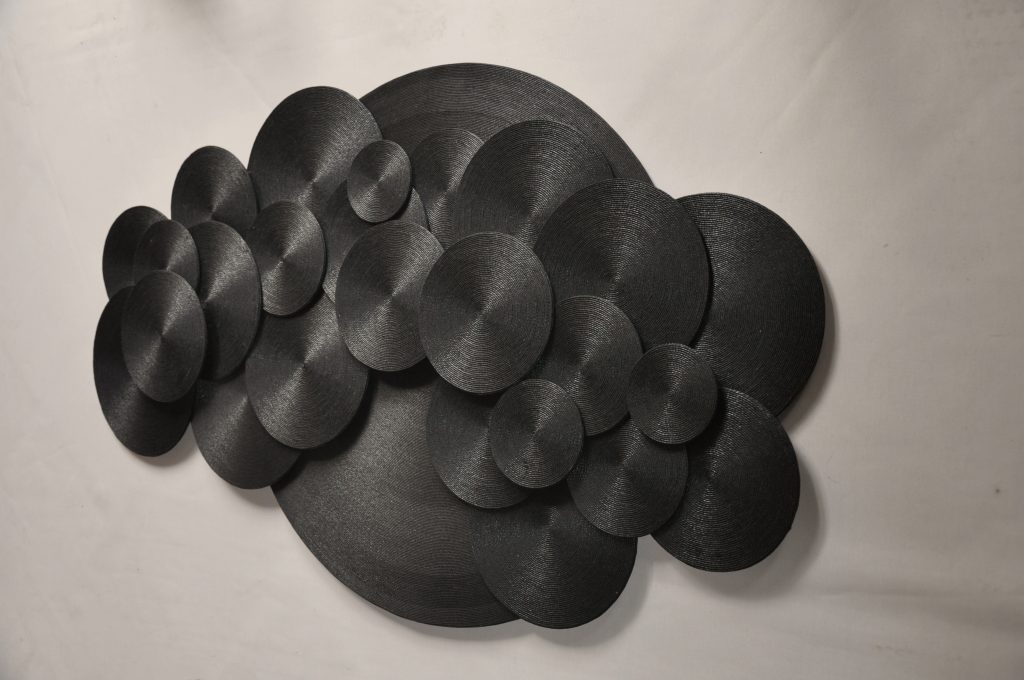
Étamine ; diamètre 160cm ; Véronique de Soultrait ; Studio Erick Saillet

Étamine ; diameter 160cm ; Véronique de Soultrait ; Studio Erick Saillet

Before becoming the medium for her creations, rope formed part of a journey characterised by detours and experimentation. After training in painting and textile design at the École des Beaux-Arts in Lyon, Véronique de Soultrait worked as a painter and decorator for over fifteen years. Then came her passion for antique objects: at flea markets, she hunted down crocheted pieces, re-dyed them, and transformed them into cushions and throws.

Gradually, she developed a desire to return to the wall and design her own patterns. Rope then became her medium. She borrowed the art of knotting from lace and macramé and the precision of assembly from marquetry and trimmings. From this fusion emerged a unique decorative language fuelled by research and the blending of techniques.

The material itself invites experimentation. Natural fibres or traditional cords can be combined with gold thread, kitchen string, or rubber. These unexpected combinations open up new possibilities. The focus is not just on adorning a surface, but on shifting the gaze and bringing out the richness of a design in a material that one thought one knew.

It is this creative freedom that also appealed to Juliette Chazot. “I’m very attached to nature and raw, unadorned things. I love authentic things.” After spending ten years working in transport and logistics, she developed a personal pottery practice alongside her day job.

She shapes lamp bases and designs lampshades from raffia and wool, paying close attention to the combinations of materials and colours she uses. When she discovered the workshop, she immediately recognised the connection with her own work.

The precision of a gesture

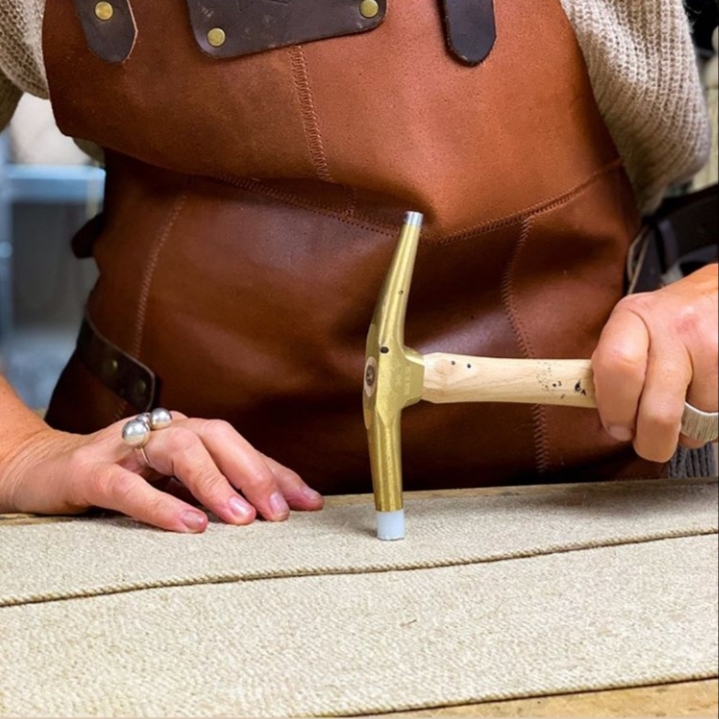
Atelier Véronique de Soultrait

Atelier Véronique de Soultrait

Each cord on the panel is positioned to the nearest millimetre. They are laid, glued and adjusted against each other. The succession of matt or satiny fibres defines contours, creates rhythm and transforms the surface into a composition. Depending on the chosen materials and colours, light can accentuate a detail, emphasise a curve or bring a pattern to life.

Behind this apparent simplicity lies meticulous research. Juliette Chazot refers in particular to a study of antelopes that was commissioned for a hotel in Bahrain. This project, which has yet to be realised, required significant preparatory work, including creating a large-format sample and conducting numerous trials in order to capture the essence of traditional Middle Eastern embroidery using silver cords that can reflect light.

The design can sometimes hinge on the tiniest detail. On an antelope’s muzzle, for instance, altering the movement of a single thread can alter the animal’s expression and the balance of the entire piece. However, it is still necessary to be able to undo the work, peeling it off without causing any damage, retraced lines and repositioned fibres. Each of the various adhesives used requires its own specific precautions.

“Until we’ve achieved a result we’re truly happy with, we start again. We’re an art workshop, and we devote a great deal of time to research.” Here, mastery isn’t just about executing a pattern. It also involves knowing how to observe it, understanding what constitutes success, and being willing to redo the work until every element is in the right place.

From hand to hand

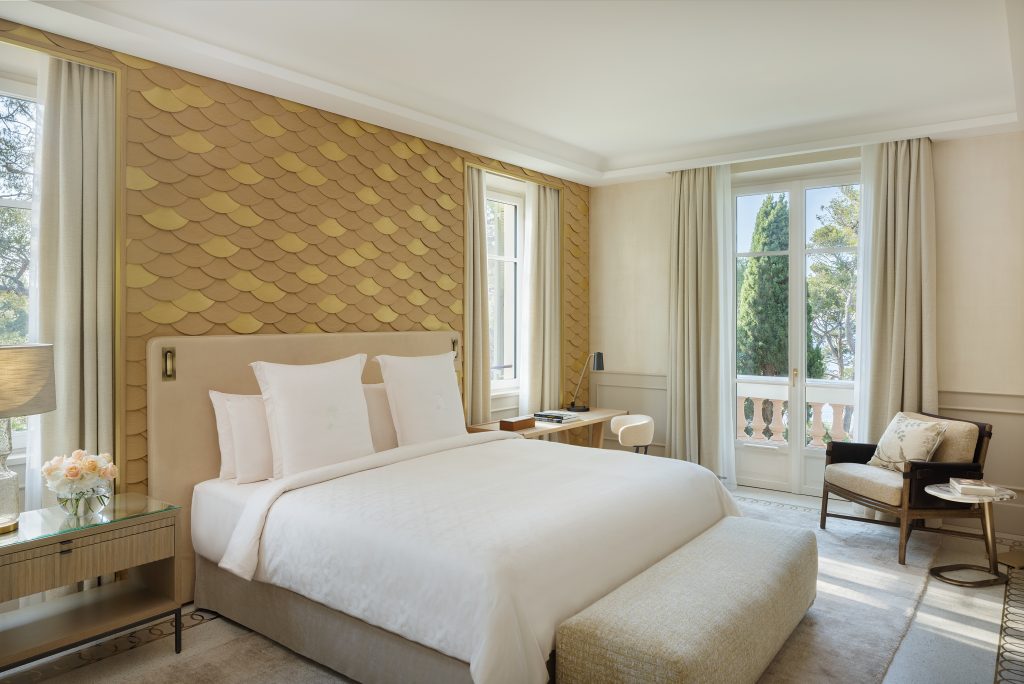
Décor mural ; motif écailles – Atelier Véronique de Soultrait

Wall decoration; scale pattern – Atelier Véronique de Soultrait

Cord marquetry cannot be learnt through a dedicated training course; the craft is passed on at the heart of the workshop. The craftswomen come from a variety of backgrounds, including tapestry, straw marquetry and other manual trades. A few days’ training is enough to tackle the first patterns. As they gain more experience, the pieces become increasingly complex until each artisan is working independently.

Led by Juliette Chazot, the founder of the workshop, two craftswomen and an executive assistant ensure the business runs smoothly. This team embodies the transmission of knowledge that goes beyond mere techniques, drawing on accumulated experience, successive trials, and technical solutions developed over the course of various commissions.

It was this continuity that also made the takeover of the workshop possible. Four years before the handover, Juliette Chazot contacted Véronique de Soultrait to offer her support in developing her business. The time was not yet right. Then, in early 2025, as Juliette began preparing for her retirement, Véronique contacted her again.

This time, Juliette did not hesitate. The sale, which had been in progress for around a year and a half, was finalised on 28 July 2026. A joint management arrangement had been put in place by July, ahead of the handover period in September. This was designed to ensure continuity of expertise and business operations.

“This workshop had become a dream. I never gave up; it had to be this one and no other.’

Two styles, one common thread

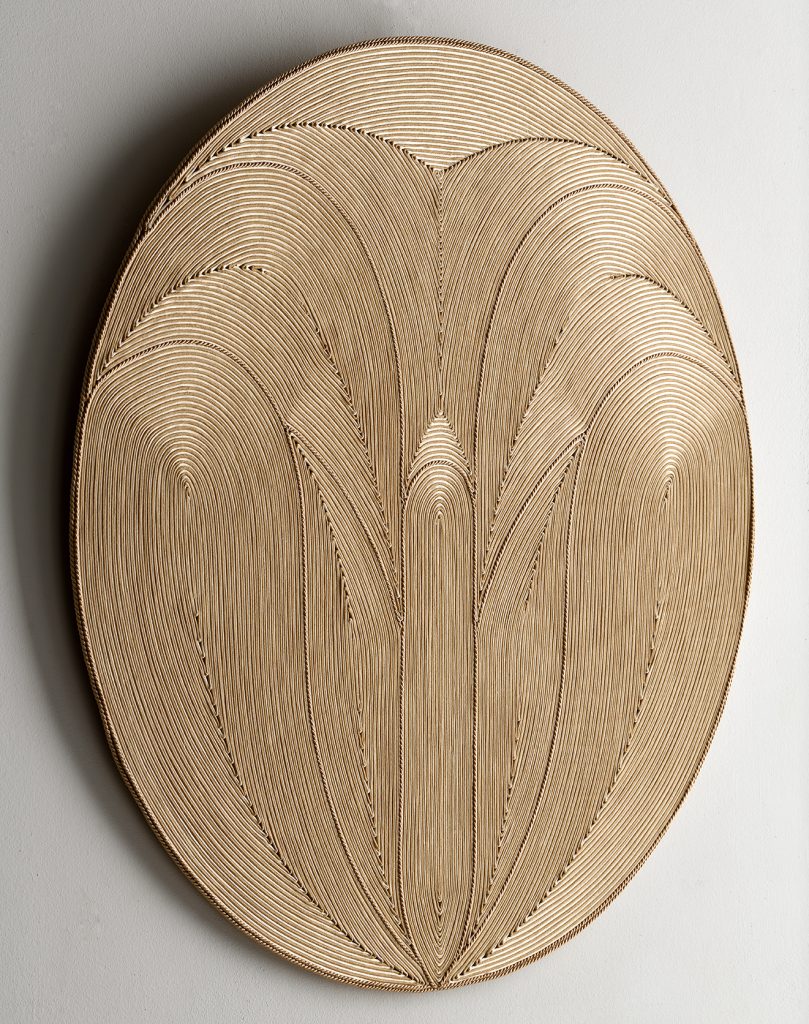
Lotus ; Atelier Véronique de Soultrait

Lotus ; Atelier Véronique de Soultrait

Although the handover is now underway, Véronique de Soultrait has not quite stepped away from the limelight. She is still involved, particularly in supporting Juliette on the artistic side of things. The new manager intends to build on the existing catalogue, which is full of motifs that she wants to preserve, while also developing her own artistic style.

Two main categories form the backbone of this repertoire. On the one hand, there are geometric compositions based on repetition, lines and rhythms. On the other hand are the more lyrical motifs featuring scrolls, spirals, birds and foliage.

Juliette’s favourite motif belongs to the latter. Named ‘Lotus’, it stands out for its three-dimensionality and botanical feel. “I find it very poetic. It could reflect nature as it is, like a water lily.” This sculptural quality, which makes the motif appear to leap off the wall, reflects her taste for organic shapes.

However, her own sensibility will lead her towards more geometric compositions and contemporary colours. Without breaking with the brand’s heritage, she aims to expand the range and combine two worlds: the one that shaped the brand’s identity and the one yet to be created.

The intention is not to turn the page, but to continue the story. Rope will remain the link between these two styles, while the patterns and colour combinations will continue to evolve.

Everything adorned with cord

Tête de lit ; Atelier Véronique de Soultrait

Tête de lit ; Atelier Véronique de Soultrait

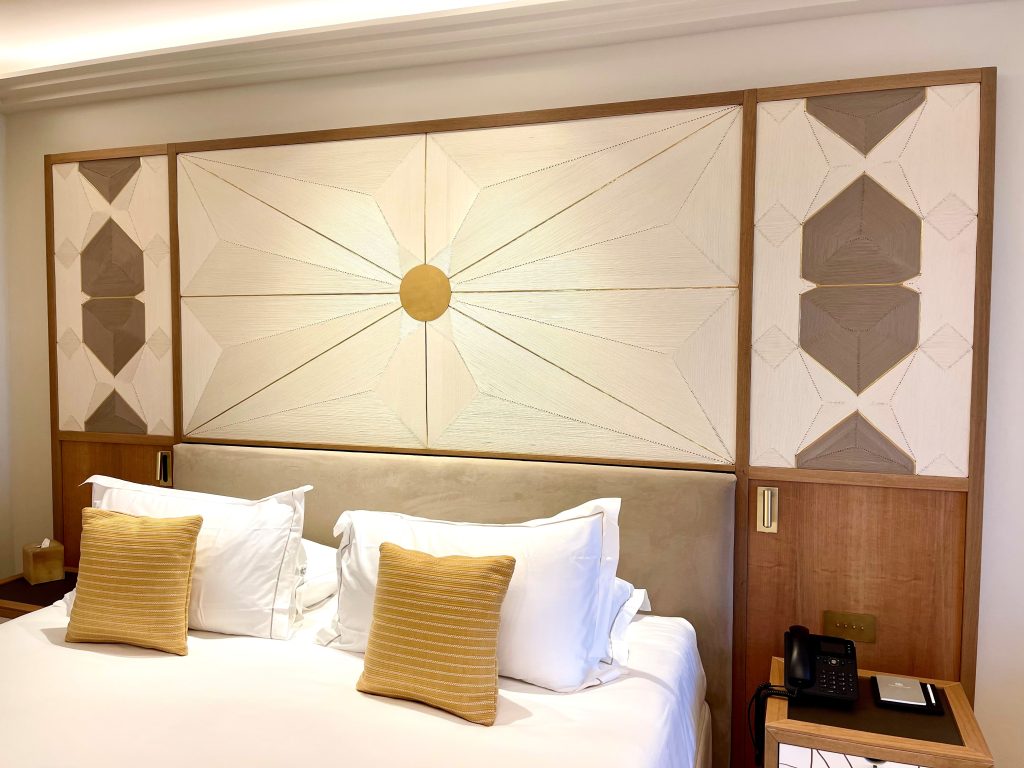
From wall panels and headboards to trellises, screens, drawer fronts and cupboard doors, the applications of cord marquetry are numerous. They are not limited to flat surfaces, either. For projects that go beyond standard formats, the workshop collaborates closely with À Mi-Bois, a joinery and interior design company based in Saint-Didier-en-Velay in the Haute-Loire – the home region of Juliette Chazot.

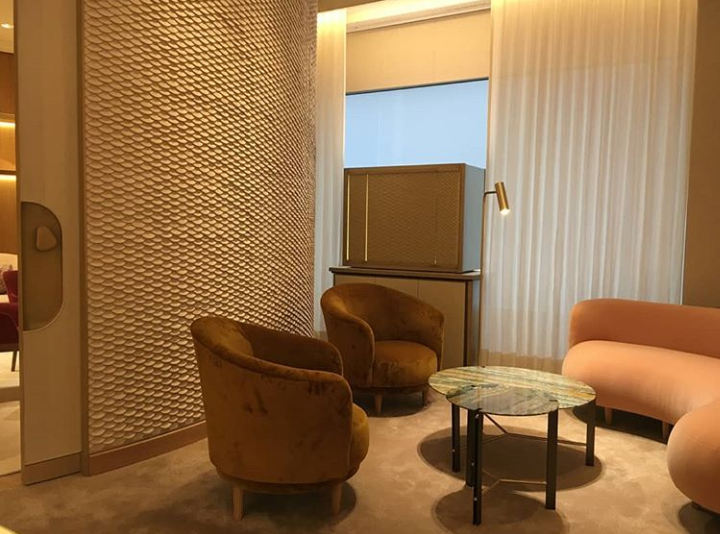
By combining their skills, the joiners and craftswomen can create bespoke solutions for each surface. Examples of this ability to adapt include a cylindrical bar entirely clad in cord, armchairs and a lift whose walls feature the ‘Écailles’ motif in an ivory shade. Each new form requires its own technical study, which is sometimes entirely new, as well as a dialogue between the different trades.

The workshop produces its pieces to order in collaboration with interior architects and designers. Laura Gonzalez, in particular, designed a three-metre-wide door for a Cartier boutique, a project which is featured in her profile on the workshop’s website. Chahan Minassian is another designer with whom the workshop collaborates.

The international dimension is significant: the workshop’s projects are mainly based abroad, and its agents help to introduce this expertise to new specifiers. Rope can thus take the place of a decorative covering that was initially envisaged. Juliette recounts the case of a yacht for which an intricately designed wallpaper had been proposed, only to be rejected by the client. The studio’s Italian agent then suggested rope marquetry, opening up a new direction for the project.

The surprise lies as much in the material as in the result. What one might imagine as a simple cord becomes a patterned surface – sometimes glossy, sometimes matt, always responsive to texture and light. It is this uniqueness that the workshop aims to promote amongst interior decorators, designers and clients.

Tête de lit ; Atelier Véronique de Soultrait

Tête de lit ; Atelier Véronique de Soultrait

A work of art in your home

Atelier Véronique de Soultrait

Atelier Véronique de Soultrait

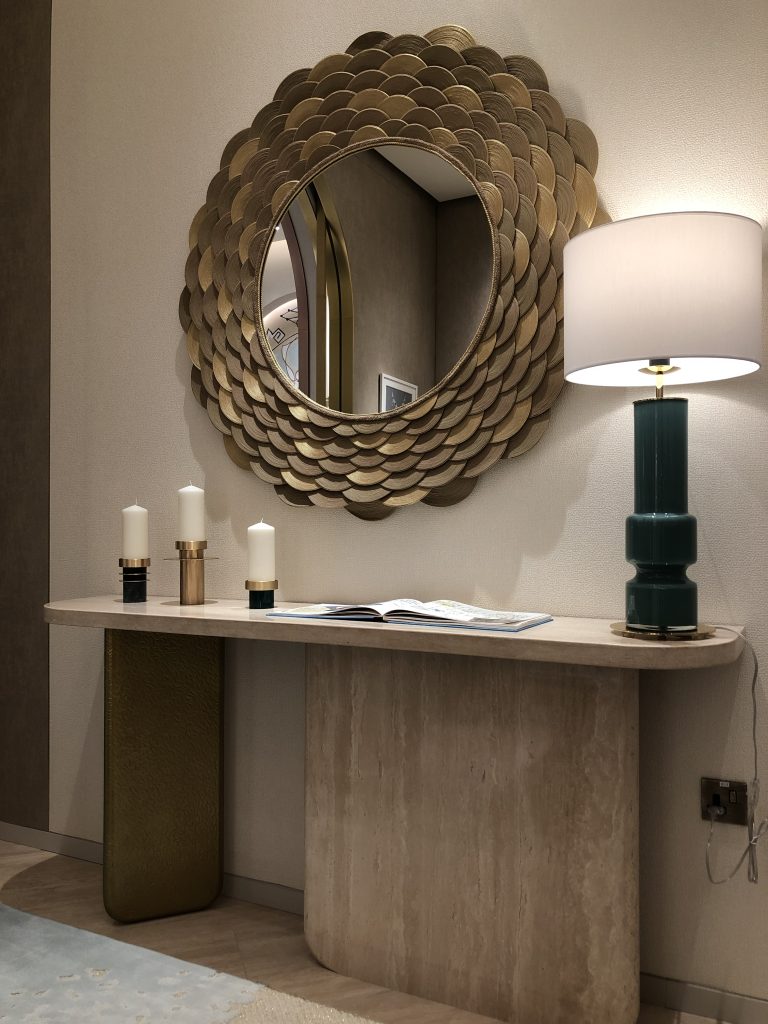
While large-scale creations are impressive, Juliette Chazot is keen to point out that the workshop also caters to private individuals. A mirror, wall piece or headboard could be placed in a spot where a painting or decorative mural might otherwise have been envisaged.

The rope lends a distinctive presence. Its texture, relief and warmth give the décor a tactile quality that cannot be achieved with other finishes. Pieces can be designed for specific spaces according to desired dimensions, colours, and patterns.

This move towards working with private clients is part of a broader ambition: to establish Atelier Véronique de Soultrait as a leading name in rope marquetry, whilst retaining what makes it unique. Juliette wishes to expand the business and its collaborations, whilst preserving its intimate scale and family atmosphere.

“We can cater to a hotel or a yacht, but also to someone who is refurbishing their home and dreams of a beautiful piece in a specific spot.”

In the Lyon workshop, the passing on of skills continues on two levels: that of the techniques, patiently learnt and refined, and that of a creative world which Juliette Chazot intends to develop without erasing its origins. As for the rope itself, it remains true to its promise: a simple material which, in the hands of those who work with it, is capable of giving rise to unexpected designs.

Atelier Véronique de Soultrait

Atelier Véronique de Soultrait

Continue exploring

Pascal Rieu, stained-glass artist and painter of light
Raphaël Barrois: shaping light in glass
Anne Paccard: the perfect harmony of song and bells
Mr Popart, the street artist with a quirky twist
Bagage Collection: vintage trunks that tell a story
Tom Waugh, stone sculptor, the long life of disposable things

Février, 2026

Édition 3 : Patrimoine et création

Créer avec l’existant, penser avec l’histoire

De l’architecture au design, cette édition explore comment lieux, savoir-faire et matières héritées deviennent terrains de création actuelle.

Janvier, 2026

Édition 2 : Quiet luxury

Le luxe se réinvente.

Finis les logos clignotants, place à une sobriété raffinée, à l’immersion personnelle, à l’excellence artisanale, à la durabilité sensible.

Décembre, 2025

Édition 1 : Le sens de la fête

Héritages, gestes contemporains et plaisirs essentiels

Parce que la fête n’est jamais qu’apparence : elle reflète notre manière d’habiter le monde, de transmettre, de fabriquer des souvenirs durables.

ÉDITION #3

Révéler la beauté
‎

Upcycling et kintsugi transforment l’objet contemporain, faisant de la trace, de la réparation et de la matière un langage esthétique.

ÉDITION #3

Les nouveaux artisans du patrimoine

Artisans et designers donnent une seconde vie aux matériaux anciens, entre création contemporaine, patrimoine et réemploi.

ÉDITION #3

L'art à la rescousse des friches et lieux oubliés

Bunkers, wagons et kiosques renaissent grâce à la création, révélant comment l’art redonne sens aux lieux délaissés.

ÉDITION #2

Le murmure du beau
‎

Un regard transversal sur le quiet luxury à travers des lieux, des objets et des figures qui expriment l’élégance.

ÉDITION #1

Lieux, maisons et matières en éclats

Une sélection de marques, architectures, objets et escapades qui donnent corps au sens de la fête.

ÉDITION #3

La création au secours des bâtiments promis à l’oubli

Usines et gares délaissées deviennent lieux culturels ouverts, où mémoire industrielle et usages contemporains redessinent la ville.

ÉDITION #3

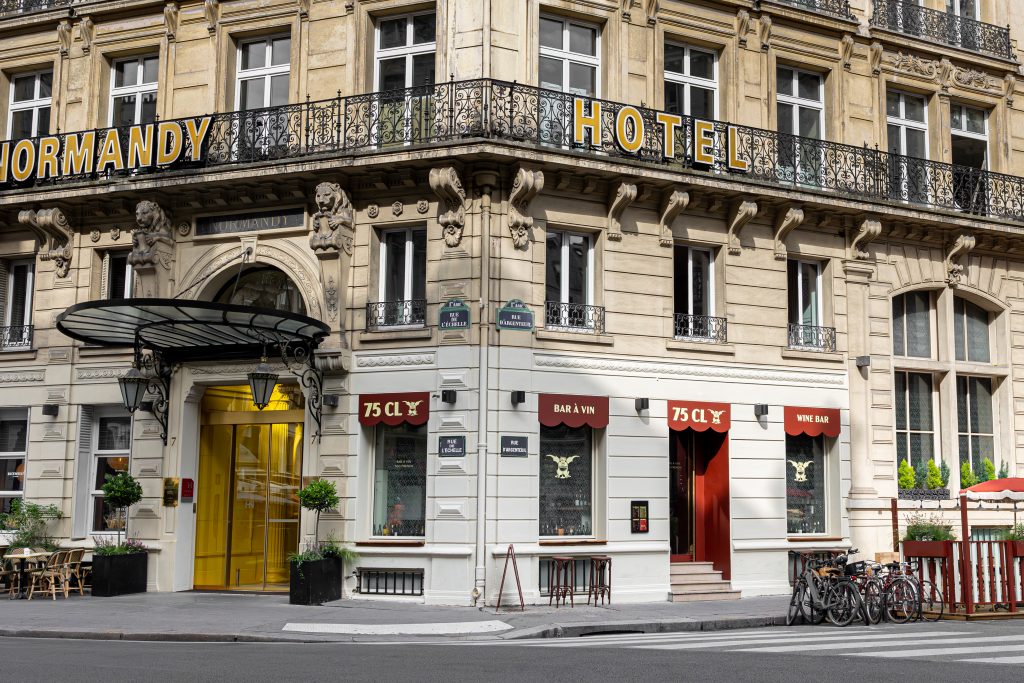
Normandy Hotel Paris Saint-Honoré

L’audacieuse métamorphose d’un palace parisien

ÉDITION #3

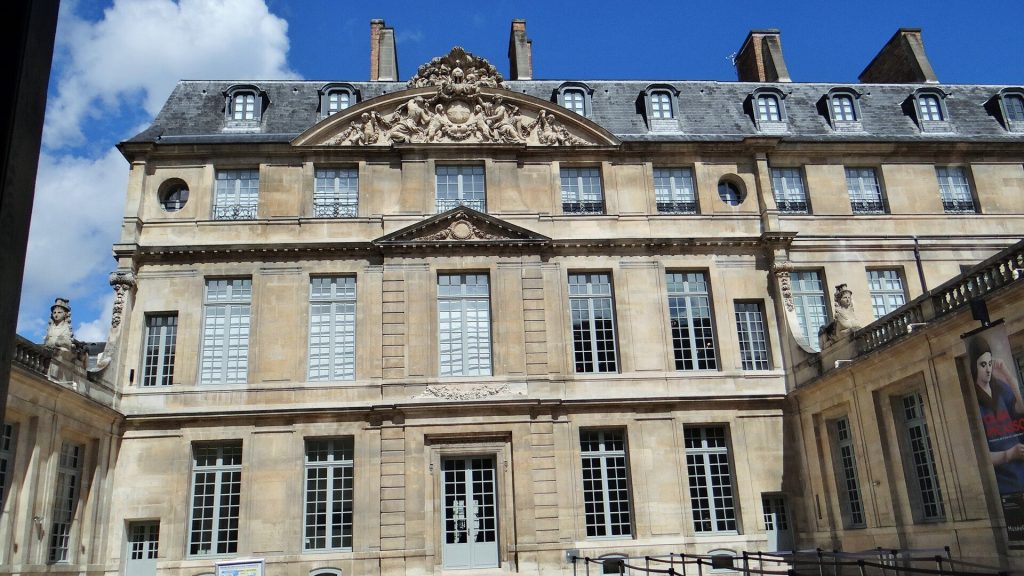
Dans les coulisses du Centre d'Études Picasso à Paris

Au cœur du Marais, un lieu discret révèle comment archives, architecture et recherche font dialoguer l’œuvre de Picasso.

ÉDITION #2

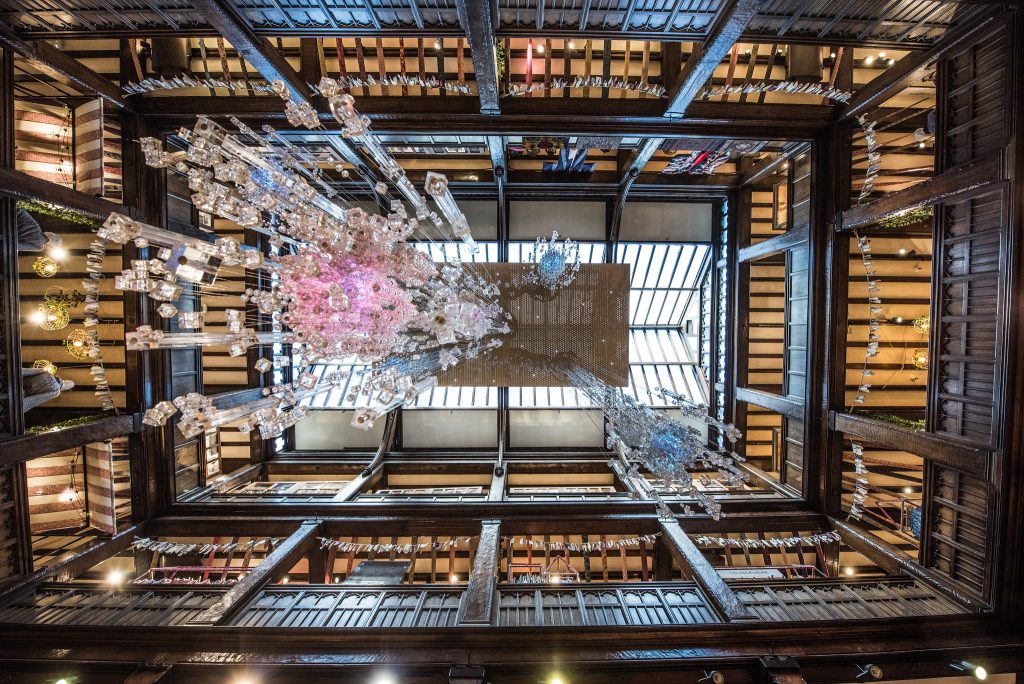
Shopping iconique dans un décor Tudor

Une expérience shopping unique dans un magasin emblématique.

ÉDITION #2

Gastronomie et architecture

Voyage culinaire et architectural au cœur de la Seine

ÉDITION #2

L'art de l'hospitalité parisienne

Dans le 9e arrondissement, un établissement qui invite au quiet luxury

ÉDITION #1

Chante!

Chante! vient d’ouvrir ses portes. Une invitation à vibrer !

ÉDITION #3

La boîte aux lettres française devenue objet de design

Icône du paysage français, la boîte jaune change de statut et s’invite dans l’univers du design.

ÉDITION #3

Retour sur Maison&Objet 2026 : retour aux sources et à l’essentiel

L’édition 2026 affirme une vision où artisanat, design et mémoire façonnent l’habitat contemporain, international actuel.

ÉDITION #3

Art Deco: un mouvement centenaire, plus actuel que jamais

Cent ans après 1925, l’Art déco revient dans nos villes et intérieurs avec géométrie, audace, optimisme.

ÉDITION #3

Royal Limoges, deux siècles d’histoire au présent

Depuis plus de deux cents ans, Royal Limoges conjugue porcelaine, savoir-faire industriel et création contemporaine.

ÉDITION #3

Du terrain à la rue et au catwalk : les sneakers à travers les époques

Des terrains de sport aux podiums, la sneaker raconte un siècle de mutations culturelles, techniques et stylistiques.

ÉDITION #2

La formidable aventure du papier peint de luxe

Design, mode, artisanat : des créations où la forme et la matière se répondent avec justesse, loin de tout effet de mode.

ÉDITION #1

Icônes, détails, rituels
‎

Décorations artisanales, calendriers ultra-luxe et pièces de collection pour s’enivrer de joie avant l’heure.

ÉDITION #3

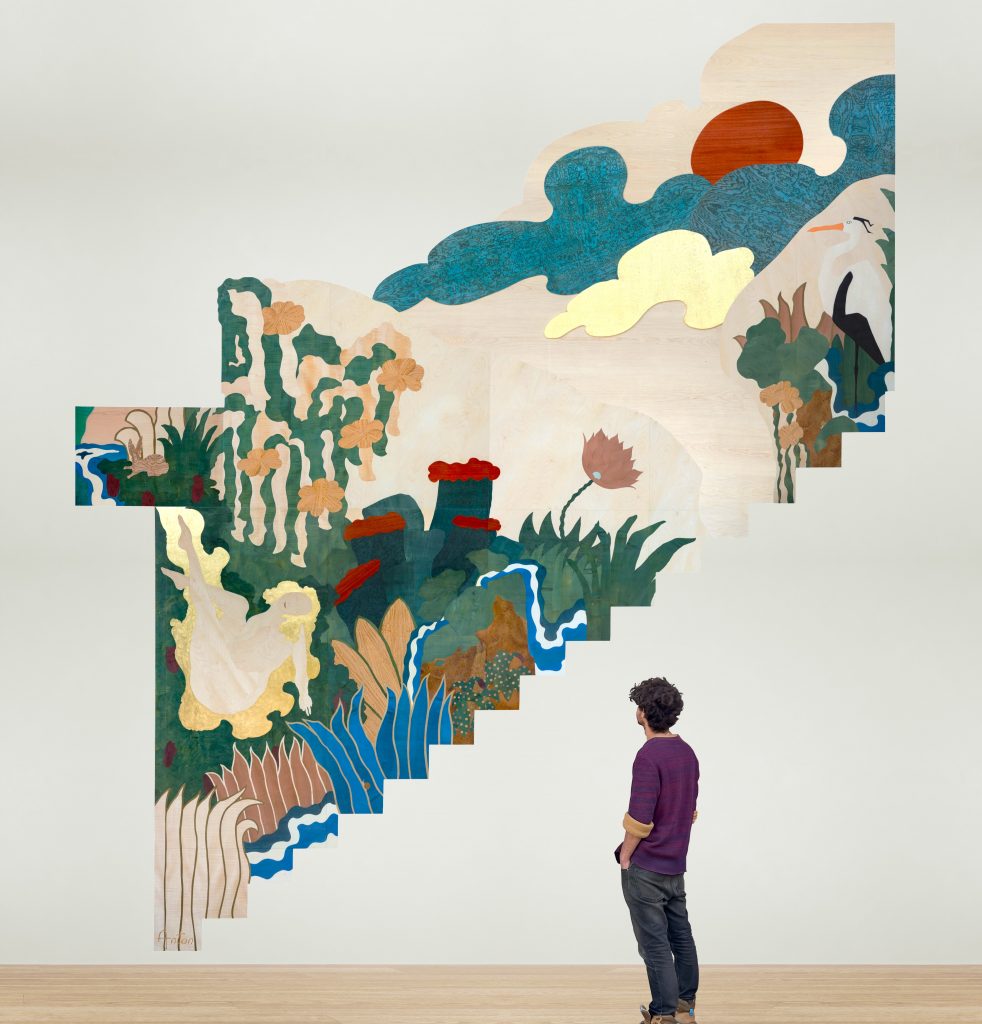
Anton Laborde

Entre marqueterie monumentale et jungle symbolique, Anton Laborde transforme le bois en récit contemporain poétique engagé.

ÉDITION #3

Thierry Laudren

À Maison & Objet, Thierry Laudren présente des meubles sculptés où fonction, matière et lenteur façonnent une présence.

ÉDITION #3

Jean Nouvel

Jean Nouvel conçoit une architecture attentive aux contextes, où lumière, histoire et usages façonnent chaque projet.

ÉDITION #3

Sophie Morel

À Lyon, Sophie Morel rénove des lieux historiques en alliant respect du bâti et écriture contemporaine.

ÉDITION #3

Pascal Grasso

Au Centre d’Études Picasso, l’architecte compose une architecture où lumière, géométrie et héritage dialoguent avec précision.

ÉDITION #2

Alexandre Danan

Entretien avec le fondateur d’EDO (European Design Office)

ÉDITION #2

Aziz Temimi

Portrait d’un visionnaire qui transforme l’art de recevoir en expérience totale.

ÉDITION #1

Visages, gestes, inspirations

Personnalités, artisans et créateurs qui donnent à la fête sa profondeur humaine.

ÉDITION #3

Chemins de traverse : parenthèse d’exception en Bordelais

De Bordeaux au Bassin, art, vignobles et bien-être composent une échappée élégante au cœur de la Gironde.

ÉDITION #2

Voyage en Toscane
‎

Vers une région de l’Italie habitée par le temps, où paysages, culture et usages s’accordent dans une continuité rare.

ÉDITION #1

Horizons, saisons, traditions
‎

Destinations et rituels qui réinventent la fête, du soleil tropical aux marchés d’hiver.

Dates, adresses, invitations

Expositions, événements et repères culturels pour vivre pleinement la saison des fêtes.