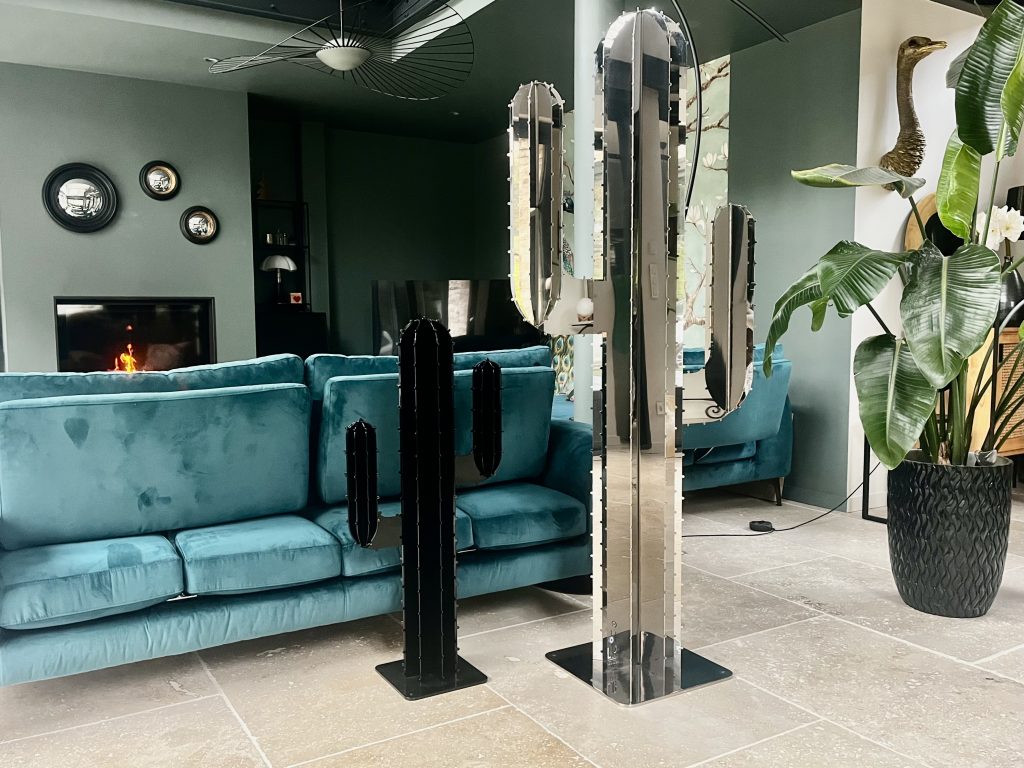
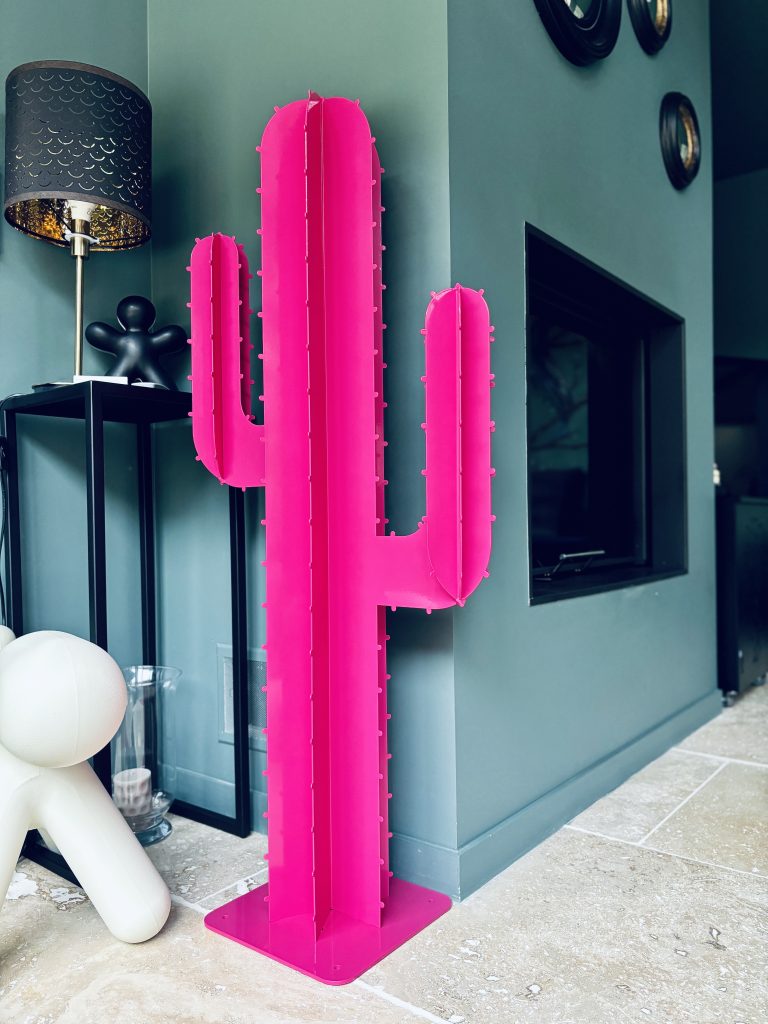
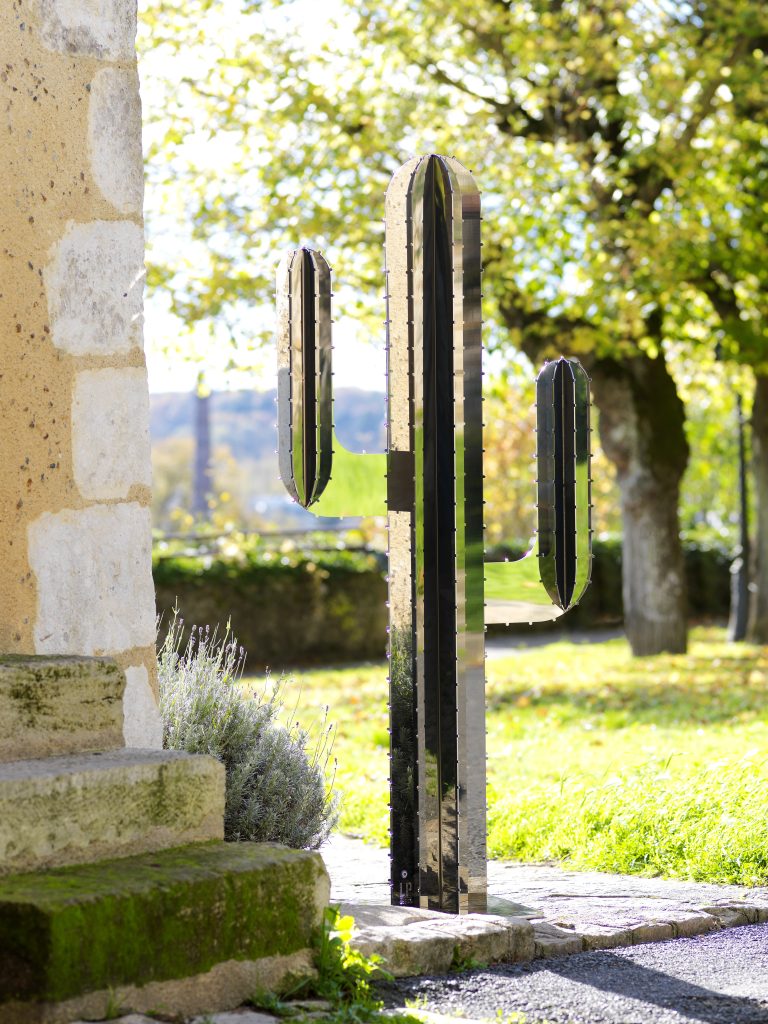
Whether placed in a hotel lobby, contemporary garden or by a swimming pool, the Mirage Cactus is sure to turn heads. Its mirror-polished stainless steel surface reflects the sky, foliage, and surrounding lights, transforming the sculpture as the hours pass. Conceived and crafted in Touraine, this spectacular cactus also represents a family business that has evolved into a French furniture and interior design brand.
Patricia Poinsaut; LP Design
The Cactus Mirage occupies a unique position in the world of LP Design. Its material – mirror-polished stainless steel with an ultra-glossy finish – transforms an already imposing sculpture into a true object of contemplation.
The silhouette is that of a branched cactus, but the surface acts as a distorted mirror reflecting the sculpture’s volumes. A blue sky seems to cling to it; a façade takes shape on its surface; the green of a tree follows its curve. As night falls, the surrounding lights take over. The sculpture is not merely placed within a setting; it captures and reflects it back.
This is what gives the sculpture its name. Depending on its surroundings, the Cactus Mirage seems to change its appearance.
Available in several sizes up to 1.8 metres high, this model is designed for spaces where a strong focal point is desired, whether indoors or outdoors. It is a spectacular piece yet sufficiently graphic to complement a wide variety of styles.
Perhaps that is where its elegance lies: the Cactus Mirage does not impose an additional colour or texture on the décor. Instead, it plays with what is already there.
Patricia Poinsaut; LP Design
To understand LP Design, we have to go back a few decades.
In 1981, Joël Duchesne established a metalwork business in Touraine. Over the years, the workshop has developed its skills and invested in various areas of expertise, ranging from locksmithing and conservatories to industrial work, laser cutting, bending, welding, drilling, forming and assembly.
His son Loïc joined the business at the age of eighteen. The handover began on the shop floor, working alongside the machinery and teams. The principle was that one must understand how things are made before designing or managing.
In 2012, Loïc took over the reins of the family business in turn. Patricia Poinsaut joined the company in 2010. She discovered a world whose codes she had not yet mastered, but which she would gradually make her own: steel, aluminium, stainless steel, Corten steel, copper and brass. She learnt about the materials, technical constraints and manufacturing possibilities, and above all, the moment when an idea must move from drawing to reality.
LP Design was born from this meeting of imagination and craftsmanship.
Patricia Poinsaut; LP Design
The idea for the cacti came from Patricia’s travels and observations. While in Morocco, Spain and the south of France, Patricia noticed metal sculptures installed in gardens. She then envisaged creating a piece for her own outdoor space, which she discussed with her partner, Loïc.
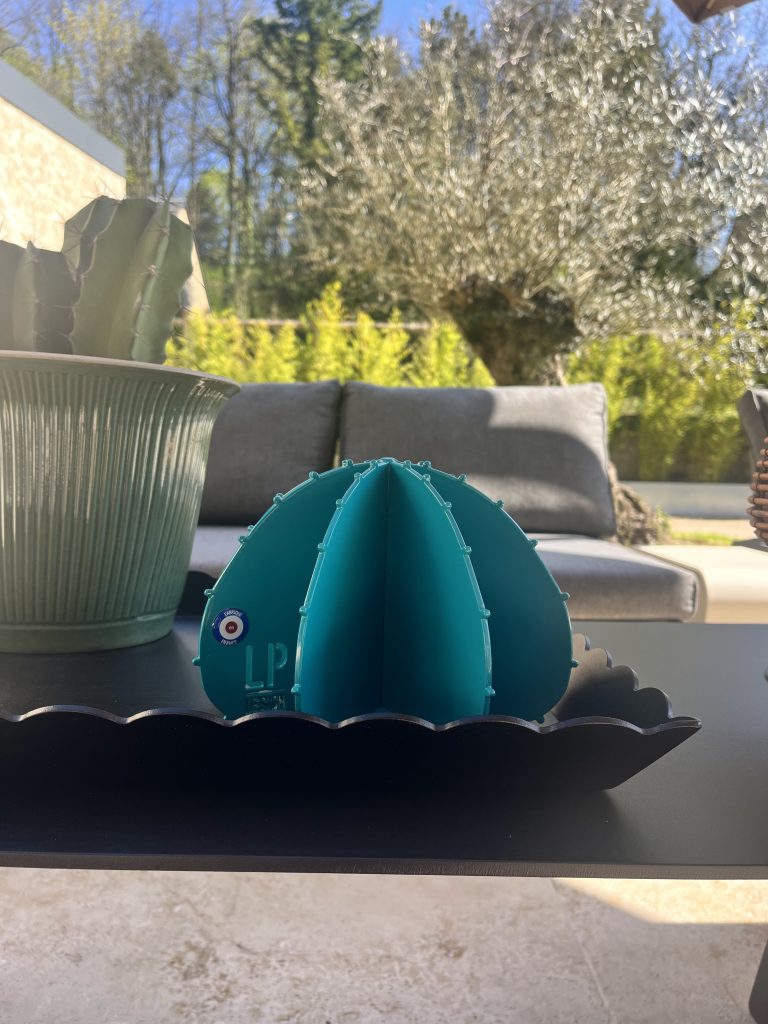
The first prototype was created in 2019. It could have remained in their garden. However, when it was photographed in distinctive locations, the response was immediate. The prototype eventually became the first in a series. Between July 2019 and January 2020, the range expanded to include branch-shaped and ball-shaped cacti in various sizes and silhouettes. This new venture needed a name. LP Design was chosen: L for Loïc and P for Patricia.
A few months later, in January 2020, the brand presented its first creations at the Maison&Objet trade fair in Paris. The project then grew in scale: what had initially been an idea for a couple became a fully-fledged collection of furniture and home décor.
Patricia Poinsaut; LP Design
LP Design’s work focuses particularly on creating a dialogue between form and material.
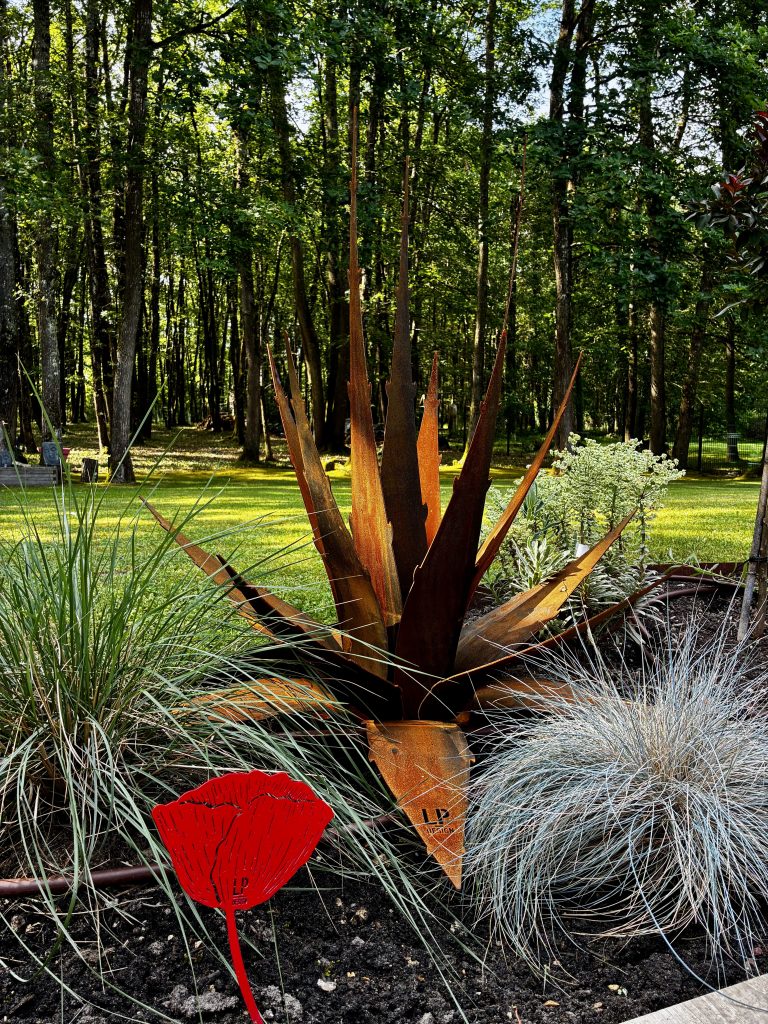
Aluminium offers lightness and corrosion resistance. It is used to create cacti in the shape of branches and balls, as well as tall palm trees, all with coloured finishes suitable for outdoor use. Some models can incorporate LED lighting.
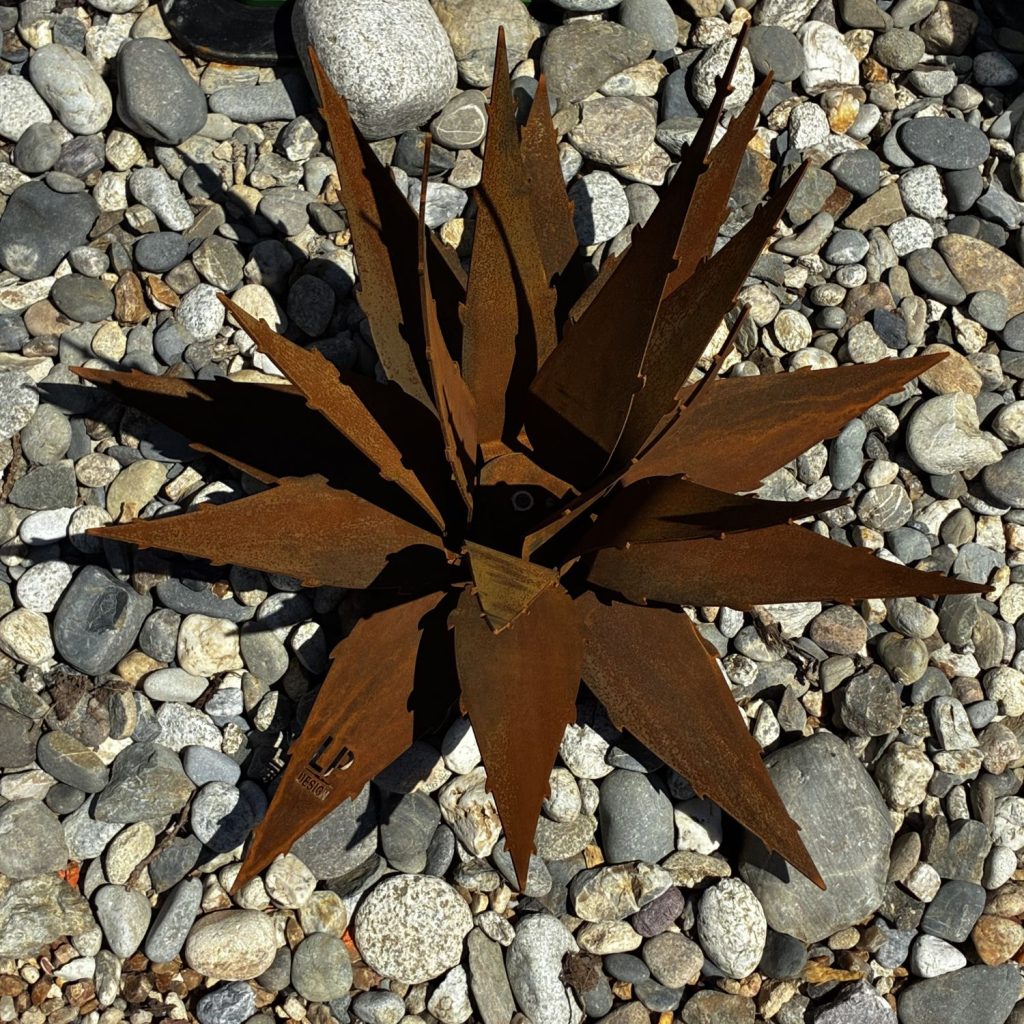
Corten steel plays a completely different role. When exposed to the elements, it gradually develops a warm, nuanced patina. Each piece evolves over time in response to its environment.
Then there is the mirror-polished stainless steel of the Cactus Mirage, which is shiny, reflective and almost ethereal.
However, cacti are only one part of the LP Design universe. The catalogue also includes furniture, planters, garden features, decorative leaves, origami-inspired metal animals, and a range of homeware.
Ultimately, this diversity tells the same story: a company that takes inspiration from metal but refuses to be confined by it. “I didn’t go to design school; I work on instinct,” explains Patricia. An idea springs to mind, moves into the design phase and then into production, evolving until it finds its final form. This freedom lies at the heart of LP Design’s identity.
Patricia Poinsaut; LP Design
LP Design conceives the designs, which are then manufactured at the Duchesne workshops in Château-Renault, a few kilometres from Vouvray.
It is there that ideas become reality: sheets of metal are formed into curves, assemblies take shape, and raw materials are transformed into objects designed to withstand the elements or complement an interior for years to come.
This close link between design and manufacture is one of the brand’s strengths. It enables the company to work on bespoke projects and meet the needs of professionals, including architects, landscape architects, interior designers, hotels, restaurants, and concept stores, as well as private individuals.
LP Design also prides itself on a direct-to-consumer sales model, which enables it to maintain close connections with clients and the intended recipients of its creations.
Patricia Poinsaut; LP Design
In 2025, LP Design took a new step forward, becoming LP Design France, a fully-fledged company led by Patricia Poinsaut.
Production remains based in Touraine, while the brand is gradually establishing its own niche in French decorative design at the intersection of craftsmanship, industry, and contemporary creation.
And metal may well be just the beginning.
Patricia is already envisaging new collaborations and materials, such as wood and stone.
The aim is not simply to increase the number of items in the catalogue, but to build a coherent universe over time that can embrace other forms, skills and craftspeople.
The Cactus Mirage embodies this philosophy perfectly. It is simultaneously a feat of craftsmanship, a decorative sculpture and a surface open to its surroundings.
To discover the Cactus Mirage, as well as the aluminium and Corten steel cacti, furniture, Origami collections and garden features, simply step inside LP Design. The website showcases this entire world, conceived and crafted in Touraine, as well as the possibilities for bespoke projects.

Février, 2026
Créer avec l’existant, penser avec l’histoire
De l’architecture au design, cette édition explore comment lieux, savoir-faire et matières héritées deviennent terrains de création actuelle.
Janvier, 2026
Le luxe se réinvente.
Finis les logos clignotants, place à une sobriété raffinée, à l’immersion personnelle, à l’excellence artisanale, à la durabilité sensible.
Décembre, 2025
Héritages, gestes contemporains et plaisirs essentiels
Parce que la fête n’est jamais qu’apparence : elle reflète notre manière d’habiter le monde, de transmettre, de fabriquer des souvenirs durables.
ÉDITION #3
Upcycling et kintsugi transforment l’objet contemporain, faisant de la trace, de la réparation et de la matière un langage esthétique.
ÉDITION #3
Artisans et designers donnent une seconde vie aux matériaux anciens, entre création contemporaine, patrimoine et réemploi.
ÉDITION #3
Bunkers, wagons et kiosques renaissent grâce à la création, révélant comment l’art redonne sens aux lieux délaissés.
ÉDITION #2
Un regard transversal sur le quiet luxury à travers des lieux, des objets et des figures qui expriment l’élégance.
ÉDITION #1
Une sélection de marques, architectures, objets et escapades qui donnent corps au sens de la fête.
ÉDITION #3
Usines et gares délaissées deviennent lieux culturels ouverts, où mémoire industrielle et usages contemporains redessinent la ville.
ÉDITION #3
L’audacieuse métamorphose d’un palace parisien
ÉDITION #3
Au cœur du Marais, un lieu discret révèle comment archives, architecture et recherche font dialoguer l’œuvre de Picasso.
ÉDITION #2
Une expérience shopping unique dans un magasin emblématique.
ÉDITION #2
Voyage culinaire et architectural au cœur de la Seine
ÉDITION #2
Dans le 9e arrondissement, un établissement qui invite au quiet luxury
ÉDITION #1
Chante! vient d’ouvrir ses portes. Une invitation à vibrer !
ÉDITION #3
Icône du paysage français, la boîte jaune change de statut et s’invite dans l’univers du design.
ÉDITION #3
L’édition 2026 affirme une vision où artisanat, design et mémoire façonnent l’habitat contemporain, international actuel.
ÉDITION #3
Cent ans après 1925, l’Art déco revient dans nos villes et intérieurs avec géométrie, audace, optimisme.
ÉDITION #3
Depuis plus de deux cents ans, Royal Limoges conjugue porcelaine, savoir-faire industriel et création contemporaine.
ÉDITION #3
Des terrains de sport aux podiums, la sneaker raconte un siècle de mutations culturelles, techniques et stylistiques.
ÉDITION #2
Design, mode, artisanat : des créations où la forme et la matière se répondent avec justesse, loin de tout effet de mode.
ÉDITION #1
Décorations artisanales, calendriers ultra-luxe et pièces de collection pour s’enivrer de joie avant l’heure.
ÉDITION #3
Entre marqueterie monumentale et jungle symbolique, Anton Laborde transforme le bois en récit contemporain poétique engagé.
ÉDITION #3
À Maison & Objet, Thierry Laudren présente des meubles sculptés où fonction, matière et lenteur façonnent une présence.
ÉDITION #3
Jean Nouvel conçoit une architecture attentive aux contextes, où lumière, histoire et usages façonnent chaque projet.
ÉDITION #3
À Lyon, Sophie Morel rénove des lieux historiques en alliant respect du bâti et écriture contemporaine.
ÉDITION #3
Au Centre d’Études Picasso, l’architecte compose une architecture où lumière, géométrie et héritage dialoguent avec précision.
ÉDITION #2
Entretien avec le fondateur d’EDO (European Design Office)
ÉDITION #2
Portrait d’un visionnaire qui transforme l’art de recevoir en expérience totale.
ÉDITION #1
Personnalités, artisans et créateurs qui donnent à la fête sa profondeur humaine.
ÉDITION #3
De Bordeaux au Bassin, art, vignobles et bien-être composent une échappée élégante au cœur de la Gironde.
ÉDITION #2
Vers une région de l’Italie habitée par le temps, où paysages, culture et usages s’accordent dans une continuité rare.
ÉDITION #1
Destinations et rituels qui réinventent la fête, du soleil tropical aux marchés d’hiver.