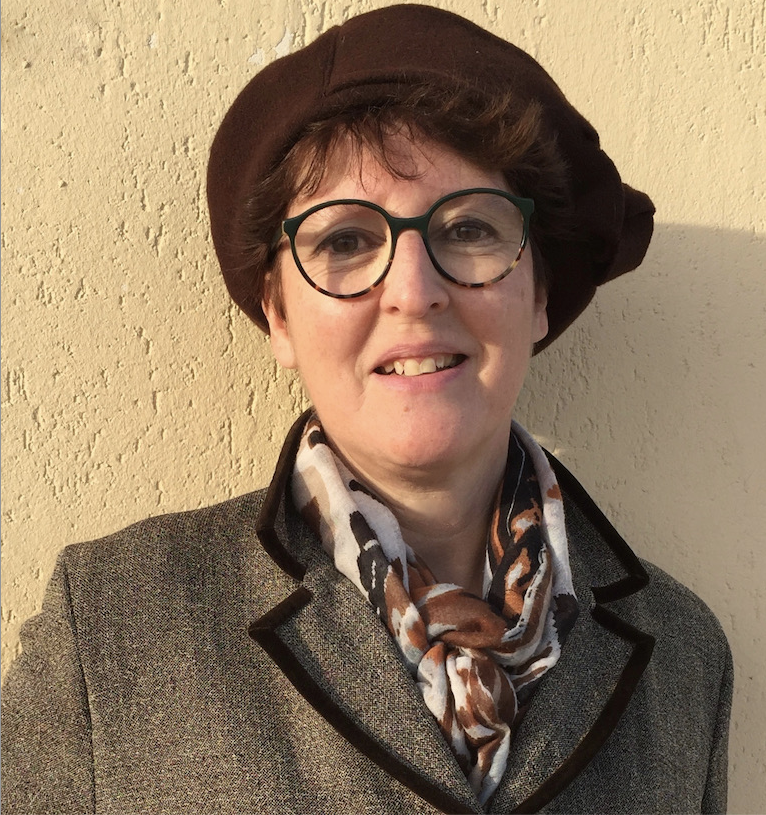
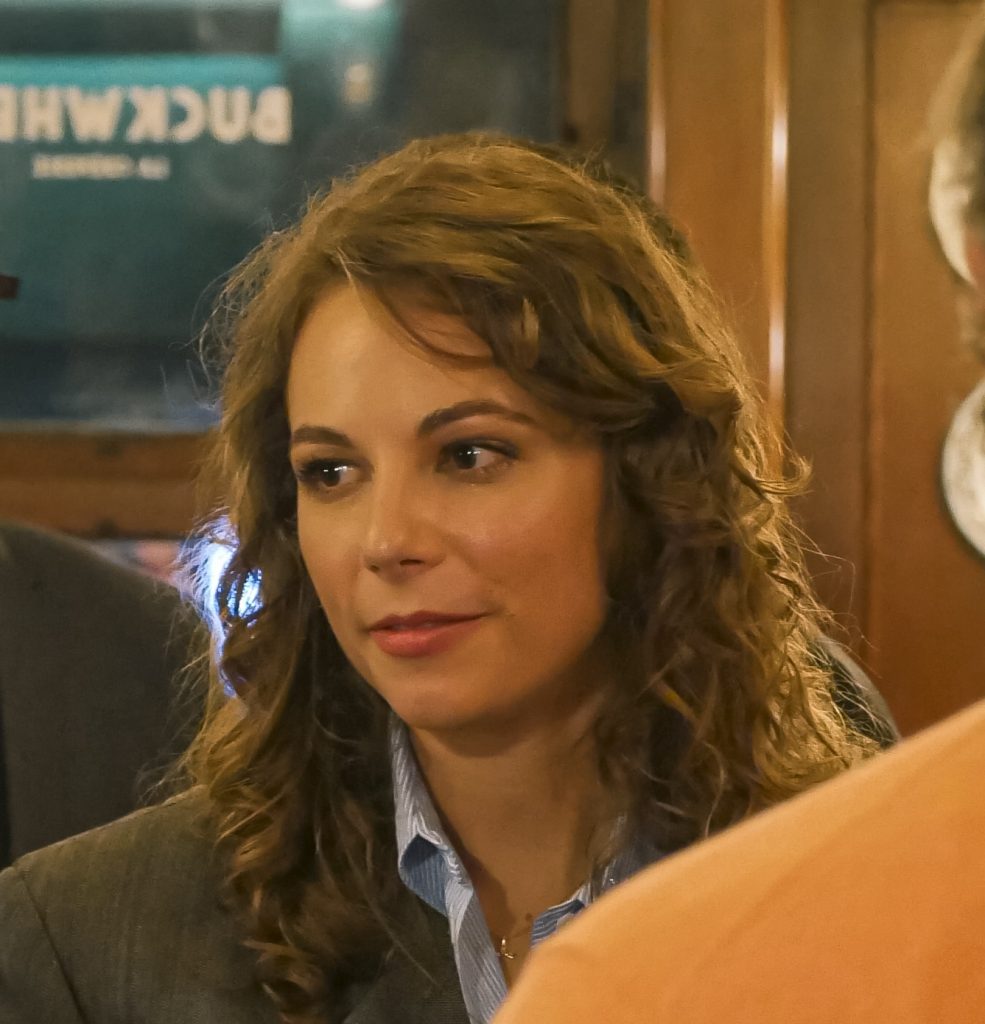
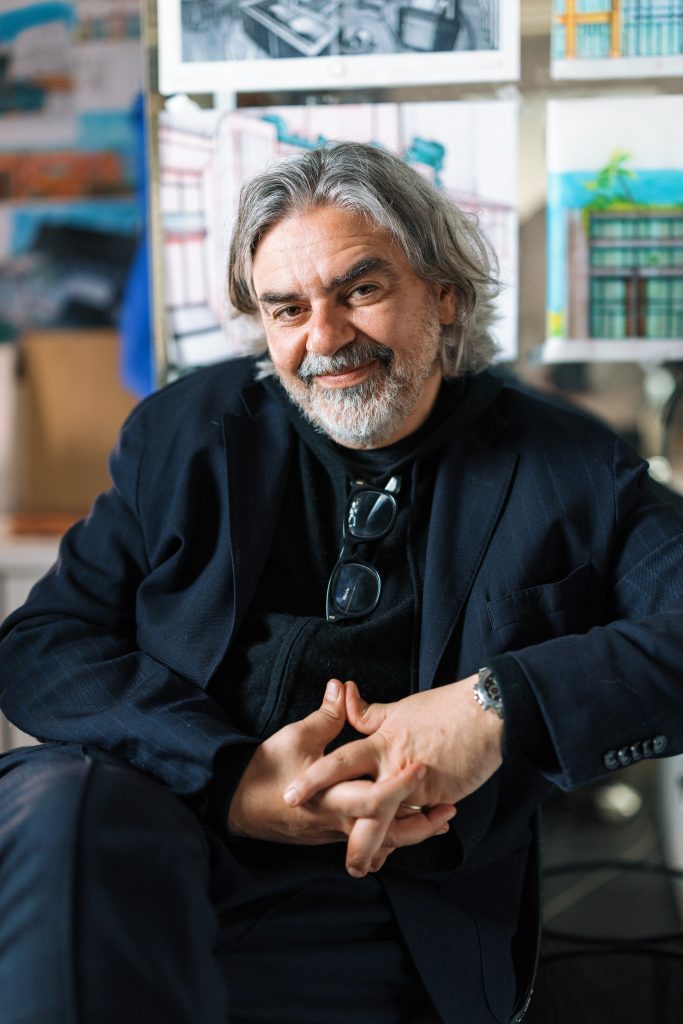
Having trained at the École du Louvre and worked on projects for the Presidency of the Republic and diplomatic residences spanning from Tallinn to Antananarivo, Pascale Rolland-Durand now applies her discerning eye and exacting standards to period homes. From her studio in Montmartre, Paris, she restores 18th and 19th century interiors with quiet obsession, striving to restore the original harmony down to the finest detail. A portrait of a colourist who works with time.
Pascale Rolland-Durand ; Studio PRD
It all began with art history. Pascale Rolland-Durand graduated from the École du Louvre, specialising in museology. From a very early age, she knew that she wanted to take the curatorial entrance exam. During her studies, she worked tirelessly at a contemporary art gallery in the Bastille district and later at Yves Michaeloff on Rue Royale, where she discovered silk carpets worn by models on the catwalk. However, the art market left her wanting more. “As I met people, I realised that, apart from a few specialists, I was dealing with dealers,” she says. Her eye was trained and her taste refined. What followed took a different path… that of lived experience.
Pascale Rolland-Durand ; Studio PRD
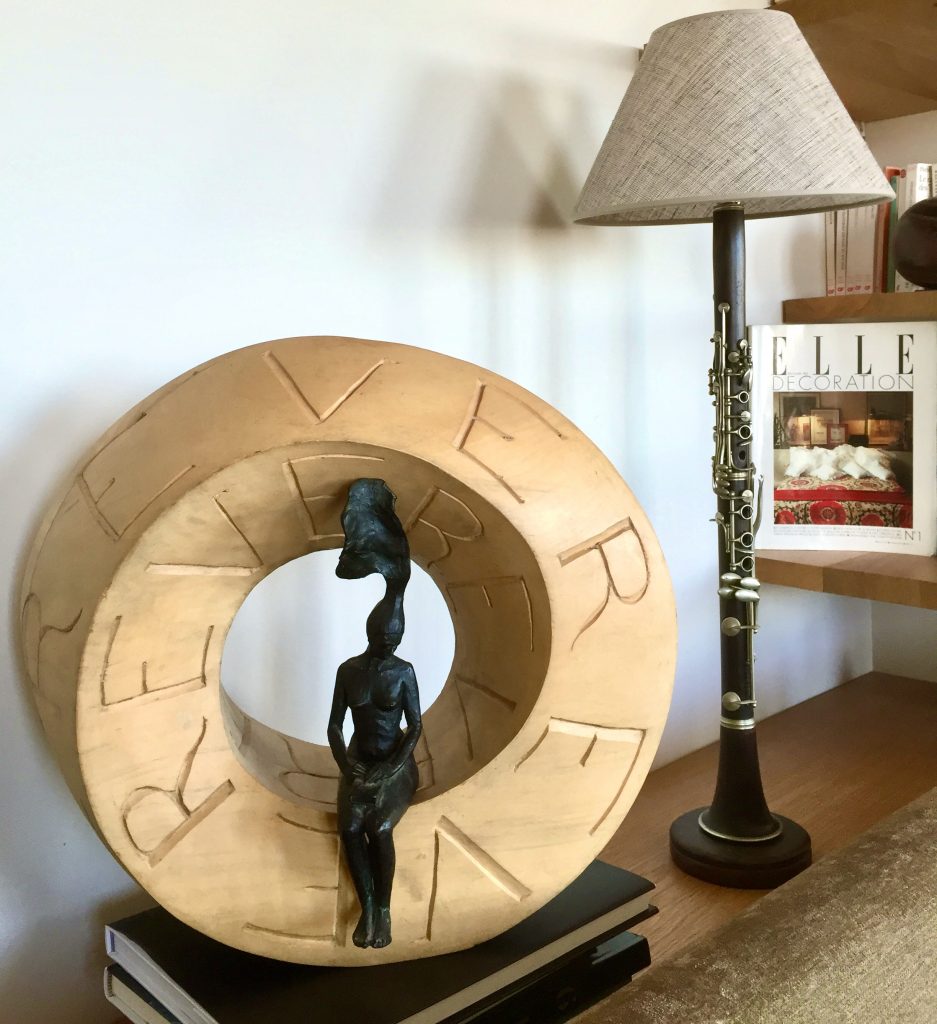
When she was twenty-three, Pascale met Catherine Colé, an interior designer based in the seventh arrondissement of Paris, who became her mentor. At that time, Françoise Labro was creating the first issue of Elle Décoration. Pascale learnt everything there was to know about proportions, materials and the rigours of working on a construction site. The projects quickly became substantial, including the waiting room for the spokesperson of the Presidency of the Republic and François Mitterrand’s office during his second seven-year term. Then came Frédérique Bredin’s office, Minister for Youth and Sports, where, still an assistant, Pascale coordinated a dozen contractors. ‘I learnt a great deal,’ she sums up modestly.

Pascale Rolland-Durand ; Studio PRD
What followed was a series of new beginnings. In 1992, she took part in renovating the residence of the French ambassador in Estonia. She then joined OGER International, a design consultancy firm with three hundred employees, which was designing projects for the Saudi Arabian royal court, including the reconstruction of the Alhambra in Granada. Simultaneously, she worked in Dubai and Madagascar, notably on a 1,200-square-metre villa that would become the residence of the Moroccan ambassador. She oversaw every aspect of this project, from the interior architecture to the crockery and household linen. Although she would never live there herself, these projects reinforced her belief that interior design is only complete when it encompasses every aspect of a space, from the overall layout to the most intimate detail.
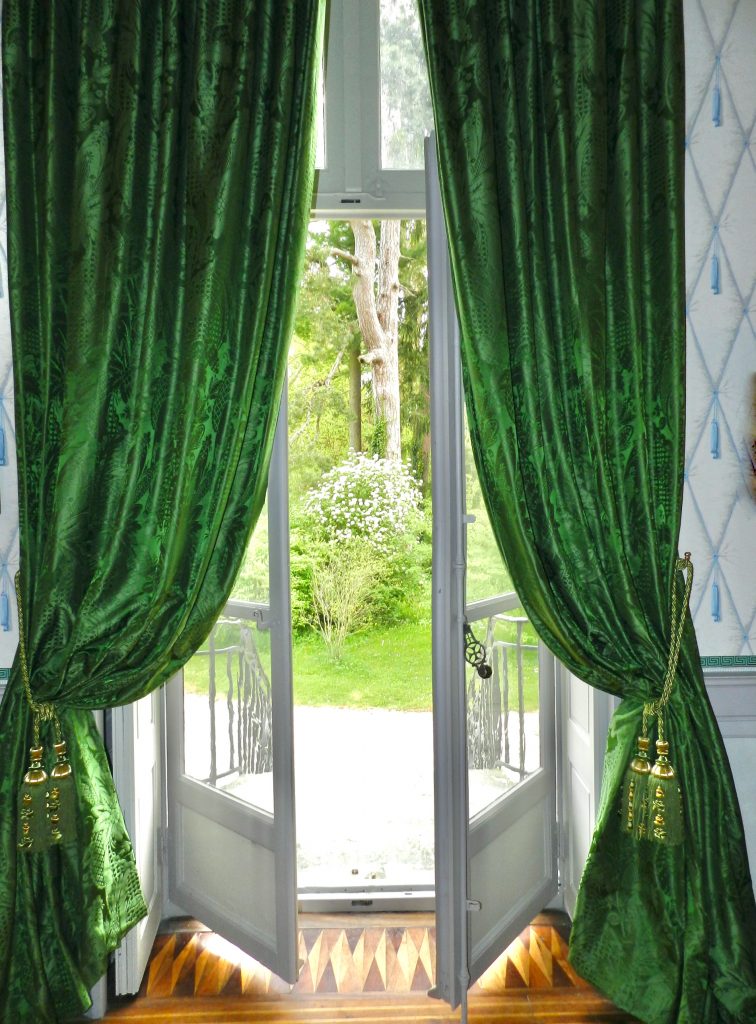
After exploring the field, Pascale Rolland-Durand has refocused her work. She has never really left the owners of beautiful French homes, and it is now to them that she devotes most of her energy. In Auvergne-Rhône-Alpes, she has worked with clients she describes as ‘keepers of memory’ for over thirty years — akin to the silk merchants of Lyon, committed to passing on their craft. The work is carried out room by room and season by season. “Everything is woven together over the years,” she says. The properties are occasionally opened to the public at weekends in spring or summer to showcase their gardens, but the interiors remain private. It is through this patient pursuit that the right balance is achieved.
Pascale Rolland-Durand ; Studio PRD
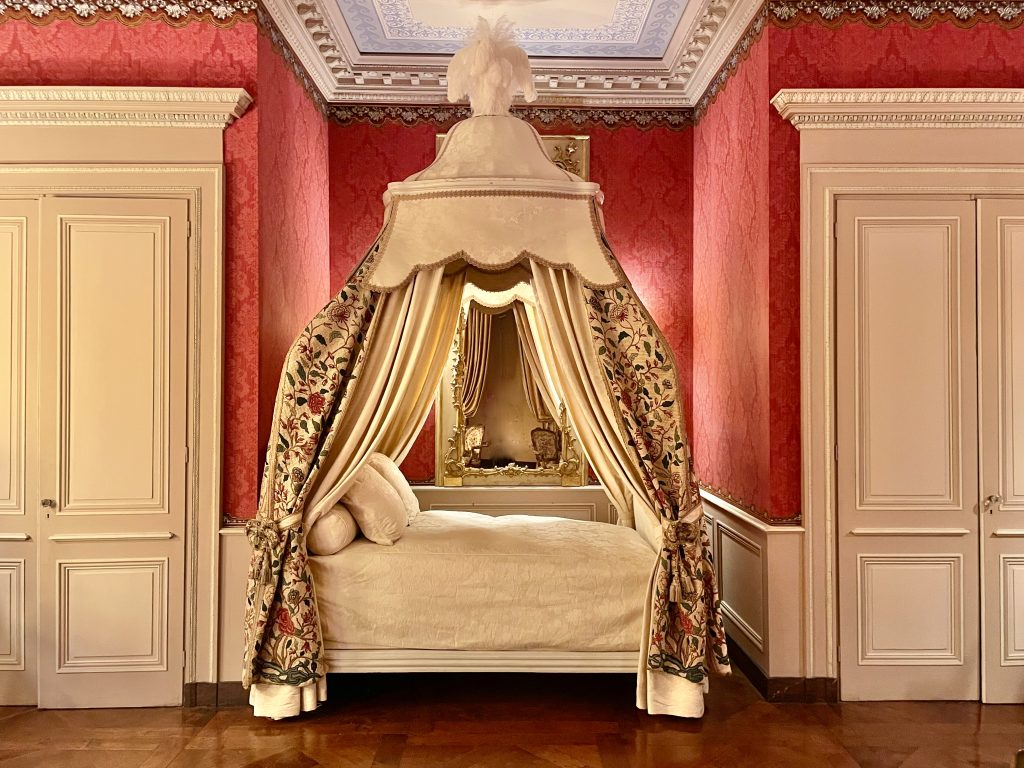
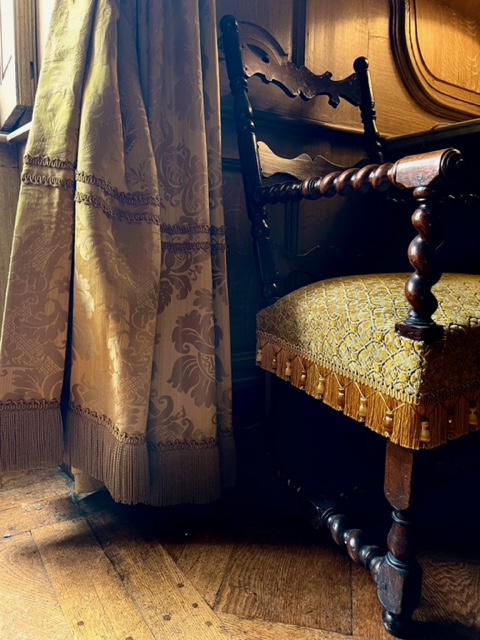
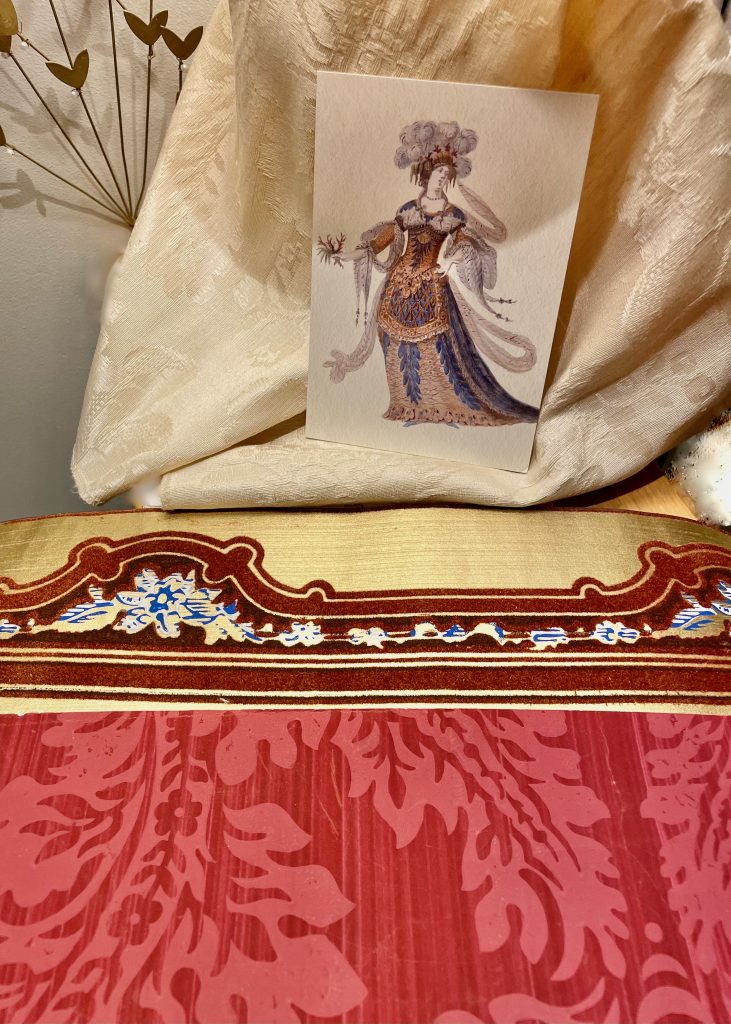
For Pascale Rolland-Durand, projects often begin in the archives or at the Musée des Arts Décoratifs. The aim is to reconnect with the heritage of the piece before taking any action. She enjoys observing the production of hand-printed wallpaper at the Atelier d’Offard in Tours. She selects fabrics from Prelle, Rubelli, Edmond Petit and Lelièvre Paris, always staying true to the spirit of the space while adhering to budget constraints. For the ceremonial bed set to receive the VMF Belle Main Award at the Fondation du Patrimoine, she commissioned Paris Passementerie to produce bespoke, handmade trimmings inspired by Mamluk tradition in Egypt, which influenced the workshops of Louis XIV. The most intricately crafted antique elements are cleaned and preserved, while the rest are recreated by hand. “You have to get the details right all the way through,” she insists. When she turns over an antique flower-shaped tassel to reveal its original colours, a whole world of colour comes to life.
Pascale Rolland-Durand ; Studio PRD
Her attention to detail focuses on proportions, precise shade selection and trim placement. However, her intention is always the same: to make people feel at ease and at home, whether they are in a room with four-metre-high ceilings or a more intimate living room. “Even for modest projects, luxury lies in taking an idea and making it a reality,” she says. What is the finest compliment she has ever received? “We feel at ease; it feels as though it’s always been this way.” Pascale Rolland-Durand doesn’t just decorate; she restores a sense of the obvious. Experience, learning and passion are essential ingredients for re-enchanting spaces. She does this admirably well, balancing needs, desires and existing elements.
Février, 2026
Créer avec l’existant, penser avec l’histoire
De l’architecture au design, cette édition explore comment lieux, savoir-faire et matières héritées deviennent terrains de création actuelle.
Janvier, 2026
Le luxe se réinvente.
Finis les logos clignotants, place à une sobriété raffinée, à l’immersion personnelle, à l’excellence artisanale, à la durabilité sensible.
Décembre, 2025
Héritages, gestes contemporains et plaisirs essentiels
Parce que la fête n’est jamais qu’apparence : elle reflète notre manière d’habiter le monde, de transmettre, de fabriquer des souvenirs durables.
ÉDITION #3
Upcycling et kintsugi transforment l’objet contemporain, faisant de la trace, de la réparation et de la matière un langage esthétique.
ÉDITION #3
Artisans et designers donnent une seconde vie aux matériaux anciens, entre création contemporaine, patrimoine et réemploi.
ÉDITION #3
Bunkers, wagons et kiosques renaissent grâce à la création, révélant comment l’art redonne sens aux lieux délaissés.
ÉDITION #2
Un regard transversal sur le quiet luxury à travers des lieux, des objets et des figures qui expriment l’élégance.
ÉDITION #1
Une sélection de marques, architectures, objets et escapades qui donnent corps au sens de la fête.
ÉDITION #3
Usines et gares délaissées deviennent lieux culturels ouverts, où mémoire industrielle et usages contemporains redessinent la ville.
ÉDITION #3
L’audacieuse métamorphose d’un palace parisien
ÉDITION #3
Au cœur du Marais, un lieu discret révèle comment archives, architecture et recherche font dialoguer l’œuvre de Picasso.
ÉDITION #2
Une expérience shopping unique dans un magasin emblématique.
ÉDITION #2
Voyage culinaire et architectural au cœur de la Seine
ÉDITION #2
Dans le 9e arrondissement, un établissement qui invite au quiet luxury
ÉDITION #1
Chante! vient d’ouvrir ses portes. Une invitation à vibrer !
ÉDITION #3
Icône du paysage français, la boîte jaune change de statut et s’invite dans l’univers du design.
ÉDITION #3
L’édition 2026 affirme une vision où artisanat, design et mémoire façonnent l’habitat contemporain, international actuel.
ÉDITION #3
Cent ans après 1925, l’Art déco revient dans nos villes et intérieurs avec géométrie, audace, optimisme.
ÉDITION #3
Depuis plus de deux cents ans, Royal Limoges conjugue porcelaine, savoir-faire industriel et création contemporaine.
ÉDITION #3
Des terrains de sport aux podiums, la sneaker raconte un siècle de mutations culturelles, techniques et stylistiques.
ÉDITION #2
Design, mode, artisanat : des créations où la forme et la matière se répondent avec justesse, loin de tout effet de mode.
ÉDITION #1
Décorations artisanales, calendriers ultra-luxe et pièces de collection pour s’enivrer de joie avant l’heure.
ÉDITION #3
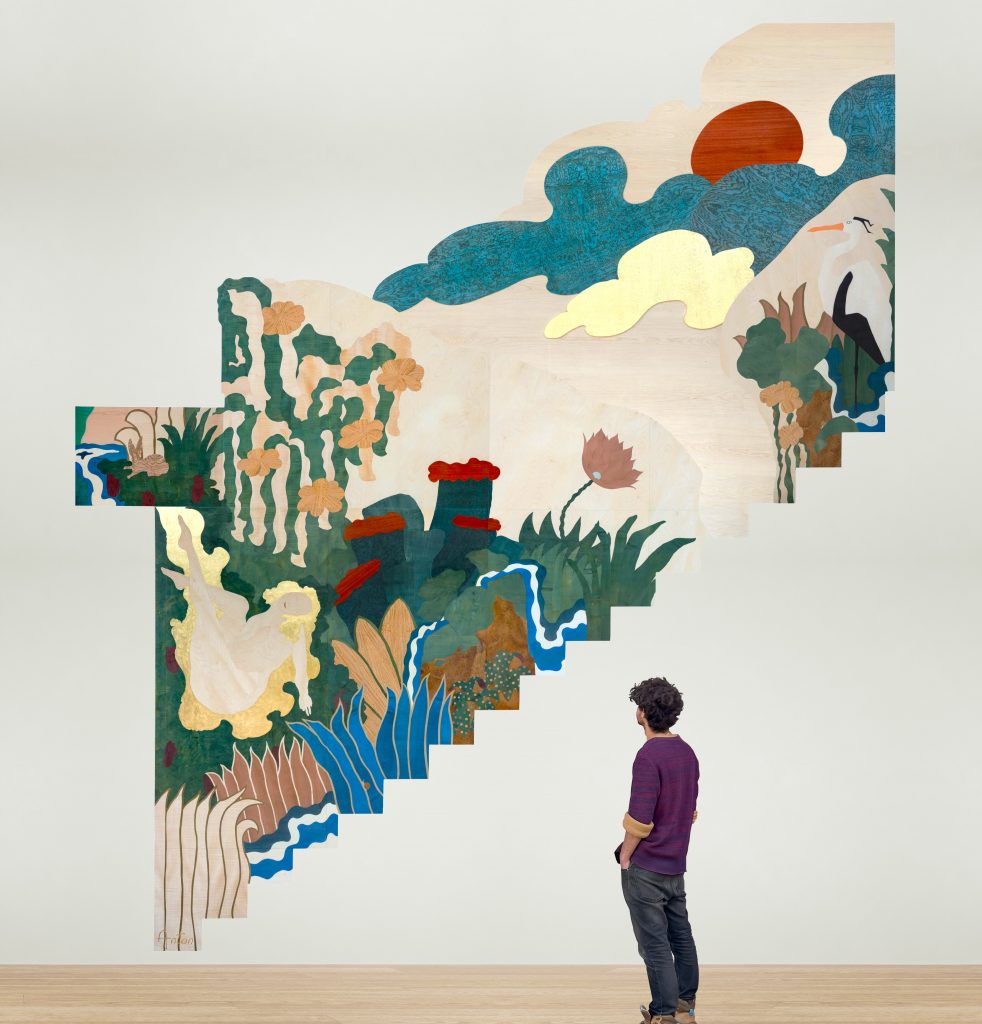
Entre marqueterie monumentale et jungle symbolique, Anton Laborde transforme le bois en récit contemporain poétique engagé.
ÉDITION #3
À Maison & Objet, Thierry Laudren présente des meubles sculptés où fonction, matière et lenteur façonnent une présence.
ÉDITION #3
Jean Nouvel conçoit une architecture attentive aux contextes, où lumière, histoire et usages façonnent chaque projet.
ÉDITION #3
À Lyon, Sophie Morel rénove des lieux historiques en alliant respect du bâti et écriture contemporaine.
ÉDITION #3
Au Centre d’Études Picasso, l’architecte compose une architecture où lumière, géométrie et héritage dialoguent avec précision.
ÉDITION #2
Entretien avec le fondateur d’EDO (European Design Office)
ÉDITION #2
Portrait d’un visionnaire qui transforme l’art de recevoir en expérience totale.
ÉDITION #1
Personnalités, artisans et créateurs qui donnent à la fête sa profondeur humaine.
ÉDITION #3
De Bordeaux au Bassin, art, vignobles et bien-être composent une échappée élégante au cœur de la Gironde.
ÉDITION #2
Vers une région de l’Italie habitée par le temps, où paysages, culture et usages s’accordent dans une continuité rare.
ÉDITION #1
Destinations et rituels qui réinventent la fête, du soleil tropical aux marchés d’hiver.