Every June, the festival opens the hidden courtyards of Montpellier’s mansions to a young generation of architects from around the globe. For its twentieth anniversary edition, which took place from 9 to 14 June 2026, the festival chose ‘Transmission’ as its theme and invited former participants to act as mentors. Nearly eighteen thousand visitors explored thirteen temporary installations. What legacy has been left by two decades of fostering a dialogue between heritage and contemporary creation?
Since its inception in 2006, the Festival des Architectures Vives has attracted an ever-growing audience. In its first year, 3,500 people passed through the courtyard gates. The festival exceeded 13,000 visitors during the 2023 and 2024 editions, before surpassing 16,000 in 2025. The anniversary edition attracted nearly 18,000 people, setting a new attendance record. Free and open to all, the festival route winds through the Écusson district in the historic centre, taking in the courtyards of private mansions that are usually closed to the public. Over the course of twenty editions, the festival has opened thirty-two of these Montpellier gems, not counting three events held in La Grande Motte.

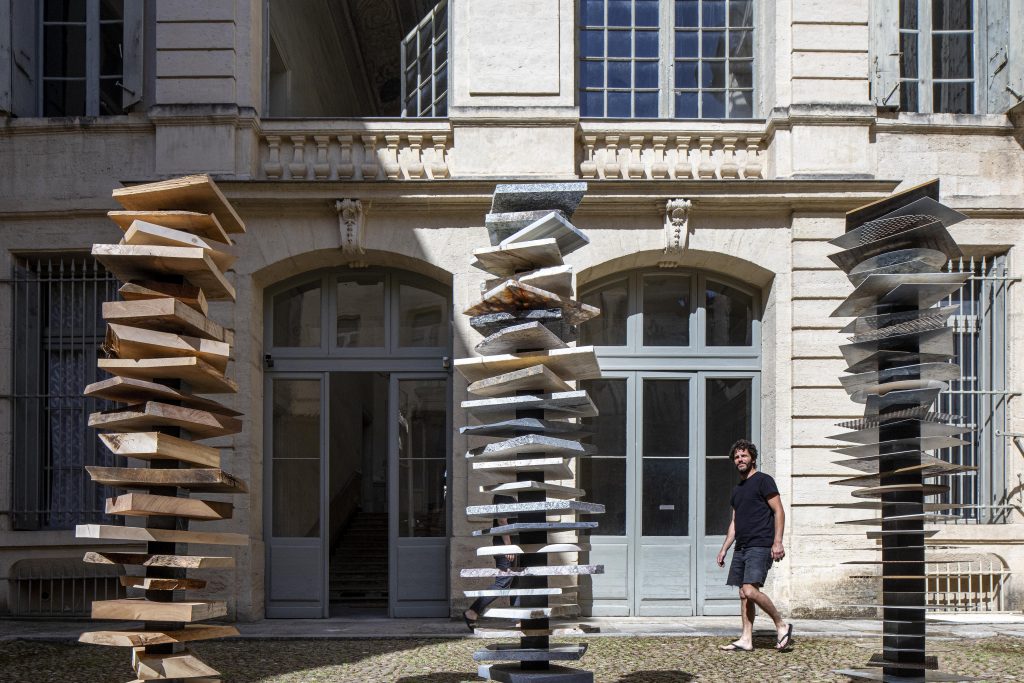
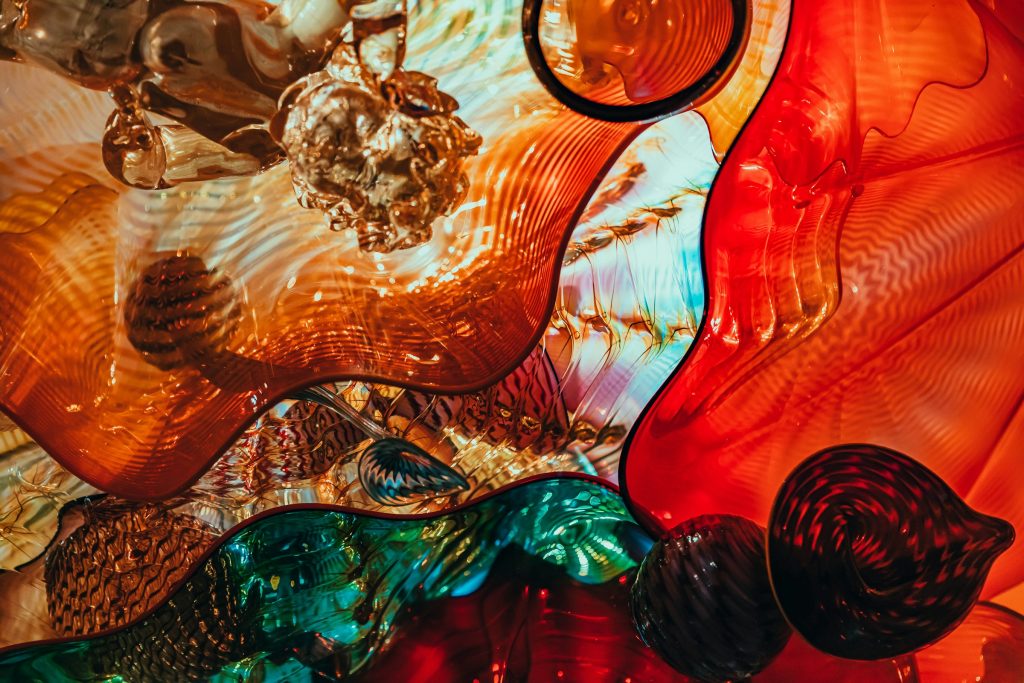
Transphères – Atelier Mousqueton ; photoarchitecture.com
To celebrate this milestone, the festival has adapted its traditional format. Iconic teams from previous editions have taken on a new role as mentors to the selected young agencies. This passing of the baton reflects the trust placed in emerging talent and the collective spirit that has characterised the festival since its inception. ‘Passing on the Torch’ resonates powerfully in the courtyards of these private mansions, where inherited expertise meets fresh ideas. Eleven mentors, all of whom are former participants, are supporting this cohort. Thirty-six guides, who are students at the École nationale supérieure d’architecture de Montpellier, led visitors from courtyard to courtyard, explaining each team’s vision.
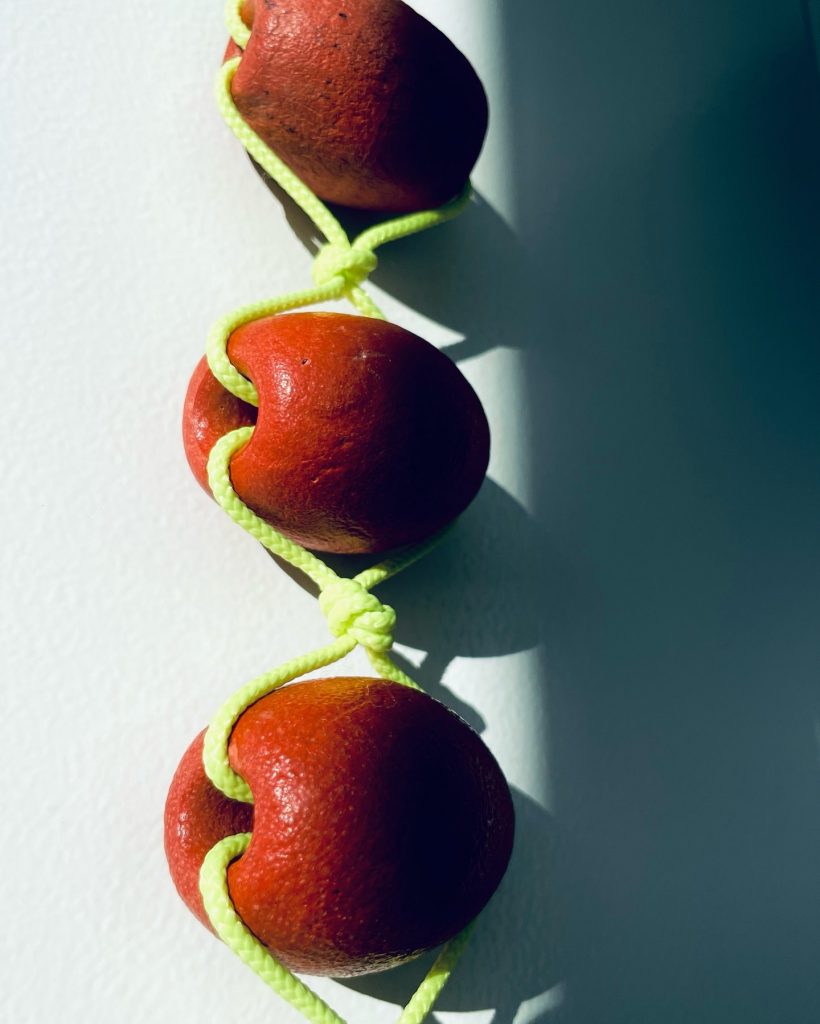
Téisser – Laetitia Rejany et Iacha Perget ; photoarchitecture.com
n keeping with this theme, the festival has chosen Julien Tuffery to be the patron of its anniversary edition. For the past two years, the festival has chosen its patrons from outside the field of architecture, selecting figures with a strong connection to creativity and the local area. Julien Tuffery is at the helm of Atelier Tuffery, founded in 1892 in Florac, in the heart of the Cévennes. He represents the fourth generation of a family of tailors and garment makers. The company is the oldest French jeans manufacturer still in operation and holds the ‘Entreprise du Patrimoine Vivant’ (Living Heritage Company) label. Together with his partner Myriam, Julien is steering the company’s development, balancing heritage with modernity and local production with sustainable materials. This is a tangible way of keeping the tradition alive, both within the workshop and in day-to-day practice.
Liminalité en mouvement : Yui Takeshima, Yurika Takemura, Haruna Kawamura ; photoarchitecture.com
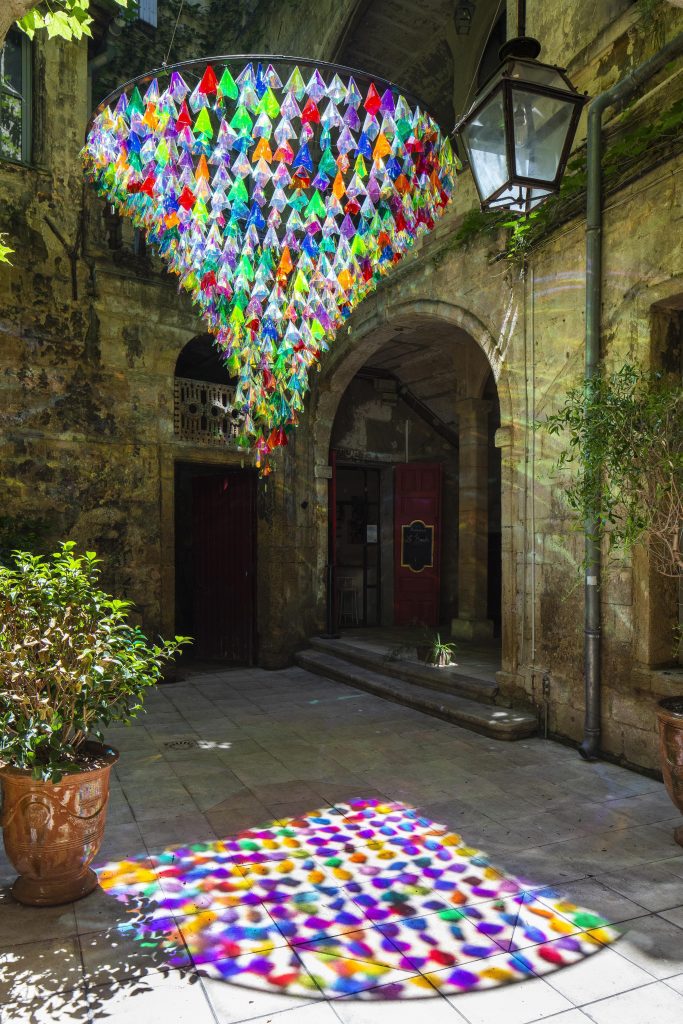
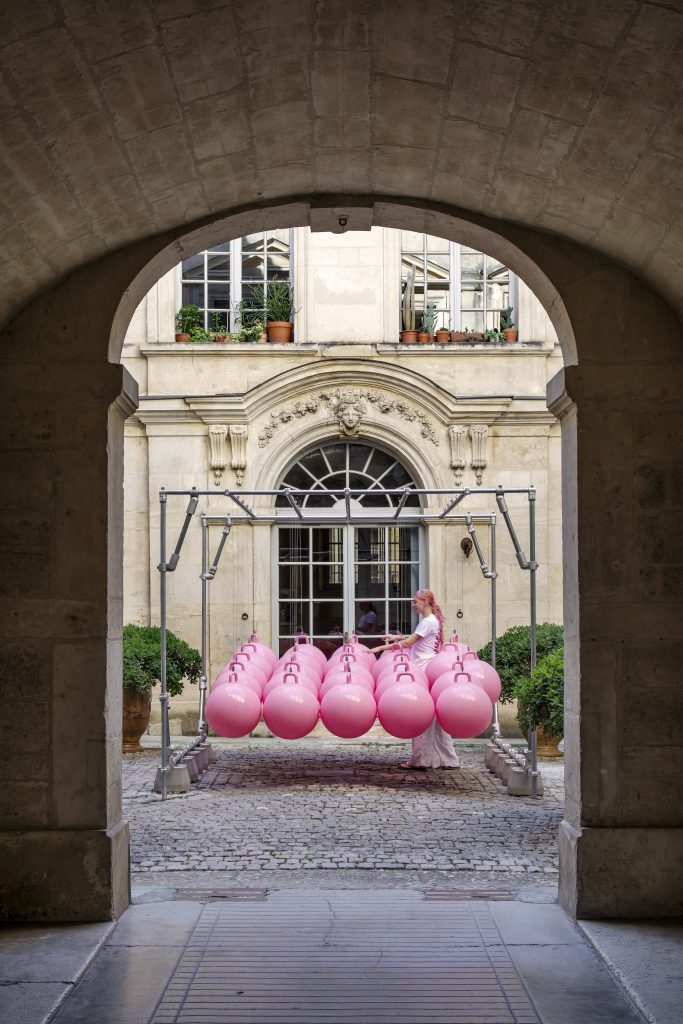
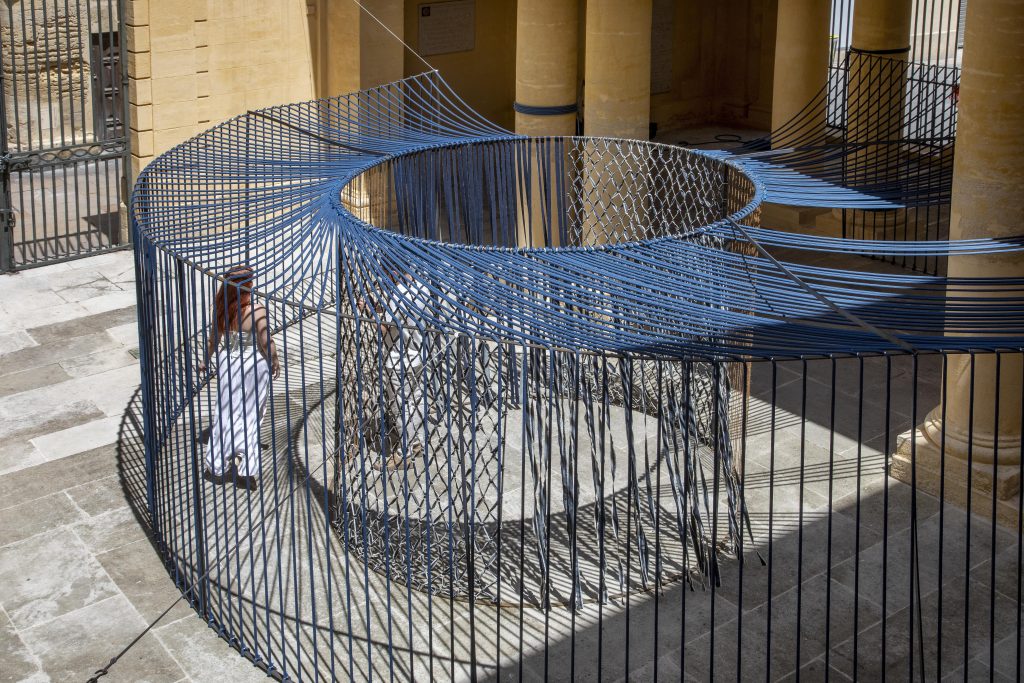
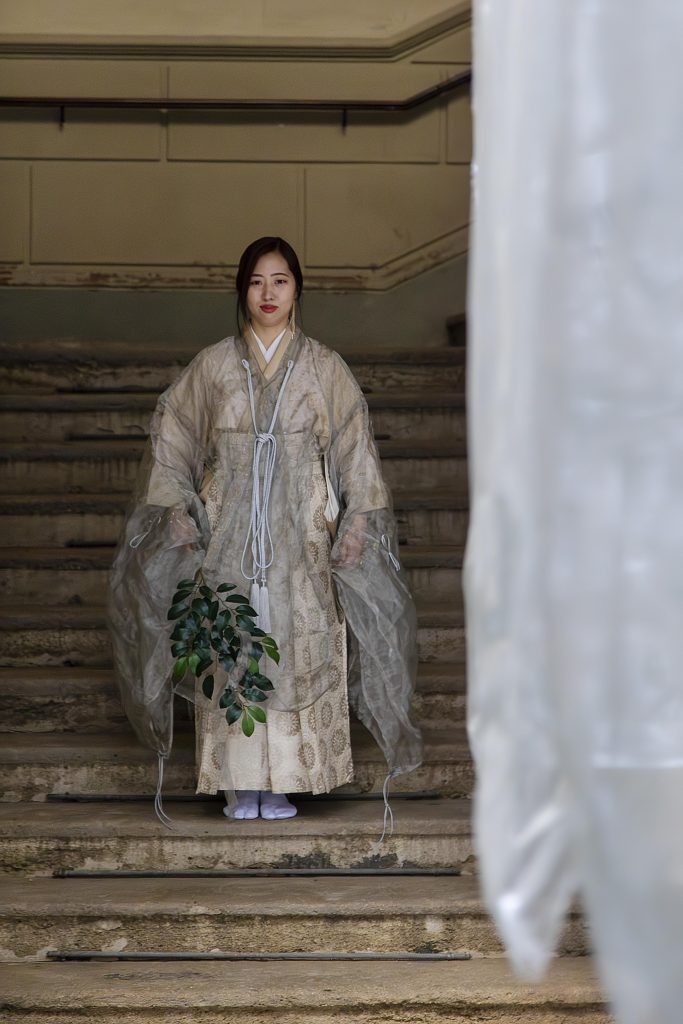
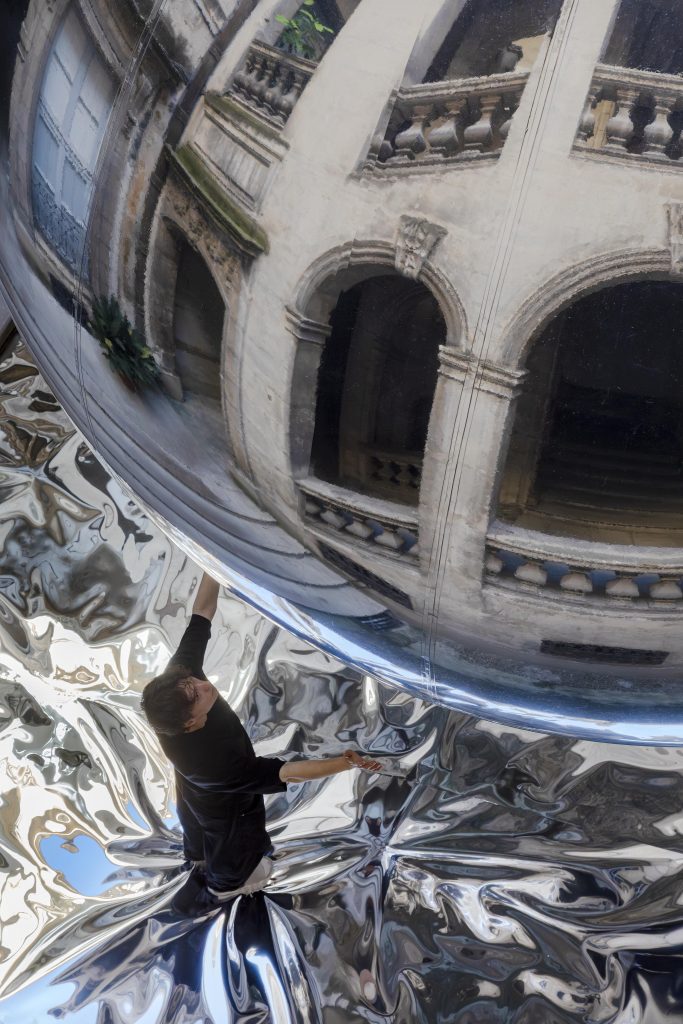
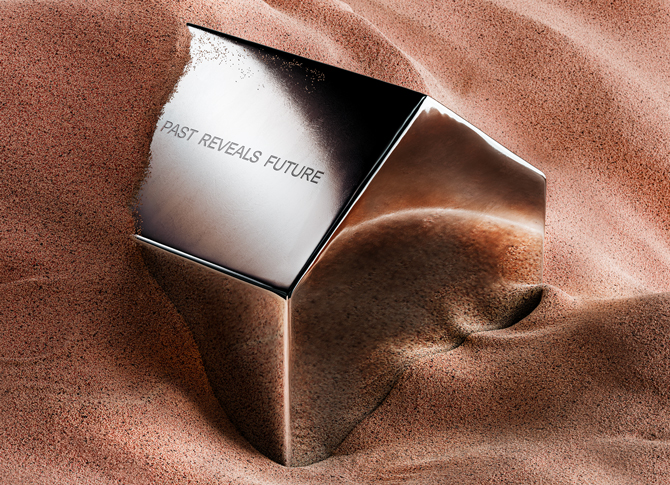
Thirteen temporary installations designed by forty architects of six different nationalities were displayed in the courtyards. The first ‘Twenty Years’ Special Prize’ was awarded to ‘Liminalité en Mouvement’ by Japanese architect Yurika Takemura, which explores visible and invisible boundaries through a performance inspired by Noh theatre. The People’s Choice Award went to Panache de Lumière, a chromatic canopy by Ateliers A+, which was suspended above a courtyard. The jury also commended Le continuum comme espace-temps, a reflective surface installation created by a Quebec-based duo, and Le sens du détail, which invites viewers to reimagine the city’s classical façades. The environmental award went to Sablier, a sand monument erected by the Nou(e)s collective.
Mât-tiers – Calada Architectes et Atelier Moschata ; photoarchitecture.com
The festival continues its long-standing commitment to the environment. Since 2024, it has partnered with Mas Réemploi in Montpellier, whose online catalogue enables teams to source recycled materials for their installations. At the end of the festival, a collection drive gathers the dismantled elements for reuse or recycling. Across the thirteen installations, this initiative saved nearly 12,275 kilos of CO₂ equivalent, representing 3.7 tonnes of materials given a new lease of life. A charter guides each team from design to dismantling to minimise the environmental footprint of these temporary structures.
Le continuum comme espace-temps : Marie-Laurence Durand et Charles-Antoine Lauzon ; photoarchitecture.com
As well as the workshops, the festival sees itself as an observatory for emerging architectural practices. Since 2006, it has welcomed over 730 architects from 26 countries, nearly half of whom were international. To mark its twentieth anniversary, a symposium held at the DRAC Occitanie brought together mentors and young teams for three round-table discussions focusing on networks, experimentation, and sharing. These discussions built on the theme of this year’s edition, reaffirming the festival’s role as a springboard for a generation inventing new ways of conceiving the city. Twenty years on from its inception, the Montpellier event remains true to its original mission of making architecture accessible to all.
Février, 2026
Créer avec l’existant, penser avec l’histoire
De l’architecture au design, cette édition explore comment lieux, savoir-faire et matières héritées deviennent terrains de création actuelle.
Janvier, 2026
Le luxe se réinvente.
Finis les logos clignotants, place à une sobriété raffinée, à l’immersion personnelle, à l’excellence artisanale, à la durabilité sensible.
Décembre, 2025
Héritages, gestes contemporains et plaisirs essentiels
Parce que la fête n’est jamais qu’apparence : elle reflète notre manière d’habiter le monde, de transmettre, de fabriquer des souvenirs durables.
ÉDITION #3
Upcycling et kintsugi transforment l’objet contemporain, faisant de la trace, de la réparation et de la matière un langage esthétique.
ÉDITION #3
Artisans et designers donnent une seconde vie aux matériaux anciens, entre création contemporaine, patrimoine et réemploi.
ÉDITION #3
Bunkers, wagons et kiosques renaissent grâce à la création, révélant comment l’art redonne sens aux lieux délaissés.
ÉDITION #2
Un regard transversal sur le quiet luxury à travers des lieux, des objets et des figures qui expriment l’élégance.
ÉDITION #1
Une sélection de marques, architectures, objets et escapades qui donnent corps au sens de la fête.
ÉDITION #3
Usines et gares délaissées deviennent lieux culturels ouverts, où mémoire industrielle et usages contemporains redessinent la ville.
ÉDITION #3
L’audacieuse métamorphose d’un palace parisien
ÉDITION #3
Au cœur du Marais, un lieu discret révèle comment archives, architecture et recherche font dialoguer l’œuvre de Picasso.
ÉDITION #2
Une expérience shopping unique dans un magasin emblématique.
ÉDITION #2
Voyage culinaire et architectural au cœur de la Seine
ÉDITION #2
Dans le 9e arrondissement, un établissement qui invite au quiet luxury
ÉDITION #1
Chante! vient d’ouvrir ses portes. Une invitation à vibrer !
ÉDITION #3
Icône du paysage français, la boîte jaune change de statut et s’invite dans l’univers du design.
ÉDITION #3
L’édition 2026 affirme une vision où artisanat, design et mémoire façonnent l’habitat contemporain, international actuel.
ÉDITION #3
Cent ans après 1925, l’Art déco revient dans nos villes et intérieurs avec géométrie, audace, optimisme.
ÉDITION #3
Depuis plus de deux cents ans, Royal Limoges conjugue porcelaine, savoir-faire industriel et création contemporaine.
ÉDITION #3
Des terrains de sport aux podiums, la sneaker raconte un siècle de mutations culturelles, techniques et stylistiques.
ÉDITION #2
Design, mode, artisanat : des créations où la forme et la matière se répondent avec justesse, loin de tout effet de mode.
ÉDITION #1
Décorations artisanales, calendriers ultra-luxe et pièces de collection pour s’enivrer de joie avant l’heure.
ÉDITION #3
Entre marqueterie monumentale et jungle symbolique, Anton Laborde transforme le bois en récit contemporain poétique engagé.
ÉDITION #3
À Maison & Objet, Thierry Laudren présente des meubles sculptés où fonction, matière et lenteur façonnent une présence.
ÉDITION #3
Jean Nouvel conçoit une architecture attentive aux contextes, où lumière, histoire et usages façonnent chaque projet.
ÉDITION #3
À Lyon, Sophie Morel rénove des lieux historiques en alliant respect du bâti et écriture contemporaine.
ÉDITION #3
Au Centre d’Études Picasso, l’architecte compose une architecture où lumière, géométrie et héritage dialoguent avec précision.
ÉDITION #2
Entretien avec le fondateur d’EDO (European Design Office)
ÉDITION #2
Portrait d’un visionnaire qui transforme l’art de recevoir en expérience totale.
ÉDITION #1
Personnalités, artisans et créateurs qui donnent à la fête sa profondeur humaine.
ÉDITION #3
De Bordeaux au Bassin, art, vignobles et bien-être composent une échappée élégante au cœur de la Gironde.
ÉDITION #2
Vers une région de l’Italie habitée par le temps, où paysages, culture et usages s’accordent dans une continuité rare.
ÉDITION #1
Destinations et rituels qui réinventent la fête, du soleil tropical aux marchés d’hiver.