Fonderie PACCARD: giving the world a voice since 1796

Located in Sevrier on the shores of Lake Annecy, Fonderie PACCARD has been casting bells for over two centuries. Seven generations of bell founders have succeeded one another at the company’s helm, and more than 120,000 bells have left its workshops to mark the rhythm of daily life in towns and villages around the world. This family-run business, based in Savoie, remains the global benchmark for church bells and carillons. Every bell has its own story, unique tone and irreplaceable level of craftsmanship.

A story born of the Revolution

Fonderie PACCARD

In 1796, the small village of Quintal, on the outskirts of Annecy, was left without a priest or bells. The parish priest had refused to swear the oath to the Civil Constitution of the Clergy, the revolutionaries had requisitioned the two bells from the belfry to melt them down into cannons and coins, and the church had closed its doors. Without a priest, there could be no more baptisms, weddings or funerals. The villagers asked the mayor to take the necessary steps with the local bishop to reopen their church. The bishop set one condition: ‘You will have a priest when you have a bell in your belfry.’

The mayor then summoned the renowned itinerant bell founder Jean-Baptiste Pitton and found him an apprentice who could read and write. It turned out that the mayor himself was the only literate person in the village. He was twenty-four years old and his name was Antoine Paccard. While assisting the bell founder, Antoine fell in love with the trade and decided to become a bell founder himself. The first Paccard bell still rings in Quintal’s bell tower. It bears the inscription, ‘If I survive the Reign of Terror, it is to herald happiness’.

The early days were difficult. It was not until the signing of the Concordat in 1801 that the bell could be hoisted into the belfry. Once civil peace had been restored, Antoine’s orders began to multiply. Savoy was not yet part of France – it would not become so until 1860 – and his bells were shipped there. The foundry quickly gained a solid reputation.

From the Savoyarde to the Liberty Bell

Fonderie PACCARD

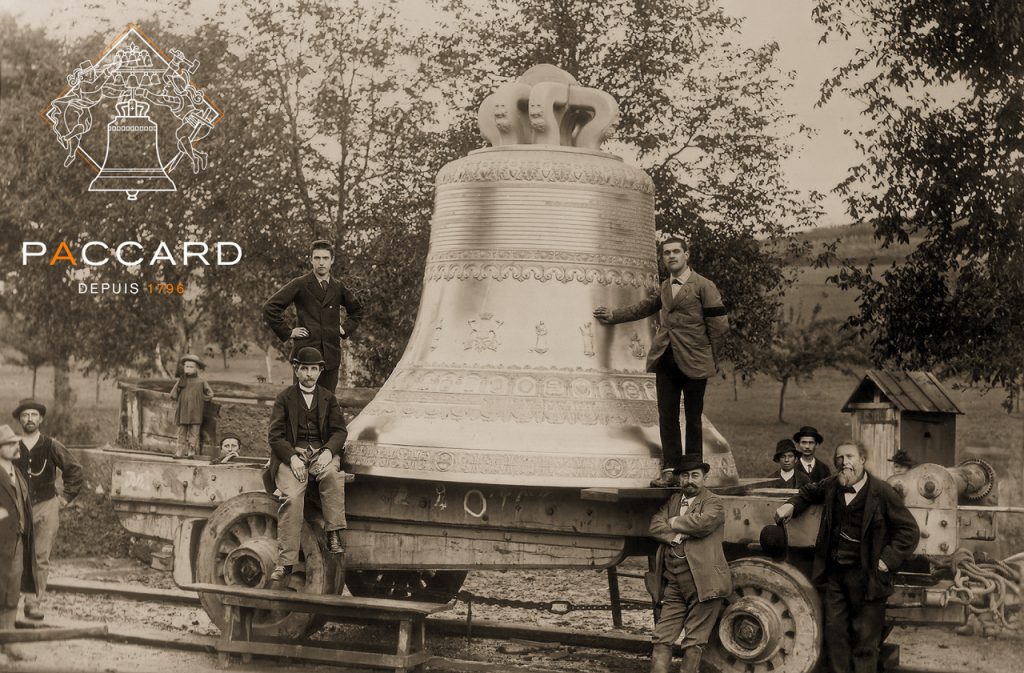
Following Antoine’s death, his sons relocated the foundry from Quintal to Annecy-le-Vieux, near Annecy railway station, to facilitate the transportation of bells. The foundry remained there for over a century. It was there that legendary bells were cast. In 1891, Georges Paccard cast La Savoyarde, the largest bell in France, which was installed at the Basilica of the Sacred Heart of Jesus in Montmartre. Then, in 1950, the US government commissioned fifty-four replicas of the Liberty Bell – the bell that heralded the United States’ independence in 1776 – one for each state capital. The bells for St Patrick’s Cathedral in New York also came from these workshops.

In 1989, the company relocated to Sevrier, on the shores of Lake Annecy. The record-breaking continued. To mark the turn of the millennium, Paccard produced the world’s largest set of bells, weighing thirty-three tonnes and destined for the United States. The twelve chimes of these bells heralded the dawn of the third millennium.

The Stradivarius of bells

Fonderie PACCARD

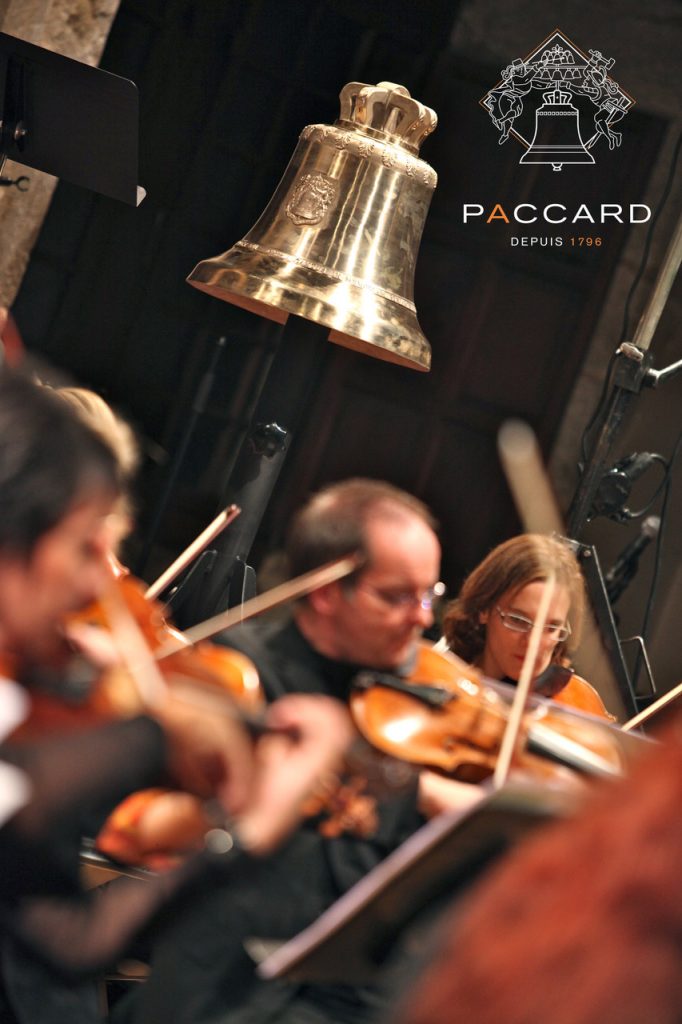
From its very beginnings, the company has been interested in the musicality of bells. In the 1920s and 1930s, it developed its own unique technique. The key lies in mastering the profile — the internal design that determines the timbre and pitch — and then in tuning, a task that requires great precision and involves removing material from the inside of the bell to achieve perfect pitch. This high standard has earned Paccard bells the reputation of being the Stradivarius of bells. The foundry supplies the finest ensembles, including those of the Opéra national, the Orchestre de Paris, and Radio France. Fewer than ten companies worldwide are capable of manufacturing church bells and carillons of this musical quality.

Expertise passed down through the generations

Fonderie PACCARD

It is often said that the first generation establishes a family business, the second consolidates it, and the third squanders it. In the Paccard family, however, each generation has managed to build on the business while also bringing something new to it, without disregarding the expertise of the past. Seven generations later, the eighth is already preparing to take up the torch.

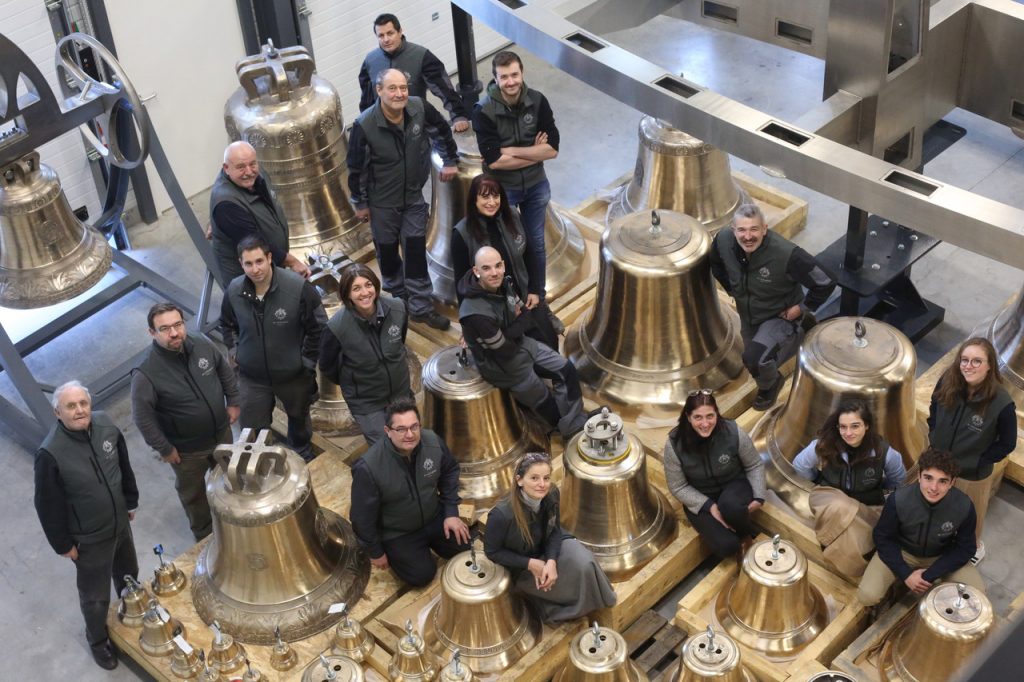
There is no school where one can learn to make bells. The workshop is still the best place to learn. While the company does not practise the guild system in the strict sense, it shares its spirit. It looks less for qualifications than qualities of the heart — people who love the craft — and trains them on the job. The company employs twenty-eight people, a relatively young team who continue to be drawn to the beauty of the craft.

Bell-maker and foundryman

The PACCARD foundry does more than simply cast bells; it provides a comprehensive solution and manufactures all bell-related equipment itself, including yokes, clappers, belfries, chimes and ringing mechanisms, and monumental clocks. This role partly explains the company’s strength in the export market. You can find out more at the Sevrier Museum, where the company has built an educational bell tower — a real bell tower that is open on two sides, revealing what is usually hidden in these private spaces.

The whole world at the tips of the bells

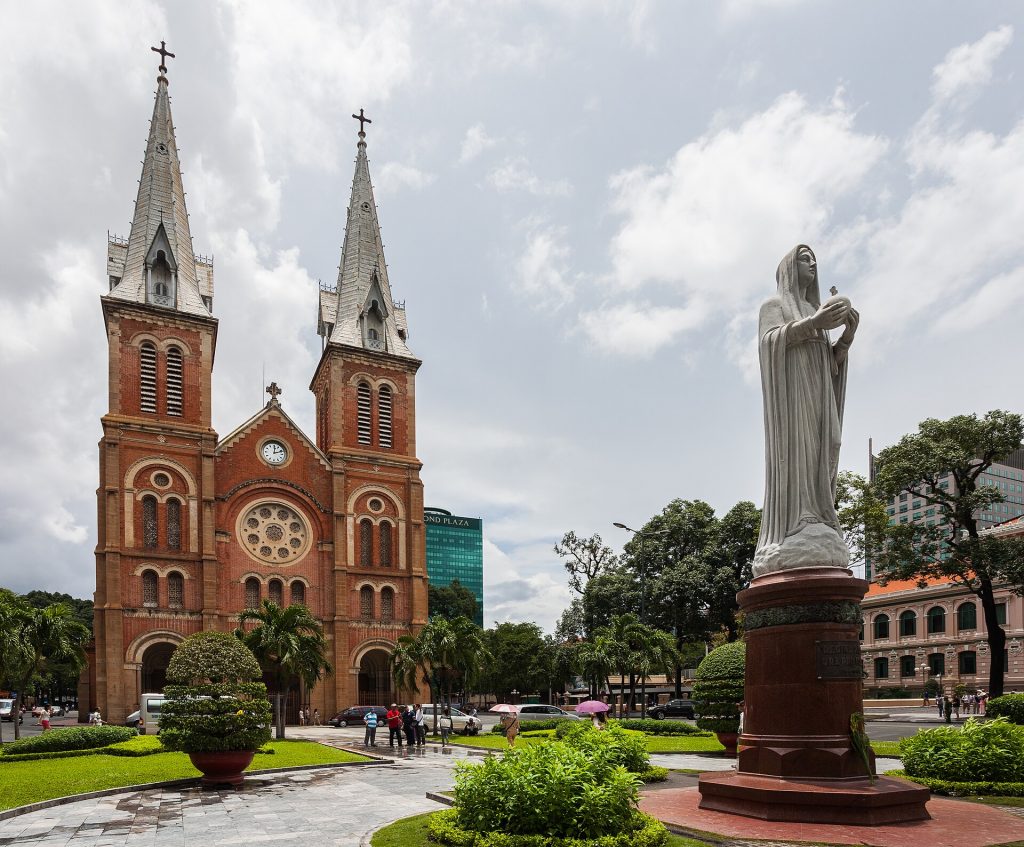
Notre-Dame Basilica, Ho Chi Minh City, Vietnam ; Wikimedia

Eighty per cent of the company’s production is exported, and its most monumental bells are often destined for international markets. The company is currently doing a great deal of work for Vietnam, where ten to fifteen per cent of the population are Catholics who fill churches that have become too small. This prompts the faithful to constantly rebuild them. “The concept of non-practising Catholics is incomprehensible to a Vietnamese person. The churches are full; they’re too small and are springing up like mushrooms,’ explains Anne Paccard, the company’s managing director. Bùi Chu Cathedral, near Hanoi, is set to receive a set of Paccard bells, the largest of which weighs 3,500 kilos. Every year, between three and four hundred bells leave the workshops.

For the past thirty years or so, the company has also offered to cast bells on site at the request of local authorities who wish to involve their communities in the process. Nearly forty on-site castings have taken place in this way. The furnace, the master founder and the foundry workers travel to the location, where workshops introduce children to the lost-wax casting technique. In 2010, a casting took place in the Luxembourg Gardens at the Senate to celebrate the anniversary of Savoy’s annexation to France. This featured a one-sixth scale replica of the ‘Savoyarde’, which is now on display at the palace. Other castings have taken place as far afield as Martinique and, more recently, in Pioggiola, a village of eighty-two inhabitants in the Balagne region of Corsica.

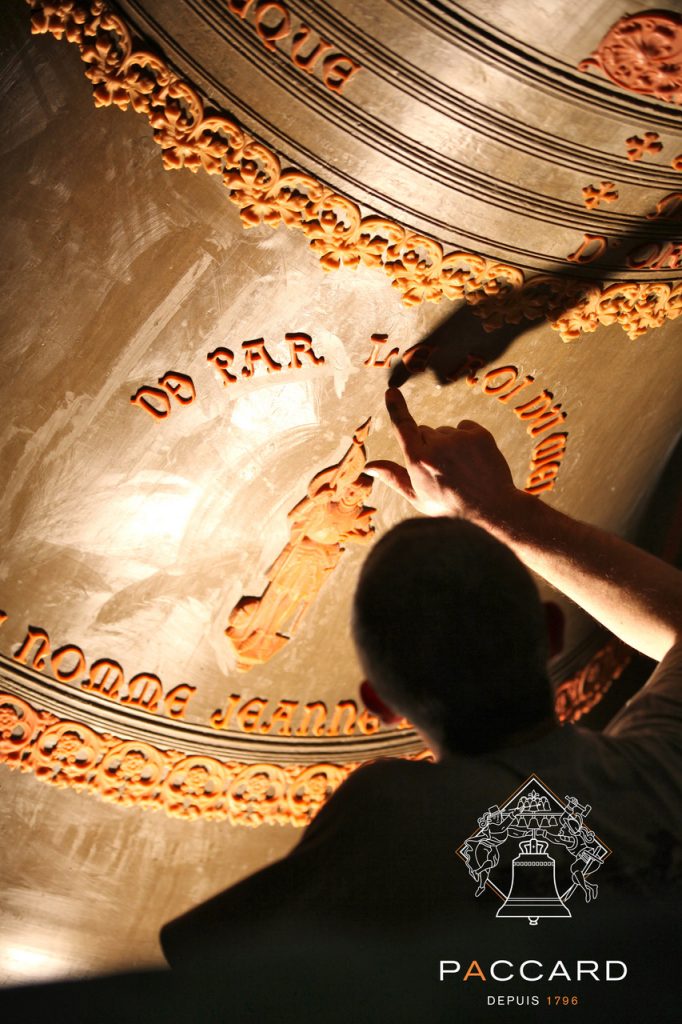
Ars Sonora: the bell in the spotlight

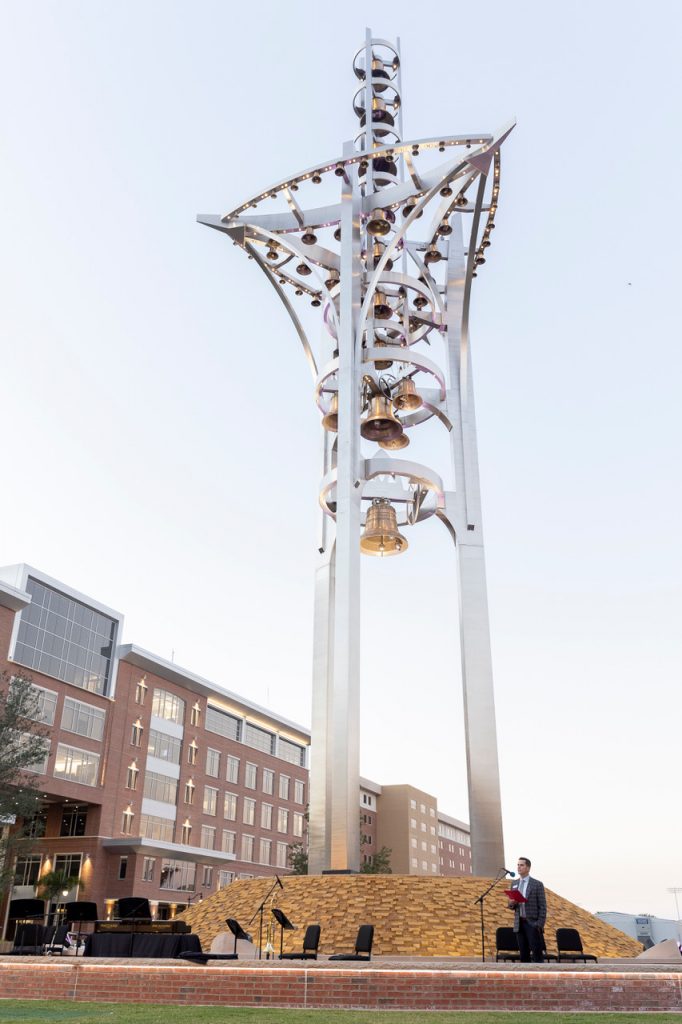
In 1999, the Paccard Foundry created the Ars Sonora® concept, which brings musical sculptures out of the belfry so that they can be seen and heard. The bells become the raw material for pieces of urban art that combine musicality with architectural design. This concept reached its zenith in 2022 with a new world record: the world’s largest musical sculpture, standing thirty-two metres high and comprising sixty-three bells. It was created for the University of Tampa in Florida. Everything, from the design of the plans to the on-site installation, was conceived and manufactured in the Savoie region. A four-part documentary, Ars Sonora Tampa, chronicles this human and technical adventure.
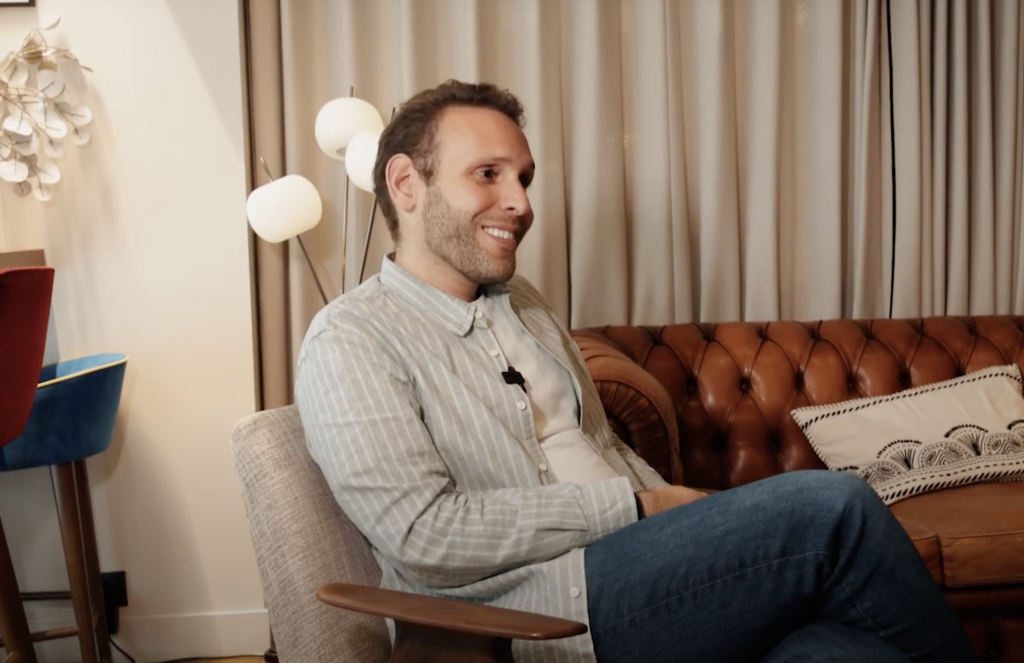
As a reward for this endeavour, the company received this year’s Palme d’Or for Artistic Craftsmanship and the National Diploma of Merit — a distinction awarded to only a handful of companies each year. This is yet another accolade for a company that takes a long-term view. “Bells are objects that last for centuries. The bell from the year 2000 is still almost a current event for us,” smiles Anne Paccard. ‘It’s nice not to always be in a race.’ 

Continue exploring

Le Rotulus: an artistic bookmark inspired by parchment
The Coca-Cola bottle: 110 years of curves, with not a wrinkle in sight!
From the gavel to the click: auctions
Julien Lachaud’s ‘Nuances’ sideboard: sycamore takes on a blue hue
Mindmade : furniture by Youssef Benhamou
The story of a bold French company: from Q de Bouteille to QDB Éditions

Février, 2026

Édition 3 : Patrimoine et création

Créer avec l’existant, penser avec l’histoire

De l’architecture au design, cette édition explore comment lieux, savoir-faire et matières héritées deviennent terrains de création actuelle.

Janvier, 2026

Édition 2 : Quiet luxury

Le luxe se réinvente.

Finis les logos clignotants, place à une sobriété raffinée, à l’immersion personnelle, à l’excellence artisanale, à la durabilité sensible.

Décembre, 2025

Édition 1 : Le sens de la fête

Héritages, gestes contemporains et plaisirs essentiels

Parce que la fête n’est jamais qu’apparence : elle reflète notre manière d’habiter le monde, de transmettre, de fabriquer des souvenirs durables.

ÉDITION #3

Révéler la beauté

Upcycling et kintsugi transforment l’objet contemporain, faisant de la trace, de la réparation et de la matière un langage esthétique.

ÉDITION #3

Les nouveaux artisans du patrimoine

Artisans et designers donnent une seconde vie aux matériaux anciens, entre création contemporaine, patrimoine et réemploi.

ÉDITION #3

L'art à la rescousse des friches et lieux oubliés

Bunkers, wagons et kiosques renaissent grâce à la création, révélant comment l’art redonne sens aux lieux délaissés.

ÉDITION #2

Le murmure du beau

Un regard transversal sur le quiet luxury à travers des lieux, des objets et des figures qui expriment l’élégance.

ÉDITION #1

Lieux, maisons et matières en éclats

Une sélection de marques, architectures, objets et escapades qui donnent corps au sens de la fête.

ÉDITION #3

La création au secours des bâtiments promis à l’oubli

Usines et gares délaissées deviennent lieux culturels ouverts, où mémoire industrielle et usages contemporains redessinent la ville.

ÉDITION #3

Hôtel Normandy Le Chantier

L’audacieuse métamorphose d’un palace parisien

ÉDITION #3

Dans les coulisses du Centre d'Études Picasso à Paris

Au cœur du Marais, un lieu discret révèle comment archives, architecture et recherche font dialoguer l’œuvre de Picasso.

ÉDITION #2

Shopping iconique dans un décor Tudor

Une expérience shopping unique dans un magasin emblématique.

ÉDITION #2

Gastronomie et architecture

Voyage culinaire et architectural au cœur de la Seine

ÉDITION #2

L'art de l'hospitalité parisienne

Dans le 9e arrondissement, un établissement qui invite au quiet luxury

ÉDITION #1

Chante!

Chante! vient d’ouvrir ses portes. Une invitation à vibrer !

ÉDITION #3

La boîte aux lettres française devenue objet de design

Icône du paysage français, la boîte jaune change de statut et s’invite dans l’univers du design.

ÉDITION #3

Retour sur Maison&Objet 2026 : retour aux sources et à l’essentiel

L’édition 2026 affirme une vision où artisanat, design et mémoire façonnent l’habitat contemporain, international actuel.

ÉDITION #3

Art Deco: un mouvement centenaire, plus actuel que jamais

Cent ans après 1925, l’Art déco revient dans nos villes et intérieurs avec géométrie, audace, optimisme.

ÉDITION #3

Royal Limoges, deux siècles d’histoire au présent

Depuis plus de deux cents ans, Royal Limoges conjugue porcelaine, savoir-faire industriel et création contemporaine.

ÉDITION #3

Du terrain à la rue et au catwalk : les sneakers à travers les époques

Des terrains de sport aux podiums, la sneaker raconte un siècle de mutations culturelles, techniques et stylistiques.

ÉDITION #2

La formidable aventure du papier peint de luxe

Design, mode, artisanat : des créations où la forme et la matière se répondent avec justesse, loin de tout effet de mode.

ÉDITION #1

Icônes, détails, rituels

Décorations artisanales, calendriers ultra-luxe et pièces de collection pour s’enivrer de joie avant l’heure.

ÉDITION #3

Anton Laborde

Entre marqueterie monumentale et jungle symbolique, Anton Laborde transforme le bois en récit contemporain poétique engagé.

ÉDITION #3

Thierry Laudren

À Maison & Objet, Thierry Laudren présente des meubles sculptés où fonction, matière et lenteur façonnent une présence.

ÉDITION #3

Jean Nouvel

Jean Nouvel conçoit une architecture attentive aux contextes, où lumière, histoire et usages façonnent chaque projet.

ÉDITION #3

Sophie Morel

À Lyon, Sophie Morel rénove des lieux historiques en alliant respect du bâti et écriture contemporaine.

ÉDITION #3

Pascal Grasso

Au Centre d’Études Picasso, l’architecte compose une architecture où lumière, géométrie et héritage dialoguent avec précision.

ÉDITION #2

Alexandre Danan

Entretien avec le fondateur d’EDO (European Design Office)

ÉDITION #2

Aziz Temimi

Portrait d’un visionnaire qui transforme l’art de recevoir en expérience totale.

ÉDITION #1

Visages, gestes, inspirations

Personnalités, artisans et créateurs qui donnent à la fête sa profondeur humaine.

ÉDITION #3

Chemins de traverse : parenthèse d’exception en Bordelais

De Bordeaux au Bassin, art, vignobles et bien-être composent une échappée élégante au cœur de la Gironde.

ÉDITION #2

Voyage en Toscane

Vers une région de l’Italie habitée par le temps, où paysages, culture et usages s’accordent dans une continuité rare.

ÉDITION #1

Horizons, saisons, traditions

Destinations et rituels qui réinventent la fête, du soleil tropical aux marchés d’hiver.

Dates, adresses, invitations

Expositions, événements et repères culturels pour vivre pleinement la saison des fêtes.