Context as the raw material of the project
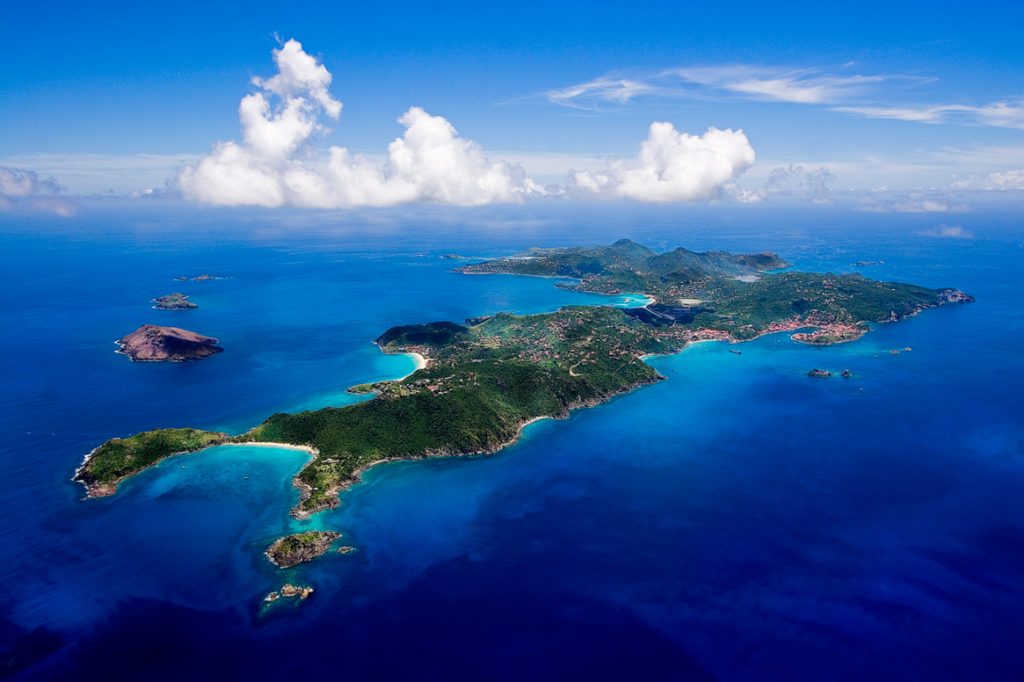
For Jean Nouvel, every project begins with an in-depth study of its site. This analysis reaches far beyond a conventional urban survey. It encompasses light, climate, use, memory and the underlying tensions of a place. Whether land, city or landscape, the site provides the project’s initial data, long before any formal exploration begins.
This method explains the radical diversity of his work: no building reproduces a previous one. Architecture is shaped by specific conditions—solar orientation, urban skyline, relationships to water, vegetation or mineral density. The result is a site-specific response, conceived for a particular location and difficult to transpose elsewhere. This attention to context produces architecture capable of entering into dialogue with its surroundings whilst asserting a strong presence. Each project emerges from a balance between real constraints and creative freedom.
Building with what already exists: a conscious choice
Opéra Nouvel – Place de la Comédie ; Lyon – Elliot Brown ; Flickr
Jean Nouvel maintains a direct and committed relationship with built heritage. For him, the city is a living organism, shaped by social, cultural and technical evolution. Architecture participates in this ongoing movement and extends far beyond simple formal preservation. This vision places contemporary creation at the heart of historic fabric, with an intellectual clarity that fuels urban debate.
Heritage becomes a framework for dialogue rather than a model to reproduce. Interventions often take the form of visible additions that acknowledge a site’s history whilst keeping it alive. This approach can provoke controversy precisely because of its assertive stance. Yet it reflects a strong conviction: that architecture contributes to the vitality of cities by introducing new uses, new interpretations and new temporal layers. Existing buildings welcome contemporary interventions that extend urban history through action and transformation.
Paris: a sensitive testing ground
La Fondation Cartier pour l’Art Contemporain (Paris) ; Jean-Pierre Dalbéra ; Flickr
In Paris, Jean Nouvel has developed a deep reflection on how to intervene in a city saturated with historical references. The capital becomes a laboratory where each project establishes a precise relationship with its immediate surroundings. Forms, materials and light respond to Haussmannian alignments, monumental perspectives and existing green spaces.
This approach produces architecture that fully embraces its time whilst remaining in dialogue with the urban fabric. Through several major projects, Paris reveals a central aspect of Nouvel’s thinking: that contemporary architecture plays an active role in the city’s identity by acknowledging its rhythms, voids and uses. Buildings conceived in this context introduce new readings, enriching the city through reflections, transparency and depth, and offering renewed ways of experiencing Parisian space.
Institut du Monde Arabe: writing with light
Completed in 1987, the Arab World Institute quickly left its mark on Paris’s architectural landscape. Located on the Left Bank, where the Seine meets the historic fabric of the fifth arrondissement, the building establishes a direct dialogue between two urban cultures. The north façade, largely glazed, captures and reflects the city, whilst the south façade functions as an active device entirely devoted to the modulation of light.
Two hundred and forty metal modules, composed of movable diaphragms inspired by Arabic geometric patterns, regulate sunlight throughout the day. Controlled by light sensors, these mechanical elements transform the façade into a responsive surface that reacts to climatic variations. The building evolves visually over the course of the day, offering an architecture in motion, deeply attentive to its environment. This project combines cultural references, technical innovation and mastery of light in a balance that has had a lasting influence on contemporary architecture.
« Architecture is the art of harnessing light. It is the richest and most changeable material we have at our disposal. »
Fondation Cartier: architecture in suspension
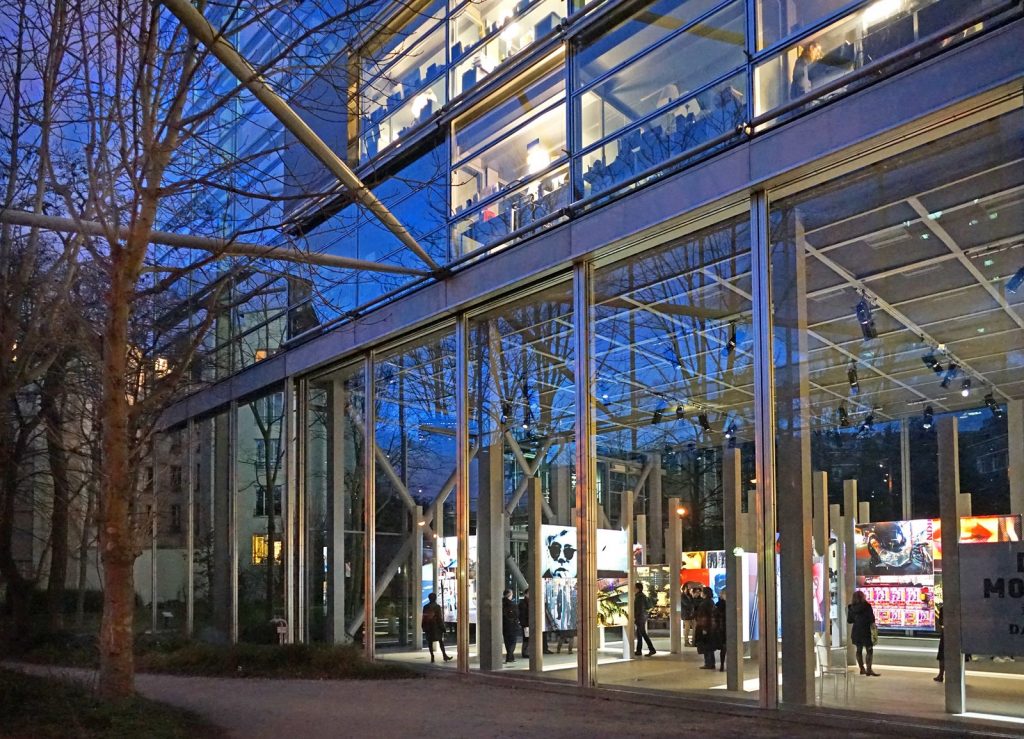
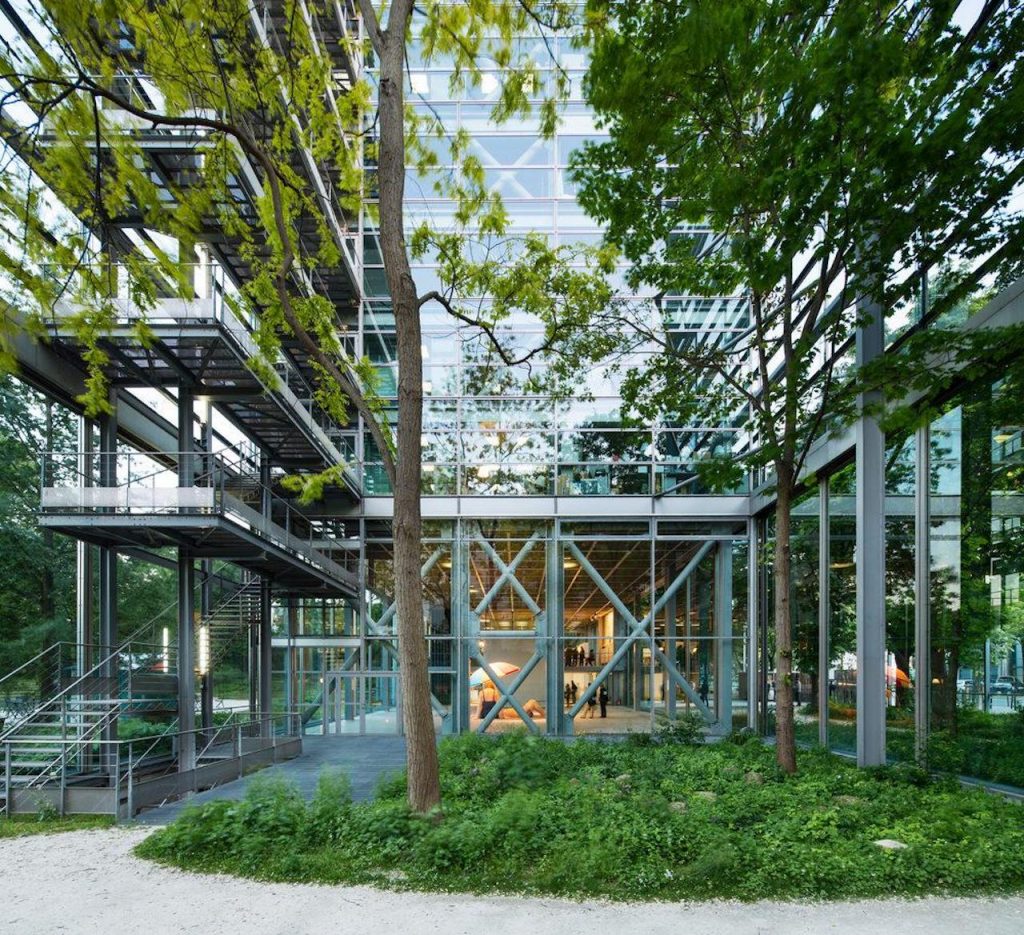
Fondation Cartier pour l’Art Contemporain ; art absolument
Inaugurated in 1994 on Boulevard Raspail, the Fondation Cartier for Contemporary Art marks a decisive moment in Jean Nouvel’s exploration of architectural perception. The building comprises successive, slightly offset glass planes that deliberately blur the boundary between interior and exterior. These glass façades extend beyond the built volume, creating an unusual sense of visual depth within the Haussmannian fabric.
Depending on light and atmospheric conditions, the glass reveals the garden, captures passing clouds or reflects the city. This visual instability places visitors in a constantly shifting experience, where architecture appears alternately present and erased. The project is organised around a garden designed by Lothar Baumgarten, fully integrated into the architectural composition. A nineteenth-century Lebanese cedar structures the entire ensemble and becomes a focal point from the entrance. Through transparency, lightness and continuous dialogue with vegetation, the building blends into the city.
The museum as landscape
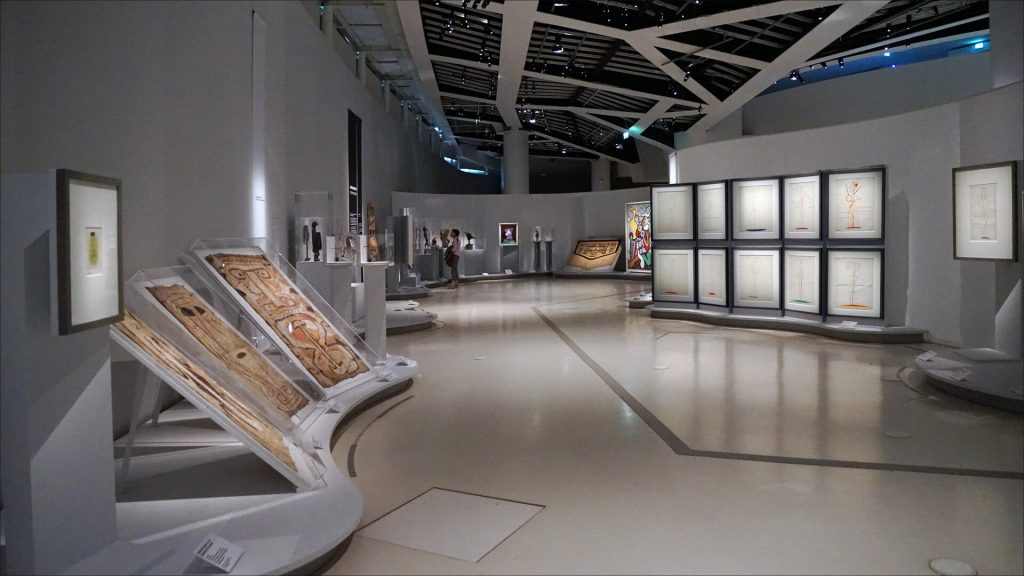
Musée du Quai Branly – Jacques Chirac (Paris) ; Jean-Pierre Dalbéra ; Wikimedia
Opened in 2006 at the foot of the Eiffel Tower, the Musée du Quai Branly – Jacques Chirac proposes a radically different approach to Western museum architecture. The building sits within a vast garden designed by Gilles Clément, which acts as a sensory threshold before entering the collections. The architecture rises on stilts, freeing the ground and allowing vegetation to grow beneath the structures.
The green façade designed by Patrick Blanc transforms the museum into a living surface that absorbs the city and alters perceptions of the building. Inside, lighting is discreet and carefully controlled, directed towards the works rather than the space itself. The visitor’s journey unfolds along a long, gently curving ramp, gradually preparing the eye for a different relationship with the objects on display. Exhibition spaces favour free forms, discreet supports and an enveloping atmosphere. Architecture, landscape and narrative merge into a single immersive experience.
The Lyon Opera House: a masterful superimposition
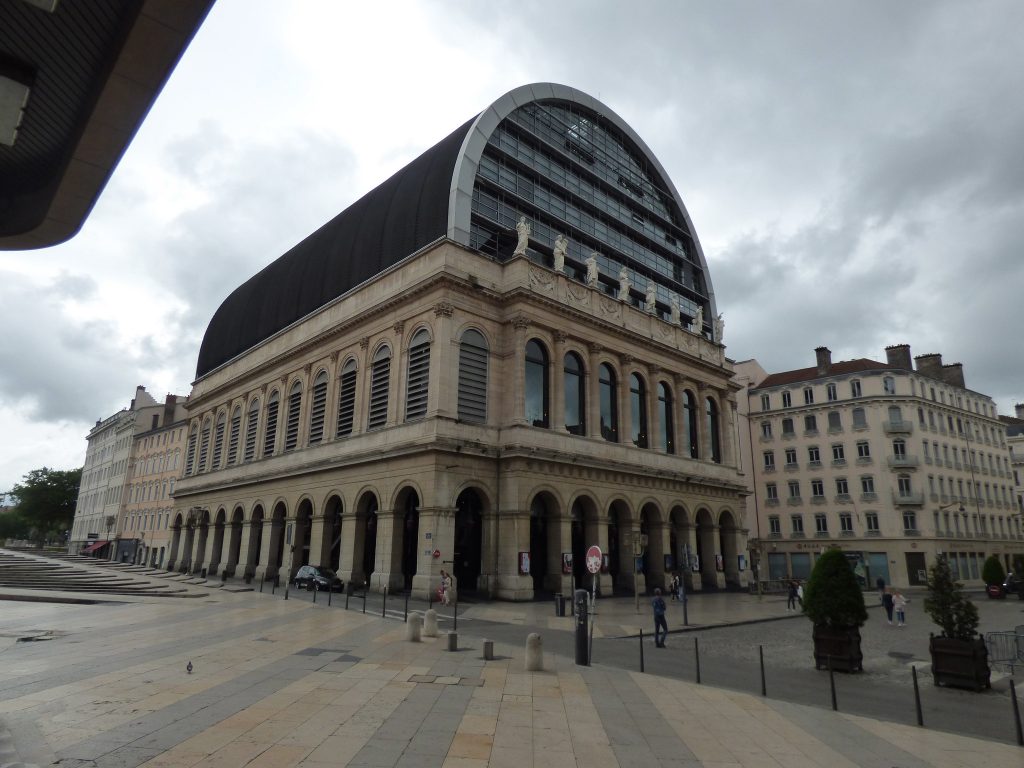
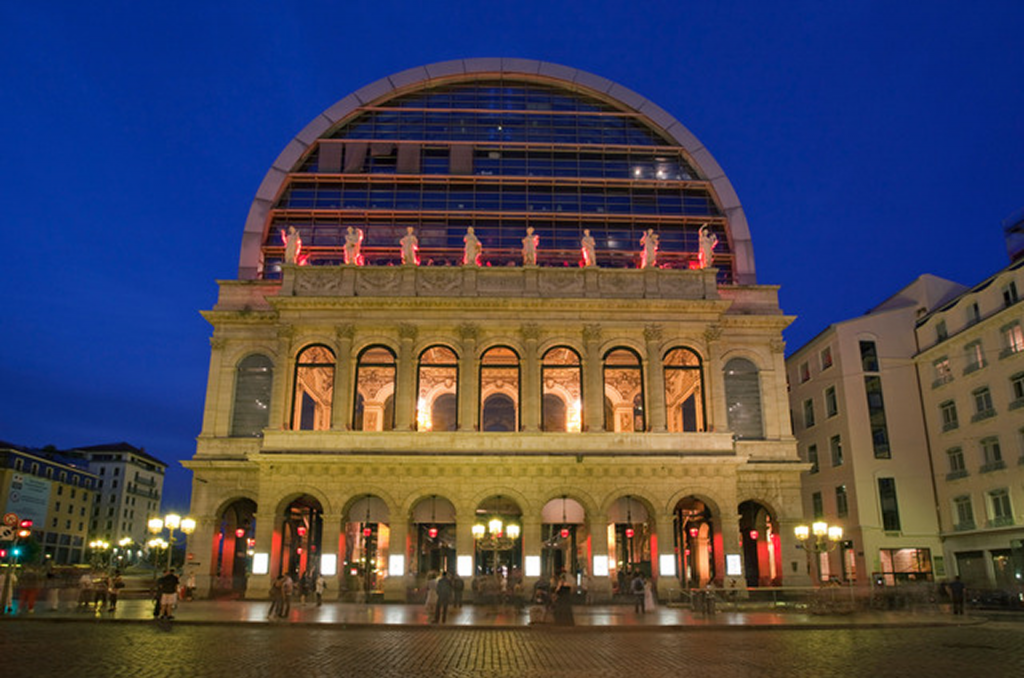
Opéra de Lyon ; Image Professionals GmbH ; Alamy
The renovation of the Lyon Opera House, carried out between 1986 and 1993, exemplifies a precise approach to dialogue between heritage and contemporary architecture. The project involved a radical transformation of the existing building whilst preserving its nineteenth-century neoclassical façades. These historic elements form a mineral base upon which a new architectural layer rises.
Above the cornice, a vast semi-cylindrical canopy of steel and glass envelops the building and houses the rehearsal spaces. Visible from street level, this vault acts as a powerful urban landmark, particularly striking at night thanks to its evolving lighting system. Inside, the layout emphasises sensory contrast: dark materials, deep volumes and vertical circulation guide visitors gradually towards the auditorium. The result is a layered architectural composition where each era finds its place within a coherent spatial continuity.
The Agbar Tower, a landmark in the Catalan skyline
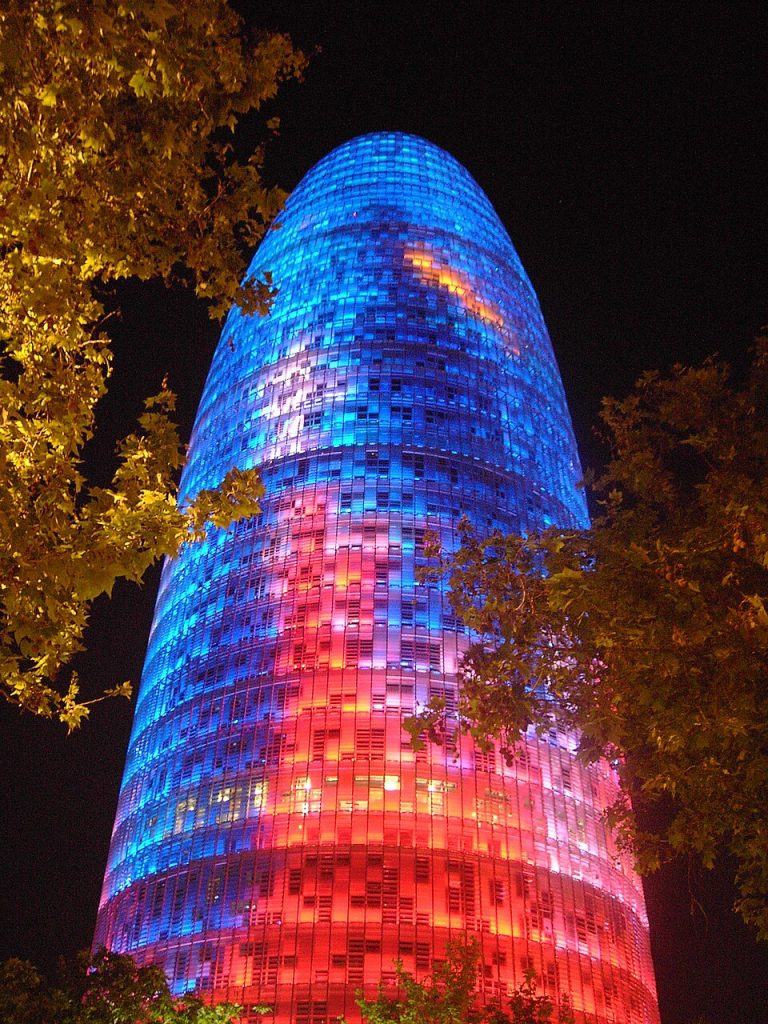
Tour Agbar, Barcelone ; Alxander Z – Wikimedia
Completed in 2005, the Agbar Tower stands out immediately within Barcelona’s urban landscape. Rising 144 metres, the tower’s organic silhouette and continuous lines evoke both the surrounding natural landscape and the presence of water, a central theme of the programme. Its rounded form engages with the Catalan sky and breaks away from the conventional orthogonal verticality of high-rise architecture.
The building’s envelope is based on a sophisticated double-skin system. A first layer of tinted aluminium offers a palette of forty shades, whilst a second skin of modular glass blades regulates light and ventilation. At night, an animated lighting system transforms the façade into a vibrant, ever-changing surface visible from afar. Through colour, light and form, the tower asserts itself as a major landmark on Barcelona’s skyline.
The Louvre Abu Dhabi, a city under the light
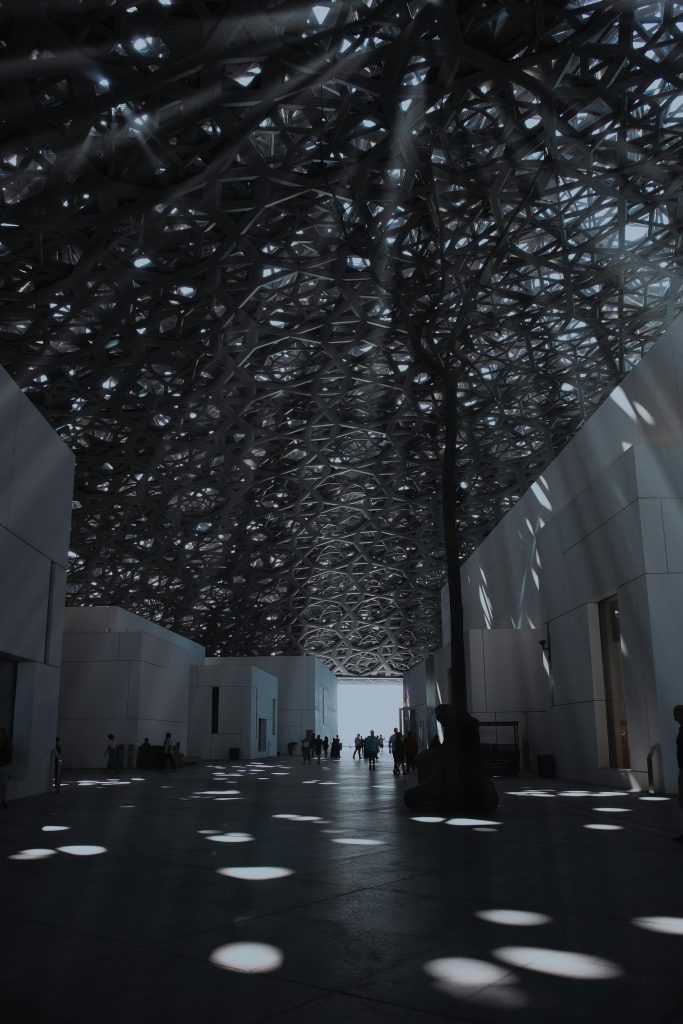
Le Louvre Aby Dhabi (UAE) ; Yulia Pribytkova ; Pexels
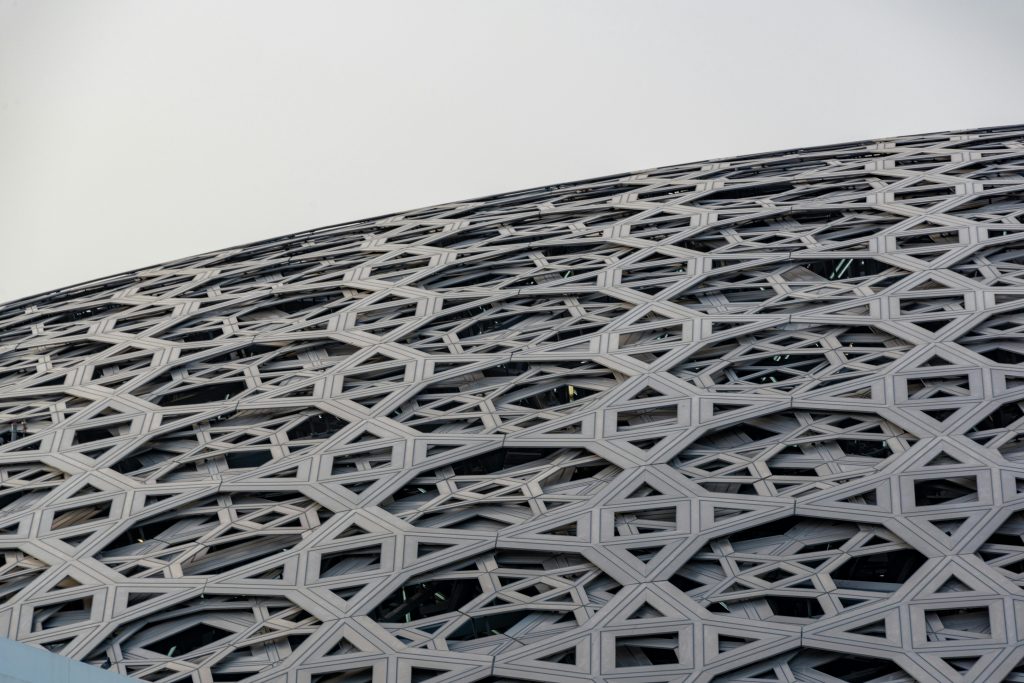
Opened in 2017 on Saadiyat Island, the Louvre Abu Dhabi unfolds like an archipelago upon the sea. Conceived at the scale of a city, the complex comprises white volumes separated by water channels and crowned by a monumental dome 180 metres in diameter. This openwork structure, made up of eight superimposed metal layers, filters sunlight to create a spectacular “rain of light”.
Light passes through geometric patterns inspired by Arab traditions, projecting shifting constellations onto the ground. Water and shade actively contribute to thermal comfort, echoing ancestral principles of regional urban design. The museum offers a spatial experience where architecture, climate and local culture remain in constant dialogue. The project combines technical rigour with poetic sensitivity, proposing a contemporary vision of the universal museum firmly anchored in its geographical and cultural context.
The National Museum of Qatar, inhabited geology
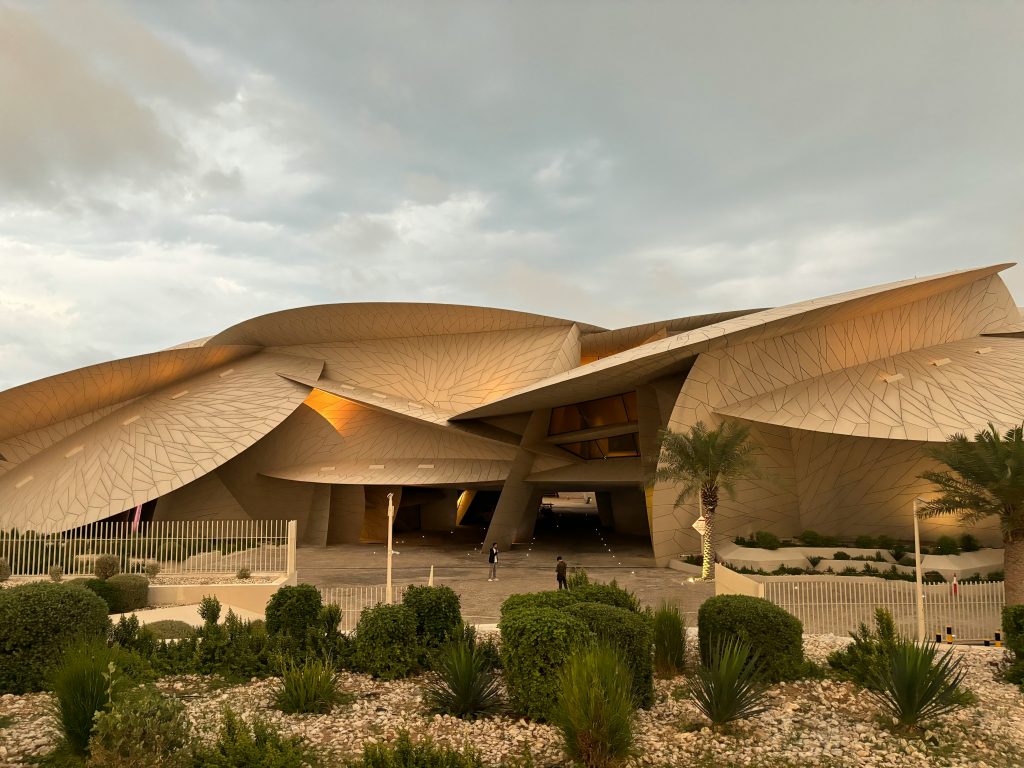
Musée National du Qatar ; Doha ; Baierx ; Unsplash
Opened in 2019 in Doha, the National Museum of Qatar is a vast sculptural ensemble inspired by the desert rose. The building is organised around hundreds of fibre-reinforced concrete discs of varying sizes and angles, intersecting to form a dense and expressive composition. This direct reference to a natural desert phenomenon anchors the architecture in the Qatari landscape, both formally and symbolically.
The discs generate extensive shaded areas, essential in an extreme climate, whilst protecting interior spaces from solar radiation. Inside, the curved walls serve as supports for immersive projections recounting the nation’s history. Exhibition spaces follow a fluid narrative guided by the building’s geometry. Here, architecture acts as a sensory envelope, combining material, light and storytelling to offer a spatial interpretation of territory and memory.
The Reina Sofía Museum: controversy at the heart of the city
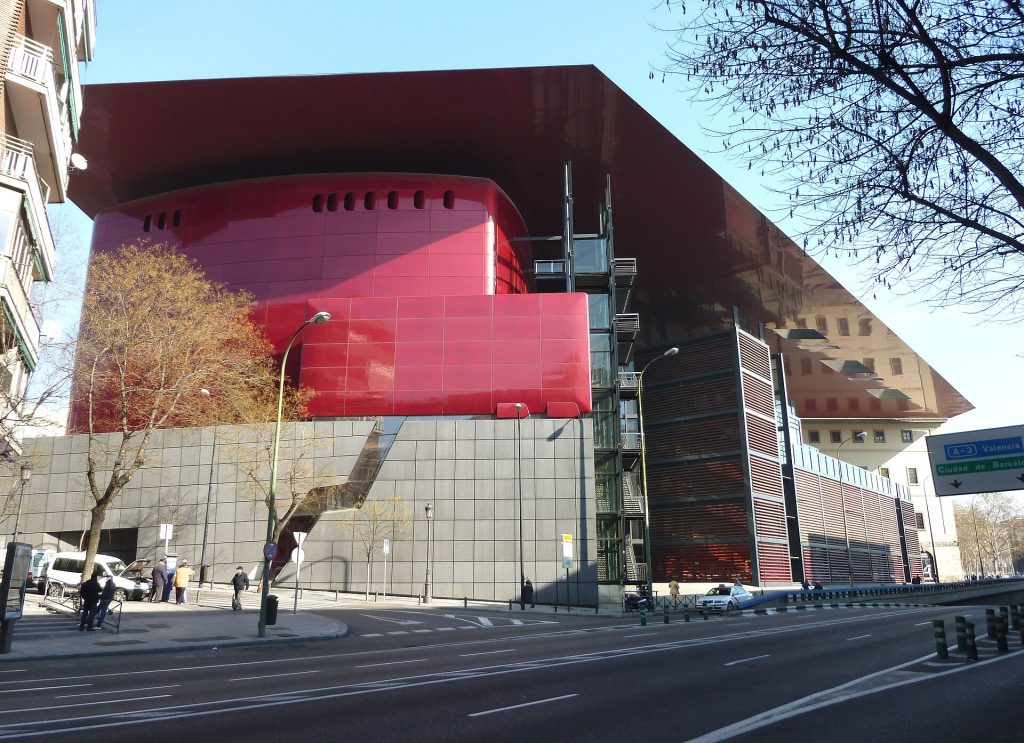
Extension du musée de la Reine Sofia à Madrid ; Luis Garcia ; Wikimedia
Completed in 2005, the extension to Madrid’s Reina Sofía Museum introduces a deliberately contemporary language into a neoclassical ensemble. The project is immediately recognisable through its use of deep red, applied to volumes and structural elements in sharp contrast with the mineral sobriety of the historic building. The intervention asserts a clear visual presence within a dense urban context.
The extension is organised around a large covered courtyard conceived as a public space integrated into the museum. Beneath the expansive flat roof, a mirrored ceiling reflects the city, passers-by and surrounding façades, forging a direct connection between the cultural institution and the urban realm. This covered square becomes a place of movement, pause and encounter. Whilst the project sparked intense debate upon its inauguration, it ultimately affirms a strong vision of contemporary architecture asserting itself within historic city centres.
The Duo Towers: verticality in dialogue
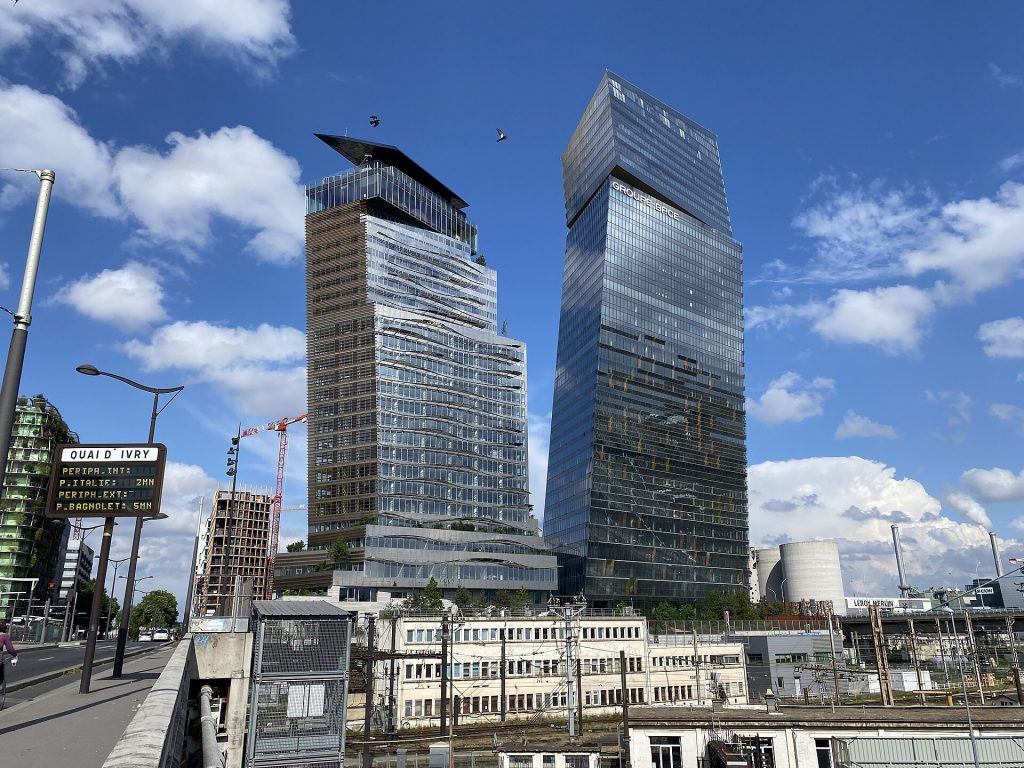
Tours Duo, Paris ; Boubloub ; Wikimedia
Gradually completed between 2021 and 2024 at Paris’s eastern gateway, the Duo Towers are reshaping the skyline of the thirteenth arrondissement. The project consists of two asymmetrical volumes, one of which leans markedly, creating a dynamic perception when viewed from major Parisian thoroughfares. This geometry establishes a visual dialogue with the railway infrastructure, the Seine and broader urban vistas.
The glass façades reflect sky, movement and variations in light, giving the towers a constantly changing presence throughout the day. The programme combines offices, a hotel, a restaurant and a panoramic terrace open to the public, offering an open and contemporary interpretation of the high-rise typology. More than a purely tertiary development, the complex functions as a vertical fragment of city life, embedded in a logic of use and shared space. The Duo Towers embody a renewed vision of height conceived in close relation to the metropolitan landscape.
Through his work, Jean Nouvel has developed an approach where heritage, context and contemporary creation interact on equal terms. Historic sites, natural landscapes and dense urban fabrics provide the intellectual and sensory material from which each project emerges. Architecture is expressed through light, materials, technology and use, consistently avoiding formal repetition.
This position reflects a profound engagement with the evolution of cities and the role of contemporary architecture within environments shaped by history. Jean Nouvel’s buildings become landmarks, spatial experiences and, at times, sources of debate—always generating new interpretations. His work expresses a constant conviction: that architecture plays an active role in cultural and urban vitality by fully embracing its time whilst remaining in dialogue with what came before.