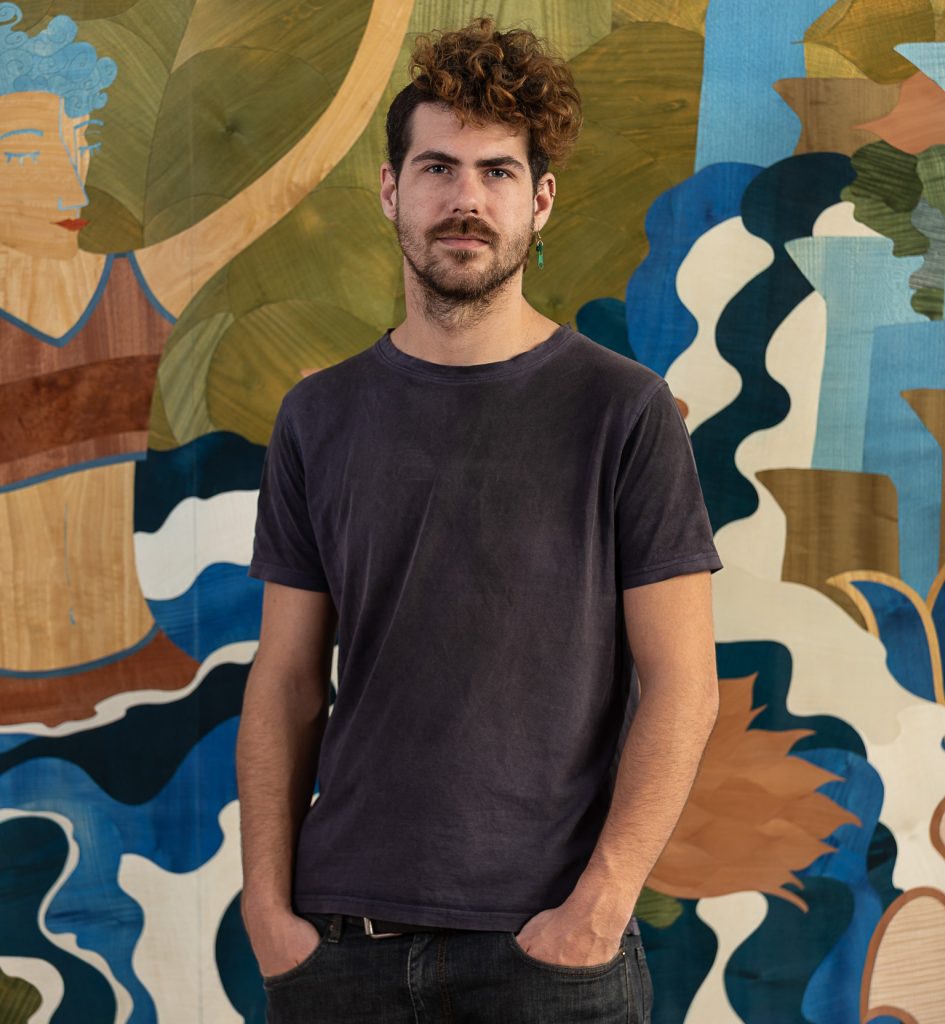
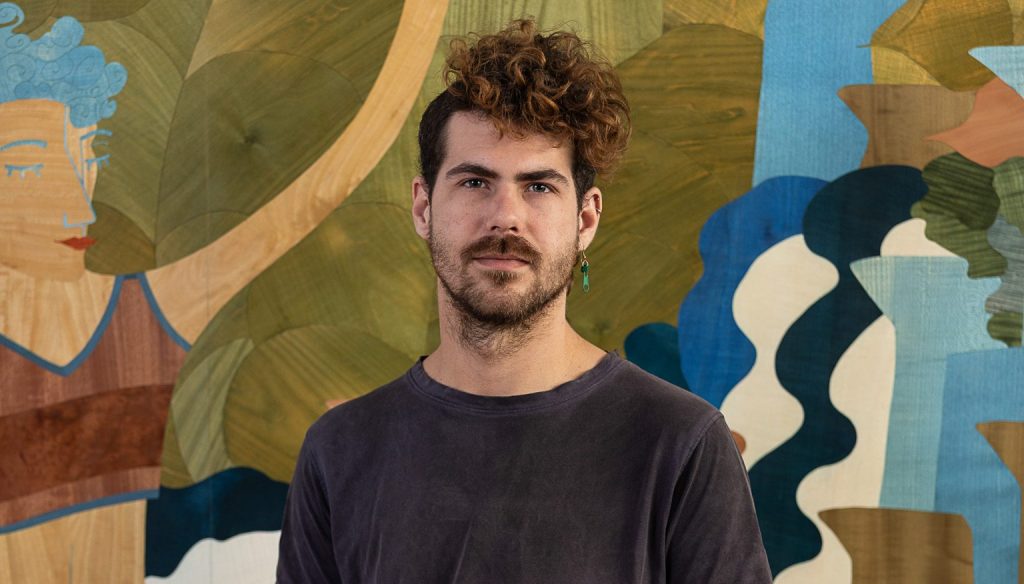
In his Bordeaux studio, Anton Laborde transforms wood into watercolour. This contemporary marquetry virtuoso creates monumental frescoes where jungle meets technology, where serene figures emerge from lush vegetation. Between his childhood in Auroville, India, and the discipline of the Compagnons du Tour de France, via the studio of Irish designer Joseph Walsh, this visual artist has forged a distinctive visual language. Exhibited in London at the Collect Art Fair, represented by REVEL Gallery, and winner of prestigious awards, his works question our relationship with the natural world through a lens of quiet intensity.
Born in 1999 in Fontainebleau, Anton Laborde spent five years of his childhood in Auroville, an experimental city founded in 1968 near Pondicherry, India. This architectural utopia, designed outside Western conventions, left a profound mark. “It was there that I was introduced to the techniques of the visual arts and personal expression,” he recalls. In this city where all nationalities converge, the child developed absolute freedom of thought, far removed from French norms.
At fifteen, however, a desire for structure drew him back to France. He joined the Compagnons du Tour de France for four years, attracted by their values of fraternity and excellence. “I was fascinated by how work could elevate the human spirit,” the artist explains. He absorbed the essentials: discipline of movement, rigour, and the pursuit of perfection. In 2017, a pivotal experience arrived with Joseph Walsh, an Irish designer in Kinsale. Walsh encouraged him to break free from traditional cabinetmaking codes. This newfound freedom, combined with the discipline he’d acquired, became the foundation for his future work.

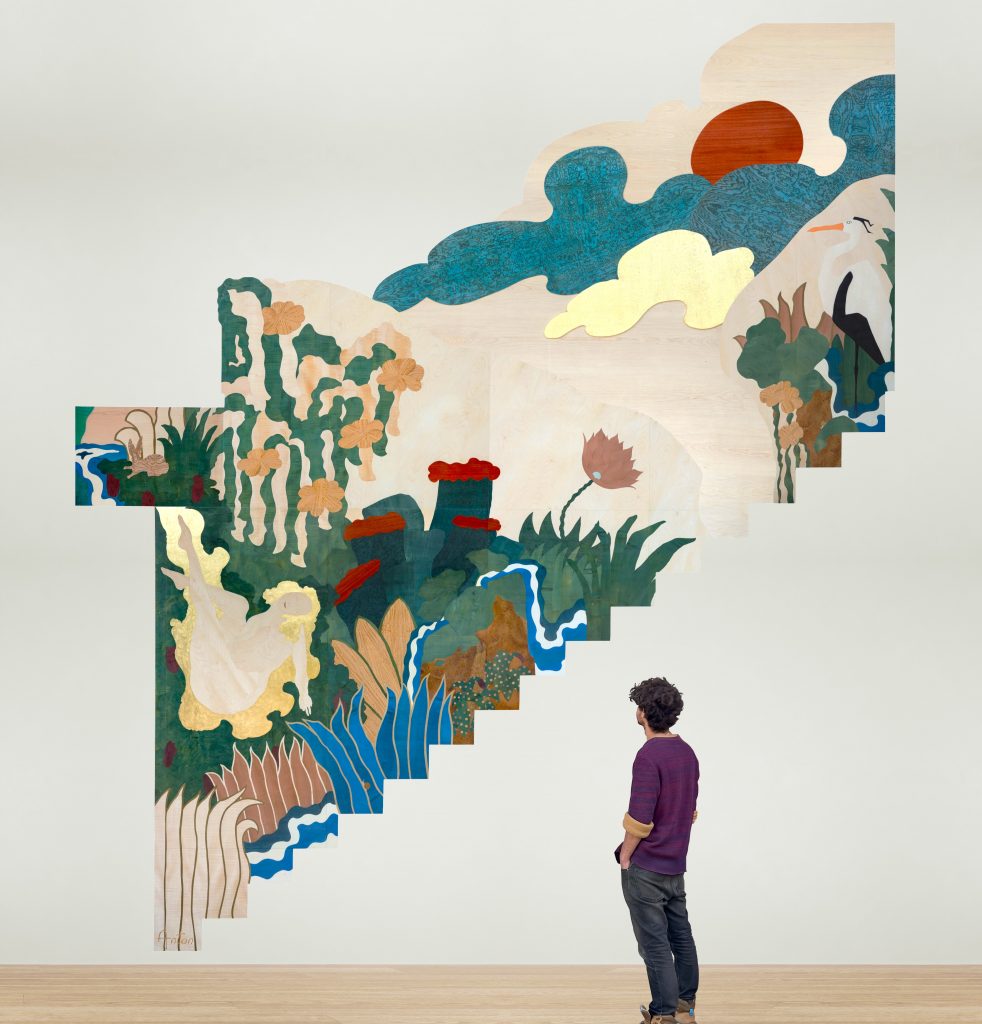
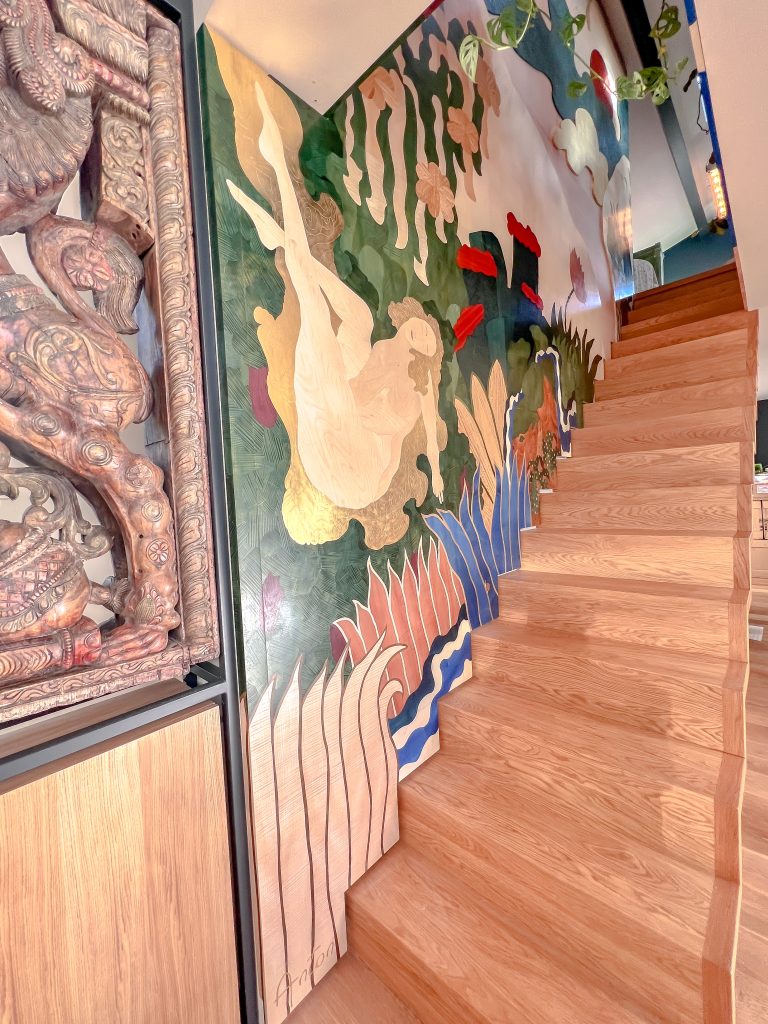
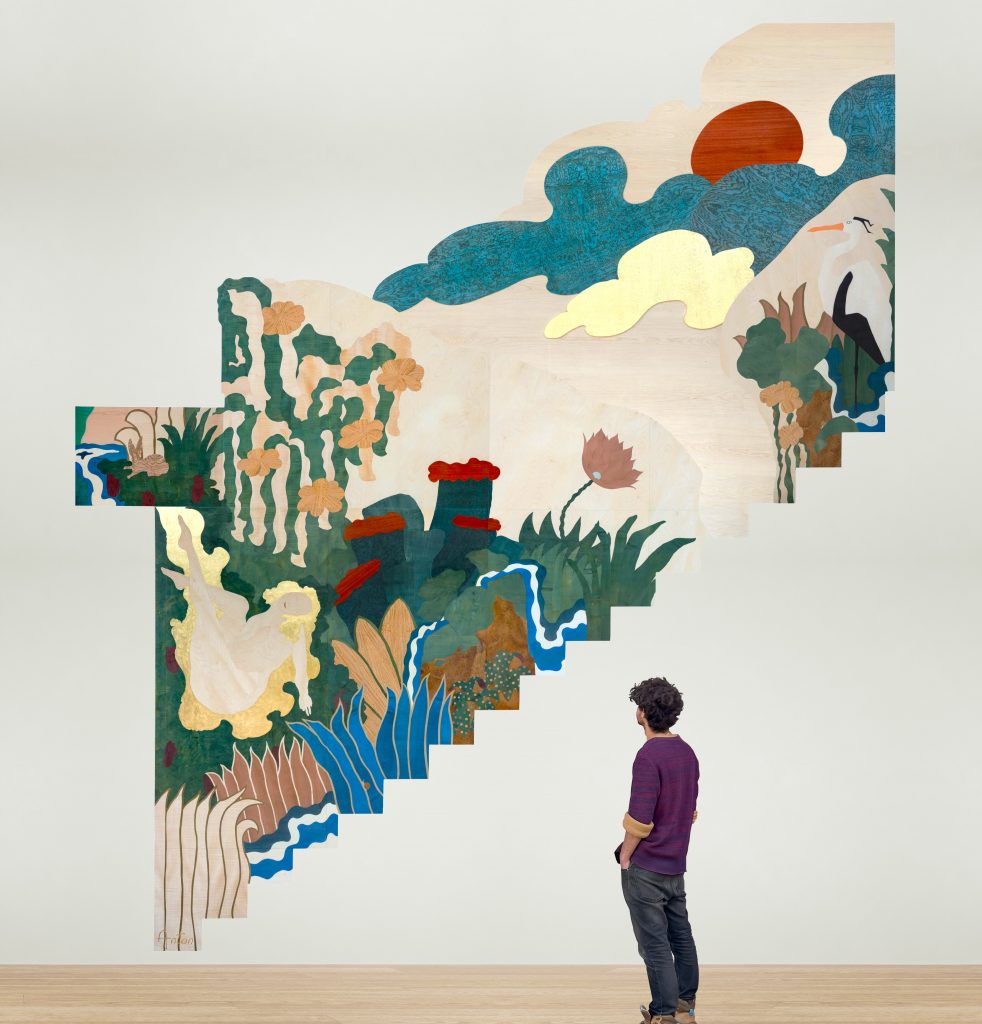
Vénus des Indes; Anton Laborde
In 2020, Anton Laborde opened his studio in Bordeaux. That’s when everything transformed. He drew on the techniques of Dominique Ciamarone, a self-taught Meilleur Ouvrier de France, adapting them to transcend the limitations of format. Traditional marquetry was confined to furniture, rarely to walls. By using recycled cardboard for environmental reasons, he can now create monumental works without size constraints.
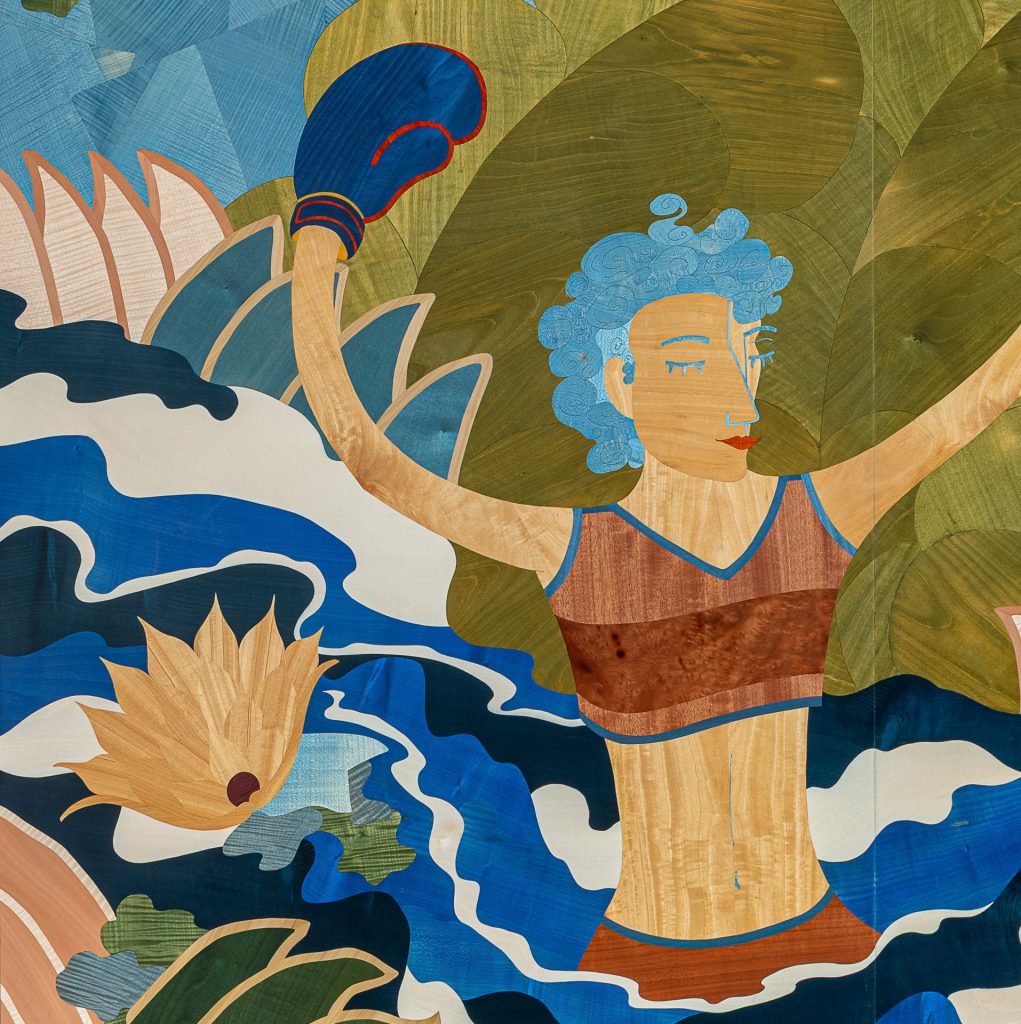
His Venus of the Indies, created as a carte blanche for a private collector, unfurls its curves over 14 m². During the pandemic, the concept of paintings emerged—a major creative turning point. Then, after hundreds of attempts, came the real challenge: creating pastel colours, tones absent from natural wood. “I wanted something akin to acrylic,” he explains. In 2021, the first successful attempt opened up endless possibilities. Today, it takes three to four months to achieve these dreamlike blues and greens through impregnation.
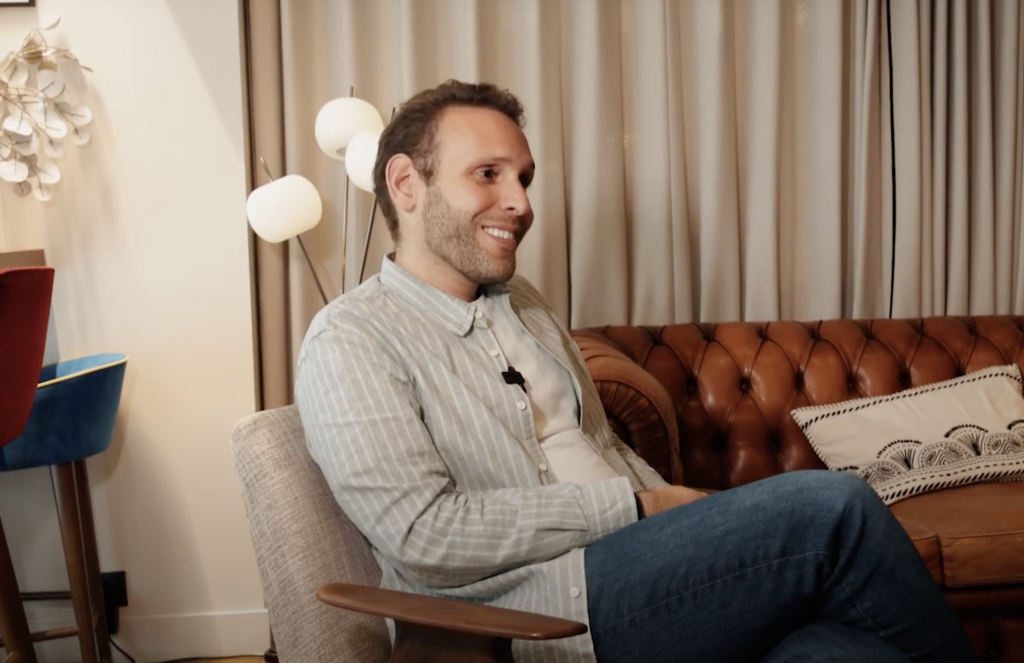
Reportage: Anton Laborde
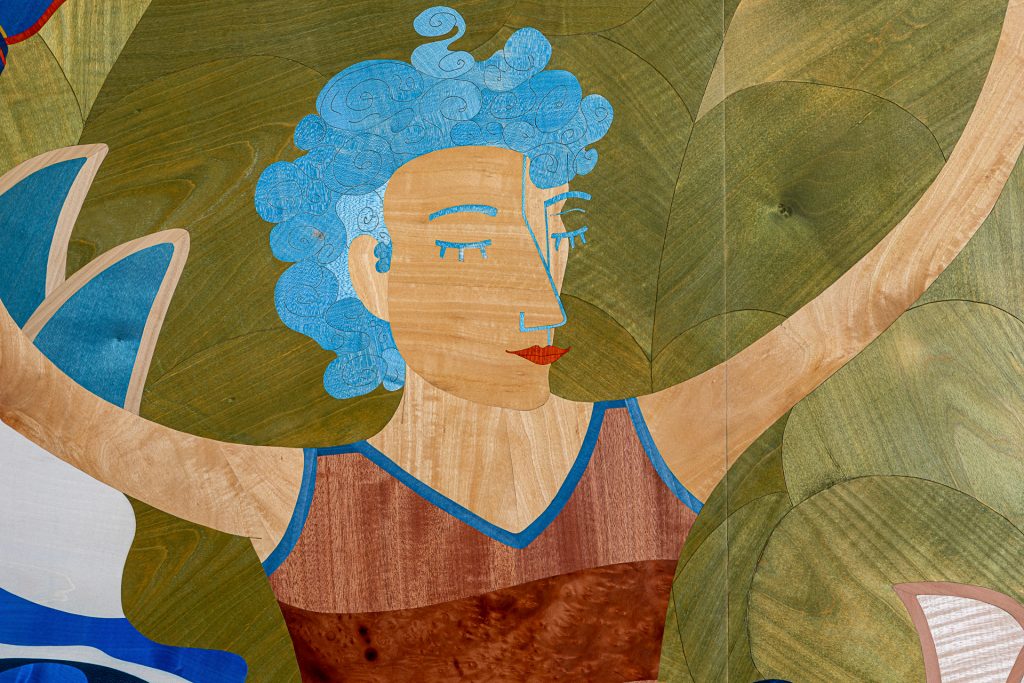
The jungle provides the setting for his creations. This lush ecosystem—free of moral judgement yet fascinatingly complex—becomes a mirror of human society. “Suffering, joys, births, deaths: everything is there,” Anton observes. Human figures emerge from the heart of this natural world, all depicted with their eyes closed. “People with closed eyes are at peace. It represents the human capacity to transcend emotions and circumstances,” the artist explains.
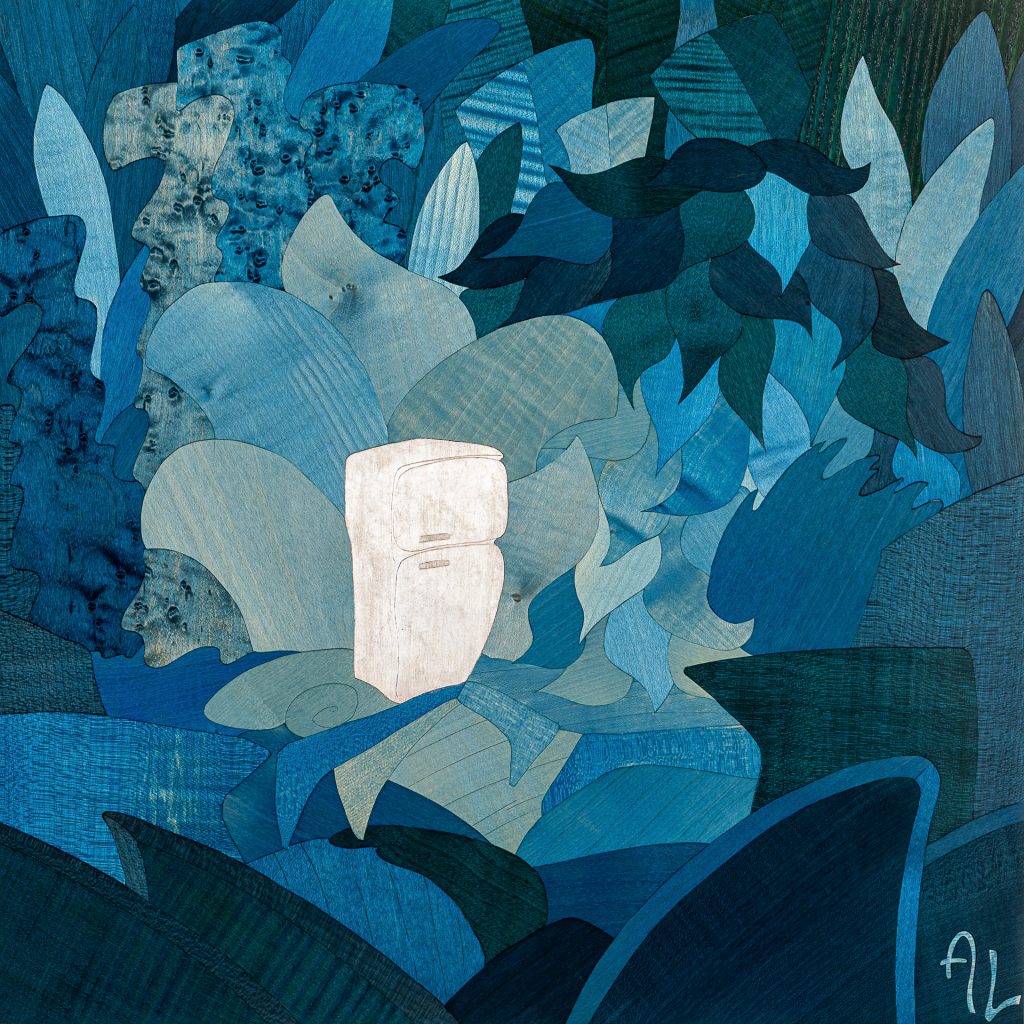
His Venus of the Indies carries a powerful political message. “This Indian Venus in the jungle is a metaphor for misogynistic attitudes and the condition of women throughout the world. For him, love is a political value,” analyses Nathalie Viot, art historian and exhibition curator. In a recent series, nature devours manufactured objects—refrigerators, petrol pumps, winged wheelbarrows. These contrasts question our dependence on technology and our impact on the environment.
Exposition Concrete Jungle; Anton Laborde
Anton Laborde’s work is constantly evolving. Maple, sycamore and amaranth wood assembled with a scalpel are now complemented by gold leaf, silver leaf, mother-of-pearl, engraving and ink. “I see an evolution in my work. There are avenues materialising, both physically and conceptually,” he says.
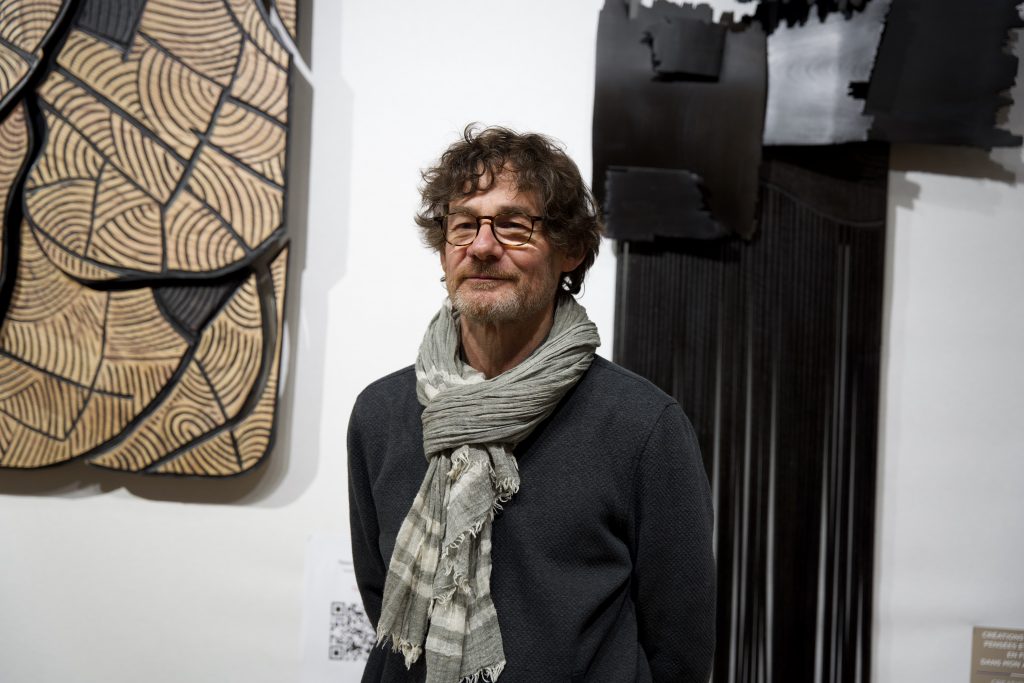
First and foremost a visual artist, he’s drawn to the complexity of human beings—their ambivalence and the deep feelings that inhabit us. His references draw on Henri Rousseau for lush jungles and Klimt for ornamental preciousness. His time in Libourne also left its mark, evoking the world of Victor Hugo’s Les Misérables.
Beyond creation, the artist shares his knowledge. In 2022 and 2023, he worked with Year 6 pupils in partnership with the Hermès Foundation and the Musée des Arts Décoratifs et du Design in Bordeaux. This educational dimension reflects his commitment to sharing his art with future generations.
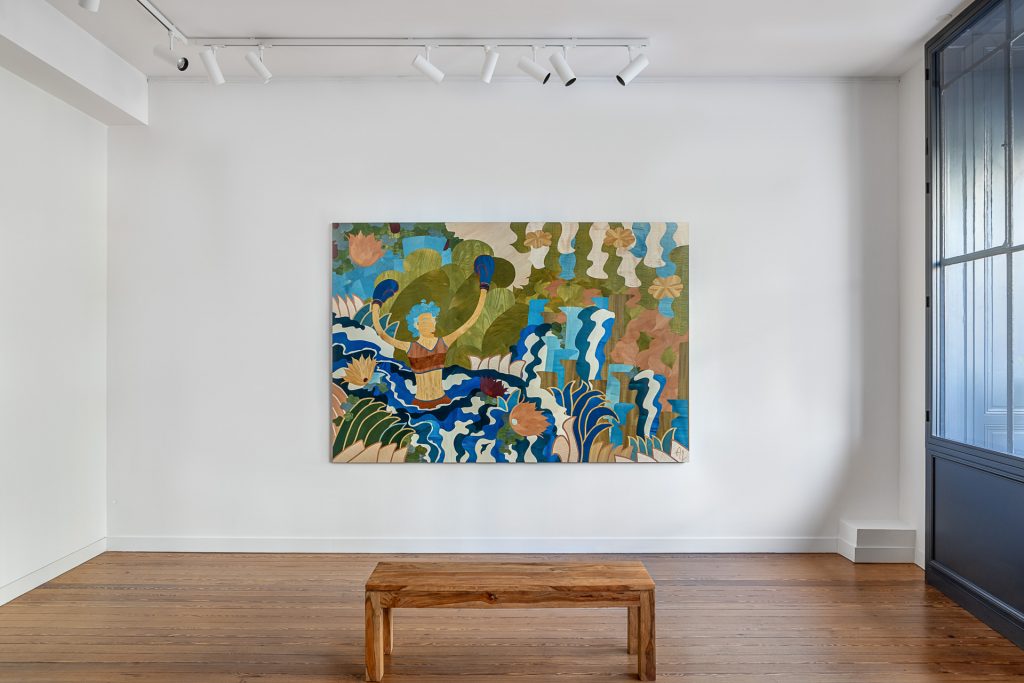
L’apaisement de l’Indomptable: la boxeuse; Anton Laborde
Winner of the Prix de la Jeune Création des Métiers d’Art in 2022, the Concours Général des Métiers in 2018 and Rotary Club awards, Anton Laborde has won over collectors and institutions alike. His presence at Collect Art Fair in Londonin 2023 and 2024 confirms his international standing. In 2025, his first solo exhibition, Concrete Jungle, at Maxwell-Baynes (Christie’s) and REVEL Gallery in Bordeaux, from April to June, marked a turning point. His works Danser sous les étoiles (Dancing under the stars) and L’apaisement de l’indomptable: la boxeuse (The appeasement of the untamable: the boxer) met with unanimous critical acclaim.
Represented by Galerie REVEL, he’s collaborated with architects to expand his creative possibilities. Having just returned from a residency in India, the artist is preparing his next solo exhibition for late 2026 or early 2027. “I plan to explore new areas of expression,” he says. In a world saturated with screens, his works act as “curative furniture”—they invite us to close our eyes in order to see more clearly.
A 14 m² masterpiece that blurs the line between architecture and marquetry.
La boxeuse: a monumental work (1.80 x 2.70 m) where brute force meets the serenity of wood.
A poignant metaphor for our consumption in the midst of sovereign nature.
Février, 2026
Créer avec l’existant, penser avec l’histoire
De l’architecture au design, cette édition explore comment lieux, savoir-faire et matières héritées deviennent terrains de création actuelle.
Janvier, 2026
Le luxe se réinvente.
Finis les logos clignotants, place à une sobriété raffinée, à l’immersion personnelle, à l’excellence artisanale, à la durabilité sensible.
Décembre, 2025
Héritages, gestes contemporains et plaisirs essentiels
Parce que la fête n’est jamais qu’apparence : elle reflète notre manière d’habiter le monde, de transmettre, de fabriquer des souvenirs durables.
ÉDITION #3
Upcycling et kintsugi transforment l’objet contemporain, faisant de la trace, de la réparation et de la matière un langage esthétique.
ÉDITION #3
Artisans et designers donnent une seconde vie aux matériaux anciens, entre création contemporaine, patrimoine et réemploi.
ÉDITION #3
Bunkers, wagons et kiosques renaissent grâce à la création, révélant comment l’art redonne sens aux lieux délaissés.
ÉDITION #2
Un regard transversal sur le quiet luxury à travers des lieux, des objets et des figures qui expriment l’élégance.
ÉDITION #1
Une sélection de marques, architectures, objets et escapades qui donnent corps au sens de la fête.
ÉDITION #3
Usines et gares délaissées deviennent lieux culturels ouverts, où mémoire industrielle et usages contemporains redessinent la ville.
ÉDITION #3
L’audacieuse métamorphose d’un palace parisien
ÉDITION #3
Au cœur du Marais, un lieu discret révèle comment archives, architecture et recherche font dialoguer l’œuvre de Picasso.
ÉDITION #2
Une expérience shopping unique dans un magasin emblématique.
ÉDITION #2
Voyage culinaire et architectural au cœur de la Seine
ÉDITION #2
Dans le 9e arrondissement, un établissement qui invite au quiet luxury
ÉDITION #1
Chante! vient d’ouvrir ses portes. Une invitation à vibrer !
ÉDITION #3
Icône du paysage français, la boîte jaune change de statut et s’invite dans l’univers du design.
ÉDITION #3
L’édition 2026 affirme une vision où artisanat, design et mémoire façonnent l’habitat contemporain, international actuel.
ÉDITION #3
Cent ans après 1925, l’Art déco revient dans nos villes et intérieurs avec géométrie, audace, optimisme.
ÉDITION #3
Depuis plus de deux cents ans, Royal Limoges conjugue porcelaine, savoir-faire industriel et création contemporaine.
ÉDITION #3
Des terrains de sport aux podiums, la sneaker raconte un siècle de mutations culturelles, techniques et stylistiques.
ÉDITION #2
Design, mode, artisanat : des créations où la forme et la matière se répondent avec justesse, loin de tout effet de mode.
ÉDITION #1
Décorations artisanales, calendriers ultra-luxe et pièces de collection pour s’enivrer de joie avant l’heure.
ÉDITION #3
Entre marqueterie monumentale et jungle symbolique, Anton Laborde transforme le bois en récit contemporain poétique engagé.
ÉDITION #3
À Maison & Objet, Thierry Laudren présente des meubles sculptés où fonction, matière et lenteur façonnent une présence.
ÉDITION #3
Jean Nouvel conçoit une architecture attentive aux contextes, où lumière, histoire et usages façonnent chaque projet.
ÉDITION #3
À Lyon, Sophie Morel rénove des lieux historiques en alliant respect du bâti et écriture contemporaine.
ÉDITION #3
Au Centre d’Études Picasso, l’architecte compose une architecture où lumière, géométrie et héritage dialoguent avec précision.
ÉDITION #2
Entretien avec le fondateur d’EDO (European Design Office)
ÉDITION #2
Portrait d’un visionnaire qui transforme l’art de recevoir en expérience totale.
ÉDITION #1
Personnalités, artisans et créateurs qui donnent à la fête sa profondeur humaine.
ÉDITION #3
De Bordeaux au Bassin, art, vignobles et bien-être composent une échappée élégante au cœur de la Gironde.
ÉDITION #2
Vers une région de l’Italie habitée par le temps, où paysages, culture et usages s’accordent dans une continuité rare.
ÉDITION #1
Destinations et rituels qui réinventent la fête, du soleil tropical aux marchés d’hiver.