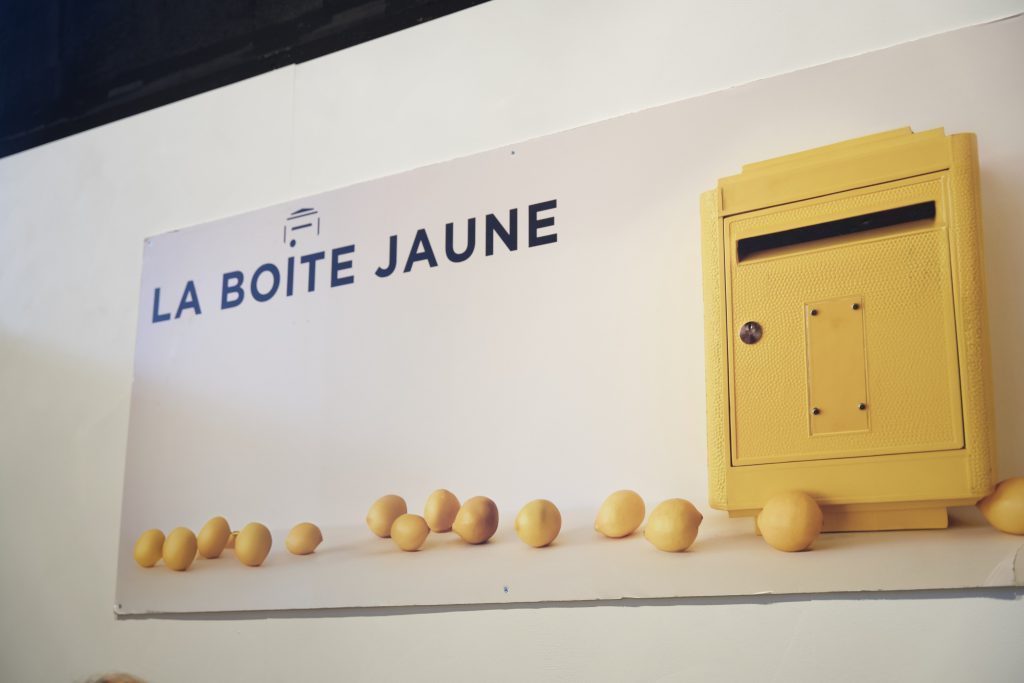
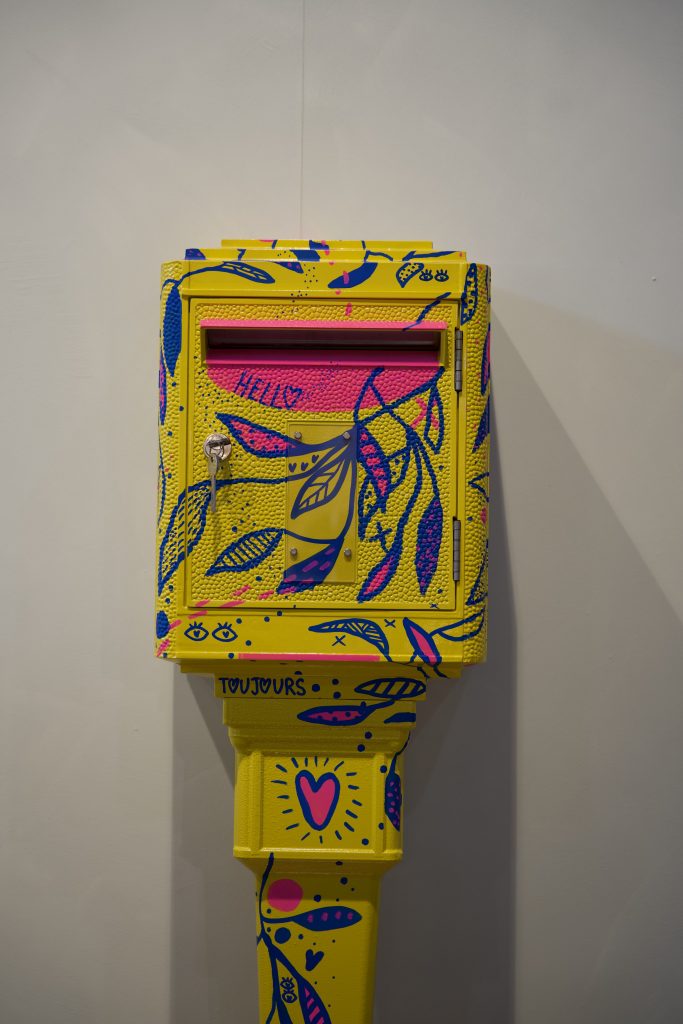
It’s been part of the French streetscape for decades. La Poste’s yellow mailbox, instantly recognizable, adorns homes, apartment buildings, and street corners across the country. A familiar fixture that holds a certain nostalgia. Now it’s getting a second life thanks to La Boîte Jaune, a company reimagining this everyday item as a coveted design piece.
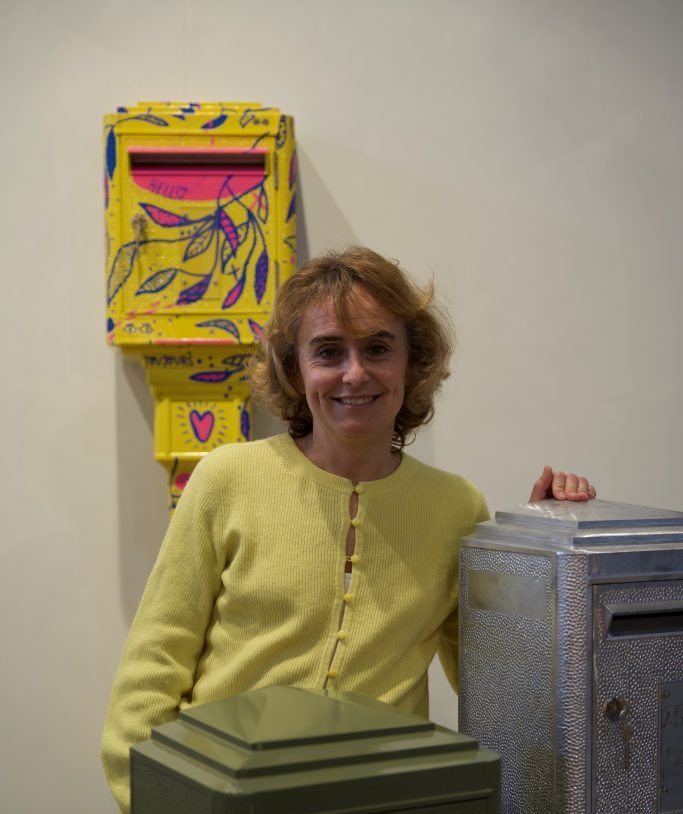
The driving force behind the project is Sophie Dounont.
“I always told myself that when I had my own house, I’d have a proper mailbox. But there wasn’t anything really attractive available in France,” she explains.
Sophie has long been familiar with this particular mailbox. It’s made by the Dejoie foundry in Nantes, a historic establishment and La Poste’s official foundry—one with family ties through her husband’s side. The design exists, the original mold is still there, and the craftsmanship remains intact. The concept came together naturally: why not offer this iconic piece to individual homeowners?

Yellow mailbox ; WeAreKollectors – Salon Maison&Objet 2026
Sophie approached the foundry with her idea.
“I asked if they’d let me sell them commercially. They said there was already interest. So we went for it.”
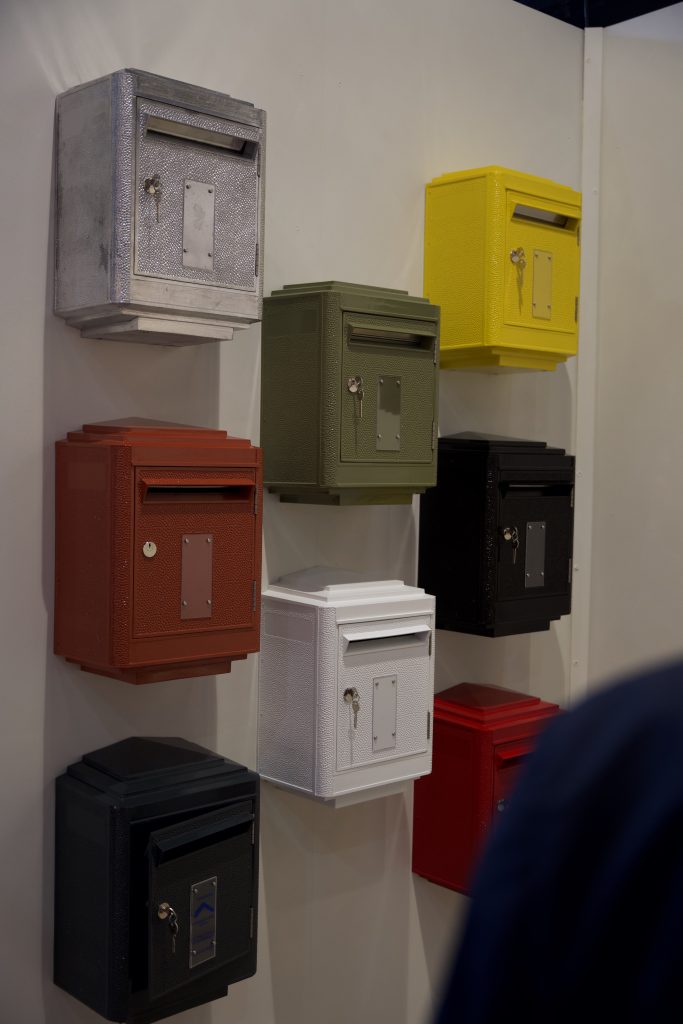
The classic models—the 1945 Small Model and 1950 Large Model—are now being produced again in Nantes at the original foundry. Cast in aluminum, they’re durable, recyclable, and corrosion-resistant. Certified by La Poste, these boxes meet all safety and capacity standards while handling modern requirements, including small package deliveries.
Functional, robust, and built to last, they work equally well on contemporary homes and period buildings.
Yellow mailbox ; WeAreKollectors – Salon Maison&Objet 2026
It didn’t take long for the object to evolve beyond its original function.
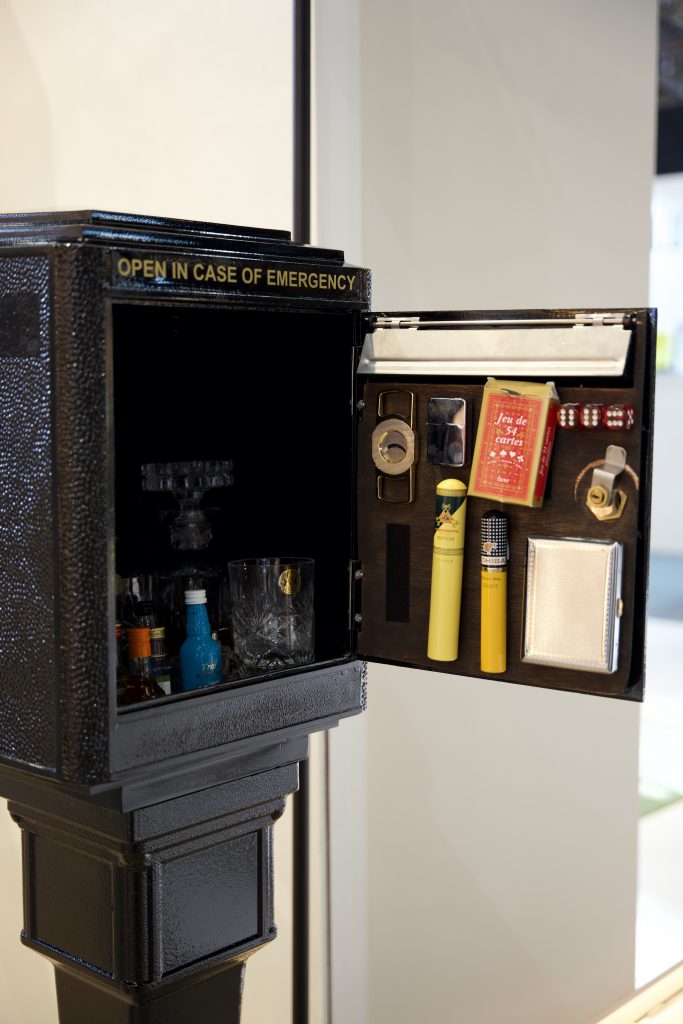
“Some places can’t accommodate an outdoor mailbox, but the design itself has instant appeal. We realized we could bring it inside.”
The yellow box transforms into a key holder, hidden bar, medicine cabinet, or jewelry box. It becomes part of the interior decor while evoking ideas of home, connection, and anticipation—all while keeping its iconic shape.
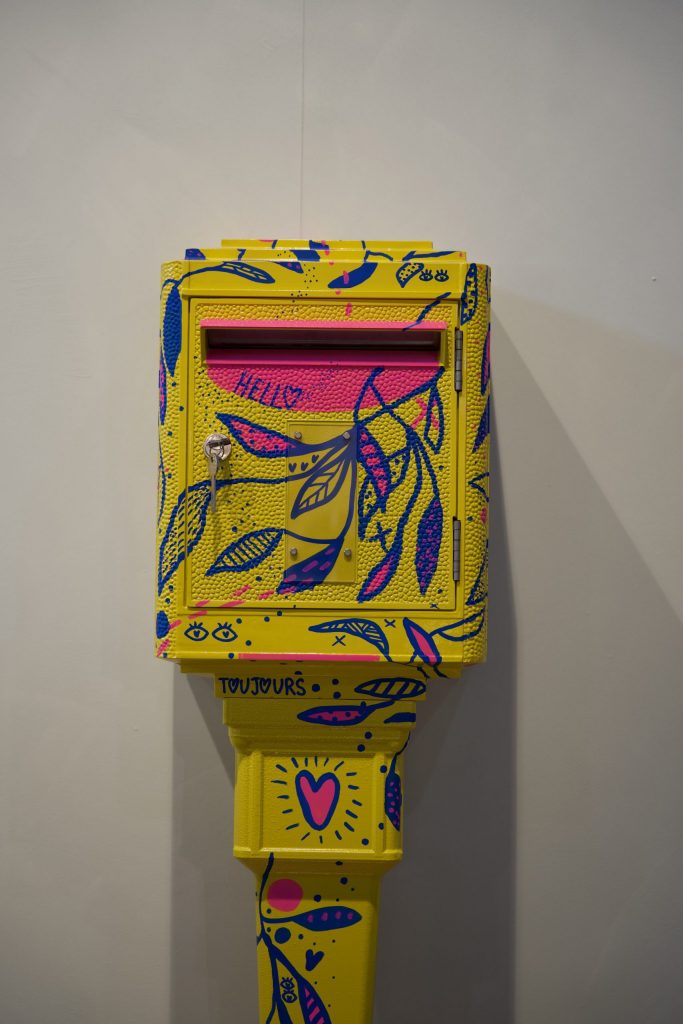
La Boîte Jaune has also become a canvas for contemporary artists. Sophie works with creators from different disciplines.
“We commission artists, and the box becomes artwork.”
Some collaborations lean graphic, others more subtle, turning the mailbox into one-of-a-kind pieces or limited editions. Each artistic intervention reinterprets the object without changing its original form.
Yellow mailbox ; WeAreKollectors – Salon Maison&Objet 2026
La Boîte Jaune now attracts private buyers as well as hotels, boutiques, and luxury brands looking for a distinctive decorative or branding element. Prices range from €450 to over €2,000 for artist collaborations and collector’s pieces.
While France remains the core market, Germany, Belgium, and the Netherlands have proven equally receptive.
“These markets really appreciate good design. I’m selling as much in Germany as I am in France now.”
The boxes have also found their way to Japan, the United States, and Australia—symbols of French craftsmanship with global appeal.
Yellow mailbox ; WeAreKollectors – Salon Maison&Objet 2026
Future plans build on this vision. A companion doorbell is in development, echoing the mailbox’s aesthetic with a modern twist. There’s also a new model in the works—more streamlined and more affordable.
The core philosophy remains unchanged.
“A mailbox made in France. Sturdy, secure, and sized for packages. Built to last.”
With La Boîte Jaune, Sophie Dounont has elevated an everyday object, positioning it where heritage, design, and daily life intersect.
Février, 2026
Créer avec l’existant, penser avec l’histoire
De l’architecture au design, cette édition explore comment lieux, savoir-faire et matières héritées deviennent terrains de création actuelle.
Janvier, 2026
Le luxe se réinvente.
Finis les logos clignotants, place à une sobriété raffinée, à l’immersion personnelle, à l’excellence artisanale, à la durabilité sensible.
Décembre, 2025
Héritages, gestes contemporains et plaisirs essentiels
Parce que la fête n’est jamais qu’apparence : elle reflète notre manière d’habiter le monde, de transmettre, de fabriquer des souvenirs durables.
ÉDITION #3
Upcycling et kintsugi transforment l’objet contemporain, faisant de la trace, de la réparation et de la matière un langage esthétique.
ÉDITION #3
Artisans et designers donnent une seconde vie aux matériaux anciens, entre création contemporaine, patrimoine et réemploi.
ÉDITION #3
Bunkers, wagons et kiosques renaissent grâce à la création, révélant comment l’art redonne sens aux lieux délaissés.
ÉDITION #2
Un regard transversal sur le quiet luxury à travers des lieux, des objets et des figures qui expriment l’élégance.
ÉDITION #1
Une sélection de marques, architectures, objets et escapades qui donnent corps au sens de la fête.
ÉDITION #3
Usines et gares délaissées deviennent lieux culturels ouverts, où mémoire industrielle et usages contemporains redessinent la ville.
ÉDITION #3
L’audacieuse métamorphose d’un palace parisien
ÉDITION #3
Au cœur du Marais, un lieu discret révèle comment archives, architecture et recherche font dialoguer l’œuvre de Picasso.
ÉDITION #2
Une expérience shopping unique dans un magasin emblématique.
ÉDITION #2
Voyage culinaire et architectural au cœur de la Seine
ÉDITION #2
Dans le 9e arrondissement, un établissement qui invite au quiet luxury
ÉDITION #1
Chante! vient d’ouvrir ses portes. Une invitation à vibrer !
ÉDITION #3
Icône du paysage français, la boîte jaune change de statut et s’invite dans l’univers du design.
ÉDITION #3
L’édition 2026 affirme une vision où artisanat, design et mémoire façonnent l’habitat contemporain, international actuel.
ÉDITION #3
Cent ans après 1925, l’Art déco revient dans nos villes et intérieurs avec géométrie, audace, optimisme.
ÉDITION #3
Depuis plus de deux cents ans, Royal Limoges conjugue porcelaine, savoir-faire industriel et création contemporaine.
ÉDITION #3
Des terrains de sport aux podiums, la sneaker raconte un siècle de mutations culturelles, techniques et stylistiques.
ÉDITION #2
Design, mode, artisanat : des créations où la forme et la matière se répondent avec justesse, loin de tout effet de mode.
ÉDITION #1
Décorations artisanales, calendriers ultra-luxe et pièces de collection pour s’enivrer de joie avant l’heure.
ÉDITION #3
Entre marqueterie monumentale et jungle symbolique, Anton Laborde transforme le bois en récit contemporain poétique engagé.
ÉDITION #3
À Maison & Objet, Thierry Laudren présente des meubles sculptés où fonction, matière et lenteur façonnent une présence.
ÉDITION #3
Jean Nouvel conçoit une architecture attentive aux contextes, où lumière, histoire et usages façonnent chaque projet.
ÉDITION #3
À Lyon, Sophie Morel rénove des lieux historiques en alliant respect du bâti et écriture contemporaine.
ÉDITION #3
Au Centre d’Études Picasso, l’architecte compose une architecture où lumière, géométrie et héritage dialoguent avec précision.
ÉDITION #2
Entretien avec le fondateur d’EDO (European Design Office)
ÉDITION #2
Portrait d’un visionnaire qui transforme l’art de recevoir en expérience totale.
ÉDITION #1
Personnalités, artisans et créateurs qui donnent à la fête sa profondeur humaine.
ÉDITION #3
De Bordeaux au Bassin, art, vignobles et bien-être composent une échappée élégante au cœur de la Gironde.
ÉDITION #2
Vers une région de l’Italie habitée par le temps, où paysages, culture et usages s’accordent dans une continuité rare.
ÉDITION #1
Destinations et rituels qui réinventent la fête, du soleil tropical aux marchés d’hiver.