ISSUE #3 - February 2026

Objects

Objects

In this section :

Art Deco : a century-old movement
that’s more relavant than ever

A hundred years after its triumph in Paris, Art Deco is reconquering our interiors, our architecture and our imaginations. But why does this movement, born in the Roaring Twenties, captivate us so powerfully today?

Paris 1925 : when everything changed

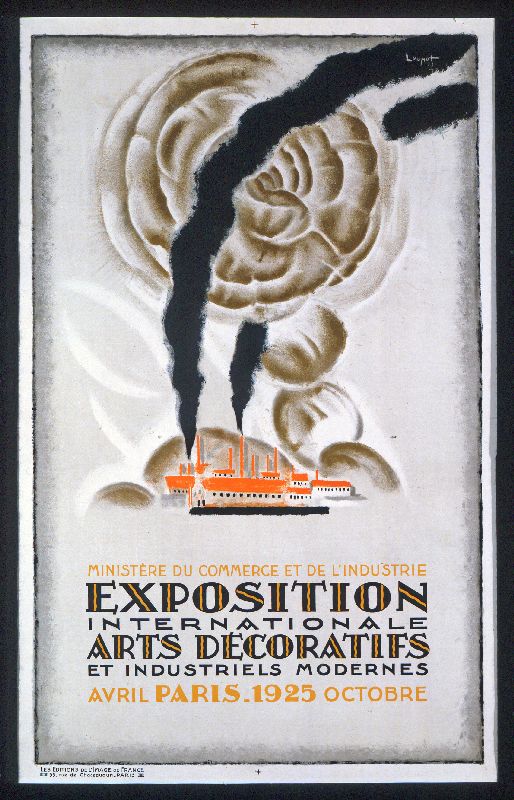
Charles Loupot ; Johann von Stein ; Wikimedia

Picture Paris in 1925. Between April and October, the capital played host to a revolutionary exhibition: the International Exhibition of Modern Decorative and Industrial Arts. The rule? Zero nostalgia. Everything had to be resolutely modern.

France was determined to prove it remained the temple of luxury and good taste. The gamble paid off handsomely: millions of visitors flocked to the exhibition, dazzled by this bold new visual language that would soon be named Art Deco.

Charles Loupot ; Johann von Stein ; Wikimedia

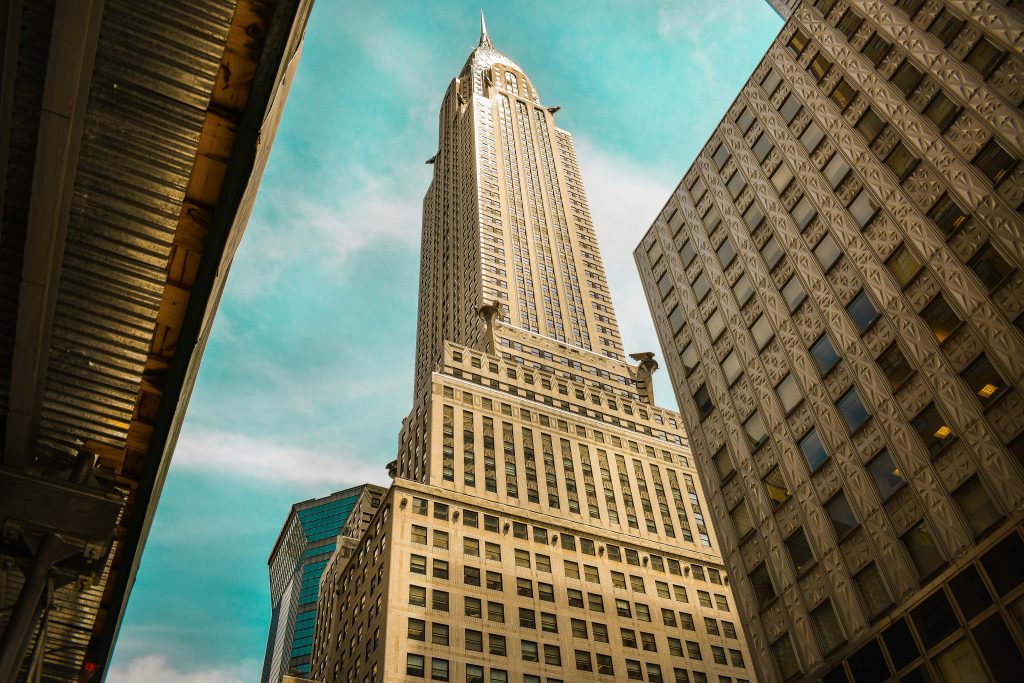
Solstice Hannan ; Unsplash

The five commandments of Art Deco

Solstice Hannan ; Unsplash

Gone are the organic curves of Art Nouveau. Enter a style that celebrates geometry, speed and the future.

Geometry above all else – Straight lines, perfect circles, pyramidal shapes. Art Deco is what you can draw with a ruler and compass.

Symmetry as signature – Everything perfectly balanced, reassuring, orderly.

Stylisation over imitation – A rose becomes a simple graphic disc. Animals—deer, panthers, greyhounds—are rendered in profile with a few bold strokes.

Black and gold, an iconic pairing – Maximum contrast for immediate visual impact. Add chrome, mirrors and glossy lacquer.

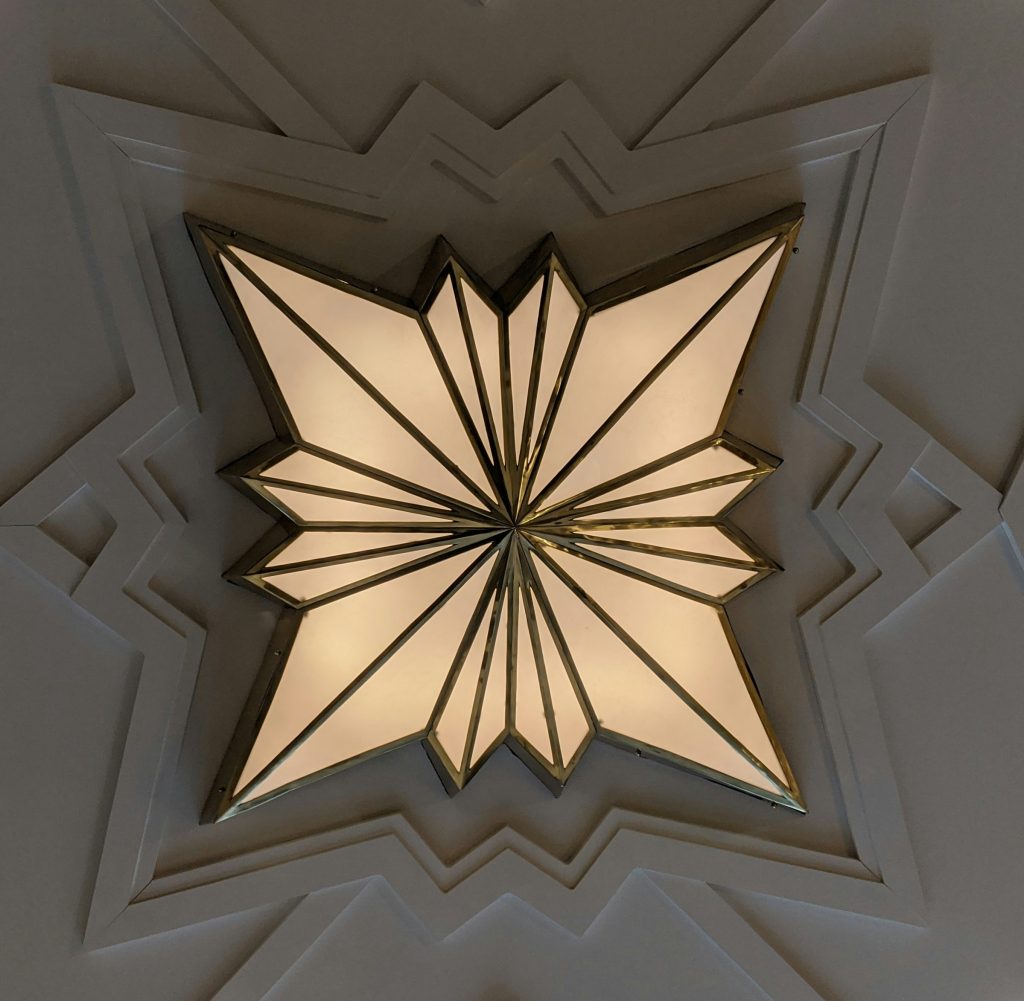
Zigzags everywhere – Chevrons, lightning bolts, sunbursts: patterns that evoke electricity, modernity and movement.

From luxury furniture to skyscrapers

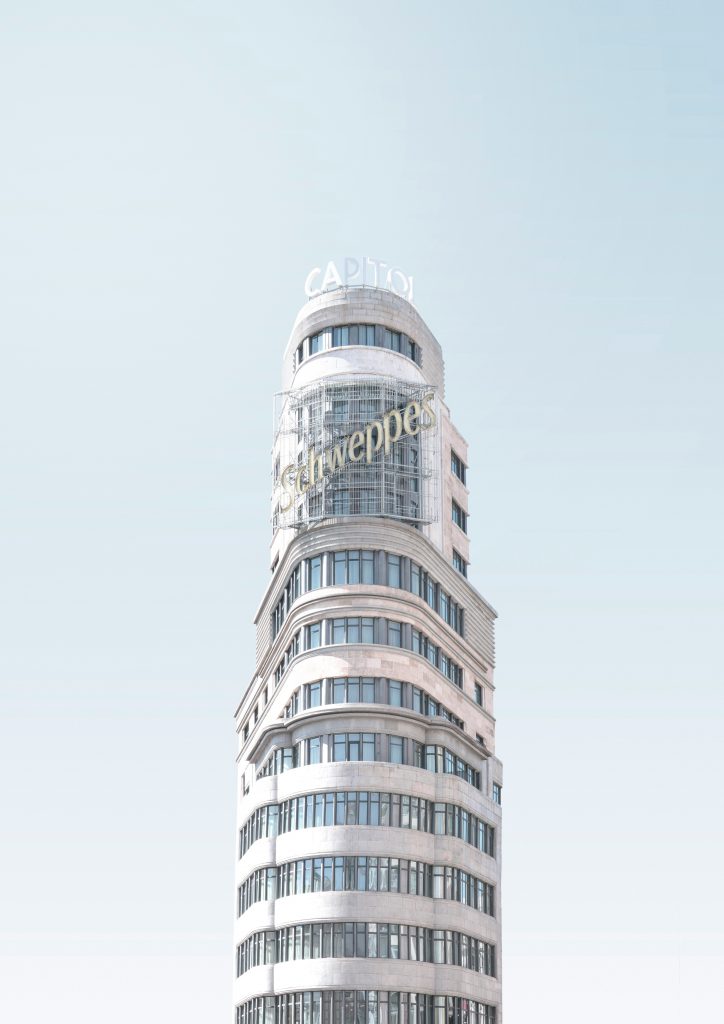
Esteban Chinchilla ; Unsplash

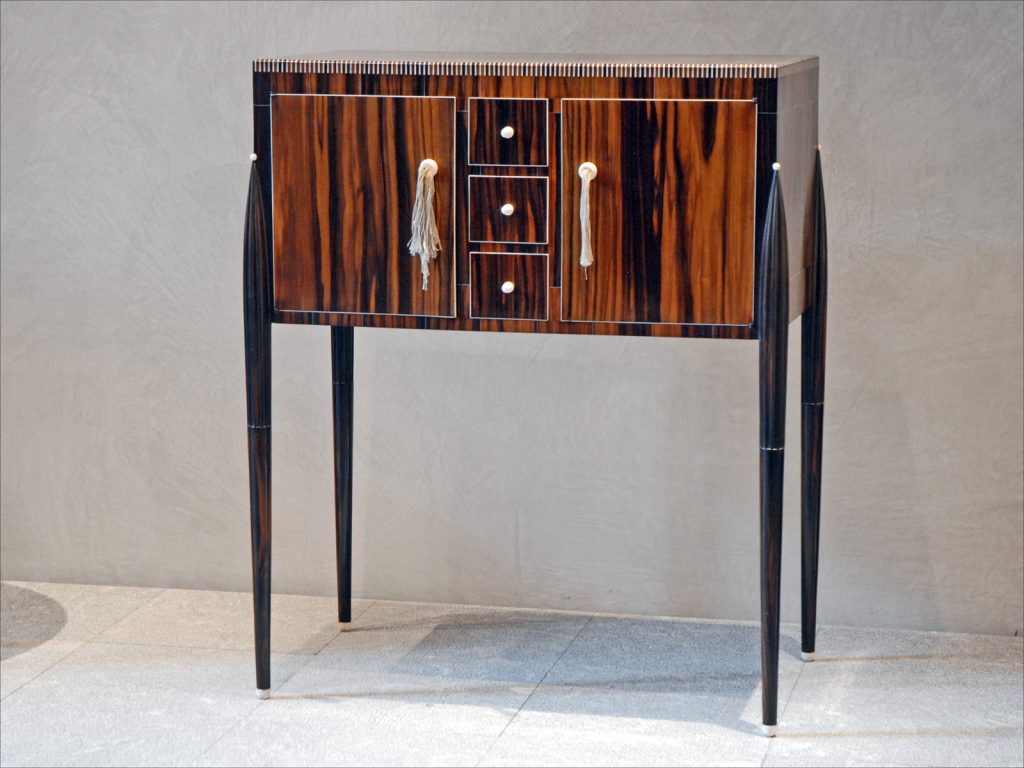
Initially, Art Deco was synonymous with precious materials: Macassar ebony, ivory, shagreen. Then the movement embraced the industrial age with chrome-plated steel, glass and concrete. Modern design was born.

Above all, Art Deco travelled. New York sent it soaring skywards with the Chrysler Building. Casablanca and Shanghai were transformed. It became the first truly global style.

Esteban Chinchilla ; Unsplash

Meuble de Jacques-Emile Ruhlmann (Paris 1879-Paris 1933) ; Jean-Pirre Dalbéra ; Wikimedia

The geniuses of the movement

Meuble de Jacques-Emile Ruhlmann (Paris 1879-Paris 1933) ; Jean-Pirre Dalbéra ; Wikimedia

The movement owes its brilliance to exceptional creators.

  • Jacques-Émile Ruhlmann, master furniture maker, embodied French refinement.
  • Tamara de Lempicka immortalised the Roaring Twenties with her sculptural, sensual portraits.
  • Cassandre revolutionised advertising posters with bold geometric compositions.
  • Le Corbusier, with his L’Esprit Nouveau pavilion in 1925, paved the way for functional architecture stripped of ornamentation.

Why are we crying out for it today?

Tsuyoshi Kozu ; Unsplash

After years of somewhat bland Scandinavian minimalism, we’re craving character. Neo-Art Deco delivers: bold shapes, golden brass, sumptuous velvets, striking graphic patterns.

Then there’s the unsettling parallel: just as in the 1920s, we’re emerging from multiple crises. Art Deco speaks of celebration, optimism and the desire to live life to the fullest—a message that resonates powerfully today.

Tsuyoshi Kozu ; Unsplash

How to spot Art Deco at a glance

To identify Art Deco instantly, simply look for the contrast with natural forms. Where nature is curved and random, Art Deco is ordered, rigorous and brilliant.
01.

The dominance of geometry

Simone Hutsch ; Unsplash

This is the simplest giveaway. If you see shapes you could draw with a ruler and compass, it’s probably Art Deco:

  • Straight lines and sharp angles
  • Perfect circles and semicircles
  • The pyramid (or ziggurat): stepped shapes, quintessentially Art Deco in skyscrapers or chair backs

Simone Hutsch ; Unsplash

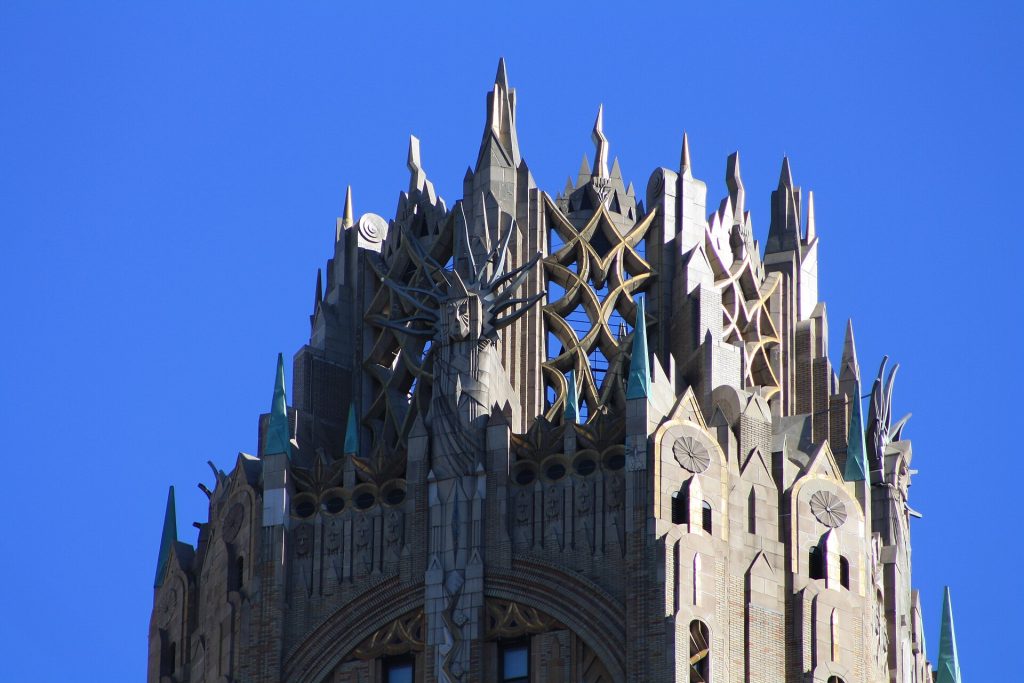
General Electric Building ; New York City; Ryan Schwark; Wikimedia

02.

The 'broken line' (or zigzag)

General Electric Building ; New York City; Ryan Schwark; Wikimedia

The movement adores dynamism. Look for patterns such as:

  • Chevrons (V-shapes)
  • Lightning bolts or zigzags (symbolising modernity and electricity)
  • Sunbursts radiating from a central point

03.

Stylisation (over realism)

Avansear ; Unsplash

Unlike Art Nouveau, which faithfully reproduced flowers, Art Deco simplified them to the extreme:

  • A rose became a simple disc with a few lines
  • Animals—often deer, greyhounds or panthers—were depicted in profile, with taut lines suggesting speed

Avansear ; Unsplash

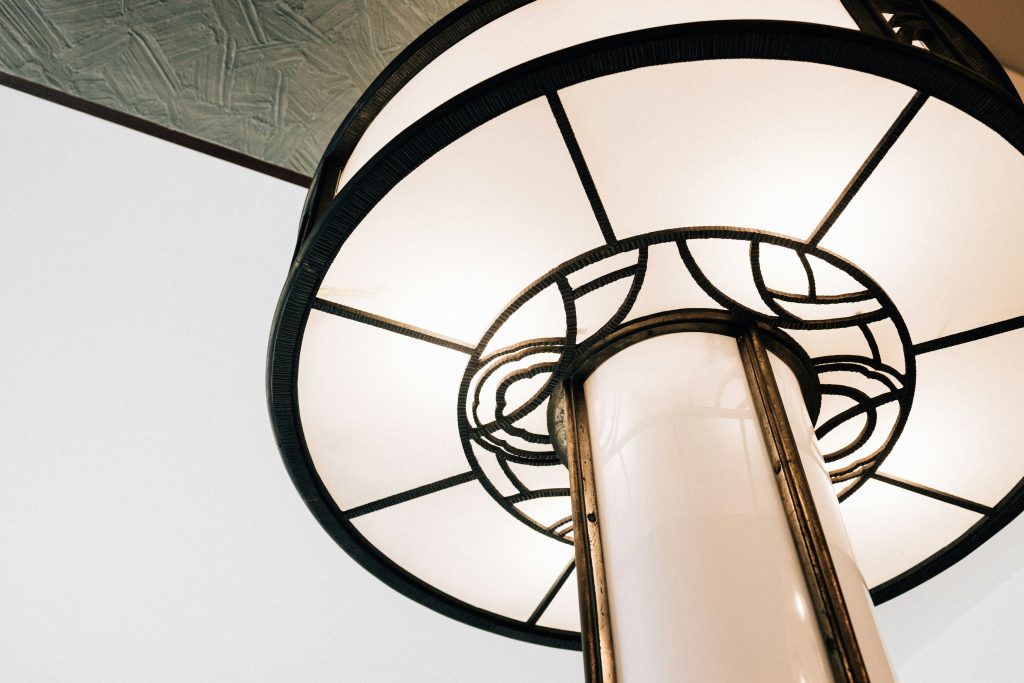
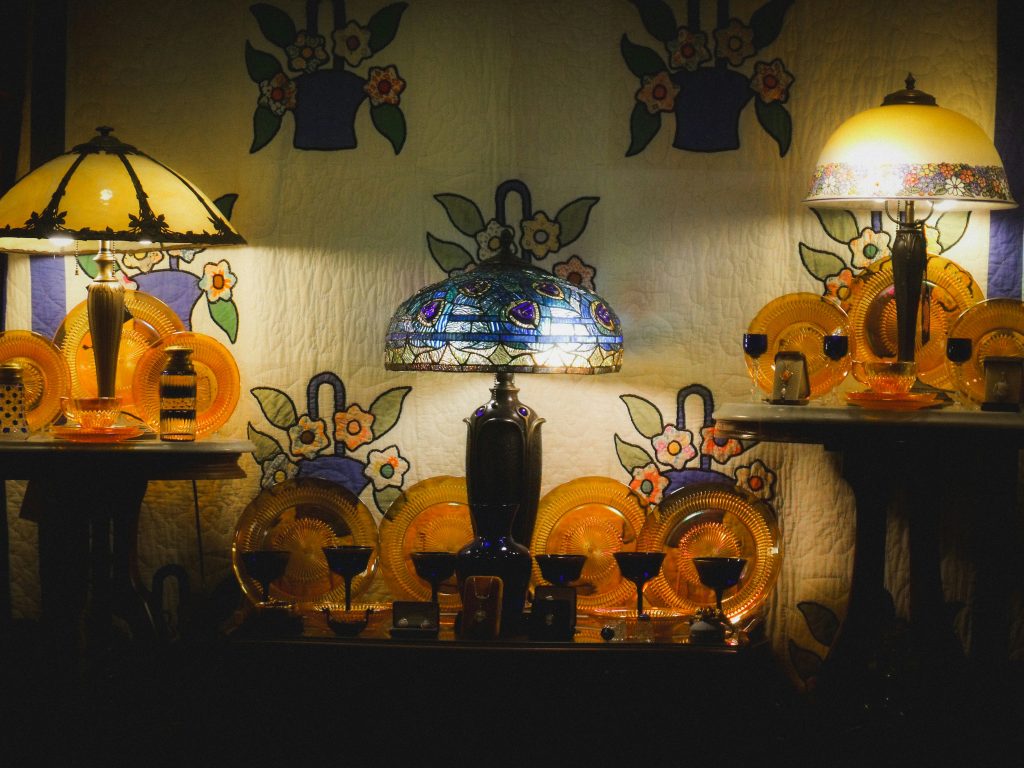
Svekloid ; Shutterstock

04.

The 'black and gold' (or silver) contrast

Svekloid ; Shutterstock

This style pursues luxury and visual impact:

  • Extensive use of contrasting colours (deep black against gleaming gold)
  • Highly reflective materials: chrome, mirror, lacquer, polished glass
  • Exotic materials: ebony (very dark wood) or geometrically worked wrought iron
05.

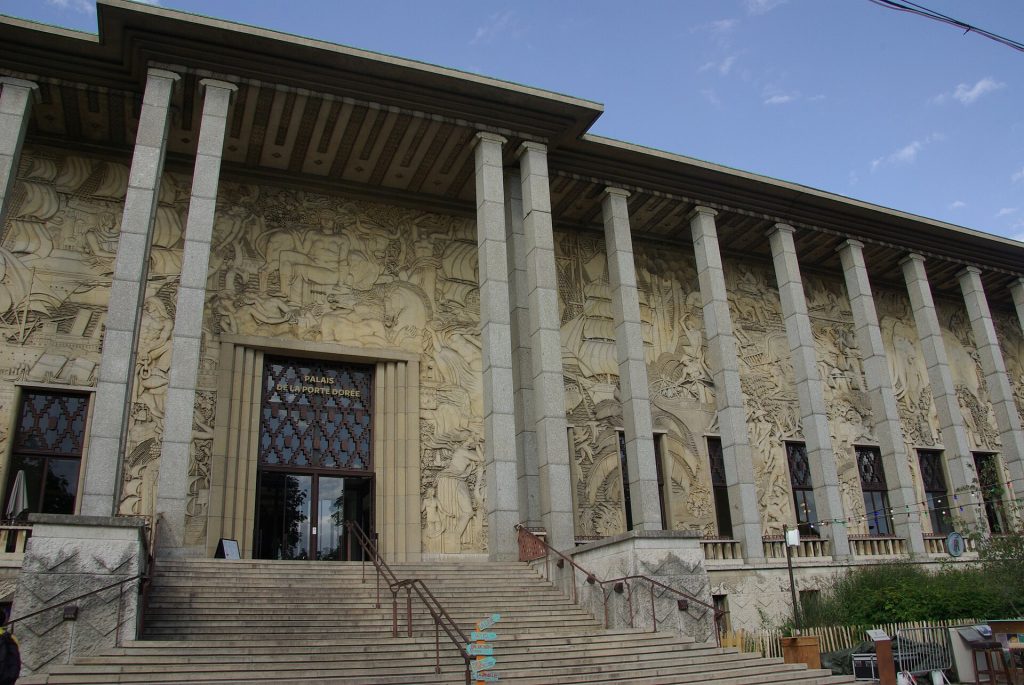
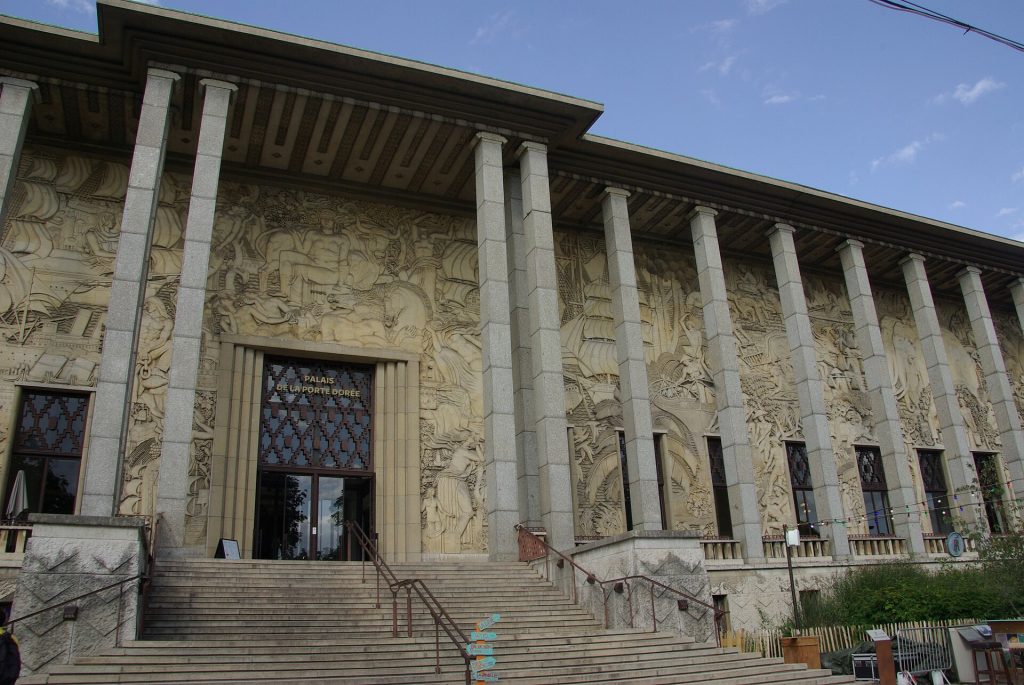
Perfect symmetry

Entrée et façade du palais de la Porte Dorée à Paris ; AkSepPhoenix ; Wikimedia

If you divide an Art Deco pattern or building down the middle, the left side is usually the exact mirror image of the right. It’s a style that reassures through order and balance, in stark contrast to the chaos of the post-war world.

Entrée et façade du palais de la Porte Dorée à Paris ; AkSepPhoenix ; Wikimedia

Three unmissable places to discover and admire Art Deco

Telemaque MySon ; Wikimedia
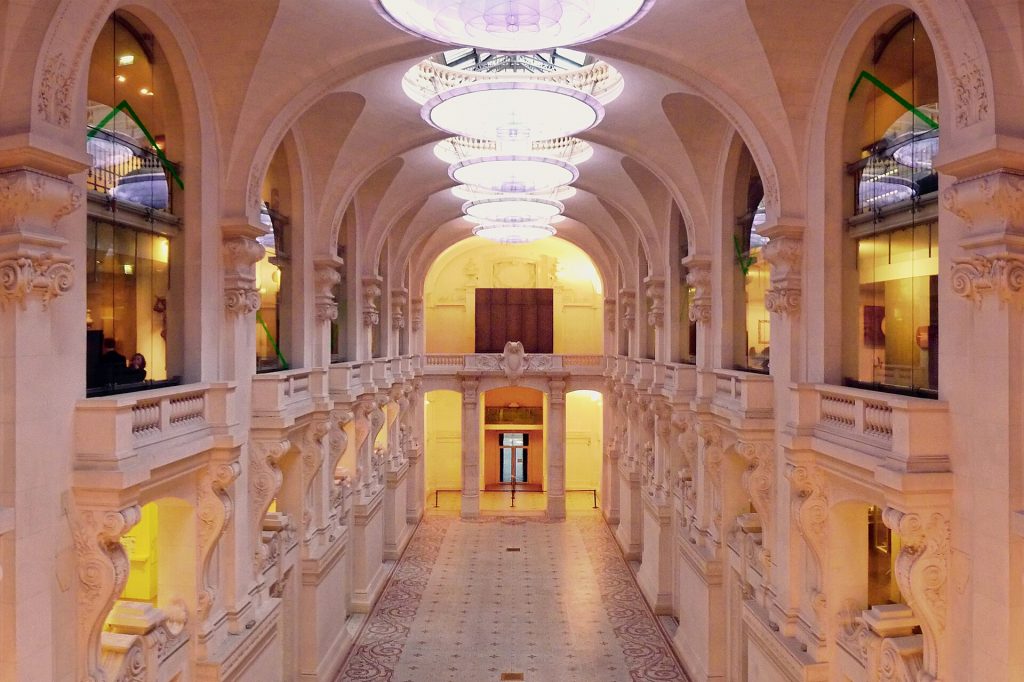
Musée des Arts Décoratifs

Flagship exhibition 1925-2025. One Hundred Years of Art Deco until 26 April 2026

AkSepPhoenix ; Wikimedia
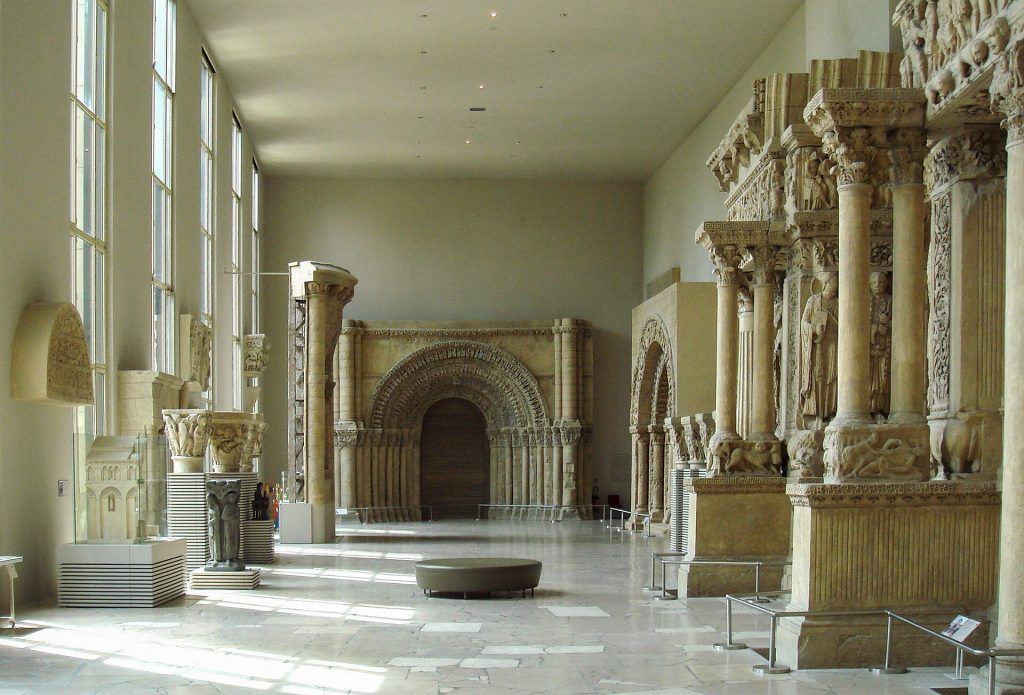
Cité de l’Architecture et du Patrimoine

Paris 1925: Art Deco and its architects, until 29 March 2026

Architecture Patrimoine ; Wikimedia
Palais de la Porte Dorée

A monumental masterpiece, with façades sculpted by Alfred Janniot

Continue in this issue

Do you like WeAreKollectors® ? Talk about it on social media !

February, 2026

Issue #3 : Heritage and creation

Create with what already exists, think with history

From architecture to design, this edition explores how places, know-how and inherited materials become fields of current creation.

January, 2026

Issue #2 : Quiet luxury

Luxury is reinventing itself.

No more flashing logos, place to a refined sobriety, personal immersion, artisanal excellence, sensitive sustainability.

December, 2025

Issue #1 - Sense and Festivity

heritage, contemporary practices and essential pleasures

Because celebration is more than just appearances:
it reflects how we live the world, pass on traditions and create lasting memories.

ISSUE #3

Revealing beauty

Upcycling and kintsugi transform contemporary objects, turning marks, repairs and materials into an aesthetic language.

ISSUE #3

New heritage artisans

Craftsmen and designers give old materials a new lease of life, combining contemporary design, heritage and reuse.

ISSUE #3

Art to the rescue of wastelands and abandoned places

Bunkers, railway carriages and kiosks are being given a new lease of life through creativity, revealing how art can restore meaning to neglected places.

ISSUE #2

The murmur of the beautiful

A transversal look at quiet luxury through places, objects and figures that express elegance.

ISSUE #1

Places, houses and vibrant subjects

A selection of brands, architecture, objects and getaways that embody the spirit of celebration.

ISSUE #3

Creativity to the rescue of buildings doomed to oblivion

Abandoned factories and railway stations are being transformed into open cultural venues, where industrial heritage and contemporary uses are reshaping the city.

ISSUE #3

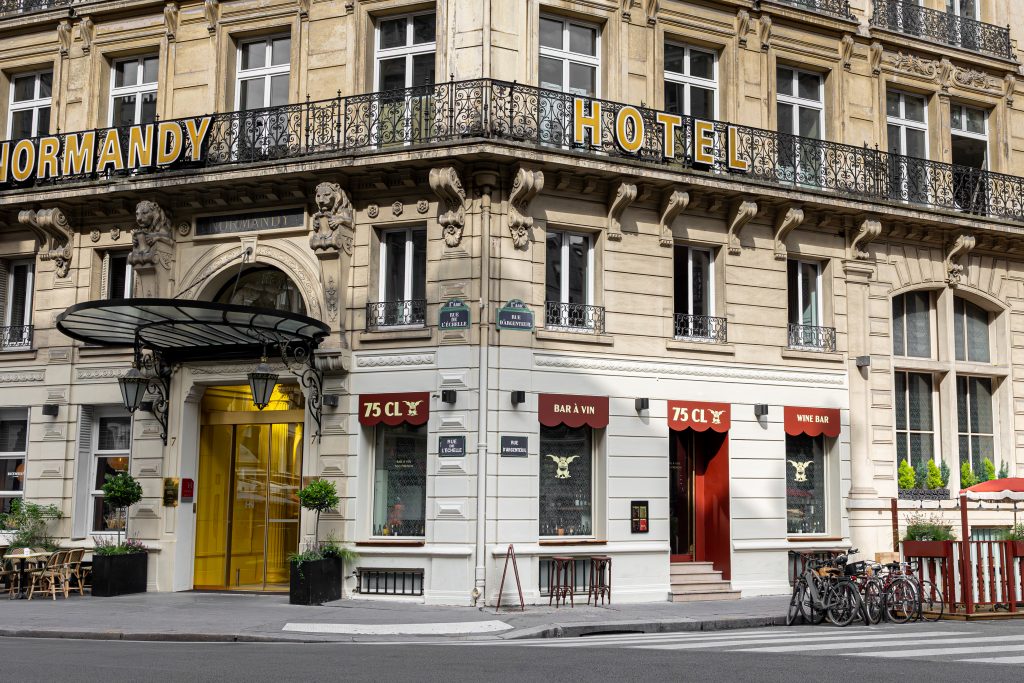
Hôtel Normandy Le Chantier

The audacious metamorphosis of a Parisian palace

ISSUE #3

Behind the scenes at the Centre d'Études Picasso in Paris

In the heart of the Marais district, a discreet location reveals how archives, architecture and research bring Picasso’s work to life.

ISSUE #2

Liberty London

A unique shopping experience in an emblematic store.

ISSUE #2

Cheval Blanc Paris

A culinary and architectural journey in the heart of the Seine

ISSUE #2

Hôtel Maison Mère

In the 9th arrondissement, an establishment that invites you to enjoy quiet luxury

ISSUE #1

Chante!

Chante! has just opened its doors. An invitation to vibrate!

ISSUE #3

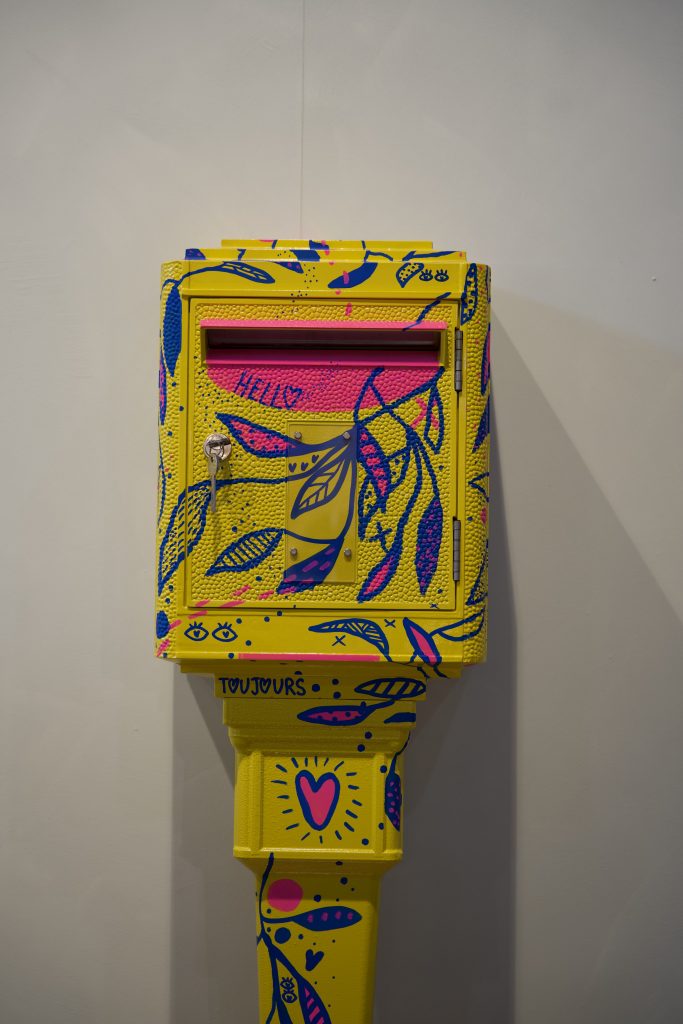
The French post box has become a design object

An icon of the French landscape, the yellow post box is changing status and entering the world of design.

ISSUE #3

A look back at Maison&Objet 2026: back to basics and the essentials

The 2026 edition affirms a vision where craftsmanship, design and memory shape contemporary, international living today.

ISSUE #3

Art Deco: a century-old movement, more relevant than ever

A hundred years after 1925, Art Deco is making a comeback in our cities and interiors with geometry, boldness and optimism.

ISSUE #3

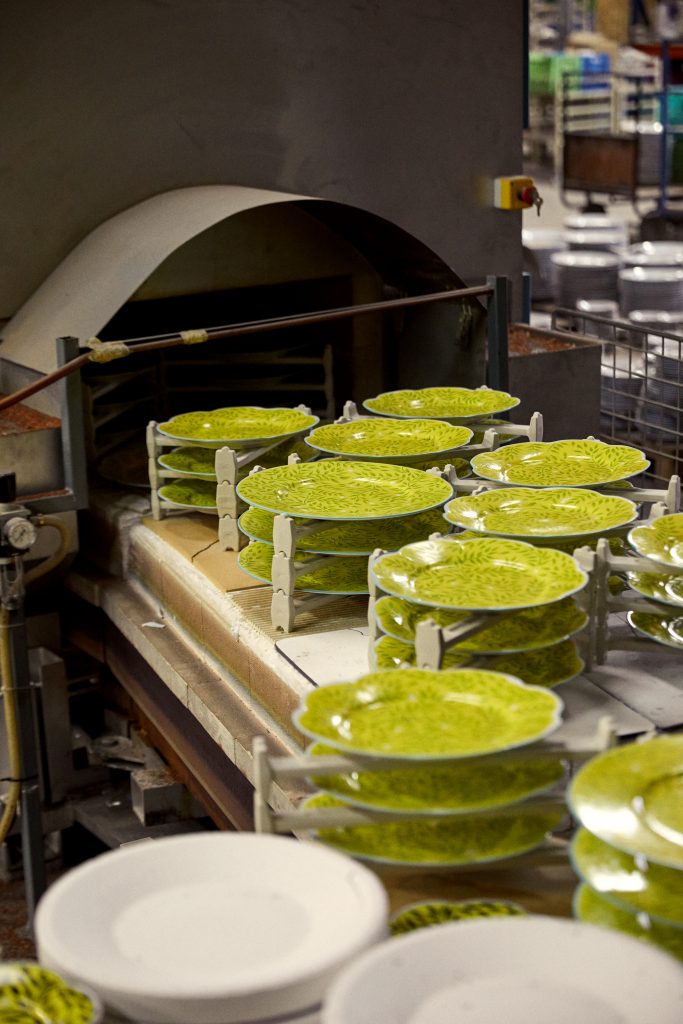
Royal Limoges, two centuries of history into the present

For over two hundred years, Royal Limoges has been combining porcelain, industrial expertise and contemporary design.

ISSUE #3

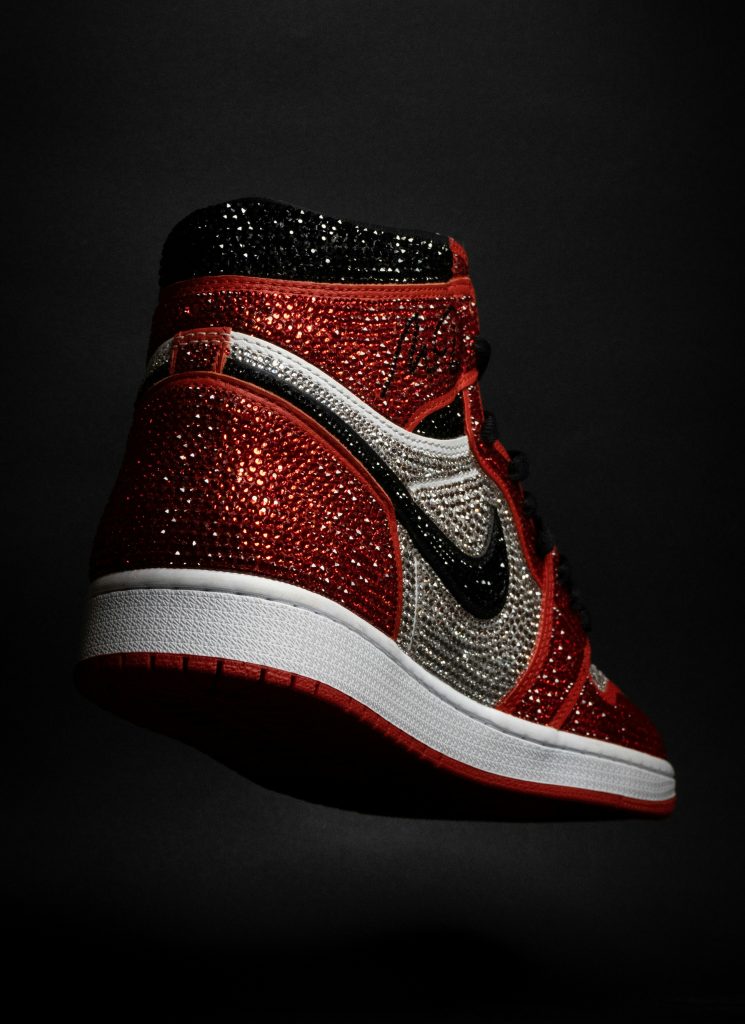
From the field to the street and the catwalk: trainers through the ages

From sports fields to catwalks, trainers tell the story of a century of cultural, technical and stylistic changes.

ISSUE #2

The wonderful adventure of luxury wallpaper

Design, fashion, craftsmanship: creations where form and material respond with precision, far from any fashionable effect.

ISSUE #1

Icons, details, rituals

Handcrafted decorations, ultra-luxurious calendars and collectibles to fill you with joy before the season begins.

ISSUE #3

Anton Laborde

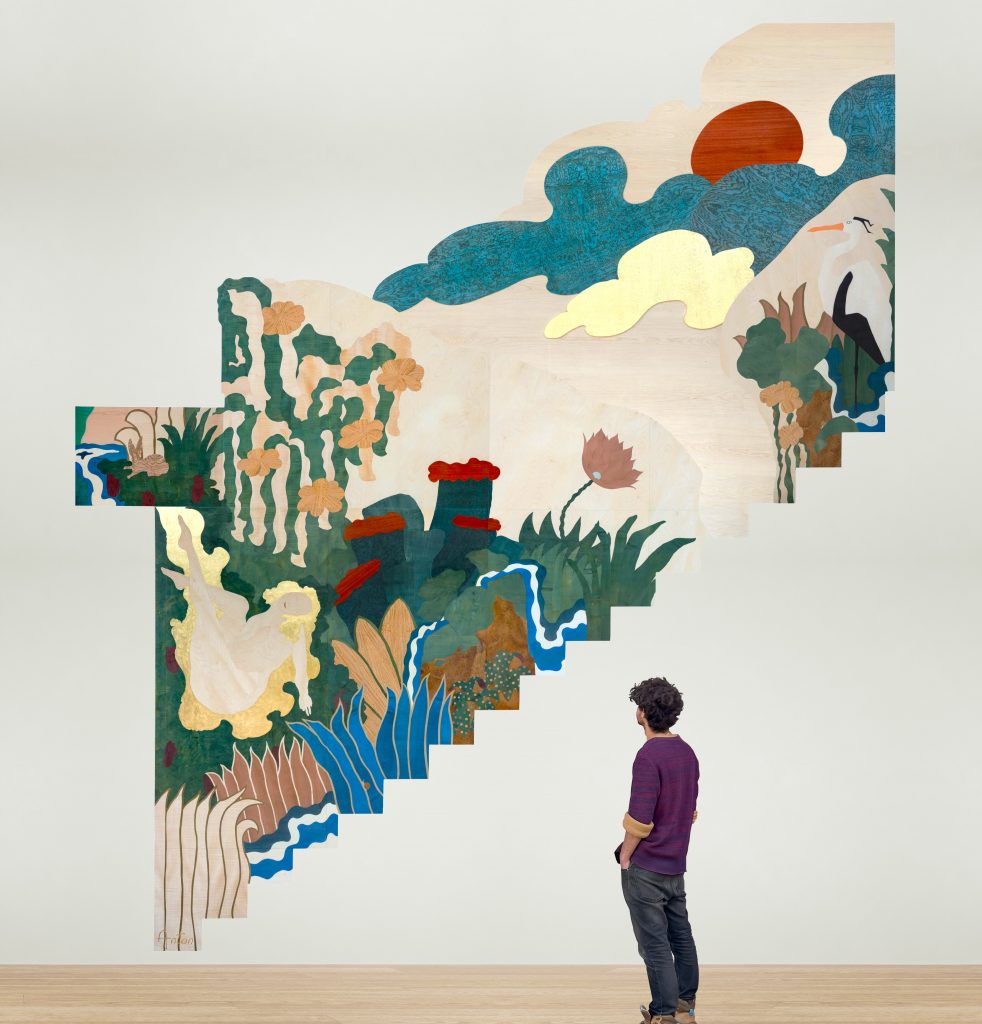
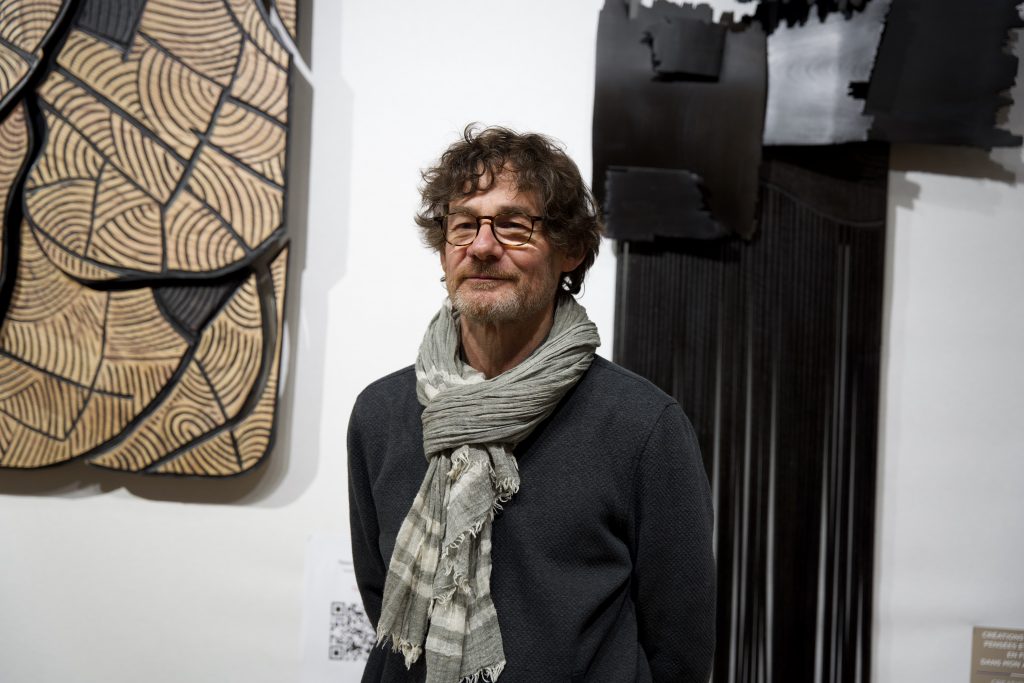
Between monumental marquetry and symbolic jungle, Anton Laborde transforms wood into a contemporary poetic narrative with a message.

ISSUE #3

Thierry Laudren

At Maison & Objet, Thierry Laudren presents sculpted furniture where function, material and slowness shape a presence.

ISSUE #3

Jean Nouvel

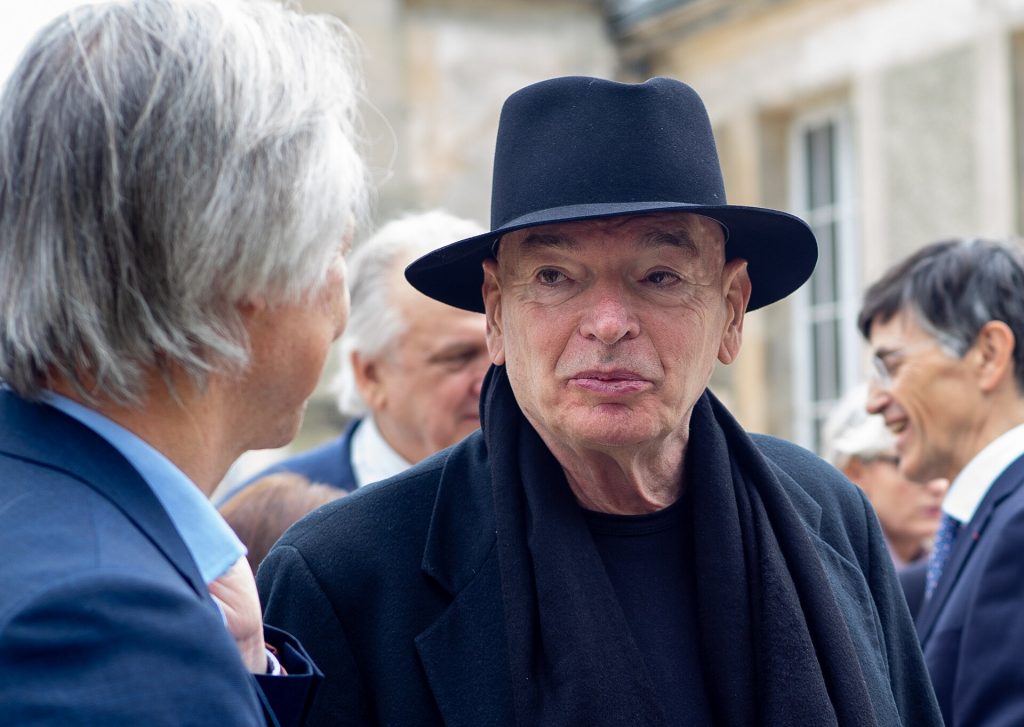
Jean Nouvel designs architecture that is attentive to context, where light, history and usage shape each project.

ISSUE #3

Sophie Morel

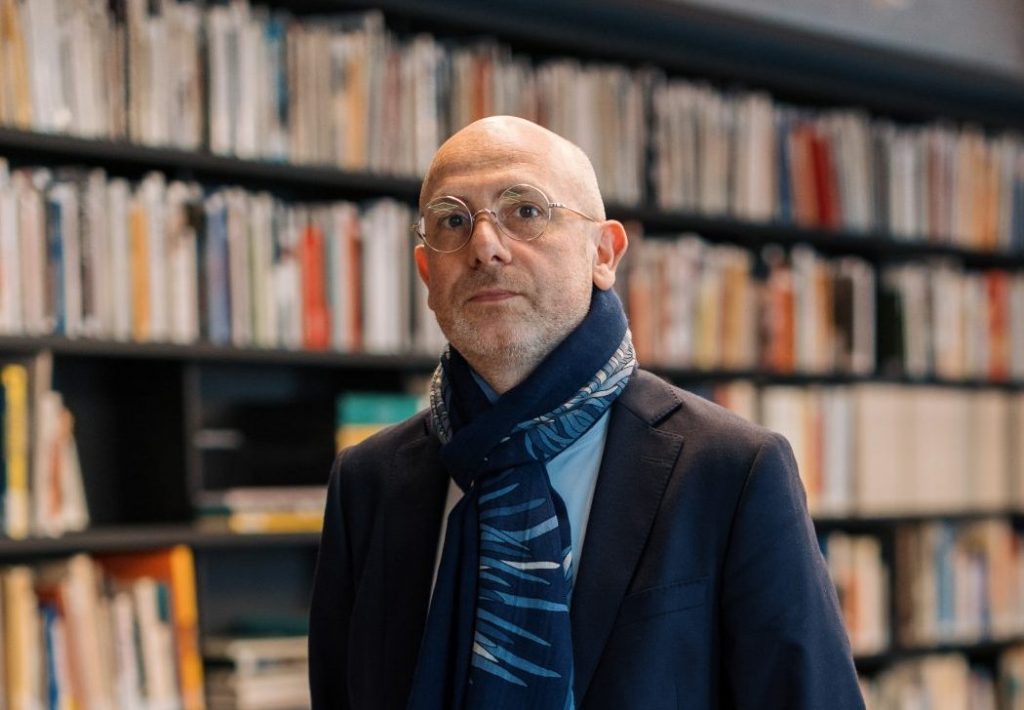
In Lyon, Sophie Morel renovates historic buildings, combining respect for the original structure with a contemporary style.

ISSUE #3

Pascal Grasso

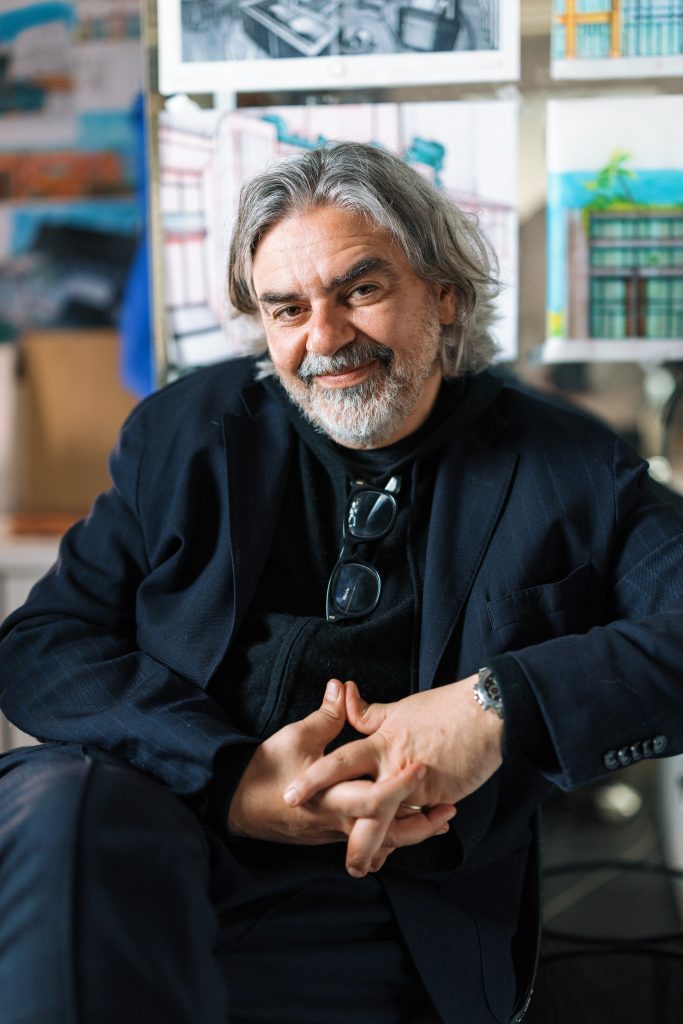
At the Centre d’Études Picasso, the architect has created an architectural design in which light, geometry and heritage interact with precision.

ISSUE #2

Alexandre Danan

Interview with the founder of EDO (European Design Office)

ISSUE #2

Aziz Temimi

Portrait of a visionary who transforms the art of hospitality into a total experience.

ISSUE #1

Faces, gestures, inspirations

Personalities, artisans and creators who give the celebration its human depth.

ISSUE #3

Side roads: an exceptional interlude in Bordeaux

From Bordeaux to the Bassin, art, vineyards and well-being combine to create an elegant getaway in the heart of the Gironde.

ISSUE #2

Tuscany getaway

To a region of Italy steeped in history, where landscapes, culture and customs blend together in rare harmony.

ISSUE #1

Horizons, seasons, traditions

Destinations and rituals that reinvent the festive season, from tropical sun to winter markets.

Dates, addresses, invitations

Exhibitions, events and cultural landmarks to fully experience the festive season.

Registration

Inscrivez-vous pour avoir accès à l’ensemble du site WeAreKollectors.

Inscription

Inscrivez-vous pour avoir accès à l’ensemble du site WeAreKollectors.