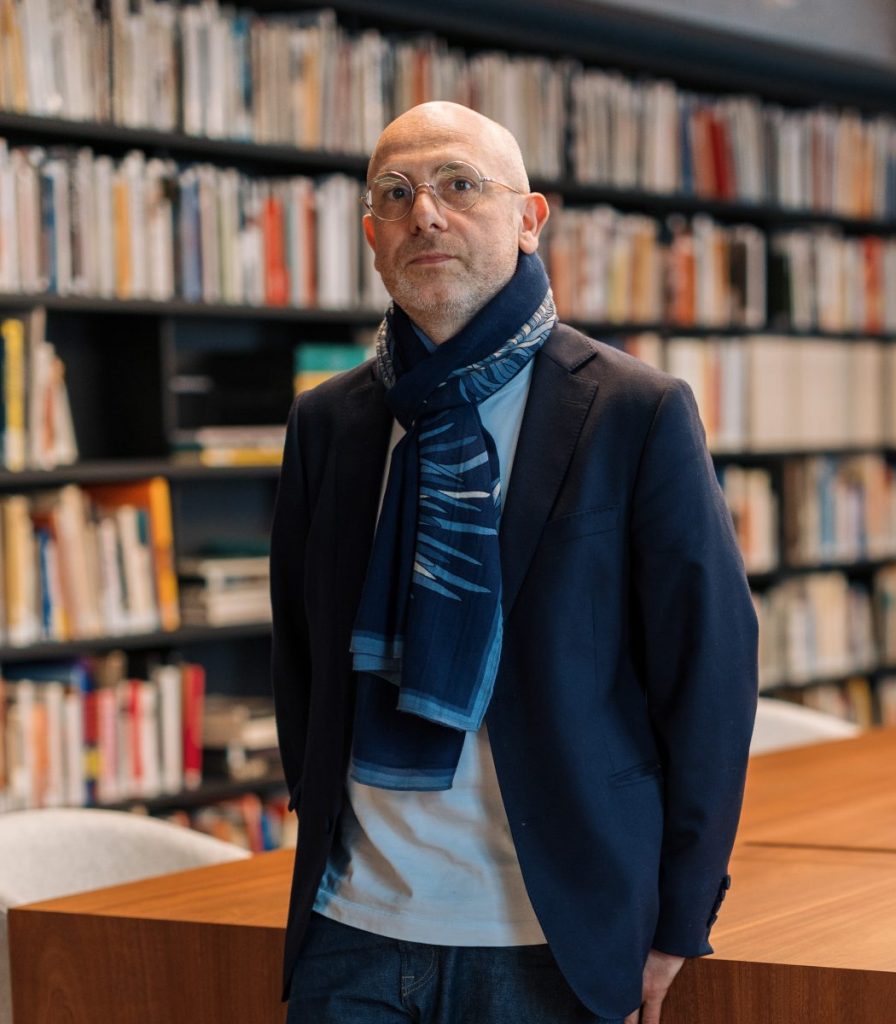
In the heart of the Hôtel de Rohan in Paris, architect Pascal Grasso reinterprets the Cubist heritage in the design of the new research centre, combining history and modernity through meticulous work on light.
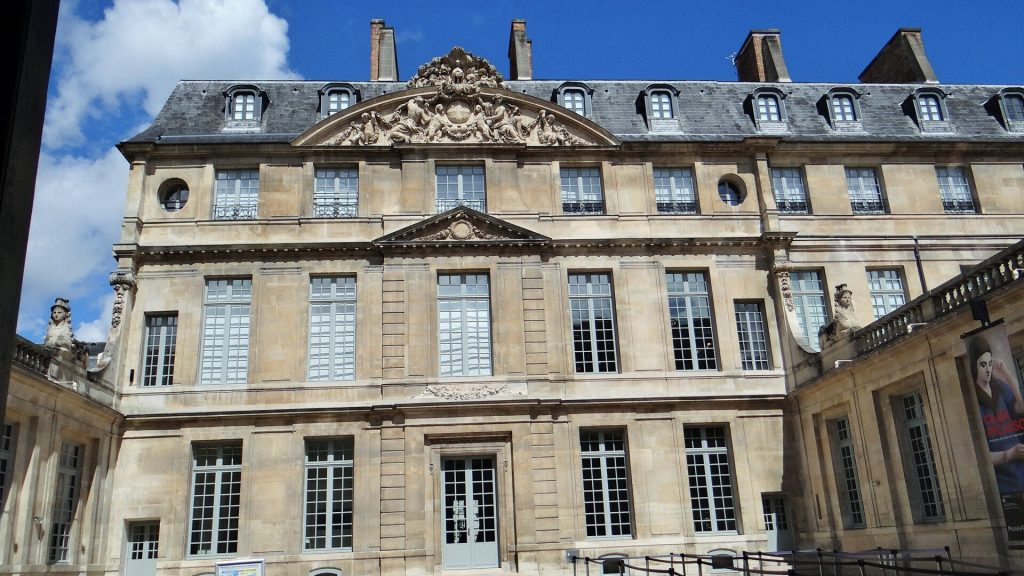
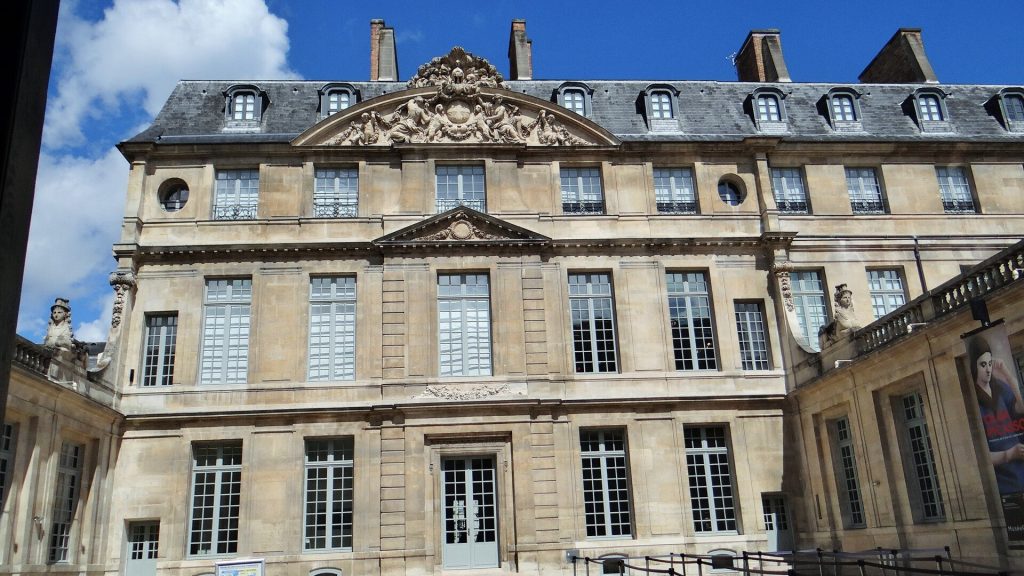
Façade of the Hôtel Salé, Paris 3rd arrondissement, Picasso Museum, Paris; Ibex73; Wikimedia
Crossing the threshold of the Centre d’Études Picasso, housed in the former stables of the Hôtel de Rohan, visitors enter a carefully orchestrated interplay of past and present. Pascal Grasso once again demonstrates his ability to transform historic spaces into contemporary venues without compromising their essence. This skill, honed through his work on the Giacometti Institute in 2018, finds expression here in a project where geometry becomes a universal language.
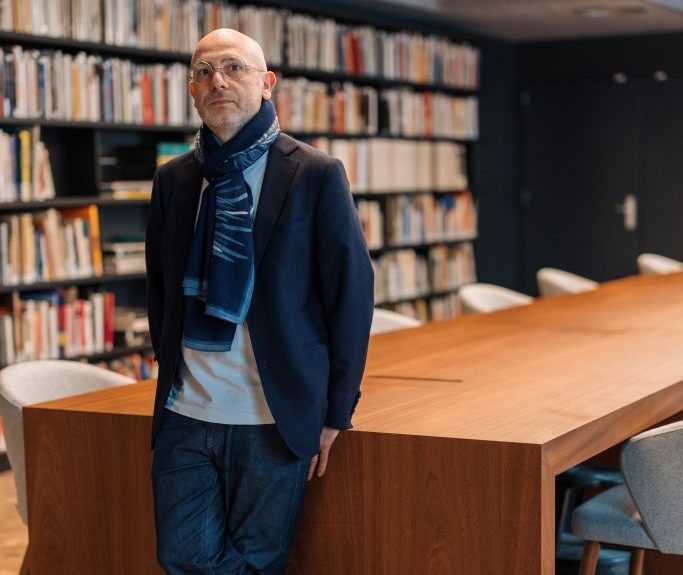
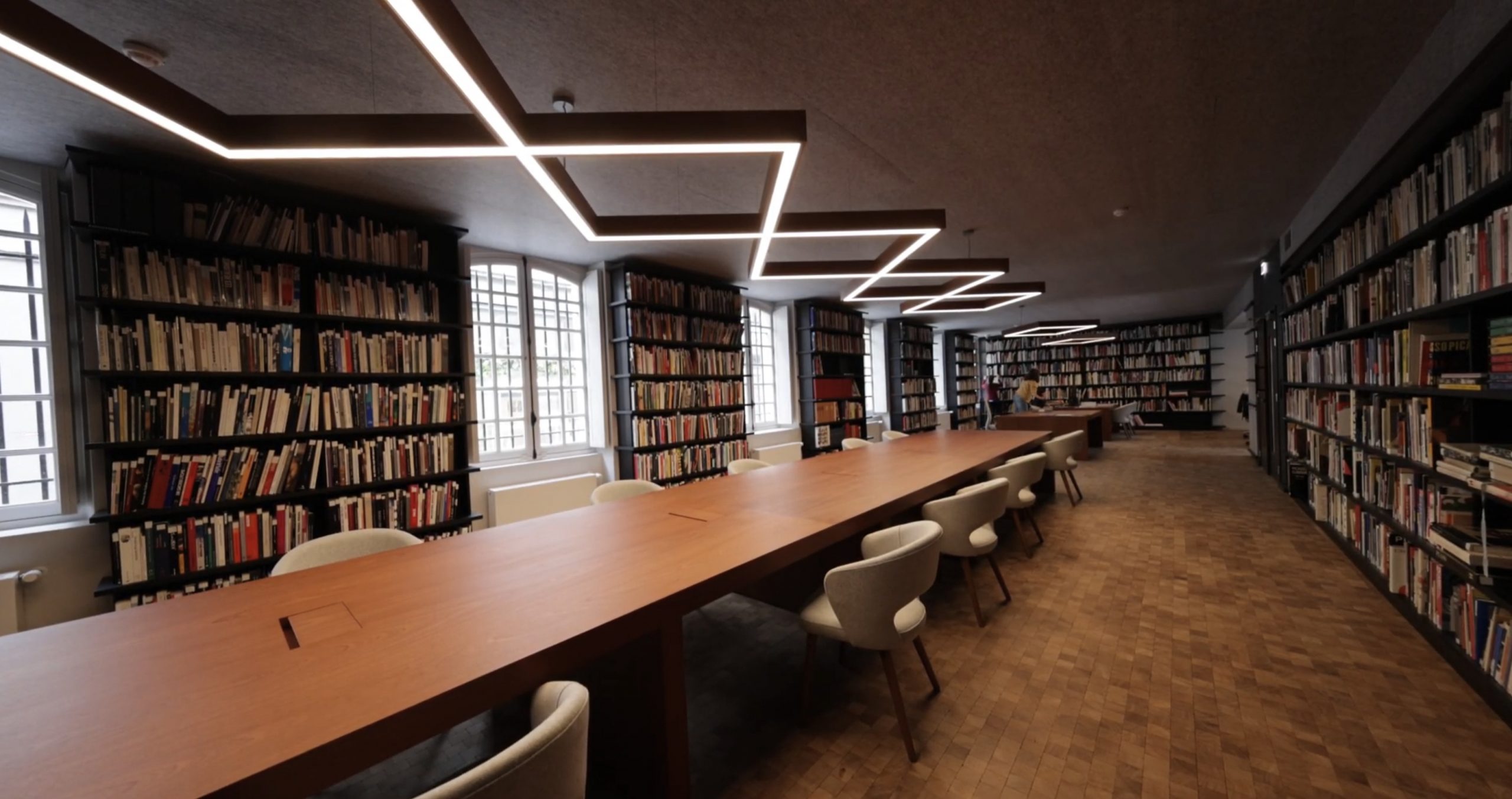
The diamond motif, inspired by the macles adorning the building’s ironwork, serves as both the visual signature of the space and the unifying thread of the design. This shape, which echoes both aristocratic heraldry and the Harlequin costumes painted by Picasso, embodies the meeting point between history and modern art. The architect’s approach follows a tradition of sensitive heritage interpretation: rather than opposing old and new, he creates a dialogue between them through a minimalist reinterpretation of historical forms. His design for the centre’s 720 m² space reflects a holistic vision, with furniture, lighting, and finishes all forming part of the same architectural whole. The slender proportions of the mahogany tables in the reading room echo those of the building itself, creating a fluid transition between eras.
Kollectors
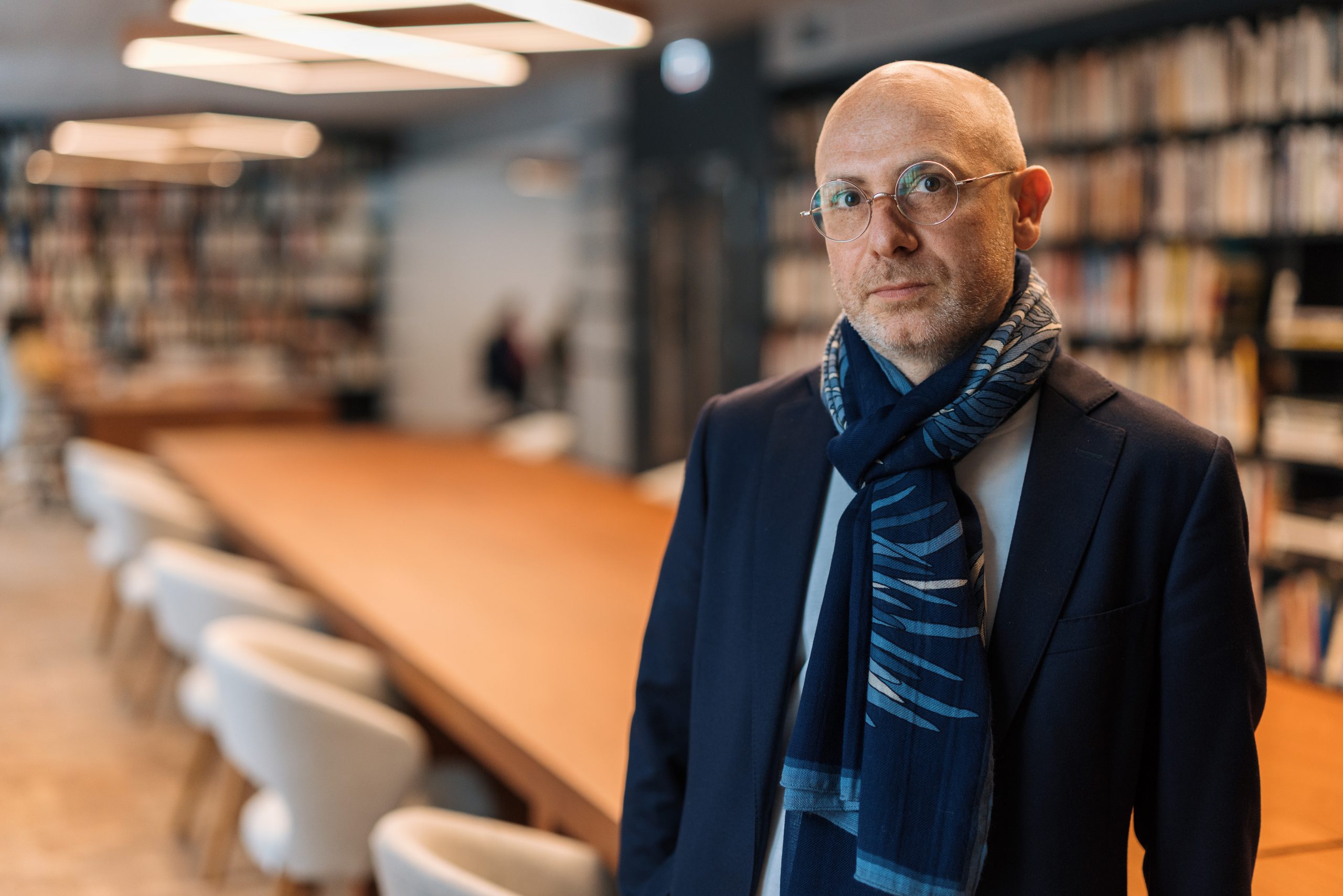
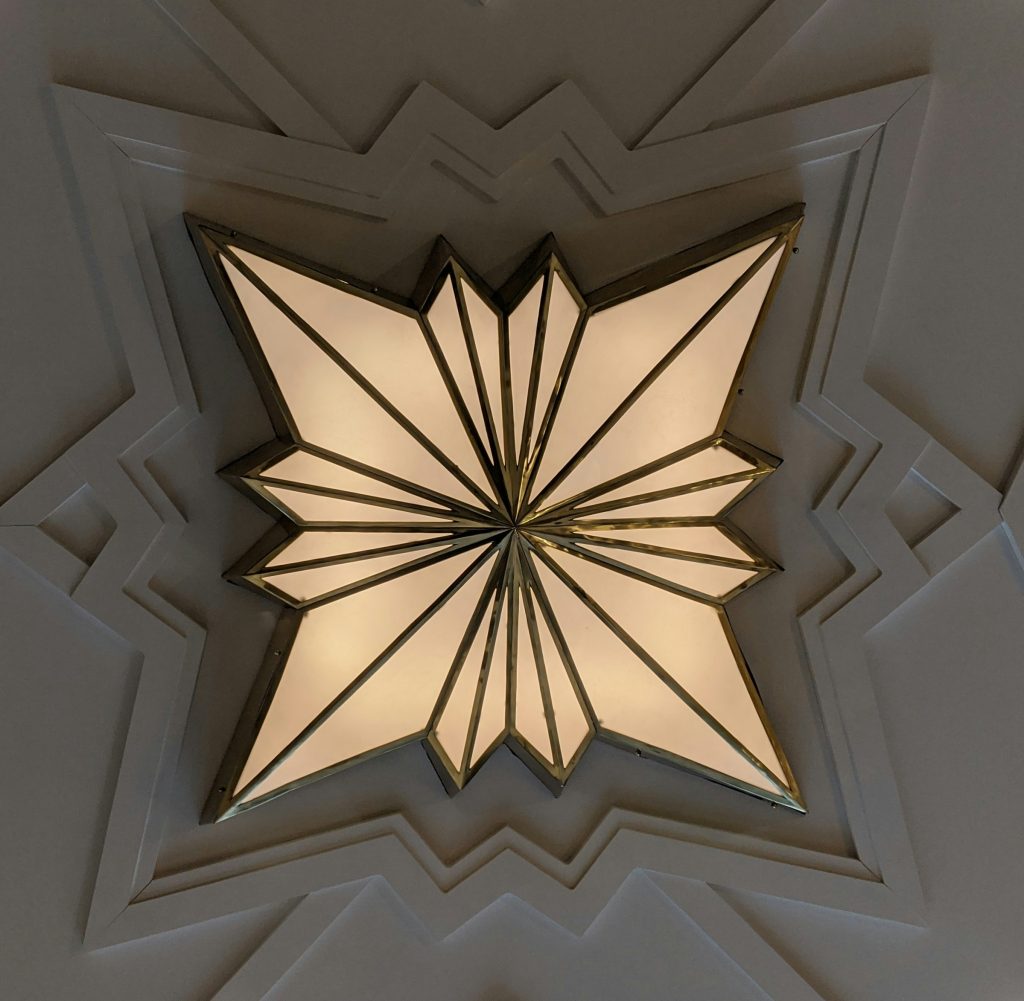
In Pascal Grasso’s hands, light becomes an architectural material in its own right. Drawing inspiration from Diego Giacometti’s work for the Picasso Museum, the architect designed custom light fixtures whose geometry evokes Cubist compositions. In the reading room, a choreography of diamond-shaped pendant lights casts overhead illumination, lending the research space an almost museum-like quality. This lighting scheme is complemented by a more intimate approach in the library areas, where linear fixtures integrated into the shelving cast light along the book spines, creating an enveloping atmosphere.
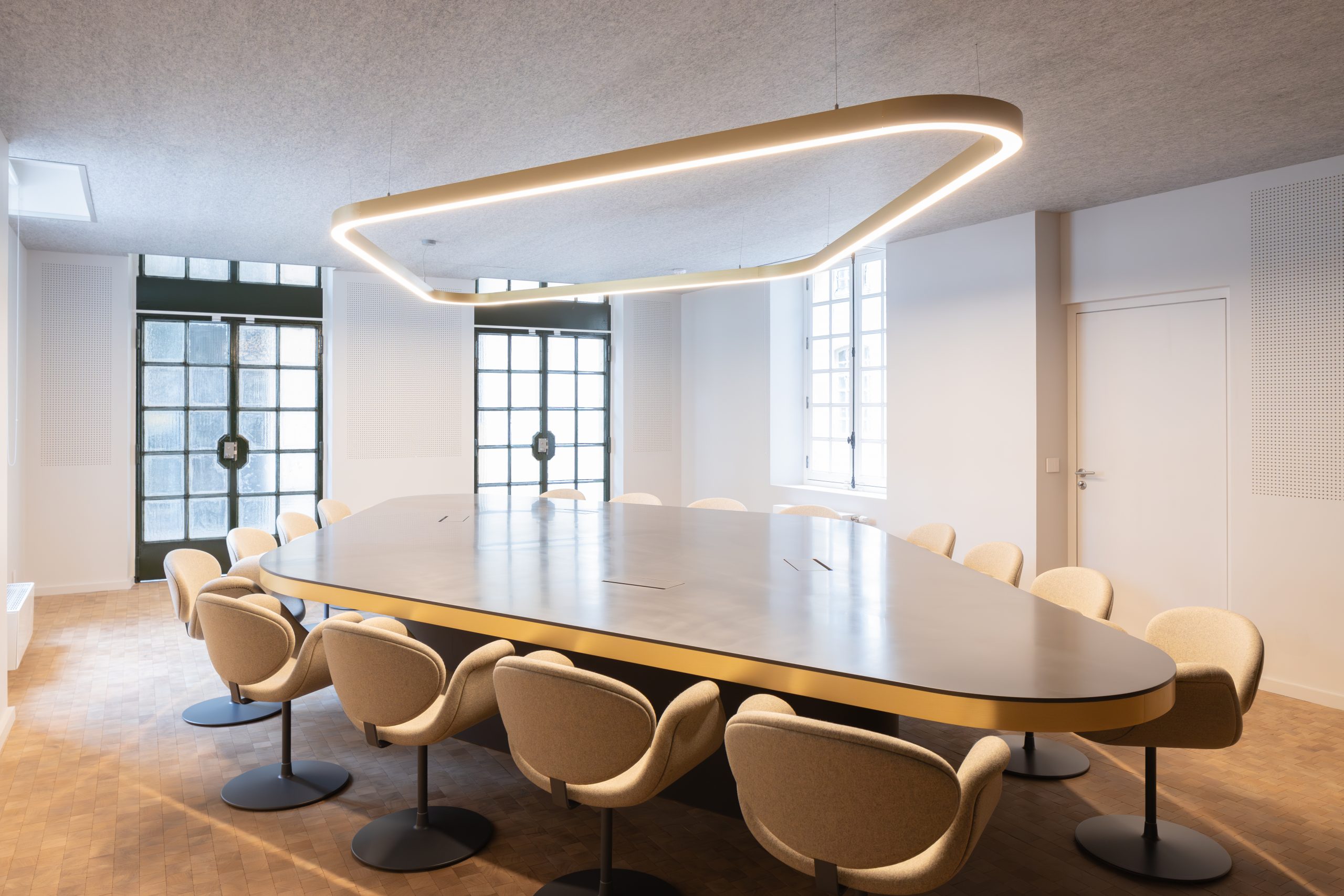
This careful interplay of light reveals the architect’s intent to create ideal conditions for study and reflection. The conference room features an imposing brass light fixture whose sculptural form transforms a functional meeting space into a sensory experience. This approach reflects the influence of minimalist artists on Grasso’s work—for him, light doesn’t simply illuminate the space but reveals its essence. The thoughtful acoustic treatment, featuring a recycled Petac® ceiling, completes this quiet environment that fosters concentration among researchers.
Kollectors
The materials selected by Pascal Grasso situate the Centre d’Études Picasso within a historical continuum while affirming its contemporary character. The solid oak end-grain parquet flooring, whose pattern echoes the exterior paving of the courtyard, establishes a visual link to the building’s history while evoking Cubist fragmentation. The monumental mahogany tables, with their deep reddish tones, bring warmth that contrasts with the austere black finish of the bookcases. This interplay between noble materials and more restrained surfaces reflects the duality between tradition and modernity that defines the entire project.
In the conference room, the brass trim on the monumental table resonates with the historic gilding of the Hôtel de Rohan, creating a material conversation across centuries. This sensitivity to textures and finishes reveals an approach in which architecture becomes as much a tactile experience as a visual one. To realize his vision for the bespoke lighting fixtures—the centerpieces of the project—Pascal Grasso collaborated with the designer and manufacturer Kollectors. Their expertise enabled the development of a design and production process aligned with his architectural intent. This fully custom approach made it possible to refine the design and optimize solutions to achieve both magnificent fixtures and exceptional lighting quality, while enhancing the space and accentuating its modular relief elements.
Through this collaboration and his choice of materials, Pascal Grasso has transformed a research facility into an immersive setting for Picasso’s 200,000-piece archive, where each architectural element serves to honor the artistic heritage while creating an environment conducive to its study.

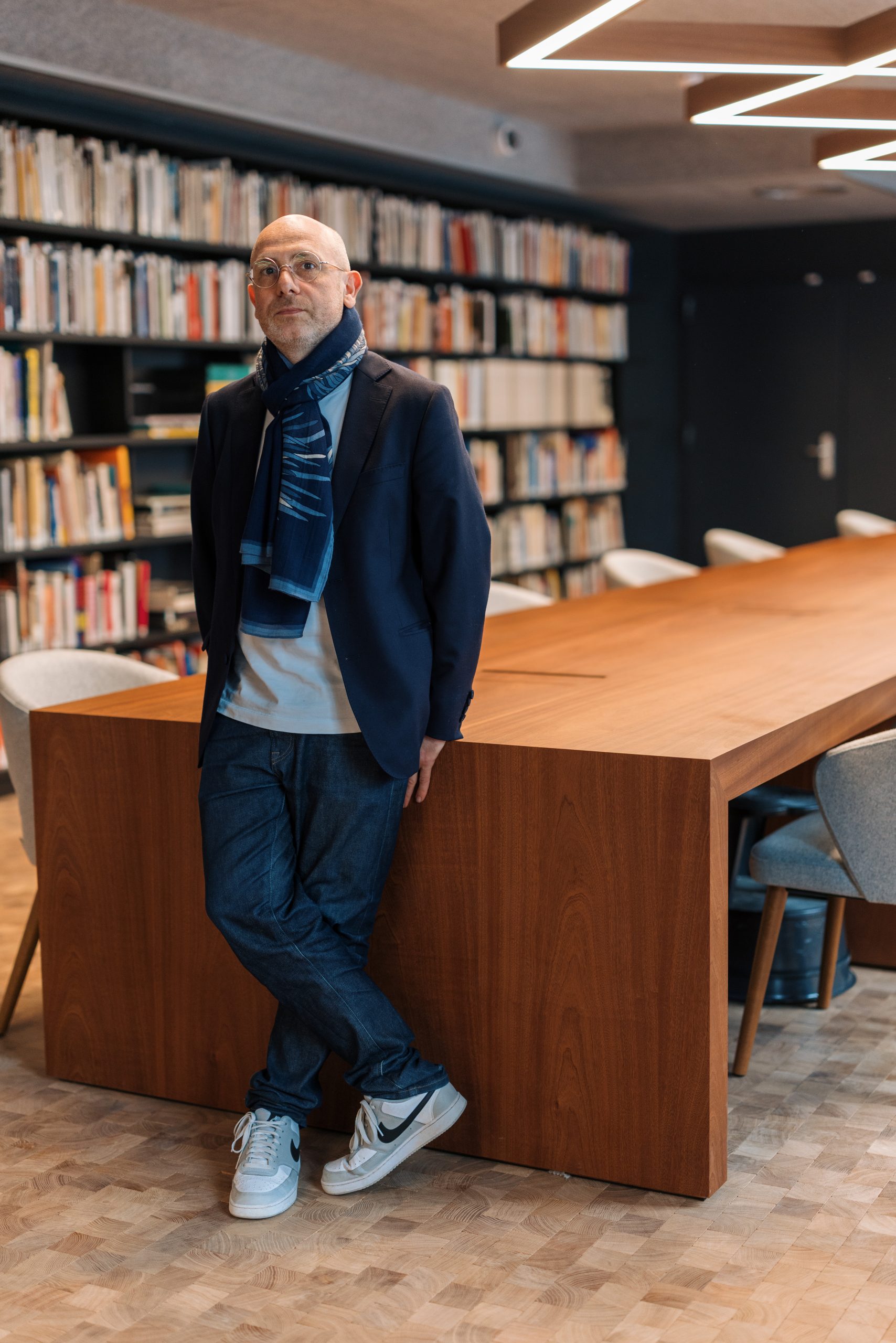
« My architecture is greatly inspired by artistic movements »
« We are actually in the former stables of the Hôtel de Rohan »
« I never have any preconceived ideas about what I’m going to do »
« The idea is that an immaterial element becomes the main material of my architecture. »
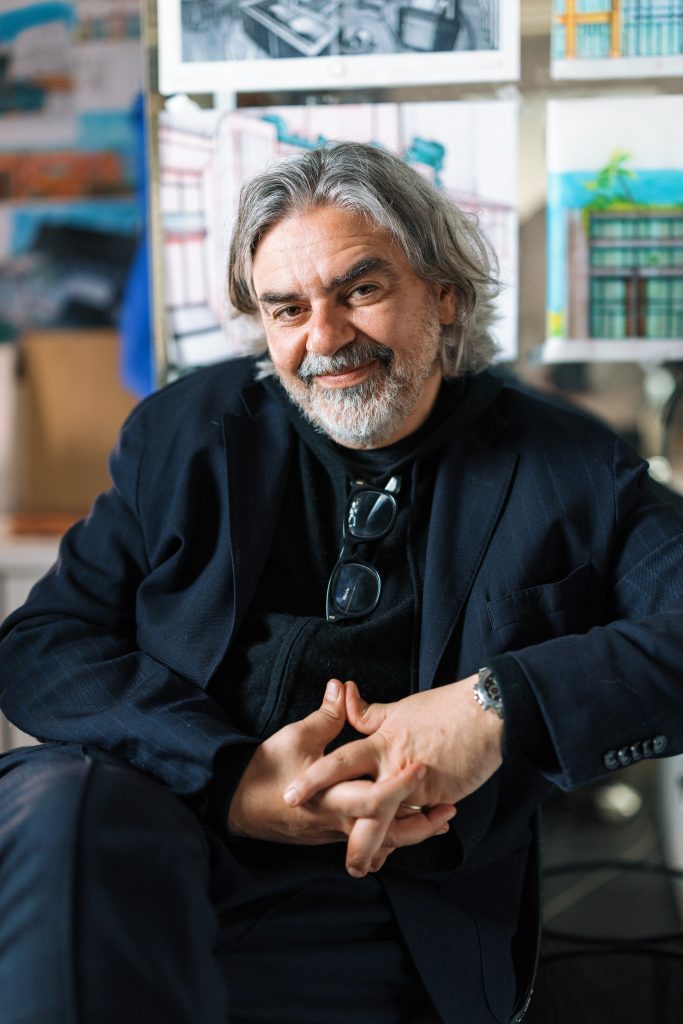
« The key word in my work is balance »
Février, 2026
Créer avec l’existant, penser avec l’histoire
De l’architecture au design, cette édition explore comment lieux, savoir-faire et matières héritées deviennent terrains de création actuelle.
Janvier, 2026
Le luxe se réinvente.
Finis les logos clignotants, place à une sobriété raffinée, à l’immersion personnelle, à l’excellence artisanale, à la durabilité sensible.
Décembre, 2025
Héritages, gestes contemporains et plaisirs essentiels
Parce que la fête n’est jamais qu’apparence : elle reflète notre manière d’habiter le monde, de transmettre, de fabriquer des souvenirs durables.
ÉDITION #3
Upcycling et kintsugi transforment l’objet contemporain, faisant de la trace, de la réparation et de la matière un langage esthétique.
ÉDITION #3
Artisans et designers donnent une seconde vie aux matériaux anciens, entre création contemporaine, patrimoine et réemploi.
ÉDITION #3
Bunkers, wagons et kiosques renaissent grâce à la création, révélant comment l’art redonne sens aux lieux délaissés.
ÉDITION #2
Un regard transversal sur le quiet luxury à travers des lieux, des objets et des figures qui expriment l’élégance.
ÉDITION #1
Une sélection de marques, architectures, objets et escapades qui donnent corps au sens de la fête.
ÉDITION #3
Usines et gares délaissées deviennent lieux culturels ouverts, où mémoire industrielle et usages contemporains redessinent la ville.
ÉDITION #3
L’audacieuse métamorphose d’un palace parisien
ÉDITION #3
Au cœur du Marais, un lieu discret révèle comment archives, architecture et recherche font dialoguer l’œuvre de Picasso.
ÉDITION #2
Une expérience shopping unique dans un magasin emblématique.
ÉDITION #2
Voyage culinaire et architectural au cœur de la Seine
ÉDITION #2
Dans le 9e arrondissement, un établissement qui invite au quiet luxury
ÉDITION #1
Chante! vient d’ouvrir ses portes. Une invitation à vibrer !
ÉDITION #3
Icône du paysage français, la boîte jaune change de statut et s’invite dans l’univers du design.
ÉDITION #3
L’édition 2026 affirme une vision où artisanat, design et mémoire façonnent l’habitat contemporain, international actuel.
ÉDITION #3
Cent ans après 1925, l’Art déco revient dans nos villes et intérieurs avec géométrie, audace, optimisme.
ÉDITION #3
Depuis plus de deux cents ans, Royal Limoges conjugue porcelaine, savoir-faire industriel et création contemporaine.
ÉDITION #3
Des terrains de sport aux podiums, la sneaker raconte un siècle de mutations culturelles, techniques et stylistiques.
ÉDITION #2
Design, mode, artisanat : des créations où la forme et la matière se répondent avec justesse, loin de tout effet de mode.
ÉDITION #1
Décorations artisanales, calendriers ultra-luxe et pièces de collection pour s’enivrer de joie avant l’heure.
ÉDITION #3
Entre marqueterie monumentale et jungle symbolique, Anton Laborde transforme le bois en récit contemporain poétique engagé.
ÉDITION #3
À Maison & Objet, Thierry Laudren présente des meubles sculptés où fonction, matière et lenteur façonnent une présence.
ÉDITION #3
Jean Nouvel conçoit une architecture attentive aux contextes, où lumière, histoire et usages façonnent chaque projet.
ÉDITION #3
À Lyon, Sophie Morel rénove des lieux historiques en alliant respect du bâti et écriture contemporaine.
ÉDITION #3
Au Centre d’Études Picasso, l’architecte compose une architecture où lumière, géométrie et héritage dialoguent avec précision.
ÉDITION #2
Entretien avec le fondateur d’EDO (European Design Office)
ÉDITION #2
Portrait d’un visionnaire qui transforme l’art de recevoir en expérience totale.
ÉDITION #1
Personnalités, artisans et créateurs qui donnent à la fête sa profondeur humaine.
ÉDITION #3
De Bordeaux au Bassin, art, vignobles et bien-être composent une échappée élégante au cœur de la Gironde.
ÉDITION #2
Vers une région de l’Italie habitée par le temps, où paysages, culture et usages s’accordent dans une continuité rare.
ÉDITION #1
Destinations et rituels qui réinventent la fête, du soleil tropical aux marchés d’hiver.