Michelin Guide : How a tyre manufacturer became the ultimate judge of the world's best cuisine
There are some evenings when you just want everything to be perfect. You’ve chosen the table weeks in advance, confirmed the reservation twice and laid out your outfit on the bed since the afternoon. It could be a dinner to propose marriage or sign that contract that changes everything. At times like these, many people do the same thing: they open the Michelin Guide. Not necessarily the physical book itself, but rather the list, the star system and the unspoken promise that if a restaurant is included, it will not disappoint.
This collective reflex is fascinating. How did a guide designed by a tyre manufacturer to encourage motorists to drive more become the most feared gastronomic institution on the planet in just over a century?
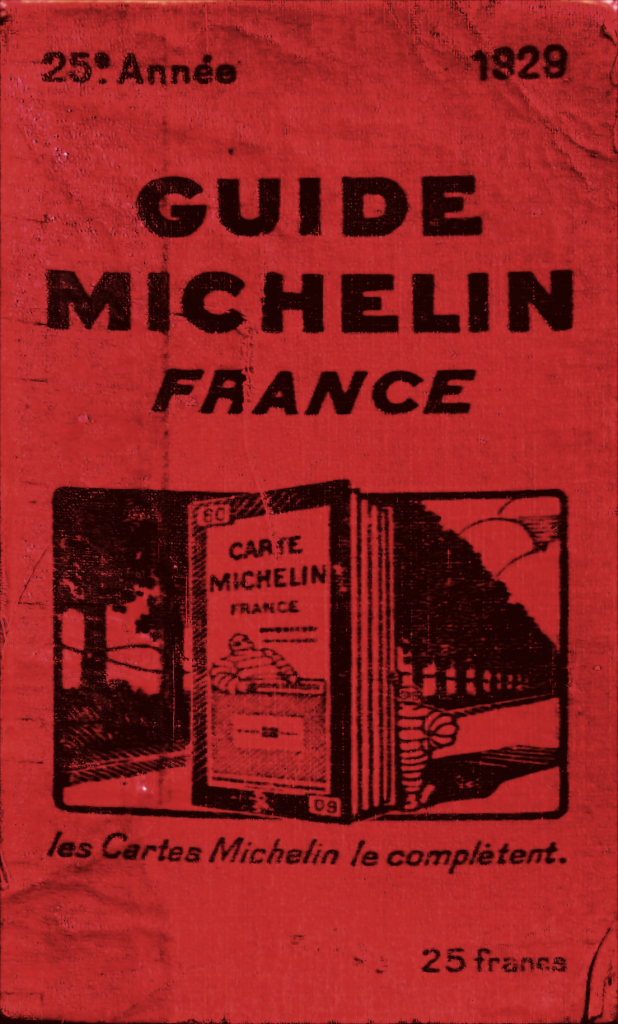
1900 : A booklet for mechanics, not foodies
Mathias Reding ; Pexels
The Michelin Guide has a long history, beginning in 1900, and its commercial logic is almost comical. André and Edouard Michelin manufactured tyres. However, French roads were poorly maintained, there were few cars and their owners were reluctant to drive far from home. Fewer kilometres travelled meant less tyre wear and therefore fewer sales.
The Michelin brothers’ solution was to create a practical guide, which they distributed free of charge with their tyres. It was intended to encourage travel. Originally, it contained the addresses of garages, petrol stations and mechanics who could change a wheel at the roadside, as well as a few hotels and restaurants. It was functional and dense, and had no literary pretensions.
Imagine a motorist in 1900 preparing for a trip from Paris to Clermont-Ferrand. He would pack his Michelin Guide as casually as we carry a phone charger today. It was not an object of desire, but a survival tool on roads where a flat tyre could turn a weekend into a real nightmare.
1920: From a free publication to a valuable resource
John Cameron ; Unsplash
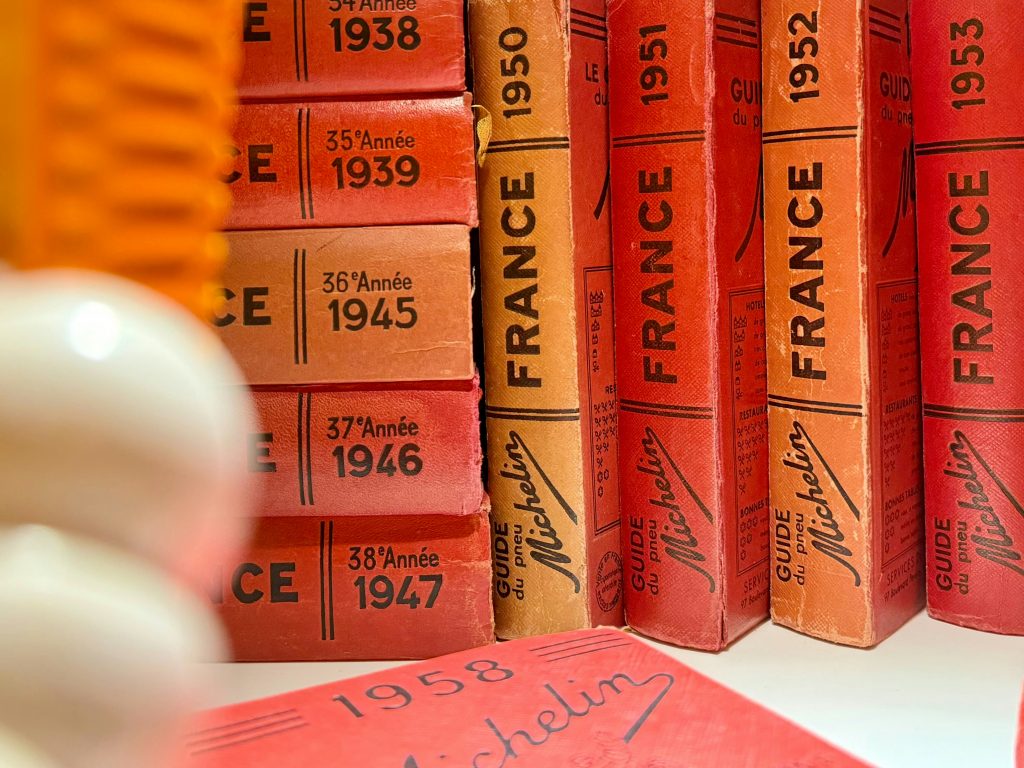
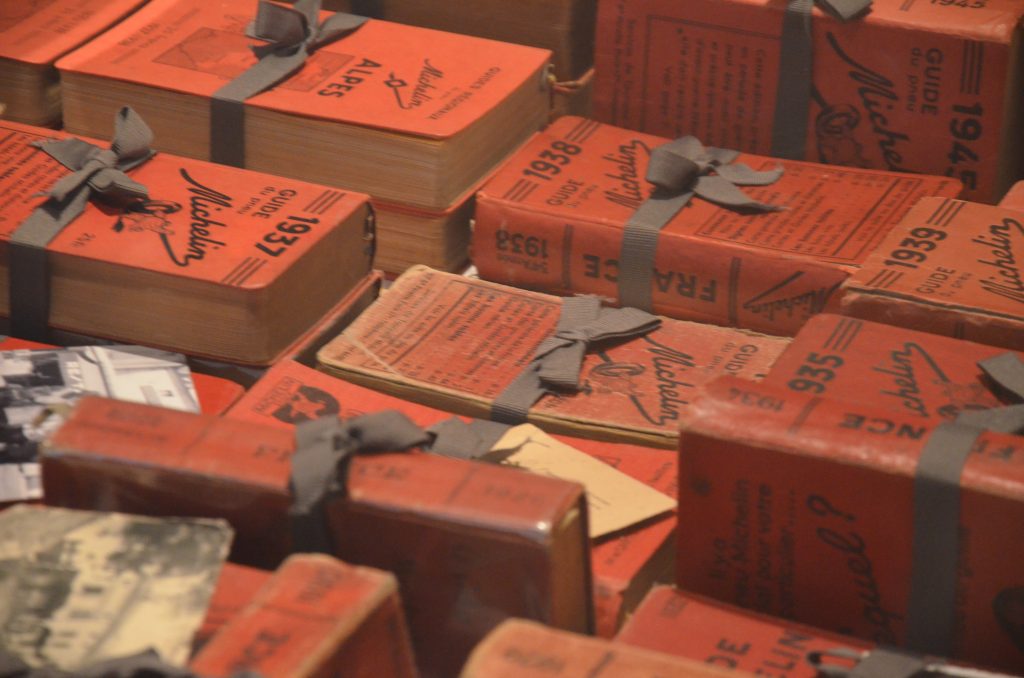
For years, the Michelin Guide remained just a useful brochure. Then came the defining moment. André Michelin visited a workshop and found his guides propping up a wobbly piece of furniture under a workbench. He was shocked. If something is free, it is neither respected nor read. It’s used to prop up workbenches!
In 1920, Michelin decided to start charging for the guide, and this change in price transformed everything. People bought it, put it on a shelf, and came back to it. By charging for the guide, Michelin also forced it to justify its existence. Its content had to live up to public expectations. This is when gastronomy began to play a more serious role.
La décision est prise en 1920 de rendre le guide payant et ce prix change tout. On achète ce qu’on achète, on le range sur une étagère et on y revient. En rendant le guide payant, Michelin l’oblige également à se justifier… Il faut que le contenu soit à la hauteur des attentes du public. C’est là que la gastronomie commence sérieusement à prendre de la place.
1926–1933: The stars take centre stage
Grigorii Shcheglov ; Unsplash
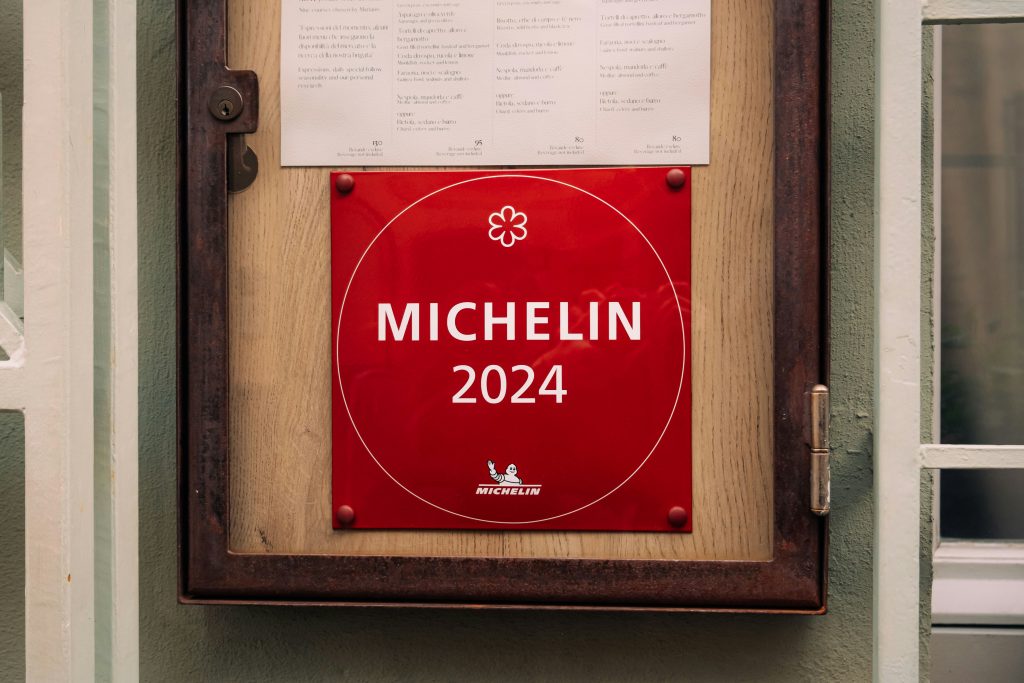
The first star appeared in 1926. There was only one simple category: ‘Good Food’. Although modest, this distinction was a strong signal for the restaurateurs who received it. In 1933, the three-level system was introduced and has remained virtually unchanged since then.
- One star indicates ‘very good cuisine in its category’. The restaurant is worth a visit.
- Two stars: excellent cuisine, worth a detour. You plan your itinerary around this meal.
- Three stars: exceptional cuisine, worth the trip on its own. You organise an entire trip around this restaurant.
The ingenious aspect of the system lies in its travel logic. The guide does not simply rate the quality of a dish in absolute terms. It provides a more specific rating. How far would you go for this meal? One star is awarded to a nice neighbourhood restaurant. Three stars is a real pilgrimage!
The mechanics of secrecy: anonymous inspectors
Delightin Dee ; Unsplash
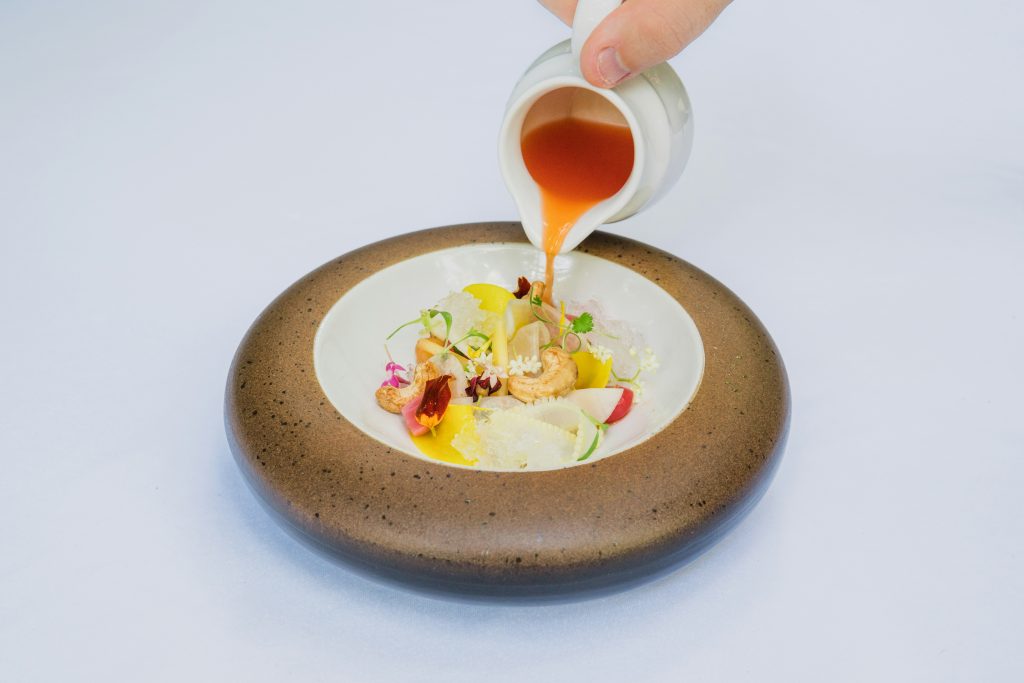
The inner workings of the Michelin Guide are based on an institution that has become legendary in its own right: its inspectors. They visit restaurants incognito, pay their bill like any other customer and never introduce themselves. A single restaurant may receive several visits over several months, at different times and on different days, before a decision is made.
It is this system that gives the Michelin Guide its credibility. You don’t receive a star simply for providing excellent service on a busy Friday evening. Rather, you get it because you maintain the same level of service on a Tuesday lunchtime in November, when the dining room is half-empty and the chef is working his fortieth service of the week.
The Michelin Guide conquers the world: Tokyo, New York, São Paulo
Meg von Haartman ; Unsplash
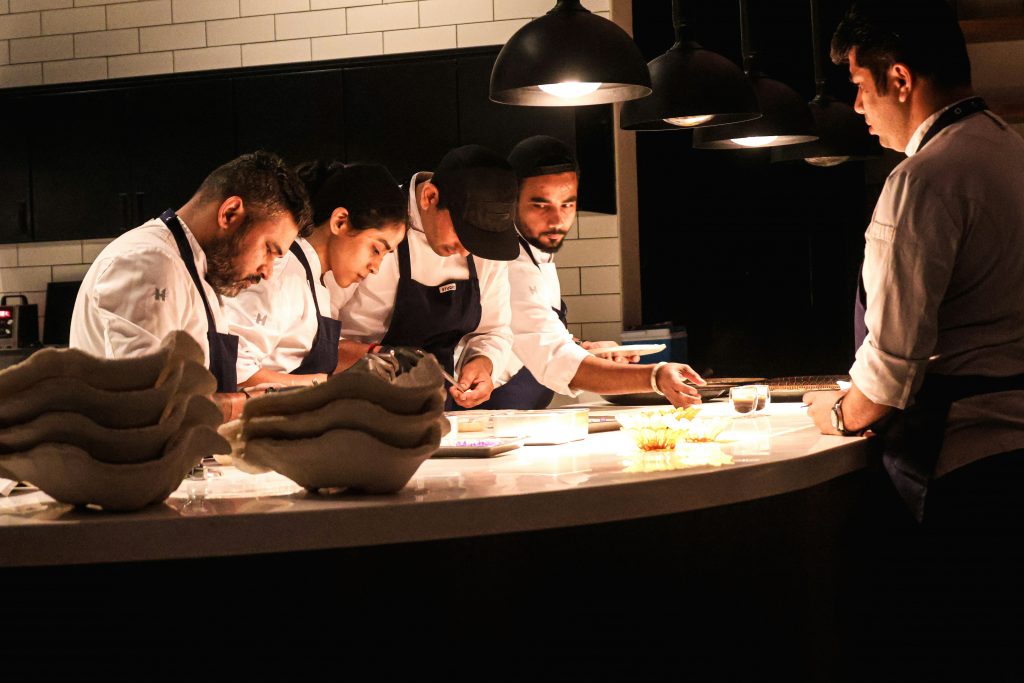
For decades, the Michelin Guide remained essentially French, then European. It was subsequently exported, initially tentatively, then with clear global ambitions. Today, Tokyo is the city with the highest number of starred restaurants in the world. New York, Copenhagen, Hong Kong, São Paulo… The guide has established itself everywhere, bringing with it its criteria and prestige.
It is interesting to note that the system adapts without ever losing its essence. A Japanese izakaya can earn a star for the precision of its skewers and the purity of its dashi. A Roman trattoria for the perfection of its pasta cacio e pepe. An Alsatian bistro for the depth of its homemade sauerkraut. The criteria remain the same (quality of ingredients, mastery of cooking techniques, personality of the cuisine, consistency) but they apply to very different gastronomic cultures.
Other distinctions, beyond the stars
Yohan Marion ; Unsplash
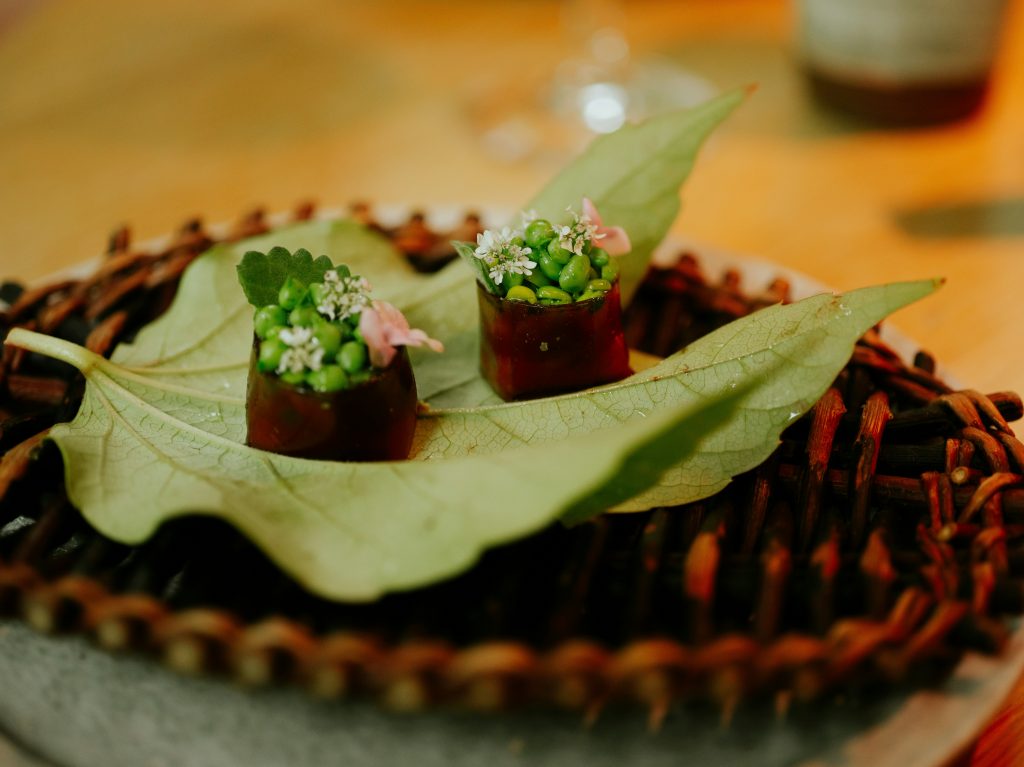
Many people are unaware that the Michelin Guide moved beyond its three-star rating system a long time ago. Two other distinctions have become more important:
First is the Bib Gourmand. Introduced in 1997, this award recognises restaurants that offer quality cuisine at affordable prices. Expect no embroidered tablecloths or ten-person teams in the dining room. Examples include a bistro that makes its own butter and a country inn that sources its produce locally without breaking the bank. For many customers, this is the most useful distinction in everyday life.
Then there is the green star, launched in 2020. It recognises restaurants that are committed to environmental issues. Examples include home-grown vegetables, short supply chains, working with local producers and reducing waste. It’s a signal that responds to a genuine expectation among customers, particularly younger ones. Nowadays, eating well is not enough; we also want to know where our food comes from.
Living in a Michelin-starred kitchen: what does it really entail?
We sometimes imagine that Michelin-starred restaurants are timeless places, suspended in an abstract elegance. However, the reality is rather different. Michelin-starred cuisine is, above all, a discipline of repetition. The same gestures, the same presentation, the same high standards, day in, day out. The critical element is not the big night when the inspector visits; it’s about maintaining this level when no one is watching.
Meanwhile, the customer experience looks like this: you arrive and are welcomed as if you had been expected forever; you follow a tasting menu that lasts two or three hours. Each dish is accompanied by an explanation of where the fish comes from, how it is cooked and which wine goes with it. The meal becomes a narrative.
But behind the scenes, the pressure is intense. The fear of losing a star is ever-present and a constant worry for everyone. In recent years, several chefs have chosen to be removed from the guide or give up their awards to regain a sense of freedom. Cooking for ghost inspectors is an exhausting, constant performance. Some prefer to cook only for their customers.
2026: what the new Michelin-starred chefs say about today's gastronomy

Claude Humbert ; Wikimedia ; “Christophe Hay (au centre) avec d’autres Maîtres Restaurateurs”
The 2026 edition of the Michelin Guide highlights several ongoing trends. Bistronomy — the concept of enjoying high-quality cuisine in an informal setting without tablecloths at reasonable prices — continues to rise in popularity. Small, often young, urban establishments are earning their first stars thanks to their highly personal cuisine, which is characterised by raw ingredients and seasonality.
Regional cuisines are also making a comeback. Restaurants in rural areas, far from big cities, collaborate with local producers and transform their remote location into a strength. Their distance from urban centres is becoming a real selling point.
These trends are not unique to this edition. In 2025, Christophe Hay in the Loire region was a perfect example of this movement. He is a chef who has built a veritable ecosystem around his restaurant, complete with a vegetable garden, fish farm and local producers, in order to serve cuisine that is specific to the region. This is the type of establishment that the guide has gradually learned to view differently.
The 2026 green star also goes to establishments that have environmental commitment at their core (such as having a vegetable garden spanning several hundred square metres that is cultivated by the chef himself, refusing to use certain out-of-season products and working with local artisanal fishermen). These restaurants demonstrate that gastronomic excellence can be achieved without ignoring what is happening outside their walls.
Before the big night, check out the guide
Patrick Gaudin ; Wikimédia
Let’s go back to the beginning… Why does the Michelin Guide continue to play such an important role in our decisions? It’s because it answers a question that everyone asks themselves before an important meal: ‘How can I be sure I’m making the right choice?’
A couple organising a pre-wedding dinner for their families is looking for a guarantee. An event organiser who includes a Michelin-starred lunch in a seminar is looking to send a strong message. A traveller planning a weekend in Alsace based around wine cellars and restaurants is looking for consistency.
The guide provides this structure. It does not guarantee a perfect evening (no guide can promise that). But it does indicate that a minimum standard has been checked, tested and retested. It offers a level of confidence that few other gastronomic tools have managed to build in over a century.
Perhaps what is most remarkable about this story is that it all started with tyres… And the logic was absolutely simple: if people drive more, they use more rubber. To get them to drive more, you have to give them reasons to go out. And if there’s one thing that gets people out and about, it’s the promise of a good meal!
The Michelin brothers understood something fundamental about human beings… We travel to eat. Everything else followed.