In this issue, the portraits explore those for whom celebration is a language, a space to be constructed, an emotion to be orchestrated. Visionary architects and masters of illusion, they reveal how a gesture, a form or a staging can transform a place into a moment, and a moment into a celebration.
© Kollectors – 2025 – All rights reserved
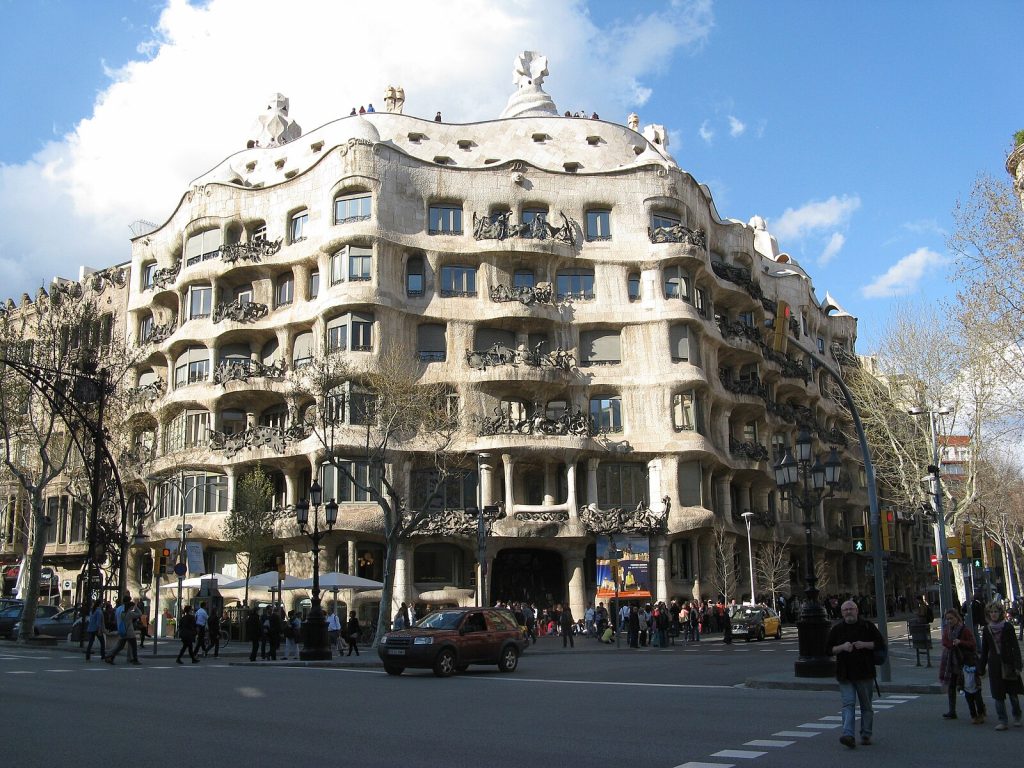
Born in Catalonia in 1852, Antoni Gaudí developed an early sensitivity to organic forms, natural curves and earth-inspired textures. His style, at the crossroads of Gothic and Art Nouveau, was born out of a rejection of linearity and a taste for formal freedom. For him, architecture is never static: it must vibrate, breathe and surprise. His work, deeply rooted in Barcelona, celebrates life through undulating lines, vibrant mosaics and almost plant-like volumes.
© Kollectors – 2025 – All rights reserved
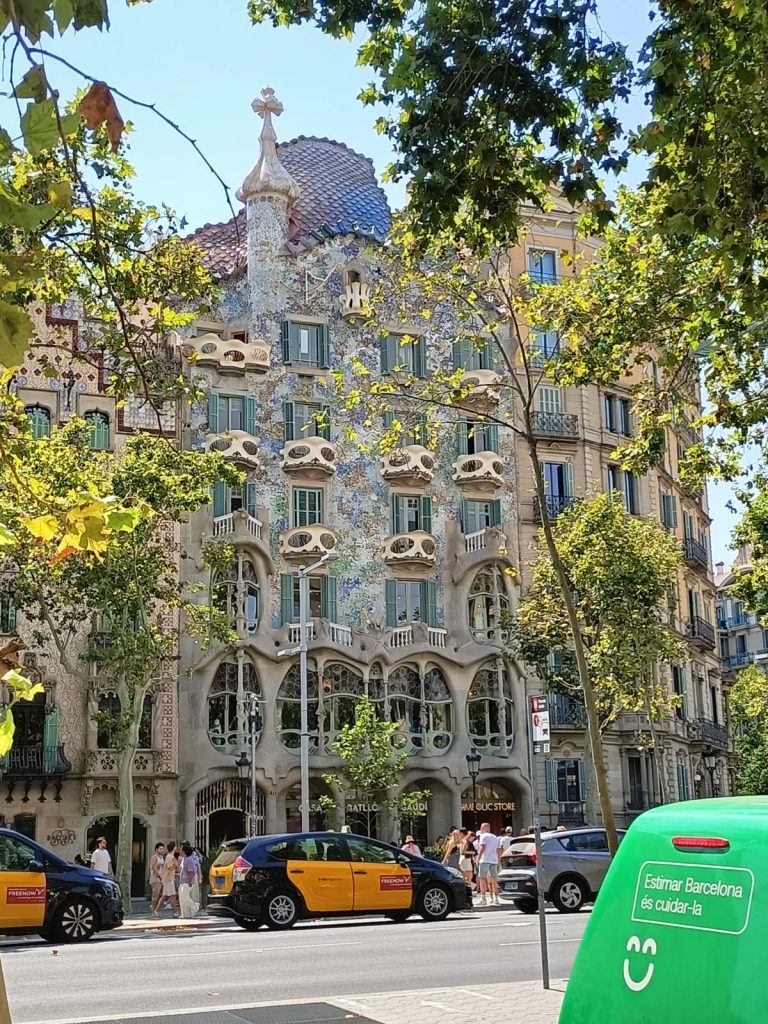
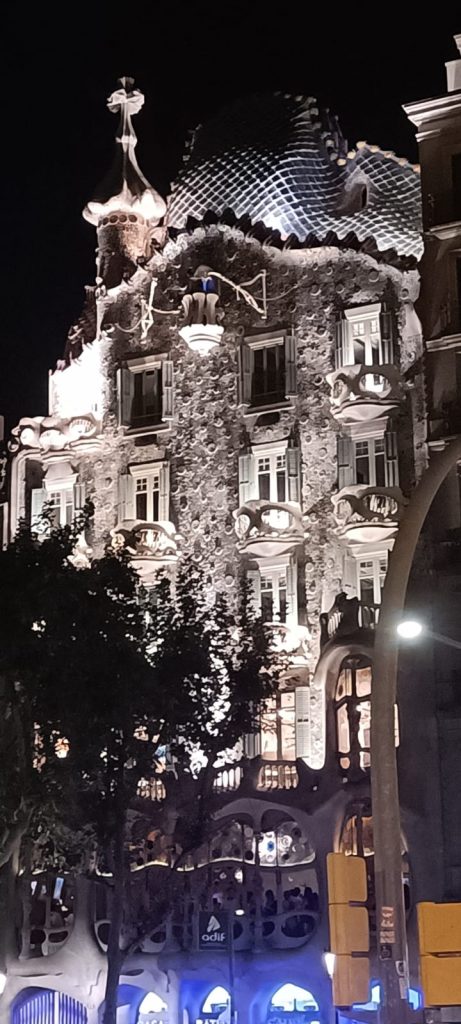
Gaudí designed buildings that seem to be in motion, as if in the midst of a celebration. Casa Batlló, with its undulating façades and multicoloured mosaics, evokes a mineral carnival, a mask smiling at the city. Parc Güell, designed as an ideal garden, displays fantastic, almost playful forms, where a stroll becomes a sensory experience. In each of these places, colour, light and patterns combine to create a festive atmosphere, accessible to all, where imagination takes precedence over decor.
© Kollectors – 2025 – All rights reserved
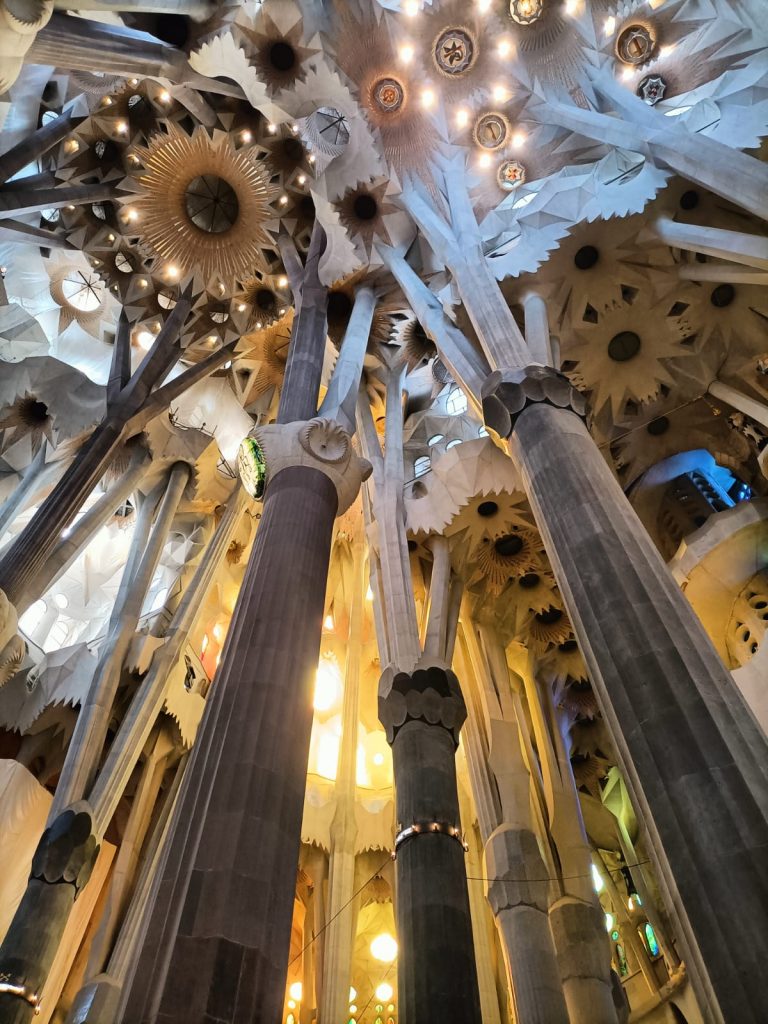
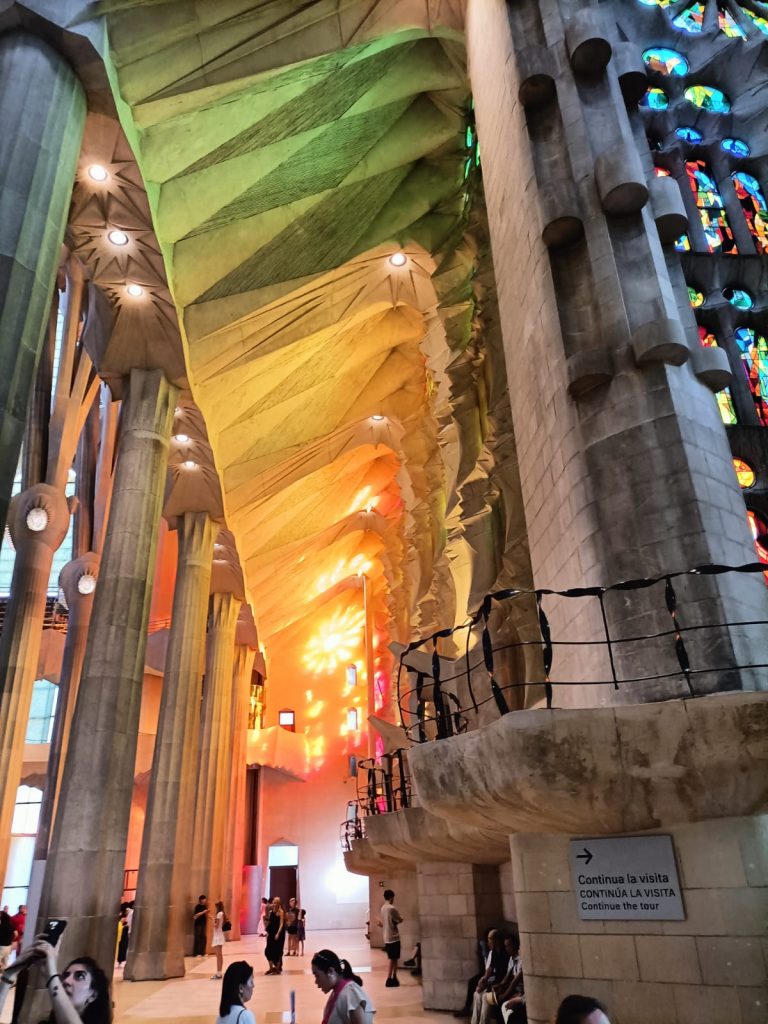
Dedicated at the end of his life, the Sagrada Família embodies everything that Gaudí considered essential: spiritual verticality, naturalistic symbolism, light as matter. The façades seem to recount a sacred celebration: an explosion of sculptures, vertical rhythms, stained glass windows in jubilant colours. Inside, the tree-like columns form a silent but vibrant forest. Even unfinished, the work stands out as one of the most festive monuments in world architecture, a place where spiritual elevation meets the celebration of nature.
© Kollectors – 2025 – All rights reserved
Gaudí did not only design buildings: he also designed furniture, lighting, ironwork and stained glass windows. This holistic vision, shared with exceptional craftsmen, gave his projects a rare, almost scenographic coherence. His signature technique, trencadís — mosaics made from ceramic shards — adorned the spaces like festive decorations. Through this approach, Gaudí composed a joyful, immersive visual language, where every detail is a celebration. His legacy continues to inspire those who think of space as a sensory experience.
An heir to the Beaux-Arts who became a master of illusion
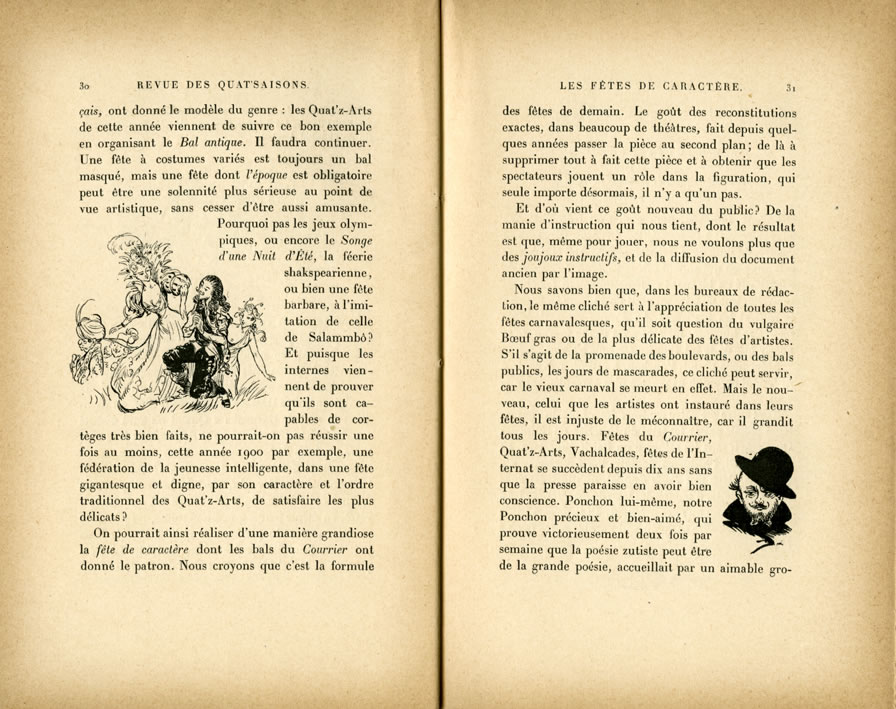
Doc103, Wikimedia, 1901
Trained at the Beaux-Arts, Paul Tissier seemed destined for a classic career as an architect. But very early on, he strayed from the academic path to join a freer territory: scenography.
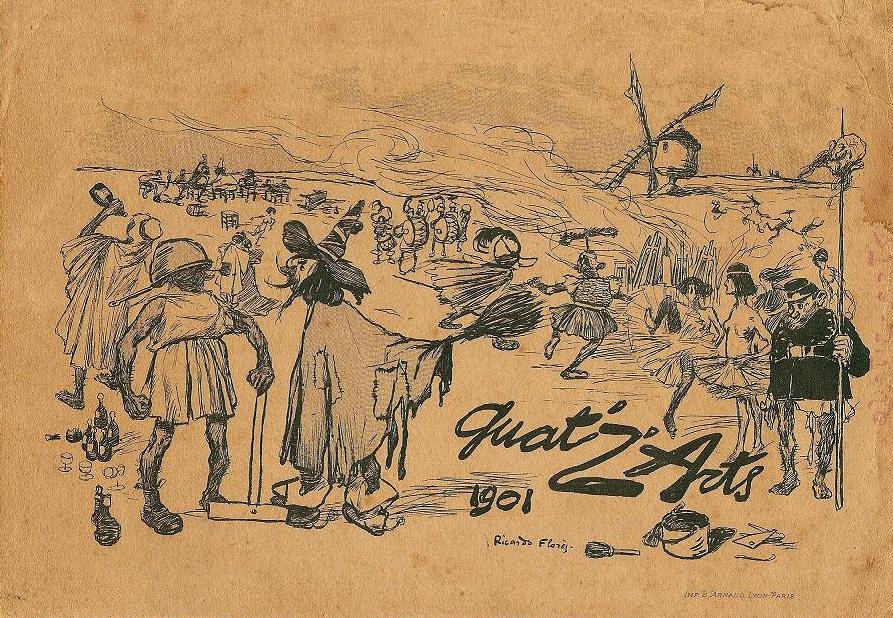
In the Paris of the Années Folles, he became president of the Quat’z’Arts ball, a festive laboratory where students and artists reinvented a historical era each year. Monumental sets, costumes, frescoes and machinery: Paul Tissier learned that celebration could be an architectural gesture, a space constructed for the present moment, an immersive theatre where the audience became actors.
Doc103, Wikimedia, 1901
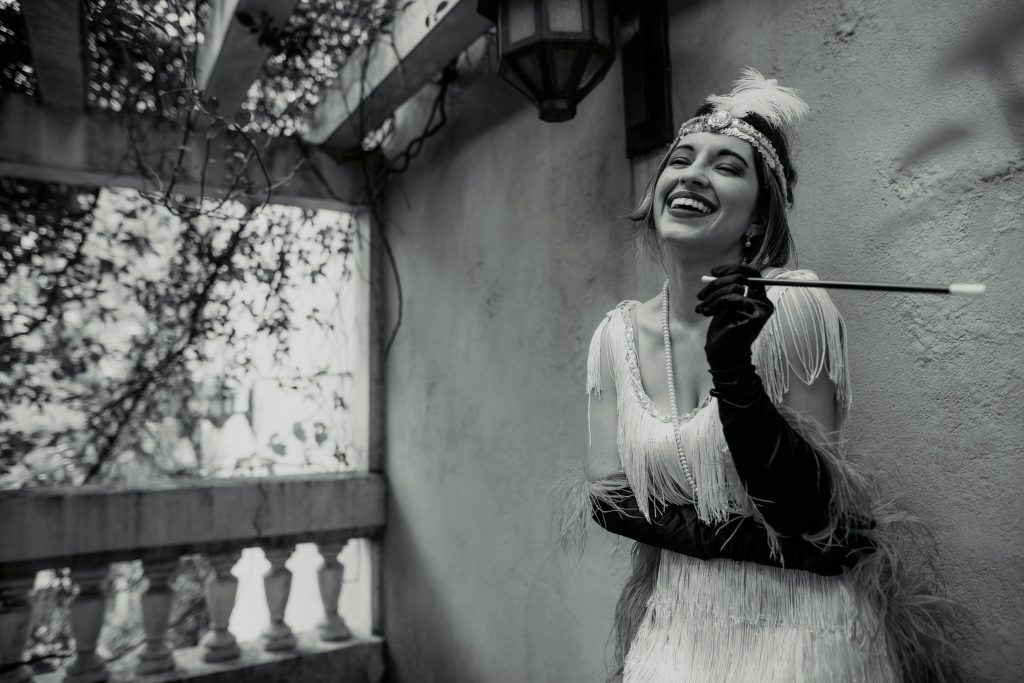
Gera Cejas, pexels, 23/04/2024
After the First World War, Tissier abandoned traditional architecture for good. Nice became his open-air studio. Under the patronage of Alfred Donadei and alongside his wife Gisèle, he designed nearly a hundred themed celebrations in two years – a dizzying pace that testifies to his creative energy. Ancient Rome, Imperial Russia, underwater worlds, cubist imaginations: each celebration was a total work of art, where painted canvases, installations, music, costumes and rituals composed entire worlds. Where others decorated, Paul Tissier designed, directed and choreographed. He created parties as one might create an opera.
Wikimedia
For Paul Tissier, a festival only exists if it engages. There are no passive spectators: everyone must enter the story, become involved in it, become a part of it. His approach is based on a rare authenticity: Russian artists invited for the Russian festival, a Japanese composer for a Sino-Japanese immersion. The architect rejected pastiche, preferring dialogue between cultures, the creation of the right atmosphere, and the use of light, colour and movement to provoke emotion. His ephemeral scenographies thus became sensory spaces: an architecture of the moment where everything, from sound to textiles, structured the experience.
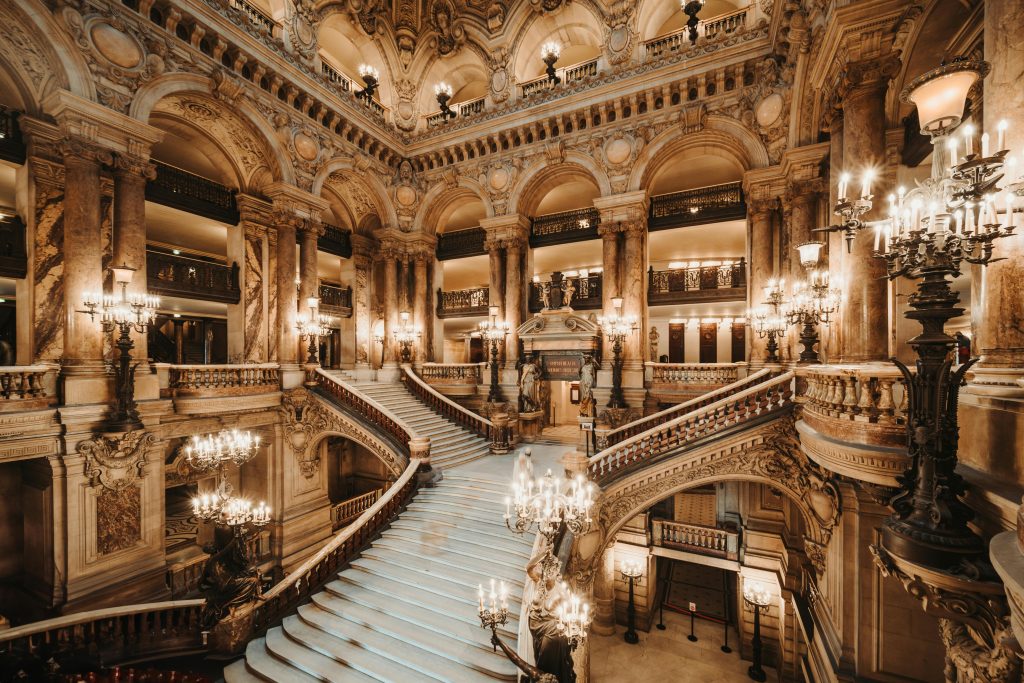
Wikimedia
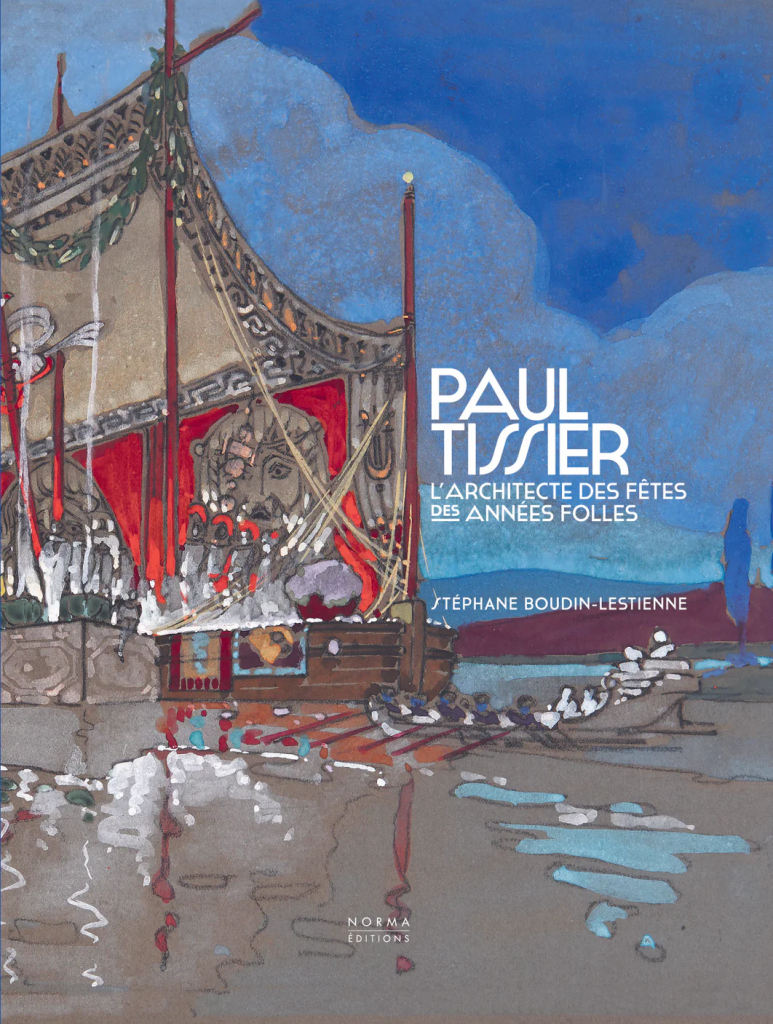
Éditions-norma
Éditions-norma
Paul Tissier died at the age of forty, leaving behind a body of work that was as brief as it was intense. Thanks to the archives compiled by his wife and the research published in 2022, his name is now regaining its place in the cultural history of the 1920s. His vision goes beyond decorative celebration: it makes celebration a total construction, a staging of the world, a collective space where architecture, visual arts and live performance come together. Tissier shows that celebration can be an art form – a moment when light, materials, gestures and bodies are combined to create an ephemeral universe that will nevertheless remain in the memory.
contact@wearekollectors.com
5 rue du Helder 75009 PARIS
Site by FORGITWEB
January, 2026
Luxury is reinventing itself.
No more flashing logos, place to a refined sobriety, personal immersion, artisanal excellence, sensitive sustainability.
December, 2025
heritage, contemporary practices and essential pleasures
Because celebration is more than just appearances:
it reflects how we live the world, pass on traditions and create lasting memories.
ISSUE #2
Design, fashion, craftsmanship: creations where form and material respond with precision, far from any fashionable effect.
ISSUE #1
Handcrafted decorations, ultra-luxurious calendars and collectibles to fill you with joy before the season begins.
ISSUE #2
The architect of light and shadow
Interview with the founder of EDO (European Design Office)
ISSUE #2
The alchemist of discreet hospitality
Portrait of a visionary who transforms the art of hospitality into a total experience.
ISSUE #1
Antonio Gaudi and Paul Tissier
Personalities, artisans and creators who give the celebration its human depth.
Inscrivez-vous pour avoir accès à l’ensemble du site WeAreKollectors.