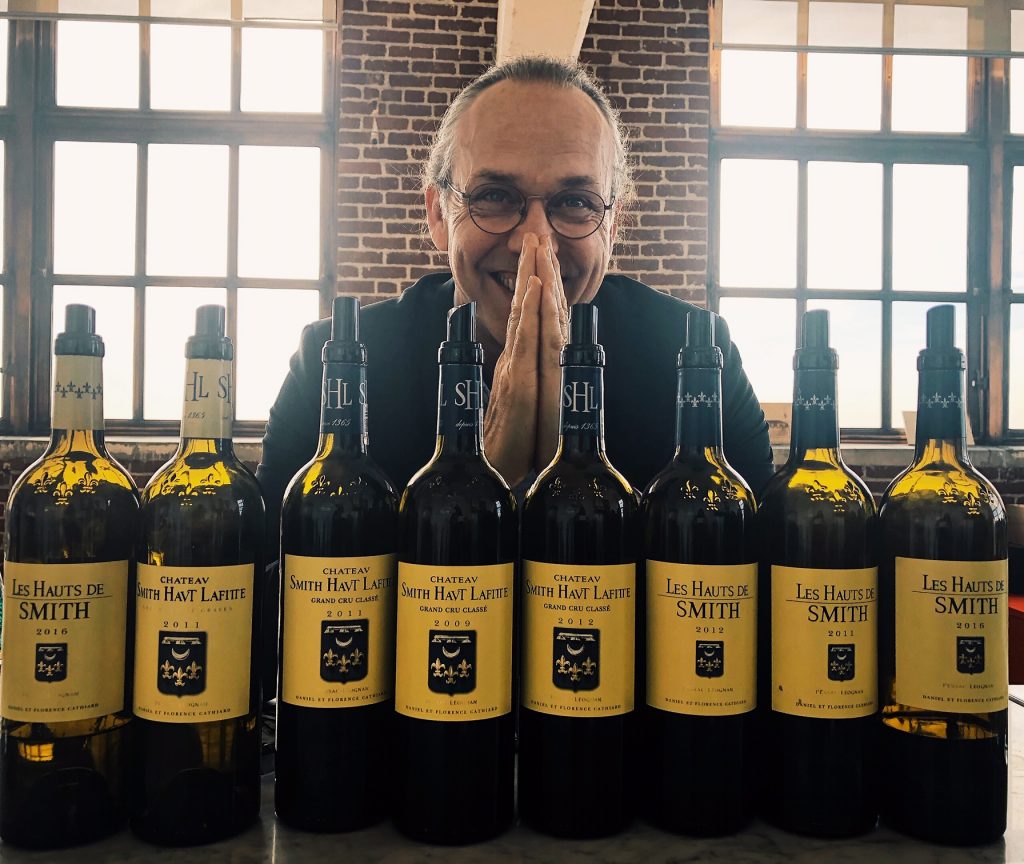
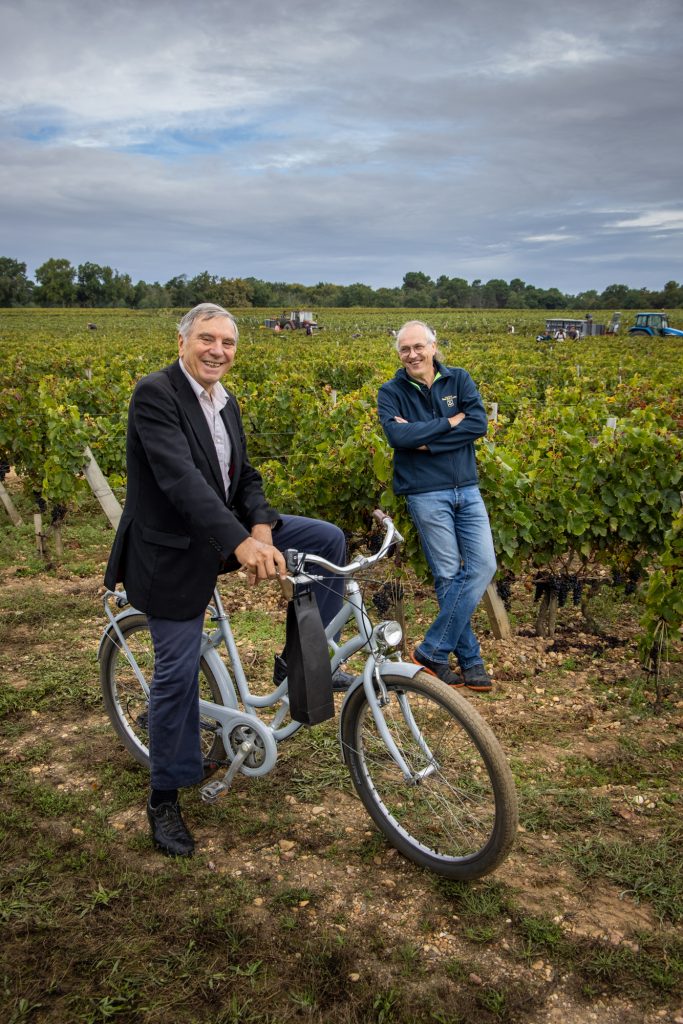
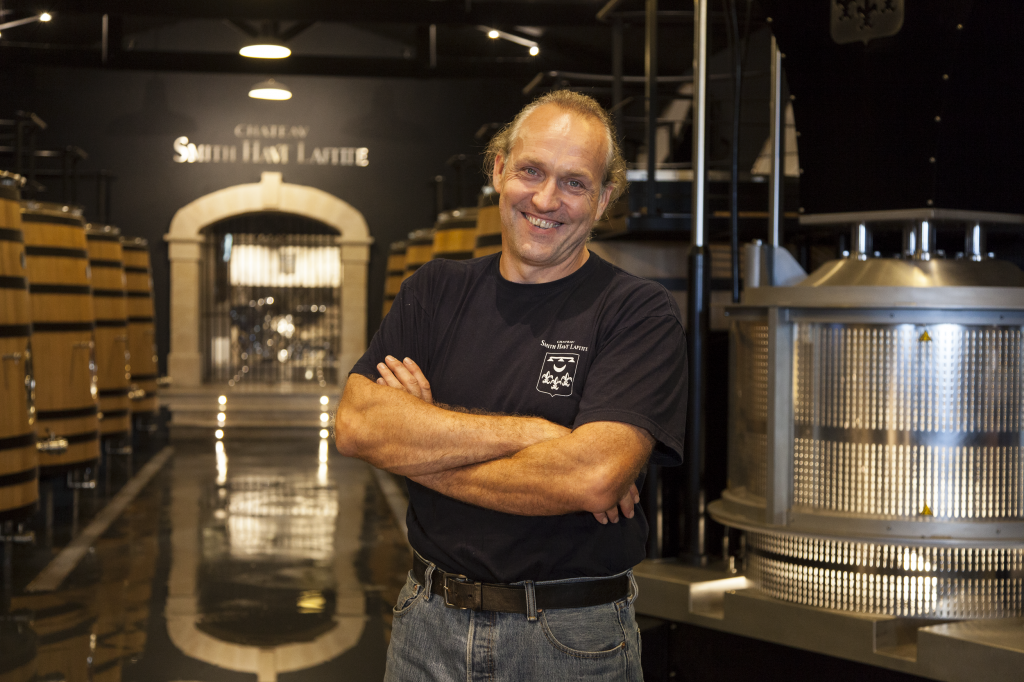
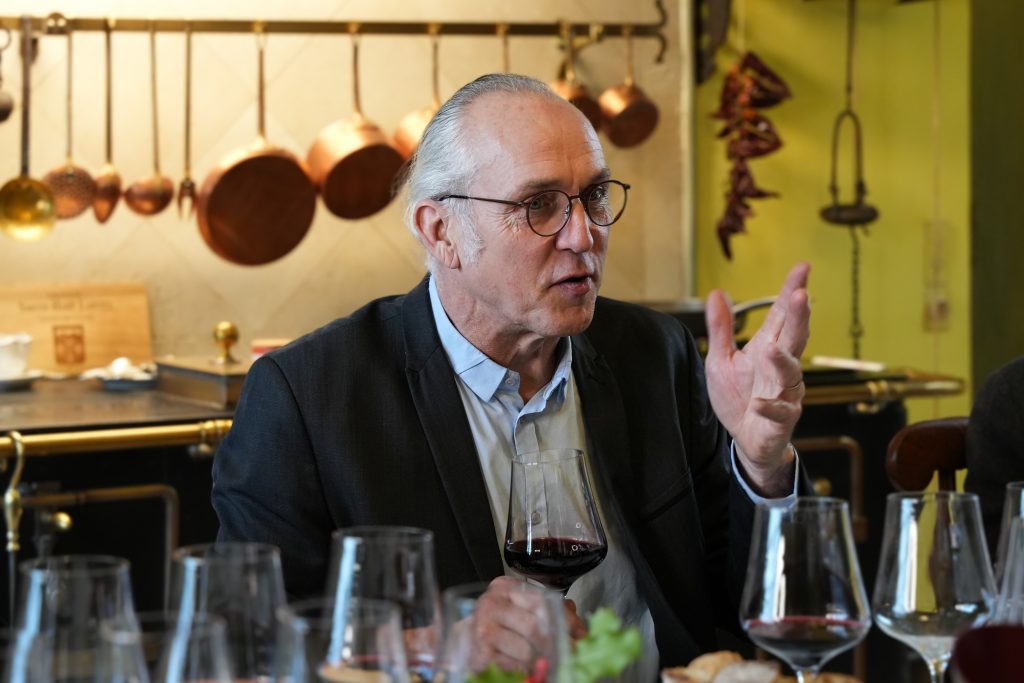
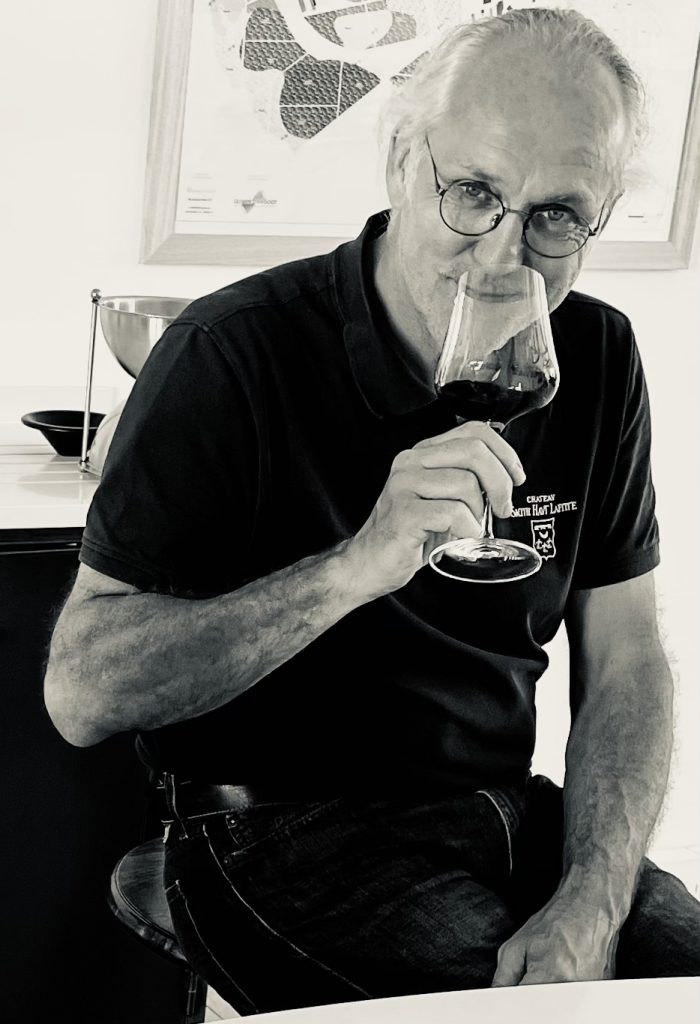
Fabien Teitgen takes a long-term approach to his work at Smith Haut Lafitte, paying constant attention to the estate, the vines and the people around him. As the estate’s managing and technical director, he has spent nearly thirty years developing a grand cru classé de Graves, a wine with a history dating back to the 14th century. An agricultural engineer and oenologist, he was named Winemaker of the Year by the Guide Hachette des Vins in 2021. He moves forward with method, observation and confidence in nature. “What happens in the vineyard touches me deeply; it’s visceral,” he confides. His role is to develop the vineyard, vintage after vintage, while remaining faithful to what the soil, climate and weather permit. ‘My job is to magnify this place, to try to be ever more faithful to it and to changing times.’
Fabien Teitgen ; Château Smith Haut-Lafitte
Fabien Teitgen was born in Thionville and grew up in Yutz, an urban area characterised by the steel industry — the profession of his father. He spent his holidays with his maternal family and his farming grandfather. It was there that he discovered working the fields at a very early age. “I learned to drive a tractor when I was eight,” he says. Another memory that comes to mind is that of his great-grandfather, who was a distiller of vintage wines and owned vineyards and fruit trees. It was while savouring “the little drop of mirabelle plum brandy that fell from the still” that he formed a sensory connection with the land and its produce. “Wine was part of everyday life, but not in the noble sense,” he explains.
This childhood spent between two worlds established a direct relationship with work and reality. His parents encouraged him to focus on his studies. His father’s influence in the forestry sector reinforced his attraction to agriculture, which offers a direct connection to the land and the finished product. After passing the competitive exams, his choice was clear: agronomy. Starting at the school in Rennes marked the first turning point in his career, moving him towards a profession linked to living things and the land.
Fabien Teitgen ; Château Smith Haut-Lafitte
Fabien Teitgen truly discovered wine during his studies. In his final year, he specialised in viticulture and oenology at the University of Montpellier. Exploring the diversity of French vineyards made him realise that specific expertise could be acquired. “Initially, wine seemed inaccessible to me, but I discovered that it was possible to learn how to make wine,” he recalls. He was fascinated by the “sensual relationship between the plant and the glass”, and the long process that begins with the earth and ends with a transformed product, ready to be consumed and shared. The oenology diploma he obtained in Bordeaux confirmed this path for him.
In 1994, an internship at Château Canon La Gaffelière proved pivotal. There he met Stéphane von Neipperg and observed the inner workings of a large Bordeaux estate. A few months later, in October 1995, Smith Haut Lafitte welcomed him as head of cultivation. He took charge of the vineyard, which he considers to be the most important stage in wine production. Six years later, he became technical director and then managing director, working directly with Florence and Daniel Cathiard.
Fabien Teitgen ; Château Smith Haut-Lafitte
The history of Smith Haut Lafitte dates back to the 14th century. Over the centuries, the great tower has undergone many transformations. In 1855, the owner at the time, Lodi-Martin Duffour-Dubergier, took part in the official classification of Bordeaux wines as part of the Universal Exhibition. The name “Smith” comes from a Scottish merchant, Georges Smith, who gave his name to the property. The Louis Eschenauer company managed the estate for nearly a century in the 20th century, before it was bought by Florence and Daniel Cathiard in 1990.
Fabien Teitgen, who joined five years later, is committed to continuing this tradition. He observes changes to the château, its practices, and the climate, guided by the principle of supporting the evolution of the vineyard while honouring its history. “My identity hasn’t changed; we’ve simply expressed it differently and more effectively,” he explains. This identity is evident in the red wines, which exhibit an aromatic complexity linked to the gravel, particularly the empyreumatic character and distinctive smokiness. The terroir, which is 30% clay-limestone, gives the wine a fresher, more powerful, structured feel. Meanwhile, the white wines represent “an almost impossible combination”, being both rich and powerful yet also crystalline, salty and delicate.
Les Sources de Caudalie
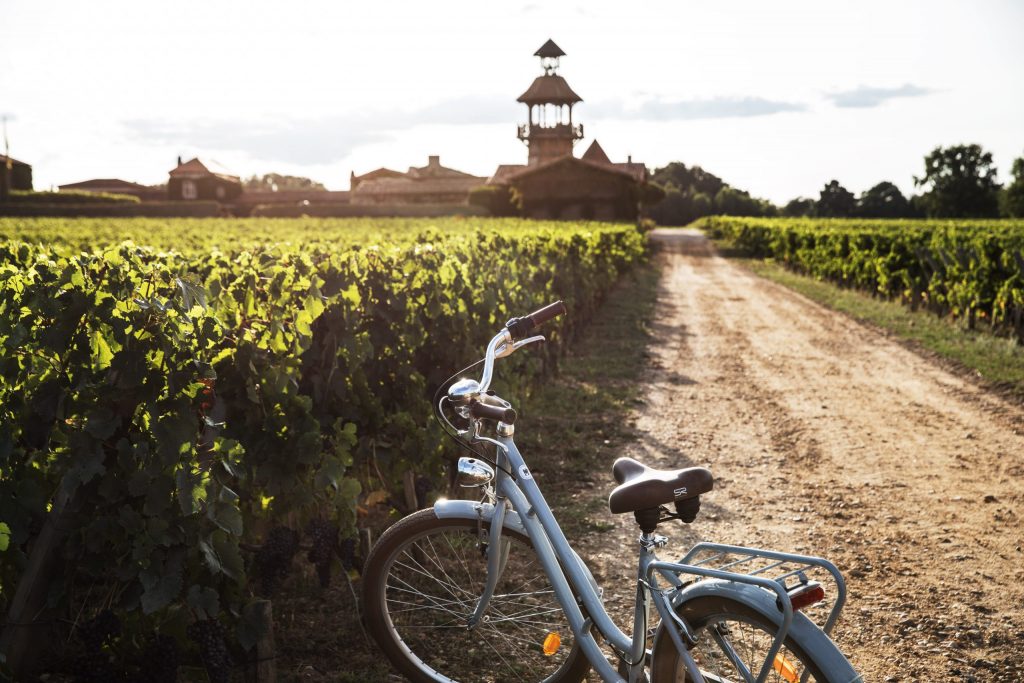
The Cathiard family has developed a whole ecosystem centred around the château. Daniel came up with the idea of creating an experience centred on wine and the location. This vision gave rise to Les Sources de Caudalie, a “vineyard palace” built literally in the middle of the vineyards. The youngest daughter, Alice, and her husband Jérôme Tourbier took up this project. The concept has now extended to Château de Gilly and Rouffach.
It was during the château’s harvest that the idea for the Caudalie brand was conceived. Through meetings with researchers, the family discovered that grape seeds contain polyphenols, which are powerful antioxidants. Mathilde Thomas and her husband Bertrand then developed the vinotherapy skincare brand. The Sources de Caudalie spa uses extracts of grapes and vines from the estate. According to Fabien Teitgen, these projects “energise and open up new perspectives”.
In the face of climate change, Fabien Teitgen has adopted a pragmatic and optimistic stance. “When you understand nature, you realise that there are opportunities for change,” he says. The 2022 heatwave demonstrated to him the resilience of a well-cultivated and well-rooted vineyard.
He is exploring ways to adapt, such as using different rootstocks and grape varieties and changing pruning methods. “For years, we have sought to capture light to improve the ripening of our grapes. Perhaps in the future, as they do in Napa, we will have to provide shade for the grapes to delay ripening.’
The estate has been certified organic since 2019 and prioritises the relationship between the vine and the soil. On the white wine plots, which consist of clayey gravel, horses have been working the land since 1998 to minimise compaction. This pragmatic approach has helped regenerate the soil and eliminate erosion. Fabien Teitgen considers the variety of spontaneous plants and the presence of earthworms to be signs of life.
For Fabien Teitgen, progress is not a race to the top, but an evolution in the details. Technical advances such as optical sorting and improved destemming contribute to this quest. His goal is to pass on a vineyard that is adapted to its environment to the next generation. This notion of transmission extends beyond the property itself. It also has a personal dimension. His son, Julien, is currently studying agricultural engineering and plans to pursue a career in viticulture and winemaking. This continuity comes naturally in a family where the connection to life and the land spans generations.
Fabien Teitgen ; Château Smith Haut-Lafitte
A new project will begin at Cathiard Vineyard in Napa Valley, California, in January 2020. Founded in 1885 by the Rennie brothers, Scottish wine merchants, this former estate has had famous owners such as Louis Martini. Formerly known as Flora Springs, one of the leading estates in the 1980s and 1990s, it offers a different climate and balance. “We’re not going to make a Smith Haut Lafitte in California; we’re going to make a Californian wine with a Bordeaux sensibility,” explains Fabien Teitgen.
Six vintages later, the positive feedback on quality confirms the relevance of these choices. Furthermore, Napa acts as a reverse laboratory and a source of inspiration for Bordeaux.
The challenge remains the same: “If you listen to nature, you see that there are windows of opportunity.” Listening, observation and open-mindedness guide every decision. Otherwise, you get stuck in recipes and rules and you don’t move forward.
Fabien Teitgen is a humble man who remains loyal to his rural roots. “The people around us are important. In my story, it’s my parents first and foremost. If they hadn’t encouraged me, my life would have turned out differently,” he confides. He emphasises the importance of family stability and mentions his wife, Carole, and their son, Julien, with whom he shares this attachment to life. For him, family is an essential source of balance. “Everything I have achieved is thanks to the people around me — people who love trying new things and moving forward.”
He remains inspired by his work with Florence and Daniel Cathiard, who “have a wealth of ideas and energy”. ‘We are not limited by tradition or rules, as long as we take a positive, quality-focused approach.’ As soon as we or they have an idea, we put it into practice. We are committed to constant evolution, questioning and progress. This personal stability also feeds into his way of working. Julien is currently studying agricultural engineering and plans to specialise in viticulture and winemaking. This choice is a natural extension of the family’s connection to the land. The tradition is thus being passed on in two ways: at the estate, where Fabien Teitgen is preparing the vineyard for future generations; and within his own family, where this relationship with nature is being passed on.
Faced with nature and its unpredictability, he remains confident. “Times change, things evolve, and these changes will not always be problematic.” The key, he says, is to ‘find the key to each vintage’, to understand what each year has to offer and to be moved by a wine.

Février, 2026
Créer avec l’existant, penser avec l’histoire
De l’architecture au design, cette édition explore comment lieux, savoir-faire et matières héritées deviennent terrains de création actuelle.
Janvier, 2026
Le luxe se réinvente.
Finis les logos clignotants, place à une sobriété raffinée, à l’immersion personnelle, à l’excellence artisanale, à la durabilité sensible.
Décembre, 2025
Héritages, gestes contemporains et plaisirs essentiels
Parce que la fête n’est jamais qu’apparence : elle reflète notre manière d’habiter le monde, de transmettre, de fabriquer des souvenirs durables.
ÉDITION #3
Upcycling et kintsugi transforment l’objet contemporain, faisant de la trace, de la réparation et de la matière un langage esthétique.
ÉDITION #3
Artisans et designers donnent une seconde vie aux matériaux anciens, entre création contemporaine, patrimoine et réemploi.
ÉDITION #3
Bunkers, wagons et kiosques renaissent grâce à la création, révélant comment l’art redonne sens aux lieux délaissés.
ÉDITION #2
Un regard transversal sur le quiet luxury à travers des lieux, des objets et des figures qui expriment l’élégance.
ÉDITION #1
Une sélection de marques, architectures, objets et escapades qui donnent corps au sens de la fête.
ÉDITION #3
Usines et gares délaissées deviennent lieux culturels ouverts, où mémoire industrielle et usages contemporains redessinent la ville.
ÉDITION #3
L’audacieuse métamorphose d’un palace parisien
ÉDITION #3
Au cœur du Marais, un lieu discret révèle comment archives, architecture et recherche font dialoguer l’œuvre de Picasso.
ÉDITION #2
Une expérience shopping unique dans un magasin emblématique.
ÉDITION #2
Voyage culinaire et architectural au cœur de la Seine
ÉDITION #2
Dans le 9e arrondissement, un établissement qui invite au quiet luxury
ÉDITION #1
Chante! vient d’ouvrir ses portes. Une invitation à vibrer !
ÉDITION #3
Icône du paysage français, la boîte jaune change de statut et s’invite dans l’univers du design.
ÉDITION #3
L’édition 2026 affirme une vision où artisanat, design et mémoire façonnent l’habitat contemporain, international actuel.
ÉDITION #3
Cent ans après 1925, l’Art déco revient dans nos villes et intérieurs avec géométrie, audace, optimisme.
ÉDITION #3
Depuis plus de deux cents ans, Royal Limoges conjugue porcelaine, savoir-faire industriel et création contemporaine.
ÉDITION #3
Des terrains de sport aux podiums, la sneaker raconte un siècle de mutations culturelles, techniques et stylistiques.
ÉDITION #2
Design, mode, artisanat : des créations où la forme et la matière se répondent avec justesse, loin de tout effet de mode.
ÉDITION #1
Décorations artisanales, calendriers ultra-luxe et pièces de collection pour s’enivrer de joie avant l’heure.
ÉDITION #3
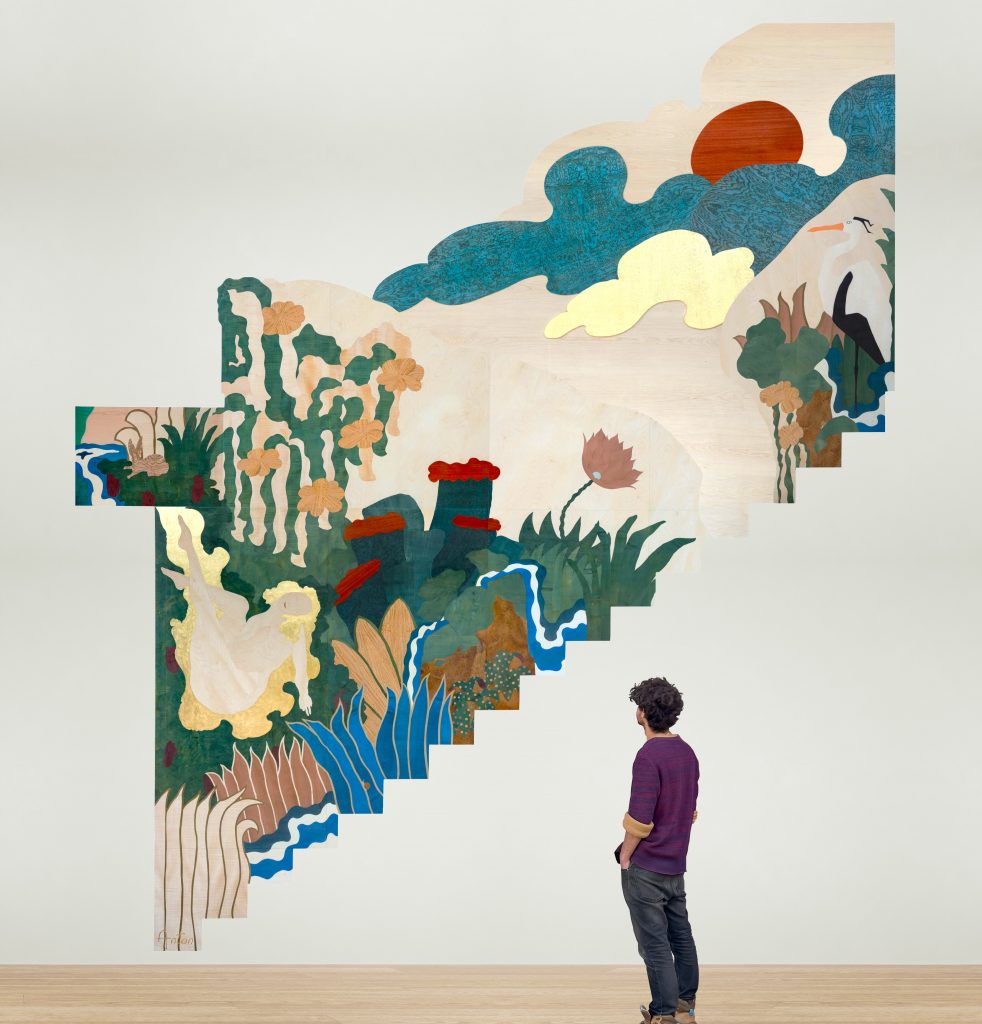
Entre marqueterie monumentale et jungle symbolique, Anton Laborde transforme le bois en récit contemporain poétique engagé.
ÉDITION #3
À Maison & Objet, Thierry Laudren présente des meubles sculptés où fonction, matière et lenteur façonnent une présence.
ÉDITION #3
Jean Nouvel conçoit une architecture attentive aux contextes, où lumière, histoire et usages façonnent chaque projet.
ÉDITION #3
À Lyon, Sophie Morel rénove des lieux historiques en alliant respect du bâti et écriture contemporaine.
ÉDITION #3
Au Centre d’Études Picasso, l’architecte compose une architecture où lumière, géométrie et héritage dialoguent avec précision.
ÉDITION #2
Entretien avec le fondateur d’EDO (European Design Office)
ÉDITION #2
Portrait d’un visionnaire qui transforme l’art de recevoir en expérience totale.
ÉDITION #1
Personnalités, artisans et créateurs qui donnent à la fête sa profondeur humaine.
ÉDITION #3
De Bordeaux au Bassin, art, vignobles et bien-être composent une échappée élégante au cœur de la Gironde.
ÉDITION #2
Vers une région de l’Italie habitée par le temps, où paysages, culture et usages s’accordent dans une continuité rare.
ÉDITION #1
Destinations et rituels qui réinventent la fête, du soleil tropical aux marchés d’hiver.