Behind the scenes at our favourite places, with Where is Brian, interior design agency based in Nantes

Why do we always return to certain restaurants, while others leave us indifferent? Behind every lively dining room, bustling bar and smoothly running kitchen, there is a lot of invisible work going on. In Nantes and beyond, interior design agency Where is Brian creates dining spaces that are designed down to the finest detail. With an architect’s eye and a restaurateur’s sensibility, the agency’s founders design spaces that are lively, functional and in tune with the times.

Consider the restaurant's design before decorating it

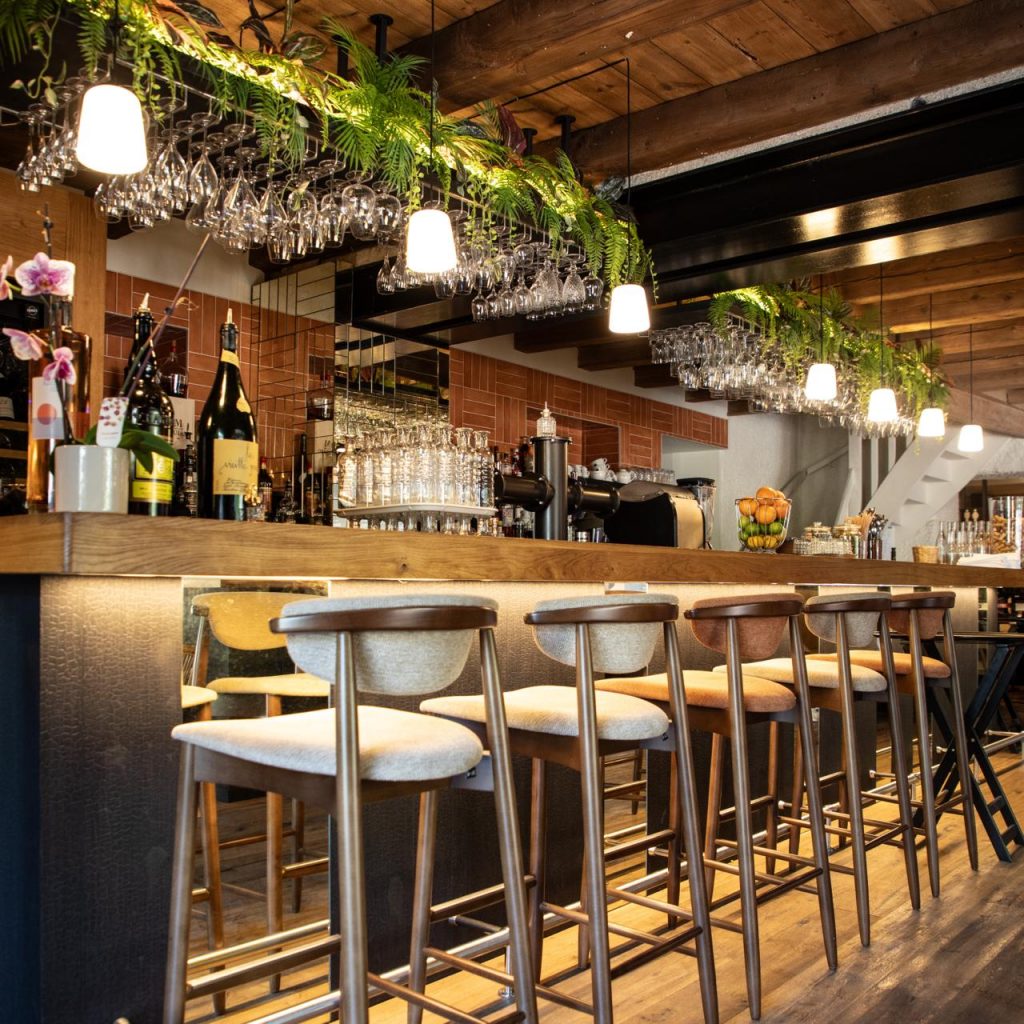
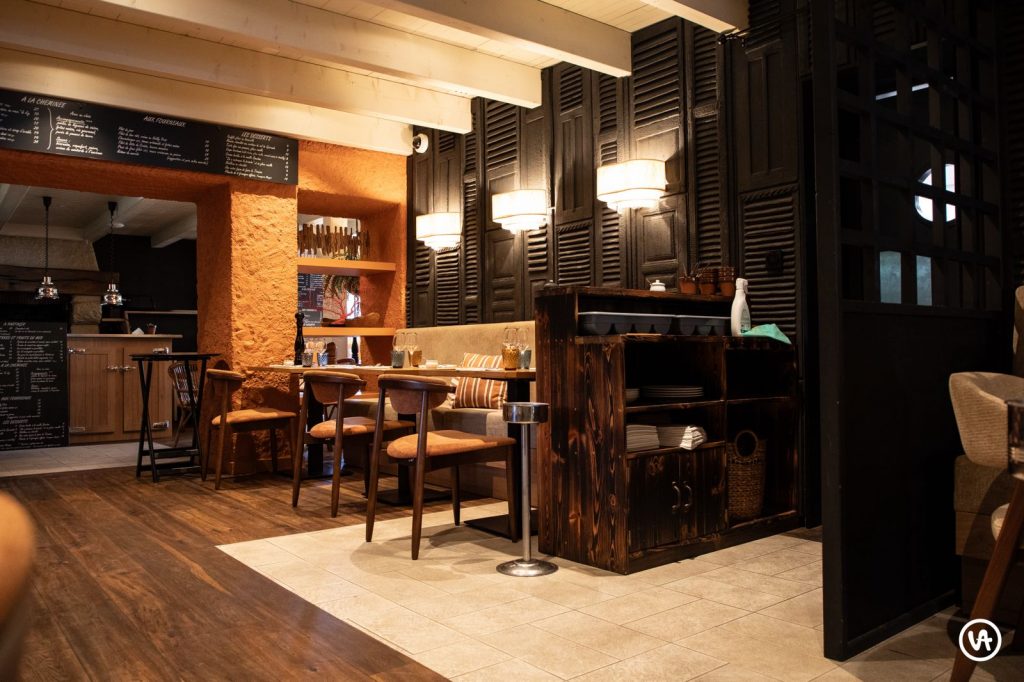
Restaurant La Ferme à Saint-Étienne-de-Montluc ; Where is Brian

The story begins in 2015. Two architect friends — one a DPLG graduate and the other an interior designer — founded Where is Brian in Saint-Sébastien-sur-Loire. A few months later, they were joined by their third partner, Élodie Rondelet. The trio quickly set their sights on cafés, hotels and restaurants. Their first project, La Prison du Bouffay, housed in a former prison in the centre of Nantes, set the tone from the outset with its strong concept rooted in the history of the location.

Eleven years later, the agency employs twenty people and supports twenty to thirty openings each year in France and abroad.

For co-founder Gil Aubinais, aesthetics are not the starting point. “Decoration is subjective. What we build are first and foremost working tools.” This includes customer flow, staff circulation, supplier flow, bar ergonomics and the number of steps behind a station. Every detail influences the overall experience for both customers and staff. If the queue is too long, the atmosphere deteriorates. If the bar is poorly sized, service slows down. While many architects start with aesthetics, Where is Brian starts by thinking like a restaurateur. Gil Aubinais is a restaurateur himself, with several establishments in Spain. This dual role feeds into each of the agency’s projects.

He even plans to send his team on internships in restaurants, so each employee can experience first-hand the reality of service: the waiting, the pace, the heat and the repetitive movements of an evening’s service.

La Ferme, example of a method

Restaurant La Ferme à Saint-Étienne-de-Montluc ; Where is Brian

The project at La Ferme in Saint-Étienne-de-Montluc, on the outskirts of Nantes, was initially intended to be limited to a facelift. The new owner wanted to modernise the existing premises. However, upon visiting the site, the team quickly realised that the project went beyond mere decoration. The bar faced away from the garden, the layout slowed down service and the overall organisation limited the restaurant’s potential.

Rather than adding a cosmetic layer, the team decided to rethink everything. The restaurant was transformed, opening up and taking on a new lease of life. The garden, which had long been relegated to the background, became the soul of the place. The kitchen was reorganised according to entrances and exits, and the flow and use of space were adjusted. “We really did our job as space organisers,” says Gil Aubinais.
Before committing the plans to paper, the agency interviewed everyone from the owner to the dishwasher, paying close attention to every gesture and habit. How do suppliers enter? Where does dirty crockery pile up during rush hour? When does the counter get covered in marks? The result is an integrated washing area behind the bar to keep the counter spotless even at the height of service, a discreet make-up corner in the toilets and fluid circulation to avoid invisible friction. It is these kinds of choices, which are often imperceptible to customers, that give the place its coherence and comfort. “Our added value is not a fleeting aesthetic. It is well-designed spaces.”

Prior experience is more important than spectacular effects

Who hasn’t experienced an ‘immersive’ restaurant? This trend involves giant screens, looped projections and intense soundscapes. While the spectacular catches the eye, Gil Aubinais doesn’t see it that way. “Everyone talks about immersive experiences. But an immersive restaurant isn’t just screens showing images; it’s something else entirely!”

At Au Cœur du Marché, the gourmet restaurant created for Michelin-starred chef Nicolas Sale at the Marché International de Rungis, it is not technology that provides the immersion. It comes from the food. Cuisine that tells a story: the story of a product, a region or a chef. It is in what we taste and share around the table that emotion arises. The venue embodies this philosophy with its refined setting and focus on the culinary experience.
Gil Aubinais likes to keep things simple. “Deep down, what we really love are the simple things. A friendly waitress. A little bouchon lyonnais. Oysters eaten on a barrel in Arcachon Bay…” There is a conviction behind these words: most customers are looking for an experience that fits their budget. ‘People no longer spend eighty to a hundred euros at a restaurant as easily as they used to. We have to stick to the reality for customers, restaurateurs, and the economic equation.’
From Nantes to the Caribbean, the same high standards

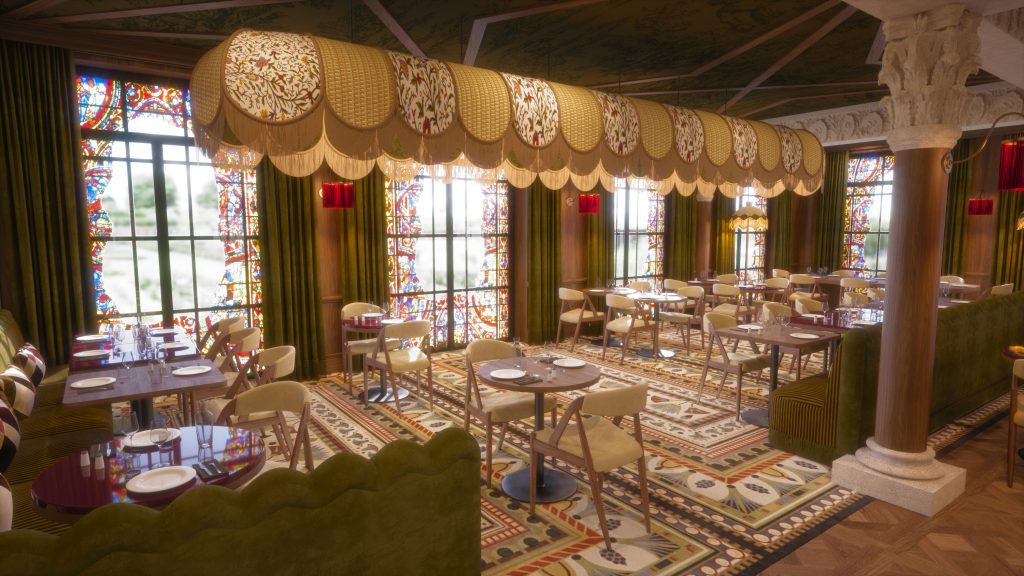
Maison Gloria, Lyon – Where is Brian

From Saint-Sébastien-sur-Loire, Where Is Brian Now has a reach that extends well beyond the Nantes metropolitan area. In Nantes, the agency has designed several venues that have become landmarks: La Prison, Maria, La 500 Trattoria, Le Cochon qui fume, The Jungle, Circus and many more. It has also just completed Maison Gloria in Lyon, in the iconic former restaurant premises of L’Institution on the corner of Rue de la République and Rue Grenette. A large hotel is under development in Cayenne, a hotel residence is taking shape in the Caribbean, and restaurants are opening in Ibiza.

‘With Éloïde, we always have our passports in our back pockets,’ says Gil Aubinais, who has just returned from Thailand, where he went to observe the rooftops of Bangkok. ‘Visiting other places is part of our job.’

Each project receives the same attention to detail. The team designs its own furniture, creates custom pieces and manufactures them in Indonesia or India to offer personalised solutions at a controlled cost. They also call on local companies for construction work. Everything is scrutinised from the very first visits: extraction, accessibility, technical constraints.

Where is Brian : the kitchen at heart

La Chapelle; Quimperlé – Where is Brian

The name of the agency tells a story, too. At the Serbotel trade fair in Nantes — a must-attend event for France’s hotel and catering industry — Gil Aubinais and his partner set up a real kitchen on their stand. For three days, they cooked for and served drinks to their customers. It was their way of thanking their clients for their custom – and giving them a taste of Brian’s cuisine. This generous and unusual gesture sums up the agency’s mindset quite well.

Ultimately, the guiding principle remains simple: “Our job is to make people happy. In a restaurant, Gil Aubinais wants to see grandmothers with their grandchildren, couples who love or argue with each other, and businessmen exchanging ideas. He wants to see multigenerational, lively places that create connections. There is a desire to create places that people naturally want to return to behind every plan, every counter and every flow of traffic.

Continue exploring

Cordon Bleu, Hôtel de la Marine: culinary excellence open to the public
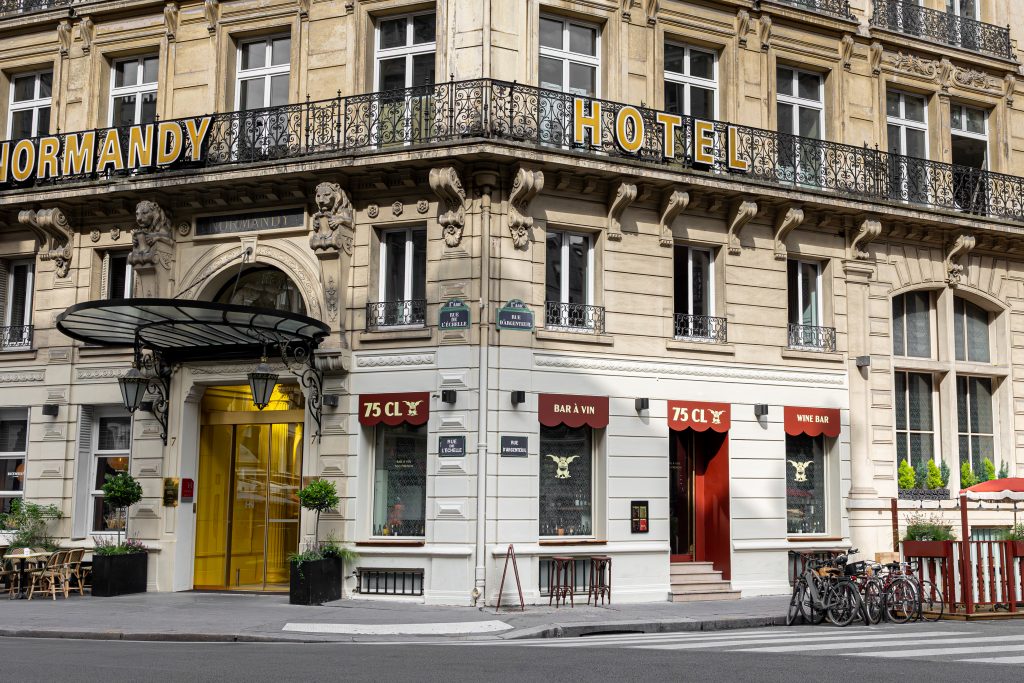
Hotel Normandy Le Chantier, the daring transformation of a Parisian palace
Creativity breathing new lifeinto buildings destined for oblivion
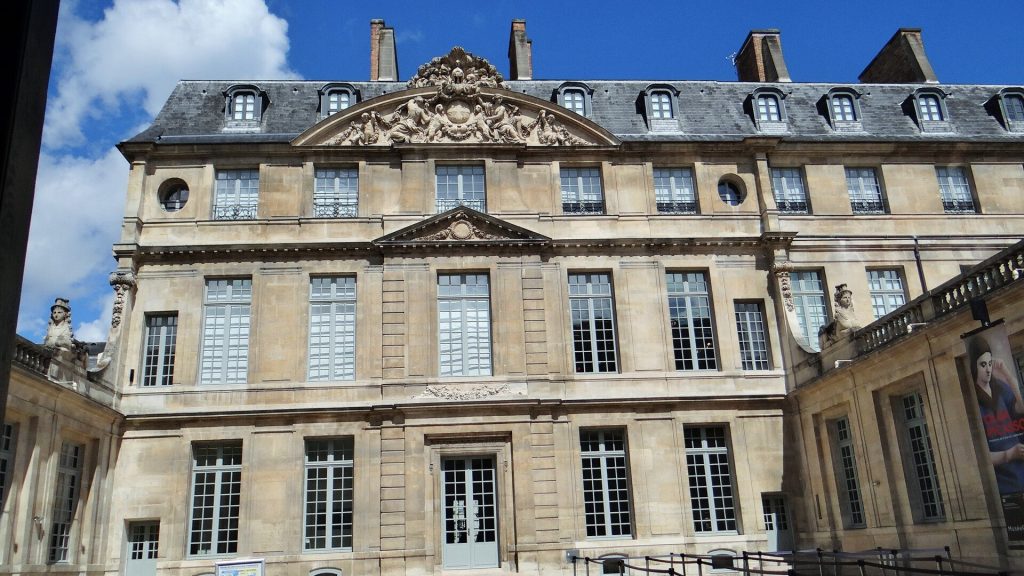
Behind the scenes at the Centre d’Études Picasso in Paris
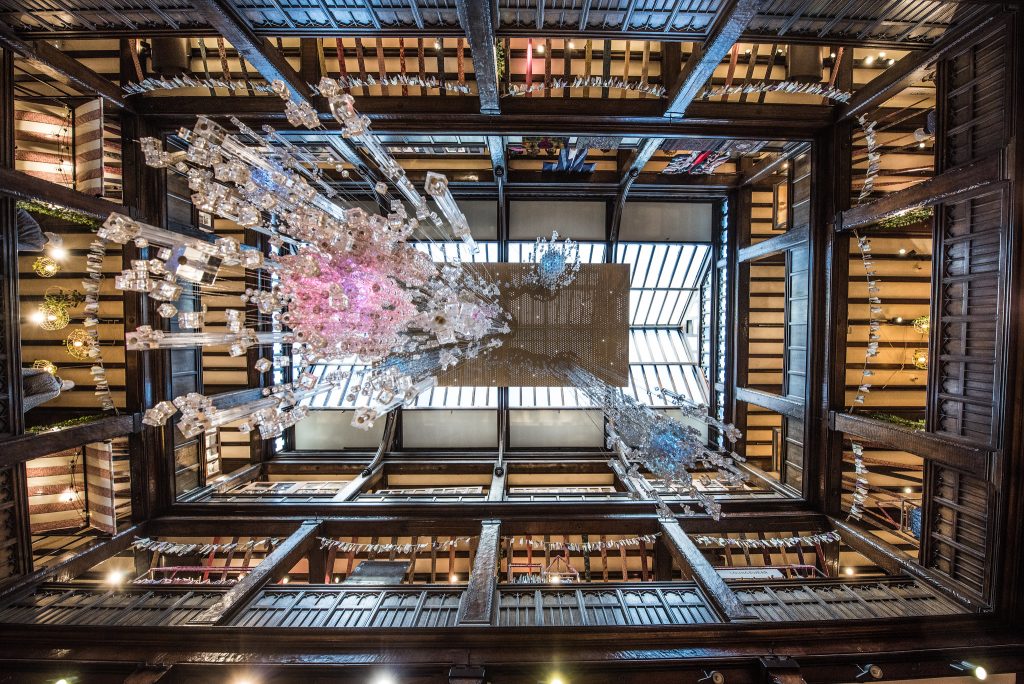
Liberty London: Iconic shopping in a Tudor setting
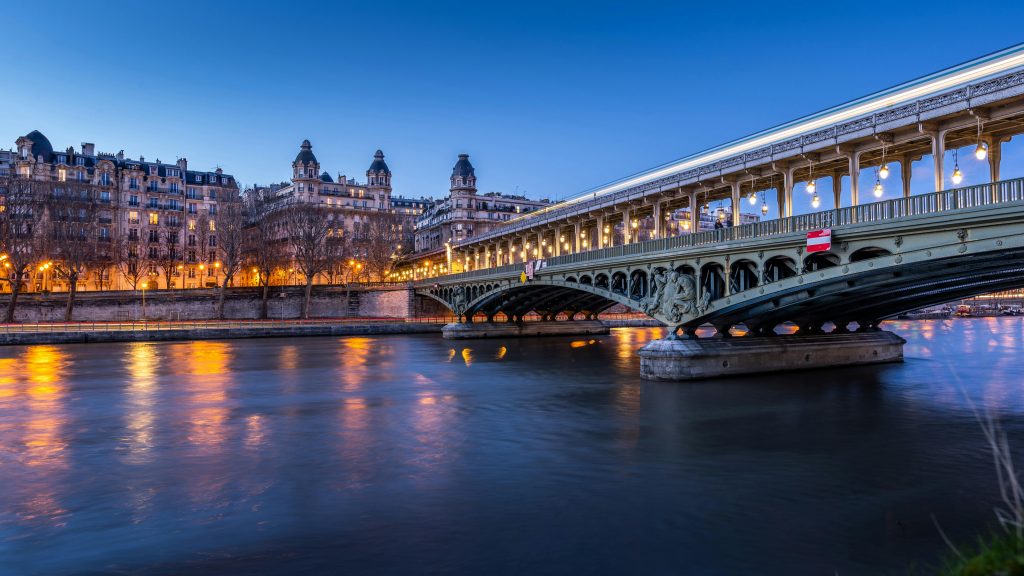
Lunch at Cheval Blanc Paris: A culinary and architectural journey at the heart of the Seine

Février, 2026

Édition 3 : Patrimoine et création

Créer avec l’existant, penser avec l’histoire

De l’architecture au design, cette édition explore comment lieux, savoir-faire et matières héritées deviennent terrains de création actuelle.

Janvier, 2026

Édition 2 : Quiet luxury

Le luxe se réinvente.

Finis les logos clignotants, place à une sobriété raffinée, à l’immersion personnelle, à l’excellence artisanale, à la durabilité sensible.

Décembre, 2025

Édition 1 : Le sens de la fête

Héritages, gestes contemporains et plaisirs essentiels

Parce que la fête n’est jamais qu’apparence : elle reflète notre manière d’habiter le monde, de transmettre, de fabriquer des souvenirs durables.

ÉDITION #3

Révéler la beauté

Upcycling et kintsugi transforment l’objet contemporain, faisant de la trace, de la réparation et de la matière un langage esthétique.

ÉDITION #3

Les nouveaux artisans du patrimoine

Artisans et designers donnent une seconde vie aux matériaux anciens, entre création contemporaine, patrimoine et réemploi.

ÉDITION #3

L'art à la rescousse des friches et lieux oubliés

Bunkers, wagons et kiosques renaissent grâce à la création, révélant comment l’art redonne sens aux lieux délaissés.

ÉDITION #2

Le murmure du beau

Un regard transversal sur le quiet luxury à travers des lieux, des objets et des figures qui expriment l’élégance.

ÉDITION #1

Lieux, maisons et matières en éclats

Une sélection de marques, architectures, objets et escapades qui donnent corps au sens de la fête.

ÉDITION #3

La création au secours des bâtiments promis à l’oubli

Usines et gares délaissées deviennent lieux culturels ouverts, où mémoire industrielle et usages contemporains redessinent la ville.

ÉDITION #3

Hôtel Normandy Le Chantier

L’audacieuse métamorphose d’un palace parisien

ÉDITION #3

Dans les coulisses du Centre d'Études Picasso à Paris

Au cœur du Marais, un lieu discret révèle comment archives, architecture et recherche font dialoguer l’œuvre de Picasso.

ÉDITION #2

Shopping iconique dans un décor Tudor

Une expérience shopping unique dans un magasin emblématique.

ÉDITION #2

Gastronomie et architecture

Voyage culinaire et architectural au cœur de la Seine

ÉDITION #2

L'art de l'hospitalité parisienne

Dans le 9e arrondissement, un établissement qui invite au quiet luxury

ÉDITION #1

Chante!

Chante! vient d’ouvrir ses portes. Une invitation à vibrer !

ÉDITION #3

La boîte aux lettres française devenue objet de design

Icône du paysage français, la boîte jaune change de statut et s’invite dans l’univers du design.

ÉDITION #3

Retour sur Maison&Objet 2026 : retour aux sources et à l’essentiel

L’édition 2026 affirme une vision où artisanat, design et mémoire façonnent l’habitat contemporain, international actuel.

ÉDITION #3

Art Deco: un mouvement centenaire, plus actuel que jamais

Cent ans après 1925, l’Art déco revient dans nos villes et intérieurs avec géométrie, audace, optimisme.

ÉDITION #3

Royal Limoges, deux siècles d’histoire au présent

Depuis plus de deux cents ans, Royal Limoges conjugue porcelaine, savoir-faire industriel et création contemporaine.

ÉDITION #3

Du terrain à la rue et au catwalk : les sneakers à travers les époques

Des terrains de sport aux podiums, la sneaker raconte un siècle de mutations culturelles, techniques et stylistiques.

ÉDITION #2

La formidable aventure du papier peint de luxe

Design, mode, artisanat : des créations où la forme et la matière se répondent avec justesse, loin de tout effet de mode.

ÉDITION #1

Icônes, détails, rituels

Décorations artisanales, calendriers ultra-luxe et pièces de collection pour s’enivrer de joie avant l’heure.

ÉDITION #3

Anton Laborde

Entre marqueterie monumentale et jungle symbolique, Anton Laborde transforme le bois en récit contemporain poétique engagé.

ÉDITION #3

Thierry Laudren

À Maison & Objet, Thierry Laudren présente des meubles sculptés où fonction, matière et lenteur façonnent une présence.

ÉDITION #3

Jean Nouvel

Jean Nouvel conçoit une architecture attentive aux contextes, où lumière, histoire et usages façonnent chaque projet.

ÉDITION #3

Sophie Morel

À Lyon, Sophie Morel rénove des lieux historiques en alliant respect du bâti et écriture contemporaine.

ÉDITION #3

Pascal Grasso

Au Centre d’Études Picasso, l’architecte compose une architecture où lumière, géométrie et héritage dialoguent avec précision.

ÉDITION #2

Alexandre Danan

Entretien avec le fondateur d’EDO (European Design Office)

ÉDITION #2

Aziz Temimi

Portrait d’un visionnaire qui transforme l’art de recevoir en expérience totale.

ÉDITION #1

Visages, gestes, inspirations

Personnalités, artisans et créateurs qui donnent à la fête sa profondeur humaine.

ÉDITION #3

Chemins de traverse : parenthèse d’exception en Bordelais

De Bordeaux au Bassin, art, vignobles et bien-être composent une échappée élégante au cœur de la Gironde.

ÉDITION #2

Voyage en Toscane

Vers une région de l’Italie habitée par le temps, où paysages, culture et usages s’accordent dans une continuité rare.

ÉDITION #1

Horizons, saisons, traditions

Destinations et rituels qui réinventent la fête, du soleil tropical aux marchés d’hiver.

Dates, adresses, invitations

Expositions, événements et repères culturels pour vivre pleinement la saison des fêtes.