A getaway to the Japan of silence

In Japan, there is a plateau perched 800 metres above sea level and encircled by eight peaks that form the shape of a lotus flower. For twelve centuries, over a hundred temples have stood among the cedars here. There are no hotel signs, lobbies or wine lists here: you sleep where the monks sleep, eat what they eat and rise when they rise. Mount Kōya is not a wellness retreat pretending to be a spiritual experience. It is a place where silence is not a commodity, but a way of life.

Ascending: the journey as the first ritual

Meishang ; Unsplash

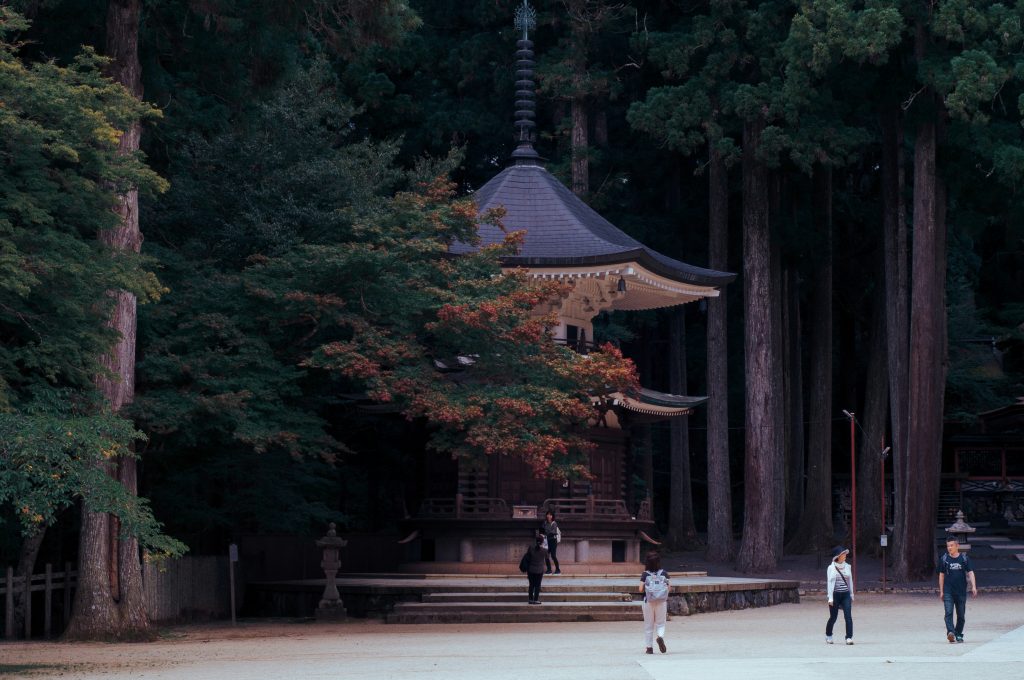
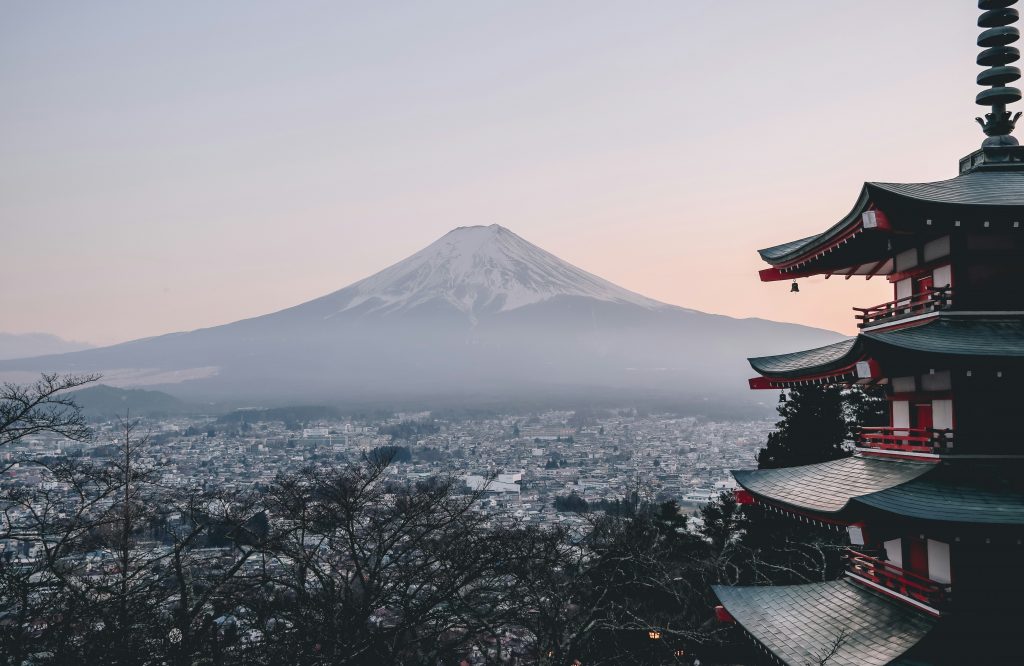
One does not simply arrive at Mount Kōya; one must ascend to it. From Namba Station in Osaka, a Nankai Line train plunges into Wakayama Prefecture, passing through suburbs before entering increasingly dense forests. At Gokurakubashi, literally meaning ‘the bridge to paradise’, the train stops. You then board a vertiginous funicular railway and a bus that winds between the ridges. The road is closed to pedestrians at this point, so you must accept being carried and guided and relinquish control of your itinerary. When you finally step onto the plateau, the air feels different. The temperature has dropped by several degrees. The noise of the world has stayed behind, below.

Kōyasan, a temple village and monastery town, was founded in 816 by the monk Kūkai, who is known posthumously as Kōbō Daishi. As the founder of Shingon Buddhism, an esoteric branch of Japanese Buddhism, Kūkai sought a place of total isolation in which to establish the seat of his doctrine. According to legend, he threw a sacred object from China, where he had studied, and it came to rest in a tree on this very mountain. He took this as a sign that it would be here and nowhere else.

Today, the site is a UNESCO World Heritage Site. It is home to over a hundred and ten temples and seven thousand monks. However, Kōyasan is not a museum; it is a living community where morning prayer marks the days, just as the monastic horæ once marked time in medieval European abbeys. One of its most precious features is that it opens its doors to travellers, with around fifty temples offering shukubō, or monastic lodging.

Sleeping: the shukubō, between ryokan and monastery

Shiva ; Pexels

The word ‘shukubō’ literally means ‘sleeping at the monks’ place’. This ancient practice dates back to a time when pilgrims, lacking an inn, would seek shelter at temples for the night. Over time, certain monasteries developed this hospitality into an art form, while never abandoning their primary vocation. This is not hotel keeping; it is an experience in which travellers enter the rhythm of monastic life for a few hours.

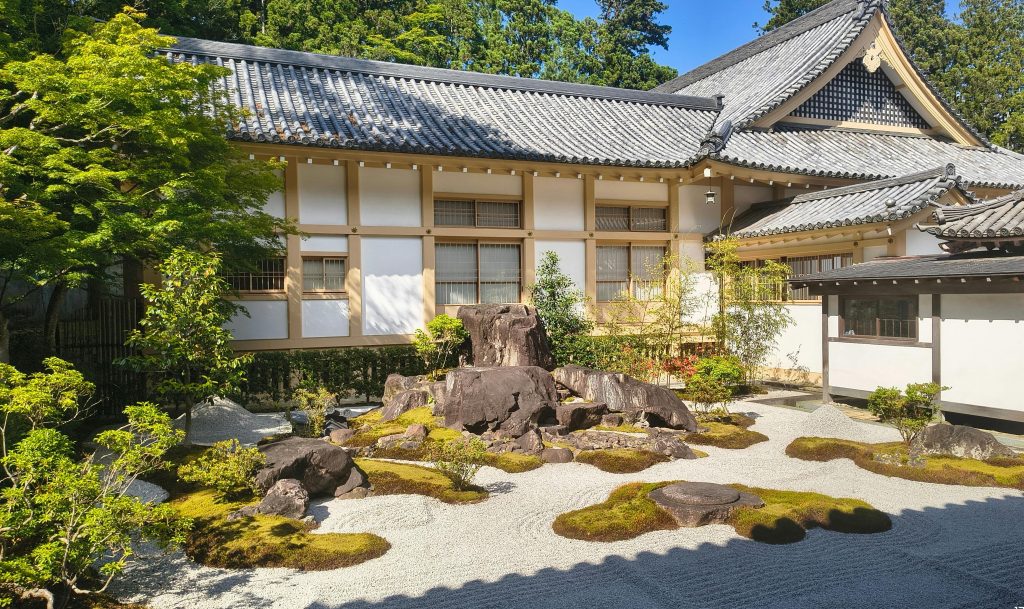
The rooms are extremely simple: tatami mats on the floor, a futon laid out at nightfall, sliding paper screens and sometimes a view of an inner garden. There is no television, no minibar and no hum of air conditioning. In the finest shukubō, the sliding panels are adorned with fusuma-e paintings by renowned artists and the stone gardens bear the hallmark of master landscapers, such as the garden at Yōchiin Temple, which was designed by the celebrated Mirei Shigemori and has been designated a natural monument. Elegance is everywhere, yet it never announces itself.

Curfew is at nine in the evening. After that hour, there is nothing to do but listen to the sounds of the night: The wind in the cedars. The creak of wood. Silence is not an absence of sound, but a presence of something else: a vacant space that Shingon Buddhism invites you to inhabit through meditation. You fall asleep early. You sleep deeply.

Eating: cuisine as an inner discipline

Yosuke Ota ; Unsplash

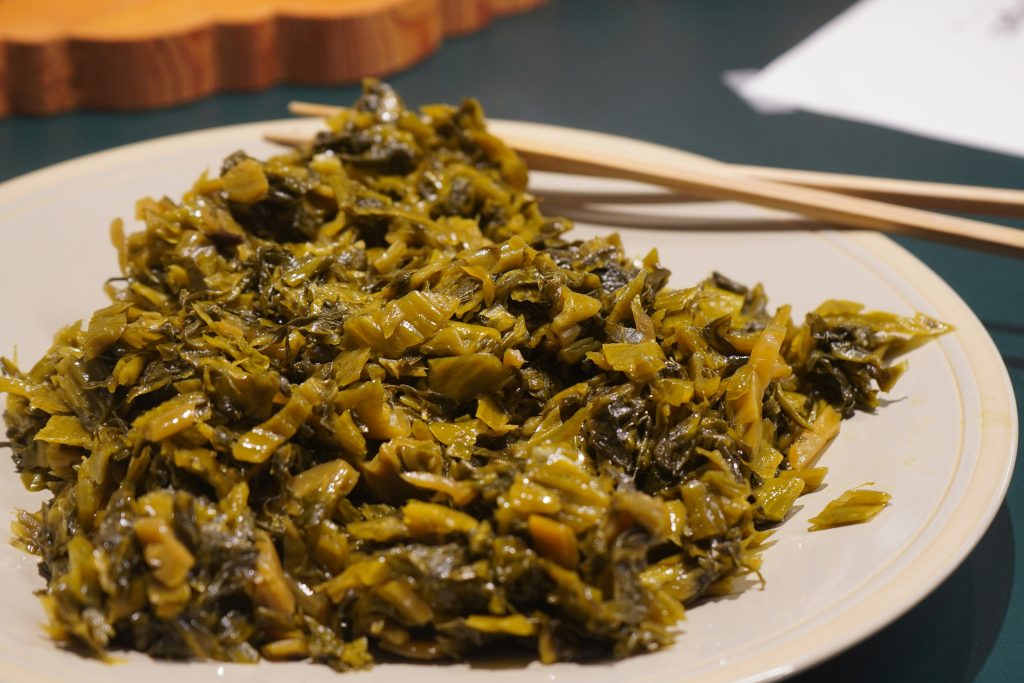
Mealtimes at the shukubō are not leisurely occasions; they are acts of mindfulness. Shōjin ryōri, literally meaning ‘cuisine of devotion’, is the dietary tradition of Buddhist monks. It is entirely plant-based and excludes not only meat and fish, but also garlic, onions and any other bulb whose harvesting would kill the plant. Each ingredient is selected for its ability to nourish without causing harm.

Dinner is served early, at half past five, in the guest’s room on a lacquered tray placed directly on the floor. Examples of dishes served include silken tofu, seasonal vegetable tempura, konjac jelly, kombu broth and fermented pickles with white rice. Each dish is as beautiful as it is precise: the colours, textures, and proportions are arranged with the same care as a floral arrangement. You eat slowly, without background music, facing the garden if the room has one. Breakfast the following morning continues this aesthetic of restraint: simple, nourishing and perfectly sufficient.

Shōjin ryōri is not a diet; it is a philosophy of moderation. Meal after meal, it teaches that refinement has nothing to do with abundance. For a magazine such as ours, devoted to the right gesture and the necessary object, it is hard not to detect a faint echo of quiet luxury in it — except that the monks of Kōyasan practised it long before anyone else.

Praying : fire and the early morning

Pixabay

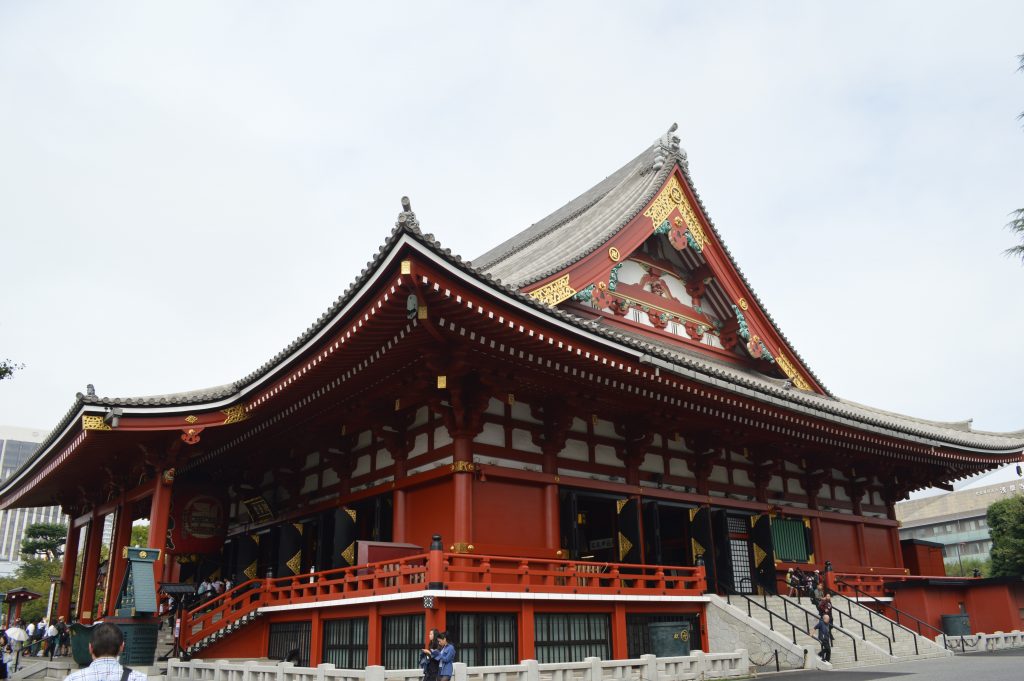
The wake-up call sounds before dawn. At six o’clock, or sometimes earlier in summer. Guests are invited, but never obliged, to attend the morning ceremony. You put on a yukata, walk along corridors of polished wood and enter the main temple barefoot. The air is cold. Incense burns. A monk chants sutras in a deep, steady and almost hypnotic voice. Although you do not understand the words, something passes through you: the rhythm, the vibration and the collective attention.

In certain temples, prayer is followed by the goma ritual, the fire ceremony. The monk casts wooden tablets inscribed with prayers into a brazier. The flames rise, crackling and illuminating the dimness. In Shingon Buddhism, fire is a purifying agent: it consumes attachments, illusions and hindrances. This is an intense, physical and arresting experience, even for those with no affinity for the sacred. At the end of the ritual, some monks give each guest a small talisman and a blessing for their journey ahead.

You leave the temple feeling changed. Not converted nor moved in any spectacular way, but subtly altered — as though your inner centre of gravity had shifted by a millimetre. Perhaps that is the true luxury of the shukubō: not offering an extraordinary experience, but making the ordinary perceptible.

Walking: the cemetery where no one has died

AXP Photography ; Unsplash

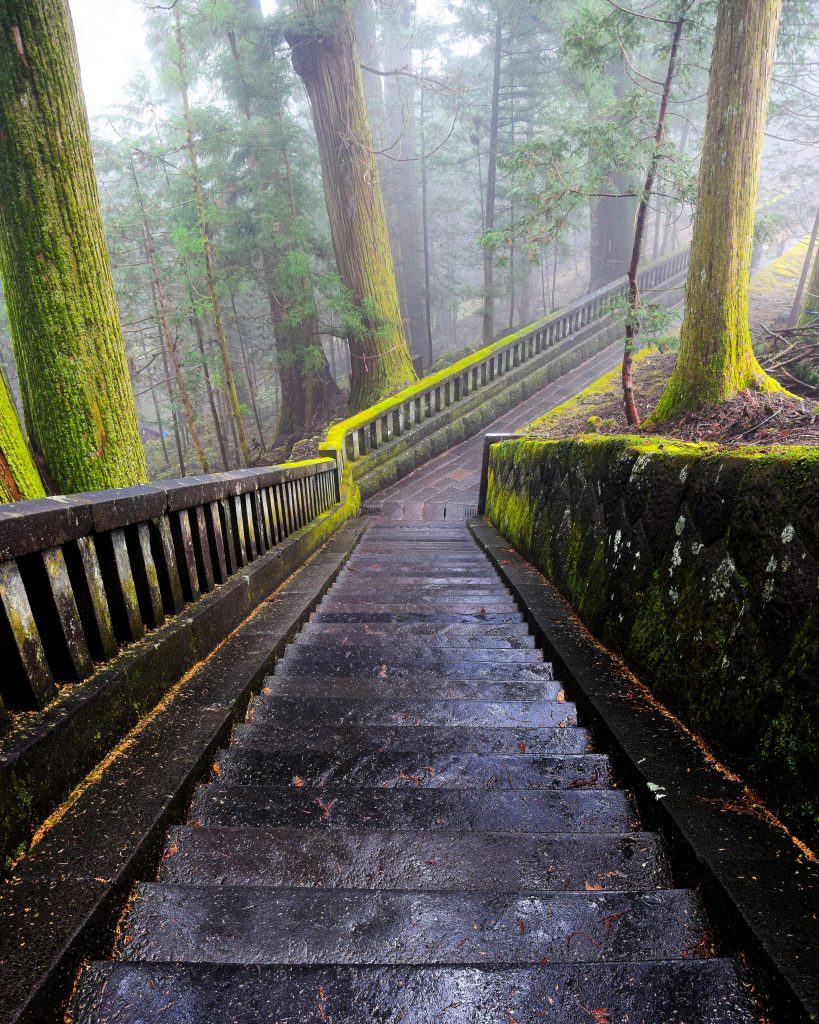
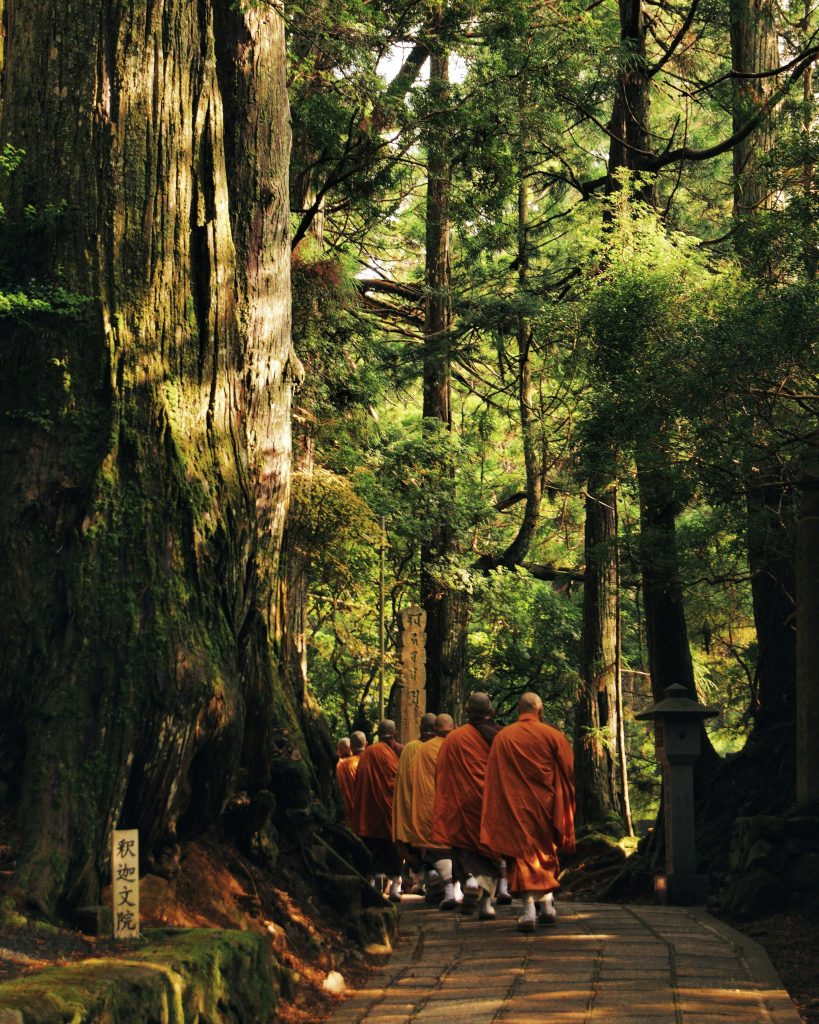
A visit to the Okunoin is a must. Not only is it Japan’s largest cemetery, it is also quite possibly one of the most moving places a traveller can walk through. A two-kilometre cobblestone path winds beneath a canopy of ancient cedars, some of which are over nine hundred years old, and whose moss-covered trunks form a living guard of honour. On either side of the path are more than two hundred thousand stone markers, including five-ringed gorintō towers, Jizō statues wearing red bonnets, mausoleums of feudal lords and corporate memorials. Twelve centuries of history lie in silence here, beneath the filtered light.

At the end of the path, the Gōbyō-bashi bridge marks the entrance to the inner sanctum. Beyond it, photography is prohibited. No eating. Scarcely any talking. The Tōrō-dō, or Lantern Hall, houses over ten thousand candles offered by devotees, two of which, it is said, have been burning without interruption for over nine hundred years. Behind the hall stands Kūkai’s own mausoleum, which is closed to the public and hidden from view. The Shingon monks believe that Kōbō Daishi is not dead; he is said to be meditating and awaiting Miroku, the Buddha of the future. Every day, two meals are brought to him. Once a year, a monk enters to trim his hair and change his robes.

The Shingon monks have a phrase they repeat: ‘There are no dead in Okunoin, only spirits who wait.’ You may not believe it. But when you walk alone through the forest at dusk, watching the stone lanterns light up one by one as the mist dissolves every outline, you may find yourself suspending your judgement. You are no longer quite a tourist, but not yet a pilgrim either. You are simply there — present, silent and available.

Staying: what silence teaches

Manuel Cosentino ; Unsplash

Shingon Buddhism — ‘shingon’ means ‘true word’ — is based on the idea that the ultimate truth cannot be expressed in human language. Instead, it is through the body, gesture, repetition, and contemplation of the living world that one can draw closer to this truth. At Koyasan, this philosophy permeates everything: the architecture of the temples, the composition of the meals, the layout of the gardens and the pace of the funicular railway, which never hurries anyone.

You could spend only one night here. Most visitors do just that: arrive late morning, visit a few temples, eat the monastic dinner, attend the morning ceremony and leave after breakfast. This is already a great deal. However, for those who can, staying for two nights transforms the experience. The first day is disorienting, but the second day allows you to settle in. Silence ceases to be a curiosity and becomes an inner landscape. You start to notice things you hadn’t seen before, such as the way a monk folds a cloth, the way the light plays around the stone garden and the precise taste of tofu when there is nothing else on your palate.

Kōyasan is not a spa, a meditation course or a marketing tool for a detox retreat. It is a place that has functioned for twelve centuries, with or without visitors, and it allows you to experience its rhythm on the condition that you respect it. The price — between 10,000 and 15,000 yen per night, including meals — is similar to that of a good ryokan, but the things you take away with you when you leave cannot be put on the market. You may take away a paper talisman, a memory of fire or the echo of a sutra in a cold temple, as well as the idea that silence is not a void to be filled, but a space to be inhabited.

Practical information

Getting there: From Namba in Osaka, take the Nankai Line to Gokurakubashi, and then change to the funicular railway and bus. Allow approximately two hours. This journey is covered by the Japan Rail Pass when combined with the Nankai supplement.

Accommodation: There are around fifty shukubō on the plateau. Bookings can be made via the official website (eng-shukubo.net) or through standard booking platforms. Expect to pay between ¥10,000 and ¥15,000 per person per night, including half board.
Best season: Spring (April–May) and autumn (October–November) offer the best light. Winter is harsh, but magical beneath the snow. Book several months in advance, especially for the more intimate temples.

Not to be missed: A night-time walk through Okunoin, guided by a monk and lit by stone lanterns. Visit Kongobu-ji Temple, the seat of Shingon Buddhism, and its stone garden, which is the largest in Japan.

Good to know: This is neither a hotel nor a guesthouse. There is a curfew at 9 pm and you should arrive before 5 pm for dinner. Light luggage is recommended due to the steep hills. Bring warm clothing as the plateau is considerably cooler than the rest of the Kansai region.

Continue exploring

World cuisine: a dish is worth a thousand stories
Side Roads: an exceptional interlude in Bordeaux
Secret itineraries and places in Tuscany
Here & Beyond: Sustainable Escapes & Christmas Markets Worldwide

Février, 2026

Édition 3 : Patrimoine et création

Créer avec l’existant, penser avec l’histoire

De l’architecture au design, cette édition explore comment lieux, savoir-faire et matières héritées deviennent terrains de création actuelle.

Janvier, 2026

Édition 2 : Quiet luxury

Le luxe se réinvente.

Finis les logos clignotants, place à une sobriété raffinée, à l’immersion personnelle, à l’excellence artisanale, à la durabilité sensible.

Décembre, 2025

Édition 1 : Le sens de la fête

Héritages, gestes contemporains et plaisirs essentiels

Parce que la fête n’est jamais qu’apparence : elle reflète notre manière d’habiter le monde, de transmettre, de fabriquer des souvenirs durables.

ÉDITION #3

Révéler la beauté

Upcycling et kintsugi transforment l’objet contemporain, faisant de la trace, de la réparation et de la matière un langage esthétique.

ÉDITION #3

Les nouveaux artisans du patrimoine

Artisans et designers donnent une seconde vie aux matériaux anciens, entre création contemporaine, patrimoine et réemploi.

ÉDITION #3

L'art à la rescousse des friches et lieux oubliés

Bunkers, wagons et kiosques renaissent grâce à la création, révélant comment l’art redonne sens aux lieux délaissés.

ÉDITION #2

Le murmure du beau

Un regard transversal sur le quiet luxury à travers des lieux, des objets et des figures qui expriment l’élégance.

ÉDITION #1

Lieux, maisons et matières en éclats

Une sélection de marques, architectures, objets et escapades qui donnent corps au sens de la fête.

ÉDITION #3

La création au secours des bâtiments promis à l’oubli

Usines et gares délaissées deviennent lieux culturels ouverts, où mémoire industrielle et usages contemporains redessinent la ville.

ÉDITION #3

Hôtel Normandy Le Chantier

L’audacieuse métamorphose d’un palace parisien

ÉDITION #3

Dans les coulisses du Centre d'Études Picasso à Paris

Au cœur du Marais, un lieu discret révèle comment archives, architecture et recherche font dialoguer l’œuvre de Picasso.

ÉDITION #2

Shopping iconique dans un décor Tudor

Une expérience shopping unique dans un magasin emblématique.

ÉDITION #2

Gastronomie et architecture

Voyage culinaire et architectural au cœur de la Seine

ÉDITION #2

L'art de l'hospitalité parisienne

Dans le 9e arrondissement, un établissement qui invite au quiet luxury

ÉDITION #1

Chante!

Chante! vient d’ouvrir ses portes. Une invitation à vibrer !

ÉDITION #3

La boîte aux lettres française devenue objet de design

Icône du paysage français, la boîte jaune change de statut et s’invite dans l’univers du design.

ÉDITION #3

Retour sur Maison&Objet 2026 : retour aux sources et à l’essentiel

L’édition 2026 affirme une vision où artisanat, design et mémoire façonnent l’habitat contemporain, international actuel.

ÉDITION #3

Art Deco: un mouvement centenaire, plus actuel que jamais

Cent ans après 1925, l’Art déco revient dans nos villes et intérieurs avec géométrie, audace, optimisme.

ÉDITION #3

Royal Limoges, deux siècles d’histoire au présent

Depuis plus de deux cents ans, Royal Limoges conjugue porcelaine, savoir-faire industriel et création contemporaine.

ÉDITION #3

Du terrain à la rue et au catwalk : les sneakers à travers les époques

Des terrains de sport aux podiums, la sneaker raconte un siècle de mutations culturelles, techniques et stylistiques.

ÉDITION #2

La formidable aventure du papier peint de luxe

Design, mode, artisanat : des créations où la forme et la matière se répondent avec justesse, loin de tout effet de mode.

ÉDITION #1

Icônes, détails, rituels

Décorations artisanales, calendriers ultra-luxe et pièces de collection pour s’enivrer de joie avant l’heure.

ÉDITION #3

Anton Laborde

Entre marqueterie monumentale et jungle symbolique, Anton Laborde transforme le bois en récit contemporain poétique engagé.

ÉDITION #3

Thierry Laudren

À Maison & Objet, Thierry Laudren présente des meubles sculptés où fonction, matière et lenteur façonnent une présence.

ÉDITION #3

Jean Nouvel

Jean Nouvel conçoit une architecture attentive aux contextes, où lumière, histoire et usages façonnent chaque projet.

ÉDITION #3

Sophie Morel

À Lyon, Sophie Morel rénove des lieux historiques en alliant respect du bâti et écriture contemporaine.

ÉDITION #3

Pascal Grasso

Au Centre d’Études Picasso, l’architecte compose une architecture où lumière, géométrie et héritage dialoguent avec précision.

ÉDITION #2

Alexandre Danan

Entretien avec le fondateur d’EDO (European Design Office)

ÉDITION #2

Aziz Temimi

Portrait d’un visionnaire qui transforme l’art de recevoir en expérience totale.

ÉDITION #1

Visages, gestes, inspirations

Personnalités, artisans et créateurs qui donnent à la fête sa profondeur humaine.

ÉDITION #3

Chemins de traverse : parenthèse d’exception en Bordelais

De Bordeaux au Bassin, art, vignobles et bien-être composent une échappée élégante au cœur de la Gironde.

ÉDITION #2

Voyage en Toscane

Vers une région de l’Italie habitée par le temps, où paysages, culture et usages s’accordent dans une continuité rare.

ÉDITION #1

Horizons, saisons, traditions

Destinations et rituels qui réinventent la fête, du soleil tropical aux marchés d’hiver.

Dates, adresses, invitations

Expositions, événements et repères culturels pour vivre pleinement la saison des fêtes.